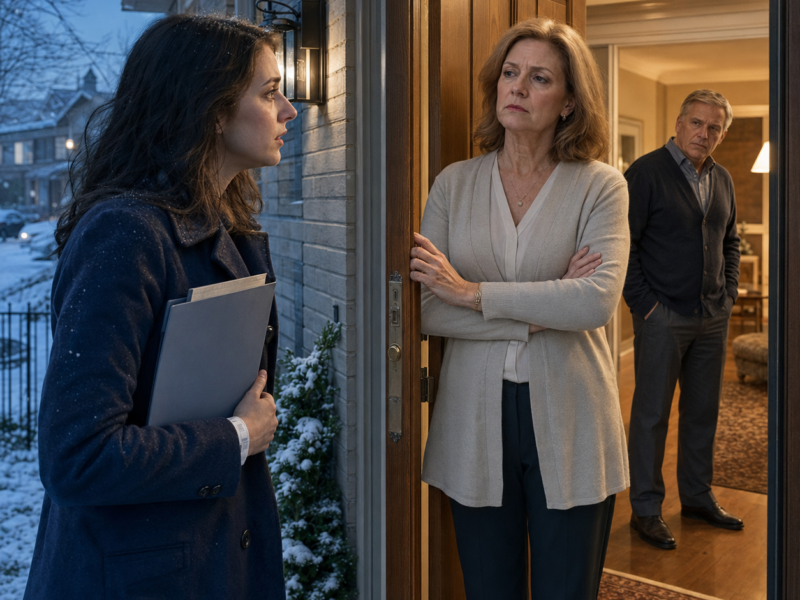
“You have cancer? Why should we care?” My mother said it like my life was an inconvenience, and my father only added, “Take care of yourself.” I had called for comfort, not money, but that call taught me I had no family left to lean on. I walked through the city until dark and found an old homeless man outside a closed diner, hungry and shivering. I brought him home, gave him food, and let him sleep in my spare room, thinking it was just one small kindness before my own life fell apart. A week later, I opened his door and froze. He was gone, but what he left behind would make my family regret the day they turned their backs on me.
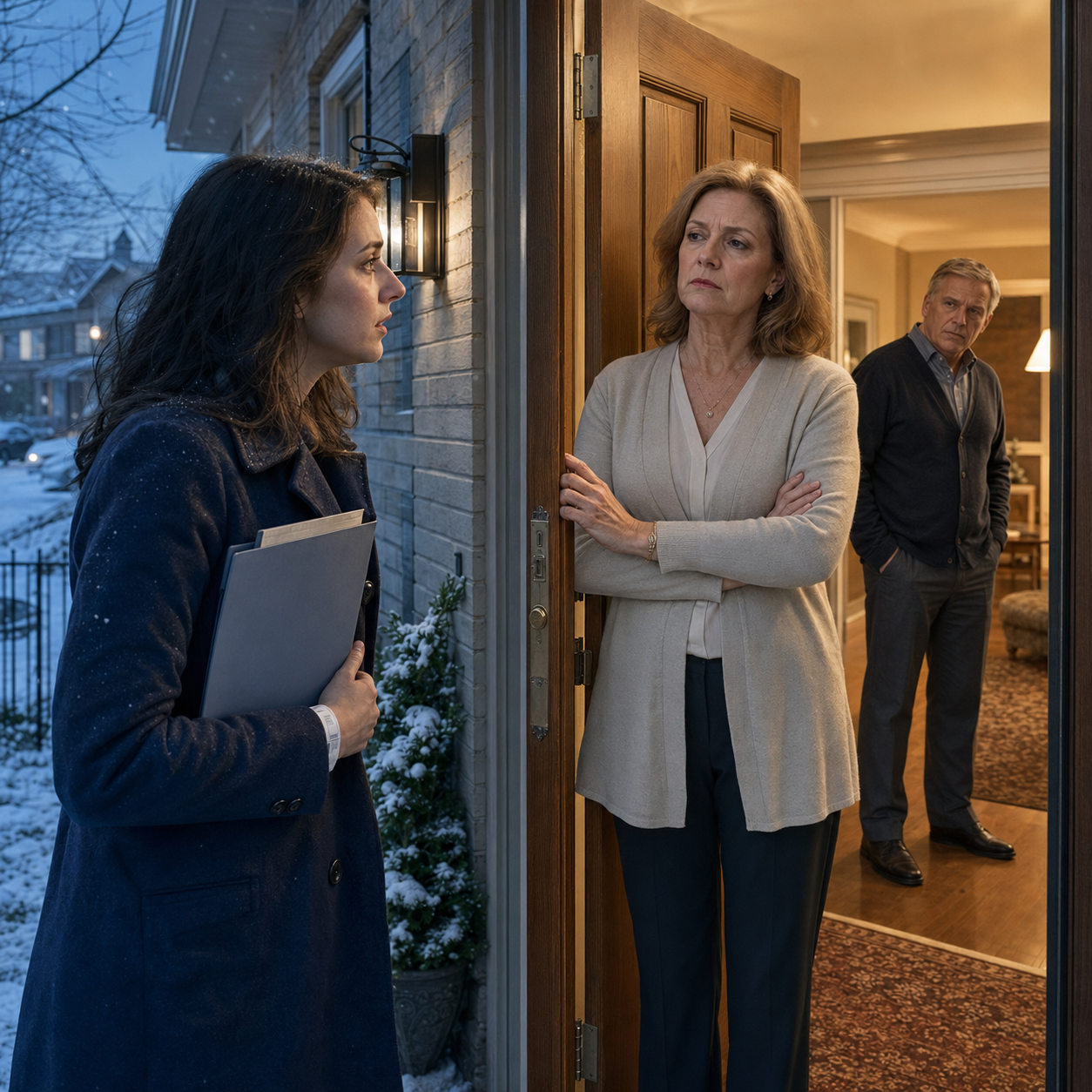
The pathology report was still warm from the clinic printer when my mother asked me why my dying should matter to her.
I was twenty-eight years old, sitting alone in a narrow consultation room on the eleventh floor of Lakeshore University Medical Center in Chicago, staring at a page filled with words that had somehow turned my life into a countdown.
Progressive metastatic disease.
Pulmonary involvement.
New mediastinal lesions.
Standard systemic therapy no longer providing adequate control.
My oncologist, Dr. Meera Patel, had avoided using the word terminal until I asked her directly.
“How long?”
She looked at me across the desk.
Doctors have a particular stillness when they know the answer will divide your life into before and after.
“If we don’t find another effective treatment, I would begin thinking in terms of months rather than years.”
I had been dealing with thyroid cancer for fourteen months.
Surgery first.
Then radiation.
Then medication.
Then the peculiar hope that comes when scans look almost stable enough to call good news.
I had gone to work through much of it because I was an accounts coordinator at a small architectural-supply company and paid medical leave is a concept much more generous in conversations than on actual American payroll forms.
I had used vacation days for biopsies.
Taken conference calls from infusion chairs.
Hidden fatigue behind concealer.
Paid insurance deductibles with a credit card and then paid that credit card with savings I had originally planned to use for a new kitchen.
My cancer was not the kind that responded politely to determination.
It spread anyway.
Dr. Patel told me she was sending another tissue sample for broader molecular testing.
“We still look,” she said.
“For what?”
“A target. Something the earlier panel may have missed. A trial. A drug your tumor happens to be vulnerable to. I don’t want to promise something we have not found.”
I appreciated that.
False hope would have been easier for ten minutes.
Then worse.
“What should I do while we wait?”
She looked at me for a long moment.
“Whatever matters.”
That answer followed me out of the hospital.
Chicago had been under a winter storm warning since morning. By the time I crossed the lobby, snow was beginning to move sideways across Superior Street, bright under the hospital lights and thick enough to soften every edge of the city.
I stood beneath the entrance canopy with the pathology report folded inside my coat pocket and thought of the people I had not called.
There was Chloe, my closest friend, who would leave work immediately and probably drive through the blizzard with groceries, three blankets, and an argument about why I had not called sooner.
I could call my supervisor.
My aunt in Milwaukee.
Dr. Patel had given me the card for an oncology social worker.
Instead, I called my mother.
That decision probably tells you everything about the part of me that had not yet grown up.
I had been distant from my parents for nearly three years.
Not estranged enough to call it estrangement.
That word sounded too formal for our particular arrangement.
We still exchanged holiday messages.
My mother mailed birthday cards.
Dad occasionally called if somebody in the extended family was sick.
But there had been no real relationship since my older brother Derek’s business disaster.
Derek was five years older than me and had spent most of our childhood occupying the emotional center of our house.
When he played football, Saturdays belonged to football.
When he struggled in algebra, Mom sat beside him every night.
When I brought home a good report card, she put it on the refrigerator.
When he brought home a C after weeks of tutoring, the family went for ice cream because he had “worked so hard.”
I noticed.
Children notice.
Still, ours was not a house without love.
Dad taught me to ride a bicycle.
Mom stayed awake with me when I had pneumonia.
We ate Sunday dinner together.
There were Christmas mornings and county fairs and summers when Dad set up a cheap plastic pool in the backyard and all three of us believed it was luxurious.
The problem was not that my parents loved Derek and hated me.
It was that they treated his needs as events and mine as evidence that I was doing fine.
By adulthood, “Megan can handle herself” had become the family’s highest compliment and most convenient excuse.
Except my name was Mallory.
That was how invisible I could feel in my own family sometimes.
My mother once introduced me to a church friend as Megan, my cousin’s name, then laughed when I corrected her.
“Too many children in this family.”
There were two.
Derek and me.
I was Mallory Bennett, and eventually being capable of handling myself became exactly what I did.
I studied accounting for two years before changing direction into business systems because I discovered I liked fixing the places where numbers and software disagreed.
I took whatever scholarships I could get.
Worked campus jobs.
Graduated.
Moved to Chicago.
Found an administrative position that turned into financial operations work.
Nothing glamorous.
No start-up stock worth millions.
No secret inheritance.
I lived carefully.
I owned a small one-bedroom condominium in Rogers Park because my grandmother had left me enough for a down payment and I had bought during a year when interest rates were kind.
It was not impressive.
Brick building.
Radiators that clanged.
A kitchen barely wide enough for two people to disagree in.
But my name was on the deed.
I loved it.
Derek’s life moved differently.
He married young.
Divorced.
Started a small residential contracting business after working for other people.
For two years, business was good.
Then one client refused a large payment, another project went over budget, and Derek began using personal credit to keep the company alive.
Mom called.
“He just needs temporary help.”
I sent him five thousand dollars.
Then another three.
Then cosigned nothing, despite being asked.
When the business failed, Derek wanted twenty-five thousand dollars to start again under a new name.
I said no.
My parents acted as though the first eight thousand disappeared from the historical record the moment I refused the next request.
Dad said:
“He’s your brother.”
Mom said:
“Someday you might be the one who needs family.”
Derek said:
“You’ve always thought you were better than us.”
I did not.
But after that conversation, something cooled permanently.
When I got sick, I told them only that doctors had found thyroid cancer.
Mom sent:
Praying.
Dad called once.
Derek never did.
Months passed.
Treatment became harder.
Our already thin contact thinned further.
Still, standing outside Lakeshore University Medical Center with snow hitting my face, I wanted my mother.
Maybe biology is stubborn that way.
I dialed.
She answered after six rings.
“Mallory?”
At least she got my name right.
“Hi, Mom.”
“Everything okay?”
No.
The question nearly broke me.
“I had scans today.”
Silence.
Then:
“And?”
“The cancer spread.”
I stared toward Michigan Avenue, where headlights moved slowly through white air.
“They think I may have months if they can’t find another treatment.”
The line stayed silent.
For one hopeful second, I thought she was crying.
Then Mom exhaled.
“Mallory, I don’t know what you expect me to do with that.”
My fingers went numb around the phone.
“What?”
“You barely speak to us.”
“I’m calling now.”
“After everything with Derek.”
“This isn’t about Derek.”
“It is always about how we failed you.”
“I didn’t say that.”
“You don’t have to.”
Her voice sharpened.
“You made it very clear you didn’t need this family.”
I could hear Dad in the background.
“What is it?”
Mom covered the phone badly.
“She says the cancer got worse.”
A pause.
Then Dad, loud enough for me to hear:
“She made her choices. Tell her to take care of herself.”
I stopped feeling the snow.
Mom returned.
“You heard him.”
“Yeah.”
“We don’t know what you want from us.”
I swallowed.
“I wanted my mother.”
Silence.
That was the worst part.
Not anger.
Not another argument.
Silence.
Then Mom said:
“I’m sorry you’re sick.”
It sounded like something she might say to a former coworker whose name she barely remembered.
“I have to go.”
The call ended.
I stood beneath the hospital canopy until a security guard asked whether I needed help finding a cab.
“No.”
I stepped into the storm.
For several blocks, I walked without knowing where I was going.
The sensible choice would have been the Red Line.
Or a rideshare.
Or back inside the hospital.
Instead, I moved through the snow as though motion itself might keep the phone call from settling.
People hurried around me with collars raised.
A bus groaned through slush.
Somebody was scraping ice from a windshield with a credit card.
Christmas lights still hung from a hotel awning even though the holiday had passed.
Chicago winter can make an entire city look abandoned while millions of people remain inside it.
By the time I reached a commercial stretch near Clark Street, my fingers hurt despite gloves.
That was when I saw him.
At first, he looked like another pile of winter clothing beneath a closed storefront awning.
Then the pile moved.
A man was sitting against the brick wall with his knees drawn toward his chest.
His coat was not really a winter coat.
More like a torn field jacket layered over a sweater.
Snow had blown beneath the awning and collected around his shoes.
He was shivering hard enough that I could see it from the sidewalk.
People walked past.
So did I.
Six steps.
Maybe seven.
Then I stopped.
I remember standing there thinking:
I am dying.
I do not have enough money.
I do not know this man.
I am not equipped to fix every sad thing in Chicago.
All true.
Then another thought:
He could die tonight too.
I turned around.
“Sir?”
No response.
I moved closer.
“Can you hear me?”
His eyes opened.
Gray.
Confused.
He looked somewhere in his thirties.
Maybe a little older.
Dark hair badly overgrown.
A healing cut near his temple.
His lips had the blue-gray color that makes you stop debating whether somebody is “just cold.”
I called emergency services.
He tried to push himself upright.
“No hospital.”
His voice was weak but surprisingly polished.
“That’s not really your best argument right now.”
“No.”
He caught my sleeve.
“Please.”
I should have waited for paramedics.
I know that.
Instead, I crouched.
“What’s your name?”
His expression went blank.
“I don’t know.”
I thought I misheard.
“What?”
“I don’t know.”
He touched the side of his head.
“I don’t remember.”
That changed the situation.
I told the emergency dispatcher he appeared disoriented and possibly hypothermic.
An ambulance was delayed because of the storm.
A nearby warming center was full.
The dispatcher told me to keep him sheltered and awake if possible.
My condo was six blocks away.
That is how a stranger ended up on my sofa.
Not because I made some noble decision.
Because an ambulance was delayed, the snow was getting worse, and leaving him under that awning became impossible once I had heard him speak.
I helped him walk.
He was taller than I expected.
Heavy enough that my chest began aching halfway home.
Twice, he told me he could manage.
Twice, he nearly fell.
My building had no doorman.
Thank God.
I did not want to explain myself.
We made it upstairs.
I unlocked the door.
He stopped on the threshold.
“You live alone?”
“Yes.”
He looked uncomfortable.
“You shouldn’t bring strange men home.”
I stared at him.
“You are the strange man.”
For the first time, something like a smile appeared.
“That is fair.”
I got him onto the sofa.
Wrapped him in every blanket I owned.
Called the non-emergency medical advice line again while we waited for a mobile response team because the ambulance service was overwhelmed.
His temperature was low but improving.
He had no obvious chest pain.
No severe difficulty breathing.
The cut on his head appeared several days old.
He refused transport once paramedics finally arrived.
They urged him to go.
So did I.
He became agitated at the mention of hospitals.
Not violent.
Terrified.
One paramedic explained that adults with capacity could refuse care, though his memory problems made that complicated.
Eventually they convinced him to allow a basic evaluation.
No immediate life-threatening instability.
They gave me instructions I had no business receiving for a man whose name I did not know.
“Call again if he becomes confused beyond baseline, vomits repeatedly, loses consciousness, has a seizure, severe headache, trouble walking, anything changes.”
Everything about him was already a change.
The paramedics left.
I stood in my tiny kitchen looking at the contents of the cabinet.
One can of chicken soup.
Rice.
Crackers.
Tea.
The man slept.
I heated the soup.
When the smell reached the living room, he woke.
Slowly.
His eyes followed me.
“Where am I?”
“Rogers Park.”
He frowned.
“Chicago.”
That meant something.
Not enough.
I brought him the bowl.
He sat carefully.
“Thank you.”
The tone was so formal that I almost smiled.
He did not eat like somebody starving.
He put the spoon down between bites.
Wiped his mouth with the napkin.
Said please.
Small things.
Not proof of wealth.
Only history.
I noticed a pale band around his left wrist where a watch had once been.
The rest of his skin was weathered by cold and dirt.
The tan line was sharp.
He had worn something there every day for years.
Probably a watch.
Maybe medical equipment.
When he leaned forward, I saw a curved surgical scar behind his hairline.
Older than the cut on his temple.
“You’ve had surgery.”
He touched the scar.
“I suppose.”
“You really remember nothing?”
“Pieces.”
“What pieces?”
He closed his eyes.
“Water.”
My attention sharpened.
“Lake?”
“I don’t know.”
“Boat?”
His breathing changed.
“I don’t know.”
I stopped.
No reason to force a frightened brain.
He looked toward the window.
“Did you say Chicago?”
“Yes.”
“I know Chicago.”
“Good.”
“Do you know how?”
He almost laughed.
“No.”
I called police the next morning.
They took a missing-person report.
No identification.
No wallet.
No phone.
His fingerprints were entered for comparison where legally available, though nothing returned immediately.
They photographed him.
Checked hospital bulletins.
Suggested shelters and medical evaluation.
He still resisted hospitals.
I told him he could stay two nights while we figured something out.
He looked at my sofa.
“Why?”
“Because it’s twelve degrees.”
“No.”
He meant why are you helping me?
I did not have an answer I liked.
“Because you were there.”
That was all.
My best friend Chloe discovered him that afternoon.
She had a key and used it without knocking because boundaries in friendship apparently become optional after twelve years.
“Mallory?”
She came through carrying two grocery bags.
“I brought soup ingredients because you said you went to the doctor and then stopped answering—”
She saw him.
Stopped.
The man was sitting at my dining table wearing one of my old college sweatshirts because his clothes were in the laundry.
Chloe stared at me.
Then him.
Then me.
“Why is there a man in your apartment?”
“He was cold.”
She blinked.
“Outside?”
“Yes.”
“So you brought him inside.”
“Yes.”
“Of your house.”
“Condo.”
“This is not the part of the sentence requiring correction.”
The stranger almost smiled.
I pointed.
“He doesn’t remember his name.”
Chloe stared harder.
“Of course he doesn’t.”
“I called police.”
“Wonderful.”
“He’s not wanted.”
“So far.”
He raised one hand slightly.
“I can hear both of you.”
Chloe looked at him.
“Good. If you murder her, I want you to know I’ll be extremely annoying about it.”
He nodded.
“That seems fair.”
Chloe put the grocery bags on the counter.
In doing so, she knocked over a stack of mail.
My hospital folder fell.
Opened.
I lunged too late.
She saw the pathology report.
Her eyes moved across the first lines.
Then to me.
The color left her face.
“Mallory.”
“Not here.”
She ignored me.
“What does this mean?”
“Chloe.”
“What does months mean?”
The man at the table became still.
I grabbed the folder.
“Hallway.”
Chloe followed me out.
The apartment door barely closed before she started crying.
“You didn’t tell me.”
“I found out yesterday.”
“And you brought home a homeless stranger.”
“Those are unrelated facts.”
“They are absolutely not unrelated.”
She lowered her voice.
“Oh my God.”
Her hands went to her hair.
“What are we doing?”
“We?”
“Yes, we.”
“You don’t get to die individually when you have friends.”
That was Chloe.
I started crying too.
She hugged me.
For several minutes, I let myself become the person I had wanted my mother to see.
Frightened.
Small.
Not capable.
Then Chloe pulled back.
“You are not spending your savings rescuing random men.”
“I spent six dollars on soup.”
“Today.”
“I can afford six dollars.”
“How much do you have left?”
I looked away.
Cancer had eaten savings faster than disease ate anything else.
“Enough.”
“That is not a number.”
“About nine thousand.”
Her eyes widened.
“You had thirty.”
“I had medical bills.”
“Mallory.”
“I know.”
“What did the doctor say?”
I told her.
Broad molecular testing.
Possible trial.
No guarantees.
Chloe wiped her face.
“Okay.”
“No.”
“Okay means we do one thing at a time.”
She looked toward my door.
“And the mysterious man?”
“We get him identified.”
“Then a shelter or family or wherever.”
“Yes.”
“You don’t become Florence Nightingale because your mother is terrible.”
I almost laughed.
“Too soon.”
“I’m serious.”
“So am I.”
Then:
“Helping him makes me feel useful.”
Chloe stopped.
That was the first time I admitted it.
The diagnosis had made every hour feel passive.
Wait for tests.
Wait for progression.
Wait for symptoms.
Wait to die.
This stranger had a problem with an action attached.
Warm him.
Feed him.
Find his name.
“I understand.”
Chloe’s voice softened.
“But meaning and self-destruction are not the same thing.”
I nodded.
We went back inside.
The stranger looked away politely, pretending he had heard nothing.
I appreciated the lie.
The police had suggested using a temporary name for paperwork if he needed shelter services.
I asked what he wanted to be called.
He looked at the silver ring on his right hand.
The initials E.W. were engraved inside.
“Something with W?”
I suggested.
He frowned.
“Will.”
“Will?”
He tested it.
“Could be.”
So for six days, he became Will.
I bought him a winter coat from a thrift store, not a pharmacy as Chloe later accused me of doing.
I picked up my pain medication at the pharmacy, then walked two doors down and found a heavy navy parka for thirty-eight dollars.
Will objected.
“You should return it.”
“No.”
“I can manage.”
“You were freezing under an awning.”
“That is a persuasive counterpoint.”
He wore it.
His manners remained strange for a man with no memory.
He knew which fork belonged with salad.
Could discuss wine even though I had none.
Recognized a German phrase on a package delivered to my neighbor.
Knew how to calculate compound interest faster than I did.
When a hinge on my kitchen cabinet loosened, he found a screwdriver and fixed it without asking.
“Useful.”
I told him.
“Apparently my mysterious past involved cabinets.”
At night, he had nightmares.
Water.
Metal.
Someone calling his name.
Once I woke to him shouting:
“Dad!”
I ran out.
He was sitting upright, soaked in sweat.
His hand closed around the silver ring.
“I remember having a father.”
“Who?”
“I don’t know.”
His eyes filled.
“That feels ridiculous.”
“No.”
“I know I had people.”
He looked toward the floor.
“I just don’t know who would miss me.”
That sentence hurt.
I sat beside him.
For a long time, neither of us spoke.
I did not tell him my family knew exactly where I was and had chosen not to ask.
Some silences are privacy.
Others are shame.
Mine was both.
My health worsened quietly.
Fatigue.
Pain.
A cough that became harder to dismiss.
One evening, I locked myself in the bathroom during a coughing fit.
When I pulled the tissue away, there were thin red streaks.
Not much.
Enough.
I stared at them.
For the first time, months stopped being abstract.
I called Dr. Patel the next morning.
She moved my appointment earlier.
New scans.
New biopsy.
Wait.
More waiting.
That same week, I met with Thomas Hayes, the attorney who had handled my grandmother’s estate and the purchase of my condo.
He was sixty-three, bald, patient, and possessed the emotional range of a tax form until somebody truly needed him.
“You need a will.”
That was his response after I explained.
“I know.”
“Healthcare power of attorney.”
“Yes.”
“Beneficiary designations.”
“Yes.”
“Funeral preferences?”
“I hate this conversation.”
“So do I.”
“Good.”
We worked for two hours.
My condo had equity.
Not enormous.
Enough that if I died without a will, Illinois intestacy rules would send assets toward the very family who had just told me to take care of myself.
I did not want that.
“What do you want done with the condo?”
Hayes asked.
I thought of Will asleep on my sofa.
“I want him to have it.”
Hayes stared.
“The man with amnesia.”
“Yes.”
“The unidentified man with amnesia.”
“Yes.”
“The man you met six days ago.”
“Yes.”
He removed his glasses.
“Cancer has not impaired your decision-making?”
“Not according to anyone.”
“Good.”
He put them back on.
“Then I’m allowed to tell you this is an unusually bad estate plan.”
I laughed.
First real laugh in days.
“I don’t care.”
“You should.”
“He has nowhere.”
“Today.”
“My family has plenty.”
“That is not the test.”
I leaned forward.
“If I die next month, I want the one thing I own to do something useful.”
Hayes studied me.
“You can name a beneficiary by sufficiently clear description if identity can later be established, but it creates unnecessary risk.”
“Then add a backup.”
“Which?”
I named a Chicago homelessness nonprofit.
Good.
He nodded.
“That makes more sense.”
“I still want Will first.”
“Why?”
I thought.
“Because when I got the worst news of my life, my family asked why they should care.”
My throat tightened.
“Then I found somebody outside who had nobody.”
“I know that is emotional.”
“Wills are allowed to be emotional.”
Hayes sighed.
“Unfortunately.”
We drafted carefully.
The man currently residing with me and temporarily known as Will, if his legal identity could be conclusively established.
If not, the property would pass to the nonprofit.
I also explicitly excluded my parents and Derek from the residuary estate.
Not revenge.
Clarity.
I signed.
Afterward, I sat on a bench outside the post office and wrote Will a letter.
Not because I expected to die that afternoon.
Because doctors had taught me paperwork becomes crueler when left to sick people too late.
Will,
If you are reading this because I’m gone, please do not turn my apartment into a shrine or some tragic story about the woman who saved you.
The kitchen cabinet sticks when it gets humid. The building manager is named Mr. Lopez. He complains but fixes things.
There are spare keys in the blue bowl.
Please find out who you are.
If you have family and they love you, go home.
If you discover they don’t, build something better.
And please, whatever happened before I found you, do not go back to sleeping outside because you think you deserve it.
Your being here made the last week of my life feel less like waiting.
Thank you for that.
Mallory.
I folded the letter.
Put it in an envelope.
Hid it in my bedside table.
Then walked home carrying groceries.
The television was louder than usual when I opened the apartment door.
Will stood in the living room.
Frozen.
A glass lay broken near his feet.
Water spread across the floor.
“Will?”
He did not turn.
On the television, a financial news channel had interrupted programming.
A photograph filled the screen.
Dark-haired man.
Tailored charcoal suit.
Standing beside an older gentleman at what looked like an investor conference.
The man in the photograph was cleaner, shaved, hair cut.
Still unmistakably Will.
The headline read:
WHITMORE INDUSTRIES HEIR STILL MISSING AFTER LAKE MICHIGAN YACHT ACCIDENT.
The anchor spoke.
“Evan Whitmore, thirty-six, son of industrialist Richard Whitmore and executive vice president of privately held Whitmore Industries, has been missing for nine days following a late-season boating accident on Lake Michigan…”
Will gripped his head.
His knees buckled.
I dropped the groceries.
“Sit.”
He stumbled backward.
“Evan.”
“What?”
“My name.”
His eyes met mine.
“My name is Evan.”
The broadcast showed Richard Whitmore at a press conference.
Gray hair.
Dark overcoat.
Exhausted face.
He was pleading for information.
Evan pointed.
“That’s my father.”
Then memories came badly.
Not like a movie.
Fragments.
A boat leaving Milwaukee.
A weather warning.
An argument with the captain about turning back.
Metal slamming.
Water.
Cold.
His head striking something.
Then a rescue light.
A man in reflective gear.
A roadside clinic.
Fear.
He remembered leaving before they could transfer him because he did not understand where he was.
A commuter train.
Chicago.
Walking.
Then nothing until my soup.
We called police first.
Not Whitmore Industries.
Police contacted the missing-person task group.
Within hours, the apartment building filled with more official people than it had probably seen in forty years.
Detectives.
A physician.
Two Whitmore security representatives.
Then Richard Whitmore himself.
No dramatic private army.
No black SUVs sealing a neighborhood.
Two vehicles parked badly at the curb because Chicago snow had removed half the legal parking spaces.
Richard came upstairs alone with a detective.
Evan stood behind me.
His hand shook.
When Richard saw him, everything corporate disappeared from his face.
“Evan.”
That was all.
Evan crossed the room.
His father held him.
Not elegantly.
Desperately.
I looked away.
The detective did too.
There were formal identification procedures afterward.
Medical records.
A scar Richard could identify.
Fingerprints previously held from a corporate security clearance.
DNA confirmation arranged through the hospital.
No instant scanner.
No magical machine on my kitchen counter.
By the following morning, identity was formally confirmed.
Evan Whitmore had been missing nine days.
Search teams had focused on the lake, shoreline, hospitals, and towns near the accident area.
A highway maintenance worker later reported finding a confused man near the Indiana shore and arranging transport to an urgent-care facility. Evan had left before police linked him to the search.
The pieces finally connected.
Richard sat at my kitchen table while Evan received medical evaluation at the hospital.
“I don’t know how to thank you.”
He looked absurdly large in my tiny apartment.
Not physically.
Contextually.
Richard Whitmore controlled a company that employed thousands of people.
His photograph appeared in business magazines.
My dining chair came from IKEA.
“You don’t have to.”
“I do.”
“You can start by not offering me money.”
His expression changed.
“Evan told you.”
“He guessed.”
“I was going to.”
“I know.”
I poured coffee.
Richard held the mug.
“Then what do you want?”
I almost said nothing.
Then the room tilted.
The coffee slipped from my hand.
I heard Richard stand.
Then the floor disappeared.
I woke briefly in an ambulance.
Then again in the emergency department.
Chloe was there.
So was Evan.
His head had been bandaged properly.
He looked more like the television photograph now.
Still not entirely.
Richard stood behind him.
Dr. Patel came into the room.
Her expression told me privacy had become complicated.
“I need to speak with Mallory.”
Evan immediately stood.
“Of course.”
“Wait.”
My voice barely worked.
I looked at him.
“You know I’m sick.”
He nodded.
“I heard enough.”
I closed my eyes.
No more hiding.
“They can stay.”
Dr. Patel confirmed the disease had progressed.
The coughing.
The weakness.
Dehydration.
Anemia.
None of it was surprising.
Evan sat silently.
Richard looked toward the window.
Then Dr. Patel said something else.
“The broader molecular results are not complete yet.”
Richard turned.
“Molecular?”
She looked at me.
I nodded permission.
“We are still looking for an actionable target.”
Richard asked:
“Can she be evaluated somewhere else too?”
Dr. Patel’s expression became careful.
“She can absolutely seek a second opinion.”
“Money does not create eligibility for a trial.”
“I know.”
Richard nodded.
“I’m asking whether we can get every appropriate pathology review done quickly.”
That distinction mattered.
Dr. Patel relaxed slightly.
“Yes.”
So that was what the Whitmore family’s money did.
Not buy a cure.
It bought speed.
A car to another hospital.
Outside pathology review without waiting for an insurance appeal.
Private nursing support after discharge.
Access to specialists who answered the phone because Richard sat on hospital boards.
Those advantages were real.
I would spend years thinking about them.
But biology still had the final vote.
A physician could not create a mutation because Richard Whitmore was wealthy.
A trial could not legally enroll me because I had saved his son.
My tumor either carried the target or it did not.
For six days, we waited.
I stayed in the hospital.
Evan remained nearby despite being ordered by his own doctors to rest after his concussion.
“You should go home.”
“I did.”
He looked around the hospital room.
“This feels more like home than the place they took me.”
“That’s deeply unhealthy.”
He smiled.
“I’m working on it.”
Richard tried to pay off my medical debt immediately.
I refused.
Then reconsidered after Chloe said:
“If you reject help because you’re proving independence, I will personally smother you with a hospital pillow.”
She had a point.
We compromised.
The Whitmore family covered expenses directly related to second opinions, travel, and supportive care that insurance did not cover while lawyers created written gift documentation so nothing felt vague.
My existing debt remained mine until I decided otherwise.
Control mattered.
On the seventh morning, Dr. Aria Thornton entered with Dr. Patel.
Thornton was a molecular oncologist from a major cancer center across town.
She carried a tablet.
No dramatic smile.
“Mallory, your repeat biopsy gave us something useful.”
My heart began beating hard.
She explained.
The tumor had a rare gene fusion not included on the narrower original panel.
A new targeted drug had shown promising response rates in cancers with that exact alteration.
There was an open clinical trial.
I might qualify.
Might.
Not guaranteed.
There would be screening.
Organ function requirements.
Prior-treatment review.
Consent.
Potential side effects.
No promise of cure.
“What are the odds?”
I asked.
Thornton did not give me a miracle number.
“Better than the odds you had yesterday.”
That was enough.
I cried.
Chloe cried.
Evan looked down and wiped his face.
Richard left the room.
Later, I found him in the hallway pretending he needed to make a phone call.
The trial accepted me.
Not because of Whitmore.
Because I qualified.
That distinction became almost sacred.
Treatment began nine days later.
It was not the cinematic recovery people later imagined.
There was no single infusion followed by sunlight.
The medication made me nauseated.
My joints hurt.
My blood pressure became difficult.
I developed a rash that made me feel as though my own skin disliked me.
Some days I slept fourteen hours.
Other nights, steroids kept me awake until dawn.
Evan visited.
At first, constantly.
Then Dr. Thornton told him:
“She is not your responsibility.”
I laughed.
He looked offended.
“I know.”
“Do you?”
She raised an eyebrow.
He sat back.
“She saved my life.”
“And gratitude can become pressure if you build her recovery around repaying it.”
That doctor was worth every dollar Richard did not bribe her with.
After that, Evan asked.
“Do you want company?”
Sometimes yes.
Sometimes no.
He accepted both.
Chloe handled practical life.
Mail.
Work leave.
Insurance calls.
My supervisor arranged unpaid medical leave beyond what company policy normally offered.
My downstairs neighbor fed my plant.
Mr. Lopez fixed the kitchen cabinet.
The world contained more care than my family phone call had allowed me to remember.
After three weeks, the first scan showed no new lesions.
Too early to celebrate.
At six weeks, the lung nodules had begun shrinking.
Dr. Thornton showed me side-by-side images.
“This is meaningful.”
I stared.
“Meaningful good?”
“Yes.”
“Doctors should learn to say good.”
She smiled.
“Good.”
At twelve weeks, the main tumor burden had decreased substantially.
Not gone.
Smaller.
Stable elsewhere.
I walked out of the scan appointment and sat on a bench because my legs stopped working emotionally before they did physically.
Evan sat beside me.
“You okay?”
“No.”
“Good no?”
I laughed through tears.
“Apparently.”
He took my hand.
Carefully.
No declaration.
No romance yet.
Just hand.
The relationship between us changed slowly because both of us were aware of the danger of confusing trauma with destiny.
Evan returned to his own life in stages.
Whitmore Industries.
Physical therapy.
Neurological appointments.
Press attention.
Investigators reconstructing the yacht accident.
It had been caused by a combination of weather, mechanical failure, and several bad decisions.
No corporate conspiracy.
No secret assassination.
Sometimes accidents are simply accidents.
Richard offered Evan a leave from the company.
He took it.
That surprised people.
“I don’t know who I was before the boat.”
He told me.
“You were apparently rich.”
“Very helpful.”
“You’re welcome.”
His memory returned gradually.
Boardrooms.
College.
His mother, who had died eight years earlier.
A broken engagement.
His complicated relationship with Richard.
His habit of wearing a large steel watch every day, explaining the tan line.
The missing watch was never found.
The ring with E.W. had belonged to his grandfather.
He remembered why he wore it only months later.
“Family continuity.”
He said dryly.
“Ironic.”
We became friends before anything else.
He learned I loved old detective novels.
I learned he hated olives.
He made terrible scrambled eggs.
He knew too much about wine and too little about grocery-store coupons.
I returned to my condo between treatment cycles.
He visited.
Always asked.
Sometimes slept on the sofa out of habit even after Richard offered to put him in any hotel in Chicago.
“That sofa tried to kill my back.”
He said.
“You survived a boating accident.”
“Barely survived your sofa.”
Chloe rolled her eyes at us.
Four months into treatment, my scans showed what Dr. Thornton called a near-complete radiographic response.
Not cure.
Not yet.
The word remission remained premature.
But the disease had retreated dramatically.
For the first time since diagnosis, doctors began talking about a future longer than one season.
I celebrated by going to a diner with Chloe and ordering pancakes.
Evan sent flowers.
I told him never to do that again because hospital flowers die too quickly.
He sent a potted plant next time.
Annoying.
Richard visited my condo one afternoon.
He stood by the window.
“I understand you changed your will.”
I stared.
“How do you know about my will?”
“Evan told me you had originally left him the condo.”
I closed my eyes.
“I’m going to kill him.”
Richard almost smiled.
“Good sign.”
After Evan’s identity returned, I had amended the will.
He did not need my condo.
The property would now go to a local transitional-housing nonprofit if I died.
Richard said:
“I would like to fund something.”
“No.”
He waited.
“Not for me.”
“What?”
“The organization.”
I considered.
“Directly?”
“Yes.”
“No naming rights.”
He looked offended.
“I wasn’t going to ask.”
“Your family has buildings named after you.”
“Some mistakes are inherited.”
That made me laugh.
Eventually, the Whitmore Foundation made a grant to the nonprofit with no name attached.
Not enormous.
Enough to expand winter housing.
I remained alive to see it happen.
That mattered.
The first time the press connected me publicly to Evan was five months after he returned.
We had gone to a follow-up appointment.
A photographer caught us leaving through a side entrance.
Nothing romantic in the picture.
Evan held the door.
I wore a mask and a knit hat.
Still, the story ran because rich families generate news simply by walking.
MYSTERY WOMAN WHO SHELTERED MISSING WHITMORE HEIR UNDERGOES CANCER TREATMENT.
I hated it.
Evan called furious.
“I’m sorry.”
“You didn’t publish it.”
“I should have planned better.”
“Stop managing my life like a security problem.”
Silence.
Then:
“Fair.”
Growth.
The article mentioned very little about my illness.
Good.
It did mention that I was “a Chicago woman who reportedly provided shelter to Whitmore during the period he was missing.”
My photograph was clear enough.
Derek saw it.
I learned that later.
At the time, I was too busy trying not to vomit after medication.
My brother worked as a site supervisor for a commercial contractor outside Milwaukee after his own business failed.
He saw the newspaper in the break room.
Recognized me.
Then searched Evan Whitmore.
Whitmore Industries.
Richard Whitmore.
Estimated family wealth.
Corporate holdings.
Private foundation.
By the end of lunch, the sister whose terminal diagnosis had not deserved a phone call had become economically interesting.
Derek left me seven messages that afternoon.
I did not answer.
Mom called twice.
Dad once.
Chloe looked at my phone.
“Interesting.”
“Don’t.”
“I said one word.”
“I know your tone.”
Another message appeared.
MOM:
Mallory, sweetheart, we just saw the article. We had no idea you were still so sick. Please call us. We love you.
I stared.
No idea.
They had made no attempt to learn.
Derek:
You should have told us you survived.
I laughed.
Chloe took the phone from my hand.
“Do you want me to throw this out the window?”
“Hospital glass doesn’t open.”
“Cowards.”
I muted all three.
For two weeks, messages continued.
Childhood photographs.
Apologies.
Mom:
I keep thinking about when you were little and used to sleep in our bed when it stormed.
Dad:
We handled your diagnosis badly.
Derek:
Life is too short for this.
Then a package arrived at the Whitmore estate, where I had temporarily moved into a guest cottage during the most difficult treatment weeks because the hospital commute from Rogers Park had become exhausting.
I resisted moving there.
Richard insisted the cottage was empty.
Evan said:
“You let me sleep on your sofa when you had nine thousand dollars left.”
“That is emotionally manipulative.”
“Yes.”
I moved.
The estate was in Lake Forest.
Beautiful.
Old trees.
Stone house.
Guest cottage larger than my condo.
I hated how quickly luxury solves inconvenience.
That discomfort became something Richard and I discussed often.
“Money makes hard things easier.”
He said.
“It doesn’t make them fair.”
Exactly.
The package from my family contained a stuffed rabbit from childhood.
Three photographs.
A knitted scarf Mom claimed she made.
A letter.
Mallory,
We failed you in the worst moment of your life. Fear made us cruel. Pride kept us from calling back. We have regretted it every day.
I read that sentence twice.
Regretted it every day?
Then why had no one called before the newspaper?
The letter continued.
We do not want anything except the chance to see you.
I laughed.
Not because I knew they were lying.
Because Derek had already texted Evan’s net worth to Natalie.
Natalie was my cousin, not my sister, and one of the few relatives still loosely in touch with me.
She forwarded the screenshot.
DEREK:
Do you realize what kind of money she’s around now?
Then:
If she’s with him, Mom and Dad’s mortgage problem is nothing.
There.
Chloe wanted me to refuse every contact.
I considered.
Then surprised both of us.
“I want to see them.”
“Why?”
“I want to know.”
“You already know.”
“Maybe.”
Chloe folded her arms.
“Do not do this because the dying daughter still wants Mom.”
“I’m not dying today.”
“No.”
She softened.
“You’re not.”
I arranged a meeting.
Not at my condo.
Not at their home.
At the Whitmore estate because security made me feel safer and because I was still physically weak enough that traveling far was difficult.
Evan offered to sit with me.
“No.”
Richard offered.
“No.”
Chloe?
“No.”
I wanted to hear them without an audience influencing their behavior.
But I was not foolish.
Evan stayed in the adjoining library.
An estate attorney, Margaret Shaw, knew the meeting was happening.
Security remained nearby.
My parents arrived with Derek on a Sunday morning.
Mom saw me and started crying.
Real tears.
Probably.
She moved toward me with both hands.
I stepped back.
The motion stopped her.
Good.
“Can I hug you?”
That question mattered.
“No.”
Her face crumpled.
Still, she nodded.
Dad looked older.
Derek looked uncomfortable.
They sat.
For several minutes, nobody knew how to begin.
Then Mom said:
“We were scared.”
I almost laughed.
“Of what?”
“You dying.”
“You told me to take care of myself.”
Dad closed his eyes.
“I said that.”
“Yes.”
“I was angry.”
“At me?”
“At everything.”
He rubbed his hands together.
“Derek’s business.”
“The mortgage.”
“The way the family had fallen apart.”
“And you called.”
He swallowed.
“I took all of it out on you.”
Mom cried harder.
“I thought you were calling to make us feel guilty.”
I stared.
“For having cancer?”
“No.”
She shook her head.
“For everything.”
“There it is.”
Derek shifted.
“We all said terrible things.”
“You said nothing.”
I looked at him.
“You didn’t call once.”
His face reddened.
“I didn’t know what to say.”
“You know how to use a phone.”
Silence.
I let it remain.
Then Mom said:
“We want to make things right.”
“What does that mean?”
“Family.”
She looked around the room.
Not subtly enough.
I noticed.
Stone fireplace.
Paintings.
Windows looking over winter gardens.
Her eyes moved through wealth while her mouth said family.
Derek leaned forward.
“We’re not here because of all this.”
“Good.”
He nodded too quickly.
“We’re here because you’re our sister.”
“Daughter.”
“Exactly.”
He reached into his jacket.
My body became still.
He brought out folded papers.
Not a weapon.
Bills.
Mortgage notices.
Credit-card statements.
A bank letter.
Chloe would later call it the fastest emotional confession in American history.
Derek spread them on the table.
Mom whispered:
“Not yet.”
He looked at her.
“We have to talk about it.”
There.
The performance was over.
Dad stared at the floor.
Derek turned toward me.
“We don’t need much.”
I laughed.
He stopped.
“Sorry.”
I shook my head.
“Keep going.”
“Dad’s mortgage reset.”
“The payment jumped.”
“Mom has medical costs.”
“I’m trying to get stable again.”
“If we could get enough to keep the house and clear some high-interest debt…”
“From me?”
He hesitated.
“Or Evan.”
The room went very quiet.
I looked at the foreclosure warning.
Then at my mother.
“You told me you wanted nothing except to see me.”
She covered her face.
“We do want you.”
“And the money.”
“We’re desperate.”
Dad said it quietly.
That was probably the most honest sentence.
I leaned back.
“When I called from the hospital and told you the cancer had spread, Mom asked why you should care.”
Her shoulders shook.
“Dad told me to take care of myself.”
He looked at me.
“I know.”
I slid the bills back toward Derek.
“So I did.”
Derek’s face hardened.
“Mallory.”
“No.”
“We are not asking you to buy us a mansion.”
“No.”
“Just help with the house.”
“No.”
“You can afford it now.”
There.
I stared.
“Can I?”
He gestured around the room.
“You’re living here.”
“This house is not mine.”
“You’re with Evan.”
I became cold.
“Being loved by a wealthy man does not make his family’s accounts mine.”
Mom jumped in.
“We are not saying that.”
“He just did.”
Derek leaned forward.
“After everything Mom and Dad did for us growing up, you really can’t help?”
There was the invoice again.
I almost smiled.
Some family scripts survive cancer.
“I helped you.”
“You gave me eight thousand dollars.”
“Yes.”
“Years ago.”
“Still money.”
“You had more.”
“How do you know?”
He had no answer.
Because nobody had asked how I was living before the newspaper.
Dad finally spoke.
“Stop.”
Derek looked at him.
Dad’s face was gray.
“Your sister said no.”
The room changed.
I looked at him.
He continued.
“We came here wrong.”
Mom whispered:
“Robert.”
“No.”
He looked at her.
“We did.”
Then at me.
“I’m sorry.”
Not enough.
Different.
Derek stood.
“This is unbelievable.”
“You’re sitting inside a billionaire’s estate while your parents are losing their home.”
“Sit down.”
Dad’s voice hardened.
Derek stared.
For once, our father did not choose him.
Interesting.
“I said sit.”
He did.
I looked at all three.
“I am not giving you money today.”
Mom cried.
“Will you later?”
“I don’t know.”
Derek laughed bitterly.
“That means no.”
“Yes.”
I looked at him.
“For you, it probably does.”
His face changed.
“I won’t finance another business.”
“I won’t pay your personal debt.”
“You can handle yourself.”
That sentence landed.
Maybe cruel.
Also borrowed from years of family logic.
Then I turned toward Mom and Dad.
“If you are genuinely facing foreclosure, I will pay for an independent financial counselor to review options with you.”
Derek scoffed.
“That’s insulting.”
“No.”
I kept looking at my parents.
“Refinance.”
“Sell.”
“Downsize.”
“Debt restructuring.”
“Whatever makes sense.”
“I will pay the professional directly.”
“I will not hand over cash.”
Mom stared.
“You would make us sell our house.”
“No.”
“The numbers might.”
She looked stricken.
That was the difference money had taught me.
Helping someone does not always mean preserving every choice they made before needing help.
Dad nodded slowly.
“I’ll meet the counselor.”
Mom looked at him.
“Robert.”
“We can’t afford this place.”
He said it.
Apparently they had been avoiding that fact for two years.
Derek stood again.
“You are unbelievable.”
He looked at me.
“You get one lucky break and suddenly you think you’re better.”
Evan entered from the library.
Not dramatically.
He had heard enough.
I looked at him.
“I’m okay.”
He nodded.
Stayed near the doorway.
Derek saw him and immediately changed.
Shoulders.
Voice.
Expression.
Power recognition.
I hated it.
“Mr. Whitmore, I’m sorry you’re seeing a private family situation.”
Evan stared at him.
“I’m not involved in Mallory’s financial decisions.”
Good.
Derek’s face tightened.
“But obviously you know—”
“No.”
Evan’s voice remained calm.
“If Mallory says no, I don’t have a separate answer.”
That was support.
Not rescue.
Mom looked at me.
“Do you hate us?”
The question came out almost childlike.
“No.”
I surprised myself with how quickly I answered.
“I’m hurt.”
“Still.”
“I don’t know what relationship we have.”
“But I don’t hate you.”
She cried harder.
“What would it take to forgive us?”
“I don’t know.”
Derek muttered:
“So punishment forever.”
I looked at him.
“Forgiveness is not the same as access.”
He rolled his eyes.
“Therapy language.”
“Maybe you should try some.”
Not my finest moment.
Evan almost coughed to hide a laugh.
The meeting ended without security escorting anyone dramatically.
Dad collected the bills.
Mom left the childhood rabbit.
Derek left angry.
At the door, Dad turned.
“Thank you for offering the counselor.”
“You haven’t accepted.”
“I am.”
Good.
Three weeks later, my parents listed their house.
Not because I destroyed them.
Because the financial counselor showed them numbers they had been refusing to see.
Their adjustable mortgage had become unaffordable.
Dad’s retirement income could not support the payment plus other debt.
They sold.
Paid the mortgage.
Cleared a portion of their credit cards.
Moved into a smaller townhouse outside Milwaukee.
Mom hated it for six months.
Then discovered she liked not having a yard.
Derek called that “Mallory winning.”
Dad told him to stop.
That mattered more than the house.
Derek’s finances took longer.
He entered a formal debt-management plan.
Worked.
Did not receive a check from me.
Eventually stabilized.
No total ruin.
No apartment in a dangerous neighborhood.
No poetic starvation.
Consequences do not need theatrical suffering to be consequences.
My family lost something larger.
The assumption that I would absorb the result of every decision once guilt became loud enough.
That access never returned in the old form.
Dad and I began speaking occasionally.
He apologized again.
More specifically.
“I was ashamed.”
He told me.
“About the mortgage.”
“About Derek.”
“When you called sick, I heard another problem I couldn’t solve.”
“So I made you the problem.”
That was honest.
Mom took longer.
For almost a year, every apology contained context.
“We were scared, but…”
“We were under pressure, but…”
“Derek needed us, but…”
Eventually, I stopped taking calls.
Then she wrote.
Mallory,
I keep trying to explain because explanation makes me feel less cruel.
I’m beginning to understand it does not change what I said.
You called me because you were afraid you were dying.
I made the conversation about how abandoned I felt by you.
I am sorry.
No but.
I read it three times.
Then replied:
Thank you.
That was all.
Derek and I remained distant.
Years later, he would apologize too.
Not yet.
My health continued improving.
At six months, the scans showed no measurable progression and only small residual lesions.
At nine months, Dr. Thornton used the phrase “deep response.”
At fourteen months, she finally said:
“We can reasonably call this a clinical remission.”
I cried.
Then immediately asked:
“So I’m cured?”
“No.”
She smiled gently.
“You are doing extremely well.”
“You continue medication according to protocol.”
“You continue surveillance.”
“We respect cancer enough not to make promises.”
Fair.
I became someone living with the possibility of recurrence rather than someone waiting to die.
That distinction took emotional adjustment.
People assume survival feels like pure gratitude.
Sometimes it feels like terror wearing a brighter shirt.
I had spent months preparing to die.
I made a will.
Wrote letters.
Imagined no future.
Then suddenly everyone expected me to have one.
Therapy became necessary.
Not optional.
I worked with an oncology psychologist named Dr. Elena Marcus.
“What are you afraid of?”
“Recurrence.”
“Anything else?”
I thought.
“Wasting the time.”
There.
Survivorship guilt.
Pressure.
If death had given life meaning, survival now felt as though it required exceptional use.
Dr. Marcus said:
“You are allowed to waste Tuesday.”
I laughed.
“I’m serious.”
“That feels irresponsible.”
“So does watching television.”
“Do it anyway.”
I learned.
Some Tuesdays were wasted.
Good.
Evan needed therapy too.
Memory loss.
Accident.
Pressure of returning to a family that had publicly mourned him.
A company waiting for the old executive to reappear.
He did not want to become the miraculous heir restored by destiny.
He took a year away from Whitmore Industries.
Richard hated it for a week.
Then supported him.
Evan spent time with a neuropsychologist.
Returned slowly.
Not as heir apparent immediately.
His relationship with Richard became more honest too.
Apparently they had spent years using business as the only language safe enough for father and son.
Near-death changed that.
Evan once told me:
“My father said he loved me.”
I stared.
“He’s your father.”
“You don’t know him.”
Fair.
Our romance began only after both of us had stopped living inside immediate crisis.
It was almost disappointingly normal.
Dinner.
Walks.
Arguments.
Our first real date happened eleven months after his identity returned.
He took me to an Italian restaurant in Lincoln Square.
Not one Richard owned.
No private room.
No driver.
At the end, Evan asked:
“Can I kiss you?”
I laughed.
“Why are you asking like this is a legal deposition?”
“Because boundaries.”
“Therapy?”
“Expensive.”
I kissed him.
We did not move in together.
Not immediately.
I returned full time to my condo after treatment stabilized.
Evan rented an apartment downtown rather than move back to his father’s estate.
Good.
We dated.
I discovered he was terrible at laundry.
He discovered I become unpleasant when hungry.
Richard occasionally invited us to dinner and never once asked when we were getting married.
I suspect somebody threatened him.
Probably Chloe.
Chloe became permanent family.
At every scan, she texted:
Facts first.
It was our rule.
No catastrophizing before results.
No miracle language after good results.
Facts.
Evan adopted it too.
My relationship with money became complicated around him.
He could spend more on dinner than I once spent on rent without noticing.
I hated that.
We talked.
A lot.
He tried to pay for everything because money felt like gratitude and protection.
I refused.
Then sometimes accepted.
We negotiated like adults instead of turning generosity into dominance.
When my medical debt remained after insurance, Richard once offered to erase it.
I said no.
Then Dr. Marcus asked why.
“Because I don’t want to owe him.”
“Would he believe you owe him?”
“No.”
“Then is the debt financial or emotional?”
Annoying.
Ultimately, the Whitmore Foundation’s patient-assistance program, structured independently, covered certain trial-related expenses for participants under its existing policy.
I qualified like anyone else.
My ordinary medical debt I paid down over time with negotiated assistance.
That mattered to me.
Evan respected it.
Three years after remission, he proposed.
Not on the estate.
Not under fireworks.
At my condo.
The same sofa where he once slept nameless.
He had replaced it as a gift after I finally admitted it was terrible.
“I owe my spine that much.”
He said.
We were eating takeout.
He reached into his pocket.
I stared.
“Absolutely not.”
He froze.
“What?”
“If you are proposing while I’m holding dumpling sauce, give me a minute.”
He laughed so hard he almost dropped the ring.
I washed my hands.
Came back.
He was still kneeling.
“Very romantic.”
“I had a speech.”
“Do it.”
He looked at me.
“I don’t want to marry you because you saved me.”
Good.
“I don’t want you to marry me because my family found a treatment option faster.”
Better.
“I want to marry you because after all of that, the person I still want to tell ordinary things to is you.”
My eyes filled.
“Like what?”
“That the dry cleaner lost one sock.”
“That’s devastating.”
“Exactly.”
He smiled.
“Mallory Bennett, will you marry me?”
“Yes.”
Our wedding was small.
Chloe beside me.
Richard.
Evan’s cousins.
Friends.
Coworkers.
My father attended.
My mother did not.
Her choice.
She said she was not ready to enter a room where she feared judgment.
I did not beg.
Derek did not come.
Dad sat near the back.
Afterward, he hugged me.
“Your mother loves you.”
“I know.”
That was true.
Love and courage are not the same thing.
Richard gave a toast.
He did not call me the woman who saved his son.
I had asked him not to.
Instead:
“I spent most of my life believing wealth could prepare a family for every emergency.”
He looked at Evan.
“I was wrong.”
Then me.
“The most important help my son received came from a woman who had no reason to stop walking and did anyway.”
He paused.
“Later, money helped us act faster.”
“It paid for expertise, travel, time, and care.”
“It did not create Mallory’s treatment target.”
“It did not create her courage.”
“And it did not purchase what she gave Evan.”
That was one of the most honest things a wealthy man ever said in my presence.
We did not receive a trust fund as a wedding gift.
Richard did something better.
He asked what we wanted.
I told him about my condo.
The will.
The nonprofit.
The winter night under the awning.
Over the next two years, the Whitmore Foundation partnered with an established Chicago homelessness organization to purchase two additional units in my building and renovate them as transitional apartments.
My unit became part of the program when Evan and I moved into a different home.
I donated my equity.
Richard’s foundation funded renovations and operating reserves.
The nonprofit controlled admissions and services.
Not me.
No “Mallory Whitmore House.”
No giant plaque.
A small sign near the entrance:
OPEN DOOR TRANSITIONAL RESIDENCES.
Warm beds.
Case management.
Employment assistance.
Medical navigation.
Housing support.
Nothing glamorous.
Real.
The first winter after opening, Chloe and I visited.
A woman my age was sitting at the kitchen table filling out job applications.
A social worker helped a man replace lost identification.
Someone had burned toast.
The radiators still clanged.
I smiled.
“What?”
Chloe asked.
“Nothing.”
I touched the old kitchen cabinet.
Still stuck slightly when humid.
Mr. Lopez had retired.
Some things survived.
My parents’ life became quieter.
The townhouse suited Dad.
Mom eventually joined a gardening club.
Their finances stabilized after selling the old house.
No luxury.
No ruin.
Derek worked his way into a project-management role for another contractor.
He never became wealthy.
Neither did most people.
One Christmas, five years after the estate meeting, I received a letter from him.
Mallory,
I have spent years telling myself I came to see you because I wanted our family back.
That was not the whole truth.
I saw Evan’s name and thought money.
I am ashamed of that.
He continued.
When you were sick, I stayed away because I was still angry about the business money.
I told myself you had judged me.
The truth is I was embarrassed that you had helped once and I still failed.
Your illness made me feel guilty, so I avoided you.
Then when I thought you had access to wealth, guilt became entitlement.
I am sorry.
Specific.
No request.
I replied:
Thank you for saying it clearly.
We did not become close.
Years later, we could sit at the same Thanksgiving table.
Enough.
My mother took longest.
She missed our wedding.
Then regretted it.
Two years later, she asked to meet.
Public café.
Her choice.
She looked older.
So did I.
“I heard you’re still in remission.”
“Yes.”
“Thank God.”
I waited.
She looked down.
“I don’t know if I’m allowed to say that.”
“You’re allowed.”
Tears entered her eyes.
“I was afraid to come to the wedding.”
“I know.”
“I thought Richard’s family would hate me.”
“Some probably did.”
She almost laughed.
“I also thought you would be better without me there.”
“That wasn’t your decision.”
“No.”
She nodded.
“I’m learning.”
Good.
Then:
“I keep hearing myself on that phone.”
My chest tightened.
“Why should we care?”
She said the words.
Quietly.
“I said that to my own daughter.”
“Yes.”
“I have no explanation that makes it acceptable.”
“No.”
“I was angry.”
“Yes.”
“I felt abandoned.”
“Yes.”
“None of it matters enough.”
I looked at her.
“That is the first time you’ve said that.”
She cried.
“I’m sorry.”
Did I forgive her that day?
Not entirely.
Forgiveness arrived in pieces.
She started calling without asking for anything.
Remembered appointments.
Sent a message before scans.
If I did not answer, she did not guilt me.
One year, she mailed a scarf.
No childhood manipulation.
Just:
Saw this blue and thought it would suit you.
That is how relationships change when people stop using every gesture as leverage.
Dad died first.
Heart disease.
He and I had repaired more.
At the hospital, he took my hand.
“I’m glad you lived.”
I laughed and cried.
“Me too.”
Then:
“I wish I had been your father when you needed one.”
That sentence hurt.
“You were my father.”
“I know.”
He closed his eyes.
“I wish I had acted like it.”
Better.
I forgave him.
Mom lived several more years.
She attended one of my oncology follow-ups because I invited her.
Not because I needed transportation.
Because I wanted her there.
Dr. Thornton walked in.
Mom stood as if meeting a senator.
“Sit.”
I laughed.
After the appointment, Mom cried in the elevator.
“What?”
“I missed all of this.”
“Yes.”
“I’m sorry.”
“I know.”
We went for coffee.
Repair.
Not erasure.
Evan and I had no perfect marriage.
That matters.
Trauma bonds can create intensity.
Ordinary life tests compatibility.
We argued about money.
Work.
His father’s expectations.
My need for control around health.
Every headache made me fear recurrence.
Every time Evan traveled near water, I became irrationally tense.
Therapy again.
Couples this time.
Our counselor asked:
“Why do both of you respond to fear by becoming competent?”
We stared.
Because it was true.
Evan organized.
I planned.
Neither asked for comfort.
We learned.
When a scan scare happened eight years into remission, I did not research until three in the morning.
Mostly.
I woke Evan.
“I’m scared.”
He sat up.
“Okay.”
No solution.
Hand.
That was enough.
The scan showed a benign change.
I cried anyway.
At ten years, Dr. Thornton said my continued remission was “extremely encouraging.”
She still refused cured.
I loved her for that.
Richard aged.
Whitmore Industries changed.
Evan returned to the company eventually but never became the empire-building heir newspapers expected.
He moved into a strategy and foundation role.
Later stepped away from operations entirely.
Richard protested.
Then said:
“I already lost you once.”
Go.
That relationship repaired too.
Evan used his experience to fund identification and medical-access programs for people experiencing homelessness.
Not because every unhoused person is secretly wealthy.
Exactly the opposite.
Because his nine days without identification showed him how quickly a person becomes administratively invisible when no document connects them to a system.
We supported programs that replaced IDs.
Connected hospitals to missing-person databases appropriately.
Expanded winter warming capacity.
Boring infrastructure.
Useful.
The original financial article that brought my family back still exists online somewhere.
I stopped caring.
For a while, strangers told our story as a fairy tale.
Dying woman saves homeless man.
Homeless man is billionaire.
Billionaire saves dying woman.
They fall in love.
Perfect circle.
I hated that version.
It reduced both of us.
Evan was not saved because he was secretly wealthy.
I stopped because he was cold.
I was not saved because kindness magically earns medical miracles.
My tumor had an actionable mutation.
Doctors found it.
Science helped.
Money accelerated access.
A clinical trial gave me a chance.
My body responded.
Many equally kind people do not get that outcome.
That truth matters.
Kindness is not a transaction with the universe.
I would have stopped for Evan even if he had remained Will forever.
At least I hope so.
My survival does not prove goodness is rewarded.
It proves that on one particular winter, several improbable things happened close together.
A stranger stopped.
Another stranger later paid attention to laboratory options.
Doctors kept looking.
Friends stayed.
A wealthy family helped without owning the outcome.
Life continued.
That was enough.
The will I wrote for Will became a family joke years later.
Evan discovered the original letter after we married because I had forgotten to remove it from the bedside table before moving.
He found the envelope while packing.
I walked into the room.
He was crying.
“You weren’t supposed to read that.”
“It had my temporary name on it.”
“Still.”
He held up the letter.
“You were going to leave me your condo.”
“You were homeless.”
“I own part of a company.”
“You did not mention that under the awning.”
He laughed.
Then:
“You wrote, ‘If your family loves you, go home.’”
I looked at him.
“Yes.”
“Mine did.”
“Good.”
“Yours did too.”
That took longer to answer.
Eventually:
“In their way.”
Evan shook his head.
“Diplomatic.”
“Age.”
He kept the letter.
Not because of the condo.
Because it came from the week when neither of us knew who he was and I did not know whether I would survive.
Years later, we donated it with other personal papers to a family archive?
No.
Absolutely not.
Some things stay private.
That was another lesson.
Not every powerful story belongs to the public.
At fifty, I left corporate work.
Not because I became a billionaire’s wife.
I had returned for years.
Advanced into financial operations leadership.
Then found I cared more about nonprofit housing systems and patient navigation than quarterly close cycles.
I joined the board of the organization running Open Door.
Eventually became part-time operations director.
Salary.
Job.
Evan laughed.
“You married rich and somehow became more employed.”
“Character flaw.”
The work mattered.
One winter, a woman arrived at the program after sleeping in her car with two children.
No miracle billionaire.
No hidden inheritance.
She needed deposit assistance.
Childcare.
Job scheduling.
Six months later, she moved into an apartment.
That success felt quieter than my story.
More representative.
I preferred it.
We expanded slowly.
No empire.
Twenty-three transitional units across several neighborhoods by the time I was sixty.
Good enough.
Chloe remained my closest friend.
She never stopped reminding people she was present before the Whitmore money.
At my fiftieth birthday, Richard gave a toast.
Chloe interrupted:
“I would like the record to show I brought groceries before any of you.”
Everybody laughed.
She pointed at Evan.
“And I threatened you.”
“You did.”
“Good.”
Chosen family can become annoying enough to resemble biological family.
That is how you know it is secure.
Mom attended that birthday.
She sat beside Chloe.
They had an awkward relationship at first.
Then, strangely, became friends.
Chloe never let her rewrite history.
Mom once said:
“We were all under a lot of pressure.”
Chloe answered:
“No.”
Mom stopped.
Then:
“You’re right.”
Growth.
Derek eventually married again.
Had a daughter.
Parenthood changed something in him.
When his daughter became seriously ill with pneumonia at six, he called me afterward.
“I thought about you.”
I became still.
“At the hospital?”
“Yes.”
“I was terrified.”
“I kept thinking what if she called me one day and I told her her pain was inconvenient.”
His voice broke.
“I don’t understand how we did that to you.”
I closed my eyes.
“You were angry.”
“That is not enough.”
“No.”
He cried.
“I’m sorry.”
That apology went deeper because it came from empathy rather than consequence.
Did we become close after?
No.
But when his daughter graduated high school, I attended.
Mom cried.
Derek hugged me.
Family.
Changed.
My mother died when I was sixty-two.
In hospice.
No dramatic last-minute redemption because the redemption had happened slowly enough that we did not need one.
Her last clear conversation with me was about soup.
She said:
“Remember when you were little and hated chicken soup?”
“No.”
“You did.”
“Apparently dying makes everyone revise childhood.”
She laughed.
Then:
“I’m glad you answered when I called again.”
“So am I.”
That was enough.
After she died, I found the childhood rabbit I had left at the Whitmore estate years earlier.
She had kept it when I returned the package.
How?
Evan had boxed the items and sent them back after I said I did not want them.
Mom kept the rabbit.
I almost threw it away.
Then did not.
A child’s toy had done nothing wrong.
I washed it.
Put it on a shelf.
Not symbol.
Just rabbit.
Richard died a few years later.
He was eighty-six.
At his funeral, Evan spoke about the search after the yacht accident.
Not about corporate success.
“He had every resource money could provide.”
Evan said.
“Helicopters.”
“Boats.”
“Investigators.”
“Media.”
“And none of it found me before a woman with almost no resources saw that I was cold.”
Then he paused.
“Dad spent the rest of his life learning the difference between resources and control.”
I cried.
Richard had indeed learned.
He funded.
Then stepped back.
Hard for men used to power.
That was his growth.
My cancer never returned.
I hesitate even writing that because life trained me not to tempt anything.
Dr. Thornton retired before I stopped surveillance.
At our final appointment together, she looked at my chart.
“Do you know how annoying you are?”
I laughed.
“Why?”
“You ask better questions now.”
“That sounds good.”
“It lengthens appointments.”
Fair.
She became serious.
“When I met you, you were preparing to die.”
“Yes.”
“Did surviving become what you expected?”
“No.”
“Good.”
“Why good?”
“Because nobody should have one required way to be grateful.”
I hugged her.
Doctors do not always like that.
She allowed it.
At seventy, I was still getting annual checkups.
Different oncologist.
Mostly routine.
The scar on my neck faded.
The psychological one changed shape.
I no longer touched it every morning.
Sometimes I forgot cancer entirely until a form asked about history.
That felt almost disrespectful.
Then wonderful.
Evan and I grew old.
No children.
We discussed them.
Cancer treatment had complicated fertility.
Adoption came up.
Then life moved.
We decided not to become parents.
That decision had sadness inside it.
Also peace.
We became aunt and uncle to Chloe’s children.
Derek’s daughter.
Whitmore cousins.
Young staff at Open Door who treated us like strange grandparents.
Enough.
At seventy-five, Evan and I visited the block where I found him.
The storefront had become a coffee shop.
The awning was gone.
He stood on the sidewalk.
“Here?”
“Approximately.”
“You don’t remember?”
“I was dying.”
“Fair.”
He looked toward the street.
“What were you thinking?”
“When I saw you?”
“Yes.”
I considered giving a beautiful answer.
Instead:
“That you were going to be heavy.”
He laughed.
“I was.”
“You still are.”
Then he took my hand.
“Thank you for turning around.”
I looked at him.
“I’m glad I did.”
That was all.
No destiny.
No universe.
Choice.
We went for coffee.
The old condo building remained.
Open Door still operated three units there.
We did not go upstairs.
No need.
A social worker met us briefly.
Residents deserved privacy.
That mattered more than nostalgia.
One young employee recognized us.
“You’re Mallory?”
“Yes.”
“She’s the reason—”
I stopped him.
“No.”
The program existed because dozens of people built it.
Donors.
Staff.
Case managers.
City grants.
Residents themselves.
Evan smiled.
He knew that correction.
Teams.
Always teams.
The same way medicine saved me.
Not one billionaire.
Not one doctor.
Dr. Patel kept looking.
The pathologist reran tissue.
Dr. Thornton understood the mutation.
Trial scientists developed the drug.
Nurses managed side effects.
Chloe handled my life.
Evan stayed when invited.
Richard paid for speed.
I swallowed pills.
My body responded.
No lone savior.
That became the story I preferred.
The family rejection mattered too.
Without it, would I have taken Evan home?
Maybe.
Maybe not.
I refuse to turn my parents’ cruelty into necessary fate.
Pain does not become good because something good follows.
I would choose a mother who said:
I’m coming to Chicago.
A father who said:
We’ll figure this out.
I would choose that and still hope somebody else helped Evan.
The universe does not need to wound one person to place them beside another.
We simply live with the route we received.
That distinction kept me from romanticizing suffering.
People love saying:
Everything happens for a reason.
I don’t.
Some things happen because weather changes.
Cells mutate.
People panic.
Families fail.
Strangers turn around.
Meaning comes later, if we choose to build it.
At eighty, I still keep the first pathology report.
Not on display.
Inside a file.
Why?
Because I once thought it was a death sentence.
Then it became a record of one terrible day.
Nothing more.
I also kept my mother’s final letter.
Dad’s apology.
Derek’s.
Evan’s ring eventually came off his finger because arthritis made it uncomfortable.
He gave it to me.
“E.W.”
I traced the engraving.
“That started the temporary-name disaster.”
“You named me Will.”
“You looked like a Will.”
“I do not.”
“Memory loss made you less judgmental.”
He smiled.
The ring sits in a drawer now.
Not a relic for newspapers.
Ours.
When I think of my mother’s words, they no longer cut the way they did.
Why should we care?
For years, I wanted to answer with everything that happened afterward.
Because I survived.
Because I became important to wealthy people.
Because Evan loved me.
Because doctors saved me.
Because my life turned out to matter.
Wrong answer.
My life mattered when she said it.
Even if I had died three months later.
Even if Evan had been exactly the homeless stranger he appeared to be.
Even if no clinical trial had existed.
Even if the condo had passed to a nonprofit and nobody ever wrote a newspaper article.
My mother’s cruelty was wrong because I was her frightened daughter calling from a hospital.
Not because of what I became later.
That became the deepest correction.
Success does not retroactively create worth.
Wealth does not.
Survival does not.
Marriage to a billionaire certainly does not.
The twenty-eight-year-old woman standing in a Chicago blizzard deserved care before any miraculous reversal.
So did the man under the awning.
That is why I stopped.
Not because he was Evan Whitmore.
Because he was cold.
If my story has a lesson, perhaps it is that.
Do the humane thing because the person in front of you is human.
Not because they may someday become valuable.
My family learned that badly.
They ignored me when I seemed to have nothing to offer.
Returned when they saw wealth nearby.
Over years, some of them changed enough to love me without an economic reason.
That repair mattered.
But I never forgot what the first return revealed.
Attention can be selfish.
Apologies can be strategic.
Need can wear the language of family.
So I learned to watch behavior after words.
Dad accepted financial counseling instead of demanding cash.
Real.
Mom called during scans without asking for access.
Real.
Derek rebuilt his finances and eventually apologized without requesting help.
Real.
Those things earned relationship slowly.
Not because blood required it.
Because behavior invited it.
Evan and I learned the same lesson in marriage.
Saving someone does not give you ownership over them.
Paying for care does not.
Love does not.
Every day requires renewed consent in ordinary ways.
Do you want company?
Can I help?
Do you want advice or listening?
May I come in?
Some of the most healing sentences in my life became questions.
My parents’ worst mistake was assuming relationship eliminated the need to ask.
Richard’s greatest improvement was learning to ask even when he could easily provide.
Evan learned after Dr. Thornton corrected him.
I learned after Chloe corrected me.
We all needed correction.
That is normal.
At eighty-three, I became less involved in Open Door.
Young people ran it better.
Good.
One executive director asked whether we wanted to rename the original program after Evan and me.
“No.”
She looked surprised.
“Why?”
“Because residents do not need to sleep inside our love story.”
She laughed.
Then understood.
Keep Open Door.
A practical name.
People enter.
Stay temporarily.
Leave.
No gratitude requirement.
That mattered.
The first winter after I stepped down, the program sent me a photograph of the building in snow.
Lights in windows.
No residents visible.
Privacy.
I looked at it for a long time.
Then showed Evan.
“Good.”
He said.
“Yes.”
We had become people who could describe enormous feelings with one word.
Age.
One evening, not long after, he asked:
“Do you ever wish you hadn’t brought me home?”
I stared.
“Are you having some late-life identity crisis?”
“Answer.”
“No.”
“Never?”
“You broke a glass.”
“Fair.”
Then serious:
“No.”
I took his hand.
“I wish my diagnosis had been different.”
“I wish my family had been kind.”
“I wish you hadn’t been injured.”
“But I don’t wish away what we chose afterward.”
He nodded.
That was how we held the story.
No gratitude for pain.
Gratitude for response.
The pathology report did not give me Evan.
The yacht accident did not give him me.
Our families did not arrange fate.
A winter afternoon placed two frightened people on the same street.
One turned around.
Then thousands of choices followed.
Soup.
Police report.
A coat.
A will.
A television.
A hospital.
A biopsy.
A trial.
Boundaries.
Apologies.
Years.
There was no single moment everything changed.
People like to choose one.
Maybe the phone call.
Maybe the awning.
Maybe the news report.
Maybe Dr. Thornton’s molecular result.
Maybe the day my family returned with bills.
For me, the most important moment became much smaller.
It happened during my first week of treatment.
I was sick.
Feverish.
Angry.
Evan was sitting beside my hospital bed.
He asked:
“What can I do?”
I said:
“Nothing.”
Old Mallory would have felt guilty.
Would have invented a task.
Would have let him help because being useful had always been the language I understood.
Instead, I said:
“Just stay.”
He stayed.
No fixing.
No debt.
Presence.
That was what I had wanted when I called my mother.
Not money.
Not a solution.
Stay.
My chosen family eventually learned that word.
Chloe knew from the beginning.
Evan learned.
Richard learned.
My father learned late.
Mom learned later.
Even Derek, in his limited way.
The person I had to teach most stubbornly was myself.
I was allowed to need people without earning them through usefulness.
Allowed to accept help without becoming property.
Allowed to give without being responsible for the receiver’s entire future.
Allowed to say no to family bills and yes to an unknown man’s soup.
Human choices do not always balance on spreadsheets.
I spent part of my career in numbers.
Life refused to.
The clinic report in my hand that afternoon told me my cancer had spread.
Accurate.
It did not tell me what would happen next.
My mother’s words told me my family had failed me.
Also accurate.
They did not tell me who they might become years later.
The stranger under the awning looked homeless.
Accurate.
He was also Evan Whitmore.
Both.
I looked terminally ill.
Accurate according to what doctors knew then.
My tumor also carried a target nobody had found yet.
Both.
That is why I became cautious about final conclusions.
Facts matter.
Timing matters too.
Sometimes the fact you have is real and incomplete.
The trick is not pretending incompleteness means optimism.
It means humility.
Dr. Patel taught me that.
“We still look.”
Three words.
We still look.
My family stopped looking at me long before the cancer.
Chloe kept looking.
Doctors kept looking.
Evan looked after remembering himself.
I learned to look again at people I had frozen into old roles.
Mom.
Dad.
Derek.
Some changed.
Enough.
I would never tell someone in an abusive or dangerous family that reconciliation is required.
It is not.
Distance may be the healthiest answer.
For me, limited repair became possible because behavior changed over years.
If it had not, the door would have stayed closed.
Forgiveness is not a duty owed to biology.
Neither is access.
That remains true.
By the end of my life, the family tree looked nothing like it did when I was twenty-eight.
Chloe was family.
Evan.
Richard had been.
Open Door staff.
Old colleagues.
My parents, in different degrees.
Derek around the edges.
Blood did not become irrelevant.
It simply stopped being sufficient.
Family became the people who could hear no without treating it as betrayal and hear I’m scared without asking what they were supposed to do about it.
That definition served me better.
I sometimes think about the phone call ending while snow hit the hospital sidewalk.
Young Mallory holding a folded pathology report.
She believed the world had just become very small.
Months.
Savings.
One condo.
No parents.
No future.
If I could stand beside her under that canopy now, I would not tell her everything.
Not Evan.
Not the trial.
Not remission.
Hope should not require spoilers.
I would tell her:
Call Chloe.
Go home before the snow gets worse.
When you see the man under the awning, call for medical help first.
Then if you still choose to help, do it because you can.
Do not spend your last dollar proving kindness.
Let people help you too.
Tell Will you are sick sooner.
He deserves the choice to stay.
Do not leave him your condo until the lawyer finishes yelling at you.
Keep looking for treatment, but do not treat survival as a moral obligation.
If the trial works, wonderful.
If it does not, your life was still real.
When your family comes back, listen if you want.
Do not confuse tears with accountability.
Do not hand Derek money because saying no feels cruel.
Offer help that does not recreate the old pattern.
Let Dad change if he changes.
Let Mom take longer.
You can forgive without forgetting the hospital call.
When Evan loves you, make sure he loves Mallory, not the woman who saved him.
When you love him, make sure you love Evan, not the lost man you rescued.
Build something useful with the condo.
Then let other people run it.
Do not become indispensable again.
And please learn earlier that your worth is not measured by who cares after your name reaches a newspaper.
The woman standing in the snow already counts.
That is what I would tell her.
Maybe she would not believe me.
Twenty-eight-year-olds rarely believe eighty-year-olds about anything except interest rates.
Still.
I would try.
When I close my eyes now, I can still see the awning.
Snow blowing beneath it.
A man curled against brick.
I remember being tired.
Angry.
Afraid.
I remember almost walking past.
Then turning around.
For years, people told me that choice changed my destiny.
Maybe.
But I no longer think destiny is the useful word.
It changed the next hour.
The next hour changed another.
That is enough.
Most lives are built that way.
One small humane choice followed by another.
Sometimes the person you help turns out to be rich.
Usually not.
Sometimes a new treatment works.
Sometimes it doesn’t.
Sometimes parents apologize.
Sometimes they never do.
The moral cannot depend on the lucky ending.
Kindness matters before reward.
Boundaries matter before betrayal becomes dramatic.
And a person’s worth exists before anyone powerful recognizes it.
The winter I thought I was dying, my biological family told me to take care of myself.
I did.
But not alone.
That was the part I had misunderstood.
Taking care of yourself does not always mean proving you need nobody.
Sometimes it means recognizing the people who actually show up.
Sometimes it means accepting soup from Chloe.
Medical help from doctors.
Practical support from a wealthy family without handing them ownership of your choices.
Sometimes it means telling your brother no.
Sometimes it means letting your mother apologize years late.
Sometimes it means opening a door.
Sometimes closing one.
The night I brought Evan into my apartment, I thought I was giving a freezing stranger somewhere warm to sleep.
I was.
Nothing more needed to be true.
Everything that came afterward was life being larger than either of us knew how to predict.
And if there is one thing I learned from cancer, family, money, survival, and a man who once forgot his own name, it is that no one should wait until a miracle reveals somebody’s value before deciding they deserve care.
Evan deserved warmth before I knew he was a Whitmore.
I deserved my mother’s compassion before she knew I would survive.
The people who now sleep safely in the apartments where I once waited to die deserve dignity before anyone knows what they might become.
That is the only ending I trust.
Not wealth.
Not revenge.
Not destiny.
A door.
A warm room.
And somebody on the other side willing to say, “Come in.”









