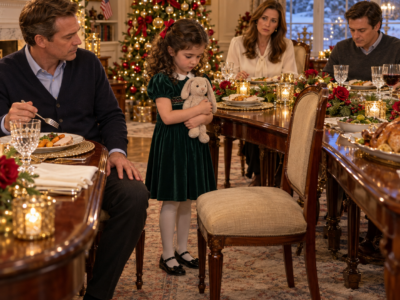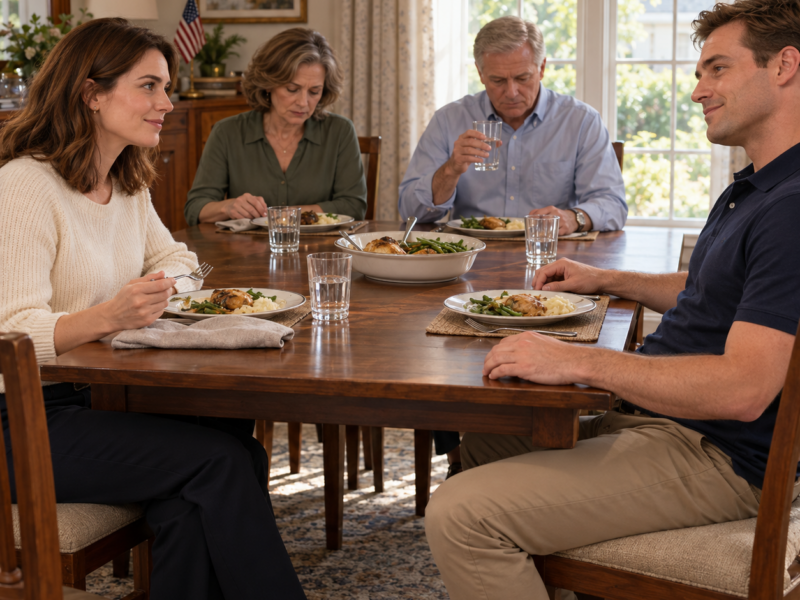
At Sunday dinner, I smiled and said, “I can’t wait for the reunion.” My brother, Caleb, laughed. “You’re not invited. We voted.” My mother looked down at her plate. My father reached for his water. Two days later, Caleb sent me a babysitting schedule for that same reunion and told me to cancel the graduation trip I had spent seven months planning.
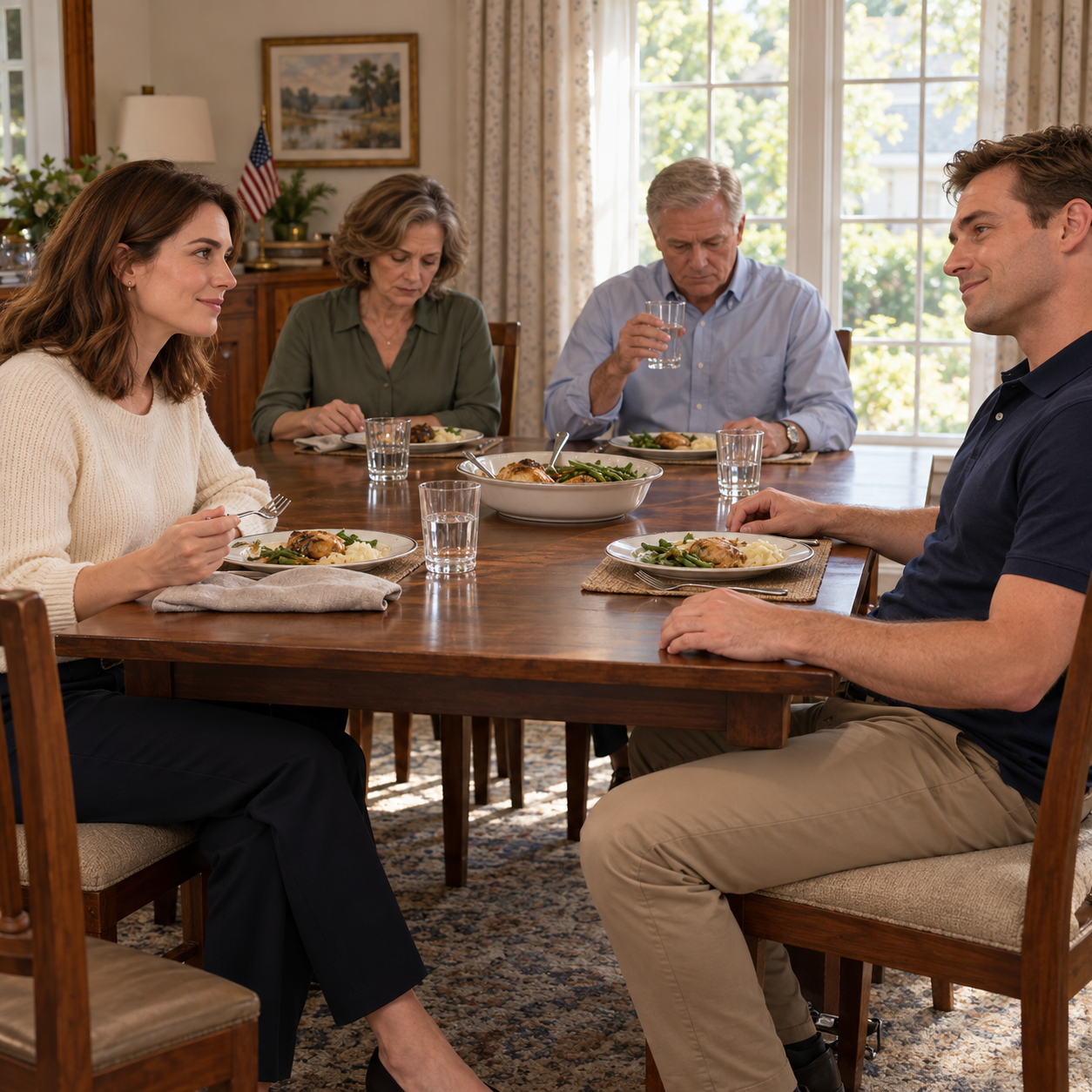
At Sunday dinner, I smiled and said, “I can’t wait for the reunion.”
My brother Caleb laughed.
“You’re not invited.”
I looked at him, waiting for the rest of the joke.
Then my father lowered his eyes to his plate. My mother became very interested in the serving dish between us. Caleb’s wife, Sophie, gave me a small, uncomfortable smile.
“We voted,” Caleb said.
For several seconds, I couldn’t think of a single thing to say.
A few days later, he sent me a childcare schedule for the same week and told me to cancel the graduation trip I had spent seven months planning.
When I refused, he wrote, “After everything we’ve done for you, this is how you repay us?”
That evening, I sent him one screenshot.
Thirty minutes later, my phone rang.
Caleb’s voice had lost every trace of the confidence he’d had at dinner.
“How did you find this?”
The screenshot didn’t prove my family had voted me out.
It proved that no vote had ever happened.
My name is Emma Whitmore. I was thirty-two, living in Charlotte and working full-time as a reading intervention specialist while finishing a master’s degree in literacy education.
For three years, my days had been organized around other people’s needs.
During school hours, I worked with children who needed extra help learning to read. After work, I went to class or opened my laptop at the kitchen table. Weekends meant papers, research, planning, and catching up on whatever the previous week had pushed aside.
There were evenings when I fell asleep with an article open in front of me and woke up convinced I had missed a deadline.
I kept going because the degree mattered to me.
I loved my work. I wanted to become better at it, and I wanted the qualifications that would let me take on more responsibility without having to explain why my experience should count.
By the time I graduated, I was proud.
I was also tired in a way a free Saturday couldn’t fix.
So I planned something I had never done before.
Eight days in Costa Rica, entirely for myself.
I had saved for more than a year. Once I committed to the trip, I spent seven months planning it. Flights, places to stay, rainforest tours, transportation, and the little practical details that keep a person from arriving in another country without knowing where to go next.
I read descriptions carefully. Compared prices. Set money aside instead of spending it casually.
I didn’t want a trip that looked impressive on someone else’s phone.
I wanted to wake up somewhere unfamiliar and have enough time to notice it.
My family knew.
I talked about Costa Rica often enough that my mother had once said, “We know, Emma. You’re excited.”
I was.
After three years of arranging every week around work and school, having something joyful on the calendar felt like a promise to myself.
Caleb knew most of all.
He was four years older than I was, married to Sophie, and the father of two children I adored.
Milo was six. Hazel was four.
Being their aunt was one of the happiest parts of my life.
Milo had a way of asking serious questions at inconvenient moments. Hazel could become deeply attached to an object for three weeks, then wake up one morning and decide she had never liked it.
I loved listening to them.
I loved taking them places, reading with them, and learning the small details that made each of them different.
I also helped Caleb and Sophie with childcare.
At first, it was occasional.
A daycare closure.
A work meeting that ran late.
A night when they wanted to have dinner without cutting someone else’s food into small pieces.
They asked, and when I could, I said yes.
I understood that raising children was demanding. I didn’t need children of my own to understand that parents sometimes needed help.
But over time, asking changed.
A request began arriving with an assumption already attached to it.
Could you take them tomorrow became We’ll drop them off at eight.
Would you be available became You don’t have anything going on, right?
If I mentioned a plan, Caleb usually treated the plan as an obstacle we could remove rather than a reason I was unavailable.
Dinner with a friend could be rescheduled.
An afternoon to work on a paper could happen later.
A quiet evening didn’t count as a plan at all.
My parents encouraged it.
Caleb had children. Therefore, Caleb was busy.
I didn’t have children. Therefore, my time was flexible.
That reasoning became so familiar that no one seemed to hear the assumption inside it anymore.
Mom’s favorite phrase was, “It’s just easier for you.”
I used to hear that as a compliment.
I was dependable.
Independent.
The daughter who could manage her own life without much help.
I didn’t realize how easily dependable could become the person everyone expected to give something up.
Caleb had missed four birthday dinners in a row.
The first time, there was a client event.
The next year, the children were tired.
Another time, something had changed at the last minute.
The previous year, he forgot and sent a message the following morning.
Two days after that message, he asked whether I could watch Milo and Hazel while he and Sophie went to a concert.
I said yes.
That was the pattern.
He missed something important to me.
I helped make something important to him possible.
When I tried to think about it, I usually ended up telling myself not to keep score.
They were family.
The children were little.
There would be other birthdays.
There would be time to celebrate my graduation properly.
I became good at making room for explanations.
What I didn’t question was whether I belonged.
The Whitmore reunion had always been part of that belonging.
Every year, our extended family gathered near the lake. Aunt Gloria handled most of the organization, which meant she spent months asking people for information they should have given her the first time.
Who was coming?
How many rooms did they need?
Who was bringing food?
Who needed a quieter place to sleep?
By the time everyone arrived, it looked effortless. Anyone who had watched her plan it knew otherwise.
The reunion wasn’t perfect.
No family gathering is.
People disagreed over small things. Someone always forgot something. Someone complained about the weather as if Gloria had ordered it.
But I loved it.
I loved recognizing voices before I saw faces.
I loved the familiar stories, even the ones people had been telling for so long that everyone knew where to laugh.
My cousin Lena and I had already discussed a kayaking rematch.
She claimed I had won the previous year only because she stopped to retrieve something.
I told her that losing with an explanation was still losing.
We had been joking about it for months.
I had spoken to Gloria about coming.
There was no reason for me to think my place in the family required approval at a dinner table.
That Sunday, I arrived at my parents’ house expecting an ordinary meal.
There was nothing unusual about the beginning of the evening.
We talked about work.
The children moved between the table and the other room.
My mother asked whether I wanted more food before I had finished what was on my plate.
I mentioned the reunion because I was looking forward to seeing people.
“I can’t wait,” I said.
Caleb looked across the table and laughed.
“You’re not invited.”
I smiled at first.
I assumed he was teasing.
Then the room changed.
No one laughed with him.
Dad reached for his water.
Mom looked down.
Sophie adjusted her napkin.
“We voted,” Caleb said.
I put my fork on the edge of my plate.
“Who voted?”
“Everyone.”
He shrugged as if he were explaining why we had ordered pizza from a different place.
I looked at my mother.
She didn’t correct him.
Sophie spoke before I could ask again.
“It’s mostly a space thing.”
“A space thing?”
“The cabins are tight this year,” Caleb said. “People wanted to keep it smaller.”
I turned to my father.
“Aunt Gloria agreed to this?”
He sighed.
“Emma, don’t turn it into a thing. It’s one year.”
That hurt more than Caleb’s laughter.
My father had heard the sentence.
He had watched me try to understand it.
And instead of saying whether it was true, he had told me not to react.
I looked around the table.
“So everybody discussed me when I wasn’t there and decided I shouldn’t come?”
“Basically,” Caleb said.
There was something casual in his voice that made the humiliation worse.
He didn’t sound regretful.
He sounded pleased to be the person telling me.
I stood before my face could give away how much it hurt.
“Okay.”
Mom looked up.
“Emma.”
“I said okay.”
I didn’t ask them to reconsider.
I didn’t want to sit there while someone explained why everyone else had made the cut and I hadn’t.
I collected my things and left.
The drive home felt longer than usual.
I kept finding reasons they might not have meant what I thought they meant.
Maybe there really wasn’t enough room.
Maybe Caleb had explained it badly.
Maybe Gloria had been forced to make a difficult decision.
Then another thought arrived, and I couldn’t find a comfortable place to put it.
Maybe I had misunderstood my relationship with the whole family.
Maybe the affection I felt at the reunion wasn’t as mutual as I believed.
That was the part that followed me into my apartment.
Not losing a room.
Not missing a weekend.
The possibility that people I loved had sat somewhere without me and agreed I was the person they could leave out.
I put my keys down and went to the couch.
For a while, I stared at my phone.
There was no message from Caleb saying he had been joking.
No call from my parents explaining that something had gone wrong.
I thought about contacting Gloria.
Then I imagined making her repeat the decision.
I couldn’t face it that night.
Rejection can make ordinary questions feel humiliating.
I didn’t want to ask someone whether twenty-five relatives had decided they would enjoy the reunion more without me.
So I told myself to leave it alone.
I had Costa Rica.
I had graduation.
I had work that mattered and friends who cared about me.
I wasn’t going to fall apart over a family trip.
But I cared.
I cared enough that I woke up the next morning and remembered the silence at the table before I remembered anything else.
A few days later, Caleb sent a message.
It wasn’t an apology.
It wasn’t even a greeting.
It was a schedule.
Thursday, 8:30 a.m. Drop-off.
Milo’s camp bag.
Hazel’s allergy medicine.
Tuesday afternoon pickup.
I read it once, then again.
“What is this?” I wrote.
“The kids for reunion week.”
For a moment, I actually laughed.
I thought he had sent the message to the wrong person.
“I’m going to Costa Rica.”
There was a pause.
Then, “That’s that week?”
“Yes, Caleb. The graduation trip I’ve talked about for seven months.”
His reply arrived quickly.
“Then move it.”
I looked at the screen.
Move it.
Not Would that be possible?
Not I forgot, I’m sorry.
Just an instruction to undo months of planning.
“Move my flight?”
“You can travel later. We already made plans.”
“So did I.”
“It’s just a trip, Emma.”
I felt something sharper than the hurt from Sunday dinner.
“You told me I wasn’t invited to the reunion.”
“Exactly.”
Then another message.
“So you’ll be home.”
Those four words changed the whole thing.
Until then, I had been thinking about exclusion.
Now I was thinking about preparation.
He hadn’t simply failed to remember my vacation.
He had built a plan around my supposed absence from the reunion and expected me to make the rest of my life fit it.
I called him.
He answered on the second ring.
“Please tell me you’re joking,” I said.
“About what?”
“About canceling Costa Rica so I can babysit while you attend the reunion I’m apparently not good enough to join.”
He sighed.
“Don’t make it dramatic.”
“I’m repeating what you said.”
“We need someone we trust with the kids.”
“Then hire someone.”
“That’s expensive.”
There it was.
Not impossible.
Not unsafe.
Expensive.
“You make more than a hundred thousand dollars a year.”
“That doesn’t mean I want to throw money away when the kids already love being with you.”
“I love them, too.”
“Great. Problem solved.”
“No.”
He was quiet for a second.
“My love for your children does not make my calendar yours,” I said.
“You’re off in the summer.”
“I’m not simply off. And I’m leaving the country.”
“Move the trip.”
“I have flights, hotels, and tours booked.”
“You can rebook.”
“Some of it is nonrefundable.”
“It’s not like this is your honeymoon.”
I looked toward the papers on my kitchen table.
The last pieces of work from a degree that had taken three years.
The trip had been the thing I looked toward when I was too tired to open another article.
It was the reward I had allowed myself for finishing.
Caleb reduced it to a vacation without a husband attached to it, as if that made it less worth protecting.
“So let me understand,” I said. “I’m not family enough to attend the reunion, but I’m family enough to provide free childcare for it.”
“Don’t make it sound ugly.”
“I don’t have to.”
He stopped talking.
For a moment, I thought he might hear what I was saying.
Then he asked whether I could at least look into changing the flight.
I told him no.
After we ended the call, Sophie texted.
“The kids really love being with you. We just thought family would help family.”
I sat with that message for a while.
Then I replied.
“Did family help me celebrate graduation?”
She didn’t answer.
That silence was different from the silence at dinner.
At dinner, I had wondered what everyone was thinking.
Now I knew what I had asked.
If family helping family was the principle, I wanted to know why it only seemed to move in one direction.
Caleb’s next message arrived later.
“After everything we’ve done for you, this is how you repay us?”
I read it several times.
I tried to identify what he meant.
I didn’t want to deny every good thing my family had ever done. There had been good things. There had been meals, holidays, ordinary help, and moments when we cared about one another.
But none of that created a lifelong obligation to cancel plans whenever Caleb wanted childcare.
I took a screenshot of his message.
Then I put the phone down.
That evening, I thought about Lena.
Our kayaking rematch.
The joking messages.
The confidence with which she had talked about seeing me at the lake.
I opened our conversation.
“Guess our rematch is canceled,” I wrote. “Apparently everyone voted me out this year.”
Her response came almost immediately.
“What vote?”
I frowned.
“The family vote about the reunion.”
The typing dots appeared.
Disappeared.
Appeared again.
Then her message arrived.
“Emma. Nobody voted on you.”
I stared at it.
Before I could answer, she sent another message.
A screenshot from the reunion planning chat.
Caleb had written it weeks earlier.
“Emma’s probably out this year. Work and grad school stuff. Don’t hold a room for her.”
Below it was Gloria’s reply.
“Really? She told me she wanted to come.”
Caleb answered, “She can’t get the time.”
I read those lines slowly.
He hadn’t been passing along a decision.
He had been creating one.
Further down, Sophie had asked about the children.
Caleb wrote, “If Emma’s home, she can keep Milo and Hazel.”
Gloria asked, “Did she agree?”
“Not yet. I’ll handle it.”
I read the thread three times.
Then I went back to the beginning and read it again.
No one had voted me out.
My aunt had expected me.
My cousin had expected me.
Caleb had told them I couldn’t attend.
Then he had told me they didn’t want me.
Between those two lies, he had created a place where I would be hurt, home, and apparently available.
“I’ll handle it.”
I thought about the way he laughed at dinner.
The way my parents looked away.
The way Sophie said it was mostly a space issue.
I had spent days questioning my place in the family.
Caleb had spent those days assuming the plan was moving forward.
Lena called, but I wasn’t ready to speak yet.
I wrote, “Give me a minute.”
She answered, “Of course.”
That small response mattered.
She didn’t demand that I make the moment easier for her.
She gave me the minute I asked for.
I saved the screenshot.
Then I sent it to Caleb.
Nothing else.
No accusation.
No paragraph explaining why it hurt.
The image already contained the thing he would have to explain.
The time was 7:12 p.m.
At 7:18, the typing bubble appeared under his name.
Then it vanished.
At 7:24, Sophie called.
I let it ring.
At 7:31, my mother sent a message.
“Call your brother.”
I looked at it without replying.
At 7:42, Caleb called.
Exactly thirty minutes after I sent the screenshot.
I answered.
His voice sounded different.
“How did you find this?”
I leaned back against the couch.
“You mean the vote that never happened?”
“Emma, it’s not what you think.”
“Then explain it.”
“The cabins really are tight.”
“Did Aunt Gloria vote me out?”
Silence.
“Caleb.”
“No.”
“Did Lena?”
“No.”
“Did anybody?”
He waited before answering.
“It wasn’t a formal vote.”
I laughed once.
There was no humor in it.
“You looked me in the face and told me everyone had agreed.”
“Mom and Dad did.”
“So three people decided to tell me the entire family had rejected me.”
“That’s not what I meant.”
“What did you mean?”
He began talking faster.
I was busy.
I had graduation.
There had been work and school.
They figured I might not want to go anyway.
“I told Lena I was coming.”
“I didn’t know that.”
“You told Gloria I couldn’t get time off.”
He stopped.
I looked toward the bedroom.
My suitcase stood near the doorway, partly packed for Costa Rica.
“Why did you need me home?” I asked.
“Emma.”
“Why?”
Finally, he said it.
“We needed someone we trusted with the kids.”
I closed my eyes.
“So you told me my family voted me out because you wanted me to stay home and watch your children.”
“I was trying to make the weekend work.”
“You were trying to make me work so everyone else could have a weekend.”
“That’s ridiculous.”
“Is it?”
“Childcare for five days costs a fortune.”
“Then pay for it.”
“You know the kids hate strangers.”
“Then take them with you.”
His voice sharpened.
“You’re punishing Milo and Hazel because you’re mad at me.”
I sat up.
“No. I’m not punishing them.”
“They love being with you.”
“I know. I love being with them. But that does not mean you can schedule my life around your vacations.”
“Be reasonable.”
“I was reasonable for years.”
He didn’t answer.
I could hear Sophie saying something nearby.
I couldn’t make out the words.
Then Caleb spoke again, more quietly.
“So what are we supposed to do now?”
I looked at the suitcase.
“Parent your children.”
“Emma.”
“I’m going to Costa Rica.”
I ended the call.
For a while, I held the phone in both hands.
I felt angry.
I also felt sad in a way I hadn’t expected.
The lie had given me back my extended family, but it had changed how I saw the people who were supposed to be closest to me.
My parents hadn’t watched me misunderstand an innocent comment.
They had helped Caleb make the lie believable.
Their silence at dinner had done work.
It had turned his words into something that looked like a family decision.
A minute later, Lena messaged.
“Can I tell Mom what happened?”
Her mother was Gloria.
The person Caleb had used to make the exclusion sound official.
I wrote, “Yes.”
Five minutes later, Gloria called.
“Emma, nobody voted you out,” she said. “I need you to know that before anything else.”
I sat on the edge of my bed.
“I saw the messages.”
“Lena showed me.”
“I’m sorry you got pulled into this.”
“No,” she said. “I’m sorry my name was used to make you think twenty-five people had decided they didn’t want you there.”
I looked down at my hands.
Hearing it said that plainly made my throat tighten.
For days, I had been trying to tell myself it wasn’t a big deal.
That I shouldn’t need to be wanted at a reunion to know I had a good life.
Both things could be true.
I could have a good life and still be hurt by what I believed my family had done.
Gloria let me be quiet.
Then she explained.
She had asked Caleb because he told her I couldn’t attend. She had been surprised because I had already said I wanted to come.
He told her work and school made it impossible.
“I should have called you myself,” she said.
“You didn’t know he was lying.”
“Maybe not. I still wish I’d checked.”
That was different from my mother’s response.
Gloria wasn’t asking why I had reacted.
She wasn’t explaining how difficult Caleb’s life was.
She was considering what had happened to me.
“There’s room if you want to come,” she said. “I’ll fix it.”
I looked at the suitcase.
“Thank you.”
“So you’ll come?”
“No.”
She paused.
I understood why.
After believing I had been excluded, it might have seemed that an invitation solved the problem.
But the reunion wasn’t the only thing I needed to protect.
“I spent three years finishing this degree,” I said. “This is the first trip I planned entirely for myself. I saved for it. I booked it. I’m not canceling it because Caleb decided my time belonged to him.”
“I understand.”
“I want to know I’m welcome. I really do. But I’m still going to Costa Rica.”
She laughed softly.
“Good.”
That word helped.
Not because I needed permission.
Because someone in the family could hear my decision and support it without asking what inconvenience it created for someone else.
We talked a little longer.
She asked about the trip.
I told her where I was going and what I hoped to see.
For the first time that week, talking about Costa Rica felt exciting again instead of defensive.
The next morning, Gloria posted one message in the reunion planning group.
Lena forwarded it to me.
“For clarity, there was never a family vote excluding Emma from the reunion. Please don’t speak for the reunion committee without checking with me first.”
That was all.
No long explanation.
No public argument.
No screenshot attached.
She didn’t need to name Caleb for the people who had heard his stories to understand.
By lunch, two cousins contacted me.
One said Caleb told her I couldn’t get time off.
Another said he told her I wanted to skip the family gathering that year.
The explanations were different.
The common part was that none of them came from me.
I replied to the cousins.
I told them I had wanted to attend and that I was glad to know what actually happened.
I also told them I was taking my graduation trip.
I didn’t ask them to choose between Caleb and me.
I didn’t need a new family vote about who had behaved badly.
The records were clear.
What I wanted was for people to stop accepting someone else’s statement about my plans as if I had made it.
That afternoon, my mother called.
“Did you really have to involve Gloria?”
I stood beside the kitchen counter.
“Caleb involved Gloria when he used her reunion to lie to me.”
“He made a bad judgment call.”
“He told me my whole family voted me out.”
“He was under pressure to find childcare.”
I closed my eyes for a moment.
There it was again.
The explanation that was supposed to make everything understandable.
Caleb had a need.
Therefore, whatever he did to meet it should be viewed sympathetically.
“What pressure was I under?” I asked.
“Emma.”
“I worked full-time for three years while finishing a degree. I saved for this trip. I told everyone when it was. Why does his pressure explain his behavior, but mine doesn’t make my plans worth respecting?”
She sighed.
“You know what I mean.”
“No. I don’t think I do.”
Dad took the phone.
“Family matters should stay private.”
“Then Caleb shouldn’t have invented a family vote.”
He was quiet.
I could hear my mother nearby.
I waited.
Finally, she came back on the line and said the thing they had apparently been avoiding all week.
“We thought it would just be easier if you stayed home.”
I held the phone away for a second, then brought it back.
“Easier for whom?”
No answer.
“Because it wouldn’t have been easier for me.”
“Your brother has two small children.”
“I know. They’re his children.”
“You love them.”
“I do.”
“Then why are you being so rigid?”
I looked around my apartment.
The suitcase.
The travel documents.
The ordinary things I had bought and prepared for something I was looking forward to.
“Because every time I love someone, you treat that as a reason I should give up what matters to me.”
My mother said I was making a broad accusation.
I didn’t want to argue about whether every past moment fit the pattern.
I stayed with the one in front of us.
“At dinner, you knew there hadn’t been a vote.”
She didn’t answer.
“Dad knew.”
Another silence.
“You could have corrected him.”
“We didn’t want to start a fight at the table.”
I thought about standing there with my fork on the plate, waiting for someone to tell me whether the whole family had really rejected me.
“You avoided a fight by letting me leave hurt.”
Mom said she was sorry I felt that way.
I didn’t spend the rest of the conversation explaining why that wasn’t the same as acknowledging what she had done.
I was tired.
Not tired enough to cancel the trip.
Tired of having to carry both the injury and the work of making everyone understand it.
“I’m not watching the children that week,” I said. “I’m going to Costa Rica. That decision is finished.”
We ended the call without resolving everything.
For once, I let it remain unresolved.
I had grown used to believing a family conversation wasn’t over until everyone was comfortable.
Usually, that meant I had to soften my position.
This time, the discomfort belonged to people who had made decisions without asking me.
I didn’t need to remove it for them.
In the days that followed, Caleb and Sophie tried to find another arrangement.
Several days of care for two young children cost more than they wanted to spend.
That didn’t make it impossible.
It made it a choice.
They could pay.
They could change their plans.
They could bring the children.
What they couldn’t do was make me the default solution while pretending my agreement was unnecessary.
I expected more calls.
Some came.
Some messages asked whether I had considered just part of the week.
Others suggested that the children would be disappointed.
I answered the practical questions once.
I wasn’t available.
Then I stopped treating the decision as something that needed a fresh defense every time someone phrased the request differently.
That was harder than it sounds.
I was used to explaining.
If I could find the right wording, perhaps everyone would understand.
If I sounded kind enough, perhaps nobody would accuse me of not caring.
But Caleb already knew why I wasn’t available.
He knew the dates.
He knew the trip mattered.
The problem wasn’t that I had failed to explain.
The problem was that he preferred a different answer.
I checked my travel arrangements.
Not because I thought I would cancel.
Because I wanted to turn my attention back toward something I had chosen.
I reviewed the confirmations.
Made sure the documents were where they belonged.
Finished packing.
For months, preparing for the trip had happened in the spaces left over from work and school.
Now I allowed it to occupy a whole evening.
I tried on the shoes I planned to take.
Checked the weather.
Moved a few things out of the suitcase because I had packed as if I were afraid of every possible inconvenience.
The process was simple.
It was also strangely emotional.
No one needed me to use that hour differently.
No paper was due.
No childcare schedule had been accepted.
I was allowed to prepare for my own life.
Caleb and Sophie ultimately brought Milo and Hazel to the reunion.
The children went to the lake.
Caleb packed snacks.
Sophie handled bedtime.
They took turns during dinner.
They missed a wine tasting.
None of that destroyed the gathering.
It meant they attended as parents.
I didn’t need to be there to know that parenting sometimes reduced the amount of uninterrupted leisure available.
I also didn’t need to absorb that fact as my responsibility.
Meanwhile, I boarded my flight.
I had imagined the moment for months.
When it arrived, I felt a mix of excitement and fatigue.
The week before had taken something out of me.
I wasn’t leaving Charlotte with every family issue settled.
I was leaving with a clear decision.
That was enough.
Once the plane lifted, I looked down until the city became shapes instead of places I recognized.
For a few minutes, I thought about Caleb.
Then about my parents.
Then about Gloria telling me there had been no vote.
The thoughts moved through without needing immediate action.
There was no call to make.
No reply to compose.
I could let them exist and still look forward to where I was going.
On my second morning in Costa Rica, I woke before sunrise.
I took coffee outside.
Mist hung over the hills, softening the distance. The air felt different from home, and the quiet was full of sounds I couldn’t immediately name.
I stood there longer than I intended.
I had no one to pick up.
No drop-off time to plan around.
No message telling me a schedule had changed.
I could finish my coffee slowly.
That might sound like a small thing to someone who had always felt free to do it.
To me, it felt like the beginning of understanding how much of my attention had been reserved for other people.
Even when Caleb wasn’t asking for help, I often behaved as if he might.
I left space.
Avoided firm commitments.
Kept weekends loosely arranged.
I called it flexibility.
Sometimes, it was simply waiting to be needed.
That morning, I didn’t need to wait.
Later, I checked my phone.
There was a photograph from Lena.
Caleb sat near the dock with Hazel asleep against his chest.
People stood nearby talking.
I looked at the picture and smiled.
Not because he seemed miserable.
He didn’t.
He looked like a father holding his tired child.
That was all.
The photo made the situation feel much less complicated than the week of pressure had made it seem.
The children were safe.
They were with their parents.
The family reunion was happening.
And I was in Costa Rica.
Both things could exist.
My vacation had not required anyone else’s life to collapse.
I put the phone away and went hiking that afternoon.
I paid attention.
To the trail.
To the air.
To the different shades of green.
To the way I could become tired from doing something I had wanted to do instead of from keeping up with obligations that kept multiplying.
I wasn’t magically free of anger.
Sometimes, walking, I would remember the dinner and feel my jaw tighten.
Then something on the trail would bring me back.
A sound.
A change in light.
A turn that opened a different view.
I didn’t have to solve the entire relationship with my brother before enjoying the day.
I had to learn that.
For years, enjoyment had been something I postponed until other people’s needs were handled.
Even the trip had started to feel guilty because Caleb wanted my time.
Being there made the guilt seem less like a moral warning and more like a habit.
I had not abandoned children.
I had declined an assignment I never accepted.
The difference was simple.
My family had made it complicated because the simple version required them to respect my answer.
Over eight days, I began to settle into my own plans.
I went on the tours I had booked.
Spent time outdoors.
Ate without calculating how quickly I needed to finish.
Rested when I was tired.
I didn’t fill every minute.
There had been so much urgency in the previous three years that empty time initially felt wasteful.
Then it began to feel necessary.
One evening, I looked through photographs and realized I could remember taking each one.
I hadn’t been rushing toward the next responsibility.
I had been there.
That was what I had wanted when I planned the trip.
Not escape from my family.
A chance to experience something without turning it into a negotiation over whether I deserved the time.
I thought about graduation, too.
Finishing the degree had required more than passing courses.
It had required continuing when I was exhausted.
Telling myself another paper mattered.
Believing that the work would be worth the effort even when there was no immediate reward.
Costa Rica was my way of marking that effort.
Caleb hadn’t understood that.
Or he had understood and still considered his own convenience more important.
I didn’t know which possibility hurt more.
I stopped trying to choose.
The result was the same.
My plans had needed protection.
I had protected them.
When I came home, the family wasn’t transformed.
My mother still believed I had made the matter more public than necessary.
Caleb and Sophie were quieter, but quiet wasn’t the same as acknowledgment.
My father looked uncomfortable in a way I hadn’t seen before.
At a conversation after my return, Mom said, “You embarrassed your brother.”
I set down what I was holding.
“I didn’t make him lie.”
“He could have handled it better.”
“He could have asked.”
She said nothing.
Dad spoke.
“We should have stopped him at dinner.”
I looked at him.
“Yes.”
He lowered his eyes.
I didn’t rush to tell him it was fine.
It wasn’t.
“You had the chance,” I said. “You helped him make it believable instead.”
He nodded slowly.
That acknowledgment mattered.
It didn’t undo the evening.
It didn’t explain why they were willing to let me believe so many people didn’t want me.
But it was the first time one of my parents spoke about their own action rather than my response.
I could work with that more easily than with another explanation about how busy Caleb was.
I didn’t ask for a family meeting.
I didn’t want everyone sitting around deciding whether my feelings were reasonable.
I knew what had happened.
I changed how I responded.
The first rule was no last-minute babysitting unless there was a genuine emergency.
An inconvenience wasn’t an emergency.
Wanting a night out wasn’t an emergency.
Forgetting to arrange care wasn’t automatically an emergency for me.
The second rule was no multi-day childcare unless I volunteered.
That kind of responsibility affected sleep, work, appointments, and the ordinary rhythm of my week. It required agreement, not a message announcing drop-off.
The third rule was that no meant no.
Not the opening offer in a negotiation.
Not an invitation to explain why my plans mattered less.
Not something my mother could reverse by calling after Caleb did.
I communicated those rules plainly.
I didn’t present them as punishments.
They were terms for something I was willing to do voluntarily.
I still wanted to help sometimes.
I wanted help to mean help again.
Something I chose.
Not a job I had somehow acquired without applying.
The adjustment was awkward.
There were moments when Caleb began a request in the old way, then remembered.
There were moments when I almost said yes before checking my own calendar.
I had to change, too.
It would have been easier to make the whole problem Caleb’s behavior and ignore how quickly I responded to pressure.
He had become accustomed to my agreement.
I had become accustomed to providing it.
That did not make his lie my fault.
It did mean the new boundaries required me to practice keeping them.
The first time I declined a non-emergency request because I already had plans, I spent too much time staring at the phone afterward.
I expected another message.
A complaint.
A call from Mom.
When nothing came immediately, I felt relieved.
Then annoyed that relief was necessary.
Over time, the feeling changed.
I could say I wasn’t available and put the phone down.
I didn’t need to wait for permission to continue my evening.
Milo and Hazel remained part of my life.
That was important to me.
I didn’t want their relationship with me reduced to a dispute between adults.
I took them for ice cream sometimes.
Went to Milo’s school play.
Brought Hazel a ridiculous stuffed dinosaur she carried almost everywhere for three weeks.
I read with them.
Listened to their stories.
Let them tell me things that mattered enormously at six and four and would probably be forgotten by the following week.
I stopped being available on command.
I didn’t stop being their aunt.
The distinction became easier to see once I lived it.
Before, Caleb had often presented the children’s affection as a reason I should do whatever he needed.
Now I could enjoy their affection without treating it as an obligation to provide childcare.
When I took them somewhere because I wanted to, I was more present.
I wasn’t mentally rearranging a paper deadline or regretting the plans I had canceled.
I had chosen the time.
That made it better for all three of us.
A few months passed before Caleb asked me to coffee.
By then, our conversations were polite and practical.
Not fixed.
Quieter.
I considered saying no.
Not because I wanted to punish him.
Because I didn’t want another meeting where he asked me to understand him while avoiding what he had done.
Then I decided to go.
We sat across from each other.
He stirred his coffee for a long time.
I waited.
“I shouldn’t have lied about the vote,” he said.
“No.”
“And I shouldn’t have assumed you would take the kids.”
“No.”
He looked embarrassed.
For once, he didn’t tell me I was making it sound worse than it was.
I let the silence stay.
He looked down at the cup.
“I thought because you didn’t have kids, your plans were more flexible.”
I considered that before answering.
“Flexible never meant disposable.”
He nodded.
“I got used to you saying yes.”
“That was because I was helping.”
“I know.”
“You turned helping into a job I never applied for.”
He didn’t argue.
That was new.
I watched him for a moment.
There had been many conversations in our lives where Caleb heard the first part of what I said and began preparing an answer before I finished.
This time, he seemed to be listening.
I didn’t want to reward the smallest acknowledgment by declaring everything repaired.
But I could recognize it.
“I love Milo and Hazel,” I said.
“I know.”
“I need you to stop using that as proof that I’ll agree to anything.”
He nodded again.
“I understand.”
I wanted to believe him.
I also knew understanding would need to appear in his behavior.
A coffee conversation couldn’t rewrite years of assumptions.
It could be a beginning.
We talked about the trip.
He asked what I liked most.
I told him about the mornings, the hiking, and the strange feeling of having a whole day that belonged to me.
He didn’t interrupt with a story about how hard reunion week had been.
I noticed.
I didn’t say that aloud.
Some things are more useful when they are simply allowed to happen.
Afterward, I walked to my car feeling neither victorious nor entirely reassured.
Just less guarded than when I arrived.
That was enough for one afternoon.
My parents changed more slowly.
Mom still sometimes began with, “It would be easier if…”
I learned to ask, “Easier for whom?”
Not sharply every time.
Sometimes, genuinely.
I wanted her to hear the question.
What looked easy from outside often required someone else to give something up.
I had been that someone so consistently that the cost became invisible.
Dad made more of an effort to ask me directly about my plans.
It was a small change.
A question instead of an assumption.
I appreciated it.
I also stopped treating small changes as reasons to abandon the boundaries that had made them necessary.
Respect wasn’t a reward I earned by being agreeable again.
It was something our relationships needed in order to work.
A year later, Gloria invited me directly to the reunion.
No message through Mom.
No information passed through Caleb.
She contacted me herself.
“Are you coming?” she asked.
“I’d like to.”
“Then let’s make the arrangements with you.”
I smiled.
That was all I had needed from the beginning.
To be included in decisions about my own attendance.
I booked my room.
Made my plans.
Talked to Lena about the kayaking rematch.
She warned me that she had been practicing.
I told her excuses were already a bad sign.
The exchange felt familiar in the best way.
For a while after the lie, even harmless family messages had made me cautious.
I wondered what had been discussed elsewhere.
What I was expected to do.
Whether a friendly conversation might end in an obligation.
Now I could enjoy a joke with my cousin without searching for what came next.
When I arrived at the lake, I saw people before they saw me.
Gloria moving between tasks.
Relatives talking.
Someone carrying bags.
The same familiar gathering.
I felt a brief tightness in my chest.
The previous year, I had imagined those people deciding I didn’t belong.
That memory hadn’t disappeared.
But now I knew it hadn’t happened.
I let myself walk toward them without carrying Caleb’s version of the family in place of the real one.
Gloria hugged me.
Lena immediately began talking about the kayak race as if greeting me could wait.
I laughed.
It was ordinary.
That was what made it healing.
No grand welcome.
No announcement that I was officially wanted.
I had always been wanted by people Caleb had falsely used as an authority.
I didn’t need them to perform proof.
I needed to let the truth take the place of the lie.
The first afternoon, Hazel came running toward me in her swimsuit.
“Aunt Emma, come swim!”
I bent slightly to hear her.
“Okay. Later.”
She accepted it with the ease of a child who hadn’t been told that later meant never.
Caleb started to speak.
“Can you watch her while I—”
Then he stopped.
I looked at him.
He looked back.
“Actually, never mind,” he said. “I’ve got her.”
And he did.
He turned toward Hazel, listened to what she was saying, and went with her.
I stayed where I was for a moment.
It was a tiny exchange.
No one applauded.
No one apologized in front of the whole family.
But it meant more to me than a public speech would have.
Caleb had caught the assumption before making it my responsibility.
He had remembered that I was there as his sister and the children’s aunt, not as the person automatically assigned to keep his day convenient.
Later, I did swim with Hazel.
Because I wanted to.
That difference was the whole point.
I spent time with Milo.
Talked with cousins.
Had a conversation that wasn’t interrupted because someone decided my attention was available for transfer.
I could help carry something without wondering whether helping once meant taking over.
I could sit down without needing a justification.
I could be at the reunion.
Not working it.
Not being kept away from it.
Simply there.
I don’t want to pretend one better weekend solved every family habit.
There were still moments when someone expected too much.
Still conversations where I had to be clear.
Families don’t become different because one person finally says a sentence everyone remembers.
They change, if they change, through repeated decisions.
Ask first.
Accept the answer.
Don’t speak for someone who isn’t there.
Don’t confuse affection with consent.
Those were the things I watched.
I stopped being interested in whether everyone described us as close.
I cared more about what closeness allowed.
Could I say no and still belong?
Could I make a plan without defending it?
Could I love the children without becoming the default answer to every adult scheduling problem?
Over time, the answers improved.
Not perfectly.
Enough that I could enjoy the relationships without surrendering all my room inside them.
Sometimes, people assume the worst part was missing the reunion the year Caleb lied.
It wasn’t.
I didn’t miss it because I was rejected.
I chose another trip.
Once I knew the truth, I was invited and still went to Costa Rica.
The worst part was the few days when I believed the people I loved had discussed me and decided I was the one they could leave behind.
The worst part was watching my parents help make that belief feel real.
And then learning that the purpose was not even to exclude me for its own sake.
It was to leave me hurt and available.
That combination took time to understand.
Caleb hadn’t simply forgotten my vacation.
He had decided that the life I was planning could be moved because his plans involved children and mine involved only me.
My graduation was something I should quietly be proud of.
His weekend was something the family should help make possible.
I had accepted smaller versions of that hierarchy for years.
The lie made it impossible to keep pretending I didn’t see it.
I don’t regret taking the trip.
I don’t regret telling Gloria.
I don’t regret sending the screenshot without a long explanation attached.
The image gave Caleb no comfortable way to shift the conversation toward my tone or accuse me of remembering incorrectly.
His words were there.
So were Gloria’s questions.
So was the claim that he would handle me.
I didn’t need to destroy his relationship with the family.
I needed to stop participating in an arrangement where keeping him comfortable required me to doubt my place in it.
That is what changed.
I still loved my brother.
I still loved his children.
Love did not require me to accept every plan he made.
Being helpful did not mean my calendar belonged to him.
And being single, childless, or able to manage my own responsibilities did not make my time less valuable.
Sometimes I look back at the woman who drove home from Sunday dinner and wish I could tell her what she would learn by the end of the week.
That Gloria hadn’t voted.
That Lena hadn’t voted.
That the cousins weren’t quietly relieved she wouldn’t be there.
That the silence at one table was not proof of rejection by an entire family.
I would also tell her something harder.
Even after the lie was exposed, she would have to choose herself.
An invitation wouldn’t automatically solve that part.
She would still need to board the plane.
Still need to let Caleb and Sophie arrange care.
Still need to resist the idea that refusing an assignment meant failing the children she loved.
The evidence corrected the story.
The boundary changed her life.
Costa Rica wasn’t important because it was far away.
It was important because I had chosen it, worked toward it, and finally refused to put an invisible condition after the plan.
Unless Caleb needs something.
Unless Mom thinks it would be easier.
Unless somebody decides my time is less important.
For eight days, those conditions disappeared.
When I came home, I stopped putting them back.
At the next reunion, standing near the lake while Caleb walked off with Hazel, I understood something I had spent years missing.
I could be loved without making myself endlessly useful.
I could belong without paying for that belonging in canceled plans.
And I could say yes with a full heart once everyone understood that no was also mine to say.
My brother had told me the family voted against me because he thought it would leave me at home, ready to do what he needed.
He was wrong.
The reunion had never required me to choose between being part of the family and being a person with a life of my own.
Only the version he had invented did.
I stopped living inside that version.
And I went swimming with my niece when I was ready.