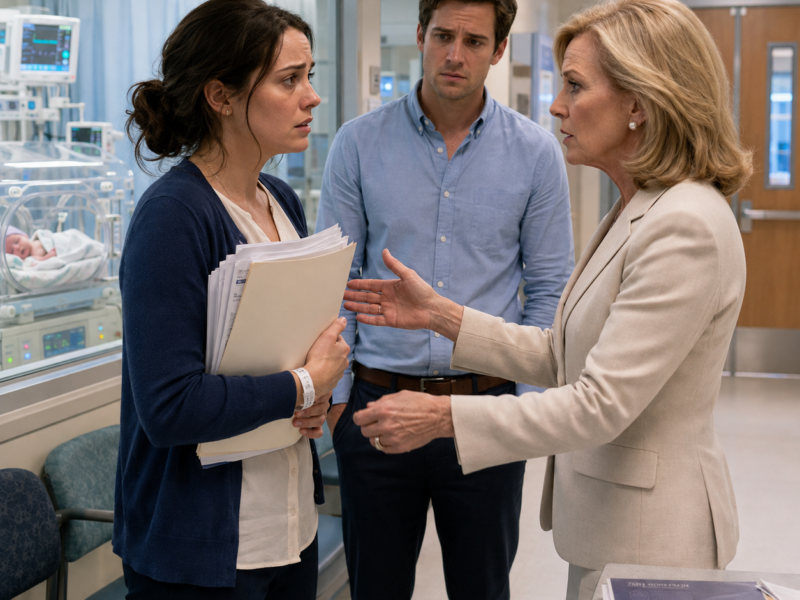
When my daughter was born premature, my in-laws refused to help with the NICU bills. “She’s too weak to survive anyway,” my mother-in-law said. “Why waste money?” My husband stayed silent. That night, I sold my wedding ring and walked back into the hospital alone, because my baby deserved someone willing to fight for her. Years later, the same woman called me asking for help — and I finally gave her the answer she had earned.
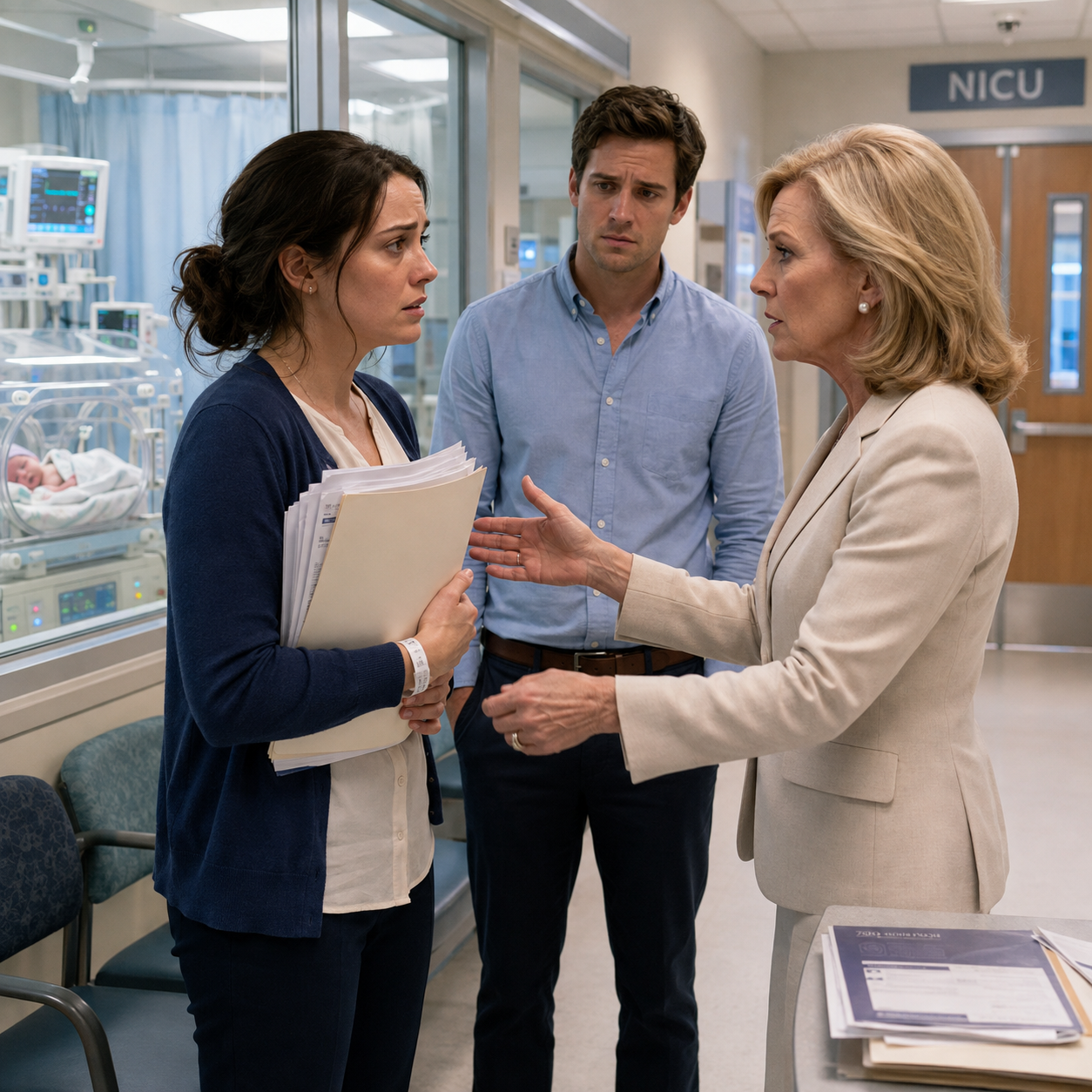
My Mother-in-Law Said My Premature Baby Was “Too Weak to Survive”—Ten Years Later, She Called Me for Money
The pawnshop clerk turned my wedding ring beneath a white inspection lamp and said, “I can give you eleven hundred.”
Behind him, three guitars hung from a pegboard wall. A row of used power tools sat beneath locked glass. Somewhere near the back of the shop, a television was playing an old late-night sitcom with the sound turned low.
I looked at the ring in his hand.
Half-carat diamond. White gold. Thin band scratched near the bottom from six years of dishes, payroll spreadsheets, grocery carts, and ordinary married life.
Callister had bought it before either of us had any money.
He proposed in a park outside Richmond beside a pond full of geese that had almost ruined the moment by surrounding us for crackers we did not have.
Back then, I had believed the ring meant permanence.
At 1:18 in the morning, eleven days after our daughter was born three months early, it looked like eleven hundred dollars.
“Okay,” I said.
The clerk studied my face.
“You sure?”
“No.”
He waited.
I held out my hand.
“Do it anyway.”
He slid a form across the counter.
I signed.
Ten minutes later, the money was in an envelope inside my purse and my ring was gone.
I drove back toward the hospital through nearly empty streets, passing a closed CVS, a gas station glowing beneath fluorescent lights, and a bus stop where nobody was waiting. My body still hurt from childbirth. My breasts ached from pumping milk every few hours for a baby who was too fragile to nurse. There was dried salt on the sleeve of my sweatshirt from crying earlier.
I parked on the third level of the hospital garage.
For a long moment, I stayed in the car with both hands on the steering wheel.
Then I looked at the pale band of skin around my left ring finger.
That evening, my mother-in-law had said my daughter was probably too weak to survive.
My husband had said nothing.
The ring did not feel like a marriage anymore.
It felt like inventory.
I put the envelope in my bag, wiped my face, and went back upstairs to the NICU.
Everly was asleep beneath the plastic dome of her incubator.
At twenty-six weeks gestation, she weighed one pound, eleven ounces.
The first time I saw her, I thought my mind had made a mistake.
Babies were supposed to be soft and round.
Everly looked translucent.
Her skin was reddish and so thin that blue veins showed beneath it. Her arms were no thicker than my fingers. Her chest rose and fell with mechanical help, every breath accompanied by the soft hiss of respiratory support and the constant electronic conversation of monitors.
There were wires on her chest.
A line in one tiny arm.
Sensors wrapped around a foot that looked no bigger than the end of my thumb.
I had not been allowed to hold her for the first eleven days.
Touch had to be measured.
Two fingers through the round access port in the incubator.
Still hand.
No stroking when she was unstable because stimulation could raise her stress.
I had learned that love, for a premature baby, could mean not moving.
That night, I placed two fingers against her palm.
Her hand closed weakly around one.
“I’m back,” I whispered.
She did not open her eyes.
“I sold the ring.”
The ventilator continued.
“I hope you don’t mind.”
A nurse named Marie passed behind me carrying medication.
She glanced toward my bare hand and then away.
Nurses notice.
Good ones also know when not to ask.
I bent closer to the incubator.
“I don’t know what I’m doing, baby.”
My voice shook.
“But I’m going to keep doing it.”
That promise would become the organizing principle of the next twenty years of my life.
At the time, I was only trying to survive until morning.
My name is Searsha Keene.
I was twenty-nine when Everly was born, though there were days during those first three months when I felt ninety.
Before the NICU, I had a small life that seemed stable enough.
Callister and I rented a three-bedroom townhouse in Chesterfield County outside Richmond. He supervised a warehouse for a regional logistics company. I worked part-time as a payroll coordinator because pregnancy had been difficult from early on, and my obstetrician eventually asked me to cut my hours.
We were not poor.
We were not rich.
We were the kind of American couple who could handle a $600 car repair by moving money between savings accounts and calling it annoying.
A six-figure medical crisis was something else.
People hear that a NICU stay can generate hundreds of thousands of dollars in hospital charges and imagine a family receiving a bill for the whole amount.
That was not exactly our situation.
We had health insurance.
Thank God.
The hospital billed astronomical numbers, but contracted rates, insurance payments, deductibles, coinsurance, out-of-pocket maximums, specialist bills, ambulance charges, medications, follow-up equipment, parking, food, missed work, and disputed claims turned the financial burden into something messier than one giant invoice.
Our patient responsibility was nowhere near the hospital’s gross charges.
It was still more than we could comfortably carry while I was barely working and Callister was taking every overtime shift available.
There were also things insurance did not solve.
Gas.
Parking.
Meals.
Unpaid time.
Specialized equipment.
Therapy later.
A breast pump rental after mine failed at exactly the wrong moment.
The thousand cuts around the enormous expense.
Selling my ring did not buy “three days of NICU.”
No piece of jewelry could buy three days of that level of care.
The eleven hundred dollars bought breathing room.
A deductible payment.
Parking.
Groceries.
Part of a specialist bill.
One less envelope I had to open with shaking hands.
That mattered.
Three months before Everly’s due date, I had been folding baby clothes in our living room.
Tuesday afternoon.
Rain against the windows.
A stack of tiny yellow onesies on the coffee table.
I remember that because I had washed them twice.
Not because they were dirty.
Because pregnancy had turned me into a person who believed preparation could negotiate with uncertainty.
Wash.
Fold.
Label.
Install car seat early.
Pack hospital bag at twenty-four weeks.
Read everything.
Maybe if I did every task correctly, nothing frightening could happen.
At 2:43 that afternoon, my water broke.
There was no dramatic scream.
I stood there confused, one hand holding a tiny sleeve.
Then another wave of fluid.
I called my doctor.
The nurse asked three questions.
Then:
“Go to labor and delivery now.”
Callister came home so quickly I wondered how many traffic laws he had broken.
He drove with both hands locked around the steering wheel.
“You okay?”
“No.”
“Me neither.”
He ran a red light.
I shouted his name.
He barely seemed to hear me.
At the hospital, monitors went on.
Doctors came in.
Magnesium sulfate.
Steroids to help the baby’s lungs if there was enough time.
Antibiotics.
Questions.
Could they delay delivery?
Maybe.
Then contractions began.
Then fetal monitoring changed.
The calm room became less calm.
A maternal-fetal medicine physician explained the situation.
“We may need to deliver.”
“Today?”
“Yes.”
“But she’s twenty-six weeks.”
“I know.”
“Is she going to be okay?”
The doctor looked directly at me.
“We have very good neonatal care here.”
Not yes.
I heard what she did not say.
Callister squeezed my hand.
For those hours, he was exactly the man I had married.
Terrified.
Present.
He called my mother.
My parents lived in western North Carolina after retirement. They had limited money but unlimited concern.
My mother, Jean, said:
“I’m getting in the car.”
I told her not to.
She said:
“That’s nice.”
She arrived the next afternoon.
My father had stayed home because he had mobility issues and could not manage a long hospital stay, but he called every day.
Sometimes twice.
That mattered too.
You do not have to be physically capable of doing everything to show somebody they matter.
Everly was born shortly after one in the morning.
One pound, eleven ounces.
She did not cry in the way I expected.
The neonatal team took her immediately.
There were too many people in the room.
Then too few.
I remember Callister asking:
“Can we see her?”
A nurse said:
“Soon.”
Soon became ninety minutes.
Then we were wheeled to the NICU.
Dr. Amara Okonkwo met us outside the bay.
Soft-spoken.
Mid-forties.
Hair pulled back.
She did not use inspirational language.
I trusted her immediately for that.
“She is critically premature.”
The word critical.
Again.
Underdeveloped lungs.
Risk of infection.
Risk of brain bleed.
Feeding intolerance.
Heart monitoring.
Temperature regulation.
Everything a full-term newborn’s body is ready to do automatically, Everly’s body was attempting months ahead of schedule.
“What are her chances?” I asked.
Dr. Okonkwo did not give me a neat percentage.
Good medicine rarely does in individual cases.
“She is very small.”
Then:
“But she is responding to what we’re doing right now.”
Right now.
That became the only timeline I could tolerate.
Callister called his parents on day two.
Not for money initially.
To tell them.
His father, Wendell, said:
“That’s terrible.”
Harriet asked:
“Was it something Searsha did?”
I was standing beside the phone.
I heard.
Callister said:
“No, Mom.”
“Oh.”
No apology.
Then:
“Keep us posted.”
I did not like Harriet before Everly.
But I had tolerated her.
Six years of marriage had trained me.
Harriet Bellamy had the kind of politeness that made you doubt your own reaction.
At Sunday dinner:
“You’re keeping your last name at work?”
“Yes.”
“How modern.”
Smile.
At Christmas:
“You look tired.”
“I am.”
“Women used to take more pride in presentation.”
Smile.
When I gained weight during pregnancy:
“Your body really committed to motherhood.”
Smile.
Each comment small enough that if I objected, I became difficult.
Callister’s standard response:
“That’s just Mom.”
I had accepted that sentence for years.
It was easier.
Wendell was less openly critical.
He had built an independent insurance brokerage over three decades.
Comfortable money.
Not extravagant.
Nice home.
Golf membership.
Two vacations most years.
Enough savings that they were not frightened by a surprise car repair.
He liked talking about financial discipline.
He believed most people’s money problems came from bad planning.
Life had been unusually cooperative with that belief.
Harriet had not worked outside the home since their children were born.
She hosted.
Volunteered.
Organized.
Judged.
Those are also forms of labor, though Harriet used hers partly to establish social control.
Callister grew up learning not to contradict her publicly.
Wendell learned the same.
That should have warned me.
Eleven days after Everly’s birth, the hospital’s patient financial services office called.
There were claims still being processed.
Our out-of-pocket exposure was unclear because of separate providers and one disputed neonatal specialist group.
I sat with a counselor named Monica who helped me understand charity-care screening, payment plans, insurance appeals, and the difference between hospital charges and what we might actually owe.
She was calm.
“Do not make decisions based on the biggest number you see on a statement.”
I nearly laughed.
“What should I make decisions on?”
“The finalized patient responsibility.”
Then:
“And don’t put medical bills on a credit card until you’ve exhausted appeals and payment-plan options.”
That advice probably saved us thousands.
Still, immediate money was tight.
My reduced hours.
Callister’s regular pay.
Parking.
Food.
Bills at home.
We called family.
My parents sent $700.
That was a lot for them.
Mom apologized.
“It’s not enough.”
“It is.”
“No.”
“Mom.”
She cried.
“I wish I had more.”
“You came.”
That sentence.
You came.
I did not understand then how much it would matter.
Callister called his parents from the family hallway outside the NICU.
I stood next to him.
He put them on speaker because I said:
“I want to hear.”
He explained.
Insurance.
Cash flow.
Potential need for help with our deductible and living expenses while Everly remained hospitalized.
“We’re not asking you to pay the hospital,” he said.
“We need help getting through this.”
Silence.
Then Harriet.
“So what exactly are the doctors saying?”
Callister looked at me.
“She’s stable today.”
“That’s not what I asked.”
He swallowed.
“She’s still critical.”
“How critical?”
“Mom.”
“Callister.”
“What are the odds?”
“We don’t know.”
Harriet sighed.
Then said it.
“Well, if she’s too weak to survive anyway, I don’t understand why everybody is throwing money at this.”
My body went cold.
The fluorescent lights seemed suddenly louder.
Harriet continued.
“I’m not being cruel.”
That phrase people use immediately before cruelty.
“I’m being practical.”
“Why bankrupt yourselves if the outcome…”
She stopped.
Maybe because even she heard herself.
Callister said nothing.
Nothing.
I looked at him.
He stared at the floor.
On the phone, Wendell finally said:
“Harriet.”
Weak.
Too late.
Then:
“Maybe once the baby is more stable, we can revisit financial help.”
I looked at my husband.
He still said nothing.
So I took the phone from his hand.
“You will never speak about my daughter like that again.”
Harriet inhaled.
“Searsha, I’m only—”
“No.”
I ended the call.
My hands shook.
Callister whispered:
“Why did you hang up?”
I stared at him.
That question.
Not:
Are you okay?
Not:
I’m sorry.
Why did you hang up?
I handed the phone back.
Then went to the nearest bathroom.
Locked myself in a stall.
Sat on the closed toilet.
Cried into my sweatshirt until I could breathe.
There are moments when a marriage changes before either person admits it.
That was ours.
I did not decide to leave Callister that night.
I still loved him.
He still loved Everly.
He worked.
He came.
He sat beside the incubator.
He learned to change impossibly small diapers through plastic access ports.
He held syringes of milk for tube feeds after nurses taught us.
He cried the first time Everly opened her eyes and seemed to focus on his face.
People want family betrayal stories to contain clean villains.
Callister was not one.
He was a man with a serious failure at the center of his character.
When his mother’s comfort and his wife’s safety came into conflict, he froze.
Then rationalized the freezing.
That became unbearable over time.
Not because he never loved us.
Because love without action repeatedly failed where action mattered.
The night I sold the ring, Callister had gone home to shower.
I did not tell him.
Four days later, he noticed.
“Where’s your ring?”
I was sitting beside Everly’s incubator pumping milk.
“Sold it.”
He stared.
“What?”
“I sold it.”
“Why?”
“For money.”
“Searsha.”
“What?”
“You should’ve talked to me.”
I looked at him.
The irony was too large.
“Should I have?”
His face changed.
“That’s not fair.”
“No.”
I turned back toward the pump.
“It isn’t.”
He sat beside me.
“How much?”
“Eleven hundred.”
“That ring cost almost three thousand.”
“I didn’t have time to build a retail strategy.”
He flinched.
“I could’ve found money.”
“From where?”
He said nothing.
“Your parents?”
Silence.
There.
Callister worked overtime after that.
Sometimes double shifts.
I give him credit.
He brought food to the hospital.
He handled utilities at home.
He slept in the NICU family room twice even though he hated hospital chairs.
But Harriet’s sentence remained between us.
Every time I asked him to address it, he softened.
“She was scared too.”
No.
“She says things badly.”
No.
“She’s practical to a fault.”
No.
“She didn’t mean Everly should die.”
I stopped him.
“That isn’t the standard.”
“What?”
“The standard isn’t whether your mother literally wanted our baby dead.”
He stared.
“She said our daughter wasn’t worth the cost.”
“She said it because she was shocked.”
“She didn’t call after.”
Callister looked away.
That was the part he could not answer.
Ninety-one days.
Harriet never called me.
Never called the NICU.
Never asked Callister for a daily weight.
Never sent a card.
Wendell called his son twice about unrelated business.
No:
How’s Everly?
My mother called every evening.
Sometimes from her recliner in North Carolina.
Sometimes while doing dishes.
Sometimes she said nothing.
I would listen to her breathing.
She would listen to mine.
Different silence.
One held.
One abandoned.
Week five brought a setback.
Everly developed an infection.
Her oxygen requirement increased.
Monitors alarmed.
Three nurses moved around the incubator with fast, practiced precision.
Dr. Okonkwo came in.
A resident guided me into the hallway because there was no space for my panic inside the treatment area.
I called Callister.
He arrived forty minutes later.
Good.
We sat in the family room drinking vending-machine coffee.
After the crisis settled, I asked:
“Did you tell your parents?”
He looked confused.
“About what?”
“Tonight.”
“No.”
“Why?”
“I don’t want to worry them.”
I stared.
“Your daughter had an emergency.”
“I know.”
“And your instinct is to protect them from worry.”
“That’s not what I mean.”
“It is exactly what you did.”
“Searsha.”
“No.”
I set the coffee down.
“You keep protecting their emotional comfort from the reality we’re living.”
Callister rubbed his face.
“They’re older.”
“They’re fifty-eight.”
“Mom has anxiety.”
“I have a baby in intensive care.”
Silence.
That was the moment my marriage began ending emotionally.
The legal ending came later.
Survival came first.
I worked from the hospital.
Not officially.
My employer had reduced my schedule, but money still mattered.
I picked up freelance bookkeeping for two small businesses through a former coworker.
Invoices on my phone.
Bank reconciliations on a laptop in the cafeteria.
Two in the morning.
Five in the afternoon.
Whenever Everly slept and I could think.
I sold my grandmother’s china.
That hurt.
Not because china matters more than children.
Because I had wanted to keep one object that connected me to a woman who taught me biscuits and never met my daughter.
I sold a watch Callister had given me for our fourth anniversary.
Not out of symbolism.
Cash.
We appealed insurance denials.
Monica from financial services helped us build a payment plan.
The hospital eventually reduced several charges through negotiated adjustments and assistance tied to lost income during hospitalization.
Our final out-of-pocket burden remained painful but survivable.
Years later, I would tell clients:
“Never assume the first medical statement is the final amount.”
That lesson cost me fear.
Everly turned a corner in week seven.
Not magically.
Numbers improved.
Oxygen support stepped down.
She tolerated feeds.
Weight rose.
Slowly.
Four pounds.
Four-two.
Four-six.
Five.
The first time I held her skin-to-skin, she was still so tiny that I feared breathing too deeply.
A nurse placed her beneath my hospital gown against my chest.
Everly settled.
Her heartbeat raced.
Mine did too.
I put one hand over her back.
“I’m your mother.”
I whispered.
“I know that sounds obvious.”
The nurse smiled.
I continued.
“But I need you to know I’m here.”
That promise was partly to myself.
Dr. Okonkwo once called her “a fighter.”
I laughed.
Then said:
“I know.”
Later, I reconsidered.
Everly was not surviving because she had superior character.
She was surviving because of medicine, biology, luck, skilled care, and whatever strength a tiny body could produce.
Premature babies who do not survive are not weaker in some moral sense.
That distinction became important to me.
I stopped using fighting language as though outcomes reflected virtue.
Everly was doing what her body could.
The NICU was helping.
We were lucky.
On day ninety-one, she went home.
Five pounds, three ounces.
Car seat looked enormous.
We had oxygen-monitoring instructions, follow-up appointments, feeding notes, medication, and enough discharge paperwork to build a small shelter.
I stood in the hospital lobby holding the car seat handle.
Callister carried bags.
My mother had returned to help for the first week.
She cried when she saw Everly outside the incubator.
“We’re going home.”
I said.
Mom kissed my head.
“You are.”
Victory.
Hollow and real.
At home, sleep became fictional.
Everly fed slowly.
We tracked ounces.
Appointments.
Pediatrician.
Cardiology follow-up.
Developmental clinic.
Early intervention screening.
Each good report loosened one knot and created another worry.
Harriet and Wendell met Everly once that first year.
Family birthday.
I did not want to go.
Callister said:
“For me.”
That phrase still worked then.
We went.
Harriet took Everly.
Held her for four minutes.
Photo.
Another photo.
Posted later:
Finally cuddling our miracle granddaughter.
I stared at the caption.
Miracle.
The woman who had asked why money should be “wasted.”
I did not comment.
At lunch, she talked forty minutes about a Turks and Caicos vacation.
The vacation had happened six weeks after Everly’s birth.
I had discovered the photographs while scrolling during a 3:00 a.m. pumping session.
Harriet beside turquoise water.
Wendell holding a drink.
Caption:
Blessed beyond measure.
Their money.
Their choice.
They had not owed us a check.
That matters.
Grandparents are not legally or morally obligated to finance a grandchild’s medical care.
The wound was never simply that they refused money.
It was the way they measured her life while refusing.
They could have said:
We can’t help financially, but we love her.
We’re scared.
What do you need emotionally?
We’ll bring dinner.
We’ll sit.
Instead:
Why waste money?
Then vacation.
That told me enough.
I stopped attending.
Callister continued seeing them.
Our marriage hollowed.
At home, he loved Everly.
Changed diapers.
Bathed her.
Sang terrible country songs.
Then when Harriet called:
He became son.
Small.
Avoiding conflict.
Eighteen months after Everly’s birth, I asked him:
“Will you tell your mother she cannot make comments about Everly’s worth?”
He sighed.
We were in the kitchen.
Everly asleep upstairs.
“This again?”
My stomach tightened.
“Yes.”
“It’s been over a year.”
“Yes.”
“She hasn’t said anything since.”
“She hasn’t seen us.”
“Exactly.”
He looked frustrated.
“Searsha, at some point you have to let one awful comment stop running our family.”
I stared.
“The comment isn’t running the family.”
“What is?”
“Your refusal to name it.”
He looked away.
“There is no point fighting with Mom.”
“There.”
“What?”
“Your goal is still not making her uncomfortable.”
“That’s not fair.”
“What does fair have to do with it?”
He raised his voice.
“I’m trying to keep peace.”
I whispered:
“For whom?”
Everly stirred upstairs.
We both went quiet.
Three weeks later, I learned Wendell had given Callister four thousand dollars toward a used truck.
Not illegal.
Not inherently wrong.
A father gave his son money.
The timing broke something.
We were still carrying medical balances.
Specialist copays.
Therapy-related expenses.
Callister had accepted four thousand from the same father who would not give one dollar toward the crisis.
Then he did not tell me.
I found the deposit while reconciling our joint account.
“What is this?”
He looked over my shoulder.
“Dad.”
“For what?”
“Truck.”
I stared.
“You accepted money for a truck.”
“He offered.”
“We have medical debt.”
“I know.”
“Then why not use it there?”
“It was for the truck.”
I laughed.
“What?”
“Your father gave you money for something you wanted.”
“Searsha.”
“And you didn’t tell me.”
“I didn’t want this exact conversation.”
There.
Avoidance becoming policy.
I said:
“I want separate accounts.”
His face changed.
“What?”
“I want financial separation.”
“This is insane.”
“No.”
I closed the laptop.
“This is overdue.”
Four months later, I filed for divorce.
No plates thrown.
No screaming.
Mediation.
Attorneys.
Custody.
Money.
The townhouse lease.
Medical debt allocation.
Callister did not fight hard.
That hurt too.
He wanted shared custody but his work schedule made equal time difficult initially.
We settled on a schedule that preserved Everly’s routines and allowed expansion later.
I moved into a two-bedroom apartment.
Second floor.
Thin walls.
Old carpet.
Rent I could manage.
My parents helped with the deposit.
I tried to refuse.
Dad said:
“Let us be parents.”
I cried.
Good.
Not every support creates debt.
I started a full-time bookkeeping position with benefits.
Kept freelance clients.
Studied accounting part-time because my original degree had never been completed.
Everly was two.
Then three.
Life was not inspirational.
It was exhausting.
I ate cereal for dinner because cooking after bedtime felt impossible.
I bought clothes at consignment stores.
Everly wore hand-me-down coats.
Fine.
Children do not know retail price unless adults teach them.
One winter, the apartment heating failed.
Eleven days of landlord excuses.
Space heaters helped but the bedrooms stayed cold.
I slept beside Everly under every blanket we owned.
“Camping.”
I called it.
She loved it.
I did not.
Day four, I hired an HVAC technician for an emergency repair authorized under local habitability rules after documenting the landlord’s failure and speaking with legal aid about reimbursement.
Real life.
Not secretly breaking leases.
Paper trail.
The landlord reimbursed part after an argument.
I paid the rest.
Then moved when lease ended.
Years built slowly.
Accounting classes at night.
Everly doing coloring books beside me.
Then kindergarten homework.
I passed my CPA exam.
First attempt.
I called Mom.
She screamed.
Dad got on.
“I knew it.”
“You absolutely did not.”
He laughed.
“Still.”
They sent flowers.
No money attached.
I became senior accountant at a downtown firm.
Then manager.
Then left.
Why?
I wanted control over schedule.
Everly had appointments and swimming lessons.
I had begun doing tax work for local small businesses on weekends.
The clients grew.
So I opened a small bookkeeping and tax practice.
One rented office.
One folding table.
One printer that jammed during every deadline.
Everly did homework in the corner after school some evenings.
Not ideal.
Necessary.
I built slowly.
No eighteen-hour-day mythology if I could avoid it.
I had learned enough about burnout.
Still, busy seasons were brutal.
My first employee was Odalis Rivera.
Twenty-four.
New accounting degree.
Quiet.
Sharp.
She found an error in my sales-tax workflow during her second week.
I was embarrassed.
Then delighted.
“You’re hired.”
“I already work here.”
“Promoted emotionally.”
She laughed.
Signing her first paycheck felt extraordinary.
Not power.
Responsibility.
My practice became stable.
Then profitable.
Two accountants.
Part-time office manager.
Later five employees.
Not empire.
Good business.
Everly grew.
Dinosaurs.
Space.
Then swimming.
At six, she became obsessed with planets.
At nine, competitive swimming.
The baby who once needed respiratory support could cross a pool faster than children twice her size.
I avoided calling that poetic.
Her survival did not owe me symbolism.
She swam because she liked water.
Good enough.
She had no major long-term complication from prematurity beyond careful monitoring in early childhood and a small chest scar from a neonatal procedure.
We were lucky.
Very.
I told her the story in pieces.
“You were born early.”
“How early?”
“Very.”
“Was I tiny?”
“Ridiculously.”
“How tiny?”
I showed her one photograph.
My hand beside her incubator.
She stared.
“That’s me?”
“Yes.”
“I looked like an alien.”
“Everly.”
“What?”
“Accurate.”
She laughed.
I did not tell her Harriet’s sentence.
Not at six.
Not at ten.
Children do not need to carry adults’ cruelty before they have a reason.
Callister remained in her life.
Inconsistently.
That is the honest word.
He loved her.
He also missed pickups.
Changed jobs.
Remarried.
His new wife, Melissa, was polite to me.
Good to Everly.
No reason to invent conflict.
I appreciated her.
Callister’s parents barely existed in Everly’s childhood.
Holiday cards sometimes.
Thirty dollars in a birthday card.
No visits after I stopped facilitating.
That was their choice.
Then, almost exactly ten years after the phone call in the hospital hallway, Wendell’s brokerage failed.
Callister mentioned it during a Saturday pickup.
Everly was ten.
She ran back inside for goggles.
Callister stood beside his SUV.
“My dad’s business is in trouble.”
I looked at him.
“How bad?”
“Bad.”
“What happened?”
“Client base aged.”
“Some investments.”
“Accounting issues.”
I stared.
“Accounting issues?”
“He got sloppy.”
Interesting phrase.
The brokerage did not collapse from one scandalous act.
It eroded.
Aging clients.
Revenue decline.
Poor succession planning.
Wendell had resisted spending on modern systems.
Then used bookkeeping practices his accountant had warned him to change.
One investment tied to the business went badly.
Eight months later, the brokerage closed.
No criminal charges.
No morality play.
Business failure.
Harriet and Wendell were left with far less retirement wealth than expected.
Mortgage still on a large house.
Medical expenses increasing.
They sold assets.
Then Harriet called me.
Tuesday evening.
I was helping Everly with fractions.
Phone lit.
HARRIET BELLAMY.
My entire body reacted before my mind.
Ten years.
I let it ring.
Again twenty minutes later.
Again.
Everly looked up.
“You gonna get that?”
“No.”
“Then mute it.”
Teenager logic in a ten-year-old body.
I muted.
After she went to bed, I listened to voicemail.
“Searsha, it’s Harriet.”
Same voice.
Older.
Smaller.
“We need to talk.”
No apology.
I deleted nothing.
Three days later, she called again.
I answered.
“Hello?”
“Searsha.”
“Yes.”
“I’m glad you answered.”
I said nothing.
Harriet began with Wendell’s health.
Business.
Mortgage.
Insurance.
Then:
“We’re in a difficult position.”
“I’m sorry.”
She hesitated.
“Callister says your business is doing very well.”
Of course.
“It’s stable.”
“That’s wonderful.”
Silence.
Then:
“We were wondering whether you might be able to help us temporarily.”
There.
“How?”
“A loan.”
“How much?”
“Fifty thousand.”
I almost laughed.
Not because money was funny.
Because ten years collapsed.
Hospital hallway.
One pound, eleven ounces.
Why waste money?
“What would it be for?”
“Mortgage.”
“Medical costs.”
“Getting us through until the house sells.”
“Do you have equity?”
“Yes.”
“Then talk to a financial adviser about bridge options.”
Harriet’s voice hardened slightly.
“Banks are not being reasonable.”
“Then I am not a bank.”
Silence.
“Searsha.”
“Yes?”
“We’re family.”
The sentence.
I looked toward the kitchen table.
Everly’s fraction worksheet.
Pencil.
Glass of milk.
Life.
“I need to think.”
Harriet exhaled in relief.
“Of course.”
“I’ll call Friday.”
I spent three days thinking.
Not because I considered fifty thousand seriously.
Because I wanted to know why I was saying no.
Anger?
Punishment?
Protection?
Clarity matters.
I talked to my mother.
She said:
“What do you want?”
“I want them to know how it feels.”
“That’s revenge.”
“Yes.”
“Do you need it?”
“No.”
Good.
I talked to Odalis, now my senior manager and friend.
Without names.
She said:
“If it’s a business loan, underwrite it.”
“It isn’t.”
“Then don’t pretend.”
Good.
I talked to a therapist too.
I had started therapy after divorce and returned periodically.
Dr. Maren Holt.
She asked:
“If Harriet had never made the NICU comment but you still had no relationship, would you lend fifty thousand?”
“No.”
“Then you have your answer without revenge.”
Excellent.
Friday, I called.
Harriet answered immediately.
“I’m not making the loan.”
Silence.
“Searsha.”
“I’m sorry you’re struggling.”
“I mean that.”
“But I will not finance it.”
Harriet’s tone sharpened.
“After everything?”
I almost admired the instinct.
“Everything what?”
“We are Everly’s grandparents.”
“No.”
“You are biologically her grandparents.”
“That relationship was not maintained.”
“We sent cards.”
“Yes.”
“You kept her from us.”
There.
I breathed.
“I stopped doing the work of creating access.”
“That is different.”
“You could have called.”
“Visited.”
“Asked.”
“You didn’t.”
“We thought you didn’t want us.”
“Correct.”
“After what you said.”
Harriet went quiet.
“What exactly are you still angry about?”
I almost laughed.
Then said it.
“You told your son our daughter was too weak to survive and asked why money should be wasted.”
Silence.
“That was ten years ago.”
“Yes.”
“I was scared.”
“So was I.”
“I didn’t mean it the way you heard it.”
“That sentence has a literal meaning.”
She began crying.
Maybe real.
“I made a mistake.”
“You made a choice.”
“Searsha.”
“I’m not going to argue.”
She shifted.
“You have done very well.”
“You have resources.”
“Everly is healthy.”
“Thank God.”
“Doesn’t family forgiveness matter?”
I thought.
“Yes.”
“Then—”
“Forgiveness does not create a financial obligation.”
Silence.
“I hope you sell the house successfully.”
“I hope Wendell gets the medical care he needs.”
“I will not be funding it.”
Harriet whispered:
“You’re cruel.”
There.
I felt no rage.
Only sadness.
“Maybe that’s how no feels when you expected yes.”
Then I ended the call.
No flourish.
My hands shook afterward.
Still.
Ten years.
Boundaries can activate old alarms long after we know we are safe.
Callister called a year later.
Not angry.
Tired.
“Would you reconsider for Dad?”
“No.”
“He’s not Mom.”
“No.”
“He was less harsh.”
“He also did nothing.”
Silence.
Then I said what I had never said.
“I waited years for an apology from you.”
Callister breathed.
“For what?”
“Not the phone call only.”
“Every choice after.”
“Every time you explained Harriet.”
“Every time you protected your parents from worry.”
“The truck.”
“The secrecy.”
“The insistence that I let it go.”
“I spent years believing one day you would say, ‘I failed you.’”
He was quiet.
“I did.”
“Yes.”
“I’m sorry.”
It was the first time without a defense.
My eyes filled.
“You were scared of her.”
“Yes.”
“I was scared of losing them.”
“And you lost us.”
His voice broke.
“I know.”
Then:
“I’m sorry.”
I accepted the apology.
Not the loan request.
Separate categories.
Everly was sixteen when she asked directly about her grandparents.
We were sitting at the same kitchen table where the fraction worksheet had once been.
She had swimmer’s shoulders now.
Hair wet from practice.
She was considering colleges with marine biology programs.
“Why don’t I know Dad’s parents?”
I had waited.
Now she was old enough.
I said:
“There’s a story.”
“Bad?”
“Yes.”
“Tell me.”
I did.
Not theatrical.
Premature birth.
Hospital.
Money.
Harriet’s sentence.
Callister’s silence.
The ring.
Ninety-one days.
Divorce.
Distance.
Everly’s face changed.
She looked at the scar on her chest.
Then at me.
“She said I wasn’t worth it?”
My heart hurt.
“She said something cruel during a frightening moment.”
“Did she mean it?”
“I don’t know.”
“That’s not an answer.”
“It’s the only honest one.”
Everly looked down.
“Did Dad defend me?”
“No.”
She cried.
I reached.
She took my hand.
Then:
“You sold your ring?”
“Yes.”
“For me.”
“For us.”
She shook her head.
“You didn’t need them.”
I smiled sadly.
“That isn’t exactly true.”
“What do you mean?”
“I needed people.”
“Doctors.”
“Nurses.”
“My mother.”
“Your grandfather.”
“Friends later.”
“Odalis.”
“You.”
I squeezed her hand.
“The lesson isn’t that strong women need nobody.”
“That lesson is dangerous.”
Everly listened.
“The lesson is to notice who shows up and stop confusing titles with behavior.”
“Grandmother.”
“Mother-in-law.”
“Husband.”
“Family.”
“Those words do not automatically guarantee care.”
She nodded.
Then:
“Do you regret selling it?”
“The ring?”
“Yes.”
I looked at my bare left hand.
I had never replaced it after divorce.
“No.”
“Never?”
“I regret that I was in a situation where selling it felt necessary.”
“That’s different.”
“But the ring itself?”
“No.”
She traced the faint scar on her chest.
“Do you have a picture?”
“Of the ring?”
“Of the pawnshop.”
I laughed.
“Why would I have a picture?”
“I don’t know.”
“People document everything.”
“Not then.”
I smiled.
“Some important moments happen without a camera.”
She became quiet.
Then:
“Would you sell it again?”
“Yes.”
Immediately.
That answer was easy.
The harder question came next.
“Would you marry Dad again if you knew?”
I stared.
Everly watched.
I could have protected him.
Could have protected her from complexity.
Instead:
“I don’t know.”
Then:
“If I didn’t marry him, I wouldn’t have you.”
“That’s not a reason to excuse what happened.”
She nodded.
Good.
“I loved him.”
“He loved me in ways.”
“He failed in others.”
“People can be more than one truth.”
Everly looked toward the window.
“That’s annoying.”
“Yes.”
“Life has poor organization.”
She laughed.
Years passed.
She went to college.
Marine biology, exactly as predicted.
Then graduate school.
Not because premature babies must grow into impressive adults to justify care.
I need that said.
If Everly had struggled academically, she still would have been worth every minute.
If she had lifelong medical needs, still.
If she needed financial support forever, still.
The fact that she became healthy and accomplished did not retroactively make Harriet wrong.
Harriet was wrong when Everly weighed one pound, eleven ounces and had done nothing but exist.
Dignity begins there.
Not after the comeback.
I built my business into something steady.
Not glamorous.
Seven employees eventually.
Small-business clients.
Payroll.
Tax planning.
Bookkeeping.
The kinds of services that keep restaurants, contractors, dentists, and local retailers from waking up terrified in April.
I loved it.
Not every day.
Tax season should be regulated as a psychological hazard.
Still.
We paid people fairly.
Good benefits by small-firm standards.
No one slept at the office.
Why?
Because I had done enough survival.
I did not want to build a company that converted somebody else’s exhaustion into my success.
Odalis became partner.
The first time I told her:
“I want to offer equity.”
She stared.
“Are you dying?”
“No.”
“Then why?”
“Because you helped build this.”
She cried.
Then negotiated aggressively.
I was proud.
My parents aged.
Mom died when Everly was in college.
Dad followed four years later.
They had shown up.
Not perfectly.
Enough.
My mother spent two weeks in NICU with me and never let me forget I did not need to be alone.
When she became ill later, I flew to North Carolina.
Not from debt.
Choice.
We sat together.
She said:
“Remember Harriet?”
“Unfortunately.”
“You ever forgive her?”
“I don’t know.”
Mom smiled.
“Good answer.”
Then:
“Forgiveness isn’t a check.”
Exactly.
My mother had a gift for saying one sentence after I spent years in therapy learning it.
Harriet and Wendell eventually sold their house.
Moved to a condo.
Wendell did consulting work.
Their finances stabilized enough.
I did not track details.
Not my account.
Callister mentioned occasionally.
No gloating.
Business failure is not moral justice.
Medical costs are not punishment.
Age comes for everyone.
I had no interest in making their vulnerability a spectacle.
That became important to me.
The satisfying version of the story would be:
They refused my baby.
Then became poor.
Then begged.
I refused.
Justice.
Too simple.
Their financial collapse did not repay the NICU.
My refusal did not heal the marriage.
Everly’s health did not prove they were monsters.
The actual justice was quieter.
I no longer measured myself through them.
I could say no without needing them to suffer.
That was freedom.
Harriet sent a letter when Everly was twenty-two.
Not to me.
To Everly.
She contacted me first.
“May I send it?”
I asked Everly.
“Do I have to read it?”
“No.”
“Then okay.”
The letter arrived.
Everly kept it unopened for three months.
Then read.
She showed me later.
Harriet wrote:
Everly,
I said something about you when you were born that I am ashamed of.
I was frightened by how sick you were and I turned fear into coldness.
That does not excuse it.
I asked why your parents should spend money if you might not survive.
It was cruel.
I did not know you yet, but that is not a defense either.
You were my granddaughter.
I should have cared before I had anything from you in return.
Your mother protected you from me after that.
She was right.
I stayed away partly from pride and partly because apologizing would have required admitting what I had done.
That made the distance longer.
I am sorry.
I do not expect a relationship.
I wanted you to know the truth from me.
Harriet.
I read it twice.
Everly asked:
“What do you think?”
“I think she finally apologized.”
“Is it enough?”
“For what?”
Everly sighed.
“You always answer questions with questions now.”
“Professional disease.”
She thought.
“Do I meet her?”
“What do you want?”
“I’m curious.”
Good.
Curiosity.
Not obligation.
They met once.
Coffee.
Public.
I did not attend.
Everly was twenty-two.
Her relationship.
She came home.
“How was it?”
“Sad.”
“Why?”
“She’s old.”
“Yes.”
“She cried.”
“Yes.”
“She said I look like Dad.”
“You do.”
“Do I see her again?”
“I don’t know.”
“Do you want to?”
Everly looked toward the yard.
“Maybe.”
Then:
“She asked permission before hugging me.”
That mattered.
They built a very limited relationship.
Holiday cards.
Two lunches a year.
Nothing like grandmother-granddaughter closeness.
No need to manufacture one.
Wendell apologized too.
Later.
More awkwardly.
He said:
“I should have spoken.”
Everly answered:
“Yes.”
Good.
No comforting.
Callister eventually became more consistent as a father after Everly reached adulthood.
Funny.
Some parents improve after the hard logistics end.
That can feel insulting.
Everly decided what access she wanted.
She never called him Dad consistently.
Sometimes Callister.
Sometimes Dad.
Complicated.
He attended her college graduation.
Cried.
I watched from three rows away with no rage.
That surprised me.
Time.
Therapy.
A life.
When Everly married at thirty-one, Callister attended.
Harriet was too frail.
She sent a card.
No money drama.
I walked Everly down the aisle because she asked.
Not because I had earned some title through suffering.
Because we were close.
Her husband, Miles, cried before she reached him.
Good sign.
At the reception, Everly gave a toast.
She did not tell the NICU story.
Thank God.
She thanked doctors broadly.
Grandparents who showed up.
Friends.
Me.
Then:
“My mother taught me that love is not a feeling you announce.”
“It is a pattern of behavior.”
I cried.
Odalis handed me a napkin.
“You’re ruining your makeup.”
“Shut up.”
Life.
I retired from full-time practice at sixty-two.
Odalis bought out most of my ownership through a structured agreement.
No dramatic windfall.
Fair value.
Taxes.
Lawyers.
Boring.
Excellent.
I stayed as consultant during two tax seasons.
Then stopped because retirement consultants are how companies accidentally keep the founder forever.
I traveled.
Not Turks and Caicos initially.
That felt too on the nose.
Everly and I went to Maine.
Then Costa Rica.
Eventually, yes, Turks and Caicos.
At sixty-six.
Everly laughed when we booked.
“You sure?”
“Yes.”
“Feels weird?”
“A little.”
We stood on a beach.
Turquoise water.
I thought of Harriet’s old photographs.
Then released the thought.
Places do not belong to bad memories.
We made new ones.
At seventy, I volunteered with a hospital family-support nonprofit.
Not in the NICU directly.
Too much.
We helped families with practical costs.
Parking vouchers.
Meals.
Temporary lodging.
Childcare for siblings.
Financial counseling.
Because insurance can cover medicine and still leave families drowning around the edges.
I insisted the nonprofit avoid language like:
Saving babies through gas cards.
No.
Doctors save lives.
Sometimes.
Families survive logistics.
Support helps.
Precision matters.
One mother cried because we paid $220 for parking she could not afford.
She said:
“It feels stupid.”
“No.”
I looked at her.
“It feels small compared with what’s happening upstairs.”
“But small costs still break people.”
She cried harder.
I understood.
Eleven hundred dollars from a ring.
Small beside NICU medicine.
Huge to me.
At seventy-three, a young volunteer asked:
“Did you really sell your wedding ring?”
“Yes.”
“That’s so powerful.”
I shook my head.
“No.”
She frowned.
“It was desperate.”
Important.
“Don’t romanticize people selling cherished things to pay medical costs.”
“Better systems would mean they don’t have to.”
She nodded.
Good.
Pain does not become noble because we survive it.
I did what I had to.
I would prefer nobody need to.
That became part of my later thinking.
When I was young, I told the story as:
I chose my daughter over the ring.
True.
But incomplete.
I should never have had to convert a symbol of marriage into grocery and medical money while the child’s father stood emotionally divided between two families.
The deeper failure was structural.
Marriage.
Support.
Health-care finance.
Family.
I survived by improvising.
Survival should not become a policy recommendation.
Everly had children.
One daughter.
Then son.
My grandchildren knew I was Grandma Searsha, not NICU Warrior Mother.
Thank God.
Children should not inherit our dramatic identities.
One day my granddaughter found a photograph of Everly in the incubator.
“What’s that box?”
“A special bed.”
“Why?”
“Your mom was born very early.”
“She was tiny.”
“Yes.”
“Was she sick?”
“Yes.”
“Were you scared?”
“Very.”
She looked at me.
“Did Grandma Everly know you were scared?”
“No.”
“She was busy.”
My granddaughter laughed.
Perfect.
No family villain.
Age-appropriate truth.
Later, when she was older, Everly could tell more if she wanted.
Her history.
Not solely mine.
That distinction matters.
Parents own their experience.
Children own theirs.
At seventy-eight, Callister called.
We had not spoken directly in years outside family events.
His wife had died.
He sounded old.
“Can I ask you something?”
“Okay.”
“Did you hate me?”
I thought.
“For a while.”
“Do you now?”
“No.”
He breathed.
“I’ve been thinking about the hospital.”
“Dangerous hobby.”
He almost laughed.
Then:
“I was a coward.”
I stayed silent.
He continued.
“I loved you.”
“I loved Everly.”
“I thought if I made Mom angry, I would lose her.”
“So I kept asking you to absorb what she did because you were stronger.”
There.
Strong spouse tax.
“I’m sorry.”
My throat tightened.
“I know.”
“No.”
He said.
“I don’t think you do.”
“I spent years telling myself my mother was difficult.”
“That word made me sound like a victim of her personality.”
“I was an adult.”
“I could have spoken.”
“Yes.”
“I didn’t.”
“Yes.”
“I’m sorry.”
Specific.
Finally.
I thanked him.
No reunion.
No late-life romance.
We were two people who had once loved each other and raised a daughter badly together for a while, then separately better.
That was enough.
He died three years later.
Everly called.
Cried.
I went.
At the funeral, Harriet sat in a wheelchair.
Very old.
She reached for my hand.
Paused.
“May I?”
I nodded.
She held it.
No words.
Some apologies had already been made.
No need to use a funeral as emotional theater.
Everly spoke.
Not about the NICU.
About her father teaching her to ride a bike.
He had.
People contain contradictions.
Callister had failed us.
Also loved her.
Memory can hold both if we stop demanding a single verdict.
At eighty, I moved to a smaller home near Everly.
Not with her.
Boundary.
I had spent a life building independence.
No need to surrender early.
She lived twenty minutes away.
Dinner Sunday.
Sometimes not.
Good.
I kept few objects.
My mother’s recipe box.
Everly’s first swimming ribbon.
CPA certificate.
Photograph from my first office.
One NICU picture.
No ring.
Of course.
Everly once asked:
“Would you ever want it back if we could find it?”
I laughed.
“Where?”
“Pawnshop archaeology.”
“No.”
“Why?”
“It did its job.”
She frowned.
“Jewelry doesn’t have jobs.”
“Exactly.”
We laughed.
The ring had stopped symbolizing marriage.
Then symbolized sacrifice.
Eventually even that became too much weight for jewelry.
It was metal.
Stone.
Gone.
I did not need it.
At eighty-three, a documentary producer contacted Everly after hearing about my small-business work and hospital nonprofit.
He wanted the “incredible ring story.”
I declined.
Why?
Because stories like that become dangerous when stripped of context.
Poor mother sells wedding ring.
Cruel in-laws refuse.
Baby survives.
Mother becomes successful accountant.
In-laws lose business.
Beg for help.
She refuses.
Perfect revenge arc.
Real life was not a morality slot machine.
Everly could have died.
Harriet’s brokerage could have thrived.
My practice could have failed.
Would my decision to protect my daughter become less valid?
No.
That is the point.
Outcomes do not retroactively decide whether care was right.
We spend too much time using success as proof somebody deserved support.
Children deserve care before anyone knows their future.
Premature babies.
Disabled children.
Struggling adults.
People do not need to become doctors, swimmers, accountants, mothers, anything impressive before their early life becomes worth the resources spent on them.
Everly was worth fighting for because she existed.
That simple.
Harriet’s sentence violated that floor.
Not because Everly later proved her wrong by becoming healthy.
Because no newborn should be reduced to a return-on-investment calculation by family.
Medical teams make difficult decisions about treatment based on prognosis, suffering, clinical evidence, and parents’ informed choices.
That is different from a relative deciding money is wasted because a fragile child may not survive.
Those are not the same moral process.
Age helped me say that more carefully.
I no longer used Harriet as symbol of evil.
She was frightened.
Controlling.
Financially focused.
Cruel in that moment.
Then proud enough to let one terrible moment become years of distance.
She eventually understood.
Good.
It did not erase.
Good too.
When she died, Everly attended the funeral.
I did not.
Not anger.
My knees were terrible and travel was difficult.
Also, my relationship with Harriet had ended long before.
Everly called afterward.
“She left me a letter.”
“What did it say?”
“You were right.”
“About?”
“She said she spent years thinking you punished her.”
“Then realized you stopped doing the work of making her a grandmother.”
That was accurate.
“I like that wording.”
“Me too.”
Everly continued.
“She said she thought blood meant the relationship would wait.”
I stared out my window.
Many people do.
It does not.
Blood gives a beginning.
Behavior determines much of what follows.
At eighty-five, I spoke at a financial-literacy workshop for women after divorce.
Different audience.
Someone asked why I became an accountant.
I almost gave the normal answer.
Numbers.
Stability.
Then:
“Because chaos made me love records.”
The room laughed.
True.
Hospital bills.
Payment plans.
Freelance invoices.
Divorce documents.
Tax returns.
Numbers gave me handles.
But numbers can become armor too.
I learned later.
Money did not tell me everything.
Harriet had money and failed.
My mother had little and showed up.
Callister worked overtime and still failed emotionally.
A nurse earning a salary cared more kindly than relatives with inheritance expectations.
Financial contribution is one language of support.
Not the only one.
That became part of how I taught clients.
Do not use money to prove love.
Do not lend what you cannot emotionally afford to lose.
Put family loans in writing if repayment matters.
If it is a gift, call it a gift.
If saying no will destroy the relationship, money was already holding more than money should.
Good rules.
The irony?
I had violated them all when young.
Helped friends.
Callister.
Family.
No written terms.
Resentment.
Life teaches expensively.
At eighty-seven, Everly found an old invoice from the NICU in my files.
Not a final bill.
Gross charges.
A huge number.
Her eyes widened.
“This is me?”
“Part of you.”
She stared.
“Did you pay all that?”
“No.”
I laughed.
“Insurance, adjustments, negotiated rates.”
“Then why keep it?”
Good question.
“I don’t know.”
She looked at me.
“Throw it out.”
I did.
No ceremony.
Paper shredder.
The number had become part of the myth.
We no longer needed it.
What mattered?
Ninety-one days.
People.
One phone call.
One silence.
Then a life.
If I could sit beside twenty-nine-year-old Searsha in the pawnshop parking lot before she drove back to the hospital, I would tell her several things.
First:
Do not drive if you are crying too hard to see.
Sit ten minutes.
Everly needs you alive too.
Second:
The ring is not three days of NICU care.
You are not buying your daughter’s survival with jewelry.
Doctors and nurses are providing care.
Insurance is paying much of it.
The money helps around the edges.
Do not carry magical responsibility.
Third:
Call the hospital financial counselor before putting anything on a credit card.
You will.
Good.
Fourth:
Your in-laws do not owe you money.
They do owe your daughter basic humanity if they want a relationship.
Separate those issues.
Fifth:
Callister’s silence matters.
Do not make it less important because he later works overtime.
Both facts.
Sixth:
Do not decide divorce during a NICU crisis unless you need immediate safety.
You do not.
Survive first.
Evaluate later.
Seventh:
Do not keep asking Callister to make Harriet into someone else.
Ask him to become someone else.
A husband who speaks.
He does not.
Eventually you leave.
Eighth:
When you find the truck money, do not focus only on the four thousand.
The secrecy is the evidence.
Ninth:
Do not romanticize being broke after divorce.
Ask for support.
Use child support as legally ordered.
Use benefits.
Accept your parents’ help when they can safely give it.
Strength is not financial martyrdom.
Tenth:
Go back to school.
Not to prove anyone wrong.
Because you like accounting and want stability.
Eleventh:
Hire Odalis.
She will annoy you and make you better.
Twelve:
Tell Everly the truth gradually.
Do not make Harriet’s sentence one of your daughter’s childhood burdens.
Thirteen:
When Harriet asks for money ten years later, take three days.
Good.
Then say no without gloating.
Fourteen:
When she apologizes decades later, let Everly decide.
Not your decision anymore.
Fifteen:
Forgive Callister only if and how you want.
You eventually forgive some.
Access remains different.
And finally:
You are allowed to be frightened.
The promise you make through the incubator does not require becoming invulnerable.
You will need people.
That is not failure.
That last one mattered most.
For years, I told the story of those ninety-one days as the season I learned I could do everything alone.
False.
I did many things alone.
I also needed Dr. Okonkwo.
Marie.
Monica.
My mother.
My father’s daily calls.
Hospital staff.
Financial counselors.
Della later.
Odalis.
Friends.
Everly herself, in a strange way.
The lesson was not independence.
It was discernment.
Know who is carrying with you.
Stop begging people on the shore.
That is different.
At ninety, my hands are thin now.
Veins visible.
Sometimes I look at them and remember Everly’s hand around one finger.
She is sixty-one.
Hard to believe.
Marine biologist.
Mother.
Terrible cook.
Still swims.
Her chest scar faded almost white.
Mine did too.
Not physical.
Memory.
She visits.
Brings groceries I did not ask for.
I complain.
She says:
“Let me be your daughter.”
That sentence belonged to my father once.
Now hers.
So I let her.
Help without ownership.
Care without debt.
We learned.
The final time I was hospitalized, Everly sat beside me.
Nothing serious enough for a dramatic story.
Pneumonia.
Age.
She brought a book.
Coffee for herself.
Bad hospital tea for me.
At two in the morning, I woke.
She was asleep in the chair.
Head tilted.
Blanket over her knees.
I watched her.
The chair was not empty.
That could be the sentimental ending.
It is true.
Still, I do not want to turn it into cosmic repayment.
Everly did not owe me presence because I fought for her as a baby.
She came because she wanted to.
That difference made the moment beautiful.
I whispered:
“Go home.”
She woke.
“What?”
“You have work.”
“I’m staying.”
“You’re sixty-one.”
“Exactly.”
She adjusted the blanket.
“You can’t boss me.”
Apparently parenthood ends never.
I smiled.
Then remembered another hospital chair.
Callister beside me.
Phone.
Harriet’s voice.
Why waste the money?
For years, I needed that sentence to remain sharp because sharpness protected me.
Later, it could soften without becoming false.
Harriet had spoken cruelly.
Callister had stayed silent.
I had sold my ring.
Everly had survived.
We had divorced.
I had built a business.
They had struggled.
I had refused money.
People apologized partly.
Life continued.
No event canceled another.
That is mature memory.
Not a verdict.
An archive.
If someone asks me now what I would have done differently, I do not say:
Nothing.
People like saying that because it makes suffering look efficient.
I would change plenty.
I would insist Callister address his mother sooner.
I would use hospital financial resources earlier.
I would not sell my grandmother’s china before exhausting other options.
I would ask friends for help.
I would stop equating carrying everything with loving Everly.
I would separate sooner once the marriage became clear.
I would eat better.
Sleep whenever possible.
Accept my mother’s money without making her apologize for not having more.
I would not spend so many years waiting for Harriet to understand.
But would I choose Everly again over the ring?
Every time.
That question was always easy.
The ring was never the real sacrifice.
The real sacrifice was the version of my life that depended on other people becoming who I hoped they were.
That had to go.
Once it did, I could build with what was actually available.
A mother who came.
A father who called.
A husband who loved but failed.
In-laws who withdrew.
A medical team that showed up.
A baby who needed me.
A brain good with numbers.
Two hands capable of work.
Not enough for comfort.
Enough for a beginning.
That is how most lives are built.
Not from one triumphant decision.
From inventory.
What is here?
What is true?
What can I do next?
At the NICU, the answer was often tiny.
Pump milk.
Wash hands.
Sit.
Ask doctor.
Call insurance.
Sleep one hour.
Pay parking.
Touch Everly’s palm.
Next.
After divorce:
Find apartment.
Go to work.
Study.
Feed child.
Next.
Starting business:
One client.
Then another.
Hire.
Pay taxes.
Next.
When Harriet called:
Listen.
Think.
Say no.
Next.
People want revenge endings because revenge feels like completion.
I never got completion.
I got distance.
Then peace.
Better.
The old wedding ring probably ended up melted, reset, resold, or sitting in somebody else’s jewelry box.
I like that.
Objects do not need loyalty.
Everly once joked:
“Maybe somebody is wearing it happily.”
“Good.”
“Does that bother you?”
“No.”
“Really?”
“The promises weren’t in the metal.”
She thought.
“Dad broke them?”
“Some.”
“Did you?”
“Probably some too.”
She rolled her eyes.
“You always ruin simple moral stories.”
“Accountant.”
We laughed.
That is another thing age gave me.
No need for simple villains.
Harriet harmed me.
I did not need her to be evil.
Callister failed me.
I did not need him never to have loved me.
Wendell stayed quiet.
He later apologized.
Good.
Not enough to create closeness.
Enough to update the record.
I became strong.
Also controlling sometimes.
Everly called me out.
Good.
Everyone bigger than role.
That did not weaken boundaries.
It made them cleaner.
You do not need to hate someone to say no.
You do not need to deny their humanity to protect yours.
That was the answer I gave Harriet.
No loan.
I hope you find a way through.
Both true.
I meant both.
There is power in that kind of refusal.
Not because it wounds.
Because it does not require wounding.
At ninety-two, I keep one note taped inside my kitchen cabinet.
Everly wrote it years ago after visiting.
It says:
You don’t have to earn being cared for.
I laugh every time because she stole the lesson from me and improved it.
Good children do that.
Maybe all children do, if we let them.
I spent the first half of my life trying to earn care.
Good wife.
Good daughter-in-law.
Responsible mother.
Hard worker.
Helpful.
Quiet.
Then the NICU stripped performance away.
There was no way to be good enough to guarantee outcome.
Everly’s survival did not depend on my virtue.
Harriet’s cruelty did not prove my failure.
Callister’s silence did not make me unworthy.
Care either showed up or it did not.
That clarity changed me.
So if you ask me what the real turning point was, it was not selling the ring.
Not divorce.
Not passing the CPA.
Not refusing Harriet’s loan.
It was the first time I put two fingers through the incubator port and felt Everly close her tiny hand around one.
Nothing in that gesture promised survival.
Nothing promised marriage.
Money.
Success.
Future.
Just contact.
She was there.
I was there.
That was enough for the next minute.
Then another.
Then another.
Ninety-one days.
Then years.
Then a whole life.
I once promised her the world would deserve her.
That was an impossible promise.
The world does not reliably deserve anyone.
What I could promise was smaller and more honest.
I would not teach her to measure her worth by the people who failed to show up.
I would not make her earn belonging.
I would tell the truth about people without turning pain into identity.
And when someone looked at her life and asked whether it was worth the cost, I would know the answer before they finished the question.
Yes.
Not because she survived.
Not because she became extraordinary.
Because she was here.
That was always enough.









