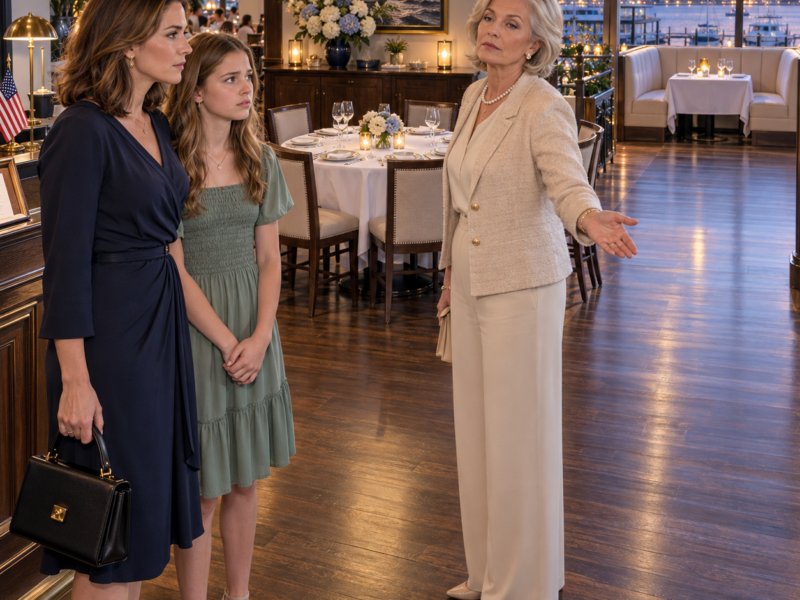
“We only have five seats at the restaurant,” Mom said, like the decision had already been made. There were six grandkids. My daughter was the one she decided could “eat at home.” I smiled and said, “No problem.” The next evening, I drove Sophie to the exact same restaurant at the exact same time and asked for the table by the window. Ten minutes later, Mom walked in with the five grandchildren she had made room for—and froze when she saw us eating lobster less than ten feet away. My phone buzzed almost immediately: “This is petty.” I looked at Sophie, then at Mom’s table, and smiled. She had forgotten one very important detail about who was paying for dinner.
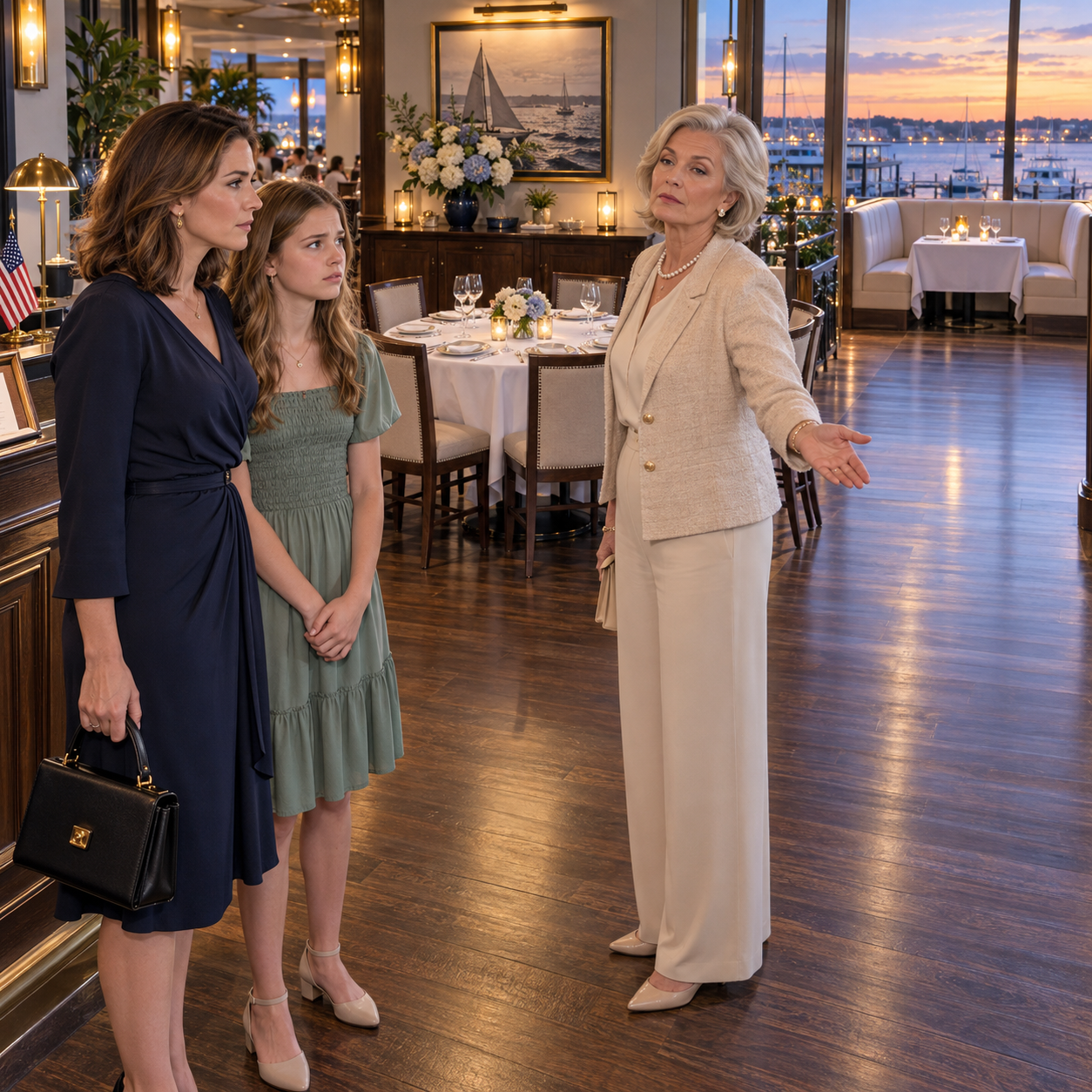
“We only have five seats for the grandchildren.”
My mother said it like she was explaining weather.
There were six grandchildren.
I will save you the suspense.
Apparently, my fourteen-year-old daughter was the one who could eat at home.
My mother, Linda Bennett, called me the afternoon before dinner. I was between patients at my dermatology practice in Charlotte, North Carolina, and had just removed a suspicious mole from a man who spent the entire procedure explaining cryptocurrency to me.
I was emotionally prepared for almost anything.
“Nora, there’s a tiny issue with tomorrow.”
My mother uses that tone when she has already made a decision and is only calling to explain why reality should cooperate.
“What issue?”
“The restaurant says the grandchildren’s table configuration only has five seats.”
I waited.
Silence is useful with my mother.
If you give her enough room, she eventually becomes uncomfortable and says the ridiculous part herself.
“So I was thinking Sophie could eat before you come.”
I looked down at my phone.
Not because I believed I misheard her.
Because for one second I genuinely wondered whether somebody had stolen my mother’s number and decided to prank me using the plot of a badly written children’s movie.
“Eat before we come where?”
“The restaurant.”
“And then what does she do?”
“Sit with the adults.”
I paused.
“So there is an adult seat.”
“Well, technically, no.”
There it was.
The ridiculous part.
“What exactly are you suggesting?”
Mom sighed.
The sigh meant I was making a simple problem unnecessarily complicated.
“Sophie is fourteen. She’s mature. She can eat at home and maybe bring her headphones. If there’s room, she can sit near us.”
I stared at the closed exam-room door.
“Mom.”
“Melissa’s kids are little.”
“Yes.”
“Daniel’s boys are younger too.”
“Yes.”
“They’d be upset if they were excluded.”
I waited.
“Sophie would also be upset if she were excluded.”
“She understands things better.”
That sentence.
My mother had been using it for twelve years.
Sophie understands.
Sophie is mature.
Sophie won’t mind.
Sophie can handle it.
Those phrases had justified everything from giving away her bedroom during family visits to asking her to surrender a Christmas gift because a younger cousin wanted it more.
“Being older doesn’t make her decorative.”
“Nora, you always do this.”
I nearly laughed.
“I always do what?”
“Turn small logistical things into moral issues.”
“This is not complicated logistics. There are six children.”
“Yes.”
“Reserve six seats.”
“The table only seats five.”
“Then get another table.”
“They’re booked.”
“Then choose another restaurant.”
“We already have the reservation.”
“Then put Sophie with adults.”
“I told you there isn’t really room.”
“So your solution is that one grandchild eats at home while everyone else goes to a restaurant?”
“She’s fourteen.”
“I’m aware.”
“She can handle disappointment.”
There it was again.
Handle it.
I had spent years hearing Sophie’s resilience presented as justification for giving her less.
I could have yelled.
I could have listed every previous incident.
I could have asked why the child who behaved the best always ended up paying for everyone else’s feelings.
Instead, something inside me became very calm.
“No problem.”
Mom exhaled.
Relief.
“Oh, good. I knew you’d understand.”
“I do.”
And I meant it.
I finally understood perfectly.
After hanging up, I called Mariner’s House.
Mariner’s House was one of those expensive seafood restaurants in Charlotte where the dining room is dim enough to improve everybody’s skin and the appetizers are priced just high enough that you start asking philosophical questions about whether you truly need crab cakes.
It was not private-jet expensive.
Nobody introduced the lobster personally before cooking it.
But it was expensive enough that a family of twelve did not accidentally wander in after soccer practice.
Mom had invented what she called her Annual Grandchildren Appreciation Dinner three days earlier.
This was the first annual dinner.
By Thursday she was already calling it a family tradition.
My mother can transform almost anything into a tradition if she says the word tradition three times and buys decorative napkins.
I asked the hostess whether she had a table for two around six-thirty.
“We’re completely booked.”
“Of course.”
“Let me check.”
Keyboard.
Pause.
“Actually, we had a cancellation. I can offer a window booth at six-fifteen.”
“Perfect.”
“Name?”
“Dr. Nora Bennett.”
I gave her my card to hold the reservation.
Then I called Sophie.
She was at school, so I texted.
Wear something nice tomorrow.
She responded immediately.
Why?
Dinner.
Grandma’s?
Dinner.
Mom??
Wear something nice.
Three dots.
Are we in trouble?
No.
That seemed to concern her more.
My name is Nora Bennett.
I was thirty-eight when the restaurant incident happened.
I am a dermatologist.
That means I have spent twelve years professionally telling grown adults not to scratch things that are clearly getting worse because they keep scratching them.
You would think this training would make me excellent at dealing with my mother.
It did not.
Linda Bennett is the human equivalent of a rash insisting it is actually a personality trait.
I love her.
That needs to be established early.
She is not an evil woman.
She is not secretly waiting for opportunities to hurt my daughter.
She makes excellent chicken soup.
She remembers birthdays.
She will drive across town if somebody is sick.
She once sat in an emergency room with my brother Daniel for eleven hours and did not complain until hour twelve.
She loves her grandchildren.
She also has a remarkable ability to distribute consideration according to who she believes can survive without it.
Sophie was excellent at surviving.
That became her problem.
I have one child.
Sophie.
Fourteen then.
My younger sister Melissa has three.
Tyler, eleven.
Madison, nine.
Chloe, seven.
My younger brother Daniel has two sons.
Noah, twelve.
Lucas, eight.
Six grandchildren.
Not seventeen.
Not a number requiring a census worker.
Six.
I was the oldest of three children.
Melissa was only two years younger than me, but in our house those two years apparently made me a nineteenth-century farm woman expected to survive blizzards with a lantern and moral discipline.
If Melissa forgot homework, Mom drove forty minutes to school.
If I forgot mine, natural consequences were important.
Melissa got a C in chemistry and Mom said the teacher did not understand her learning style.
I got a B-plus in calculus and Mom asked whether I had been distracted by boys.
I was seventeen.
I had braces, acne, and enough social anxiety to make eye contact a seasonal activity.
No boys were risking that terrain.
Daniel was the baby.
Different category.
Melissa was the princess.
Daniel was the adorable one.
I was reliable.
Reliable sounds like praise until you realize some families use it to mean:
the person we can inconvenience without consequences.
My father, Michael, balanced Mom.
Not perfectly.
He had his own habits.
Avoided emotion.
Worked too much.
Believed any household object could be fixed with WD-40 whether or not movement was desirable.
But Dad could look at Mom and say:
“Linda, that makes no sense.”
We lost that six years before the restaurant dinner.
Pancreatic cancer.
Fast enough to feel like somebody had cut out the middle chapters.
The family changed afterward.
Mom did too.
Dad had been the internal fact-checking department.
After he died, Mom became CEO, Supreme Court, social chair, and Ministry of Seating Arrangements.
Nobody applied for these positions.
She simply assumed them.
When I became a doctor, family dynamics changed again.
People hear dermatologist and imagine that medical school ends with somebody standing outside the graduation hall using a leaf blower to fire cash at you.
That was not my experience.
I graduated with loans.
A used Honda.
A coffee table I found beside a dumpster.
Residency paid enough to survive.
Not enough to feel wealthy.
By my mid-thirties, yes, I was comfortable.
Loans mostly gone.
Practice partnership.
Nice home in SouthPark.
Sophie attended a good school.
We traveled.
I could order seafood without consulting my banking app for emotional support.
Somewhere along the way, my financial stability became a family utility.
Dinner?
“Nora can put it on her card. We’ll Venmo her.”
Nobody Venmoed me.
Vacation rental?
“Nora gets better travel points.”
I did get better points.
I also got eleven months of charges and one message from Melissa:
Did I ever send you my share?
No, Melissa.
You did not.
Christmas catering?
“Nora, you’re better at ordering.”
Apparently dermatology included an elective called Advanced Turkey Procurement.
Zoo membership for all the grandchildren?
I paid once because Mom said it would be “a family gift.”
Annual photo session?
My card.
Beach house?
Forty percent mine because Melissa and Daniel were “a little tight.”
Birthday cakes?
More often than I remembered.
Restaurant deposits?
Often.
Holiday groceries?
Somehow.
I tolerated it because I could afford it.
That was my mistake.
When you repeatedly absorb inconvenience because it does not destroy you, some people eventually decide the inconvenience belongs to you.
Sophie noticed the pattern before I did.
That still bothers me.
The first time she said anything, she was ten.
Christmas at Mom’s house.
My mother had personalized stockings for every grandchild.
Tyler.
Madison.
Chloe.
Noah.
Lucas.
At the far end of the mantel was one generic red stocking.
A cardboard tag tied to the loop in black marker.
SOPHIE.
She stared.
Then whispered:
“Did Grandma forget mine again?”
Again.
That word landed harder than anything else.
Mom heard.
“Oh, honey.”
She came over.
“The embroidery place messed up.”
Sophie smiled politely.
“It’s okay.”
“You don’t care, right? You’re my big girl.”
Sophie nodded.
I accepted the story.
Until the following Christmas when the same generic stocking reappeared.
Same cardboard tag.
Same marker.
By year three, the marker had begun fading.
Apparently, the embroidery industry had declared a multiyear embargo against my child specifically.
Another year, we rented a beach house near Hilton Head.
I paid forty percent because Mom said Melissa and Daniel had more children and therefore “higher day-to-day expenses.”
The house had five bedrooms.
Mom assigned rooms before we arrived.
Melissa and her husband had one.
Daniel and his wife one.
Mom one.
The younger grandchildren shared a large bunk room.
I got the last bedroom.
And Sophie?
Inflatable mattress.
In the laundry room.
Next to dryer.
There was a bottle of fabric softener placed beside pillow because Mom said it made the space feel cozy.
My thirteen-year-old daughter was sleeping beside Tide Pods so Tyler’s PlayStation setup could have proper ventilation in the bunk room.
I objected.
Mom acted confused.
“Sophie loves little private spaces.”
“She likes doors.”
“She has a door.”
“To the laundry room.”
“It’s temporary.”
Tyler had an entire corner reserved for a folding gaming table.
Apparently his electronics had stronger housing rights than my daughter.
I moved Sophie into my room.
We shared the bed.
Mom called me dramatic.
Another year, Mom missed Sophie’s regional orchestra concert.
Scheduling conflict.
These happen.
Except the recital Mom claimed she had to attend for Chloe was the following evening.
When she realized:
“Oh, well. At least now I won’t be tired tomorrow.”
No apology.
Sophie said she was fine.
She always said she was fine.
Then her twelfth birthday.
Mom brought gifts for all the cousins.
That is not a typo.
For Sophie’s birthday, Grandma brought gifts for other children because:
“They shouldn’t have to sit there watching somebody else open presents.”
Sophie received one present.
A sweater.
Wrong size.
Madison took it home because it fit her.
I remember cleaning my kitchen after everyone left.
Feeling angry.
Then guilty for feeling angry.
Mom was not cruel.
I told myself.
She loved Sophie.
She had six grandchildren.
She was getting older.
Maybe I was keeping score.
I did not want to become one of those adults who conducts legal discovery over marshmallows.
“On December 24, did you or did you not provide three additional marshmallows to the minor identified as Chloe Bennett?”
So I kept letting things go.
The problem with repeatedly “letting things go” is that they rarely go anywhere.
They pile up somewhere inside the person expected to absorb them.
Sophie continued being polite.
Resilient.
Easy.
The adults rewarded that by asking her to give up more.
Mom’s favorite sentence:
“She understands.”
At fourteen, apparently she understood enough to eat alone.
The evening of the restaurant dinner, I got home from the clinic around five.
Sophie came downstairs wearing a dark green dress.
Simple.
Pretty.
“Too much?”
“No.”
She looked at me suspiciously.
“Aren’t we going to Grandma’s thing?”
“We are going to dinner.”
She paused.
“Am I eating at home first?”
That question.
She asked it casually.
Like the possibility made enough sense that she had already built a plan around it.
“No.”
A small smile.
“What are you doing?”
“Practicing dermatology.”
“What?”
“Removing an irritation.”
She rolled her eyes.
We arrived at 6:15.
Our booth was perfect.
Window view.
Quiet corner.
Warm lighting.
The kind of table my mother normally spends twenty minutes trying to obtain by telling a teenage hostess that she knows the owner socially.
She does not know the owner socially.
She once met his wife at a charity auction in 2018.
This distinction has never troubled her.
Our waiter was Julian.
Mid-twenties.
Calm.
Professional.
The facial expression of a man who had watched affluent people argue over seafood many times before.
“Celebrating anything?”
I looked at Sophie.
“Having enough chairs.”
Julian paused.
“Excellent occasion.”
Sophie covered a laugh with her napkin.
We ordered calamari.
Then crab cakes.
Sophie saw lobster.
Looked at price.
Then at me.
“Can I?”
“Absolutely.”
Her eyebrows rose.
“You always say lobster is financially irresponsible.”
“I have re-evaluated my beliefs.”
“You hate lobster.”
“I hate paying for lobster.”
“Different.”
“Exactly.”
I ordered one too.
At 6:37, the family arrived.
I know the time because Sophie saw them first.
“Oh my God.”
I looked.
There was Mom.
Behind her, Melissa and her husband.
Their three children.
Daniel.
His wife.
Their two boys.
They moved through restaurant in a loose formation behind Mom, like ducklings following a duck who had recently demanded to speak with management.
Mom was smiling.
Then she saw us.
Stopped completely.
Melissa walked into her back.
Daniel almost walked into Melissa.
For three seconds, my family became a human accordion.
Sophie covered mouth.
I looked down because if we made eye contact, I would lose control.
Mom stared at us.
Then the lobster.
Then the empty half of booth.
Then Sophie.
Then lobster again as if crustacean had personally betrayed her.
My phone buzzed.
Mom:
This is petty.
I took bite of lobster.
Typed:
This is a $200 dinner. Yours is on my card too. Want me to cancel it?
The three dots appeared.
Stopped.
Appeared.
Stopped.
From ten feet away, I watched my mother stare at phone.
One of most peaceful moments of adult life.
Finally:
That’s not what I meant.
I replied:
Then enjoy dinner.
Face down.
I thought that would end exchange.
Adorable.
Mom came over.
“Can I speak with you?”
“You currently are.”
“In private.”
“I’m eating.”
She glanced at Sophie.
“Honey, can Grandma borrow your mother?”
Without looking up from lobster, Sophie said:
“I’m using her.”
I almost inhaled a potato.
Mom’s mouth tightened.
“Nora.”
“Yes?”
“This looks ridiculous.”
“What does?”
“You sitting over here.”
“At my table.”
“You know what I mean.”
“No, I honestly don’t.”
“You’re making a statement.”
“I’m making dinner.”
“Everyone can see you.”
I looked around.
“I’m not wearing disguise.”
“You could have just sat with us.”
“There wasn’t a seat for Sophie.”
“She could sit with adults.”
“You said there wasn’t a seat there either.”
“Well, Daniel could move.”
I looked toward family table.
Daniel had just been seated.
Already eating bread.
My brother becomes emotionally attached to restaurant bread very quickly.
“I’m not evicting Daniel from carbohydrates.”
Mom leaned closer.
“You’re deliberately embarrassing me.”
That sentence changed something.
For years, every time Sophie was overlooked, downgraded, moved aside, asked to yield, my mother framed my reaction as greater inconvenience than original act.
The problem was never what happened.
The problem was that I noticed.
I put fork down.
“Mom.”
“Yes?”
“You told my daughter to eat at home because you booked five seats for six grandchildren.”
She stiffened.
“If anyone feels embarrassed by that, I recommend directing investigation inward.”
She stared.
Then Julian appeared.
“Everything all right?”
Mom said:
“Actually, could we move their lobster to our table?”
Julian blinked.
I blinked.
Sophie slowly set fork down.
“What?”
Mom gestured.
“If they’re technically part of our party, food should be over there. We can combine things.”
Julian looked at me.
Then Mom.
Then lobster.
“I’m sorry, ma’am. We don’t offer lobster transfers.”
Sophie made sound like bicycle tire losing air.
I bit inside cheek so hard I nearly required medical intervention.
Mom frowned.
“That’s not what I meant.”
“Of course.”
Julian turned.
“Dr. Bennett, another glass of wine?”
“Yes.”
I nodded.
“Large. Medically significant.”
He left.
Mom hissed:
“You already know the waiter.”
“I met him twenty minutes ago.”
“He knows your name.”
“I gave it to him. That is traditionally how restaurants work.”
She looked genuinely suspicious.
As if I had spent six months cultivating an undercover seafood operative to humiliate her.
Then she noticed leather folder at edge of table.
“You tipped him already?”
“Yes.”
“Before meal is over?”
“Yes.”
“Why?”
“Because he found Sophie a chair.”
Sophie choked on water.
Mom went back to her table.
The rest of dinner was magnificent.
Not primarily because lobster.
Though excellent.
Because I watched my daughter slowly realize I had chosen her without asking her to be the mature one.
She did not need to be flexible.
Did not need to understand.
Did not need to accept last place gracefully.
She just got to have dinner.
That should not have felt revolutionary.
In my family, equality apparently required shellfish.
When we finished, I paid our bill.
I also paid Mom’s table.
That detail matters.
I had promised weeks earlier that dinner would be my treat.
I did not cancel card.
Did not strand family with surprise bill.
Did not force Mom to wash dishes like Victorian orphan.
I paid every cent.
Then walked to her table.
Everyone became quiet.
“Dinner is covered.”
Mom looked up.
“This is last family event I’m paying for.”
Melissa frowned.
“What does that mean?”
“Exactly what I said.”
Mom laughed nervously.
“Oh, don’t be dramatic.”
“I’m not.”
“I’m simplifying.”
“Nora.”
“I’m happy to attend things.”
“Bring food.”
“Buy gifts when I choose.”
“But I’m done financing events where my daughter is treated like optional attachment.”
Melissa said:
“Nobody treated her like that.”
Sophie stood beside me.
Looked directly at her aunt.
“Grandma literally told me to eat at home.”
Melissa opened mouth.
Closed.
Daniel became fascinated with butter.
Mom:
“That was a seating issue.”
“Great.”
I smiled.
“Then this is billing issue.”
We left.
Next morning, twenty-seven messages.
Mom spent night assembling campaign.
Family group:
I hope everyone understands Nora has decided to withdraw financial support from family gatherings because she disagreed with a restaurant seating arrangement.
Financial support.
You would think I had canceled humanitarian aid.
My cousin Amy:
What financial support?
Mom:
She often helps.
Daniel:
She pays for basically everything.
Melissa immediately:
Not everything.
Daniel:
Okay. Name last family dinner Mom paid for.
Twelve-minute silence.
Then Mom changed subject.
She called me later.
I did not answer.
Voicemail:
“Nora, I find this whole thing extremely hurtful. Family should not keep score. Money should never be used as a weapon.”
Interesting from woman who once handed me a grocery receipt at Thanksgiving because I had eaten more imported cheese than expected.
I ignored.
Two days later, Mom texted Sophie.
Not apology.
Sweetheart, Grandma hopes you understand adults sometimes make difficult logistical choices.
Sophie showed me.
“What should I say?”
“Whatever you want.”
She typed:
I understand. Six is a difficult number.
Then blocked her grandmother for twenty-four hours.
I did not tell her to.
Would be lying if I said I was not proud.
But after laugh faded, I asked Sophie something I should have asked years earlier.
“How long have you noticed?”
She looked at me.
“What?”
“Grandma treating you differently.”
She shrugged.
“Forever.”
My stomach dropped.
“That’s not an answer.”
“It kind of is.”
We were sitting at our kitchen island.
Schoolbooks around her.
She picked at label on water bottle.
“When I was little, I thought it was because I was older.”
“You are not oldest grandchild.”
“Noah is older by two years.”
“I know.”
“Then I thought maybe because I’m an only child.”
I stayed quiet.
“Then I thought Grandma liked girls who are little.”
“What?”
“She treats Chloe and Madison differently.”
My heart tightened.
“Sophie.”
“I’m fine.”
There it was.
“No.”
I stopped her.
“You don’t have to say that.”
She looked surprised.
“What?”
“You don’t have to be fine so I feel better.”
Her eyes filled.
I nearly cried first.
She whispered:
“The stocking hurt.”
I nodded.
“The birthday presents hurt.”
“Yes.”
“The beach house really hurt.”
“Yes.”
“And yesterday.”
“Yes.”
“I knew you’d fix it.”
That sentence broke me.
“Why?”
“Because you looked mad.”
I laughed through tears.
“I’ve looked mad before.”
“No.”
She shook her head.
“Different.”
I reached hand across counter.
“I’m sorry.”
“For what?”
“For teaching you that being easy was your job.”
She stared.
“I didn’t mean to.”
“I know.”
“But I did.”
That became the beginning of our repair too.
Because this was not only story about Linda Bennett.
It was story about me turning my mother’s favoritism into a series of explanations my daughter had to live inside.
Grandma is stressed.
Grandma has more little kids to think about.
Grandma didn’t mean it.
Grandma loves you.
All true sometimes.
None changed outcome.
For next two weeks, Mom tried every guilt strategy.
Morality:
“You earn more than rest of us.”
Tradition:
“You’ve always handled dinners.”
Victimhood:
“I guess I won’t celebrate my birthday this year.”
Martyrdom:
“I told everyone not to buy me anything for Christmas. I don’t need material things anymore.”
It was May.
Then administrative warfare.
Email attachment:
family_contributions_fairness_review.xlsx
My mother does not know how to use Excel.
Spreadsheet had five columns.
One:
EMOTIONAL LABOR.
Another:
HISTORICAL GENEROSITY.
Third:
APPROX GRATITUDE OWED.
No formulas.
Colors.
Many colors.
My name red.
Melissa green.
Daniel yellow.
Mom purple.
Sophie gray.
I called Daniel.
“Did Mom send spreadsheet?”
He sighed.
“Yes.”
“What does gray mean?”
“She told me emotionally pending.”
I had to put phone down.
My mother had assigned fourteen-year-old granddaughter a credit rating.
Daniel laughed.
Then stopped.
“Nora.”
“What?”
“Were you serious about not paying anymore?”
“Yes.”
“Like dinners?”
“Yes.”
“Vacations?”
“Yes.”
“Mom’s birthday stuff?”
“Yes.”
He became quiet.
“Okay.”
“What?”
“Nothing.”
“No.”
I knew that tone.
“What?”
“Just realizing how much you cover.”
There it was.
“What do you think I cover?”
“Dinner.”
“Sometimes vacations.”
“Christmas catering.”
He began counting.
“Grandkids photographer?”
“Yes.”
“Museum passes?”
“Yes.”
“Mom’s anniversary dinner last year?”
“Yes.”
“Lake rental deposit?”
“Yes.”
He whistled.
“I honestly thought Mom was paying some of that.”
“So did Melissa.”
“Why would you think that?”
“Because Mom organizes.”
I stared at phone.
There it was.
I paid.
Mom hosted.
People credited host.
No one had maliciously stolen recognition.
I had never corrected.
Silent generosity had slowly created false history.
That mattered.
“I don’t need credit.”
“I know.”
Daniel said.
“But maybe you needed people to know enough that they stopped assuming.”
My brother, who once ate eight dinner rolls before entrée, had unexpectedly become insightful.
Annoying.
Three months later, the next crisis arrived.
Mom had planned family lake weekend for August.
She originally sent listing.
Four-bedroom house.
Dock.
Two hours from Charlotte toward Lake Norman? Two hours from Charlotte would be maybe Lake Lure or Lake Norman less. Let’s use Lake Lure in western NC. She wrote:
This would be so fun. Can you reserve? Your card has better travel protection.
I had not booked.
After restaurant, I told her:
I’m not paying for rentals anymore. If family wants trip, split cost before booking.
Simple.
Clear.
Mom interpreted this as opening position.
She booked another house herself.
More expensive.
Six bedrooms.
Hot tub.
Kayaks.
And something listing described as rustic wellness barn.
I still do not know what wellness barn is.
I assume cows do Pilates.
Then she told everyone I was reimbursing her.
I found out when Melissa texted:
Thanks again for covering lake house. Kids are excited.
I replied:
I’m not covering lake house.
Three dots.
Mom said you were.
Mom is incorrect.
Five minutes.
Phone.
“Nora.”
Just my name.
Military tribunal voice.
“You told Melissa you’re not paying for lake house.”
“I am not.”
“I already booked it.”
“I know.”
“It’s nonrefundable.”
“That seems important.”
“Nora.”
“Mom.”
“We discussed this trip months ago.”
“You discussed.”
“You asked me to reserve.”
“I didn’t.”
“You always pay rental.”
“And now I don’t.”
Deep inhale.
“So you’re making nieces and nephews suffer because of one dinner.”
“No.”
“How is that not what you’re doing?”
“Their suffering currently consists of possibly not having access to wellness barn.”
Silence.
“You booked something you couldn’t comfortably afford because you assumed I would reimburse you after I explicitly said I would not.”
“That is not something I did to you.”
“You can afford it.”
There.
Family slogan.
You can afford it.
As if capacity creates obligation automatically.
“That doesn’t mean I owe it.”
Then Mom went nuclear.
“I think your father would be disappointed.”
That was first time I got truly angry.
Not loud.
Cold.
“Dad spent thirty years telling you not to spend money you didn’t have.”
“That’s not relevant.”
“It feels aggressively relevant.”
“He valued family.”
“He also valued reading contracts before clicking nonrefundable.”
She hung up.
Lake house caused first major crack among siblings.
Mom told Melissa and Daniel I backed out.
Daniel asked for screenshots.
This was revolutionary.
Normally everyone accepted Mom’s version because challenging her triggered ninety-minute phone call.
I sent messages.
Daniel called ten minutes later.
“She asked you to book it.”
“Yes.”
“You said no.”
“Yes.”
“Then she booked more expensive house.”
“Yes.”
“And told us you were paying.”
“Yes.”
Long pause.
“That is objectively hilarious.”
“It gets better.”
Mom tried dividing cost between Melissa and Daniel.
Melissa said her family could not afford third.
Daniel said his family could pay third but would not cover Melissa.
Melissa said unfair because she had three children.
Daniel said that was exactly why her portion should be larger.
Melissa responded:
“Children shouldn’t count as full people when dividing vacation costs.”
I wish Sophie had been in room.
I would have framed moment.
Eventually trip canceled.
Mom lost deposit.
Substantial.
She told everyone she had been financially ambushed by cancellation policy she personally selected.
Then declared family needed healing.
This is where things became truly absurd.
Physical invitations arrived.
Heavy cardstock.
Gold lettering.
THE BENNETT FAMILY RECONNECTION AND RESTORATION BRUNCH
A CELEBRATION OF UNITY, FORGIVENESS, AND MOVING FORWARD
ATTIRE: SMART CASUAL
ATTITUDE: POSITIVE
GRIEVANCES: LEFT AT HOME
At bottom:
SEATING ASSIGNMENTS WILL BE STRICTLY OBSERVED.
I laughed so hard I scared dog.
Sophie got own invitation.
On back, handwritten:
You will definitely have a chair.
She pinned it above desk.
“I’m keeping this forever.”
“I’m calling therapist.”
“You don’t have one.”
“Yet.”
I had no intention attending.
Then Daniel sent photo.
Mom had created seating chart.
Laminated.
Every family member assigned.
Mine had gold star.
Sophie had two gold stars.
Melissa’s children grouped left.
Daniel’s boys right.
Mom center.
Looked less like brunch than NATO negotiation.
Daniel zoomed.
Legend.
One star:
NEEDS ENCOURAGEMENT.
Two stars:
PRIORITY INCLUSION.
Triangle:
POTENTIAL CONFLICT.
I had triangle and star.
Melissa two triangles.
Daniel question mark.
My mother had invented family seating astrology.
I texted:
We won’t be attending.
Phone instantly.
“Nora.”
“I made seating plan.”
“I saw.”
“I had it professionally laminated.”
“That does make refusal harder.”
“I specifically put Sophie next to me.”
“She doesn’t want to go.”
“Why?”
“Because she doesn’t want to.”
“She’s fourteen. She doesn’t know what she wants.”
“I’m her dermatologist mother. I’m willing to take risk.”
“What does dermatology have to do with anything?”
“Nothing. I just wanted to remind you I completed medical school and therefore can count to six.”
She hung up.
Brunch happened without us.
Daniel live-texted.
10:11 Mom brought seating chart.
10:14 Restaurant says we can’t tape it to wall.
10:19 She brought own tape.
10:21 Manager removed tape.
10:37 Melissa moved seats.
10:38 Mom noticed.
10:40 We may need federal intervention.
11:03:
You need to see this.
Video.
Mom beside table holding folding chair.
A folding chair.
Apparently stored in trunk.
Restaurant manager explaining chair cannot be placed in aisle due fire code.
Mom:
“This chair represents symbolic inclusion.”
Manager:
“It also represents a blocked emergency exit.”
Mom:
“My granddaughter was excluded from a chair once.”
Manager:
“I’m sorry to hear that.”
Mom:
“So you understand.”
Manager:
“I understand the fire code.”
Video ended because Daniel laughing too hard.
The story should have ended there.
Did not.
One week later, Mom created Facebook group:
GRANDMA LINDA’S SIX EQUAL STARS.
Cover image: stock photo of six children holding hands on beach.
None were her grandchildren.
One looked approximately twenty-three.
Mom began posting quotes about family equality.
Tagged Sophie.
Every child deserves seat at table.
Sophie sent screenshot:
She learned Canva before apologizing.
Most accurate description of my mother ever written.
Then T-shirts.
SIX EQUAL STARS.
All grandchildren.
Except Sophie’s arrived wrong size.
Naturally.
She wore medium.
Mom sent extra-small.
I called.
“Mom.”
“Yes?”
“Sophie’s shirt is extra-small.”
“Really?”
“Yes.”
“She can probably fit.”
“She cannot.”
“Maybe it can be motivation.”
Silence.
“Motivation for what?”
Mom realized.
“No, no.”
“Finish sentence.”
“I mean motivation for…”
No safe landing.
“Maybe she can stretch it.”
Excellent recovery.
Two more weeks silence.
Meanwhile, something unexpected happened.
The other grandchildren started talking to Sophie.
Kids notice more than adults think.
Noah apologized.
“I didn’t know Grandma told you to eat at home.”
Tyler admitted:
“Grandma is kind of weird about you.”
Madison, age nine, solved entire family dynamic in one sentence:
“Grandma says you’re mature when she wants you not to get something.”
Nine.
She cracked code.
Eventually Melissa called.
“I’ve been thinking.”
“That sounds dangerous.”
“Shut up.”
“Sorry.”
Pause.
“Mom does treat Sophie differently.”
I said nothing.
“I honestly didn’t see it.”
“Okay.”
“And I think I didn’t see it because it benefited my kids.”
That surprised me.
Melissa was not famous for voluntary self-reflection.
She once blamed parking meter for “creating hostile environment.”
“I appreciate you saying that.”
She sighed.
“I also didn’t realize how much you paid for.”
That part did not surprise me.
Without me quietly handling bills, Mom’s financial ecosystem became visible.
Birthday cakes.
Restaurant deposits.
Holiday catering.
Beach rentals.
Museum tickets.
Zoo memberships.
Annual Christmas photos.
Thanksgiving turkey.
Easter brunch.
A magician for Lucas’s birthday.
I had forgotten magician.
He was not good.
Made $400 disappear.
In hindsight, perhaps best trick.
Once requests started landing in Melissa’s and Daniel’s inboxes, both developed sudden interest in financial boundaries.
Melissa called:
“Mom asked me for seven hundred dollars for Thanksgiving.”
“What?”
“She wants Daniel to pay seven hundred too.”
“That’s fourteen hundred.”
“I know.”
“How many people?”
“Fourteen.”
“What are you eating, the turkey’s investment portfolio?”
Mom had selected caterer offering:
LUXURY HARVEST EXPERIENCE.
Truffle stuffing.
Heritage turkey.
Maple-glazed heirloom carrots.
I do not know what makes carrot heirloom.
Perhaps grandfather owned property.
Melissa declined.
Daniel declined.
Mom accused them of following Nora into “financial extremism.”
Thanksgiving became potluck.
Presented as tragedy.
Best Thanksgiving in years.
Daniel brought turkey.
Melissa potatoes.
I brought two pies.
Sophie made macaroni and cheese.
Mom brought centerpiece approximately size of compact car.
First twenty minutes she tried formal dish placement.
Nobody listened.
Then place cards.
Daniel confiscated.
Mom made sticky-note replacements.
Melissa hid sticky notes.
Mom wrote names directly on napkins.
My mother cannot be stopped by conventional methods.
But something had changed.
People stopped reorganizing themselves around her.
Mom:
“Chloe wants chair by window.”
Noah:
“I’m already sitting here.”
He remained.
No constitutional crisis.
Mom suggested Sophie serve dessert because she was oldest girl.
Sophie:
“Tyler has hands.”
Tyler raised both hands as proof.
Mom privately:
“Sophie has become mouthy.”
I replied:
“I think she’s developing boundaries.”
“She didn’t get that from you.”
“I know. It’s recent.”
Our relationship became limited.
Phone every couple weeks.
Major holidays if we wanted.
Sophie chose whether she wanted contact.
This was biggest change.
I stopped translating my mother to my daughter.
Before:
Grandma didn’t mean it.
Grandma is stressed.
Grandma loves you her own way.
Now:
That wasn’t fair.
Then move on.
No philosophical defense of obvious.
But family was not finished changing.
About nine months after restaurant, Mom asked me to lunch.
Just us.
I considered saying no.
Then agreed to a diner.
Cheap.
Neutral.
No reservation.
Guaranteed chairs.
She arrived early.
Of course.
There was manila folder.
I stared.
“What’s that?”
She followed my eyes.
“Not a spreadsheet.”
“Whiteboard?”
“No.”
“Laminated?”
“Nora.”
“Just checking.”
We ordered soup.
Mom looked older.
Not dramatically.
Tired.
“I want to talk about your father.”
I became still.
“What about him?”
“After he died, I got scared.”
I waited.
“The house.”
“Money.”
“Being alone.”
“Yes.”
She folded napkin.
“Your father did things.”
“What things?”
“Bills.”
“Reservations.”
“Insurance.”
“He handled practical life.”
I knew.
“And then suddenly everybody called me.”
“Melissa needs this.”
“Daniel needs that.”
“Grandkids.”
“Christmas.”
She smiled sadly.
“I thought if I kept organizing things, we’d still be family.”
There.
Control as grief.
Not excuse.
Explanation.
“When you paid for everything, it made it possible.”
I looked.
“That’s interesting phrasing.”
She winced.
“I know.”
“I let you.”
“Yes.”
“I told myself it was because you had more.”
“Yes.”
“And because you only had Sophie.”
There it was.
“So my life cost less.”
Mom’s eyes filled.
“I think that’s how I treated it.”
I looked away.
Restaurant noise.
Coffee cups.
Someone laughing near register.
Mom continued.
“You were always the one who didn’t need me.”
That sentence hurt unexpectedly.
“I did.”
She looked.
“What?”
“I needed you.”
“No, I mean financially.”
“I don’t.”
“I know.”
“But you treated financial need like only kind of need that counted.”
Mom became quiet.
“You’re right.”
That was first time she said it without qualification.
“I kept giving more attention to people who needed more practical help.”
“Then called Sophie mature.”
“Yes.”
“Because she was like me.”
Mom nodded.
“I think so.”
I sat with that.
Then:
“Why didn’t you apologize to her?”
She looked ashamed.
“I didn’t know how without admitting it wasn’t one mistake.”
There.
That was real.
A true apology threatened history.
Not just restaurant.
Stocking.
Beach house.
Birthdays.
Concert.
Every mature.
“I’m not asking you to fix years in one speech.”
“What do I say?”
“Truth.”
She nodded.
“What truth?”
“You know.”
She did.
The apology came two weeks later.
Not Facebook.
No Canva.
A letter.
Handwritten.
Sophie gave me permission to read.
Sweetheart,
I have used the word mature when what I sometimes meant was easier to disappoint.
That was unfair.
I told myself you would understand because you were older, calmer, and because your mother always seemed capable of fixing things. I let those qualities become reasons to give you less consideration.
The dinner was not the first time.
I know that.
I am sorry for the stocking.
The beach house.
Your birthday.
The orchestra concert.
And the restaurant.
You never should have had to prove you were easy enough to love.
I love you.
Grandma.
Sophie read quietly.
Then put letter down.
“Well?”
I asked.
“It’s good.”
“Do you want to answer?”
“Not yet.”
“Okay.”
She eventually wrote:
Thank you. I love you too. Please count chairs.
Mom framed it.
Of course she did.
Then purchased two folding chairs.
One labeled SOPHIE in gold vinyl.
Other:
EMERGENCY INCLUSION.
My mother turned growth into merchandise.
At least growth.
The financial boundaries stayed.
That mattered.
No return to Nora pays because apology happened.
Mom paid for own birthday dinner next year.
She called first.
“I found restaurant.”
“Okay.”
“Private room.”
“Okay.”
“Seats sixteen.”
“How many?”
“Fourteen.”
“Excellent.”
“I confirmed twice.”
“I’m proud.”
“You’re mocking me a little.”
“Yes.”
Then completely serious:
“I asked whether all sixteen chairs are physically present.”
I had to mute.
She continued:
“And I’m bringing two folding chairs.”
“Mom.”
“Just in case.”
“In case what?”
“You never know.”
“This specific issue is extremely knowable.”
“They might remove chairs.”
“Why would restaurant remove chairs?”
“They do things.”
“Like serve food?”
“You know what I mean.”
I did not.
But at dinner, server put bill in front of Mom.
She looked at it.
Then at me.
Old reflex.
I smiled.
She looked back down.
Reached for card.
Paid.
Nothing exploded.
Stock market did not crash.
No ambulance.
My mother survived purchasing food.
As we left, she stopped Sophie.
“Did you have enough to eat?”
“Yes, Grandma.”
“You had a chair?”
“Yes.”
“Good.”
Then she looked at me expecting applause.
I gave thumbs up.
She rolled eyes.
Progress arrives in strange forms.
The siblings changed too.
Daniel was first.
Without Mom’s narrative filter, he started calling me directly about money.
Not asking.
Clarifying.
“You paid the beach house?”
“Yes.”
“How much?”
“Forty percent.”
“Jesus.”
“Language.”
“You’re dermatologist. You hear worse.”
True.
He paid for family bowling night later without announcing.
I tried to Venmo.
He declined.
“My turn.”
Clean.
Melissa took longer.
She was accustomed to Mom subsidizing chaos through me.
Not malicious.
Habit.
When her oldest needed braces, she called.
“Nora, can I ask you something?”
My body tensed.
Then she said:
“Do you like Sophie’s orthodontist?”
I relaxed.
“Yes.”
That was all.
No money.
Another month, she said:
“I’m short on camp deposit.”
I waited.
“I am not asking you to pay.”
I laughed.
“What are you asking?”
“Can you look at cancellation policy? I don’t understand.”
I did.
Help without check.
Beautiful.
My mother’s financial system had made us siblings less close because money always moved through hierarchy.
Once that stopped, direct relationships improved.
I had to own my part too.
I enjoyed being capable.
That sounds ridiculous.
But being family sponsor gave me authority I never admitted.
If I paid vacation rental, I could choose room? Except I often didn’t.
Still, internally:
I am the responsible one.
I am the one keeping this running.
Private superiority.
I never said it.
That does not make it harmless.
Therapy exposed.
Yes, I eventually went.
Dr. Hayes.
Woman around sixty.
Looked at me after I described restaurant.
“You enjoyed it.”
“The lobster?”
“The reveal.”
I stared.
“My daughter had chair.”
“Yes.”
“And your mother saw you.”
I became defensive.
“She excluded Sophie.”
“Yes.”
“Was I supposed to hide?”
“No.”
Dr. Hayes waited.
Then:
“You also enjoyed knowing you were paying her dinner while refusing her control.”
I sighed.
“Maybe.”
“Why?”
“Because for once she couldn’t call me selfish.”
There.
I had engineered boundary elegantly enough that Mom could not change story.
Paid dinner.
Better table.
No screaming.
That was satisfying.
Not wrong.
But if I started designing boundaries for maximum humiliation, I would become entangled differently.
“Did you stop paying to punish her?”
Dr. Hayes asked.
“Partly.”
Honest.
“And?”
“Because I was done.”
“Keep second part.”
“What about first?”
“Notice it.”
No saint.
No villain.
I stopped financing because pattern unhealthy.
I also liked consequences.
Both.
Maturity meant not letting satisfaction become mission.
That was why I did not post restaurant story online.
Did not send photos of lobster.
Did not distribute spreadsheet of family expenses.
I could have.
No need.
Actual change happened when bills landed with people who benefited.
Not when audience applauded.
Sophie saw therapist briefly too.
Not because I thought Grandma had traumatized her beyond repair.
Because “fine” had become too automatic.
Counselor helped her identify resentment without shame.
One night she said:
“I think I’m mad at you too.”
I swallowed.
“For what?”
“You always made me be nice.”
There it was.
“When Grandma forgot stocking, you told me not to ruin Christmas.”
I remembered.
“When beach house happened, you said we’d make laundry room fun.”
I remembered.
“When she missed concert, you said she’s getting older.”
I remembered.
“Why didn’t you just say she was wrong?”
I had no defense.
“I was trying to protect relationship.”
“Whose?”
Fourteen-year-olds are brutal.
“Ours.”
“With Grandma.”
“Mine or yours?”
Silence.
“I think yours.”
I looked at her.
“I’m sorry.”
She cried.
“So am I.”
We hugged.
That became more important than seafood.
I had spent years asking Sophie to preserve my relationship with my mother by translating Mom’s behavior into harmless.
I stopped.
That does not mean I encouraged estrangement.
I simply allowed accurate language.
Grandma forgot.
Grandma favored younger cousins.
Grandma was unfair.
Grandma apologized.
Grandma changed some.
All.
Children can hold complexity.
Adults underestimate.
The annual stocking changed.
Mom finally ordered proper embroidered Sophie.
It arrived.
Correct.
Sophie stared.
“You’re not going to believe this.”
“What?”
“Font is different.”
I looked.
All others cursive.
Sophie block lettering.
We both laughed until couldn’t.
“Grandma.”
Sophie said.
“Don’t call.”
“No.”
“She tried.”
“Yes.”
She hung it.
That was growth on both sides.
Not perfection.
At next family Christmas, Mom brought gifts only for birthday person? Wrong event. Let’s keep Christmas equal-ish.
She asked each grandchild one thing wanted within price limit.
Actual system.
Sophie chose bookstore gift card.
No forced sacrifice.
When Chloe wanted same but more expensive, Mom said:
“Limit is same.”
I almost applauded.
Sophie kicked ankle under table.
No spectacle.
Thanksgiving potluck became tradition.
A real one.
Not invented Tuesday.
Everyone signed up.
Google Sheet.
Daniel turkey.
Melissa potatoes.
I pies.
Mom centerpiece, of course.
Kids desserts sometimes.
Costs roughly visible.
No one person underwriting.
First year, Mom complained food “less elevated.”
Daniel said:
“We’re eating turkey, Linda.”
She told him:
“I’m your mother.”
“Then bring elevated carrots.”
She did.
Heirloom carrots.
We laughed.
Family gatherings became cheaper and better.
Fewer performance costs.
More participation.
Interesting.
Money had been allowing Mom to curate family like event planner.
When money decentralized, gathering became messier.
Also warmer.
People brought mismatched dishes.
Arrived late.
Kids chose chairs.
Mom still tried.
But could not control all.
She adjusted.
One Easter, Sophie arrived late from school trip.
No seat at main table because people had moved chairs.
Mom immediately stood.
“I have folding chair.”
She sprinted to garage.
Returned with gold-lettered emergency inclusion.
Sophie looked at me.
I looked at her.
Mom placed chair carefully.
“See?”
Sophie hugged her.
That mattered.
Not because chair fixed history.
Because Mom remembered without needing correction.
Changed behavior is best apology.
Eventually my mother asked something I did not expect.
“Nora.”
“Yes?”
“Did I do same thing to you?”
We were walking through garden center.
She held two hydrangeas, comparing.
“Do what?”
“Make you the understanding one.”
I became quiet.
“Yes.”
She stopped.
“How?”
I could have opened every childhood file.
No need all.
“When Melissa got more because she struggled, you said I didn’t need it.”
Mom nodded.
“When Daniel got rescued because youngest.”
“Yes.”
“When Dad was sick, you called me first because I could handle it.”
“I did.”
“I learned needing less got less.”
Mom looked away.
“That sounds awful.”
“It wasn’t always.”
“I love being capable.”
“But sometimes I needed someone to ask anyway.”
Mom put hydrangea down.
“I thought you were like your father.”
“What does that mean?”
“Strong.”
I almost laughed.
“Dad cried at dog food commercials.”
She smiled.
“Yes.”
“But he handled things.”
“So did you.”
“Handling isn’t same as not needing care.”
She nodded.
We bought blue hydrangea.
Later she planted.
No grand resolution.
But question mattered.
My financial support did not stop completely forever.
Important.
Boundary was not:
Never help family.
It became:
Help deliberately.
When Daniel had emergency appendectomy and insurance deductible hit before reimbursement, I lent him $2,000.
Written text:
Loan. Pay back in four months.
He did.
When Melissa’s husband lost job, I bought groceries twice.
Gift.
No repayment.
When Mom’s water heater died, siblings split.
Three ways.
She paid part.
I paid part.
Melissa, Daniel.
No hidden sponsor.
When Sophie’s cousin Madison wanted summer science camp and Melissa could not cover full cost, I offered birthday gift.
Asked Sophie first.
“Why me?”
“Because I don’t want my generosity toward cousins creating resentment for you.”
She thought.
“I don’t care.”
“Sure?”
“Yes.”
I paid half.
Clean.
No invisible sacrifice.
Difference.
One Christmas, Mom slid envelope toward me.
“What?”
“Open.”
Inside check.
$1,840.
I stared.
“What is this?”
“Your share.”
“Of?”
“She had reconstructed older family photo, some catering, beach expenses.”
Not complete.
Symbolic.
“I don’t want this.”
She looked hurt.
Then I stopped.
Old reflex.
Refusing help can be control too.
“Why are you giving it?”
“Because I realized I let you pay things without even asking cost.”
Silence.
“I can’t repay all.”
“I’m not asking.”
“I know.”
“So?”
“I want to return this.”
I looked at check.
Then took.
“Thank you.”
That felt harder than declining.
Receiving.
The responsible child can become addicted to giver role.
Letting mother give something back shifted relationship.
I deposited.
Bought nothing symbolic.
Retirement.
Boring.
Good.
Sophie grew.
Fifteen.
Sixteen.
Less willing to be nice automatically.
One Thanksgiving, Mom said:
“Could you help serve? You’re oldest girl.”
Sophie looked around.
“Tyler is older.”
“Oldest girl.”
“Why does gender matter to pie?”
Mom opened mouth.
Daniel laughed.
“Good question.”
Mom sighed.
“Fine. Everybody serve themselves.”
Buffet.
Revolution.
At seventeen, Sophie drove.
Mom gave car-wash gift card.
No cousin gifts.
She was learning.
At graduation, all grandchildren attended.
Mom arrived early.
Reserved row? Not actually possible; she tried.
Sophie performed in orchestra one final time.
Mom sat front.
After:
“I missed one years ago.”
Sophie nodded.
“I remember.”
“I’m sorry.”
“I know.”
No erasing.
Presence now.
When college applications came, Mom offered to pay a fixed amount toward laptop.
I nearly intervened.
Stopped.
Relationship between them.
Sophie accepted.
Mom paid.
No request to share with cousins.
Trust.
I realized I could stop supervising every interaction once behavior improved.
Hypervigilance is another prison.
Boundaries create ability to relax eventually.
My practice grew.
I became partner.
Financially even more comfortable.
Interesting challenge.
More income meant family old logic could return.
“You can afford.”
I responded consistently:
“Yes, I can. That does not answer whether I want to pay.”
Simple.
No shame about wealth.
No performance poverty.
I had once hidden purchases to avoid requests.
After boundaries, I stopped.
Bought nicer car.
Mom:
“Wow.”
“Yeah.”
“Must be…”
She stopped.
We both smiled.
“It is nice.”
No guilt.
Money can be enjoyed without becoming public fund.
I updated estate plan too.
Dad’s death taught.
Sophie primary beneficiary.
Some charitable gifts.
No vague family promises.
I told Mom:
“Please do not tell cousins Sophie is rich when I die.”
“Nora.”
“I’m serious.”
“I won’t.”
“Do not build claims around future inheritance.”
She laughed.
“I learned from restaurant chairs, not wills.”
Good.
Daniel once joked:
“Sophie gets all your money?”
“Yes.”
“Lucky.”
“Get your own dermatologist.”
He laughed.
No resentment.
Siblings had adjusted to reality.
Our parents’ generation often treated resources family-wide.
My generation more individual.
Neither inherently moral.
Problem is ambiguity.
If family support expected, discuss.
Not assume.
Mom’s original restaurant decision contained same logic as finances.
Sophie has more capacity, so she gets less.
Nora has more money, so she pays more.
Capacity becomes extraction principle.
Sometimes fair.
Progressive taxes exist for reason.
Families help members in crisis.
Older child can wait while toddler needs immediate care.
But if same person always adapts because capable, capacity gets punished.
Eventually people learn helplessness pays better than resilience.
I did not want Sophie learning that.
Nor cousins.
Interestingly, when I stopped compensating, other grandchildren developed flexibility too.
Tyler gave seat once.
No catastrophe.
Madison handled not getting first choice.
Lucas waited.
Children were capable.
Adults had been overprotecting them while exploiting Sophie’s maturity.
Equal consideration does not mean identical outcomes.
It means nobody becomes designated absorber.
That phrase came from therapist.
Designated absorber.
I wrote it.
In medicine, skin sometimes takes burden of internal process.
Stress rash.
Autoimmune manifestations.
The body externalizes.
Families do too.
One person becomes place everything lands.
Bill.
Disappointment.
Schedule compromise.
Emotional labor.
That person often looks strong because system requires.
Break system and everyone feels sudden discomfort.
That discomfort gets blamed on boundary.
But it was always there.
Just redistributed.
The lakehouse fiasco taught siblings that.
Before, Mom’s overspending landed in my account.
After, it landed visibly.
Then family adjusted plans.
No one suffered.
They simply chose affordable vacation.
Next summer, we rented smaller cabin.
Everyone paid upfront according to household.
Sophie had bed.
No wellness barn.
Excellent.
Mom complained no hot tub.
Daniel brought inflatable kiddie pool.
Called wellness basin.
Mom did not laugh.
We did.
The next major family event was Mom’s seventy-fifth birthday.
By then restaurant incident four years old.
She planned carefully.
Called me.
“I have list.”
“How many?”
“Fourteen.”
“Grandchildren?”
“Six.”
“Chairs?”
“Six.”
“You sound prepared.”
“I have chart.”
“Mom.”
“Not seating chart.”
“Guest count.”
“Okay.”
“I’m paying.”
“Okay.”
“No one will reimburse.”
“Good.”
“You sound suspicious.”
“History.”
She paused.
Then:
“I know.”
Birthday went well.
Mom gave small speech.
No grand apology.
Thank God.
She said:
“I’m grateful you’re all here.”
Then looked at Sophie.
“And counted.”
Everyone laughed.
Sophie raised glass.
“Growth.”
That evening, I saw Mom checking bill twice.
Price hurt.
She paid.
On drive home, Sophie said:
“Do you think Grandma finally gets it?”
“Some.”
“Not all?”
“Do any of us?”
She groaned.
“Doctor answer.”
“Parent answer.”
She stared out window.
“I love her.”
“I know.”
“She’s also exhausting.”
“Yes.”
Both.
Families become easier when allowed both.
No need choose saint or villain.
Mom’s Facebook group eventually died.
Grandma Linda’s Six Equal Stars received fewer posts.
Sophie untagged herself.
Mom forgot password.
Merciful.
The T-shirts became cleaning rags, except one Mom kept.
Emergency chairs remain trunk.
Gold vinyl peeling.
One day I asked:
“Why keep them?”
Mom said:
“Insurance.”
“Against what?”
“Myself.”
That surprised.
She touched chair back.
“I don’t want to forget how stupid I was.”
I smiled.
“You can remember without hauling furniture.”
“No.”
She said.
“I know me.”
Fair.
After Dad died, Mom had spent years using tradition to stabilize world.
Grandchildren dinner.
Annual photos.
Beach week.
Formal holidays.
The rituals gave her control.
When I stopped paying, I did not only change finances.
I disrupted grief scaffolding.
That insight helped me become kinder without returning to old system.
We could let Mom organize centerpiece.
Let her make invitations.
Let her count.
As long as others retained choice.
Control became hobby, not authority.
That was healthier.
Melissa also changed her relationship with Mom.
For years she received rescue.
When Mom began asking her to contribute financially, resentment surfaced.
Therapy? Maybe not. They had a major argument.
Melissa called:
“Mom says I take advantage.”
“What did you say?”
“That she trained me.”
I almost laughed.
“Not wrong.”
“Then she said I’m adult.”
“Also not wrong.”
Melissa sighed.
“This is terrible.”
“Growth often is.”
“Shut up, doctor.”
She started budgeting.
Her husband took on more planning.
They stopped assuming Mom would cover extras.
Relationship improved after ugly year.
Daniel had opposite issue.
He always stayed out.
Like Dad.
He realized neutrality benefited whoever was loudest.
At one Thanksgiving, Mom criticized Melissa in front kids.
Daniel said:
“Mom, stop.”
Entire room froze.
Mom:
“What?”
“You heard.”
I looked at him.
He looked at me.
Later:
“That was awful.”
“Yes.”
“How do you do it?”
“Practice.”
He laughed.
Family skills learned collectively.
Not just target.
One of most healing scenes happened with all six grandchildren.
They were older.
Sophie eighteen.
Noah sixteen.
Tyler fifteen.
Others.
Mom took them to same Mariner’s House.
Her idea.
I was suspicious.
“I’m not paying.”
“I know.”
“Six seats?”
“Seven.”
“Why seven?”
“One extra.”
I stared.
“Emergency inclusion?”
“Yes.”
She paid.
Sophie texted me photo.
Six grandchildren around table.
One empty chair.
Caption:
Grandma has backup capacity.
I laughed.
No lobster drama.
They ordered what wanted within reason.
Mom survived.
That was perhaps true repair.
Not me protecting Sophie.
Mom changing behavior when I was not there.
Good.
A few weeks ago, Sophie and I went back to Mariner’s House.
Just us.
Julian still worked there, now dining-room manager.
He recognized us.
“Window booth?”
“Yes, please.”
He grinned.
“Any lobster transfers tonight?”
Sophie laughed so hard dropped napkin.
We ordered lobster again.
It has become our thing.
Not because I want revenge.
Not because $200 crustaceans are healthy treatment for intergenerational dysfunction.
Though more enjoyable than therapy paperwork.
We go because that dinner was first time I stopped asking my daughter to be easiest person in room.
For years, I thought maturity meant overlooking small cruelties because other people had bigger problems.
I thought keeping peace meant absorbing quietly.
I thought generosity meant never mentioning what I gave.
But if one person is always expected to understand, eventually “understanding” becomes another word for last.
Last choice.
Last chair.
Last present.
Last room.
Last person anyone worries about disappointing.
I did not want Sophie learning that from me.
She is in college now.
Smart.
Funny.
Less polite in ways I consider healthy.
When roommate issues happen, she speaks.
When professor changes assignment unfairly, she asks.
When family requests something she does not want:
“No, thanks.”
Mom occasionally blames me.
Correctly.
Sophie once said:
“I think I overcorrected.”
“For?”
“I say no too fast.”
“Maybe.”
“Is that bad?”
“Boundaries are doors, not brick walls.”
She rolled eyes.
“Therapy mom.”
Yes.
We learned together.
I still help family.
I paid for part of Mom’s dental work last year.
Gift.
Chosen.
Daniel borrowed money for roof.
Loan.
Repaid.
Melissa asked for support during husband’s job transition.
I brought groceries.
No tracking.
Because I wanted.
That is difference.
Voluntary help feels lighter even when amount same.
Entitlement makes five dollars heavy.
Choice can make five thousand clean.
But I also review my motives.
Am I helping because fear they will be angry?
Then pause.
Because I want gratitude?
Pause.
Because emergency real and I can help?
Maybe yes.
Because love?
Yes, if no resentment.
Money does not determine closeness.
It reveals patterns.
After restaurant, Mom accused me of keeping score.
She was partly right.
I had mental ledger.
Because unspoken giving creates hidden accounting.
The solution was not “never count.”
It was make expectations explicit enough no private ledger needed.
Family dinner: split.
Birthday: host pays unless arranged.
Vacation: contributions upfront.
Gifts: gifts.
Loans: loans.
Simple.
Boring.
Healthy.
At work, I see patients who pick at skin until small issue becomes scar.
I sometimes think family conflict works similarly.
Something minor irritates.
We scratch.
Explain.
Avoid.
Repeat.
Then one day wound far larger than original event.
The chair at Mariner’s House was one night.
The real irritation had been years.
My mother was not transformed by restaurant alone.
Neither was I.
We changed by stopping repetitive scratching.
No more explaining obvious.
No more silent sponsorship.
No more “Sophie understands.”
No more “Nora can afford it.”
Then tissue healed.
Not perfectly.
Scar remains.
Memory.
Useful.
I keep first Mariner’s receipt.
Not framed.
In drawer.
Maybe weird.
Total for our table:
A little over $200 with tip.
Family table much more.
Both on card.
The financial point was never amount.
I could have canceled Mom’s payment.
Would have been funny.
Also would have let her shift argument to money.
By paying, I removed escape route.
All she had left was six children and five chairs.
Sometimes best boundary removes distractions.
No performance.
Just facts.
When Mom said petty, I did not defend.
When family asked why support stopped, I explained once.
Then allowed consequences.
Lakehouse was strongest.
Had I rescued after she booked, I would have taught:
Nora’s no means temporary until stakes high.
I did not.
Deposit lost.
Mom learned contracts.
Siblings learned.
No child harmed.
No wellness barn.
That loss was tuition for family education.
Expensive.
Mom paid it.
Fair.
I would do restaurant again.
Maybe without petty satisfaction.
Maybe.
Honestly, lobster tasted better because she could see us.
I am not saint.
Sophie knows.
She teases:
“You absolutely planned timing.”
“Yes.”
“Petty.”
“Yes.”
“Worth it?”
I look.
“Did you feel chosen?”
She always gets quiet.
“Yes.”
“Then yes.”
That is answer.
But I also tell her adulthood cannot be built entirely from dramatic demonstrations.
Most choosing happens boring.
Show up for concert.
Remember stocking.
Listen when upset.
Do not volunteer her for sacrifice.
Ask before using her time.
Pay attention.
That is family.
The restaurant was punctuation.
Not sentence.
Mom and Sophie have a relationship now on their own terms.
They text.
Mom sends too many emojis.
Sophie visits sometimes without me.
That was one of clearest signs repair genuine.
I no longer mediate.
If Mom says something annoying, Sophie handles.
If Sophie is sharp, Mom handles.
I am not interpreter.
Good.
Last Christmas, Mom gave Sophie a chair ornament.
Tiny gold chair.
Tag:
JUST IN CASE.
Sophie laughed.
Hung it.
No wound.
History transformed because accountability preceded humor.
If Mom had given same ornament month after dinner, cruel.
Timing is ethics sometimes.
Mom also still has folding chairs in trunk.
One says SOPHIE.
Other EMERGENCY INCLUSION.
She once asked whether she should patent concept.
I told her chairs already invented.
“Not emotionally.”
So apparently my mother may enter furniture industry.
I’m staying out of it.
I treat skin.
There are limits to medicine.
And for record, there are still six grandchildren.
Mom counts before reservations now.
Usually twice.
Sometimes she sends group text:
Six kids. Six chairs. Confirmed.
Daniel replies:
Historic achievement.
Melissa adds applause emoji.
Sophie:
Backup chair?
Mom:
In trunk.
That is our family now.
Not fixed.
Aware.
More honest.
Less expensive.
And nobody eats at home unless they actually want to.









