
Two hundred and twenty guests applauded when my millionaire son announced at his wedding that he had bought me a lake house two years earlier. I was his mother, and I had never seen it. “David,” I asked, “what lake house?” Beside him, his bride went still. The applause faded until I could hear someone set down a champagne glass.
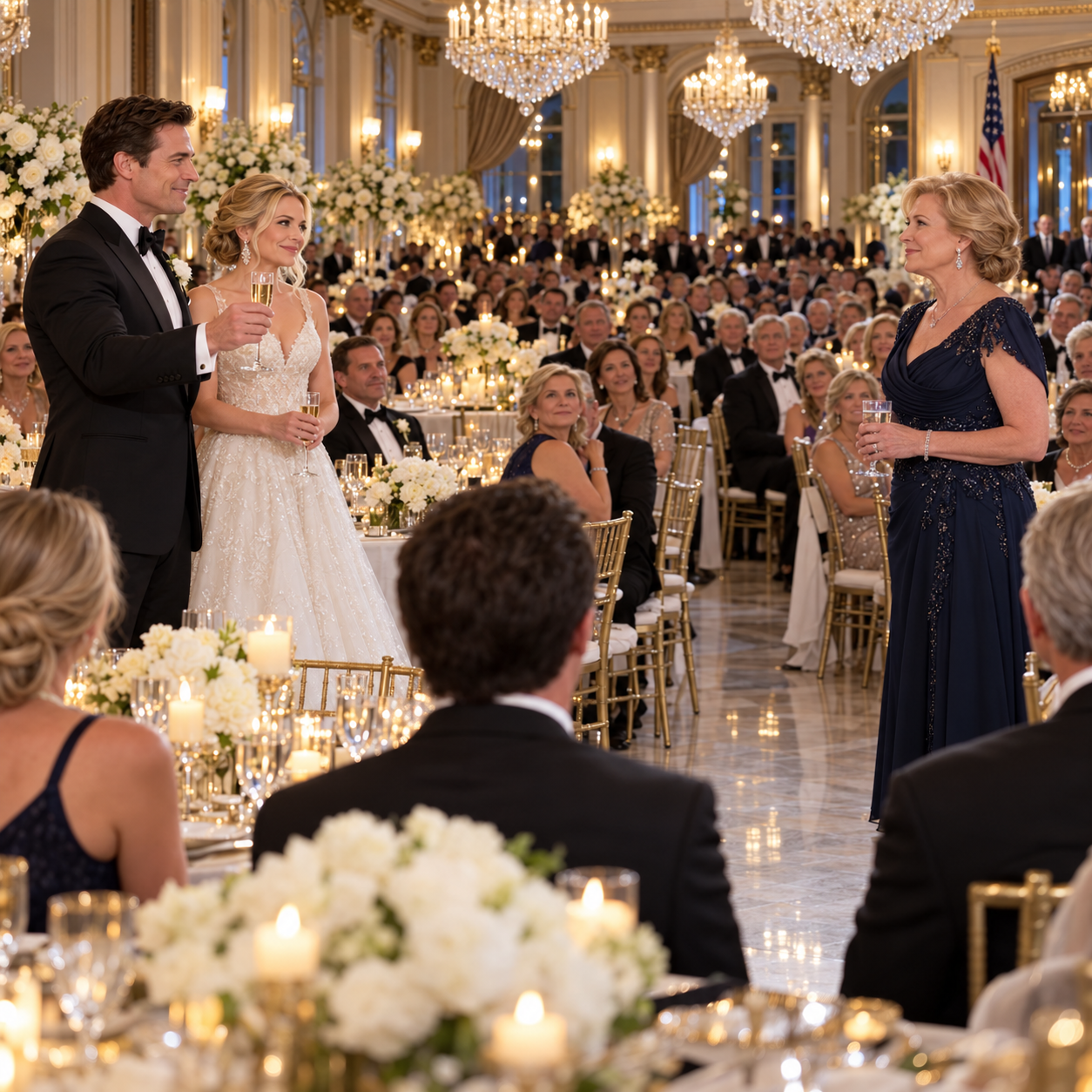
Two hundred and twenty wedding guests applauded when my son announced that he had bought me a lake house.
I did not clap.
I stood near the back of the ballroom in the nicest navy dress I owned, holding a glass of sparkling water. David raised his champagne glass from the front of the room. His new wife, Victoria, stood beside him under a spray of white roses, smiling as he looked directly at me.
“To family,” he said. “And especially to my mother.”
Heads turned. I smiled because people were looking, though I had no idea what was coming.
“She’s going to hate me for embarrassing her,” David said, “but two years ago I finally got to do something she and Dad always dreamed about. I bought her a house on Willow Lake.”
The room erupted.
I heard someone at my table say, “How wonderful.” I looked at David, waiting for the rest of the story. Perhaps he meant he had just bought it and planned to take me there after the honeymoon. Perhaps Willow Lake was part of an old joke I had forgotten.
Then he said, “I hope you’ll let us visit more often now that the wedding is over.”
The applause continued. David lifted his glass toward me. Victoria watched us both.
“David,” I said.
He leaned forward. “What?”
“What lake house?”
The clapping thinned. He laughed, but he did not sound amused.
“Mom. The house on Willow Lake.”
“I’ve never been there.”
“The cedar house with the big windows. I thought you liked being out there.”
“I’ve never seen it.”
His glass lowered. Victoria’s stayed halfway to her lips.
“You’ve lived there for two years,” David said.
“I still live in my apartment.”
His expression changed so quickly that I wished I had reached him before he took the microphone. Now half the room was watching while we tried to understand each other.
“You kept the apartment?” he asked.
“I have always lived in the apartment.”
“I thought you liked being close to Franklin.”
Franklin Elementary was where I cleaned classrooms four evenings a week. David believed I kept the job because I liked the people there and grew restless at home. I did like the people. I also liked having a reliable paycheck. My pension and savings covered most months comfortably, but a car repair or a medical bill could make the next one tight.
I had never given him the details. We both knew I tended to refuse help, and I did not want our every conversation to become a discussion of my budget.
David glanced toward the guests and gave them a strained smile. “There must be some mix-up. I send money every month.”
I frowned. “What money?”
The room went still.
For a moment, all I heard was the faint sound of glasses being set down on linen-covered tables. David stared at me. Victoria reached for his arm.
“David,” she said softly, “we can discuss this later.”
He took out his phone. “I need to know where it’s going.”
“Your wedding guests are here,” she whispered.
“I know.”
He called Rachel, his executive assistant. She answered after two rings, sounding surprised to hear from him during the reception.
“I need you to pull the monthly support payments for my mother,” he said.
I looked at him. He had never told me he was sending support. I had never asked him for any. Still, I could see from his face that he believed every word he was saying.
Rachel’s keyboard clicked through the speaker. “I have the account.”
“How many payments?”
“Twenty-four.”
“All cleared?”
“Yes.”
“I’ve never received them,” I said.
There was a pause on the line.
David asked, “What account received them?”
Rachel hesitated. “They’re routed through the household instructions connected to Willow Lake.”
“What household instructions?”
“The property management file. Let me open the change history.”
Victoria took a small step toward him. “Please don’t make Rachel work through this in front of everyone.”
David looked at her, then at his phone.
“Rachel?”
“The updated instructions came through Victoria,” Rachel said.
I felt people looking at the bride. Her father, Charles Mercer, was seated at the family table. He stopped speaking to the woman beside him and looked down at his plate.
Rachel continued, “The receiving company is Mercer Household Services.”
Charles and his wife, Elaine, owned that company.
David ended the call and came down from the platform. He looked from me to Victoria to Charles.
“What is Mercer Household Services doing with money I intended for my mother?”
Charles stood. “We should speak somewhere private.”
I wanted that too. I had no desire to discuss my finances with two hundred people. But when I looked at David, I could see he was struggling to understand how both of us had been so certain about things that could not both be true.
“Go to the side room,” I told him. “I’ll come with you.”
A member of the hotel staff showed us into a small lounge off the ballroom. Victoria and her parents followed. David called Rachel back and asked her to send him the records. I sat down, suddenly aware that I had been standing in heels for most of the evening.
“How are you paying your bills?” he asked me.
“With my pension and my job.”
“You’re still cleaning four evenings?”
“Yes.”
“I thought you wanted to.”
“I do. It helps to have the income too.”
He rubbed his forehead. “Why didn’t you tell me?”
“You knew I worked.”
“I didn’t know you needed the pay.”
I looked at him. “I didn’t know you thought I was receiving yours.”
Victoria stood near the door, her hands clasped so tightly that her knuckles were pale. She said the company had been paying expenses on the property and that the records would explain everything. She spoke smoothly, as she usually did. I had always liked how capable she was. Whenever a plan fell apart, Victoria seemed able to make it work again.
That evening, her calm made me want to see the papers for myself.
David had arranged for a property attorney named Martin Hale to review an issue with the Willow Lake file before the wedding. Someone from his office reached Martin while we waited. He arrived with a document case and looked startled to find us all together.
“I expected to speak with you next week, Mrs. Harrison,” he said.
“We’re here now.”
He sat beside me and took out a copy of the recorded deed. My name, Margaret Harrison, appeared as the owner. The date was nearly two years old.
“I own this house?” I asked him.
“Yes. Your son purchased it and had title placed in your name.”
“I was never told.”
Martin glanced at David, who looked as shocked as I felt.
“There have been questions about the management instructions,” Martin said. “I’ve tried to reach you directly.”
He showed me tax notices, insurance papers, and an authorization allowing Mercer Household Services to receive correspondence and manage certain household expenses. My signature appeared at the bottom of that authorization.
I had signed enough forms in sixty-eight years to know my own handwriting. The first letter of my surname was close. The rest was wrong.
“That isn’t my signature.”
Martin nodded. “I wanted to ask you about it.”
He pointed to the notarization. The date fell months after the named notary had died. Martin had checked the public record that afternoon because the seal appeared on paperwork submitted much later than expected.
Victoria spoke before anyone addressed her. “Those forms were handled through the company office.”
David turned to her. “Who handled them?”
“I said the office did.”
Martin closed the folder gently. “I can’t tell you who signed this tonight. I can tell you that Mrs. Harrison disputes it, and the notarization requires investigation.”
David asked me when I had last received anything from him in the mail.
I tried to remember. “Maybe two years ago.”
“No. I sent you a card for your birthday three weeks ago.”
“I didn’t get it.”
“What about Christmas?”
“No.”
“The bracelet I sent last year?”
“What bracelet?”
He went quiet.
I thought back over the past two years. David was often traveling. He had built a successful company, and even before that, he had been busy in the way ambitious people often are. Our calls had grown shorter. When cards stopped arriving, I told myself he was settling into a new life. I missed them, but I never asked.
“I want to see the house,” I said.
“Tonight?” David asked.
“Tomorrow morning.”
“I’ll go with you.”
“I want to walk in before anyone tells me what I’m supposed to think of it.”
He looked ready to object, but he nodded.
Back in the ballroom, the band had begun playing again. I could hear it through the lounge door, faint and uneven. David asked the hotel staff to take me out by a quieter exit. Before I left, he said, “I thought you knew. I swear.”
“I believe you.”
“I thought you were getting the money.”
“I believe that too.”
He looked miserable. I touched his cheek, then went home.
I slept less than three hours. At six, I sat at the little kitchen table in my apartment with the address Martin had given me. My cleaning shoes stood beside the door. A stack of utility mail waited under the salt shaker. The refrigerator was the one I had bought the previous year after the old one failed. I had lived out of a cooler until payday so I could replace it without dipping into the money I kept for emergencies.
For two years, David thought I woke each morning beside a lake. I had been right here the whole time.
He called at seven-thirty and offered to drive with me. I told him I would call when I arrived.
The road to Willow Lake narrowed after the last gas station. I passed houses set far back among the trees, then turned onto a private lane. At the end stood a cedar-and-stone house facing the water. Morning light lay across its windows.
I stopped my car and stayed in it for several minutes.
Robert, my late husband, had once described a place very much like this. We were eating breakfast at a diner after dropping David off at college. Robert said that when we were older, we should find a small house by a lake.
“You hate fishing,” I reminded him.
“I’ll learn.”
“You hate mosquitoes.”
“I’ll complain from inside.”
“A lake place would be a lot to maintain.”
He pointed his fork at me. “Big windows. Stone fireplace. A porch. You can list your objections from the porch.”
We never bought one. There were college bills, then ordinary expenses, then Robert’s illness. The conversation remained one of those pleasant ideas we returned to on long drives. I had not realized David remembered it so clearly.
The house before me had big windows, a stone chimney, and a porch facing the water.
I got out of the car. The lawn had been mowed. Flowers filled two planters near the steps. Someone was living here and taking care of it.
A polished brass plaque beside the front door read MERCER.
I called David.
“I’m here,” I said.
“Is everything all right?”
“The Mercers’ name is beside my door.”
He was quiet. Then he said he was coming.
Martin had given me a key after checking the property records. I unlocked the door and stepped inside.
The living room faced the lake. Its furniture was comfortable and expensive without looking new. On a console table stood framed photographs of Victoria as a child, Victoria at her college graduation, Charles and Elaine on vacation, and the Mercer family at Christmas.
In the kitchen, milk and fresh vegetables filled the refrigerator. A handwritten grocery list on the door included Elaine’s yogurt and Charles’s medication. Upstairs, the closets held their clothes.
I had expected the possibility that Victoria’s parents were staying there. I had not expected every room to tell me this was their home.
A room off the hallway contained two desks, computer equipment, and shelves of binders labeled Mercer Household Services. I stood there looking at the office supplies for a long time. My son had bought me a house I did not know existed, and his wife’s parents had made both a home and a workplace inside it.
One desk drawer was locked. A small key lay in a ceramic dish on top. I knew Martin would want to see whatever records the company kept here. I also knew that I was standing in my own property, trying to learn why my name had been signed to an authorization I had never seen. I called him before opening anything.
He asked me to photograph the room first and leave business files undisturbed if I could. Then I told him what I had seen through the gap in the drawer: envelopes addressed to me.
“Photograph where they are,” he said. “Then you may take possession of your own mail. Keep the envelopes.”
I opened the drawer. There were birthday cards, holiday cards, notes, and two small padded packages. Some were addressed to my apartment, others to Willow Lake. I recognized David’s handwriting before I opened the first card.
*Mom, I hope you’re finally letting yourself enjoy that porch. Dad would have loved it. Dinner when I’m back? Love, David.*
The postmark was almost a year old.
I opened another. He had invited me to lunch. The next contained a gift receipt. In one of the padded packages was a silver bracelet with a note asking me to use the money he sent for something fun now and then.
I sat down at the desk.
For two years, I had believed David no longer made much room for me. He had believed I was receiving his cards and leaving them unanswered. I thought of all the times I had said, “He’s busy,” when a friend asked whether I had heard from him. I had believed that. It was a kinder explanation than asking him directly why he had stopped writing.
A car came up the drive. Through the window, I saw Elaine Mercer step out carrying coffee. She walked toward the house with the ease of someone returning from an errand.
She found me in the office, with David’s letters on the desk.
“Oh,” she said.
“Why is your name on my front door?”
She set down her coffee. “Margaret, I can explain some of this.”
“Why is my mail in a locked drawer?”
“I didn’t put it there.”
“Who did?”
She looked at the envelopes. “Victoria handled correspondence about the property.”
“These were sent to my apartment.”
“I know that some of them were.”
“How?”
Elaine pulled out a chair but did not sit. “Did Victoria tell you about the house?”
“No.”
Her expression collapsed. She sat down.
“When we moved in, she told us David had bought it for you,” she said. “She said the house needed work and that you were taking time before you came out. We had sold our place, and our next purchase fell through. She offered us six weeks here.”
“How long have you been living here?”
“Nearly two years.”
“Did you ever wonder why I never visited?”
“Yes.”
“When?”
She rubbed her hands together. “After a few months. Victoria said the house reminded you of Robert and you did not want to talk about it.”
“I didn’t know about it.”
“I see that now.”
I held up one of the cards. “Did you know she kept these?”
“I knew she handled the mail. I should have asked what happened to it.”
Outside, another car stopped. David had arrived.
He came straight to the office. The sight of his cards brought him to a halt. He picked one up, then another.
“I sent these,” he said.
“I know.”
He looked at Elaine. “Why are they here?”
“Victoria kept them.”
Elaine told him what she had told me. She said she and Charles had believed I knew about the house at first. Later, they suspected I might not. They asked Victoria, accepted her explanations, and stayed.
David looked around the office. “Your company works out of here?”
“Part of it.”
“In Mom’s house.”
Elaine nodded.
“She didn’t know we were here,” he said.
“I thought Victoria was speaking to her.”
“After a year without Mom visiting, you still thought that?”
“No,” Elaine said quietly.
I was grateful for the honesty, though it did little to ease what had happened.
Martin called while the three of us were there. The payment records showed that much of David’s monthly support had gone toward taxes, insurance, utilities, repairs, and management fees at Willow Lake. He needed a full accounting to determine what else had been charged.
David stared at Elaine. “My mother worked at night while money meant for her maintained this place.”
Elaine looked down. “I didn’t know she was working for the income.”
“Neither did I,” he said.
That was true. It mattered. Neither of us had known how the other lived, and for two years we had both let assumptions fill the distance.
After the call, I told Elaine I wanted her and Charles to arrange to remove their personal belongings. Martin would oversee the company records and equipment. She started to explain how disruptive a move would be for the business, then stopped.
“I understand,” she said.
I gathered the cards into a bag. David and I took them onto the porch. He sat beside me, holding a birthday card he had mailed the previous year.
“I thought you wanted space,” he said.
“I thought you’d stopped making time to see me.”
“I was waiting for you to answer.”
“I never knew you’d written.”
The lake was bright enough that I had to shade my eyes.
“We could have called,” I said.
“Yes.”
“Either one of us.”
He nodded. “I should have come to your apartment. It’s an hour away.”
“Less than that.”
He looked at the card again. “I knew that.”
Victoria arrived that afternoon after David called her. She entered the living room, saw my mail laid out on the table, and stopped.
“I wish you’d waited before opening the company office,” she said.
“My birthday cards aren’t company records.”
“No. Of course they aren’t.”
“The house is in my name.”
“Yes.”
“I need you to tell me how your parents came to live here and why I was never told.”
She sat down across from me. David stood near the window.
“David bought the house as a surprise,” she said. “He asked me to coordinate the work. You had refused the car he bought you. You turned down his offer to pay for a different apartment after Robert died. We knew you might refuse this too.”
“I probably would have.”
David glanced at me, wounded despite everything.
Victoria noticed. “That’s what I was trying to avoid. He wanted to give you something that mattered. Every time he offered help, the two of you ended up hurt.”
“It still had to be my choice,” I said.
“I know that now.”
She explained that her parents needed a place after selling their home. The lake house had repairs underway, and it seemed practical to let them stay. David was traveling and postponed bringing me out. One delay followed another.
“That explains six weeks,” I said. “How did it become two years?”
She looked at the mail. “Once David began writing about the porch, you would have found out.”
“So you held the cards.”
“At first I thought I could put everything right after he told you.”
“Some of these cards don’t mention the house.”
“I know.”
“Why keep those?”
She took a breath. “By then David thought you were receiving them. I didn’t know how to explain that you hadn’t.”
David moved away from the window. “You told me Mom wanted less contact because Dad’s death still made her sad.”
“I thought she did.”
“Did she tell you that?”
“No.”
“You told me she felt crowded when I called.”
“She often said she was fine and didn’t need anything.”
“She didn’t say she didn’t want to hear from me.”
Victoria looked at him. “Whenever you came back from seeing her, you were upset. You worried that you weren’t doing enough. I thought giving both of you some space would help.”
I looked at my son. “Were you upset after our visits?”
“Sometimes,” he admitted.
“Why didn’t you tell me?”
“Because you would say I was being ridiculous.”
I was ready to deny it. Then I remembered how quickly I dismissed his concern whenever he asked about my work or offered to pay for something. I had done it partly to spare him guilt about Robert. David was overseas when his father’s condition worsened. He arrived home twelve hours after Robert died. I knew he had carried that pain for years, and I never wanted him to think a check could make up for not being there.
I had not known my refusals sometimes sounded to him like criticism.
Victoria had seen something real between us. She had also kept my son’s letters and told him I wanted distance without asking me. Both things could be true.
I turned back to her. “Who signed the authorization?”
“I didn’t.”
“Who arranged it?”
“The company handled the paperwork. I coordinated with them.”
“The notary named on it had already died.”
“I learned that last night.”
She looked genuinely alarmed. I could not tell what she had known before. Martin would pursue the document. I was unwilling to guess.
His financial review came in stages over the next several weeks. Some of David’s payments had covered legitimate costs of owning the house. Other charges appeared high, including fees paid to Mercer Household Services while Victoria’s parents occupied the property. The records did not show that every dollar had simply disappeared. They showed that money intended to make my life easier had been spent without my knowledge or consent.
The property could be cleared and the accounts examined. At the time, I had no idea what would repair the years David and I had spent misunderstanding each other.
That first night at Willow Lake, after Victoria and her parents left, David stayed on the porch with me. We could see the lights of other houses across the water.
“Would you really have turned this down?” he asked.
“Yes.”
He gave a tired laugh. “That’s why I asked Victoria to handle it. I wanted to do something good for you without an argument.”
“You should have let me argue.”
“I know.”
“And I should have listened long enough to understand why it mattered to you.”
He leaned back in the porch chair. “I thought you refused everything because taking it from me made you uncomfortable.”
“It did.”
“Why?”
“Because after your father died, I saw how hard you tried to make up for being away. I didn’t want you paying me because you felt guilty.”
He turned toward me. “I wanted to help because I love you. I’m sure I felt guilty too. You could have let me tell you the difference.”
We sat with that for a while.
At the wedding, David had believed the house would show me that he remembered his father’s dream. I had seen a house full of another family’s photographs. We would have to talk about both, even if the papers were eventually put right.
The story of the wedding spread before the weekend was over. With more than two hundred guests in the room when it began, I could hardly expect privacy. Friends called to ask whether I was all right. A few people seemed to want details they had no business requesting. One person told me I was fortunate to have a son who could buy a house, as though that settled the matter.
Mercer Household Services issued a short statement calling it a private dispute about property management and family communication. Martin told me not to respond publicly while he reviewed the documents. I was glad to let him handle that. I had spent enough of the wedding discussing my life in front of strangers.
David faced questions from his company’s board because some billing had passed through business relationships connected to him. He hired separate counsel to review those records. One morning he came to my apartment looking exhausted, and I apologized for the trouble.
He looked at me sharply.
“Mom, you didn’t create this.”
“I know. Your employees shouldn’t have to spend their week sorting it out.”
“They shouldn’t. We’ll deal with it.”
He pulled out a chair and sat. “Please don’t make yourself responsible for my discomfort just because I’m sitting here.”
I poured him coffee. “That sounds like something your father would say.”
“He said it about both of us.”
I smiled despite myself.
Martin arranged a meeting with Charles Mercer and his attorney. I insisted on attending. I wanted to ask Charles when he first realized I might not know his family was living in my house.
He came in a plain jacket, looking older than he had at the wedding. His lawyer answered several of Martin’s questions about company records. When I asked Charles mine, he looked down.
“After several months,” he said.
“What made you wonder?”
“The mail. David sent personal things. Victoria said she was handling communication with you.”
“Did you believe I wanted her to keep it?”
“At first.”
“And later?”
He folded his hands. “Later I should have called you.”
“What stopped you?”
“We had been staying there. We’d set up the office. Every month made it more difficult to admit I didn’t know whether you had agreed.”
I wanted to ask how he could enjoy breakfast in my kitchen after realizing that. I could see no answer would help me.
Martin then asked about the authorization bearing my name. Charles’s attorney advised him not to answer questions about its preparation at that meeting. We left without knowing who had signed it.
Outside, David was furious. He had wanted to come, and I had let him.
“Charles knew you didn’t know,” he said.
“He suspected and stayed. That’s what he told us.”
“You think he knew about the signature.”
“I don’t know yet.”
“He benefited from it.”
“Yes. Martin will keep looking.”
I was angry too. I wanted the records to show exactly what each person had done. I also wanted to be able to trust the conclusion when we reached it.
A week later, Victoria sent David a long letter. He brought it to me because he wanted me to read what she said about our family.
She admitted keeping some correspondence and telling him I needed distance. She insisted she had wanted to protect their marriage from the guilt she saw in him every time I refused help. She listed occasions when he had left plans with her family to come see me. One was the night I slipped on ice. Another was when a pipe burst under my sink.
I remembered calling him about the pipe. I had not known he and Victoria were at their anniversary dinner.
“He could have called a plumber,” I said.
“He could have,” David replied. “I chose to leave.”
“I didn’t know where you were.”
“I never told you.”
Victoria’s account made me uncomfortable because I could recognize parts of the pattern. I sometimes told David I needed nothing, then felt hurt when weeks passed without a call. I said my cleaning job was a choice, then let him assume it meant money was no concern. I had hoped he would understand without my saying more. He had hoped gifts would tell me what he struggled to say.
Victoria had lived with the strain those habits created. She could have told either of us plainly how she felt. Instead, she spoke for me and kept David from hearing when I might have answered him myself.
“She’s right that we made some things difficult,” I told him. “She’s responsible for the cards she kept.”
“I know,” he said.
It was a hard conversation. It was also one we would never have had if the wedding toast had gone as planned.
The financial review reached a frustrating point. Most of the monthly payments had been spent on the house or charged by the management company. Martin disputed some fees, but the records did not support the simple story David first feared, that every transfer had gone into a Mercer family account for their personal use. The false authorization was serious, yet finding who had signed it would take more than comparing handwriting across the dining table.
One evening I sat in my apartment with the report open beside my prescription bottle. Earlier that year, I had delayed a refill until payday. Meanwhile, a landscaping company had been paid promptly to trim shrubs at a house I owned without knowing it.
I called David. When he asked how I was, I told him I was having a hard night.
He listened as I told him about the pharmacy, the old refrigerator, and how ashamed I had felt when he asked about money at the wedding. I told him I was angry he had not noticed how I was living, though I understood why he thought I had a lake house and monthly support. I told him I should have said more about my life. He told me how long he had waited for replies to his cards.
When we ran out of things to explain, he asked what he could do.
“Stay on the phone,” I said.
We talked for another forty minutes, mostly about ordinary things. He described a colleague’s terrible presentation. I told him the school library had received a box of books the children were excited about. Neither of us tried to solve the whole past that night. Hearing his voice was enough.
The next morning, I asked Martin to invite Victoria and her parents to Willow Lake. David came too. I wanted each person who had spoken for someone else to sit in the same room and answer what they knew.
Martin was cautious. He reminded me that a family conversation would not replace the formal investigation. I understood. I wanted one conversation in which nobody could claim that the answer was somewhere else.
Before they arrived, I placed four groups of papers on the dining table: the deed, the authorization, a summary of the payments, and the mail David had sent me.
The Mercer plaque still hung beside the front door. Charles and Elaine’s personal belongings were gone. The company equipment had been inventoried and removed under Martin’s supervision. The house looked strangely bare without their photographs.
Victoria noticed the plaque when she came in. She said nothing.
We sat down.
“Who owns this house?” I asked.
“You do,” Victoria said.
Charles and Elaine nodded. David looked at me.
“Did you know the house was mine before my son’s wedding?” I asked Victoria.
“Yes.”
“Did you tell me?”
“No.”
I touched the payment summary. “David believed I received this money each month. Did you know it was routed through Mercer Household Services?”
“Yes.”
“Did I authorize that?”
“No.”
She looked toward Martin. “We have discussed the accounts already.”
“We have. I want David and your parents to hear the answer.”
I moved to the birthday card.
“This one doesn’t mention Willow Lake. It asks me to dinner. Why did you keep it?”
Victoria looked at David. “At that point, you had been told Margaret wanted space. I was afraid you’d both discover I’d held earlier mail.”
“So you kept holding it,” he said.
“Yes.”
“Did Mom ask you to tell me she wanted less contact?”
“No.”
He looked down at his hands.
“I thought you needed some relief from worrying about her all the time,” Victoria told him.
“I needed to speak to her,” he said.
“I know that now.”
I turned to Elaine. “When did you begin to suspect I didn’t know you lived here?”
“Within the first six months. I asked Victoria why you never came.”
“I told you Margaret was still upset about Robert and didn’t want a lake house sprung on her,” Victoria said.
Elaine nodded. “That’s what you said. I accepted it.”
“After you saw my mail kept in the office?” I asked.
“I shouldn’t have.” She looked at me. “I was comfortable here. I didn’t want to make the call that might mean leaving.”
Charles said he had wondered too. He believed Victoria knew more about David and me than he did. As time went on, the business began using the office, and he let the arrangement continue without confirming it with the owner.
“You knew how to find me,” I said.
“Yes.”
“You could have called.”
“I could have.”
Martin placed the authorization before Charles. “Now I need to ask again about this document.”
Charles did not answer immediately. He looked toward his daughter, then Elaine. Finally he said he had prepared it after the company told him it needed an owner’s signature to continue managing correspondence and accounts.
“You knew I hadn’t signed it,” I said.
“Yes.”
Victoria turned toward him. “You told me the paperwork had been handled.”
“I did handle it,” he said. “I signed Margaret’s name.”
Elaine covered her mouth. David stood up from his chair and walked to the window.
Martin asked Charles about the notarization. Charles said he had used an old seal kept among company materials. Martin stopped the family discussion there and told Charles that further questions should take place through counsel. Charles’s lawyer, who had been waiting in another room, was brought in.
I was grateful Martin took over. I had wanted to know who signed my name. Now that Charles had said it, I found I had no speech prepared for him.
After the lawyers stepped aside, Victoria said she had not known her father forged the signature.
“I knew you hadn’t signed,” she said to me. “I thought he found a way to keep the management paperwork pending until we talked to you.”
“You never asked to see what he filed,” I said.
“No.”
Charles had signed my name. Victoria had known I had not authorized the company and had continued telling people the arrangement was being managed. Elaine had suspected I knew nothing and remained in the house. Each had made decisions that kept me outside it.
Victoria turned to David. “I thought you were unhappy every time your mother refused you. I wanted us to have a life that wasn’t built around whether she accepted the next gift.”
He looked at her for a long time.
“I was unhappy sometimes,” he said. “You could have told me how you felt.”
“I did.”
“Then you could have let me decide what to do. You told me Mom wanted distance when she hadn’t said it.”
“I was afraid you’d always choose to go to her.”
“Sometimes I would have,” he said. “Sometimes I would have stayed with you. We should have talked about it.”
She wiped her eyes. I could see that she loved him. I also knew love had not given her the right to close the space between him and me.
“I trusted you,” I told her.
She looked at me. For once, she had no answer.
Martin returned. Charles and Elaine left with him to address the document and the company records. Victoria picked up her bag. She asked David whether he was coming with her.
“Not today,” he said.
She held his gaze for a moment, then walked out.
David and I stayed in the quiet house. Through the windows, we could see a boat moving slowly across the lake.
“What do you want to do with this place?” he asked.
“I don’t know.”
“You could sell it. I can find someone to—”
He stopped himself. “Would you like help looking at your options?”
“Eventually,” I said. “Today I’d like to sit here.”
He pulled out a chair.
Over the following months, the legal and financial work continued. Charles accepted responsibility for the false authorization. Mercer Household Services repaid disputed charges and ended its connection to Willow Lake. With Martin’s help, the support funds were accounted for, property expenses were separated from company charges, and the remaining money owed to me was restored. The consequences of the false document proceeded through the appropriate process.
I learned to ask Martin questions until I understood the answers. I had signed plenty of forms over the years without wanting to sound troublesome. This time my name was on the deed and my name had been used on another document without permission. I wanted to know what each page did.
David and Victoria separated. Months later, he told me they were divorcing. I was sad for them. I remembered the way they used to make each other laugh at Sunday dinner and the time Victoria brought me hand cream because she noticed the cleaning chemicals had left my fingers cracked. Those memories remained even after I knew what she had done.
David began visiting me without arranging it through Rachel. He called first, then came himself. Sometimes we went out for lunch. Sometimes he brought groceries, and sometimes he arrived with nothing in his hands. We talked about his work and mine. We also talked about Robert, more openly than we had since he died.
One Sunday, David told me he still thought about arriving too late to say goodbye to his father.
“Dad knew you were coming,” I said. “The nurse told him. I told him.”
“He couldn’t answer.”
“No. But I was there, and I saw him relax after I said it.”
David looked at me. “You never told me that.”
“I thought saying it would bring the last week back when you were trying to get through the funeral.”
“I would have wanted to know.”
“I understand that now.”
It was one of several conversations we should have had years earlier. We could still have them. I was grateful for that.
Three months after the wedding, I stopped cleaning classrooms at night. I made the decision after reviewing my finances and asking myself whether I wanted to continue the schedule. I had loved parts of the job for fourteen years, especially the small notes teachers left on desks and the children who waved when they saw me at the end of an afternoon. I was tired of getting home late.
I kept two mornings a week as a volunteer in the school library. On those days I still saw the children, and I could go home before dinner.
I spent more time at Willow Lake. The first few visits were unsettling. I knew the Mercer family’s furniture had stood in those rooms. I could still see the darker rectangle on the wall where one of their photographs had hung. I moved a chair nearer the window and brought a lamp from my apartment. I put Robert’s old fishing book on the shelf, though he had never learned enough about fishing to need it.
One rainy afternoon, I made coffee and sat on the porch under a blanket. Water gathered on the leaves below me. I remembered Robert at the diner, bargaining for a porch while I listed all the work a lake house would require.
“You would fall asleep out here,” I said aloud.
I stayed until the rain stopped.
Elaine wrote to me twice. Her first letter apologized for remaining in the house after she began to suspect I knew nothing about it. I read it and put it away. Months later, she wrote again. She did not ask me to tell her everything was all right. She described the moment she had decided against calling me and said she regretted it.
I answered with a short note. I told her I believed she regretted it and that I was still deciding what place, if any, she could have in my life. I did not hear from her again that year.
The Mercer plaque remained beside the front door until autumn. I passed it every time I came to the lake house. At first I wanted it gone immediately. Then Martin asked that we photograph everything before making changes, and afterward I kept putting off the small task of taking it down.
One Saturday, David arrived carrying a screwdriver.
“Are you ready?” he asked, pointing toward the plaque.
“Yes.”
He removed the first screw, then the second. When only the last remained, he handed me the screwdriver.
“You know I’m capable of letting you finish,” I said.
“I know. It’s your door.”
I took it. The last screw resisted, then turned. The plaque came free in my palm. Behind it, the cedar was darker where the sun had not reached the wood for two years.
David went to his car and brought back another plaque. It read HARRISON.
“I kept the receipt,” he said. “If you don’t want anything on the door, we can return it.”
I held it against the cedar. The letters looked right.
“Let’s put it up.”
He held the plaque level while I marked the holes. Then he handed me the screwdriver again. I fastened the first screw crookedly, and he wisely kept quiet until I straightened it.
When we were finished, we sat on the porch. The lake had turned the soft gray-blue it often did in late afternoon.
“I’m sorry I bought it without asking,” David said.
“I know why you wanted me to have it.”
“That doesn’t make the surprise a good idea.”
“No. It is a beautiful house, though.”
He smiled. “Dad would have liked the windows.”
“He’d have spent all winter complaining about the heating bill.”
David laughed. Then he reached into his jacket and gave me an envelope.
I narrowed my eyes. “What is it?”
“A card. I was going to mail it, but I thought I’d bring it myself.”
Inside, he had written, *Dinner Sunday? I’ll call first.*
I looked at him over the top of the card.
“Bring something from the Italian place near your apartment,” I said. “I’ll make salad.”
“Deal.”
I set the card on the table between us, where I could see it. For two years, David’s letters had been kept from me in a drawer in this house. Now we had plans for Sunday, made while sitting together on its porch.









