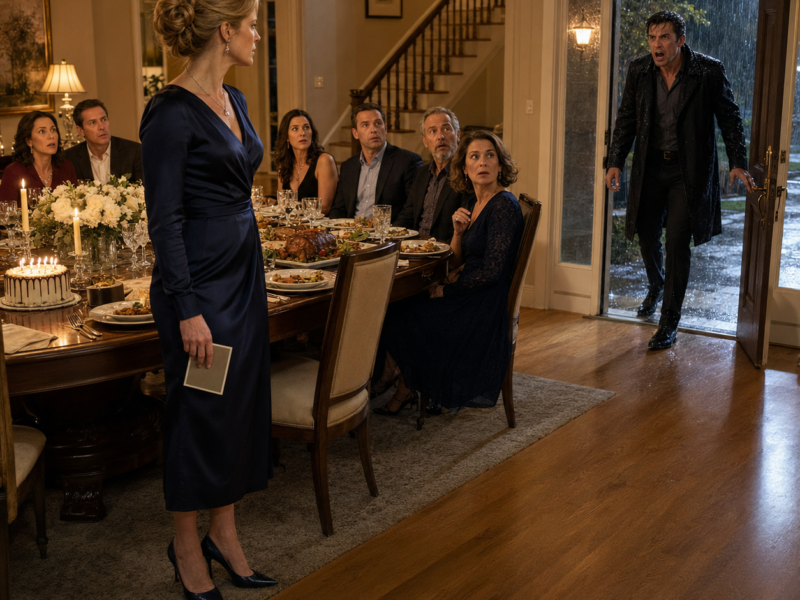
On my husband’s 40th birthday, I spent the afternoon preparing the dinner he had insisted needed to be “done properly.” The table was set for his business partners, his sister, and several old friends. Dinner was in the oven. Champagne was chilling. Then I went upstairs and found Victor’s side of our closet almost completely empty. His suitcase was gone. So was his passport. On my nightstand sat a photograph of him with a woman and a little boy I had never seen before. On the back, in Victor’s handwriting, were the words: “I’m celebrating with my real family. Enjoy your dinner alone.” I read it once. Then I picked up my phone and sent one message to a man named Mark: “Start everything.”
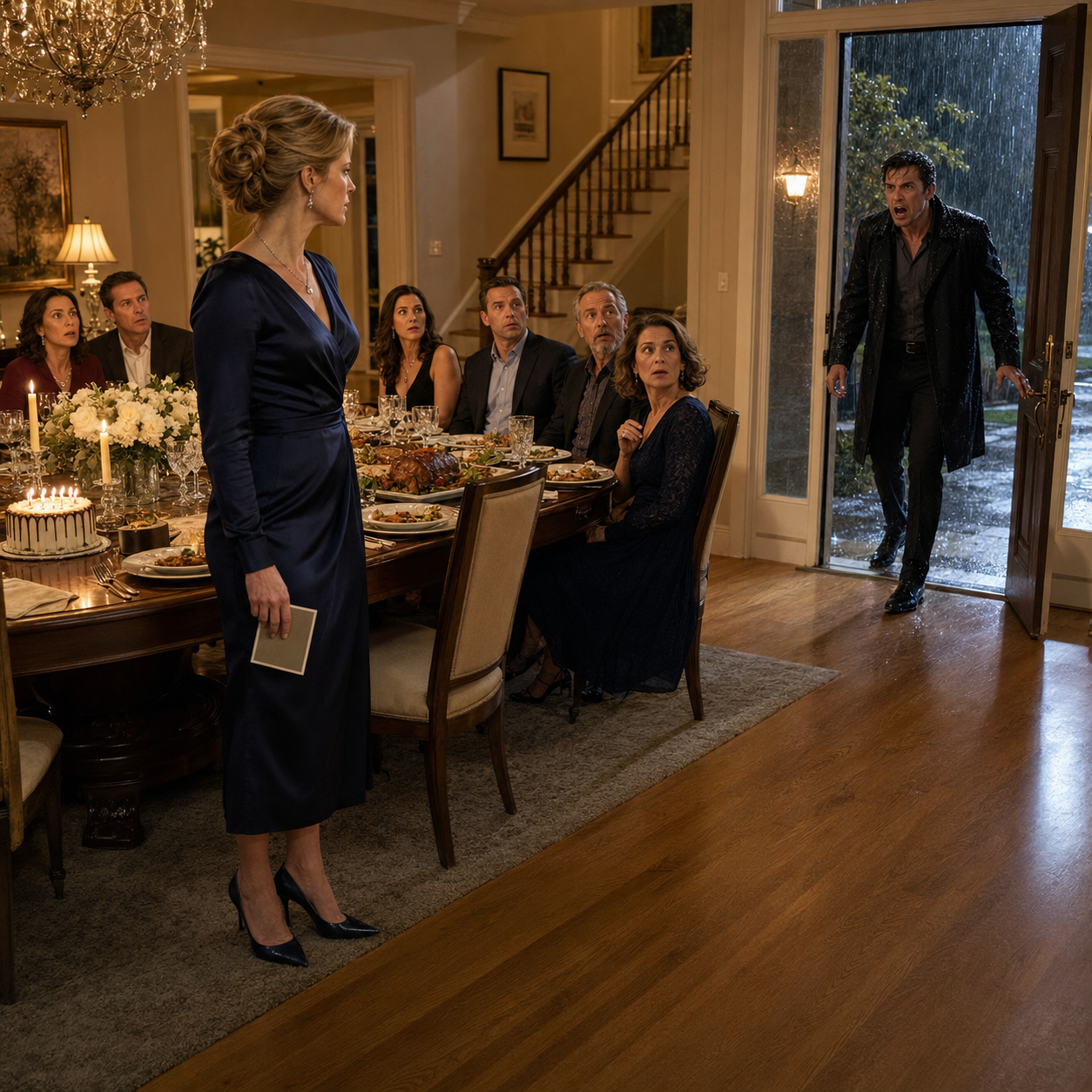
The goose had been in the oven for three hours when I found the photograph.
Honey, orange juice, rosemary, black pepper.
Every twenty minutes, I opened the oven and brushed another layer of glaze across the skin until it turned deep brown and glossy enough to belong in a magazine.
Victor loved dinners that looked expensive.
He liked heavy linen napkins, polished silver, candles in actual brass holders instead of whatever came in a six-pack from Target. He liked crystal glasses even though he drank bourbon from the same short tumbler every night. He liked telling people that standards mattered.
“Forty is not an age,” he had announced the year before. “It’s a level.”
I had laughed.
That Saturday was his fortieth birthday, and I had built the evening around him the way I had built so many evenings around him during fifteen years of marriage.
By four-thirty, the dining room looked perfect.
White chrysanthemums in the middle of the table.
Twelve place settings.
The old china with the thin gold edge.
Silver flatware I had spent Thursday polishing while listening to an audiobook.
Three bottles of cabernet breathing on the sideboard.
Bourbon for his army friends.
A champagne bucket waiting empty because his sister Vera said she was bringing the bottle.
The house smelled like roasted meat, orange, cinnamon, and the magnolia-vanilla perfume I had put on after my shower.
Outside, rain had begun tapping against the windows.
Not dramatic rain.
Late-October Chicago rain.
Gray.
Cold.
Persistent.
The kind that pressed wet maple leaves against the curb and made the whole suburb look older than it was.
We lived in Hinsdale, west of the city, in a four-bedroom brick house Victor and I had bought eleven years earlier when his distribution company finally started making real money.
The house had been ours in the plural for so long that I had stopped thinking about which parts had come from whose labor.
The down payment came mostly from my grandmother’s estate.
Victor made the mortgage payments in the first few years.
Later, we paid from joint accounts.
I designed the kitchen.
He chose the basement bar.
I found the dining table at an estate sale.
He insisted on replacing the windows.
Marriage does that if it lasts long enough.
Objects lose their individual histories.
They simply become the house.
At nine that morning, Victor kissed my temple while I stood at the kitchen island cutting oranges.
“Office.”
he said.
“On your birthday?”
“Twenty minutes.”
He reached for his keys.
“Greg forgot to leave the Singapore packet in my car.”
“Greg is coming tonight.”
“I know.”
“I can ask him to bring it.”
“No.”
Victor smiled.
“Don’t worry.”
“Three o’clock, I’m back.”
“Four at the absolute latest.”
“You swear?”
He lifted two fingers.
“Forty-year-old man’s honor.”
“Which is worth what on the open market?”
“More than your goose.”
He kissed my temple again.
Dry.
Quick.
The way he had been kissing me for months.
Then he left.
I heard the garage door close.
I went back to the oranges.
Victor’s “twenty minutes” had been elastic for most of our marriage.
At first, I complained.
Then I asked fewer questions.
Eventually, asking became more exhausting than not knowing.
That is not a healthy sentence.
I know that now.
At three-fifteen, I texted:
Need you to pick up ice on the way back.
No answer.
At three-forty:
People start arriving at 5:30.
Still nothing.
I kept cooking.
By four, I had decided he had one of his usual emergencies.
A truck stuck at a warehouse.
A supplier calling from another time zone.
A client who believed Saturday was an excellent day to renegotiate a contract.
Victor ran a regional packaging-and-logistics business with two partners.
They handled medical products, specialty foods, imported components, anything expensive enough that clients cared where it was every fifteen minutes.
The business had been good to us.
Or, more accurately, it had eventually been good to us.
The first five years were ugly.
Victor and Greg worked constantly.
I handled invoices after my own job.
We used my credit card for fuel twice.
We delayed a vacation three years in a row.
Then contracts came.
Warehouses expanded.
Employees appeared.
The company stopped feeling like a gamble and started feeling like a career.
Victor became a different man when people began calling him President.
Not all at once.
Nothing important happens all at once.
He bought better suits.
Started going to a barber who charged seventy dollars.
Joined a private gym.
Learned wine words.
Stopped ordering Miller Lite in restaurants because he said clients noticed things.
I noticed things too.
I simply did not always name them.
At four-thirty, I carried fresh napkins upstairs because I wanted to replace the stack in the guest bathroom.
The upstairs hallway was quiet.
Victor’s office door stood open.
That was unusual.
When he was not home, he normally closed it because he hated the cat going inside and sleeping on his leather chair.
We did not have a cat anymore.
Our old tabby, Jasper, died the previous winter.
Still, Victor kept the habit.
I looked in.
Dark monitor.
Desk cleared.
No file packet.
No coat.
Nothing.
I started toward our bedroom.
The door was closed.
I always left it open during the day.
I pushed.
The first thing I saw was the closet.
Both doors open.
Victor’s side nearly empty.
Not disorganized.
Empty.
The hangers were pushed together.
Three old shirts remained.
One suit he hated.
A pair of khakis.
The shoe rack contained two pairs of dress shoes with worn soles.
Everything else was gone.
The drawers in his dresser had been pulled open.
Socks removed.
Underwear.
Sweaters.
Gym clothes.
I stood in the doorway.
My body understood before my mind did.
At the foot of the bed sat a black suitcase.
Not packed.
Abandoned.
Apparently he had filled the larger ones and left this one behind.
A gray sweater sleeve hung over the edge.
A phone charger lay on the carpet.
On the bed was one navy tie.
One black sock.
Nothing more.
Then I saw the envelope.
White.
Propped against the lamp on Victor’s nightstand.
My name was not written on it.
There was only:
ANNA.
I did not open it immediately.
I walked into the closet.
Touched the empty bar.
Victor’s cologne still hung faintly in the room.
The smell did something to me.
Not because I loved the cologne.
Because I had bought the first bottle eleven years earlier after smelling a sample in a department store.
He had used the same brand ever since.
Hundreds of mornings.
Thousands.
A smell can carry more history than a photograph.
I opened the envelope.
One picture.
Matte finish.
Recent.
Victor stood outdoors beneath a flowering tree.
Maybe spring.
Light blue shirt.
Sleeves rolled.
His smile was different.
I had almost forgotten that smile.
Open.
Boyish.
Teeth visible.
The face of a man not measuring his expression.
A woman stood under his arm.
Red hair pulled into a loose knot.
Thirty-something.
Pretty.
Familiar.
I knew her.
Valerie.
My nail technician.
The woman who had been doing my manicures every four weeks for almost two years.
The woman who had once held my left hand under a bright LED lamp and said:
“You know what I love about your marriage?”
I had laughed.
“What?”
“You two still seem like friends.”
Victor’s arm was around her shoulders.
In front of them stood a boy around five.
Red hair.
Dark eyes.
Victor was leaning down to kiss the boy’s cheek.
The child laughed and pulled away.
I turned the picture over.
Victor’s handwriting.
I’m celebrating forty with my real family. Enjoy your precious goose by yourself.
For several seconds, I heard only the old wall clock downstairs.
Tick.
Tick.
Tick.
My first emotion was not rage.
It was embarrassment.
That is humiliating to admit.
I thought of the dinner table.
The goose.
The polished silver.
The candles.
The chrysanthemums.
Twelve adults coming to celebrate a man who had emptied his closet and left me a photograph like a teenager staging a breakup on social media.
I looked at Valerie’s face again.
Then the child.
Five.
Maybe six.
My husband had not met Valerie two years ago when she started doing my nails.
He had known her longer.
Much longer.
I sat on the edge of the bed.
I knew about the affair.
Not everything.
Not this.
But enough.
Six months earlier, I had found a receipt in Victor’s suit pocket while taking clothes to the cleaners.
A jewelry store downtown.
$4,860.
Diamond pendant.
Our anniversary had passed two months before.
My birthday four months earlier.
No pendant.
I told myself client gift.
Then laughed at myself.
Men do not buy clients diamond pendants.
I did not confront him.
That shocks people.
I wish I could say I had some brilliant plan immediately.
I didn’t.
I was afraid.
Not of Victor physically.
Never.
Afraid of information.
There are marriages where ignorance becomes one of the structural supports.
Remove it too quickly and you are afraid the whole roof will come down.
I wanted evidence before I blew up my own life.
So I watched.
Not illegally.
Not hacking his phone.
Not following him.
I simply stopped explaining away what was already in front of me.
Hotel charge in Oak Brook on a Wednesday when he claimed he was in Milwaukee.
Restaurant receipt for two.
Cash withdrawals.
A recurring payment to an apartment-management company I did not recognize.
A cellphone account separate from ours.
One wire transfer labeled consulting that did not match any company I knew.
Then late-night calls.
Saturday errands.
Victor carrying his phone into the shower.
Once, I entered his office unexpectedly and watched him close a browser window so fast he knocked over his coffee.
I asked:
“Porn or crime?”
He laughed.
“Work.”
I smiled.
Then made an appointment with an attorney.
Mark Donovan.
Family law.
Recommended by a woman I knew from a nonprofit board.
Mark was fifty-three and had the personality of someone who had watched enough marriages collapse that nothing impressed him.
At our first meeting, I said:
“I think my husband is having an affair.”
Mark asked:
“Do you want a divorce?”
I started crying.
Not because I wanted one.
Because I had not allowed myself to say the word.
“I don’t know.”
“Fine.”
“Then we’re not filing.”
He gave me a legal pad.
“Start with finances.”
“Not romance.”
“Why?”
“Because affairs hurt.”
“Financial surprises can ruin you.”
We spent two hours listing everything.
House.
Company interests.
Retirement accounts.
Brokerage.
Checking.
Life insurance.
My inherited apartment downtown.
Yes.
I owned a one-bedroom condo in Chicago that had belonged to my grandmother.
It was rented to a graduate student.
Separate property.
Mark immediately told me:
“Do not sell it.”
“I wasn’t planning to.”
“Good.”
Victor’s business.
Three partners.
Complicated structure.
I had helped with the company’s books years earlier but no longer touched them.
Mark referred me to a forensic accountant named Susan Park.
For the next five months, Susan and Mark quietly taught me the difference between suspicion and documentation.
I learned something else too.
Victor had been moving money.
Not necessarily illegally.
But secretly.
Large distributions from the business flowed into a separate LLC formed three years earlier.
The LLC paid rent on a two-bedroom townhouse in Elmhurst.
Car lease.
Private school? No. The boy was only five.
Daycare.
Furniture.
Insurance.
Utilities.
Support.
Valerie’s name appeared nowhere on the LLC.
Victor’s did.
When Susan showed me the spreadsheet, I stared.
“This has been going on how long?”
“At least four years from records we can access.”
The child in the photograph looked five.
I knew then there might be a child.
I did not know for certain.
Mark told me:
“Do nothing yet.”
That made me furious.
“He is using marital money.”
“Possibly.”
“What do you mean possibly?”
“Business distributions.”
“Ownership.”
“Tax treatment.”
“We prove first.”
“Then act.”
I spent months living beside a man whose financial footprints were leading toward another household.
That is not strength.
It was torture.
Sometimes I wanted to scream at breakfast.
Who is she?
Do you have a child?
Does she know you’re married?
Do your partners know?
Instead:
“Coffee?”
“Yes.”
“Eggs?”
“No.”
Our marriage became a stage play neither of us had admitted we were performing.
I think Victor sensed something.
He became overly courteous.
Flowers once.
A weekend in Lake Geneva.
A necklace for my birthday.
Not diamond pendant.
Cheaper.
I thanked him.
Then photographed the receipt when he left it in the trash.
Mark asked me:
“How long can you live like this?”
I said:
“Until I know enough.”
He said:
“You may never feel like you know enough.”
He was right.
Then came Victor’s fortieth birthday.
The empty closet.
The photograph.
The sentence about his real family.
I sat on the bed.
Reached for my phone.
There was already a draft text to Mark I had written a week earlier and never sent.
He’s leaving. File.
I deleted it.
Typed:
He left today. Closet empty. Left photo with another woman and child plus a written note saying he’s with his “real family.” I’m done. Start Monday.
Mark responded within a minute.
Save the note. Photograph room before touching anything. Do not move money. Do not destroy anything. I’ll call in ten.
I photographed.
Closet.
Drawers.
Suitcase.
Photo front.
Photo back.
Envelope.
Then put everything in a large zip folder.
My hands were steady.
That surprised me.
Mark called.
“Are you safe?”
“Yes.”
“He’s gone?”
“Yes.”
“Guests are coming.”
“What guests?”
“Birthday dinner.”
A long silence.
“You’re kidding.”
“No.”
“Cancel.”
I looked toward the hallway.
I could smell the goose.
“No.”
“Anna.”
“I’m not canceling.”
“Why?”
“I cooked.”
Mark sighed.
“Of course that’s your answer.”
“What do I do?”
“Tonight?”
“Nothing financial.”
“I’m emailing Victor formal notice that you’re represented and that he should preserve marital and business records and not dissipate assets.”
“Monday morning we file.”
“Then seek temporary orders.”
“Do not tell him accounts are frozen.”
“They are not.”
“Do not threaten the IRS.”
“Do not call his partners.”
“Do not post anything.”
“I know.”
He paused.
“Do you have somewhere to sleep?”
“The house is mine too.”
“Yes.”
“But after tonight?”
“I have Grandma’s condo once the tenant moves next month.”
“Hotel.”
“Friend.”
“Your sister.”
“Do not stay alone with him if things escalate.”
“He’s never hurt me.”
“That’s not what I asked.”
I understood.
“Okay.”
Then:
“Mark.”
“Yes?”
“Do you think the boy is his?”
“I don’t know.”
I stared at the photograph.
“He looks like him.”
“Anna.”
“Don’t go there tonight.”
“Tonight is not for solving the child.”
“Tonight is for protecting you from making a terrible decision while devastated.”
I laughed once.
“You’re very comforting.”
“I bill for usefulness.”
Then the doorbell rang.
“Guests.”
Mark said:
“Call me if he comes back.”
I hung up.
Walked into the bathroom.
Washed my face.
My makeup had not moved.
That irritated me.
I wanted some physical evidence that fifteen years had just ended.
There was none.
I went downstairs.
Victor’s sister Vera stood outside holding white roses.
Her husband Owen had a bottle of champagne.
“Birthday woman!”
Vera said.
Then laughed.
“Wrong spouse.”
She hugged me.
“Where’s the ancient man?”
My mouth worked before my mind.
“Office.”
“What?”
“Singapore client crisis.”
Victor had used Singapore often enough that it sounded plausible.
“He said start without him.”
Vera rolled her eyes.
“Of course.”
Then:
“On his birthday?”
“You know Victor.”
“Yes.”
She carried the roses in.
Owen handed me the champagne.
“You okay?”
The question was casual.
Still, it almost opened me.
“Fine.”
I smiled.
People arrived.
Greg Morrison, Victor’s business partner.
His wife Laura.
Nick and Jennifer Ross, friends from Victor’s Army Reserve years.
Victor’s younger sister, Mia, who had driven from Indianapolis with her husband.
Two neighbors.
The room filled.
Wet coats.
Perfume.
Laughter.
Wine.
The ordinary noise of people who did not know they had walked into the final evening of a marriage.
I kept hosting.
That decision gets misunderstood.
Some people think I wanted to humiliate Victor publicly.
Not yet.
I wanted the evening I had spent three days preparing.
That sounds pathetic.
Maybe.
But there was something else.
I was not ready to cancel my entire identity five minutes after discovering a photograph.
For fifteen years, I had been the person who made things run.
Holiday dinners.
Company events.
Birthdays.
Funerals.
Hospital visits.
Client receptions.
I needed one familiar action.
Slice bread.
Pour wine.
Check goose.
Set salad.
Something ordinary while my mind tried to survive.
Guests asked about Victor.
“Conference call.”
“Traffic.”
“Be here soon.”
I lied.
I hated that.
At six-fifteen, my phone vibrated.
Mark.
Sent preservation notice. He has it.
Two minutes later:
He called my office six times. Don’t answer unless you want to.
I put the phone face down.
Greg sat near the fireplace discussing a warehouse expansion.
He looked completely normal.
I studied him.
Had he known?
I did not know.
That was the problem with betrayal.
It infects innocent faces.
You start wondering who else had access to the truth.
I went into the kitchen.
Opened the oven.
Steam hit my face.
The goose was perfect.
I laughed.
Then cried.
Quietly.
Thirty seconds.
I wiped my eyes with a paper towel.
My phone rang.
Victor.
I answered.
“Hello.”
“What the hell are you doing?”
No greeting.
His voice was low.
Controlled.
More frightening than shouting, though I was not afraid of him.
I leaned against the pantry door.
“Happy birthday.”
“What did you send Mark Donovan?”
“I sent him a photograph.”
“Anna.”
“And your note.”
Silence.
Then:
“You hired a lawyer.”
“Months ago.”
That stopped him.
“What?”
“You heard me.”
“You’ve been spying on me?”
“No.”
“You went through my business.”
“I reviewed marital financial records with professionals.”
“Same thing.”
“No.”
“What did Mark mean by preservation?”
“Ask him.”
“Did you touch the accounts?”
“No.”
“Did you freeze anything?”
“No.”
“I know enough not to do that myself.”
He became quieter.
“Then what are you trying to pull?”
“You left.”
“You ended the marriage.”
“I’m responding.”
“Like a lunatic.”
I looked at the dining room through the cracked kitchen door.
Vera laughing.
Candles.
Bourbon.
Fifteen years of people who believed we were one thing.
“Victor.”
“What?”
“You left me a note telling me to choke on dinner while you celebrated with your real family.”
“Don’t pretend you wanted a conversation.”
He breathed.
Then:
“It’s over.”
“Yes.”
“I know.”
“Good.”
“Then don’t make this ugly.”
I almost laughed.
“Ugly?”
“I’ll be fair.”
“You keep the downtown condo.”
“I take my business.”
“We sell the house.”
“You get half.”
Simple.
Already planned.
He continued.
“I don’t want a war.”
Neither did I.
“Then tell your attorney to call mine Monday.”
Silence.
“Who is Valerie’s son?”
His breathing changed.
There.
I had not said:
Your son.
Just:
Valerie’s son.
Victor said:
“Leave him out of this.”
“I intend to.”
“Anna.”
“What is his name?”
“Why?”
“Because you left his photograph on my bed.”
Victor was silent.
Then:
“Leo.”
Five letters.
A child.
A person suddenly existing in the wreckage.
“How old?”
“Five.”
“Are you his father?”
Another silence.
“Yes.”
I closed my eyes.
Not surprise.
Confirmation.
Sometimes confirmation hurts more.
“How long?”
Victor’s voice hardened.
“This isn’t happening on the phone.”
“How long?”
“Six years.”
Six.
The room tilted slightly.
I put one hand against the counter.
“Before Valerie started doing my nails.”
“Yes.”
“Did she know who I was?”
Silence.
“Victor.”
“Eventually.”
That answer would matter later.
At the moment, it felt like a blade.
“You brought me to her.”
“No.”
“She already worked at the salon.”
“You chose her.”
“I didn’t arrange it.”
“But you knew.”
“Yes.”
I felt nausea.
Not jealousy.
Humiliation.
For almost two years, Valerie had touched my hands while sleeping with my husband.
“Does she know you left me a photograph?”
“No.”
“Does she know you wrote ‘real family’?”
“No.”
“Good.”
“Why good?”
“Because that cruelty is yours.”
He said nothing.
Then:
“Where are you?”
I asked.
“That’s none of your business.”
“Correct.”
I hung up.
The guests never knew about that call.
Not yet.
I walked back into the dining room.
Raised a glass.
I had no prepared toast.
Words came anyway.
“To forty.”
Everyone cheered.
Then I said:
“And to the moment life stops asking permission before it changes.”
Vera smiled.
“That got dark.”
People laughed.
I did too.
Then a car door slammed outside.
My body knew before Vera looked through the window.
“That’s Victor.”
The front door opened hard enough to strike the stopper.
He still had his key.
Of course.
Victor stepped inside.
Wet hair.
Gray shirt.
Dark coat half buttoned.
Rain on his shoes.
His face looked furious and scared.
Not the boyish man in the photograph.
The Victor I knew.
The man who believed control was a personality trait.
He saw the coats.
He had not expected guests to still be there.
“Anna.”
I remained in the dining-room doorway.
Vera stood.
“Vic?”
He looked toward her.
Then everyone.
“Why are people here?”
Nick laughed awkwardly.
“It’s your birthday, man.”
Nobody else laughed.
Victor turned back to me.
“Can we talk?”
“Yes.”
“Privately.”
“No.”
His jaw tightened.
“Anna.”
“You came into a room full of guests.”
“You can leave and call your lawyer.”
“Or you can say what you came to say.”
Greg looked uncomfortable.
“Maybe we should go.”
Victor snapped:
“No.”
Then immediately:
“Everybody stay.”
Wrong choice.
I saw it as soon as he said it.
He wanted witnesses now.
Not to confession.
To his version.
He walked into the dining room.
“You all should know what my wife has done.”
Vera frowned.
“What?”
Victor pointed toward me.
“She hired an attorney months ago.”
“She’s been digging through company records.”
“She sent a legal threat tonight.”
“She is trying to lock me out of my own money.”
I spoke.
“No.”
He turned.
“No what?”
“I have not locked you out of anything.”
“Mark threatened an injunction.”
“That is not the same thing.”
“He threatened the company.”
“No.”
“He told you to preserve records.”
Greg stood.
“Victor.”
Victor looked at him.
“Not now.”
Greg’s face changed.
He knew enough to become nervous.
I noticed.
Victor continued.
“Anna has been planning this.”
“Yes.”
I said.
That surprised him.
Everyone.
“Yes?”
Vera whispered.
I reached into my dress pocket.
The photograph was folded inside a protective sleeve.
I placed it on the table.
Face up.
Beside the goose.
Vera saw first.
Her hand flew to her mouth.
Greg looked away.
Laura stared.
Nick swore quietly.
Victor’s whole body tightened.
I said:
“I found this upstairs about ninety minutes ago.”
“Along with an empty closet.”
“And a note.”
I turned the photograph over.
Read:
I’m celebrating forty with my real family. Enjoy your precious goose by yourself.
No embellishment.
Just his sentence.
Vera sat down.
“Victor.”
He looked at her.
Nothing.
I continued.
“The woman is Valerie.”
“My nail technician.”
“She and Victor have been together for six years.”
“The little boy is five.”
“Victor just confirmed he is his son.”
Vera began crying.
Quietly.
Mia stared at her brother as if he had become someone else.
Victor raised both hands.
“This is private.”
I laughed once.
“You left a printed photograph on our bed.”
“You made it stationery.”
He looked humiliated.
Good.
Then I hated myself for enjoying that.
Greg cleared his throat.
“We should leave.”
Victor turned on him.
“You knew.”
The room changed.
Greg’s face drained.
“I knew about Valerie.”
There.
Laura looked at her husband.
“What?”
Greg closed his eyes.
“Not everything.”
Victor stared.
“Don’t.”
Greg looked at me.
“Anna.”
“I’m sorry.”
“How long?”
“Two years.”
Laura stood.
“Greg.”
He reached for her.
She stepped away.
I realized betrayal was spreading.
Not identical.
But secrets breed secondary victims.
I held up my hand.
“No.”
“This is not tonight.”
“I’m not doing everyone’s marriage.”
Greg sat.
Laura did not.
Victor became angry at Greg.
“At least say what you know.”
Greg answered:
“I told you to end one relationship before building another.”
“Several times.”
“You didn’t listen.”
“You knew about Leo?”
Greg nodded once.
Victor looked betrayed.
As if Greg’s honesty had wounded him.
That almost made me laugh again.
Vera stood.
“Is this true?”
“Vic?”
“You have a son?”
Victor looked at his sister.
“Yes.”
“How old?”
“Five.”
“And you never told us?”
“It was complicated.”
Vera stared.
“You had a child five years ago.”
“You came to Christmas.”
“Mom’s funeral.”
“My wedding anniversary party.”
“You stood next to Anna.”
“You never…”
She stopped.
Mia began crying too.
Victor snapped:
“Can everybody stop acting like I murdered someone?”
The room froze.
I said:
“No one said that.”
“Then stop.”
“You made choices.”
“Now people know.”
He turned to me.
“And you think you’re innocent?”
There.
I waited.
He continued.
“You checked out years ago.”
“You barely touched me.”
“You cared more about this house than us.”
“You cared more about table settings than whether I was happy.”
I felt the old reflex rise.
Defend.
Explain.
Then stopped.
“Maybe.”
That disarmed him.
“What?”
“Maybe our marriage was lonely.”
“It was.”
“Maybe I avoided questions.”
“You did.”
“Maybe I knew something was wrong and chose comfort.”
“Yes.”
“None of that made a second family without telling me.”
Silence.
I looked at him.
“If you were unhappy, you could have left six years ago.”
“You could have told me.”
“You could have filed for divorce before Leo was born.”
“You could have given me the chance to build a life that was true.”
He looked away.
“That part is yours.”
He had no answer.
The guests began leaving.
One by one.
Not because I asked.
Because the birthday was over.
Vera hugged me.
Then stopped halfway, unsure.
I hugged her back.
“This isn’t your fault.”
She whispered:
“I should’ve known.”
“No.”
“Don’t do that.”
“You are not responsible for your brother’s secret life.”
Owen put her coat around her shoulders.
Mia left crying.
Nick shook Victor’s hand automatically, then seemed to regret it.
Greg and Laura left separately.
That story would unfold elsewhere.
Soon only Victor and I remained.
The goose sat between us.
Untouched except for one slice.
Candles burned low.
The clock ticked.
Victor looked tired.
Forty years old.
Birthday.
Two families.
No room where he fully belonged anymore.
“Are you going to destroy the company?”
he asked.
“No.”
“Then why the forensic accountant?”
“Because marital money paid for another household.”
He closed his eyes.
“I supported my child.”
“I know.”
“That isn’t wrong.”
“No.”
“Supporting your child is not wrong.”
I said.
“Hiding hundreds of thousands of dollars from your spouse may matter in divorce.”
“That’s for lawyers.”
“Exactly.”
He stared.
“You’ve become cold.”
“Maybe.”
“When?”
I thought.
“Probably when warmth stopped protecting me.”
He looked at the photograph.
Then:
“Valerie isn’t some gold digger.”
“I didn’t say she was.”
“She worked.”
“I know.”
“She never asked me to leave you for money.”
“I didn’t say she did.”
“She’s a good mother.”
“Victor.”
“What?”
“I am not fighting Valerie.”
He looked surprised.
“I don’t know what she knew.”
“I don’t know what you told her.”
“I know what you told me.”
“That is enough.”
He sat.
For the first time that night, he looked ashamed rather than angry.
“I told her we were separated.”
I stopped.
“What?”
“At first.”
“How long?”
“Years.”
“She thought we lived separately?”
“I said we lived in the same house for financial reasons.”
I laughed.
Not because funny.
Because cruelty keeps discovering basements.
“Did she know eventually?”
“Yes.”
“When?”
“Two years ago.”
Around the time she started doing my nails.
I closed my eyes.
“So she knew me.”
“Yes.”
I nodded.
That hurt.
Still:
Not my battle.
“Is Leo definitely yours?”
“Yes.”
“Paternity?”
Victor looked offended.
“Of course.”
I did not apologize.
He had forfeited assumptions.
“What are you doing now?”
he asked.
“Hotel tonight.”
“You don’t have to leave.”
“I know.”
“This is your house too.”
“I know.”
“You can stay.”
“I don’t want to.”
He looked almost hurt.
Interesting.
“Then what?”
“Monday, Mark files.”
“Temporary financial orders.”
“House.”
“Business interest.”
“Accounts.”
“Disclosure.”
“Then we negotiate or litigate.”
“You sound like him.”
“I paid attention.”
He looked around.
“What do I do?”
That question stunned me.
For fifteen years, Victor always knew what he was doing.
At least publicly.
“I don’t know.”
“Go to Valerie.”
His face changed.
“She’s furious.”
“Why?”
“I told her everything was handled.”
“Meaning?”
“That I’d leave cleanly.”
“That finances were separate.”
“That…”
He stopped.
“What?”
“She didn’t know about the lawyer.”
“Neither did you.”
He laughed bitterly.
“Apparently.”
I went upstairs.
Packed one small overnight bag.
Victor stood at the bottom of the stairs.
I came down wearing my coat.
“Anna.”
I stopped.
“Was any of it real?”
There are questions designed to make both people bleed.
I could have said:
No.
Fifteen wasted years.
Liar.
Monster.
Instead:
“Yes.”
He looked surprised.
“Much of it.”
“I loved you.”
“I think you loved me.”
“We built a house.”
“A business helped pay for a life.”
“We had good years.”
“That is why this hurts.”
His eyes filled.
I continued.
“Real things can still end badly.”
He nodded.
Then:
“I’m sorry.”
I looked at him.
“You’re sorry now.”
“Yes.”
“That’s different from being honest when honesty cost you something.”
I opened the door.
Rain.
Cold.
I left.
The hotel room overlooked downtown lights blurred by wet glass.
I removed my shoes.
Changed into a robe.
Ordered tea.
No fruit platter.
No movie.
I sat by the window.
Mark called.
“How bad?”
“Public.”
He sighed.
“What did you do?”
“He came home.”
“He told everyone I hired you.”
“So I showed them the photograph.”
Long pause.
“Not ideal.”
“I know.”
“Not illegal.”
“Thank you.”
“I didn’t mention financial records except that you sent preservation notice.”
“Good.”
“Where is he?”
“House.”
“Where are you?”
“Hotel.”
“Good.”
“Do you want me to come tomorrow?”
“No.”
“I’m sleeping.”
“Anna.”
“What?”
“You won’t.”
“I know.”
I did not.
At three in the morning, I ordered toast.
The goose crossed my mind.
I laughed alone.
Then cried until dawn.
Monday was not cinematic.
Courthouse.
Electronic filing.
Affidavits.
Financial-disclosure requests.
A motion for temporary orders preventing either party from transferring major marital assets outside ordinary business and living expenses without agreement or court approval.
Nothing froze instantly.
Nothing vanished.
Victor had access to money for lawyers, housing, food, his child, normal business.
The point was preservation.
Not punishment.
Mark emphasized that constantly.
“You are not trying to make him unable to live.”
“You are trying to stop one spouse from moving assets while property division is pending.”
I understood.
The court entered temporary restrictions after an expedited hearing.
Victor’s attorney agreed to much of it because fighting would look worse than complying.
The house remained jointly held.
Neither of us could sell without agreement.
The business continued operating.
Victor received salary.
Distributions above normal levels required accounting.
The side LLC became part of discovery.
Susan traced payments.
Townhouse rent.
Childcare.
Car.
Health expenses.
Travel.
A private account Victor had funded from business distributions without disclosing it on the household financial statements he gave me each year.
The total was not enough to “destroy” him.
It was enough to matter.
More than $280,000 over several years had been spent supporting the second household or moved into accounts I did not know existed.
Some expenditures were legitimate support for his child.
Some were gifts to Valerie.
Some were ordinary expenses.
Family court did not treat every dollar as stolen.
That surprised people who wanted revenge.
Reality was more careful.
The question was what constituted dissipation of marital assets under our circumstances and what credits should be accounted for during equitable division.
Lawyers argued.
Accountants calculated.
Nobody pounded a gavel and handed me Victor’s entire life.
Good.
I did not want it.
What I wanted changed over the months.
At first:
I wanted every dollar.
Then:
I wanted him embarrassed.
Then:
I wanted Valerie to suffer.
I am not proud of that.
I never acted on it.
But I felt it.
Then one afternoon, Valerie called.
Unknown number.
I almost declined.
Answered.
“Anna?”
I knew her voice instantly.
Months of manicures.
Small talk.
The strange intimacy of someone holding your hands while asking about your marriage.
“Yes.”
Silence.
Then:
“I’m sorry.”
I said nothing.
“I know you have no reason to speak to me.”
“Why are you calling?”
“Because Victor says you’re trying to take everything.”
I laughed.
“He would.”
“I don’t know what’s true.”
“Then ask your lawyer.”
“I don’t have one.”
“You probably should.”
She became quiet.
Then:
“I need you to know something.”
I almost hung up.
Still listened.
“When Victor and I met, he told me you were separated.”
“I know.”
“He said you lived in the same house because of business and the mortgage.”
“I know.”
“I believed him.”
“For how long?”
“Three years.”
That matched.
“When did you learn the truth?”
She started crying.
“Leo was almost four.”
“How?”
“I saw a Christmas picture.”
“What?”
“His sister posted it.”
“You were standing together.”
“Your hand was on his shoulder.”
“He told me it was for family appearances.”
My stomach tightened.
“And you kept seeing him.”
“Yes.”
“Why?”
“I loved him.”
There was no defense.
Just truth.
“I should have left.”
“Yes.”
“I know.”
“Why did you become my nail technician?”
Valerie cried harder.
“I already worked there.”
“I didn’t know you were coming the first time.”
“Victor knew?”
“I think so.”
I closed my eyes.
“Did he tell you to take me?”
“No.”
“After the first appointment, I told him.”
“What did he say?”
She hesitated.
“He laughed.”
That one hurt almost as much as the affair.
“Why didn’t you refuse me?”
“Because that would’ve raised questions.”
“So you sat across from me every month.”
“Yes.”
“You asked about my weekends.”
“Yes.”
“You complimented my marriage.”
“I know.”
Silence.
Then:
“I hated myself afterward.”
“That did not stop you.”
“No.”
Good.
No false excuse.
“What do you want from me?”
“Nothing.”
“Then why call?”
“Because Leo heard Victor yelling about court.”
“He thinks something is his fault.”
My anger changed direction.
A five-year-old.
No.
“Tell him it is not.”
“I do.”
“Keep him away from details.”
“I’m trying.”
Then Valerie said:
“Victor left us too.”
I stared.
“What?”
“He’s staying in a corporate apartment.”
“He said he needs space.”
Of course.
Two women.
One man needing space.
I almost laughed.
Instead:
“I’m sorry for Leo.”
“Not for me?”
She asked softly.
“No.”
“That’s fair.”
Then:
“Anna.”
“What?”
“I’m sorry I knew.”
I closed my eyes.
“Thank you for saying it plainly.”
I ended the call.
I never became friends with Valerie.
No joint healing retreat.
No sisterhood.
But that conversation did something important.
It returned Victor’s choices to Victor.
Valerie was responsible for what she knowingly did.
Victor was responsible for building two realities and lying inside both.
I stopped needing to collapse them into one villain.
The boy, Leo, was innocent.
Completely.
I made Mark put that in every conversation where support expenses came up.
“I don’t want anyone implying his existence is misconduct.”
Mark looked at me.
“Good.”
“Victor’s concealment is relevant.”
“The child is not wrongdoing.”
Exactly.
That mattered to me.
Victor remained Leo’s father.
Whatever happened to us, he needed to support him.
I did not want revenge funded by a child’s instability.
Divorce took fourteen months.
Not three.
The company became the most complicated asset.
Victor owned forty percent.
Greg thirty-five.
A third partner twenty-five.
The company itself was healthy, but Victor’s stake had value.
Selling it would damage everyone.
We negotiated a buyout credit rather than forcing liquidation.
Greg and the third partner eventually bought part of Victor’s interest so I could receive marital value without becoming an owner in a business I did not want.
Victor retained a smaller stake and his executive role for a time.
Greg’s marriage survived.
Barely, from what Vera later told me.
Laura had been furious that Greg knew about the affair and said nothing.
He went to counseling.
Not my story.
The house was sold the following spring.
Neither of us wanted to keep it.
Too many rooms.
Too many ghosts.
The buyer was a family with three children and a golden retriever.
At closing, the woman said:
“We fell in love with the dining room.”
I almost laughed.
“Good.”
I hope they used it.
I moved into my grandmother’s condo downtown after the tenant’s lease ended.
One bedroom.
Old hardwood.
Radiators that clanged every winter.
A tiny balcony with enough room for two chairs.
I loved it.
For the first month, every noise sounded wrong because houses have different rhythms.
No Victor walking downstairs at six.
No garage door.
No television through the wall.
No business calls.
I had spent fifteen years thinking silence meant absence.
I learned it could mean no one was lying in the next room.
That is a harsh sentence.
It was also freedom.
Financial settlement was fair.
Not a fantasy.
I received my share of house equity.
Retirement division.
A negotiated value for Victor’s business interests.
Credit for certain proven dissipation.
My inherited condo remained mine.
Victor retained significant assets too.
He was not ruined.
He was less wealthy than he expected to be after leaving.
That is different.
The side LLC was dissolved during settlement.
Tax filings were amended for a few issues the forensic accountant discovered.
No dramatic federal agents.
No handcuffs.
No prison.
Mostly accountants.
Penalties.
Professional fees.
Stress.
Real consequences are often administered by people with spreadsheets.
Victor hated that more than spectacle.
He wanted a fight he could win emotionally.
Instead he got documents.
Valerie moved with Leo to Milwaukee to be closer to her mother.
Victor had a parenting schedule.
He drove.
Paid support.
Later, from what Vera told me, he rented an apartment halfway between Chicago and Milwaukee for weekends.
I never asked details.
Leo deserved a father who showed up.
Whether Victor became one was between them.
About eight months into the divorce, Victor asked to meet me.
Mark advised public place.
We met at a diner in Oak Brook.
Not our old restaurants.
Coffee.
Booth.
He looked thinner.
No expensive suit.
Blue sweater.
The Victor from earlier years appeared in flashes.
“Thanks for coming.”
“What do you need?”
He winced.
“Still efficient.”
“Yes.”
He stared at coffee.
Then:
“I want to apologize.”
“Okay.”
“For the affair.”
“Okay.”
“For Leo.”
“No.”
He looked up.
“What?”
“Do not apologize for your son.”
His face changed.
I continued.
“Apologize for lying.”
“For creating him inside a marriage you were pretending still existed.”
“For concealing him.”
“But Leo is not something you apologize for.”
Victor nodded slowly.
“You’re right.”
That was the first conversation we had where I believed he was no longer trying to win.
“I’m sorry for lying.”
he said.
“For years.”
“I’m sorry for making you think you were paranoid when you noticed things.”
“I’m sorry about Valerie doing your nails.”
“That was cruel.”
“Yes.”
“It was.”
“And the photograph?”
He closed his eyes.
“I wanted you to hurt.”
“Why?”
“Because I was angry you never left.”
I stared.
“That makes no sense.”
“I know.”
“Explain.”
He rubbed his hands together.
“I kept telling myself you didn’t care.”
“That you’d become cold.”
“That I had to go find a life where somebody wanted me.”
“But every time I came home, you were there.”
“You cooked.”
“You asked about my day.”
“You planned this stupid birthday.”
“The nicer you were, the worse I felt.”
I listened.
“So you needed me to become the villain.”
“Yes.”
“And I wouldn’t.”
“No.”
“So you wrote the note.”
“Yes.”
He looked ashamed.
“I wanted to make sure there was no way back.”
I understood that.
Not forgave yet.
Understood.
“Were you planning to leave Valerie too?”
His face tightened.
“I don’t know.”
“Then.”
“I thought we would be a family.”
“And after?”
“I realized I had built her entire relationship around promising a future I never actually tested.”
That sounded almost mature.
Pain teaches vocabulary.
“What happened?”
“She stopped trusting me.”
“Reasonable.”
“Yes.”
He laughed once.
Then:
“She said if I could lie beside one woman for six years, I could lie beside another.”
I looked out the window.
“Also reasonable.”
“Very.”
We drank coffee.
Then Victor said:
“Do you hate me?”
I thought.
“Sometimes.”
He nodded.
“Fair.”
“Mostly I’m tired.”
“That’s worse.”
“Maybe.”
He looked at me.
“Do you think any of the marriage was good?”
“Yes.”
Immediate.
His eyes filled.
“Why can you say that?”
“Because I don’t need fifteen years to be fake in order for the ending to be wrong.”
He looked down.
“I don’t know how you do that.”
“I’ve had fourteen months.”
He laughed.
Then cried.
Quietly.
I did not comfort him physically.
No hand.
No hug.
But I waited.
That was enough.
When we left, Victor said:
“Happy birthday to me.”
I stared.
“What?”
“That dinner.”
“Worst birthday ever.”
I almost smiled.
“You chose the theme.”
He laughed through embarrassment.
That was the last personal conversation we had for a long time.
After the divorce became final, I changed more slowly than people expected.
I did not immediately open a coffee shop.
That is the kind of ending stories like this prefer.
Woman leaves cheating husband.
Buys cute café.
Learns to love herself between cappuccinos.
Real life requires permits.
Money.
Business plans.
Commercial leases.
Food-safety certifications.
Staffing.
Insurance.
And a good espresso machine costs more than some used cars.
But I had wanted something like it for years.
Before Victor’s business grew, I worked in arts administration.
A small gallery in River North.
Then event coordination.
When the company became demanding, I shifted into consulting and eventually worked less.
I helped Victor host.
Network.
Manage client events.
I became the invisible social infrastructure of his business and our household.
After divorce, I needed work that belonged to me.
Not simply a hobby.
I spent six months volunteering two days a week at a neighborhood arts nonprofit.
Then a friend introduced me to a woman named Denise Cooper, who owned a small bookstore café near Lincoln Square.
Denise wanted to retire.
Her daughter did not want the business.
The lease had four years left.
Books were profitable enough.
Coffee was better.
Food was limited.
The place needed updating.
I did not buy it immediately.
I spent nine months reviewing numbers.
With an accountant.
Mark laughed when I told him.
“You’ve become unbearable.”
“Why?”
“You read contracts now.”
“I always read contracts.”
“Not like this.”
Fair.
I bought fifty-one percent first.
Denise stayed for a year.
We renamed nothing.
No dramatic rebrand.
The shop had been called Maple Street Books & Coffee for eighteen years.
Customers hated change.
Smart.
I improved lighting.
Added local art.
Replaced two couches.
Expanded pastries through a nearby bakery instead of building a kitchen.
Started Sunday author events.
Small.
Steady.
Mine.
The first morning I opened alone, I arrived at six.
Turned on lights.
Made coffee.
Unlocked the door.
A retired teacher named Mr. Lewis came in at six-twenty because he apparently had nowhere else to be.
“New owner?”
“Partly.”
“Coffee still the same?”
“Yes.”
“Good.”
That was my grand opening.
No ribbon.
No champagne.
One old man protecting his coffee.
I loved it.
Vera came sometimes.
My former sister-in-law.
She asked permission first.
“Is it weird if I come?”
“No.”
She sat by the window.
Ordered cappuccino.
Never asked me to forgive Victor.
Never defended him.
Once, she said:
“I’m sorry our family benefited from you thinking everything was fine.”
“What does that mean?”
“Birthdays.”
“Christmas.”
“Mom’s hospital stay.”
“You showed up.”
“He was lying.”
“We were eating your food.”
I laughed.
“That is not your fault.”
“I know.”
“Still feels strange.”
I understood.
We remained friends.
Not extremely close.
Enough.
At Christmas after the divorce, Vera sent me a card.
Signed:
Love, Vera.
Not:
Your sister-in-law.
Labels changed.
Affection could remain.
I dated nobody for two years.
Not because men were terrible.
Because every first-date question exhausted me.
“So what happened with your marriage?”
Not tonight.
“What do you do?”
Long answer.
“Kids?”
No.
Victor and I had tried early.
Two miscarriages.
Then stopped.
That was another quiet grief the affair had stepped around.
For years, I wondered whether Leo’s existence would destroy me because I could not have carried a child to term.
It did hurt.
Deeply.
But not because Leo had stolen some imaginary child from me.
He had nothing to do with my losses.
Victor had been given another path to fatherhood and chosen to hide it.
That was his failure.
Not the boy’s existence.
Therapy helped me separate those truths.
Yes.
Therapy.
I went.
I resisted because I thought talking about things I already understood was redundant.
My therapist, Dr. Claire Meyers, asked during the second month:
“Why did you keep hosting the party after finding the photograph?”
I gave the goose answer.
“I cooked.”
She stared.
I laughed.
“Fine.”
Then:
“Because if I canceled, everyone would know before I knew what I was.”
“What were you?”
I became quiet.
“Not his wife anymore.”
“That frightened you?”
“Yes.”
“More than the affair?”
At that moment?
Yes.
Identity loss.
Marriage can become an address inside your own name.
Anna-and-Victor.
Victor’s wife.
Mrs. Whitmore.
The house.
The company dinners.
The people.
The habits.
When the person leaves, you lose more than them.
You lose grammar.
Singular feels strange.
Therapy helped.
So did work.
So did time.
The photograph stayed in Mark’s evidence file for more than a year.
After settlement, his assistant asked whether I wanted the original.
I almost said no.
Then took it.
It sat in an envelope in my desk.
I did not burn it.
That would have been dramatic.
One afternoon, I pulled it out.
Victor.
Valerie.
Leo.
Flowering tree.
Three people smiling.
The note on back.
Real family.
I looked at Leo.
Five years old.
He had no idea he was being used as a weapon against a woman he had never met.
I turned the photo facedown.
Took scissors.
Cut off the section with Victor’s handwritten insult.
Shredded that.
I put the photograph itself in another envelope.
Mailed it to Victor.
No note.
A picture of his child belonged with him.
The insult belonged nowhere.
That was closure.
Not fire.
Not ashes.
Returning something to its proper owner.
Victor emailed:
Got it. Thank you.
I did not answer.
The house’s goose became family folklore.
Unfortunately.
Vera once said:
“Do you know what happened to it?”
“What?”
“The goose.”
“I left.”
“Greg took it.”
I stared.
“What?”
“Apparently Laura said somebody should eat it.”
I laughed until I cried.
Victor’s partner had carried my birthday goose home in a roasting pan after the marriage exploded.
There is something profoundly American about a family scandal ending in leftovers.
“Was it good?”
“Greg said excellent.”
Good.
At least one thing that evening worked.
Years passed.
Not decades.
Three.
Then four.
Maple Street grew.
I bought Denise’s remaining interest.
Hired a manager so the business did not consume my entire life.
Learned payroll.
Commercial insurance.
Coffee margins.
Book returns.
HVAC repair at six in the morning.
The romantic café fantasy died quickly.
The business itself survived.
Better.
I started curating small local art shows on one wall.
That brought back something I had missed.
Color.
Objects chosen because I liked them.
Not because a client dinner required them.
I sold the downtown condo eventually and bought a slightly larger two-bedroom nearby.
Not luxury.
Bright.
Big windows.
A kitchen that did not need to seat twelve.
I bought a dining table for six.
That felt rebellious.
For years, I had owned tables large enough for guests.
Now I chose one sized for my actual life.
Sometimes Vera came.
Sometimes Denise.
Sometimes my sister.
Sometimes nobody.
I cooked smaller things.
Roast chicken.
Pasta.
Soup.
Once, on my forty-fifth birthday, I ordered Thai food and ate on the couch.
No standards.
No china.
Wonderful.
Victor’s life became background information.
I heard things because Chicago business circles are smaller than people think.
He left his company two years after the divorce.
Not forced out exactly.
Greg and the third partner bought his remaining shares after repeated tension over disclosures and management.
Victor started consulting.
Smaller office.
Less status.
Maybe happier.
I do not know.
He remained involved with Leo.
That mattered more.
Valerie never reconciled romantically with him, according to Vera.
They developed some kind of co-parenting arrangement.
I hope it worked.
The boy did not choose any of us.
He deserved stability.
Victor sent me one message when Leo turned eight.
I don’t know why I’m telling you this, but he made the soccer team.
I stared at the phone.
Then replied:
Good for him.
That was all.
I did not need to be his step-anything.
Still, I was glad.
Life can become larger than the original wound.
The first time I dated seriously again, I was forty-five.
His name was Jonathan Price.
Widower.
High-school history teacher.
Two grown daughters.
He came into the café because his book club met there.
For six months, he was just the man who ordered an Americano and complained when people dog-eared hardcover books.
Then he asked me to dinner.
I said no.
He came back next week.
Same coffee.
No sulking.
Three months later, I asked him.
He laughed.
“I thought you didn’t like me.”
“I changed my mind.”
That became our beginning.
He knew about Victor eventually.
Not first date.
Not third.
When I told him, he did not say:
What an idiot.
Or:
I would never do that.
Good.
Promises about hypothetical morality mean little.
He asked:
“What do you need from me because of that history?”
I thought.
“Nothing.”
Then corrected.
“Directness.”
“If you’re unhappy, say unhappy.”
“If you’re leaving, say leaving.”
“If there’s another person, do not make me discover a photograph.”
Jonathan nodded.
“That seems reasonable.”
It was.
We did not marry immediately.
Maybe never? We can decide eventually after three years. Let’s keep open. At 47 they had their own homes, steady relationship.
He had his house.
I had mine.
We learned each other slowly.
No rushing to repair the story.
I no longer needed romantic proof that I had “won.”
That is another trap after betrayal.
People want the betrayed woman to find a better man immediately so the original husband becomes demonstrably foolish.
I was not a prize being re-auctioned.
My life became good before Jonathan.
He added to it.
That made the relationship healthier.
Mark retired from active family-law litigation eventually.
Before he did, we met for coffee.
Not at my shop.
He said he wanted neutrality.
“Do you remember the first text?”
“What?”
“You wrote: He’s leaving. File.”
“I remember.”
“You were terrifying.”
“I was in shock.”
“I know.”
He smiled.
“Most people in shock either call twenty relatives or empty the checking account.”
“You did neither.”
“Because you told me not to.”
“Rare client skill.”
Then:
“You know what saved you?”
“Evidence?”
“No.”
“Your grandmother’s condo.”
I frowned.
“Why?”
“You had somewhere emotionally yours.”
“Even before you could move into it.”
“Property matters less than the knowledge that leaving does not equal nowhere.”
I thought about that.
He was right.
The downtown apartment had been rented.
Unavailable immediately.
Still, it existed.
Mine.
Not Victor’s.
Not ours.
A small independent point on the map.
That mattered.
People sometimes remain in terrible situations because every door feels connected to the person they are trying to leave.
Money.
Housing.
Friends.
Identity.
I had more options than many.
I never forgot that.
It made me careful about giving advice.
When women told me:
“I’d leave instantly.”
Maybe.
If they had savings.
Housing.
Insurance.
Legal knowledge.
No children.
A stable job or assets.
Leaving is not only courage.
It is logistics.
I had logistics.
That was privilege.
I used it.
Good.
The deepest injury took longest to surface.
Not Valerie.
Not Leo.
Not money.
The note.
Enjoy your precious goose by yourself.
Why did that sentence stay?
Because Victor knew exactly where to aim.
He knew I had spent years creating home.
Food.
Tables.
Gatherings.
He knew I feared being unnecessary once guests stopped coming.
He knew our fertility losses had made home feel more important.
He knew I invested in rituals because rituals gave structure to a marriage that had become emotionally thin.
He took the symbol of my care and mocked it.
That was intentional.
At therapy, Claire asked:
“Why goose?”
I cried before answering.
“My mother made goose at Christmas.”
She died when I was thirty-three.
Victor knew.
I had learned the recipe from her.
The roasting pan was hers.
That birthday goose was not simply an expensive dinner.
It was a piece of my history.
Victor had reduced it to an insult because he wanted separation to feel like victory.
That took me longer to forgive than adultery.
Not because worse.
Because personal.
Eventually, I cooked goose again.
Three years later.
Christmas at Maple Street after closing.
Denise.
Employees.
Jonathan.
Vera.
My sister.
No Victor.
I almost changed the menu.
Then thought:
No.
I made the same glaze.
Honey.
Orange.
Rosemary.
It came out slightly dry.
Everyone ate anyway.
Jonathan said:
“This is excellent.”
I said:
“You’re lying.”
“A little.”
We laughed.
The goose belonged to me again.
Objects can be reclaimed.
Recipes too.
That is why I kept the roasting pan.
Not the photograph.
The pan.
There is an old temptation to measure justice by how badly the person who hurt you ends up.
Victor lost money.
A marriage.
Some business standing.
Valerie.
Maybe status.
But if he had become richer after me, would that make my boundary wrong?
No.
If he married someone else happily?
Still no.
If his business doubled?
No.
The quality of my decision cannot depend on his punishment.
That is perhaps the most useful thing I learned.
I stopped checking.
Vera understood.
Once she began a sentence:
“Victor’s new…”
I held up my hand.
“Do I need this information?”
She stopped.
“No.”
“Then don’t.”
She smiled.
“Fair.”
We talked about her son’s college applications instead.
That was freedom.
Not indifference.
Control over attention.
Victor no longer received automatic space in my day simply because history existed.
When I turned forty-eight, I received a small package at the café.
No return name I recognized.
Inside was a child’s drawing.
A building.
Three floors.
Red roof.
A stick figure holding coffee.
On back:
My dad said you own a bookstore. I like bookstores. Leo.
I sat down.
For several minutes, I could not move.
There was a second note.
Victor’s handwriting.
He asked about you. I told him the truth in an age-appropriate way. I hope this isn’t crossing a line. If it is, I’m sorry.
I showed Jonathan.
“What do you want to do?”
he asked.
I thought.
Then I wrote Leo a postcard from the shop.
Thank you for the drawing. Your building has better windows than mine. Keep reading.
Anna
Nothing about family.
Nothing about his father.
A child reached.
I answered.
That was enough.
Later, Vera told me Victor had finally begun therapy.
Not my business.
Still, I hoped he learned something.
Not for me.
For Leo.
Because children learn relationships by living inside adult choices.
Victor had built Leo’s earliest years around secrecy.
The least he could do was build later years around honesty.
I no longer needed to witness.
The café bookstore turned profitable enough that I paid myself a real salary.
That mattered.
For years, Victor had joked:
“You play shop.”
Never actually, because I started later. But I imagined he might have. Anyway.
I liked seeing payroll deposit into my account from a business whose books I understood.
I learned numbers.
Not because divorce made me suspicious.
Because ownership is easier when you know what the numbers mean.
Susan Park, the forensic accountant from my divorce, became my business accountant.
She laughed.
“You’re much less interesting now.”
“Why?”
“No hidden LLCs.”
“Sorry.”
“Try harder.”
I did not.
Boring books.
Good.
At fifty, I did not feel reborn.
I dislike that language.
The old Anna did not die.
She was still me.
The woman polishing silver.
Making goose.
Avoiding questions.
Loving Victor.
She was not stupid.
She was doing the best she could with information she allowed herself to have.
I feel tenderness toward her now.
For years, I was angry.
How did you not know?
Why didn’t you confront?
How could you let Valerie touch your hands?
How could you host the party?
Those questions are easy from the future.
Inside a life, people adapt gradually.
A slightly late husband.
A distant kiss.
Another work call.
One weird receipt.
You do not wake up in a stranger’s marriage.
You become accustomed to one degree of cold at a time.
Eventually, someone leaves a photograph.
Then the temperature becomes undeniable.
If I could tell that woman one thing, I would not say:
Leave sooner.
I would say:
Ask the question when it first appears.
Not because every suspicion is betrayal.
Because a healthy marriage can survive a direct question.
Where were you?
Why is there a jewelry receipt?
Why are you hiding your phone?
Why does this account exist?
What are we?
Avoiding the question does not preserve marriage.
It preserves uncertainty.
Sometimes uncertainty feels safer.
It rarely is.
Jonathan and I eventually moved in together.
Not into my condo.
We bought a smaller townhouse jointly after three years.
Lawyers.
Agreement.
Separate-property schedules.
Clear contributions.
Romantic?
Yes.
Actually.
Because clarity is romantic when you have lived through concealment.
We kept my condo as a rental for a while, then I sold it.
The proceeds remained documented as mine before being partially invested into the new home under our agreement.
No awkwardness.
Jonathan had assets from his first marriage and late wife’s estate.
We discussed those too.
Nobody said:
If you loved me, you wouldn’t need paper.
Paper did not insult us.
It protected the conversation.
Victor and I had once believed fifteen years together made questions unnecessary.
I knew better.
A relationship strong enough for marriage should be strong enough for nouns.
Mine.
Yours.
Ours.
Debt.
Gift.
Business.
Inheritance.
Child.
Truth.
No euphemisms.
Jonathan’s daughters liked me.
Not instantly.
They were adults.
Their mother had died.
I never asked them to call me anything.
I was Anna.
Good.
One Christmas, his younger daughter asked for the goose recipe.
I almost cried.
I emailed it.
No symbolism discussed.
Just recipe.
Life expands.
The fortieth-birthday photograph is gone.
The note is gone.
The house is somebody else’s.
Victor is older.
So am I.
Maple Street still exists.
Denise died? no need. Maybe she fully retired to Arizona. Good. She sends postcards complaining about coffee.
Vera still comes.
Greg once came in alone.
Years after the divorce.
He stood near the front counter.
I recognized him immediately.
“Coffee?”
“Please.”
We sat.
He looked uncomfortable.
“I owe you an apology.”
“You already apologized.”
“Not really.”
I waited.
“I knew Victor had someone.”
“I told myself it wasn’t my marriage.”
“That was true.”
“Partly.”
“I also helped cover for him twice.”
I stared.
“When?”
“Business trips.”
“He asked me to say we were together.”
“I did.”
There.
Another old secret.
I felt almost no pain.
Interesting.
“Why are you telling me now?”
“Because Laura asked me why I still felt guilty.”
“And?”
“I realized I was waiting for you to absolve me.”
I smiled sadly.
“I can’t.”
He nodded.
“I know.”
Then:
“I’m sorry.”
“Thank you.”
He drank coffee.
We talked about nothing else important.
He left.
I returned to invoices.
That was closure too.
People confess late because they want the past to become lighter.
Sometimes you can receive the confession without carrying the weight for them.
Greg needed to forgive himself.
Not my job.
My relationship with Vera taught me something similar.
She loved Victor.
Still.
Of course.
I never asked her to choose.
She never asked me to minimize.
That allowed friendship.
Some divorced people demand loyalty tests from extended family.
Sometimes necessary if safety.
Not ours.
Vera could have Christmas with her brother and coffee with me.
No betrayal.
Adults can hold multiple relationships without turning them into camps.
That was something Victor had failed to do.
I learned not to repeat it.
The day of the goose, I believed “real family” was an insult about replacement.
Now I think Victor was trying to simplify a life he had made complicated.
Anna or Valerie.
Wife or mistress.
Old family or real family.
People create binary stories when they cannot tolerate being responsible to more than one truth.
The truth was:
He had a wife.
He had a partner elsewhere.
He had a son.
He had obligations to all of us.
The mature response would have been honesty.
Divorce.
Co-parenting.
Financial disclosure.
Pain.
Instead, he chose a phrase.
Real family.
A phrase that allowed him to declare one life fake so he did not have to account for what he had done inside it.
I refuse that phrase now.
Our marriage was real.
His son was real.
His relationship with Valerie was real.
His lies were real.
The consequences were real.
Reality is large enough for contradiction.
You do not need to erase one part to face another.
That is why, when people ask if I wasted fifteen years, I say no.
Were some years built on lies?
Yes.
Did I lose choices because Victor hid information?
Absolutely.
Would I choose the marriage again knowing everything?
No.
But I lived.
Loved.
Worked.
Learned.
Buried my mother.
Built a home.
Helped grow a business.
Hosted friends.
Survived miscarriages.
Traveled.
Laughed.
Those years belong to me too.
Victor does not own them simply because he lied.
I took them back.
That is what moving on meant.
Not pretending nothing happened.
Claiming my half of the past.
The white chrysanthemums became another strange symbol.
I had arranged them on Victor’s birthday because he disliked “fussy flowers.”
Years later, I began keeping white chrysanthemums at the café in October.
Customers liked them.
One afternoon, Vera saw the arrangement.
“Seriously?”
I knew what she meant.
I smiled.
“They’re flowers.”
She laughed.
“Good.”
Exactly.
Flowers.
Goose.
Crystal.
House.
Photograph.
Objects do not need to keep carrying betrayal forever.
We can let them return to being objects.
That is a kind of freedom too.
At fifty-one, I celebrated the café’s tenth anniversary.
Ten years since I first bought into it.
We closed early.
Staff.
Friends.
Jonathan.
Vera.
My sister.
A few longtime customers.
Denise flew in from Arizona and complained that we had changed the pastry supplier.
Of course.
There was champagne.
Not brass candleholders.
No dress code.
Someone asked me to make a speech.
I hate speeches.
Still:
“When I bought this place, I thought I was starting over.”
I looked around.
“I wasn’t.”
“I was continuing differently.”
That was all.
People clapped anyway.
Jonathan kissed my cheek.
Warm.
Not dry.
I thought about Victor’s fortieth birthday for maybe ten seconds.
Then someone asked where the extra forks were.
Life.
If there is one lesson from the day my husband emptied his closet and left me a photograph of another family, it is not that revenge is best served with frozen bank accounts.
That version is satisfying online.
It is also legally foolish and emotionally shallow.
The real power came from preparation.
Documentation.
Professional advice.
Not touching what was not mine.
Not harming a child.
Not confusing humiliation with justice.
And eventually, not letting Victor’s outcome determine mine.
I did not need him destroyed.
I needed the truth recognized and assets handled fairly.
I needed a life that did not require me to wonder which part of the house was a stage.
I got that.
Slowly.
Expensively.
Honestly.
The last time I spoke to Victor in person was at Vera’s daughter’s wedding.
Years later.
We were seated far apart.
No drama.
During the reception, he approached while Jonathan was talking to someone else.
“Anna.”
“Victor.”
He looked good.
Older.
Gray at the temples.
Less polished.
Better somehow.
“Leo’s thirteen.”
“I know.”
“Vera tells me things.”
He smiled.
“He likes books.”
“Good.”
“He still has your postcard.”
That surprised me.
“He does?”
“Yes.”
“He thinks your shop is cool.”
I laughed.
“Teenage standards are low.”
Victor smiled.
Then:
“You look happy.”
“I am.”
“I’m glad.”
I believed him.
That mattered.
Then he said:
“I’m sorry about the note.”
Years late.
Still:
“I know.”
“No.”
“I mean specifically.”
“I wanted to make you feel like nothing we had counted.”
“I was angry and ashamed and I wanted to leave as the person who chose, not the person who failed.”
I listened.
“It was cruel.”
“Yes.”
“I’m sorry.”
I looked across the reception hall.
Jonathan laughing.
Vera dancing.
People.
A life that had continued.
“Thank you.”
Victor nodded.
No hug.
No reconciliation.
No need.
He walked away.
I stood there for a moment.
Then went back to my table.
That was all forgiveness needed to be.
No forgetting.
No reunion.
No punishment.
A closed account.
And maybe that is the real ending.
Not the night he left.
Not the divorce decree.
Not the sale of the house.
Not the café.
The ending came years later when Victor finally named the exact thing he had done, and I discovered the words no longer had enough power to change my evening.
I thanked him.
Then went back to the people waiting for me.
That is freedom.
The goose on his fortieth birthday was not wasted, by the way.
Greg apparently took it home.
I found that out later.
He and Laura ate it for two days.
When Vera told me, I laughed until my stomach hurt.
For years, Victor’s note had said:
Enjoy your precious goose by yourself.
In the end, I never ate a bite.
Life did not follow his script even that far.
It rarely does.
And that turned out to be the best thing that could have happened to me.









