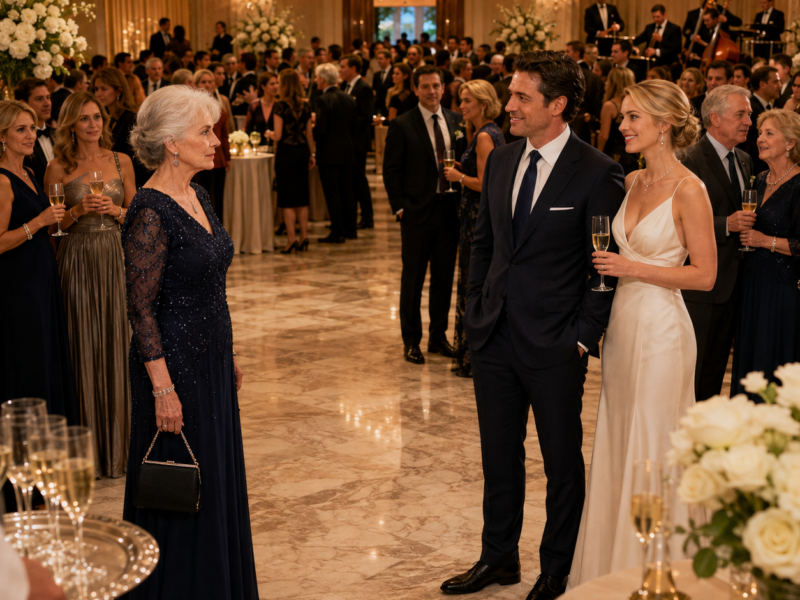
At my son’s engagement party, his fiancée laughed in front of a ballroom full of people and said our Sunday dinners were “suffocating” and that I needed to “learn when to let go.” I looked at Daniel, waiting for my only child to defend me. Instead, he said, “Mom, you’re embarrassing me. Please leave.” Vanessa stood beside him smirking while the room watched. So I picked up my purse and walked out without another word. I had spent seventy-three years learning that humiliation gets louder when you fight it in public. By Monday morning, I was sitting across from the attorney who had managed the trust my late husband left behind—and rereading one clause Robert had specifically warned me never to ignore.
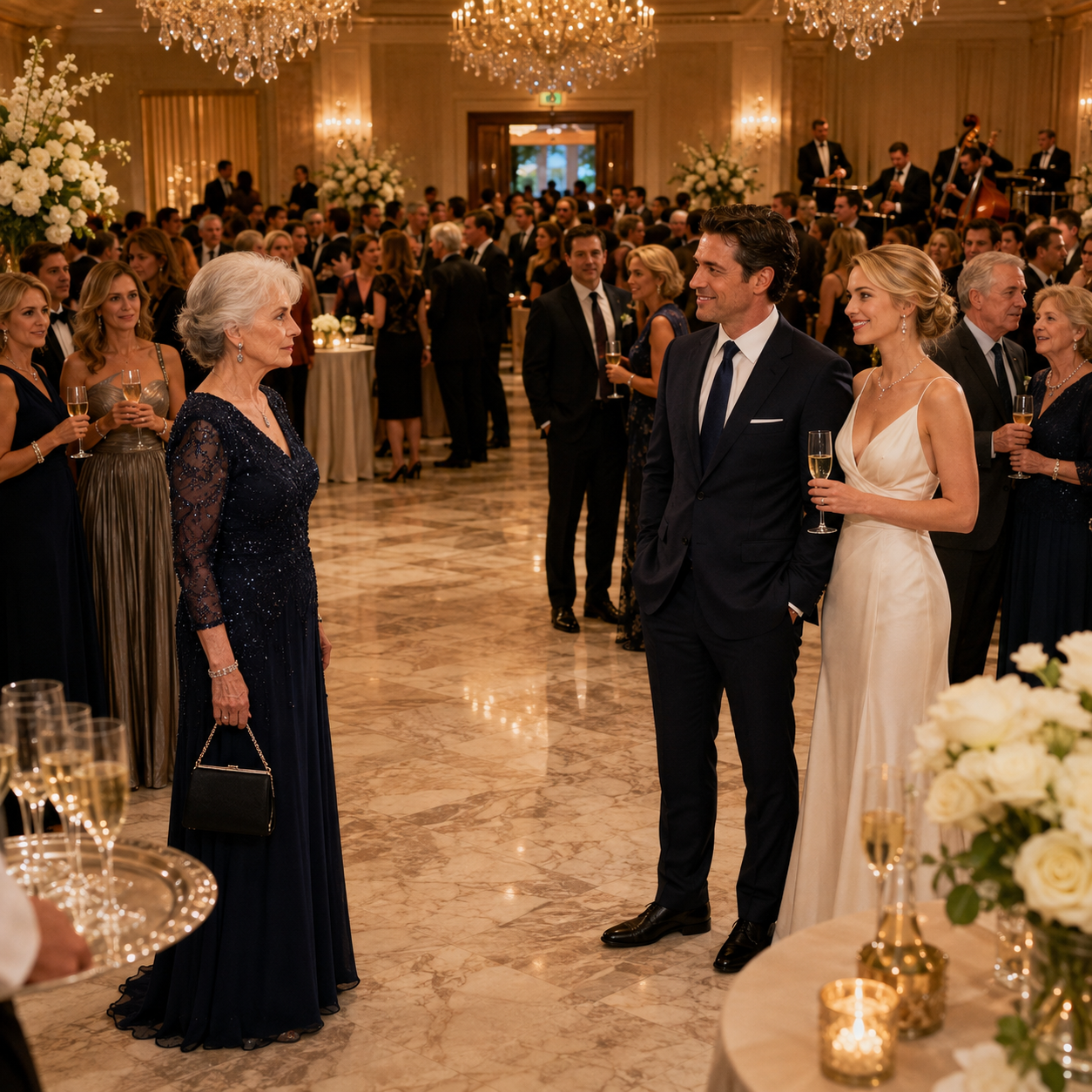
Vanessa opened the little velvet box, looked at the diamond bracelet for less than two seconds, and handed it to my son without taking it out.
“Oh,” she said. “Jewelry. How traditional.”
One of the women standing beside her laughed.
Not loudly.
Just enough.
I stood there holding the empty gift bag while fifty people circulated through the ballroom of a private country club in Scottsdale, champagne glasses in their hands and soft jazz floating above arrangements of white roses and orchids that looked more appropriate for a wedding than an engagement party.
The bracelet had cost me a little over three thousand dollars.
I did not buy it because Vanessa needed jewelry.
She clearly didn’t.
Her engagement ring alone could have paid for a used car.
I bought it because I wanted to make a gesture.
Welcome.
You are marrying my only son.
I want to begin well.
My son, Daniel, stood beside her in a charcoal suit.
He took the box awkwardly.
“Thanks, Mom.”
Vanessa was already turning away.
“The Hendersons just came in. Come on, babe.”
She looped her arm through his.
Daniel looked back at me for half a second.
Then he let himself be pulled into the crowd.
That should have been the moment I left.
Instead, I stayed another hour.
Mothers become skilled at remaining in rooms after their dignity has suggested otherwise.
My name is Charlotte Mitchell.
I was seventy-three years old that October evening, a widow of eight years and the surviving co-founder of a commercial real-estate business my late husband, Robert, and I had built over most of our marriage.
People who knew me casually thought of me as comfortable.
That word amused me.
Comfortable can mean you have enough money to replace a broken air conditioner without moving balances between credit cards.
It can also mean that your husband spent forty years buying small commercial properties across Phoenix and Scottsdale, paying down debt, reinvesting rents, and creating a trust designed to keep one impulsive generation from undoing what two careful people spent a lifetime building.
Robert had been careful.
Sometimes annoyingly so.
Especially when it came to our son.
Eight years after Robert’s death, that carefulness was about to become the only thing standing between Daniel and a half-million-dollar mistake.
But that night, I wasn’t thinking about trusts.
I was thinking about Sunday dinner.
It seems ridiculous now.
Daniel and I had eaten together almost every Sunday since his father died.
Not every single week.
Life does not respect family traditions that neatly.
Daniel traveled for work. I visited my sister in New Mexico. There were holidays, illnesses, Phoenix Suns games he had no intention of missing, and one summer when my air-conditioning failed twice and I temporarily moved into a furnished rental because July in Arizona does not reward stubbornness.
Still, Sunday dinner had survived.
Pot roast.
Chicken enchiladas.
Takeout when I was tired.
Sometimes Daniel cooked.
Sometimes he opened wine and called that contributing.
After Robert died, those dinners became one of the structures that kept both of us from drifting too far into grief.
Then Vanessa arrived.
At first, I was glad.
More than glad.
I had worried about Daniel.
He was thirty-eight and successful enough on paper, a project manager at a technology company in Tempe, but his personal life had been a series of relationships that ended just before they required anything difficult.
Daniel was not cruel.
He was not irresponsible.
He had simply inherited something from his father that Robert never admitted he possessed.
A talent for postponing emotional decisions until circumstance made the decision for him.
Vanessa changed that.
Three months after meeting her at a networking event, Daniel called me on a Thursday afternoon.
“Mom, I met somebody.”
I was trimming dead leaves from a rosemary plant on my patio.
“That happens in cities.”
“Someone serious.”
That got my attention.
“What’s her name?”
“Vanessa.”
I could hear the smile in his voice.
“She’s smart, Mom. Like really smart. Marketing and brand strategy. She has her own consulting clients. She knows everybody.”
“Everybody sounds exhausting.”
He laughed.
“She gets me.”
I stopped clipping rosemary.
That phrase.
People only say someone gets me when they are already halfway in love.
“How long?”
“A few months.”
“A few?”
“Three.”
I frowned.
Daniel normally told me when he had a second date.
Three months was new.
Still, I told myself privacy was maturity.
Maybe he had learned not to make his mother an unpaid commentator on every romantic possibility.
Good.
“When do I meet her?”
“Sunday?”
“Of course.”
I cooked too much.
Mothers do that when nervous.
Roast chicken.
Potatoes.
Green beans.
A lemon tart from the bakery near the Biltmore because my own pastry crust could legally qualify as masonry.
Vanessa arrived fifteen minutes late wearing red-soled heels, an ivory blouse, tailored trousers, and a Chanel bag I recognized because my friend Marjorie had once spent an entire lunch explaining why buying one was an investment.
I disagreed.
Vanessa looked beautiful.
Not warm exactly.
Polished.
She hugged me with both arms.
“Charlotte. Finally.”
That word bothered me slightly.
Finally.
As if I had been holding up a meeting she had requested.
Maybe I was looking for problems.
I knew that too.
I had been suspicious of two women Daniel dated previously and eventually admitted I was partly responsible for making those relationships harder.
Robert used to tell me:
“You can’t interview everyone Daniel brings home like you’re refinancing a shopping center.”
“I ask questions.”
“You request documentation.”
That had been our marriage.
He softened me.
I sharpened him.
Without Robert, I sometimes forgot which part had been mine and which had been ours.
So I welcomed Vanessa.
Wine.
Dinner.
Questions kept deliberately ordinary.
Family.
Work.
Travel.
She answered almost nothing directly.
Her parents lived in Connecticut.
“Near Greenwich?”
“Not far.”
Her father worked “in finance.”
Her mother did “charity work.”
She had attended “a small school back East.”
Which school?
“Oh, you probably wouldn’t know it.”
I almost smiled.
I had spent three decades sitting across from bankers who assumed the woman beside Robert took notes.
I knew more East Coast schools than Vanessa likely imagined.
Still, I let it go.
What she asked interested me more.
“How long have you been in this house?”
“Twenty-nine years.”
“Wow.”
She looked toward the tall living-room windows.
“This part of Phoenix has gotten so expensive.”
“It has.”
“Did you and Robert buy before the boom?”
“There have been several booms.”
She laughed.
“Of course.”
Her eyes moved toward the Southwestern paintings Robert collected.
“This one is original?”
“Yes.”
“What artist?”
I told her.
Her eyes sharpened.
“These have appreciated a lot.”
“Some.”
Then the antique credenza.
The silver candlesticks.
The hand-knotted rug.
Nothing offensive.
Guests notice homes.
Still, I felt something.
Not danger.
Assessment.
She was reading the room financially.
I had done the same thing professionally for years.
That didn’t make her predatory.
It made me notice.
After she left, Daniel stood in my kitchen grinning.
“Isn’t she incredible?”
“She’s impressive.”
“That means you don’t like her.”
“No.”
“Mom.”
“I just met her.”
He leaned against the counter.
“Please don’t do the thing.”
“What thing?”
“The quiet judgment thing.”
I almost became defensive.
Then stopped.
He was right.
I had done that.
“I’ll behave.”
He kissed my cheek.
“Love you.”
“Love you too.”
Over the next four months, Vanessa became part of nearly every Daniel sentence.
Vanessa found a restaurant.
Vanessa thinks I should negotiate harder.
Vanessa knows a branding consultant.
Vanessa says I dress too conservatively for client meetings.
Vanessa thinks Phoenix is becoming oversaturated.
Vanessa and I are looking at Scottsdale office space.
The Sunday dinners changed too.
First, she joined.
Then the food changed.
Vanessa did not eat red meat.
Then gluten.
Then dairy, except apparently the burrata at a restaurant she liked.
Fine.
People can eat whatever they want.
I adjusted.
What I did not adjust to as easily were the comments.
“Charlotte, have you ever thought about updating this room?”
“No.”
“It’s very… traditional.”
“I’m also very traditional.”
She smiled.
“You could make it feel ten years younger.”
“I’m not trying to make my furniture lie about its age.”
Daniel laughed.
Vanessa did not.
Another Sunday:
“If this were my place, I’d open this wall.”
She pointed between the kitchen and dining room.
“Why?”
“Better resale.”
“I’m not selling.”
“You never know.”
I did know.
But I said nothing.
Daniel increasingly said nothing too.
That bothered me more.
Robert and I had not raised Daniel to insult people’s homes.
We had also not raised him to sit quietly while somebody else did.
One Sunday in February, dessert had barely been served when Daniel set down his fork.
“Mom, Vanessa and I have been talking about the business.”
There it was.
Not romance.
Business.
“What business?”
“Our consulting idea.”
Daniel had mentioned starting a project-management and brand-implementation consultancy several times over the years.
I always encouraged him to build a plan before quitting a steady paycheck.
Vanessa sat straighter.
“We think there’s a gap in the market.”
“What gap?”
She launched into a polished explanation about integrated operational strategy for growth-stage companies.
It sounded intelligent.
Also broad.
“Who would your customers be?”
“Middle-market companies.”
“Which industries?”
“Initially technology and professional services.”
“Any committed clients?”
“We have warm leads.”
That meant no.
“What do you need?”
Daniel looked at her.
Vanessa answered.
“Two hundred thousand to launch properly.”
I nearly choked on coffee.
“For what?”
“Office.”
“Brand buildout.”
“Staff.”
“Client acquisition.”
“Technology.”
“Working capital.”
“What staff?”
“Account director. Junior strategist. Administrator. Maybe a content person.”
“You don’t have clients.”
Vanessa’s smile tightened.
“You have to invest before revenue arrives.”
“Yes.”
I had invested before revenue arrived more times than I could count.
I also understood the difference between investment and decorating a company before it existed.
Daniel said:
“Dad always said you have to take risks.”
“Your father spent six months studying the first strip center before he signed anything.”
Vanessa leaned forward.
“This is different.”
“Everything is different until the bank asks for payment.”
Daniel sighed.
“Mom.”
I softened.
“Send me the plan.”
Vanessa’s face brightened.
“You’ll invest?”
“I’ll review.”
Then:
“I have discretionary funds outside the trust.”
“If the plan makes sense, I would consider lending up to fifty thousand at reasonable terms.”
Vanessa’s expression changed.
Barely.
“Fifty?”
“Yes.”
“That won’t be enough.”
“Then either raise more elsewhere or start smaller.”
Daniel looked uncomfortable.
Vanessa said:
“The advantage of family capital is that you don’t have to think like a bank.”
I smiled.
“That is exactly when you should think like one.”
Silence.
The business plan arrived six days later.
Beautiful.
Forty-two pages.
Logo concepts.
Market statistics.
Three-year projections.
Office photographs.
Almost no evidence of paying demand.
I had managed properties for forty years.
I knew the seduction of a spreadsheet.
Numbers can become whatever optimism asks if assumptions remain unchallenged.
I gave the plan to Paul Henley.
Paul had been Robert’s attorney for more than twenty years and remained counsel to the family trust.
He called two days later.
“Did you write this?”
“No.”
“Good.”
“Why?”
“Because the revenue projections are fiction.”
I laughed.
“Polite.”
“I am a lawyer.”
“Barely.”
He went through it.
No signed letters of intent.
No meaningful customer-acquisition model.
High initial fixed costs.
A $78,000 first-year marketing budget for a business whose founders were supposed to sell themselves.
I declined to invest.
I offered Daniel twenty-five thousand as a personal loan if he launched lean while keeping his job.
He refused.
Vanessa later told him I did not believe in him.
I learned because he repeated it.
That hurt.
“Daniel, I offered money.”
“You offered enough to control how we start.”
“No.”
“I offered enough that losing it would not damage either of us.”
“Same thing.”
No.
But by then the conversation had stopped being about business.
It was about loyalty.
Four months later, Daniel proposed.
He called me from a restaurant.
“Mom, she said yes.”
For a second, all my concerns moved aside.
My son sounded happy.
Really happy.
“Oh, sweetheart.”
I cried.
“Congratulations.”
Vanessa shouted in background:
“Hi, Charlotte!”
I laughed.
“Let me see the ring tomorrow.”
Then came the engagement party.
Vanessa’s parents belonged to a private country club in Scottsdale.
Preston and Cecilia Langford.
I had met them once.
Preston worked in private wealth management.
Cecilia sat on several charity boards.
Old money?
Maybe.
People use that phrase loosely in Arizona.
The desert has been selling new people old stories for a long time.
Daniel said:
“Nothing huge.”
“Close family and friends.”
The final guest list was fifty-three.
Then:
“Vanessa was wondering if you might contribute.”
“To what?”
“Party.”
“How much?”
Silence.
“Daniel.”
“Twenty thousand.”
“For an engagement party?”
“Mom.”
“Is Elton John playing?”
He laughed despite himself.
“Vanessa wants it perfect.”
“How much are her parents paying?”
“Venue.”
“Anything else?”
“I don’t know.”
I stared at the phone.
“I’ll contribute ten.”
He became quiet.
“That’s generous.”
“It is.”
Then:
“Vanessa hoped—”
“Ten.”
“Okay.”
He hung up without saying love you.
I noticed.
Of course I noticed.
The party arrived.
Navy dress.
Macy’s.
Elegant enough.
No need to compete with a thirty-four-year-old woman whose closet had better financing than some small municipalities.
I arrived thirty minutes after start because valet traffic backed onto the road.
Vanessa saw me first.
Whispered to Daniel.
He turned.
The expression on his face.
I struggled for months to name it.
Not anger.
Apprehension.
As though my presence created a problem before I had done anything.
I approached.
“Congratulations again.”
I reached toward Daniel.
Vanessa stepped smoothly between us.
“Charlotte. You made it.”
The first cut.
Not glad you came.
You made it.
As if attendance had been doubtful.
“I said I would.”
“Of course.”
I handed her the gift.
She opened it immediately.
Traditional.
Passed to Daniel.
Then disappeared toward another couple.
Daniel held the box.
“Sorry.”
“For?”
He looked toward Vanessa.
“Nothing.”
I should have asked.
Instead:
“Put it somewhere safe.”
The evening deteriorated slowly.
Vanessa’s friends looked at me the way young, socially ambitious people sometimes look at older women whose relevance they cannot immediately identify.
Not malicious.
Sorting.
“Oh, Daniel’s mother.”
“Are you still working?”
“No. Mostly retired.”
That seemed to settle things.
Retired.
Old.
Not useful.
Preston Langford shook my hand.
“Charlotte.”
“Preston.”
“Vanessa’s told us a great deal.”
“Hopefully some of it is true.”
He did not laugh.
Cecilia looked at my dress.
“Macy’s?”
I glanced down.
“Yes.”
“How charming.”
She walked away.
I almost admired efficiency.
At seventy-three, insults about department stores no longer have much oxygen.
I was more interested in Daniel.
He rarely came near me.
Every time I moved toward him, Vanessa pulled him into another conversation.
Clients.
Friends.
Photographs.
Eventually, I found the two of them near a cocktail table.
“Daniel?”
He turned.
“I was thinking maybe next Sunday we could do dinner.”
Vanessa laughed.
Sharp.
“Sunday dinner?”
I looked.
“Daniel and I have done Sundays for years.”
“Had done.”
Her friends smiled.
Past tense.
Vanessa took a sip of champagne.
“Daniel’s building a new life now.”
“With me.”
“Of course.”
“We’re incredibly busy with the business and wedding.”
“I understand.”
“Then you understand weekly family dinners aren’t realistic.”
“I suggested one dinner.”
She smiled.
“It’s just very… 1950s.”
A blonde woman beside her laughed.
I felt heat climb my neck.
Daniel looked at his drink.
I should have addressed him.
Instead, I answered Vanessa.
“It is food, not a mandatory sock hop.”
Nobody laughed.
Vanessa’s smile sharpened.
“Daniel has told me how much pressure he feels.”
That stopped me.
“What?”
She turned slightly, including the people around us.
“You call constantly.”
“No.”
“You expect Sundays.”
“I invite him.”
“You make him feel guilty when he can’t come.”
“I don’t believe I do.”
“Exactly.”
Her voice rose.
“You don’t realize how overbearing you are.”
More nearby conversations stopped.
“Vanessa.”
Daniel finally spoke.
For one hopeful second, I thought he was stopping her.
Instead:
“Not now.”
She touched his arm.
“No, babe. Someone has to say it.”
Then to me:
“He’s thirty-eight.”
“A grown man should not have to worry that Mommy is upset because he misses dinner.”
Laughter.
Not everybody.
Enough.
I turned to Daniel.
“Is that what you think?”
He finally looked at me.
Embarrassment.
But I realized the embarrassment was directed at me, not what was happening.
“Mom.”
“Answer.”
“You’re making a scene.”
I stared.
“I am?”
“Please.”
“Daniel, she just—”
“I think you should go.”
The room seemed to contract.
Someone gasped softly.
Vanessa’s mouth curved.
Tiny.
Triumphant.
My son repeated:
“Please, Mom.”
“Just go.”
I looked at him.
At the child I held through croup.
At the teenager Robert taught to drive.
At the man who sat beside me at his father’s funeral with both hands wrapped around mine.
You cannot compress motherhood into one humiliation.
That is why leaving felt like tearing cloth.
But I left.
No speech.
No thrown drink.
I picked up my purse.
Walked across marble.
My heels sounded too loud.
The valet brought my car.
I drove.
Twice, I pulled over because my hands shook.
Not tears yet.
Shock.
Home was dark.
I sat in the driveway twenty minutes.
Then went inside.
Robert’s chair still stood near the fireplace.
Brown leather.
Cracked armrest.
I had tried replacing it once.
Couldn’t.
I changed into one of his old ASU T-shirts and sat.
“What do I do?”
I whispered.
Silence.
Good.
Dead husbands should not become ventriloquists for whatever decision we already want.
I went upstairs at three in the morning.
Not to create revenge.
To read.
Robert’s trust.
For the first time since his death, I read it not as widow.
As trustee.
That distinction mattered.
Robert and I had started Mitchell Commercial Properties with one small retail building near Tempe in 1984.
It was not an empire.
The source version of my story uses that word.
I dislike it.
Empires conquer people.
We bought buildings.
The first was ugly.
Six storefronts.
Flat roof.
Bad parking.
One tenant sold vacuum cleaners.
Another made signs.
We put almost every dollar we had into the down payment.
Robert repaired roof leaks himself because hiring a roofer would have broken our reserve.
I kept books at the kitchen table while Daniel slept in a playpen nearby.
Then another property.
Then another.
A medical-office building.
Two neighborhood retail centers.
Small industrial flex space.
By the time Robert died, the company owned interests in twelve commercial properties around Phoenix and Scottsdale.
Some had debt.
Some did not.
Net equity fluctuated with appraisals.
Roughly four and a half million dollars in the trust after liabilities at that time.
Monthly cash flow around thirty thousand before certain reserves and taxes.
Comfortable.
Not infinite.
Robert understood that.
He also understood Daniel.
Two years before his death, we sat on the patio after dinner.
Robert said:
“If I go first, don’t give Daniel the keys because he looks sad.”
I frowned.
“He’ll be in his thirties.”
“Exactly.”
“That is not young.”
“For Daniel?”
“Emotionally, it depends on Tuesday.”
I laughed.
Robert became serious.
“I mean it, Charlotte.”
“We need a structure.”
The trust already existed.
We amended.
At Robert’s death, I became lifetime income beneficiary of the family real-estate trust and served as family trustee alongside Desert Valley Trust Company as independent co-trustee.
Daniel became remainder beneficiary.
He had no automatic right to principal while I lived.
However, the trust allowed discretionary “advancement distributions” for education, housing, health, or a bona fide business opportunity if the independent trustee and I agreed the request was prudent.
At forty-five, Daniel would gain additional advisory rights and broader access to a separate descendant trust Robert had funded with life insurance, but not direct unilateral control over the commercial portfolio.
Robert had also insisted on a clause dealing with coercion or undue influence.
If either trustee reasonably believed a beneficiary’s request was being driven by pressure from a third party with a financial interest, discretionary advancements could be suspended pending independent review.
Not forever.
Not punishment.
Review.
I read that clause at 3:47 in the morning.
Then I closed the binder.
I did not feel powerful.
I felt frightened.
Because I was angry.
Angry trustees are dangerous.
They can mistake family pain for fiduciary judgment.
I needed someone else.
At 3:56, I texted Paul.
Need to meet Monday. Daniel trust issue. Urgent.
He replied at 4:11.
8:00. Are you safe?
Yes.
Everything okay?
No.
Then I added:
But I don’t want to make a trust decision while I’m furious.
His answer:
Good. That’s the first smart thing tonight.
Paul Henley.
Always comforting.
Sunday passed.
No call from Daniel.
That hurt more than Vanessa.
I checked my phone every half hour like a fool.
Nothing.
No apology.
No:
Mom, are you okay?
No:
I’m sorry things got out of hand.
Silence.
I cleaned.
Pulled weeds.
Reorganized pantry.
Then reorganized it again because grief creates terrible hobbies.
At one point, I found Daniel’s favorite childhood cereal still on the top shelf because he occasionally ate it when he came for dinner.
I cried over Cinnamon Toast Crunch.
Motherhood is undignified.
Monday at eight, I sat in Paul’s office overlooking downtown Phoenix.
He poured coffee.
“Tell me.”
I did.
I told him about Vanessa.
The business request.
The party.
The $10,000.
The public humiliation.
Paul listened.
Then:
“What do you want?”
“To stop distributions.”
“That sounds like anger.”
“I know.”
“Try again.”
I took a breath.
“I want an independent review before Daniel gets business money.”
“Better.”
“He may ask.”
“He will.”
“How do you know?”
“Because people do not insult their trustee two days before asking for less money.”
I laughed despite myself.
Then became serious.
“I think Vanessa is influencing him.”
“Evidence?”
I listed.
Her early interest in property.
The business plan.
The two-hundred-thousand-dollar request.
The escalating party contribution.
The way she described my money as available.
The party.
Paul held up hand.
“The party is relevant to family relationship.”
“Not necessarily trust influence.”
Fair.
“The business plan is relevant.”
“Yes.”
“Do you have communications where Vanessa discusses trust assets?”
“No.”
“Then do not make this a case about gold digging.”
That annoyed me.
“I know what I saw.”
“You saw a rude fiancée.”
“You saw an expensive party.”
“You saw a weak business plan.”
“All real.”
“Gold digger is a conclusion.”
I stared.
This is why independent professionals matter.
They offend you in useful directions.
“What can we do?”
Paul explained.
I could notify Desert Valley Trust Company that I had concerns about any near-term entrepreneurial advancement.
The corporate trustee would require updated business materials, independent valuation of any purchase, proof of Daniel’s contribution, and perhaps a meeting without Vanessa.
The undue-influence clause did not let me “lock Daniel out of his inheritance” because I was hurt.
It allowed heightened review of discretionary distributions.
Good.
“Do that.”
“Are you comfortable if the review concludes the investment is sound?”
That stopped me.
“If it’s truly sound?”
“Yes.”
“Then I listen.”
“Good.”
He called the trust officer, Maria Chen.
We met that morning.
Maria was fifty, former private banker, no patience for family mythology.
She reviewed the existing business plan.
“Not enough.”
“Why?”
“No committed customers.”
“High fixed costs.”
“No founder capital.”
“No debt-financing analysis.”
“No independent real-estate appraisal.”
“Real estate?”
I looked.
“Did they mention buying a building?”
“Not in this version.”
Maria raised an eyebrow.
“Then if they ask for property acquisition money, we need a new plan.”
I left at ten-thirty.
Nothing was “locked.”
Everything was documented.
That distinction later saved my relationship with Daniel.
Tuesday at 8:15, he called.
“Mom.”
No hello.
“I need you to approve a trust distribution.”
I closed my eyes.
“How much?”
“Five hundred thousand.”
There.
“For what?”
“Vanessa and I found a building.”
“What building?”
“Old professional office near Scottsdale Airpark.”
“Purchase price?”
“About nine-fifty.”
“And the other four-fifty?”
“Seller financing, maybe bank debt.”
“Maybe?”
“We have to move fast.”
“Why?”
“Another buyer.”
“Have you had an inspection?”
Silence.
“Appraisal?”
“We know market.”
“Environmental review?”
“It’s an office building.”
“So?”
“Mom.”
“What?”
“You always do this.”
“Ask what half a million dollars is buying?”
“You make everything impossible.”
“No.”
I sat at my kitchen table.
“I make large decisions slow enough to survive excitement.”
He exhaled hard.
“Dad left this money for me.”
“Your father created a trust.”
“Same thing.”
“No.”
“He specifically did not make it the same thing.”
His voice rose.
“Vanessa and I need the money.”
There.
Vanessa and I.
“What happens if you don’t get it?”
Silence.
“Daniel?”
“She’ll think I let you control me.”
That told me more than the property address.
“Does Vanessa know you don’t currently control the trust?”
“She knows Dad left it to me.”
“That is not the same.”
“Mom, please.”
“I’m not rejecting you.”
“I’m requiring review.”
“Maria will send a list.”
He became quiet.
“Maria?”
“Desert Valley Trust.”
“You brought them into this?”
“They are already co-trustee.”
“Vanessa says this is insane.”
I almost laughed.
“Vanessa is not a beneficiary.”
The line came out harsher than intended.
Daniel snapped:
“There it is.”
“What?”
“You hate her.”
“I don’t know her well enough to hate her.”
“You’ve judged her since day one.”
“Maybe.”
I admitted.
“That does not change the quality of the business plan.”
He became silent.
I continued.
“If this building is a good investment, show it.”
“If the business has credible customers, show them.”
“If you and Vanessa are investing your own money, show that too.”
“That’s humiliating.”
“No.”
“It’s due diligence.”
Then he said:
“You’re still angry about the party.”
“Yes.”
I did not lie.
“I am devastated by the party.”
“And because I know I’m angry, I am not making this decision alone.”
Silence.
That landed.
“You spoke to Paul.”
“Yes.”
“And Maria.”
“Yes.”
“You don’t trust me.”
“I don’t trust this request yet.”
“That is different.”
He laughed bitterly.
“Fine.”
Then:
“You’ve lost your son.”
The sentence took breath out of me.
“Daniel.”
“No.”
“You want control?”
“Keep it.”
“Don’t call me.”
“Don’t text me.”
“We’re done.”
My fingers tightened around phone.
There were hundreds of things I could have said.
Your father would be ashamed.
You’ll regret this.
Vanessa is using you.
You’re acting like a child.
I said:
“I love you, Daniel.”
He hung up.
Four words.
Not strategy.
Not a secret weapon.
Love.
That was Tuesday.
Vanessa did not leave him two days later.
Real life took longer.
Good.
If she had walked out the afternoon the money disappeared, I might have spent the rest of my life congratulating myself for knowing exactly who she was.
Instead, the next month made all of us more uncomfortable.
Daniel submitted the new business materials to Maria.
Not because he forgave me.
Because he still wanted the money.
Maria contacted him directly.
I stayed out.
That was intentional.
I did not want every question carrying my voice.
Two weeks later, Maria called.
“I can give you general trustee information.”
“Okay.”
“The request is not ready for approval.”
“Why?”
“The building appraisal is below proposed price.”
“How much?”
“I cannot discuss all details casually.”
“Right.”
She continued.
“The operating projections assume unusually fast client growth.”
“The founders propose almost no capital of their own.”
“Seller has requested a nonrefundable earnest-money deposit before normal diligence.”
“Not good.”
“No.”
“And?”
“Mr. Mitchell became angry when asked for signed client commitments.”
My chest tightened.
“Did Vanessa attend?”
“Yes.”
“How was she?”
Maria paused.
“Charlotte.”
“Right.”
“Not relevant.”
I almost laughed.
She knew exactly what I wanted.
“Thank you.”
Daniel did not call.
Sunday dinner table stayed empty.
First week I cooked anyway.
Habit.
Pot roast for four.
I ate it five days.
Second week, I ordered takeout.
Third week, nothing.
I started therapy.
Not because I believed I was wrong to refuse the money.
Because I had no idea how to be Daniel’s mother without being his manager.
Dr. Ellen Morse was sixty-seven and wore turquoise jewelry large enough to interfere with airport security.
First session:
“What do you want?”
“My son back.”
“That is not entirely under your control.”
“I know.”
“What is?”
“My behavior.”
“Good.”
Then she asked the question I did not want.
“Were you overinvolved before Vanessa?”
I became defensive.
“No.”
“Sunday dinner every week?”
“He liked it.”
“Did he?”
“Yes.”
“Always?”
I stared.
“Probably not always.”
“How often did you call?”
“Normal amount.”
“How much is normal?”
Apparently therapy is structured humiliation.
We worked.
I had called Daniel often.
Not excessively in my mind.
Three or four times a week.
Texts.
Reminders.
Article links.
Weather warnings.
Robert used to absorb half of that attention.
After he died, Daniel became the only available recipient.
I had not noticed.
That did not justify Vanessa humiliating me.
It did mean she had not invented every complaint.
Accuracy again.
“Can both be true?”
Ellen asked.
“Daniel can need more space.”
“And his fiancée can have treated you cruelly.”
“Yes.”
“Then stop using one truth to cancel the other.”
I hated therapy.
I kept going.
Daniel, meanwhile, tried to find alternative financing.
He approached a bank.
No.
Too little business history.
He approached two private lenders.
Rates terrible.
Vanessa wanted him to cash out part of his retirement account.
Daniel resisted.
Good.
Then she wanted him to ask me again.
He refused.
That was the beginning of their fracture, though I did not know it.
What I learned later came from Daniel himself.
One night, Vanessa said:
“If you can’t access four million dollars, what exactly did your father leave you?”
Daniel told her:
“A future.”
She laughed.
“Very poetic.”
Then:
“I thought you said your mother could release money whenever you asked.”
Daniel admitted:
“I said she had discretion.”
Vanessa:
“Same thing if she respects you.”
There.
Respect equals money.
Daniel started seeing it.
Not because I told him.
Because the pressure turned toward him.
Their office-building contract expired after they refused the seller’s shortened diligence period.
Vanessa blamed Daniel.
Then the business plan changed.
She wanted to rent luxury space instead.
He wanted to start from home.
She wanted three employees before launch.
He wanted contractors.
She called him cheap.
He called her reckless.
Normal business disagreements.
Except their relationship had been built partly around a shared fantasy of rapid success.
Without easy family capital, the fantasy had to become a plan.
Plans reveal compatibility.
Three weeks after our phone call, Daniel texted.
Can we talk?
I stared at those words ten minutes.
Then called.
“Hi.”
“Hi.”
His voice sounded exhausted.
“How are you?”
“Vanessa left.”
My heart tightened.
I wanted, shamefully, one second of satisfaction.
I got it.
Then grief for my son replaced it.
“I’m sorry.”
“She packed yesterday.”
“What happened?”
Daniel laughed without humor.
“Depends which version.”
I waited.
“She says I’m weak.”
“She says I let you control me.”
“She says I misrepresented what I could bring into the marriage.”
That last one mattered.
“Did you?”
Silence.
“Yes.”
Good.
Truth beginning.
“I told her Dad left me the business.”
“You said that?”
“Not exactly.”
He sighed.
“I let her think it was basically mine.”
“Why?”
“Because it sounded good.”
My chest hurt.
“Daniel.”
“I know.”
“She thought you could get millions now.”
“Yes.”
“Did you correct her?”
“Not clearly.”
There.
Vanessa had not created the entire fantasy alone.
My son had participated.
That changed the story.
“What did she want?”
“She wanted a prenup guaranteeing she’d share in whatever I received after marriage.”
“Did you agree?”
“No.”
“Good.”
“She said if she was building a business with me, she deserved protection.”
“That is not inherently unreasonable.”
He became quiet.
“I know.”
Then:
“She also said she didn’t sign up to wait until I’m forty-five for my mother to treat me like an adult.”
I closed my eyes.
“And?”
“I told her the trust wasn’t yours to give away.”
“That surprised her?”
“Yes.”
“She accused me of lying.”
“Did you?”
“Some.”
There.
No victory.
Just consequences.
“What finally happened?”
“She said we should postpone the wedding until I fixed the trust situation.”
“I said no.”
“What did she say?”
“That without capital, our plans didn’t make sense.”
“Then she said maybe neither did we.”
Daniel began crying.
Not a little.
My forty-year motherhood? He was 38, Charlotte 73. Thirty-eight years of motherhood.
The sound took me straight back to a five-year-old with a scraped knee.
I did not say:
I told you so.
I did not say:
She never loved you.
I didn’t know that.
Maybe Vanessa had loved Daniel.
Maybe she also loved the version of their future that included money, status, office, fast growth.
People can love badly.
People can mix affection and ambition until neither survives being separated.
“I’m sorry you’re hurting.”
“Were you right?”
“About what?”
“Her.”
I took time.
“I was right that money had too much influence over your relationship.”
“That is all I know.”
“Do you think she loved me?”
“I don’t know.”
“She did not leave the day she learned the trust was reviewed.”
“She stayed.”
“You two fought about other things.”
“So I’m not going to tell you your whole relationship was fake because that would make me feel clever.”
He cried harder.
“God, Mom.”
“I’m sorry.”
“For what?”
“The party.”
“The money.”
“Everything.”
“I let her talk to you like that.”
“Yes.”
“I was embarrassed by you.”
My chest tightened.
He continued.
“Not because you were doing anything.”
“Because she told everyone you were overbearing and I had repeated it.”
“I needed the room to think she was right.”
There.
That was one of the hardest sentences he ever gave me.
“Thank you for saying that.”
“Are you angry?”
“Yes.”
“Do you hate me?”
“No.”
“Can I come over?”
I closed my eyes.
Every maternal instinct yelled yes.
Ellen’s voice somewhere in memory:
Your son is an adult. Do not confuse comfort with erasing.
“Yes.”
I said.
“Come for dinner.”
Then:
“But we need to talk.”
“I know.”
He came Sunday.
No Vanessa.
No business deck.
No trust request.
He looked older.
Grief does that temporarily.
I made pot roast because apparently Mitchell men required beef during emotional crisis.
Daniel cut vegetables.
At one point we reached for the same knife.
He laughed.
First time in weeks.
Dinner was quiet.
Then:
“Mom.”
“Yes?”
“Were you trying to punish me by stopping the trust?”
“No.”
“I wanted to.”
He looked up.
“What?”
“I was furious.”
“I wanted to lock everything down forever and let you find out what Vanessa thought of you without money.”
His face tightened.
“That’s pretty harsh.”
“Yes.”
“So I went to Paul.”
“And Maria.”
“Because I knew anger made me unqualified to decide alone.”
Daniel looked down.
“I didn’t know that.”
“You didn’t ask.”
He nodded.
“Fair.”
Then I said:
“I owe you something too.”
His face changed.
“What?”
“I have been too involved.”
He almost smiled.
“Careful.”
“Do not ruin this.”
“Sorry.”
“After your father died, you became too much of my social world.”
“I called too often.”
“I expected Sunday dinner more than I realized.”
“Vanessa used it cruelly.”
“But she didn’t invent every complaint.”
Daniel stared.
“I never minded Sunday.”
“Never?”
He thought.
“Sometimes.”
There.
“Why didn’t you say?”
“Because you were alone.”
That hurt.
“My loneliness was not your job.”
“I know.”
“No.”
“I think we both need to learn that.”
He nodded.
We ate.
No instant restoration.
At the door, Daniel hugged me.
Then:
“The trust.”
I stiffened.
“I don’t want you to approve anything.”
“Not now.”
“I want to build the consulting thing without Dad’s money.”
I looked.
“Alone?”
“With a partner eventually maybe.”
“But first me.”
“I’m keeping my job.”
“I’ve got thirty-two thousand saved.”
“I can start evenings.”
That sounded like Robert.
Not because Robert was genetically superior.
Because constraints can sharpen business.
“Good.”
Then:
“I need to prove I can make decisions without asking what the trust can do.”
“To me?”
“To myself.”
That was the first thing Daniel had said in months that sounded entirely his.
“Okay.”
He hugged me.
No:
Thank you for protecting me from myself.
I am glad.
That phrase would have made me a hero and him a child.
Instead, he said:
“Thank you for not giving me the money.”
I answered:
“You’re welcome.”
Then:
“I’m still angry about the party.”
He laughed weakly.
“I know.”
“That’s going to take time.”
“I know.”
“Goodnight.”
“Night, Mom.”
Sunday dinners resumed twice a month.
Not weekly.
My idea.
Daniel objected.
Interesting.
I held boundary anyway.
“Go see friends.”
“I see friends.”
“Then stay home and fold laundry.”
“Cruel.”
“Growth.”
We rebuilt.
Not by discussing Vanessa every week.
Actually, I banned her as a dinner topic for the first month unless Daniel needed something specific.
We talked work.
Baseball.
My garden.
A leak at one property.
Ordinary things.
Trust returns through boring evidence.
Show up.
Call when you say.
Correct disrespect.
Say no without vanishing.
Daniel did.
So did I.
His consulting work started slowly.
He called it Mitchell Project Advisory.
Terrible name.
I said nothing.
Therapy growth.
He found first client through a former colleague.
A six-week implementation project.
Seven thousand dollars.
Then another.
He kept his job.
Worked nights and Saturdays.
No luxury office.
No employees.
His dining table became headquarters.
At month six, he earned enough consulting revenue to hire a part-time bookkeeper.
He asked for my opinion.
I said:
“Do you want mother or businesswoman?”
“Businesswoman.”
“Hire before taxes become disaster.”
He did.
At year two, he left his tech job.
Not because trust funded him.
Because twelve months of consulting revenue covered 1.4 times his salary and he had nine months of personal cash reserves.
I was impressed.
I did not say Robert would be proud.
I said:
“I’m proud of you.”
That mattered.
At forty-one, Daniel asked Maria at Desert Valley whether he could use a small trust advancement to buy his first home.
A normal allowed purpose.
He called me beforehand.
“I’m asking through process.”
“Good.”
“Not asking you personally.”
“Even better.”
The independent trustee reviewed.
Daniel contributed a substantial down payment from his own earnings.
Trust provided a modest supplemental distribution consistent with Robert’s plan.
I consented.
No drama.
Money became tool instead of relationship test.
At forty-three, Daniel met Maya Rodriguez.
Not at country club.
At a client’s operations meeting.
She was a CPA and controller for a manufacturing company.
Divorced.
One teenage daughter.
Daniel waited eight months before introducing us.
I teased.
“Eight?”
“You hated three.”
“I did not.”
“You interrogated.”
“Accurate.”
Maya arrived for dinner wearing jeans and carrying grocery-store flowers.
I almost laughed at universe.
She saw the Southwestern painting.
“Beautiful.”
“Thank you.”
Then:
“Is it local?”
“Yes.”
No appraisal question.
I had to stop myself from awarding points for behaving normally.
That would have been unfair.
Maya asked about Robert.
She asked about me.
She told me where she went to school without assuming I wouldn’t know it.
Good.
Still not proof.
Time.
Daniel told her about the trust early.
Not dollar amount first date.
Before engagement.
Full financial disclosure with independent attorneys later.
Maya had her own retirement accounts, divorce settlement, college savings responsibilities for her daughter.
They signed a prenup.
Daniel called me.
“Dad is haunting me.”
“No.”
“Paul is.”
“That is more believable.”
At forty-five, the trust provisions changed as scheduled.
Daniel received expanded rights in his separate descendant trust and a formal role on the family property advisory committee.
Not a four-million-dollar check.
Robert had never intended that.
Daniel met with Maria and an independent investment adviser.
Afterward, he came to my house.
“Well?”
I asked.
“I’m leaving most of it where it is.”
I smiled.
“Why?”
“Because thirty thousand a month of property cash flow is not the same thing as thirty thousand free dollars.”
There.
He understood reserves.
Roofs.
Taxes.
Vacancies.
Capital repairs.
Finally.
Robert would have been delighted.
I said only:
“Good.”
Daniel married Maya at forty-six.
Small.
No country club.
Eighty guests.
Still more than I wanted.
Not my wedding.
I behaved.
Maya’s daughter, Elena, gave a toast.
I cried.
At reception, Daniel asked me to dance.
“I don’t dance.”
“You danced at my wedding rehearsal when I was nine.”
“That was not dancing.”
“It was.”
We moved badly.
Halfway through, he said:
“I’m sorry.”
“For stepping on me?”
“For Vanessa.”
The name arrived without pain.
Interesting.
“I know.”
“No.”
He looked at me.
“I spent years apologizing for party.”
“I want to apologize for the sentence.”
“What sentence?”
“You’re embarrassing me.”
My throat tightened.
He continued.
“You were my mother.”
“You came to celebrate me.”
“And I made you feel like your existence was something I had to manage.”
Tears.
Not much.
“Thank you.”
Then:
“I embarrassed myself.”
That was enough.
We finished dance.
No audience needed.
Years moved.
Commercial properties changed.
One Scottsdale office complex sold.
A Tempe retail center redeveloped.
Industrial buildings appreciated.
One tenant bankruptcy cost us six months’ rent.
Another property needed a roof replacement so expensive Daniel called me:
“Dad would’ve sold.”
“No.”
“He would’ve complained for two weeks first.”
“True.”
We laughed.
I gradually stepped back.
At seventy-eight, Maria suggested naming Daniel as co-adviser on property decisions.
I agreed.
Not trustee control.
Adviser.
He came prepared.
Read packets.
Asked good questions.
Sometimes disagreed with me.
That was the test I had not known I needed.
The first time he voted against selling a property I wanted to sell, I felt personally betrayed for twelve minutes.
Then remembered:
Adult.
I called Ellen.
“My therapist?”
Retired.
Her replacement got story.
She said:
“You wanted independent judgment.”
“I wanted correct independent judgment.”
“That’s not the same.”
Annoying profession.
Daniel was right.
We kept the property.
Three years later, it appreciated significantly.
I sent him email:
You were right.
He replied:
Frame this.
I did not.
Maya did.
Apparently she printed it for his office.
Families.
At eighty, I sold my Phoenix house.
That surprised Daniel.
“Why?”
“Too much.”
“You love that house.”
“I loved the life in it.”
Different.
Robert’s chair came with me to a smaller patio home in Scottsdale.
I kept the paintings.
Sold the credenza.
Vanessa had been right about one thing.
It was valuable.
I laughed at appraisal.
Daniel asked why.
“Long story.”
He knew.
We donated part proceeds to an ASU scholarship for first-generation business students.
Robert would have liked.
Maybe.
Dead people are often credited with our current preferences.
I tried not to.
The trust portfolio remained.
At eighty-one, I asked Paul and Maria to review whether the structure still made sense.
Robert’s original fears were tied to a thirty-something son.
Daniel was almost fifty.
A different man.
Dead husband’s caution should not become permanent imprisonment.
We updated what we could within trust terms.
More independent management.
Clear succession.
Daniel did not ask for more access.
Ironically, that made me more comfortable giving it.
Control surrendered voluntarily feels different from control extracted.
I thought about Vanessa occasionally.
Not often.
I heard through someone that she moved to California.
Married later.
Built a marketing consultancy.
Good.
I had no evidence she was a professional gold digger.
That label became less useful with time.
She was ambitious.
Status-conscious.
Rude to me.
Too focused on what Daniel might inherit.
She also acted on information Daniel allowed her to misunderstand.
Daniel had told her a version in which he was wealthier and more financially autonomous than reality.
She planned a future based partly on that story.
When truth arrived, she reconsidered the relationship.
Was that shallow?
Somewhat.
Was it proof she never loved him?
No.
I stopped telling that simpler story.
At seventy-four, I would have.
At eighty-one, I knew better.
The more important question was:
What kind of relationship makes money access central enough that its absence threatens the bond?
Their relationship had.
That was reason enough.
I also stopped taking pride in “seeing through her” from the first dinner.
I had seen signals.
Some accurate.
Some class prejudice.
Designer shoes do not prove character.
Knowing art values does not prove greed.
Wanting a beautiful engagement party does not prove manipulation.
The evidence that mattered came later.
Pressure for capital without adequate planning.
Statements about my money.
Public disrespect.
Daniel’s distorted presentation of trust.
Their business choices.
Facts.
I became more careful with my own story.
That mattered because older parents can easily confuse intuition with authority.
I wanted other mothers to hear my experience without using it as permission to hate whoever their sons date.
So when my friend Marjorie complained her daughter-in-law carried a Louis Vuitton bag and “seemed interested in the lake house,” I said:
“Maybe she likes bags and lakes.”
Marjorie stared.
“You have changed.”
“Therapy.”
She laughed.
At eighty-two, Robert’s attorney Paul died.
Heart attack.
Sudden.
I cried harder than expected.
Paul had carried part of my marriage after Robert’s death.
He had heard Robert’s worries.
Then mine.
At memorial, Maria sat beside me.
Afterward, Paul’s daughter handed me a sealed note he had written for several long-term clients before retiring.
Charlotte,
Robert worried Daniel would spend too fast.
You worried Daniel would be manipulated.
Daniel probably worried both of you would never let him grow up.
All three of you were right at different times.
Do not make the trust more important than the family it was designed to serve.
Paul.
I laughed and cried.
Classic.
He waited until dead to become concise.
I showed Daniel.
He read twice.
Then:
“He liked me?”
“Moderately.”
Daniel smiled.
We had Sunday dinner that week.
Maya.
Elena home from college.
No special topic.
Chicken.
Salad.
Robert’s chair.
I watched my son and remembered country club.
The distance between two dinners.
Not magic.
Years.
Apologies.
Boundary.
Work.
I was grateful.
Not because I had saved Daniel from Vanessa.
That language felt wrong now.
Adults are not rescued from romantic choices by mothers holding money hostage.
What I did was narrower.
I refused to approve a poorly supported trust advancement while objective concerns existed.
Then I let consequences unfold.
Daniel saw his relationship.
Made his decisions.
Rebuilt.
That is the version I respect.
At eighty-three, a woman from my church asked for advice.
Her thirty-five-year-old daughter wanted $90,000 from a family trust to open a salon with a boyfriend.
“What would you do?”
I said:
“Read the plan.”
“She’s in love.”
“Not relevant.”
“The boyfriend gives me bad feeling.”
“Also not enough.”
She frowned.
“What about your son?”
“My son taught me not to turn maternal instinct into investment policy.”
We talked.
Independent adviser.
Business plan.
Loan terms.
Possible smaller amount.
Separate ownership.
No emotional ultimatums.
Her daughter eventually opened salon with reduced budget.
Still with boyfriend.
Successful.
Good.
Different story.
That is why I distrust formulas.
Sometimes saying no protects.
Sometimes it controls.
The difference is process, evidence, proportion, and willingness to change answer if facts change.
At eighty-four, Daniel and Maya came over for Robert’s birthday.
We had never celebrated it after he died.
That year, Daniel suggested.
“Why?”
“Because I miss him.”
Simple.
We made Robert’s favorite grilled steaks.
Maya brought chocolate cake.
Daniel told stories.
The time Robert locked keys in running car.
The first property.
The funeral? no.
Then Daniel said:
“Dad expected me to screw up.”
I looked.
“He expected everyone to screw up.”
“True.”
“He built a trust specifically because of me.”
“Partly.”
“That used to make me angry.”
“And now?”
Daniel cut steak.
“I’m glad he slowed me down.”
Then:
“But I’m also glad you eventually stopped treating his fear like prophecy.”
My chest tightened.
There.
I nodded.
“Me too.”
Dead spouses can become invisible authority if survivors never question their plans.
Robert was wise.
Not omniscient.
He knew Daniel at thirty.
Not fifty.
I had to update.
That became another lesson.
At eighty-five, my health changed.
Nothing dramatic.
Arthritis.
Blood pressure.
A knee replacement.
Daniel offered:
“Move in with us.”
“No.”
“Why?”
“I like you.”
He laughed.
“I have guest suite.”
“I have my own suite.”
We compromised.
I hired help after surgery.
Daniel stayed first three nights.
Maya brought food.
No assumption that son must become caregiver.
No guilt.
The trust paid legitimate health expenses for me.
Exactly what Robert intended.
One afternoon, Daniel helped me sort business records.
He found old copy of Vanessa’s first business plan.
He held it up.
“Burn?”
“No.”
“Why keep?”
“Archive.”
He read cover.
Then laughed.
“Integrated Growth Collective.”
“That was name?”
“Apparently.”
“Terrible.”
“You approved.”
“I was in love.”
“Not a disability defense.”
He smiled.
Then became serious.
“I really thought half a million would make me legitimate.”
“What do you think now?”
“I was trying to buy a finished business before doing unfinished work.”
Good.
I took folder.
“Throw it away.”
“What happened to archive?”
“Updated judgment.”
We shredded.
No need preserve every wound.
At eighty-six, I began writing letters for Daniel.
Not because dying.
Because age.
One about Robert.
One about trust.
One about me.
I wrote:
Daniel, the worst thing I did after your father died was confuse protecting you with preserving the version of you he worried about.
The best thing I did was eventually notice.
I hesitated.
Then:
You did not owe me Sunday dinner because I was lonely.
I did not owe you money because you were my son.
Love is not a debt schedule.
I folded it.
No plan to give yet.
Maybe someday.
At eighty-seven, Daniel turned fifty-two.
His consulting firm had fourteen employees.
Not huge.
Solid.
He offered profit-sharing.
Built emergency fund.
No trust capital beyond ordinary distributions later allowed under structure.
He came for dinner.
I asked:
“What are you proudest of?”
“Payroll.”
I smiled.
Robert would understand.
“Why?”
“Fourteen families expect me not to be stupid.”
There.
Responsibility.
Maya rolled eyes.
“Romantic.”
They laughed.
My son was happy.
Not perfect.
No need.
At eighty-eight, I resigned as family trustee.
Big decision.
Maria had been urging.
“You are still sharp.”
“I know.”
“That’s not why?”
“No.”
“Then why?”
“Because Daniel is old enough that my authority is becoming unnecessary.”
Maria smiled.
“You realize he’s been old enough for a while.”
“Don’t ruin growth.”
We transitioned according to trust terms.
Desert Valley remained corporate trustee.
Daniel became family co-adviser with defined authority.
An independent fiduciary remained.
I retained lifetime income rights.
No sudden four-million-dollar transfer.
No dramatic keys.
I signed.
Hand steady.
Afterward, Daniel and I went to lunch.
He said:
“How does it feel?”
“Like nobody asked permission.”
He laughed.
Then:
“Thank you.”
“For?”
“Letting me grow past the version Dad protected against.”
That sentence made entire story worth correcting.
At eighty-nine, I attended a financial-abuse prevention seminar for seniors.
Speaker described undue influence.
Isolation.
Urgency.
Sudden beneficiary changes.
New romantic partners.
Adult children.
I thought about Vanessa.
Then Daniel.
Then myself.
Undue influence is serious.
Also easy to misuse as a label when family dislikes someone.
I was glad Paul forced objective review.
If I had unilaterally frozen Daniel because I disliked Vanessa, I might have become another form of control.
Structure protected not only trust from Vanessa.
It protected Daniel from me.
That is what good governance does.
It limits everyone.
Even the person convinced she is right.
At ninety, Sunday dinner became monthly.
My appetite smaller.
Energy lower.
Daniel cooked more.
He made Robert’s pot roast badly.
I told him.
Maya said:
“Charlotte.”
“What?”
“Truth.”
Daniel laughed.
We ate.
After dinner, he sat in Robert’s chair.
I looked.
For decades no one sat there.
Unspoken.
That night, I did not mind.
“You know,” he said, “I thought she was the love of my life.”
“Vanessa?”
“Yes.”
“She might have been for that part of your life.”
He looked surprised.
“You don’t hate her?”
“No.”
“Did you?”
“Sometimes.”
He smiled.
“Fair.”
Then:
“I used to tell myself you ruined it.”
“I know.”
“I needed that.”
“Why?”
“Because if you ruined it, I didn’t have to admit I built parts on lies.”
My eyes filled.
He continued.
“I told Vanessa I would inherit everything soon.”
“I told her you were basically holding my money.”
“I made you the obstacle because it made me look more powerful.”
There.
The deepest truth.
“Thank you.”
“I’m sorry.”
“I know.”
We sat quietly.
Then I said:
“I also told myself she was using you because that made my refusal feel heroic.”
He looked.
“Were you wrong?”
“Not entirely.”
We laughed.
Accuracy.
Always harder.
At ninety-one, I moved into an independent-living community in Scottsdale.
My smaller patio house sold.
Robert’s chair went with Daniel.
My decision.
He asked twice.
“Sure?”
“Yes.”
“Don’t turn it into shrine.”
“I won’t.”
Maya put it in reading room.
Good.
The trust properties continued.
Some sold.
Some remained.
The original Tempe center was still there, though the vacuum store had become a smoothie shop and the sign company became a physical therapy clinic.
Daniel drove me past.
“That’s where it started?”
“Yes.”
“It’s ugly.”
“It was uglier.”
We laughed.
I remembered young Robert on roof.
Me with ledger.
Daniel in playpen.
No empire.
Work.
That matters.
At ninety-two, I finally gave Daniel the letter.
He read at my kitchen table.
Cried.
Then:
“Love is not a debt schedule.”
“Good line.”
“I know.”
“Paul?”
“No.”
“He’d be jealous.”
We laughed.
He folded.
“Can I keep?”
“Yes.”
Then:
“Are you dying?”
“Eventually.”
“Mom.”
“I’m ninety-two.”
“Still.”
“Not today.”
Good.
We ate soup.
At ninety-three, I was invited to speak to estate-planning group.
I almost declined.
Then agreed.
I told story differently from how I told it at seventy-three.
I did not say:
My son chose a gold digger and I locked his inheritance until she exposed herself.
That story flatters mother.
Shrinks son.
Turns Vanessa into a prop.
I said:
“My son wanted a large discretionary distribution for a business plan intertwined with a new relationship.”
“I had concerns.”
“I was also hurt personally.”
“So I used independent co-trustee and counsel to separate fiduciary judgment from maternal anger.”
“The request failed on its merits.”
“The relationship later failed for its own reasons.”
“My son grew.”
“So did I.”
Less exciting.
More true.
Someone asked:
“Would you do same?”
“Yes.”
“Would you tell him you’re protecting him from himself?”
“No.”
Why?
“Because adults deserve accurate language.”
I was protecting trust assets from a poorly supported request.
He protected himself later by growing.
Different.
That became final correction.
At ninety-four, Daniel took over more property meetings.
He sent me summaries.
I stopped reading every page.
That was harder than giving up formal authority.
Trust means allowing competent people to act without constant audit.
I had spent life checking.
One day Daniel said:
“Mom, you know the roof on Scottsdale center got replaced.”
“What warranty?”
Silence.
He laughed.
“You’re retired.”
“Roof warranties ignore retirement.”
Maya shouted from kitchen:
“Stop enabling her.”
We laughed.
Family.
At ninety-five, one property sold for far more than Robert and I ever imagined.
Proceeds diversified.
Daniel did not buy sports car.
He bought one eventually from his own money, a used Porsche.
I called impractical.
He said:
“This is why trust has corporate trustee.”
Fair.
He drove me once.
Too low.
Never again.
At ninety-six, Vanessa crossed my mind because a magazine at doctor office had article about women entrepreneurs in California.
Her photo.
Older.
Successful-looking.
Marketing firm.
Married.
I read.
No mention Daniel.
Good.
I felt nothing hostile.
I hoped she was kind to husband.
I hoped she had learned.
Then laughed at myself.
Not my business.
I closed magazine.
That was freedom too.
At ninety-seven, Daniel asked:
“Do you think Dad would be proud?”
I became annoyed.
“Why do you keep asking dead people for performance reviews?”
He laughed.
“Habit.”
“What do you think?”
“I think he’d complain I took too long.”
“Accurate.”
“And proud?”
“Yes.”
I thought.
“Yes.”
Then:
“He would also be wrong about something.”
“What?”
“You did not need the trust to make you responsible.”
“You needed time.”
Daniel nodded.
“And a mother who said no.”
I shook my head.
“And a son who eventually listened to reasons bigger than no.”
We both smiled.
That is where I leave the story.
Not at the engagement party.
Not with Vanessa smirking while my son told me to leave.
Not the phone call demanding half a million dollars.
Those were dramatic.
Life is longer than dramatic scenes.
The real story happened in slower decisions.
An independent trustee asking for evidence.
A mother admitting anger.
A son admitting exaggeration.
A fiancée discovering the future she imagined was not the future available.
A business started at a dining table instead of in an expensive office.
Two Sunday dinners a month instead of compulsory weekly closeness.
A new marriage built with transparent finances.
A trust updated because a dead father’s fear should not govern a fifty-year-old son forever.
That is the story worth keeping.
I used to believe Robert left me one final job.
Protect Daniel.
Now I think Robert left me something more difficult.
Use judgment.
Judgment is not control.
It changes as facts change.
At seventy-three, judgment meant no half-million-dollar advancement.
At eighty-eight, judgment meant stepping aside.
Both required strength.
Different strength.
The engagement party scarred me.
I will not pretend otherwise.
For months, I could hear Daniel’s voice.
You’re embarrassing me.
Sometimes while driving.
Sometimes at night.
Sometimes during perfectly ordinary grocery runs when some mother and adult son were arguing cheerfully over cereal.
Pain has terrible timing.
Eventually the sentence lost authority.
That is healing.
Not forgetting.
Memory becoming history instead of instruction.
Vanessa called Sunday dinners suffocating.
She was cruel in delivery.
But I learned to ask whether some of my closeness had become expectation.
Daniel called my trust review control.
He was wrong legally.
But his resentment helped me ask whether I was still treating him as a thirty-year-old because Robert died before seeing him age.
I called Vanessa manipulative.
Some behavior supported concern.
Other assumptions came from fear.
We all carried partial truths and used them badly.
The trust’s greatest value turned out not to be four million dollars.
It was time.
Time between desire and access.
Time for plans to be tested.
Time for relationships to reveal themselves without immediate money changing the answer.
Robert understood that.
He did not understand everything.
No one does.
Money gives people options.
It also accelerates mistakes.
A trust can slow things down.
That was all.
Daniel once asked me what would have happened if I simply gave him five hundred thousand.
I said:
“I don’t know.”
Maybe the business would succeed.
Maybe Vanessa would stay.
Maybe they would marry.
Maybe they would fight three years later.
Maybe the building would appreciate.
Maybe they would lose everything.
Counterfactuals are seductive.
No evidence.
The question is not whether a different choice might produce a good outcome.
The question is whether the choice you made was reasonable with information available.
The request was weak.
The business plan was weak.
The property deal was rushed.
The trust allowed discretion.
I used independent review.
No.
Reasonable.
Everything after belonged to them.
That is enough.
The last Sunday dinner I hosted in my own kitchen before moving to assisted living was simple.
Pot roast.
Of course.
Daniel chopped carrots.
Maya made salad.
Elena brought bread.
We ate around the same table where Daniel once asked me for money with Vanessa beside him.
The room looked smaller than memory.
After dessert, Daniel started clearing dishes.
I said:
“Leave them.”
He looked suspicious.
“Are you dying tonight?”
“Possibly if you keep talking.”
Maya laughed.
We sat.
Sunset over Phoenix.
Robert’s chair empty that night because it had already moved to Daniel’s house.
I looked at my son.
Not beneficiary.
Not child I needed to save.
Daniel.
A man.
Flawed.
Loving.
Once easily influenced.
Sometimes stubborn.
Capable of change.
He looked at me.
“What?”
“Nothing.”
“You’re staring.”
“I’m old. It’s allowed.”
He smiled.
Then:
“Thanks for dinner.”
“Thanks for coming.”
No obligation.
That was difference.
He stood.
Kissed my forehead.
At door:
“Next month at our house.”
“Maybe.”
“Mom.”
“I’ll check calendar.”
He laughed.
Then left.
I closed the door.
The house became quiet.
For a moment I remembered the country club.
Fifty people.
White flowers.
Vanessa laughing.
Daniel asking me to leave.
Then memory passed.
I went into kitchen.
Put leftovers away.
Turned off light.
No dramatic victory.
No revenge.
No ghost of Robert giving approval.
Just an old woman at the end of a long day, grateful that saying no had not been the end of the relationship.
It had been the beginning of a more honest one.









