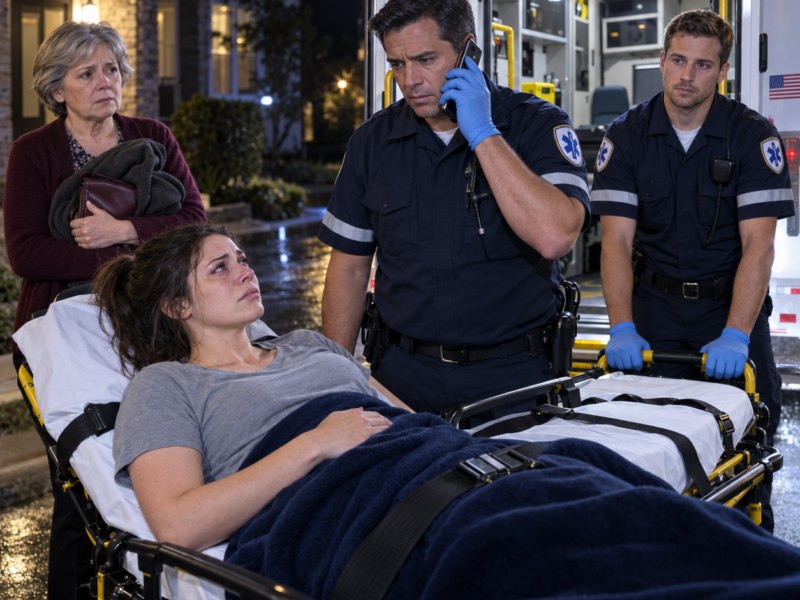
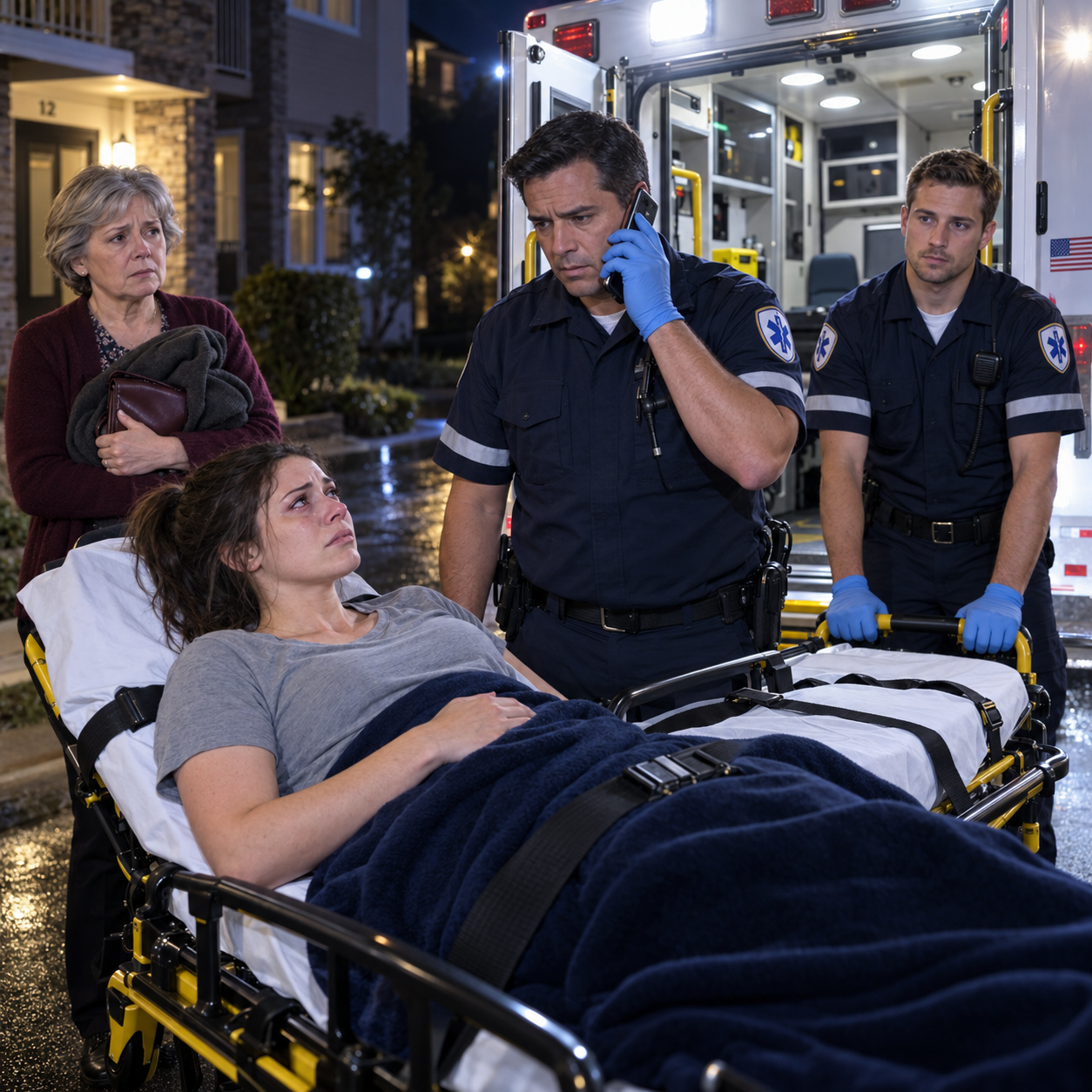
At 2:31 a.m., I was being loaded into an ambulance with a possible ruptured appendix after calling my family seventeen times. My mother had already texted, “We are not doing this tonight.” When my father finally called, the paramedic answered for me. He listened for three seconds, lowered the phone, and said, “Your father wants to know if this can wait until after the baby shower.” Then, just before the ambulance doors closed, a message arrived from a number I didn’t recognize: “I’m already at the hospital. Tell them I’m paying. Do not let your mother sign anything.” I had no idea who sent it—or why someone was warning me about my own mother.
A yellow ribbon had stuck to my wrist, and I couldn’t pull it off.
Honey from one of the little favor jars had dried beneath the satin. Each time I lifted my hand, the ribbon came with it, bright against the gray sleeve of my T-shirt. On the kitchen floor beside me, forty-three finished jars stood in neat rows inside a cardboard box.
Seven more waited on the table.
I remember thinking I should finish those before I called again.
Then the pain tightened, and the thought disappeared.
My phone lay beneath the refrigerator door, where it had skidded when I dropped it. I stretched for it, stopped, and waited until I could breathe without moving my stomach.
Rain tapped against the window over the sink.
Somewhere beyond my apartment wall, a television murmured.
I wanted somebody to know I was there.
The clock on the microwave read 1:47.
I had been feeling sick since late afternoon. At first, it was a dull ache I blamed on the sandwich I had eaten at my desk. By dinner, I didn’t want food. By ten, I couldn’t get comfortable in a chair.
At eleven-thirty, I called my mother.
She answered on the sixth ring.
“Natalie, please tell me the favors are finished.”
“Almost. Mom, my stomach really hurts.”
“What did you eat?”
“I don’t think it’s that.”
“You’ve been living on coffee again.”
“I had a sandwich.”
“Well, there you go.”
I sat on the edge of my couch, one hand pressed against my abdomen.
“Could somebody come over?”
She sighed.
It was not a long sigh. My mother didn’t need much air to make a person feel unreasonable.
“Your father has to pick up the flowers at eight. Lauren hasn’t slept properly in days. I’ve been on my feet since this morning.”
“I know.”
“Take something and lie down.”
“What if it gets worse?”
“Then call me in the morning.”
She asked whether I had printed the little cards that said, A little honey for our sweet girl.
I told her yes.
“Good. Please make sure they’re straight. Lauren notices those things.”
After we hung up, I tried lying down.
Then I tried sitting.
Then I called my father.
No answer.
By midnight, the calls had become less like conversations I hoped to have and more like a task I could still perform. Tap a name. Listen. Wait for someone familiar to decide I mattered enough to interrupt the night.
My sister’s phone went straight to voicemail.
My father’s rang until the recorded greeting began.
My mother rejected two calls and let the next four ring.
I sent a message.
I’m not kidding. I can barely stand up. Can you please call me?
Three minutes later, she replied.
We are not doing this tonight.
I stared at the words.
There was something almost reassuring about their familiarity. My mother had used versions of that sentence all my life, whenever the timing of my feelings inconvenienced someone else.
Not before your sister’s recital.
Not while your father is dealing with work.
Not at Christmas.
Not today.
The pain came again, and reassurance had nothing to do with it.
I managed to reach the phone with the side of my hand. When I pulled it toward me, the cracked corner scraped against the tile.
I should have called an ambulance sooner.
I know that now. I knew, dimly, even then.
But I was twenty-six, working an office job with a deductible I barely understood, and I had spent my entire life learning that the first interpretation of my distress was usually that I had exaggerated it.
I kept trying to make a familiar person agree that something was wrong.
By the time I understood that agreement was not coming, I was frightened enough that ordinary decisions felt difficult.
I opened the keypad.
My hand slipped.
The phone hit the floor again.
From somewhere beyond the apartment, a man’s voice called a name I couldn’t make out.
Then somebody knocked.
“Natalie?”
It was the woman from across the hall.
I knew her first name. Evelyn. I knew she carried reusable grocery bags and sometimes wore gardening gloves to tend the planters by the building’s entrance.
I had accepted a misdelivered package for her once.
“Natalie, can you hear me?”
I tried to answer.
What came out was barely a sound.
The knock became harder.
Then a second voice said, “I heard something.”
Keys rattled. Somebody called the building manager. There was a short, urgent conversation I couldn’t follow.
When the door finally opened, Evelyn came into the kitchen wearing a cardigan over a nightshirt.
She looked at me, then at the phone beside my hand.
“Oh, sweetheart.”
She knelt without asking why I hadn’t gotten up.
That was the first thing I remember clearly about being helped.
Nobody made me explain why I deserved it.
She called 911. While she spoke, she moved the cardboard box away from my knees and put a folded dish towel beneath my head.
A man stood in the doorway behind her.
I saw the bottom of a gray coat.
Then I closed my eyes.
The paramedics arrived while Evelyn was still on the phone. One of them introduced himself as Ben. He asked my name, where the pain was, and how long it had been happening.
“Natalie Caldwell.”
“Any allergies, Natalie?”
I answered.
He listened.
When I said I had tried calling my family, he didn’t ask what I had done to upset them.
He asked whether I wanted him to call someone now.
“My dad.”
Evelyn found the number. She spoke into my phone while the paramedics worked around me.
“Mr. Caldwell, this is your daughter’s neighbor. The ambulance is here.”
I heard her pause.
“No. She isn’t coming to your house.”
Another pause.
“She needs a hospital.”
The next few minutes arrived in pieces.
A blood pressure cuff tightening.
The cold of the hallway.
Someone carrying my purse.
Evelyn insisting my coat come too, though I was already covered with a blanket.
By 2:31, I was on a stretcher beside the open ambulance doors, rain shining under the parking lot lights.
My phone rang.
Dad.
Ben looked at me.
“May I?”
I nodded.
He answered, listened, and turned slightly away from the stretcher.
“Sir, your daughter needs emergency evaluation.”
He listened again.
His face became still.
Not surprised anymore.
Controlled.
He lowered the phone.
“Your father wants to know if this can wait until after the baby shower.”
Evelyn put one hand over her mouth.
For a second, I looked at the yellow ribbon still attached to my wrist.
The baby shower.
Lauren’s baby shower.
The jars. The flowers. The little cards I had been told to keep straight.
“No,” I whispered.
Ben returned the phone to his ear.
“No, sir. It cannot.”
He ended the call before I could ask whether my father was coming.
Just as he placed the phone beside my hand, a message appeared from a number I didn’t recognize.
I’m already at the hospital. Tell them I’m paying. Do not let your mother sign anything.
I read it twice.
Then the doors closed.
Inside the ambulance, I tried to ask who had sent it, but Ben was checking the monitor and his partner was calling ahead.
The siren began.
I had never understood how much an ambulance could move beneath you. Every turn seemed to travel through my body. I watched the ceiling and tried to answer questions without losing track of what I had been asked.
“Any surgeries before?”
“No.”
“Any chance you’re pregnant?”
“No.”
“Stay with me, Natalie.”
I wanted to.
That seemed like an important thing to tell him.
“I’m trying.”
“I know you are.”
He adjusted the blanket near my shoulder.
“You don’t have to do anything except keep talking to me.”
So I talked.
I told him I worked for a property management company.
I told him my apartment number.
I told him the favors were for my sister.
“I know,” he said.
“I didn’t finish.”
He looked at me.
“The favors can wait.”
I began to cry then, quietly, without enough energy to hide it.
At St. Matthew’s Medical Center, the ambulance doors opened onto bright light and wet pavement. The stretcher wheels rattled over a seam in the concrete.
People were waiting.
A nurse took over asking questions. Someone put another blanket around my shoulders. Someone else helped remove the sticky ribbon.
I remember being grateful that they didn’t laugh at it.
In the emergency department, time stopped behaving normally. A minute could contain ten people and several decisions. Then a stretch of hallway seemed to take an hour.
Blood was drawn.
Medication went through an IV.
An emergency physician examined me and explained that they needed imaging.
I asked whether my mother had called.
The nurse said she would check.
As they moved me past a glass partition, I saw a man standing near the waiting area.
Tall. Gray coat. Silver hair.
He was older than I first thought, though pain made it difficult to judge anything accurately. His shoulders were wet, and he held his hat between both hands.
He looked directly at me.
I didn’t recognize him.
But something about the way he stood made me feel that he had recognized me long before that moment.
Then the stretcher turned, and he disappeared.
After the scan, a surgeon came into the room.
“Ms. Caldwell? I’m Dr. Adrian Shaw.”
He pulled a stool close enough that I didn’t have to turn my head to see him.
“Your appendix has perforated. There’s infection in your abdomen, and your blood pressure is lower than we want. We’ve started antibiotics and fluids. You need surgery.”
I swallowed.
“Tonight?”
“Now.”
He explained what they intended to do. He explained the risks without making them sound like a threat. When I asked a question, he answered the question I asked.
My hands trembled against the blanket.
“Am I going to die?”
His expression changed, but he didn’t look away.
“You are very sick. We’re treating this urgently because we want to prevent that.”
There was no promise in his answer.
There was attention.
I held on to that.
A nurse came to the doorway and asked to speak with him. I heard my mother’s name, then my own.
Dr. Shaw listened for a moment.
When he came back, he said, “Your mother has called. She says she wants us to wait until she arrives.”
I stared at him.
“She also says you have a history of becoming anxious about symptoms. Is there anything about your medical history you haven’t told us?”
“No.”
“All right.”
I looked at the papers beside his hand.
“Can she stop this?”
“No. You’re an adult, and you’re able to make this decision. We’re asking you.”
That answer entered me more slowly than it should have.
For years, my mother’s certainty had sounded like authority.
Now a stranger was explaining that those were different things.
“I want the surgery.”
“Then that’s what we’ll do.”
The nurse helped position the consent form where I could see it.
Before I signed, I remembered the message.
“My phone,” I said. “There’s something strange.”
She found it in the clear belongings bag.
I showed her the text.
She read it, then looked at me.
“Do you know this person?”
“No.”
“Do you want your mother given information?”
I hesitated.
Some childlike part of me still wanted her to arrive and become the person I had been calling.
Then I thought about the phone lighting up on my kitchen floor.
“No,” I said. “Not right now.”
The nurse documented my request and explained that staff would handle visitors accordingly. She did not suggest that I might regret hurting my mother’s feelings.
I signed.
As they prepared to move me, I caught her sleeve.
“I don’t know how I’m paying for this.”
“We’ll deal with insurance and financial questions later,” she said. “You’re being treated now.”
“What about the man?”
“Someone has offered to help. That isn’t what decides whether you receive care.”
I nodded, though I wasn’t sure I understood.
The operating room doors opened.
Everything beyond them was clean, bright, and terrifying.
The anesthesia clinician introduced herself. She told me where she would stand and what I might feel. A hand rested briefly on my shoulder.
“Any last questions?”
I had several.
None came out.
Instead, I asked, “Did my mom get here?”
The nurse answered carefully.
“She isn’t here with you. We are.”
I closed my eyes.
That was the last thing I remembered until afternoon.
When I woke, I couldn’t understand why swallowing hurt.
There was a window to my left, but the light coming through it looked wrong. I thought I had been gone for minutes. The sky suggested otherwise.
Machines made small, regular sounds around the bed.
Somebody held my hand.
For one confused second, I thought it was my mother.
Then Evelyn leaned forward.
“Hi, sweetheart.”
Her voice shook.
I tried to speak.
“Don’t rush,” she said. “The nurse is coming.”
She wore the same cardigan I remembered from my kitchen. There was a dark patch near one cuff where something had dried.
I looked at it.
Honey.
She followed my eyes and smiled weakly.
“I’m probably bringing half your kitchen home with me.”
A nurse named Maya checked me and asked simple questions. My name. Where I was. Whether I knew what had happened.
“My appendix.”
“Yes.”
“Did they take it out?”
“Yes.”
The answer felt almost disappointingly ordinary after the night I half remembered.
Then Dr. Shaw came in.
He waited until Maya had finished and asked whether I wanted Evelyn to stay while we talked.
I looked at her.
She started to rise.
“Stay,” I whispered.
She sat back down.
Dr. Shaw explained that the infection had caused a severe reaction throughout my body. During surgery, my blood pressure had fallen dangerously low.
Then he paused.
“You had a brief cardiac arrest.”
I watched his mouth, waiting for the words to arrange themselves differently.
“My heart stopped?”
“Yes. The team responded immediately, and your circulation returned quickly.”
“How long?”
“Less than thirty seconds.”
I would later see the number twenty-seven in the timeline.
At first, I thought of those seconds as time when I had been dead. Later, he helped me understand the difference between an arrest that had been reversed and the finality I was attaching to the word.
But that afternoon, precision did not make the experience smaller.
I had come close enough to losing my life that a surgeon was sitting beside my bed, choosing each sentence carefully.
Evelyn wiped her face.
I looked down at the blanket.
I didn’t cry.
There was too much to understand before I could feel it.
“Will it happen again?”
“We’re monitoring you closely. Right now, you’re improving.”
“Can I go home?”
“Not today.”
The certainty in his voice was almost restful.
There was a plan, and I wasn’t responsible for making it.
He explained the next steps. Antibiotics. Blood tests. Rest. Watching how my body responded.
Then Maya asked whether I wanted to review who could receive information and visit.
“My mother came?” I asked.
Dr. Shaw glanced at her, then back at me.
“Yes.”
I waited.
“She was upset about not being admitted to the unit. She also insisted she had authority to make arrangements for you.”
“What arrangements?”
“She wanted you released into her care as soon as you woke.”
I stared at him.
“She knew I’d had surgery?”
“She knew you were seriously ill and required continued hospital treatment.”
“And she wanted me to leave?”
“She said you would recover better at home.”
Evelyn looked down at our joined hands.
There was more.
I could feel it.
“What else?”
Maya answered.
“She mentioned a family event. When staff explained you weren’t medically ready for discharge, she became disruptive. Security escorted her out of the restricted area.”
My mother had come to the hospital.
Not to sit beside me.
Not to find out whether I could open my eyes.
She had come to correct the inconvenience.
“Did she see me?”
“No,” Maya said. “Your earlier instructions were clear.”
I closed my eyes.
I had never imagined a boundary could be obeyed while I slept.
For most of my life, boundaries existed only as long as I had enough energy to defend them.
“Thank you,” I said.
“You’re welcome.”
I asked about the man.
“The one who said he was paying.”
“There’s a Martin Hale in the waiting area,” Maya said. “He says he knew your grandmother. He hasn’t been allowed access without your permission.”
The name meant nothing at first.
Then, faintly, it did.
An email.
A name I had seen and dismissed.
“Did he stop my mother?”
Dr. Shaw shook his head gently.
“Your treatment wasn’t hers to stop, and your discharge wasn’t hers to order. Mr. Hale raised concerns with administration. The staff followed your instructions and our responsibilities.”
I nodded.
I didn’t yet know how much I needed people to stop presenting protection as something that depended on a more powerful stranger happening to be nearby.
After he left, I asked Evelyn for my phone.
“Are you sure?”
“No. But I want it.”
She placed it where I could reach.
There were forty-three notifications.
My manager had sent two messages, the second saying not to worry about work.
A friend from college had heard from a coworker and asked whether I needed anything brought in.
My father had called three times.
My mother had called more.
Lauren’s messages began at 7:02.
Mom says you went to the hospital. Are you actually having surgery?
Then:
Please don’t post anything today. People are already arriving.
Then:
Mom is upset and Dad won’t tell me what’s going on.
I scrolled.
Natalie, answer me.
And below that:
Did you tell someone about the money?
I stopped.
The room seemed to become very quiet, although nothing around me had changed.
“What money?” I said.
Evelyn leaned closer.
“I don’t know.”
Neither did I.
My grandmother, Margaret Caldwell, died when I was nineteen.
She lived in a small brick house with a magnolia tree that dropped leaves into the gutters and a kitchen drawer full of rubber bands, twist ties, and things too useful to throw away.
She bought canned peaches when they went on sale. She kept the same dining room curtains for as long as I could remember. When somebody gave her expensive hand lotion, she saved it until it separated in the bottle.
I knew she had owned part of a commercial building with my grandfather.
I did not know what that meant.
At nineteen, commercial property sounded like something adults discussed in rooms where I was expected to carry in coffee and then leave.
When Grandma died, Dad told us the medical bills had taken most of what remained.
“There won’t be an inheritance,” he said. “I don’t want you girls expecting one.”
I hadn’t been.
I wanted the blue mixing bowl she used for pancake batter and the photograph of us on the back steps.
My mother said we would sort personal things later.
Later became a box left in the garage.
The bowl disappeared.
The photograph never reached me.
Grandma called me Birdie because, when I was small, I followed her through the house asking questions without waiting for the answers.
She was the only person who ever told me that being curious wasn’t the same as being difficult.
Once, when I was twelve, Lauren wanted the bedroom with the better window during a weekend visit. I had unpacked first.
My mother told me to switch.
“Your sister needs more space.”
Grandma stood in the doorway holding a basket of towels.
“Natalie is already in this room.”
“It’s only for two nights, Margaret.”
“Then Lauren can manage for two nights.”
The silence afterward was uncomfortable enough that I offered to move anyway.
Grandma looked at me.
“You don’t have to help people be unfair to you.”
I remembered that sentence for years without knowing how to use it.
Lauren was three years older and had always seemed to require a larger portion of the family’s attention.
Her disappointments were emergencies.
Mine were lessons.
When she struggled, people gathered.
When I struggled, people reminded me I was strong.
At sixteen, I worked weekends at a bakery. Lauren’s car insurance was due, and Mom asked whether I could lend her part of my savings until payday.
I did.
Nobody mentioned repayment.
At twenty-one, I postponed buying a laptop because Lauren’s wedding deposits had become complicated.
At twenty-four, I drove my mother to appointments while working around lunch breaks, because Lauren’s job was stressful.
When I moved into my own apartment, Mom called me independent as though it meant I no longer needed anyone to check on me.
I accepted that description.
I made it useful.
I learned to assemble furniture, negotiate my internet bill, and carry groceries up four flights without making a second trip. I paid rent on time. I stretched leftovers. I kept a little emergency account that never seemed to reach the amount financial advice columns recommended.
Three months before the baby shower, Dad came to my apartment with a manila envelope.
He brought takeout.
I remember that detail because it made the visit feel generous.
We ate at my little kitchen table, the same table later covered in honey jars.
After dinner, he took out the papers.
“Just updating some family estate administration.”
“What do I need to do?”
“Two signatures and an initial. It doesn’t cost you anything.”
I glanced at the pages.
There were paragraphs about administrative authority and an extension period. I asked whether I needed a copy.
“I’ll send you everything once it’s organized.”
I signed where he pointed.
At the time, I thought trust meant not making him prove he was trustworthy.
Now, in a hospital bed, I searched my email.
Dad’s name.
Estate.
Caldwell.
A message appeared in a folder I rarely checked, dated nearly a year earlier.
Martin Hale.
Regarding the Caldwell beneficiary account.
I opened it.
Natalie,
I need to speak with you directly about arrangements established by Margaret Caldwell. Correspondence has been returned, and the appointments scheduled through your father have not resulted in a meeting. Please contact my office at the number below.
There were two follow-ups.
I had never read them.
I stared at the screen.
“What is it?” Evelyn asked.
“Something I should have opened.”
She didn’t say yes.
She didn’t say how could you.
She asked, “Do you want to call?”
I did.
Martin answered on the second ring.
“This is Martin Hale.”
“My name is Natalie Caldwell.”
He drew a breath.
“Natalie. Thank you for calling.”
“Are you at St. Matthew’s?”
“Yes.”
“Did you offer to pay for my hospital care?”
“I offered to cover expenses that might otherwise fall to you while we sort out your financial arrangements.”
“What arrangements?”
“Your grandmother’s trust.”
I looked at Evelyn.
She had stopped moving.
“Please tell me what that means.”
“I’d prefer to do that when you’re feeling stronger.”
“No.”
My voice sounded rough and unfamiliar.
“My sister just asked whether I told someone about money. My father had me sign papers I didn’t understand. I need enough information to know whether I’m imagining something.”
“You’re not imagining it.”
“Then tell me.”
He took a moment.
“Your grandmother established a trust for your benefit. It held investment accounts and other assets. Its remaining assets are currently estimated at approximately one point eight million dollars, though a full valuation and accounting are needed.”
I looked toward the window.
A bird landed briefly on the ledge and flew away.
One point eight million dollars.
I had forty-six dollars in grocery money left until Friday.
Last fall, I had put off a dental appointment because my car needed tires.
At Christmas, my mother told me I should buy Lauren something meaningful instead of being so practical.
I bought the expensive blanket she recommended and paid the credit card off over two months.
“Dad said Grandma had nothing left.”
“I understand.”
“Did she leave it to him?”
“No.”
“To Lauren?”
“There were separate provisions for other family members. This trust was established for you.”
“Then why didn’t I know?”
“That is one of several questions that need to be answered carefully.”
“Was I supposed to receive it?”
“You were entitled to take control under the arrangement at twenty-five unless you made an informed election to continue certain administration.”
“I’m twenty-six.”
“Yes.”
“The papers in November?”
“I believe those are part of the problem.”
I closed my eyes.
“What did I sign?”
“A document your father presented as your agreement to continue his administrative role for five years.”
“Can he do that?”
“There are serious concerns about how the document was obtained and what it purports to authorize. You need independent legal advice. I am not the person who should decide those questions for you.”
It was the first answer that made me trust him a little.
Not because it was comforting.
Because he admitted that he was not enough.
“Can you come in?” I asked.
“With your permission, yes.”
I asked Maya to admit him.
When he entered, I knew immediately that he was not the man in the gray coat.
Martin was in his late fifties, with close-cropped gray hair, a navy jacket, and glasses he kept removing when he concentrated. The man I had seen through the emergency department doors had been taller and older.
For a moment, the difference troubled me.
Then Martin placed a folder on the chair beside him, and the money returned to the center of the room.
He did not try to shake my hand.
“How are you feeling?”
“Like everyone knows something about my life except me.”
He accepted that without flinching.
“Fair enough.”
“Who are you exactly?”
“I advised your grandmother on investments for twenty-two years. After her death, my firm continued managing part of the trust portfolio. Your father was responsible for other administration under the documents.”
“Were you in charge of him?”
“No. And that distinction became a place where things went wrong.”
He explained that not all the trust’s assets sat in accounts he controlled. My father had authority that should have been used for my benefit and within defined limits. Some transactions occurred through channels Martin’s firm did not administer.
He had questioned unusual requests.
He had asked to speak with me.
He had accepted too many explanations for why that never happened.
“I should have escalated the failure to reach you sooner,” he said. “You are entitled to have someone independent examine my role as well.”
I watched him.
He seemed tired.
I did not comfort him.
“How much is missing?”
“I don’t have a final number.”
“Give me the number you have.”
“Approximately two hundred and forty thousand dollars has either been disbursed or involved in commitments we need to review. Those aren’t all completed losses. I don’t want to combine them in a way that misleads you.”
“Where did it go?”
“Some went to a business controlled by your brother-in-law.”
“Eric?”
“Yes.”
“What business?”
“His renovation company.”
I thought of Eric standing in my parents’ kitchen, explaining that his business was about to grow because he had finally found the right investor.
I had congratulated him.
He had smiled and asked whether I could help Lauren organize the shower invitations.
“And the rest?”
“Payments appear connected to family expenses and debt. We need bank records before we assign every dollar.”
Evelyn sat down slowly.
I looked at my hands.
There was a faint pink line on my wrist where the ribbon had been.
“How did you know I was sick?”
“Your father called me shortly after two-twenty this morning.”
I looked up.
“Before he called the ambulance?”
“He said a neighbor had told him paramedics were there. He asked whether I could go to the hospital.”
“Why you?”
Martin paused.
“He said you might need financial help.”
“Did he sound worried?”
“Yes.”
I wanted that answer to mean more than it could.
“Then why didn’t he come?”
“I don’t know.”
The honesty hurt.
“Did you send the text?”
“What text?”
I reached for the phone, but Maya came in then to check my blood pressure and adjust a medication.
My hands had begun shaking.
She looked at the folder.
“This conversation needs a break.”
“I’m not finished.”
“I know. Your body is.”
Martin stood immediately.
“I’ll leave my card.”
I looked at him.
“I want the money protected.”
“I can alert the institutions I work with that your father’s authority is disputed and request that pending activity be held for review. An attorney can pursue the broader steps.”
“I want that.”
“All right.”
“And I want a lawyer who doesn’t work for my father.”
“I’ll provide names. You choose.”
After he left, I lay back against the pillow.
Evelyn pulled the blanket over my feet.
“I should have read the papers,” I said.
“Yes,” she answered gently. “And your father should have told you the truth about them.”
I turned toward her.
She held my gaze.
“You’re allowed to remember both.”
The next morning, my mother’s voice reached the unit before she did.
“She is my daughter.”
A staff member answered too quietly for me to hear.
Then Mom again.
“I am not discussing my family in a hallway.”
I pressed the call button.
Maya was not on duty. A nurse named Luis came in.
“My parents are here?”
“They’re at the desk.”
“I’d like my father to come in. Only him.”
He looked at me carefully.
“Are you sure?”
“Yes. Ten minutes. And I want someone nearby.”
“We can do that.”
Dad entered carrying a paper coffee cup he never drank from.
He had not shaved. His shirt was wrinkled beneath his coat, and his eyes looked swollen.
For a few seconds, he stood at the foot of the bed.
“You scared me.”
I looked at him.
“I called you seventeen times.”
“I know.”
“You didn’t answer.”
“We were asleep for some of it.”
“Mom answered.”
He lowered his eyes.
“She thought it was your stomach acting up.”
“My stomach doesn’t act up.”
He said nothing.
“You asked if it could wait until after the shower.”
“I didn’t understand.”
“The paramedic told you.”
“I heard him.”
“And you still asked.”
Dad put the coffee cup on the windowsill.
“I’m sorry.”
I had wanted those words.
Now that I had them, they seemed much smaller than the hours they were being asked to cover.
I looked at his hands.
They were the same hands that had taught me how to steady a bicycle, how to check the oil in my car, how to carry a plate without spilling gravy.
I could remember good things.
That made the next question harder.
“Did you use Grandma’s trust without telling me?”
His shoulders moved.
A tiny surrender.
“It wasn’t like that.”
“Then explain it.”
“Your grandmother wanted her family taken care of.”
“Martin said the trust was mine.”
“It was for your benefit.”
“Was Eric’s company for my benefit?”
“It was an investment.”
“Did I agree to invest?”
“We were going to talk about it when the returns started coming in.”
“Afterward.”
He looked toward the door.
I had heard my mother’s voice fade. Somewhere outside, a cart rattled past.
“Natalie, you’re upset. This isn’t the time to make decisions.”
“You chose this time by keeping it from me until now.”
He rubbed his forehead.
“My business had a bad year. Then another. I borrowed against the house, thinking things would turn around. Eric had contracts lined up, but he needed working capital.”
“With my money.”
“With family resources.”
“No.”
The word came out quietly.
He stopped.
“You keep changing the name of it when you want to use it.”
Dad pulled the visitor chair closer.
I didn’t invite him to sit, but he did.
“Lauren is having a baby.”
“I know. I was making the favors.”
He looked at my wrist.
For the first time, I thought he might actually be seeing the night instead of his version of it.
“I intended to replace everything.”
“How much?”
“I don’t have it in front of me.”
“Do you know?”
He hesitated.
“Yes.”
“Then you don’t need it in front of you.”
His face tightened.
“Around what Martin told you. Depending on how the investments are valued.”
“Does Mom know?”
He looked toward the window.
“Dad.”
“Yes.”
“For how long?”
“Several months.”
“She helped you?”
“She was worried about the house.”
“That wasn’t my question.”
He put his elbows on his knees.
“She handled some correspondence.”
I stared at him.
“My correspondence?”
“She thought you would panic before we had the situation straightened out.”
I remembered the appointments Martin said I had canceled.
“Did she tell people she was me?”
“I don’t know exactly what she said.”
“You can stop protecting her from the sound of what she did.”
He flinched.
It was the first time I had ever spoken to my father that way.
I did not enjoy it.
I also did not take it back.
“What does Lauren know?”
“Some.”
“Does she know the money came from my trust?”
“Yes.”
The answer seemed to empty the room.
“How long?”
“Since the fall.”
I looked away.
In the fall, Lauren had sent me a link to a nursery glider that cost more than my rent.
Isn’t it perfect?
I told her it was beautiful.
She replied that Mom and Dad were helping because becoming parents was overwhelming.
That same week, my car had failed inspection. I asked Dad if he knew a mechanic who might let me pay in installments.
He told me I needed a better emergency fund.
I repeated that to him now.
He closed his eyes.
“I know.”
“You knew then too.”
He began to cry.
I watched him without knowing what I was supposed to do with his tears.
For most of my life, his distress had been an instruction.
Fix the mood.
Make the room comfortable.
Say you understood.
Luis appeared in the doorway.
“Everything all right?”
I looked at Dad.
Then at Luis.
“I need a few more minutes.”
He nodded but stayed close.
Dad wiped his face with a paper tissue from the bedside box.
“You’ve always been capable.”
I almost laughed.
“That is what you call me whenever you need a reason to give me less.”
“That isn’t fair.”
“No. It isn’t.”
He looked at me.
I had never seen him run out of the belief that, if he kept talking long enough, I would return to my assigned place.
“I’m getting independent advice,” I said. “I’m requesting a full accounting. I’m not signing anything else for you.”
“That could destroy Eric’s company.”
“I didn’t create the problem in Eric’s company.”
“We could lose the house.”
I looked at the IV pump beside me.
“My heart stopped yesterday.”
“I know.”
“And you are still asking me to hold the house up.”
He bent forward.
“I don’t know what else to do.”
“Tell the truth. Give them the records.”
He sat for another moment.
Then he stood.
At the door, he turned.
“I did call Martin because I thought you might die.”
I felt the words land.
I wanted them to repair something.
They didn’t.
“You could have come too,” I said.
He nodded once and left.
My mother called that afternoon.
I let the phone ring through several times. Then I answered because I knew I would otherwise lie awake imagining what she wanted to say.
She did not ask about my pain.
“How could you do this to your father?”
I looked at the pale wall opposite the bed.
“What have I done?”
“He says you’ve involved attorneys.”
“I’m going to.”
“Natalie, he has been trying to keep this family afloat.”
“With money he told me didn’t exist.”
“You don’t understand the pressure he’s under.”
“I understand more than I did yesterday.”
Her voice sharpened.
“This is exactly why we didn’t want to overwhelm you.”
There it was.
The secrecy was now evidence of concern.
The concern was evidence that I should accept the secrecy.
I had spent years inside that circle.
“I was overwhelmed on my kitchen floor.”
“That is not fair.”
“Did you read the message where I said I couldn’t stand?”
“You’ve said things like that before.”
“When?”
She was silent.
“When, Mom?”
“I’m not going to debate every conversation we’ve ever had.”
“You don’t have to. Just that one.”
She breathed hard into the phone.
“I came to the hospital.”
“To have me released.”
“To bring you home, where people know you.”
“The doctors knew I needed to stay.”
“You’re conscious now, aren’t you?”
I closed my eyes.
“My heart stopped.”
“For seconds, Natalie. Please stop choosing words that make this sound worse.”
Something inside me became very calm.
“I’m choosing the words the surgeon used.”
“You know what I mean.”
“Yes.”
I opened my eyes.
“I finally do.”
She began another sentence.
I interrupted her.
“You knew about the trust.”
“Natalie—”
“You knew I was struggling with bills.”
“We all struggle.”
“You let me buy things for Lauren.”
“Nobody forced you.”
That hurt.
Not because it was new.
Because it was the rule beneath everything.
They would make need visible, praise generosity, express disappointment when I hesitated, and later insist I had acted freely because nobody physically moved my hand.
“No,” I said. “Nobody forced me.”
She seemed relieved for a fraction of a second.
“Exactly.”
“And I’m choosing what I do now.”
I ended the call.
My hands shook afterward.
Luis came in while I was trying to set the phone down.
“Do you want someone taken off the call list?”
“Yes.”
He waited while I gave the names.
Then he asked whether I wanted water.
I started to say I was fine.
Instead, I said yes.
On Monday morning, an attorney named Rebecca Sloan came to see me.
I had spoken with two firms by phone and chosen her because she asked me questions before telling me what she thought.
She wore flat shoes and carried a bag that looked old enough to have earned its scuffs.
Before discussing the trust, she asked whether I felt alert enough to talk and whether I wanted Evelyn present.
“Yes to both.”
“Good. We’ll keep this short. There are urgent steps and there are decisions that can wait. We won’t confuse them.”
She explained that my father’s role, the consent papers, the trust terms, and the institutions holding assets all needed to be examined together. My signature did not mean every representation surrounding it was true. It also did not mean a dispute could be solved merely by announcing that I regretted signing.
“We’ll work from records,” she said. “Not from whichever family member speaks most confidently.”
I liked her immediately.
She reviewed the narrow documents needed to represent me and request records. She explained each before I signed. When I asked for copies, she looked almost puzzled.
“Of course.”
I felt foolish for how relieved that made me.
Rebecca noticed but did not comment.
“Martin has supplied an initial set of records,” she said. “We’ll verify them independently. He should not be your only source of information.”
“He admitted he should have done more.”
“That is useful. It is not the end of the question.”
“What happens to Dad?”
“I can’t answer that today.”
“Will he go to jail?”
“I’m handling the civil and trust issues. If evidence supports a criminal referral, we’ll discuss that with the appropriate people. Your family may try to make you believe you personally control every consequence. You do not.”
I stared at her.
She continued.
“You control whether you tell the truth, preserve evidence, and protect your rights. Other people have responsibilities too.”
That was not how my family had presented it.
According to my mother, I was holding the house, Eric’s company, Lauren’s pregnancy, and my father’s entire future in my hospital bed with me.
Rebecca asked what I wanted immediately.
“No more money going out to them.”
“We’re pursuing that.”
“No documents sent through my parents.”
“Agreed.”
“And I don’t want to be told I’m too upset to understand my own life.”
She closed her pen.
“Then we’ll explain things until you understand them. Being upset doesn’t make you incapable.”
After she left, I slept for three hours.
It was the deepest sleep I had managed since surgery.
Recovery was less dramatic than the emergency and, in some ways, harder.
The crisis had clear instructions.
Lie still.
Answer questions.
Let people work.
Recovery required me to trust a body that suddenly felt unfamiliar.
Standing beside the bed exhausted me. Walking to the hallway window felt like a trip I should have packed for. My appetite returned in brief, unreliable appearances.
I cried once because I could not open a container of pudding.
Maya, back on duty, opened it without making the act symbolic.
“Here.”
“Sorry.”
“For what?”
I didn’t know.
That happened often.
An apology would leave my mouth before I understood what I was apologizing for.
Evelyn came every day, though I repeatedly told her she didn’t have to.
On the fourth day, she put down the crossword she had brought and looked at me.
“Natalie, I know.”
“What?”
“I know I don’t have to come.”
I watched her.
“I’m coming because I want to.”
There was no test hidden in the sentence.
No expectation that I would prove worthy by recovering faster or keeping her entertained.
She read while I slept.
She helped me find my hair tie.
She told me about the downstairs tenant who kept leaving recycling beside the bins instead of in them, which she considered a moral failure of modest but persistent importance.
I began looking forward to those reports.
My manager, Denise, called to arrange leave paperwork.
“Please don’t worry about the invoices,” she said.
“I know which ones need—”
“Natalie.”
I stopped.
“We have other people who can read.”
I laughed, then regretted it because my abdomen protested.
Denise waited until I caught my breath.
“Take the time you need.”
I had spent so long being useful that I had mistaken replaceable labor for irreplaceable love.
The office managed without me.
The people who cared still called.
Before discharge, a social worker named Andrea helped me plan where I would go and what support I needed.
“My apartment,” I said.
“Will someone be able to check on you?”
“Me,” Evelyn answered.
Andrea looked at me, not her.
“Is that what you want?”
“Yes.”
We arranged home nursing follow-up for the treatment I still needed and made sure I understood the instructions. I was given numbers to call if something changed.
I read every page.
Slowly.
When I didn’t understand something, I asked.
Nobody sighed.
That was becoming a pattern I could get used to.
Martin came the day before I left. He brought updated account information and confirmed that immediate protections had been put in place where his firm had authority.
Rebecca was handling the rest.
He also explained his offer to cover my outstanding medical costs while insurance processed the claims.
“I don’t want another arrangement I don’t understand,” I told him.
“Neither do I.”
He gave me the terms in writing. There would be no authority over me, no access to my medical information, and no repayment obligation hidden in gratitude.
Rebecca reviewed it before I agreed.
Then I asked again about the message.
“The one from the ambulance.”
Martin frowned.
“I didn’t send you a text before you arrived.”
I showed him the screenshot.
He read it.
His face changed.
“What?” I asked.
“I recognize the wording. I need to make a call.”
“Who sent it?”
“I don’t want to identify someone based on an assumption.”
I stared at him.
He saw my expression.
“You’re right,” he said. “That sounded too much like another person deciding what you can know.”
“Then tell me what you know.”
“I know an older relative of your grandmother contacted me that night. I haven’t spoken with him since. I think this may be from him.”
“What relative?”
“Thomas Caldwell.”
I shook my head.
“That’s impossible.”
“Why?”
“Dad said he died.”
Martin sat back.
For a long moment, neither of us spoke.
Then he said, “Thomas was alive when he called me on Saturday.”
I looked at the photograph on my phone’s lock screen, a picture of the river I had taken on a lunch break.
It was an ordinary image.
I needed something ordinary.
“Who is he?”
“Your grandmother’s younger brother.”
“My great-uncle.”
“Yes.”
“Why would Dad say he was dead?”
“I don’t know.”
I no longer believed that every adult who said I don’t know was hiding something.
But I was learning to ask what they did know before I let the answer end the conversation.
“Did you see him at the hospital?”
“Briefly, after I arrived. He was leaving.”
“In a gray coat?”
“Yes.”
There was the man behind the glass.
The figure in my apartment doorway.
I turned toward Evelyn.
She was looking at me with a worried expression.
“I think that’s the man who knocked on my door,” she said.
“What?”
“That night. Before I found you.”
I stared.
“You didn’t hear me yourself?”
“Not at first. He told me he was concerned about the young woman in 4A. I thought he was a relative you knew.”
“He is a relative I was told was dead.”
Evelyn closed her eyes.
“Oh, Natalie.”
I looked back at Martin.
“Find him.”
“I’ll try.”
“No more messages through my father.”
“Absolutely not.”
When I returned to my apartment, the favors were gone.
For one terrible second, I thought my mother had come for them while I was in the hospital.
Evelyn saw me staring at the kitchen table.
“I put everything in the hall closet. Nobody took anything.”
I stood just inside the door, one hand against the frame.
“The jars?”
“All there.”
“The ribbons?”
“In the box.”
I nodded.
The apartment smelled faintly of dish soap. My couch had been made up with clean blankets. A row of easy meals sat in the refrigerator, labeled in Evelyn’s square handwriting.
She had also moved the little rug beside the sink.
“It was slippery,” she said. “We can put it back later.”
I looked at the kitchen floor.
The place where I had been was just tile now.
Pale squares, a hairline crack near the refrigerator, one discolored patch beneath the radiator pipe.
I expected it to look different.
It didn’t.
That frightened me.
The world could hold the worst night of my life and then go back to looking like a kitchen.
Evelyn touched my elbow.
“Couch first.”
I let her guide me.
For the next week, my life grew very small.
Medication times.
Short walks.
A shower that required a nap afterward.
A nurse checking the line and the instructions.
Soup.
Sleep.
The phone.
Always the phone.
My mother found ways around the blocked number. Calls from my father’s office. Messages sent through an aunt. An email with the subject Please be reasonable.
Rebecca asked me to save communications related to the financial dispute.
So I did.
Saving them did not mean reading them repeatedly.
I created a folder and moved them there.
It was an unexpectedly useful distinction.
One afternoon, Martin brought copies of Grandma’s original trust and a sealed envelope that had been stored with her papers.
He set it on the table.
“This was intended for you when you took control of the trust.”
The envelope had my name on it.
Not Natalie Caldwell.
Birdie.
I touched the handwriting.
The years between nineteen and twenty-six seemed to fold for a moment. I could hear the scrape of Grandma’s kitchen chair. I could smell her hand cream, the inexpensive kind she actually used.
“May I keep this?”
Martin looked pained.
“It’s yours.”
I opened it after he left.
Evelyn was in the kitchen, cutting an apple because she had decided I needed something that wasn’t toast.
The letter was two pages long.
Birdie,
If somebody has handed this to you with a large stack of papers, make them explain the papers. Then make them explain anything you still don’t understand. Being polite does not require pretending.
I smiled before I could help it.
That sounded like her.
She wrote about ordinary things first. The magnolia tree. A recipe she had copied for me. A wish that I would finish school and find work I liked, but not spend my entire life proving I could manage without help.
Then the letter changed.
You have a kindness that worries me sometimes. Not because kindness is a bad thing. Because I have seen you offer it when you are hurt, as if giving one more thing might persuade someone to notice what you need.
I wish I had done a better job of telling you that you do not have to earn your place.
I stopped reading.
Evelyn looked over.
“Do you want me to leave you alone?”
“No.”
She sat down.
I continued.
This money is not a reward for being the good granddaughter. It is not payment for errands or visits or all the little things you did for me. I enjoyed you. That is a different matter.
It is meant to give you choices.
Use it carefully. Get advice from people who explain themselves. Help people if you want to. But do not confuse someone needing something with that thing belonging to them.
Love your family. Love other people too. There is more room in the world than the one you grew up in.
And learn the difference between someone holding your hand and someone holding you down.
Money alone will not make you free, Birdie. But perhaps it will give you enough room to discover that you are allowed to say no.
I pressed the letter against my chest.
The crying came suddenly and completely.
Not because of the amount in the trust.
Because a woman who had been gone seven years had described something I had never been able to explain while it was happening.
Evelyn moved closer.
I tried to apologize for the noise.
She laughed through tears of her own.
“Natalie, I was a school secretary for thirty-four years. I have heard people cry because somebody else got the blue scissors. You’re fine.”
I laughed too, carefully.
Then I cried again.
Three days later, an envelope arrived by mail.
Inside was a photograph of Grandma sitting on her back porch beside a tall man. A little girl sat on her lap with one shoe missing.
Me.
Maybe three years old.
On the back were six words.
She made me promise to watch.
Below them was a telephone number and a name.
Thomas.
I stared at the photograph for a long time before calling.
He answered without giving his name.
“Hello?”
“This is Natalie.”
A pause.
Then, softly, “Hello, Birdie.”
I closed my eyes.
Hearing that name in a living voice hurt more than I expected.
“Are you Thomas Caldwell?”
“Yes.”
“Were you at the hospital?”
“Yes.”
“Did you send the text?”
“Yes.”
I looked toward Evelyn’s chair.
She had gone downstairs to get the mail and would be back soon.
“Why did you say you were paying?”
“Because I knew you were worried about money. I had told the ambulance crew I would make sure it was covered. Martin later handled the arrangements.”
“How did you know I was worried?”
“Evelyn told me you had kept mentioning the cost.”
I remembered fragments.
A stretcher.
My own voice asking whether I could take a car instead.
It was possible.
It was terrible.
“Why did you warn me about my mother?”
He exhaled.
“Because I had heard your parents describe you as unable to handle things whenever they wanted to keep control. I didn’t know whether that might extend to medical decisions. I wanted you to know you could refuse.”
“You could have put your name in the message.”
“I should have.”
“Why didn’t you?”
“I thought seeing it might confuse you.”
“It did confuse me.”
“I understand that now.”
I watched rain begin gathering on the window.
There was no long speech about how difficult his position had been.
That made it easier to keep asking questions.
“Why were you at my apartment?”
“I’d been trying to speak with you.”
“At two in the morning?”
“I came earlier. Your father had agreed to meet me outside the building. We argued. He said you knew about the trust and didn’t want contact with me. I didn’t believe him.”
“So you waited.”
“Yes.”
“That sounds unsettling.”
“It was a poor way to handle it.”
“Why didn’t you knock?”
“I did, earlier. You didn’t answer. I thought you were out.”
I remembered the faint knocking around nine, while I was in the bathroom feeling too sick to care who wanted something.
“I didn’t hear you.”
“I saw the light later. I came back upstairs and heard a sound. I knocked on your neighbor’s door because she had spoken to me in the hallway earlier.”
“Evelyn.”
“Yes. She said she knew you.”
“How did you get into the building?”
“A tenant let me into the entry when I explained I was trying to reach a relative. I should have been more direct with everyone involved.”
I appreciated that he did not describe hovering outside my life as a noble act I was required to welcome.
“Did you call the ambulance?”
“Evelyn did. I went downstairs to meet the crew and hold the entrance. Once they were working with you, I drove to the hospital.”
“How did you know which one?”
“They told Evelyn. I was standing there.”
“And you got there before me.”
“Yes. They were still stabilizing you when I left.”
The timeline began to fit.
Not mysteriously.
Practically.
A man went downstairs.
A neighbor called.
An ambulance took time.
The hospital was close.
“What did you do after Martin arrived?”
“I left.”
“Why?”
“Because your mother recognized me and began shouting, and I thought my staying would make things harder. Martin knew the financial situation. The staff were taking care of you.”
I was quiet.
He said, “I should have left you a clear way to reach me. I did leave my number with Martin, but apparently neither of us handled that well.”
“Apparently.”
He accepted the word.
Then I asked the question that mattered more than the coat, the message, or the timing.
“Why was I told you were dead?”
Thomas was silent for several seconds.
“When did your father tell you that?”
“After Grandma died. I asked about a man in an old picture. He said his mother’s brother had died before I was born.”
“I see.”
“Did you know?”
“No.”
“Why didn’t Grandma talk about you?”
“She did when you were small. Later, she and I had periods when we weren’t speaking much. I moved away. Your father and I argued about money, and I handled some of those arguments badly.”
“What money?”
“Your grandmother’s. Then the trust.”
I looked at the photograph again.
“Did you know Dad was taking it?”
“I suspected he was misusing his authority. I didn’t know the whole amount.”
“Did you know letters weren’t reaching me?”
“Yes.”
“Did you know he was lying about my wanting to meet?”
“I thought he might be.”
“And you kept trying to solve it with him instead of telling me.”
“Yes.”
Anger rose through the exhaustion.
“You all decided I was the last person who needed to know.”
He did not answer immediately.
Then he said, “Yes. In different ways, that’s what happened.”
“So how are you different?”
The question hurt him. I could hear it in the breath before his answer.
“I came when I knew you needed help. But that doesn’t excuse waiting so long to speak to you.”
I pressed my fingers against the photograph.
He continued.
“I thought I could make your father correct things without putting you in the middle. What I actually did was leave you outside a conversation about your own life.”
I began to cry.
He waited.
He didn’t tell me not to.
After a while, he said, “I should have told you sooner.”
It was an apology with no request attached.
I didn’t forgive him that afternoon.
I did agree to meet him.
We chose a diner on the edge of town, at eleven in the morning, two weeks later.
Evelyn came with me.
Thomas arrived first and sat at a table near the front window. In daylight, he looked older than he had in my blurred hospital memory. Seventy-six, he told me. His coat hung on the chair beside him.
He stood when we approached.
Then he waited instead of moving in for a hug.
I liked that.
He brought a folder of photographs, but no financial papers.
“Rebecca has anything relevant to the trust,” he said. “These are just family pictures. You can take them whether or not you want to see me again.”
Evelyn ordered coffee.
I ordered tea.
Thomas ordered coffee so dark it looked medicinal.
We began awkwardly.
He told me Grandma had hated cilantro and pretended otherwise when someone cooked for her.
I told him I knew.
He smiled.
“She once planted it by mistake.”
“She told me it was parsley with an attitude.”
He laughed.
The sound startled something in my memory.
Not a full scene.
Just a porch, a wooden chair, and the feeling of being very small.
I looked down at the photographs.
There he was with darker hair.
There was Grandma with her arm around him.
There was my father at a picnic, younger than I was now.
I touched the edge of that picture.
“He wasn’t always like this,” I said.
“No.”
“Or was he, and I didn’t notice?”
Thomas considered the question.
“People can be generous in one part of their lives and selfish in another. Your father has done kind things. He also learned to explain away choices that benefited him.”
I appreciated that he did not need my father to have been a villain in every photograph for what happened to count.
“Grandma named him to help with the trust,” I said. “Why?”
“Because he was her son. Because he knew the local property. Because she wanted to believe responsibility would bring out the best in him.”
“She was wrong.”
“Yes.”
“Did you tell her?”
“I did.”
“How?”
“Badly, sometimes.”
He looked out the window.
“I liked being right more than I liked being useful. When she didn’t agree with me, I withdrew. That left your father with more room, not less.”
Evelyn stirred her coffee.
Nobody hurried him.
“My sister was a good woman,” Thomas said. “She was not a woman who could see the future.”
That mattered.
Grandma had loved me.
She had tried to protect me.
She had also made decisions that trusted people who failed.
I could hold all of that without needing her letter to become a prophecy.
When we left the diner, Thomas asked whether he could call in a week.
“Yes.”
“What day would be good?”
“Thursday.”
“What time?”
“After six.”
He wrote it down.
It was such a simple thing, asking when.
I was beginning to understand how much of respect lived in small arrangements.
The independent accounting took three months.
During that time, I returned to work gradually, learned how easily I tired, and discovered that fear could arrive through something as harmless as a phone vibrating on a kitchen table.
I began seeing a counselor.
The first time she asked what I needed, I gave her a list of what I needed to do.
Get back to full hours.
Finish the records request.
Answer Rebecca.
She waited.
Then she asked again.
I cried because I did not know how to answer.
We worked on that.
Meanwhile, the financial story became clearer.
The initial two hundred and forty thousand dollars was not the final exposure. Once all the records were assembled, the accountants identified roughly three hundred and ten thousand dollars in completed transfers, attempted withdrawals, and proposed commitments.
Rebecca was careful every time she explained the number.
“Money that left is different from money they tried to obtain. We’re keeping those categories separate.”
The completed payments totaled one hundred and ninety thousand dollars.
One hundred and forty thousand had gone into Eric’s renovation company through transactions described as investments and short-term financing.
Thirty-two thousand had gone to Lauren or expenses incurred directly for her household.
Eighteen thousand had been routed through my mother under the description of household reimbursements, including payments connected to my parents’ debts.
The remaining one hundred and twenty thousand involved pending or attempted transactions that had not all been completed. Some had already been questioned. Others were stopped once I disputed my father’s authority.
I sat across from Rebecca while she explained it.
The numbers were large.
The descriptions were worse.
One payment corresponded to the nursery furniture Lauren had asked me to help assemble.
Another fell during the month Mom told me she couldn’t contribute to replacing my broken refrigerator because “everybody has to learn to manage.”
Dad had used my trust to support people who watched me learn that lesson.
“Did Lauren know where it came from?” I asked.
“There are messages indicating she knew the source by the fall.”
“And Eric?”
“He knew the investing account was held for your benefit.”
“Did he think I agreed?”
“That’s what he says. The written record raises questions about how sincerely he believed it.”
Rebecca showed me an email.
Eric had asked whether I was going to need to sign anything.
Dad replied that he was handling Natalie.
I read the sentence several times.
Handling Natalie.
It sounded like a task between collecting an invoice and scheduling a delivery.
The letters told their own story.
Some had gone to my parents’ address because Dad had never properly updated the contact records. Some were returned. Some were opened and retained.
A meeting cancellation had come from an email account my mother controlled, using my name in the body of the message.
Another conversation with an office assistant had been summarized as beneficiary not interested in meeting at this time.
I remembered the birthday lunch happening that same week.
Mom had kissed my cheek.
Lauren had asked me to take pictures.
Dad had paid for lunch.
I had thanked him.
Rebecca let me sit quietly.
Then she asked whether I wanted to stop.
“No. Show me the rest.”
Among the records was an insurance inquiry my father had submitted using some of my personal information.
It concerned possible coverage on my life.
No policy had been issued.
I looked at the form and felt cold in a way I had not felt since the hospital.
“Why?”
“His explanation is that he was reviewing family financial planning.”
“Do you believe him?”
“I believe we should verify the facts instead of filling gaps with the worst possibility.”
I stared at her.
She continued carefully.
“There’s no evidence here that anyone caused your illness. There’s no issued policy. This is another instance of him using your information without a conversation you should have been part of.”
I nodded.
The inquiry was preserved and reviewed with the other records.
No evidence emerged that anyone had caused my appendicitis or interfered with the operation.
I had been frightened and betrayed.
Those facts were serious enough without turning every frightening detail into a different crime.
Still, for several nights afterward, I woke with my heart racing.
My counselor helped me understand that certainty about what had not happened did not immediately erase the fear of what I had learned people could do.
Lauren called from a number I didn’t recognize in late May.
I almost didn’t answer.
When I heard her voice, my hand tightened around the phone.
“Please don’t hang up.”
I stood in the grocery store parking lot beside my car.
“What do you want?”
“To talk.”
“About what?”
“Everything.”
“That’s a large subject.”
She sounded tired.
The baby had been born three weeks earlier.
A girl.
I knew from a message my aunt sent, not because Lauren had told me herself.
“How is the baby?” I asked.
“She’s good.”
“Good.”
There was a pause.
“We named her Margaret.”
I closed my eyes.
For a moment, anger rose so sharply I had to steady myself against the car.
Then I thought of a newborn who had done nothing except arrive.
“That was Grandma’s name,” I said.
“I know.”
I waited.
Lauren began crying.
“Eric says the company may not survive this.”
I looked across the parking lot at a woman loading groceries into a minivan.
“May not survive what?”
“The repayment demands.”
“Did the company have enough money before the demands?”
“That isn’t the point.”
“It seems relevant.”
“Natalie, I just had a baby.”
“I know.”
“I can’t do this much stress.”
I leaned against the door.
There had been a time when that sentence would have ended the conversation in her favor.
Now I heard what it was asking.
“You knew,” I said.
“I didn’t know everything.”
“You knew the money was from my trust.”
“Dad said you understood.”
“Then why did you ask if I told somebody?”
She was quiet.
A cart rattled past.
I waited.
“Because Mom said people were getting involved who didn’t understand the family.”
“And you believed that?”
“I wanted to.”
It was the first honest thing she had said.
I let it stand.
Then she added, “You always seem fine.”
I looked at the faded red line left on my wrist by the hospital band.
“I called you from the floor.”
“I was asleep.”
“You told me not to post anything when you learned I was having surgery.”
She began crying harder.
“I panicked.”
“About me?”
No answer.
I did not need one.
“I’m not discussing repayment without Rebecca,” I said.
“Are we only going to talk through lawyers now?”
“For the money, yes.”
“And for everything else?”
I watched a little boy help his mother lift a loaf of bread into a bag.
“I don’t know yet.”
Lauren asked whether I wanted a photograph of the baby.
“Yes,” I said.
That surprised both of us.
She sent one.
I saved it.
Loving the child did not require agreeing that her mother had done nothing wrong.
I was learning how to leave things separate.
The legal work continued through summer.
My father resigned the disputed administrative roles as part of the formal process, but resignation did not erase the accounting questions.
Rebecca arranged for new administration with people I selected and whose responsibilities were clear.
We discussed whether I wanted the trust terminated where its terms allowed or continued in a different form.
For the first time, I was not being asked to sign so a grown-up could finish explaining my life to someone else.
I was making a decision.
I took my time.
I asked questions about taxes, investments, fees, and what could be sold without creating a different problem.
I did not suddenly become an expert because I had been wronged.
Money still required care.
That was another truth I appreciated.
The remaining assets were substantial, but they were not a bottomless cash account. Some were invested. Some were interests in property. There were expenses and consequences attached to changing things.
I chose a conservative plan while the disputes were resolved.
I kept my job.
I replaced my refrigerator.
I went to the dentist.
Those were my first acts of financial freedom.
No dramatic purchase.
No car parked outside my parents’ house to prove a point.
A refrigerator that closed properly.
A dental appointment I did not postpone.
A savings account large enough that a flat tire no longer felt like a threat to the month.
My father wanted to meet before the settlement conference.
Rebecca asked whether I wanted that.
“I don’t know what he can say.”
“That’s a reasonable concern.”
“Do you think I should?”
“I think the decision should serve you, not the appearance of reconciliation.”
I declined a private meeting.
He sent a letter instead.
Most of it explained the pressure he had been under.
One paragraph apologized.
I read that paragraph several times, trying to decide whether it meant what I wanted it to mean.
Then I stopped.
It was not my job to improve his apology by imagining better words behind it.
At the settlement meeting, he sat across a conference table from me with his attorney.
My mother did not attend.
Lauren and Eric’s interests were handled separately through their counsel.
There were no raised voices.
There were figures, deadlines, documents, and the dry hum of an air conditioner.
I had imagined the moment would feel dramatic.
Mostly, I was tired.
Dad looked at me once while the attorneys conferred outside.
“You look better.”
“I am.”
“I’m glad.”
I nodded.
He turned a paper cup in his hands.
“I never thought it would go this far.”
I looked at him.
“What did you think would happen?”
He stared at the cup.
“That I could put it back.”
“Before I knew.”
He did not answer.
“That was the plan,” I said. “It depended on me not knowing.”
His eyes filled.
“Yes.”
There was the truth again, late but recognizable.
“I’m sorry, Natalie.”
I believed he felt sorry.
I no longer believed feeling sorry automatically made a person safe.
The settlement required records, repayment arrangements, and the sale of property my father had hoped to keep. Some money was recovered. Some recovery depended on assets and payments over time.
Eric’s company closed anyway.
The records showed it had been in deeper trouble than he admitted long before I became involved.
My mother told relatives I had destroyed it.
I stopped trying to correct every version.
The people handling the records knew what had happened.
The people determined to blame me were not waiting for one more document to change their minds.
Financial misconduct concerns were referred for review through the proper channels. I cooperated where asked. The civil agreement did not purchase my silence or require me to rewrite the facts.
I had wanted a clean ending.
What I got was a process.
It was enough.
My mother continued writing.
At first, the letters were angry.
Then sorrowful.
Then nostalgic.
One envelope contained a Christmas photograph from when I was nine.
On the back, she wrote, We were happy once.
I sat on my couch looking at it.
Lauren held the doll she had wanted.
Dad’s arm rested around her shoulders.
Mom looked toward Lauren with an expression so warm I felt guilty noticing where it was directed.
I stood at the edge holding two coats and a scarf.
For a moment, I wanted the photograph to prove everything.
That would have been easier.
But it was one picture.
There had been happy days. My father had taught me to ride a bike. My mother had rubbed my back when I had a fever as a child. Lauren and I had once stayed up whispering until dawn.
Those memories were real.
So were the coats in my arms.
So were the seventeen calls.
The good did not erase the harm.
The harm did not require me to pretend there had never been good.
I put the photograph in a drawer.
I did not send it back.
I did not answer the note.
In the fall, I opened the hall closet and found the favor boxes.
I had avoided them for months.
The honey jars sat exactly where Evelyn had placed them. The finished bows had flattened slightly. The little cards still announced a celebration I never attended.
I took one out.
The ribbon was yellow.
For a few seconds, my kitchen seemed to tilt toward that night.
Then I sat down and put both feet on the floor, the way my counselor had taught me.
I named things I could see.
The table.
The window.
The blue mug.
The refrigerator I had chosen myself.
The pain I remembered was not happening now.
My phone was on the counter.
I could call for help without asking my mother whether I needed it.
When Evelyn came over, she found me removing the cards.
“What are you doing?”
“Keeping the honey.”
She looked at the pile of ribbons.
“Good honey?”
“Probably.”
“Then that sounds sensible.”
We worked at the table together.
There was no ceremony.
We threw away paper.
We loosened knots.
We put jars on a shelf.
At one point, I said, “I don’t want to make favors for anything ever again.”
Evelyn nodded.
“A reasonable personal policy.”
“Maybe that will change.”
“Then you can change it.”
I looked at her.
She was concentrating on a stubborn ribbon.
It occurred to me that she never seemed frightened by the idea that I might want something different later.
She trusted my present answer without demanding it become a permanent identity.
Thomas became part of my life slowly.
He called on Thursdays after six.
If I did not answer, he left a message and waited.
He did not arrive unannounced.
When he wanted to bring something, he asked.
We had dinner twice a month, usually at the diner or my apartment, sometimes with Evelyn.
He was not easy in every way.
He could be stubborn. He told stories with too many road names. He believed coffee should taste like a warning.
He also listened when I said no.
Once, he suggested contacting my father about a family photograph.
“I’d rather you didn’t speak for me,” I said.
He put down his fork.
“All right.”
No wounded silence.
No reminder of what he had done for me.
Just an adjustment.
I began trusting him through those moments.
He eventually explained the years he had spent away. Work in several states. An unhappy marriage. A period after his wife died when moving seemed easier than staying long enough to be missed.
None of it was as mysterious as silence had made it sound.
He had been private.
Sometimes lonely.
Sometimes ashamed of how long he had let things go.
I did not need him to become a replacement father.
He was my great-uncle.
That was a relationship with enough room of its own.
Martin also remained in my life, though differently.
The independent review examined his firm’s role. It confirmed the limits of what they controlled and identified places where warning signs should have been handled more forcefully.
He did not argue that paying my medical expenses settled that question.
Changes were made. Records were provided. Professional responsibility was addressed through people other than Martin deciding whether Martin had done enough.
I appreciated his help.
I kept oversight.
Those could exist together too.
A year after the surgery, I returned to St. Matthew’s for an event supporting emergency surgical patients and their recovery needs.
Dr. Shaw had asked whether I would consider speaking briefly.
My first instinct was to refuse.
Not because I didn’t want to help.
Because I did not want my worst night turned into a performance.
He accepted that.
A month later, I called the foundation office myself.
“I’d like to talk about the practical costs people face after they survive.”
The woman on the phone said she would be glad to listen.
So we did.
Medication.
Transportation.
Rent while a person could not work.
Food.
Childcare.
The quiet expenses that waited at home after a hospital did its job.
I used part of the trust’s income to help establish a small fund within the hospital foundation. The staff handled eligibility and administration. I wanted the help to be available without requiring a patient to become a public story.
Evelyn joined the patient advisory group.
“I have no qualifications,” she said.
“You know what it looks like when someone needs help and doesn’t know how to ask.”
“I also know how to alphabetize attendance records.”
“Excellent. They’ll be lucky to have you.”
At the event, I wore a navy dress and flat shoes.
I had written a speech, then cut most of it.
When I stood at the microphone, I could see Dr. Shaw near the back. Maya stood beside two colleagues. Evelyn sat at a table with Thomas, who looked uncomfortable in a tie but had put one on anyway.
I did not tell the audience every detail about my family.
That part belonged to me.
I spoke about the moment a nurse told me the financial questions could wait while they treated me.
I spoke about how frightened I had been to need anything.
And I spoke about going home, where recovery required more than instructions on a printed sheet.
“I thought accepting help meant creating a debt,” I said. “Some very patient people have spent the last year teaching me that isn’t always true.”
I looked toward Evelyn.
She wiped beneath one eye and pretended to be irritated with me.
Afterward, Dr. Shaw found me near the elevators.
“You did well.”
“I kept it short.”
“A quality I appreciate in speeches.”
I smiled.
For a moment, I saw the operating room doors again.
Then I looked at the ordinary hallway, at people moving through it, and understood that this building could hold more than my fear.
“Thank you,” I said.
He nodded.
“You’re welcome.”
I wanted to say something large enough to cover what he and the team had done.
There wasn’t anything.
So I let the small words stand.
My father emailed every few months.
Some messages concerned logistics.
Some said he missed me.
I answered only when I wanted to and only about what I was willing to discuss.
My mother’s letters became less frequent.
Eventually, they stopped.
Lauren sent pictures of Margaret.
I saved them.
I sent a birthday gift chosen for the child, not priced to soothe an adult.
I did not attend every family gathering I heard about.
I did not explain my absence in new ways each time.
There were days I missed them terribly.
Not always the people they had shown themselves to be.
Sometimes I missed the people I had believed would come when I called.
That grief was harder to explain.
It had no funeral.
No clear anniversary beyond the one my body remembered when February rain began tapping against the windows.
On the second anniversary of the surgery, I woke before dawn.
For a moment, I thought my phone was ringing.
It wasn’t.
The apartment was quiet.
I got up, made tea, and stood in the kitchen wearing a sweater Grandma would have called a sensible color.
The tile beneath my feet was cool.
I did not look away from the place where I had fallen.
I had spent so long treating that spot as the place my family abandoned me that I sometimes forgot it was also where Evelyn knelt.
Where someone believed me.
Where help began.
Later that spring, Thomas and I visited Grandma’s grave.
I brought flowers and the old porch photograph.
The cemetery was damp from overnight rain. Grass clippings clung to the edge of the path. Somewhere nearby, a groundskeeper’s truck idled.
Thomas walked slowly beside me.
At the stone, I brushed away a few leaves caught near the base.
Margaret Caldwell.
The dates beneath her name looked too neat to contain the woman I remembered.
I placed the flowers down.
For a long time, neither of us spoke.
Then I asked, “Did she really think Dad would do something like this?”
Thomas looked at the stone.
“No.”
I turned toward him.
“She worried about what he could justify,” he said. “But worry isn’t knowledge. She still hoped he’d do right by you.”
I nodded.
“And she worried about me.”
“Yes.”
“What did she say?”
He put his hands in his coat pockets.
“That you kept making room for people who didn’t notice you were standing.”
I looked at the photograph.
A little girl with one shoe missing.
Grandma’s hand resting securely around her waist.
“Why didn’t she just tell me everything?”
“She tried in some ways. Failed in others. People who love us can fail us too.”
I thought about the trust.
The role she had given Dad.
The letter that reached me late.
“I wish she were here.”
“So do I.”
Wind moved through the branches above us.
Thomas glanced at me.
“There’s one thing she said I remember clearly.”
“What?”
“She said, ‘If Natalie ever finally chooses herself, don’t talk her out of it.’”
I looked down at Grandma’s name.
For years, I had imagined choosing myself would require becoming someone hard.
Someone who never answered.
Never gave.
Never needed.
Instead, it had turned out to involve smaller things.
Reading a document.
Keeping an appointment.
Letting a phone ring.
Accepting soup.
Asking a question twice when the first answer did not answer it.
Calling help when I needed help.
I stood a little longer.
Then I put the photograph back in my bag.
“Ready?” Thomas asked.
“Yes.”
We walked toward the car.
At the gate, my phone vibrated.
A message from Evelyn.
I made too much dinner. Before you say it, yes, I know I did that on purpose. Six o’clock?
I smiled.
Thomas opened the passenger door.
“Everything all right?”
“Yes.”
I typed back.
Six is good. What can I bring?
Her answer appeared before I finished fastening my seat belt.
Yourself. I have the rest.
I read it once more.
Then I put the phone away and went home.









