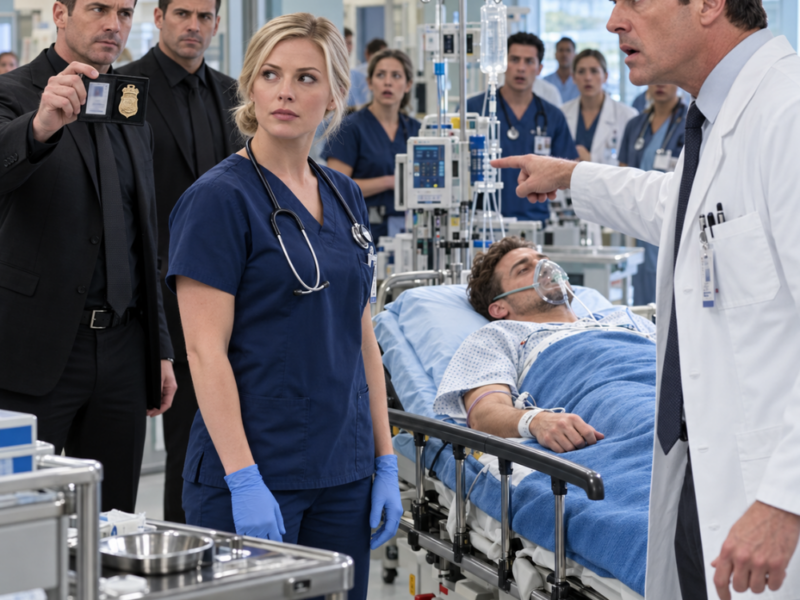
They Dismissed the Quiet ER Nurse — Until Federal Agents Arrived Using Her Callsign
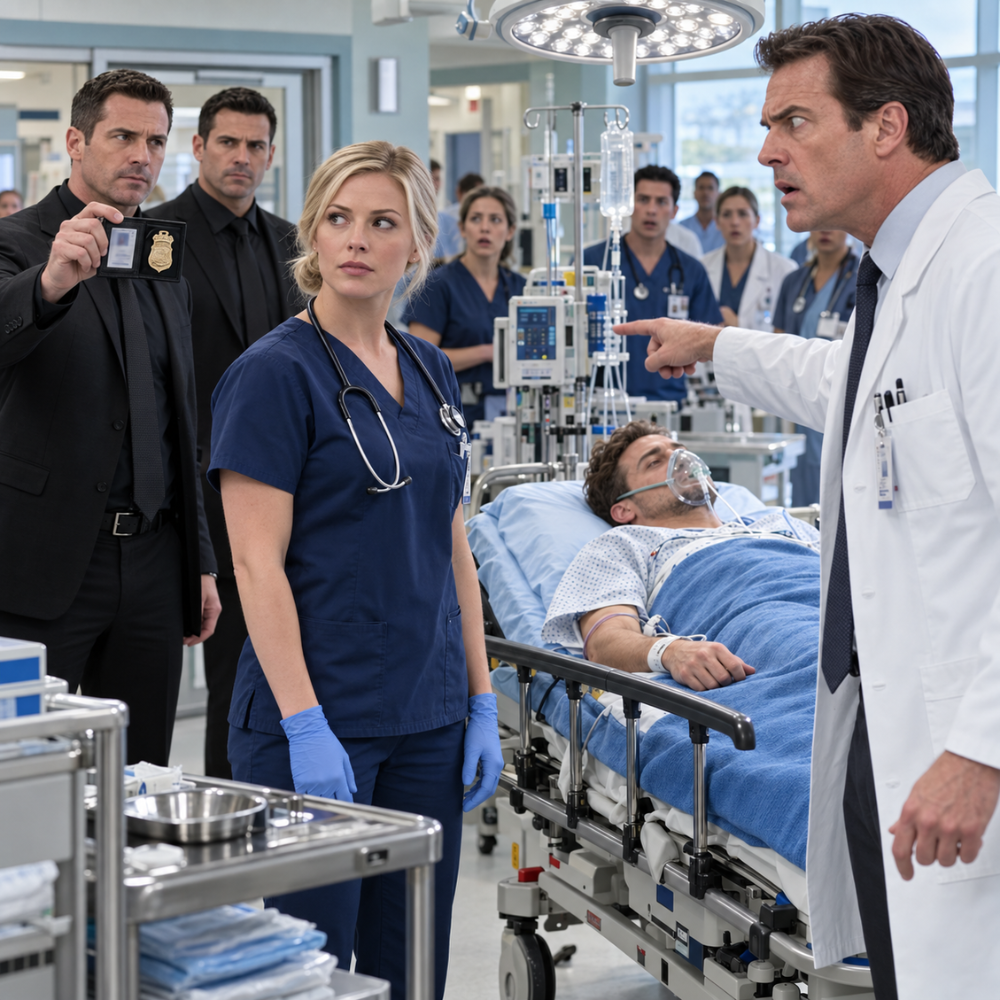
They mocked the quiet ER nurse for months—then federal agents arrived and called her by the name she had buried years ago
“Stop.”
Samantha Hayes caught Jessica Braddock’s wrist less than an inch above the IV port.
The trauma bay froze for half a second.
Dr. Ryan Lawson looked up from the defibrillator.
“What are you doing?”
Samantha did not answer him immediately.
She looked at the syringe in Jessica’s hand.
Then at the label.
“Wrong concentration.”
Jessica stared.
“What?”
Samantha took the syringe gently but firmly from her.
“This one isn’t for cardiac arrest.”
The monitor above the patient’s head screamed.
The fifty-year-old man on the bed had no pulse.
Lawson’s face flushed.
“Hayes, move.”
Samantha was already moving.
She opened the lower drawer of the crash cart, removed the correct medication, confirmed the label out loud with another nurse, and handed it across.
“Correct concentration.”
Jessica read it back.
Lawson looked from one nurse to the other.
“Push it.”
Medication entered the line.
Compressions continued.
The room narrowed into the familiar rhythm of emergency medicine.
Count.
Breathe.
Shock.
Reassess.
Everyone moved.
Samantha moved least dramatically of all.
That was how she worked.
No wasted gestures.
No shouting unless volume served a purpose.
No panic disguised as urgency.
Twenty-eight seconds later, a rhythm returned to the monitor.
Weak.
Then stronger.
The patient took a rough breath.
Someone in the room exhaled audibly.
Lawson stared at the screen.
“We’ve got him.”
Samantha looked at Jessica.
“You okay?”
The younger nurse nodded.
Her face was pale.
“I grabbed the wrong vial.”
“You caught it before it went in.”
“You caught it.”
Samantha said nothing.
There would be time later to discuss why the wrong concentration had been stocked in the wrong place.
For now, the patient needed transfer.
Lawson seemed to have a different priority.
He waited until the man was stabilized and transported upstairs.
Then he followed Samantha into the staff break room and shut the door.
“Who do you think you are?”
Samantha turned toward the sink.
“What?”
“You put your hands on another nurse.”
“She had the wrong medication.”
“That is not the issue.”
“It is exactly the issue.”
Lawson slapped his clipboard onto the laminate table.
“You interfered with my code.”
Samantha washed her hands.
The water ran warm over fingers that had once worked in places where clean water was not always available.
She kept her eyes on the sink.
“Dr. Lawson, if that medication had gone into the line at that concentration, we would be having a very different conversation.”
“You don’t know that.”
“I do.”
“You’re a nurse.”
Samantha dried her hands.
“Yes.”
He stepped closer.
“So start acting like one.”
Her expression did not change.
Lawson mistook that for submission.
People often did.
“You do not countermand me in front of staff.”
“I corrected a medication error.”
“You embarrassed me.”
That was more honest.
Samantha looked at him.
Ryan Lawson was thirty-six, newly promoted to attending physician, ambitious enough that half the hospital already knew which fellowship directors he wanted impressed.
He was intelligent.
Nobody disputed that.
He could be excellent when the room stayed predictable.
The problem appeared when prediction failed.
His voice got louder.
His hands moved faster.
And afterward, responsibility tended to migrate toward whoever was least likely to challenge him.
Samantha had become convenient.
“I wasn’t trying to embarrass you,” she said.
“Intent doesn’t matter.”
“That is an interesting standard.”
His jaw tightened.
“What was that?”
“Nothing.”
“No. Say it.”
Samantha picked up her coffee.
“It can wait.”
Lawson pointed toward her.
“Tomorrow morning. Gregory Patterson’s office.”
She paused at the door.
“Why?”
“Formal disciplinary review.”
“For stopping the wrong medication?”
“For insubordination.”
Samantha looked at him for a long moment.
Something in her gaze made him stop pointing.
“I’ll be there.”
Then she left.
At St. Jude Medical Center, Samantha Hayes was considered dependable.
That was almost the entirety of her professional reputation.
Dependable.
Quiet.
Good in trauma.
Never called off.
Rarely complained.
Patients liked her.
Residents frequently forgot her name despite working beside her for months.
Administrators knew her because she had ten years of nursing experience and very few documented problems.
Coworkers knew she packed the same lunch most days, drank coffee black, and volunteered for weekend nights often enough that younger nurses assumed she had no family.
None of them knew why she never sat with her back toward the emergency department entrance.
Nobody asked why she instinctively looked at exits when entering conference rooms.
They did not notice how precisely she could identify footsteps in a hallway before the person appeared.
They assumed her steady hands came from nursing experience.
Mostly they did.
Not entirely.
Samantha was thirty-four.
Her hair stayed tied back.
She wore faded blue scrubs.
No expensive watch.
No dramatic tattoos.
The only jewelry she wore was a small silver ring on a chain tucked beneath her shirt.
She lived alone in a two-bedroom condo west of downtown Chicago, where the second bedroom contained cardboard boxes she had never unpacked after moving three years earlier.
One box held old photographs.
Another held uniforms.
She did not open either.
That had been the point of nursing.
Not running from her past exactly.
Creating enough distance from it that she could hear ordinary hospital sounds without comparing them to field tents, aircraft engines, alarms, or incoming fire.
For five years, Samantha had served as a military medical specialist supporting high-risk operations overseas.
The public version of her record was ordinary enough.
Military nursing.
Overseas contracts.
Emergency medicine.
The less public version contained names of teams, locations, and assignments she no longer had clearance or desire to discuss.
She had treated gunshot wounds under blackout conditions.
Kept people breathing during evacuations that lasted too long.
Held pressure on wounds while aircraft shook beneath her.
Learned the difference between fear that paralyzed and fear that sharpened.
She had also learned something less glamorous.
Nobody remained extraordinary indefinitely.
Everyone eventually needed sleep.
Food.
Someone to listen.
A clean shirt.
A room where nobody expected heroism.
St. Jude had been supposed to be that room.
The next morning, she sat across from hospital administrator Gregory Patterson.
Lawson sat to his right.
Patterson’s office looked like every hospital executive office Samantha had ever seen.
Mahogany.
Diplomas.
Corporate mission statement.
A photograph of Patterson shaking hands with the mayor.
No patients.
Patterson folded his hands.
“Samantha, Dr. Lawson filed a formal concern regarding yesterday’s code.”
She nodded.
“I know.”
“He says you physically interfered with another nurse.”
“I stopped a medication error.”
Lawson shifted.
Patterson looked at him, then her.
“Was Nurse Braddock holding the incorrect medication?”
“Yes.”
“Was the concentration error confirmed?”
Samantha almost relaxed.
Then Patterson continued.
“That still doesn’t excuse disregarding chain of command.”
She stared.
“Patient safety is the chain of command.”
Lawson gave a small laugh.
Patterson’s eyebrows lifted.
“That attitude is exactly what concerns me.”
“What attitude?”
“This insistence that you operate independently.”
“I don’t.”
“You do.”
He opened her personnel file.
“You have substantial nursing experience.”
“Strong reviews.”
“But there is an unusual five-year period before St. Jude.”
“Overseas medical work.”
“That description is vague.”
“It is accurate.”
Patterson looked toward Lawson as if they were sharing patience with a difficult employee.
“Whatever clinic structure you worked under overseas may have been informal.”
Samantha went still.
He continued.
“St. Jude is a premier medical institution.”
“We function through defined authority.”
She thought of a field hospital in Afghanistan where six people had worked for forty minutes to keep one young Marine alive after an evacuation route changed.
No titles then.
Only tasks.
Airway.
Bleeding.
Medication.
Transport.
Nobody cared who had the more impressive badge if the wrong syringe was in someone’s hand.
Samantha kept that memory where it belonged.
Behind her teeth.
Patterson continued.
“Dr. Lawson is the attending physician.”
“That carries responsibility.”
“It does not make him infallible.”
Lawson leaned forward.
“See?”
Patterson raised a hand.
Samantha looked at him.
“I will follow every lawful medical order that does not place a patient at preventable risk.”
Patterson’s expression cooled.
“That sounds rehearsed.”
“It isn’t.”
He closed her file.
“You’re being reassigned to weekend nights for the rest of the month.”
Samantha said nothing.
“Consider this corrective.”
“Fine.”
“And if there is another incident involving insubordination, termination is possible.”
“Understood.”
Lawson smiled faintly.
Samantha stood.
Patterson stopped her.
“One more thing.”
She turned.
“You need to learn the difference between confidence and authority.”
Samantha looked at him.
Then at Lawson.
“I agree.”
Neither man realized what she meant.
Friday night began with the ordinary ugliness of emergency medicine.
A college student with a split lip.
A construction worker who put a nail through his hand.
Two influenza cases.
An elderly woman with abdominal pain.
A man sleeping off intoxication behind a curtain while his brother argued with insurance.
At 11:42 p.m., Samantha stood inside the supply room counting saline bags.
The emergency radio sounded.
“St. Jude, be advised. Multiple critical patients inbound from a collision involving a federal transport. Possible armed incident associated. Secure trauma capacity requested. Three criticals. ETA four minutes.”
Samantha stopped counting.
Something old inside her woke immediately.
Not fear.
Organization.
She stepped into the hall.
“Jessica.”
The younger nurse turned.
“Open trauma one and two.”
“Already open.”
“Clear three too.”
“Why three?”
“We may need separation.”
Lawson came from the physicians’ lounge.
“What happened?”
“Federal transport incident,” Jessica said.
Lawson frowned.
“Armed incident?”
Samantha moved toward the blood refrigerator.
“Activate massive transfusion readiness.”
Lawson looked toward her.
“We don’t know if we need that.”
“We have three criticals.”
“I’ll decide.”
Samantha stopped.
Then nodded.
“Then decide quickly.”
He stared.
She continued moving.
The ambulance doors opened four minutes later.
The first patient wore a torn dark suit and body armor beneath it.
A badge hung from his belt.
Federal marshal.
Blood soaked one side of his clothing.
Second patient:
Another federal officer with multiple injuries from the crash.
Third:
A prisoner in an orange transport jumpsuit, one wrist secured to the gurney rail under armed guard.
Abdominal gunshot wound.
Unconscious.
The first marshal grabbed Lawson’s sleeve as paramedics passed.
“The prisoner.”
Lawson leaned down.
“What?”
“Keep him alive.”
The marshal coughed.
“He’s a witness.”
Then the gurney rolled on.
Lawson turned toward trauma one.
“Move.”
Samantha, Jessica, and two techs transferred the prisoner.
His blood pressure fell.
Lawson began calling orders.
Some correct.
Some overlapping.
Jessica looked frightened.
Samantha positioned herself beside the patient.
“Pressure’s dropping.”
“I can see that,” Lawson snapped.
“Source likely abdominal.”
“I know.”
Samantha looked toward the monitor.
Then toward the lobby.
Four men had entered through the emergency department doors.
Civilian clothes.
Heavy winter jackets.
Nothing overtly wrong.
To almost anyone else, they looked like relatives arriving after bad news.
Samantha watched one glance left before the doors even finished opening.
Second man checked right.
Third stayed near the entrance.
Fourth moved toward the security desk without looking at signage.
They were not lost.
They were not looking for a patient name.
They were reading the room.
Samantha’s heartbeat slowed.
That frightened her more than if it had accelerated.
“Dr. Lawson.”
“What?”
“Look at the lobby.”
“I’m working.”
“Look.”
He did.
The four men stood near triage.
“What?”
“They’re not family.”
“How do you know?”
“Movement.”
Lawson stared.
“What does that mean?”
“Call security now.”
He looked back toward the patient.
“Hayes, we have a man bleeding out.”
“And four possible threats approaching the department.”
Jessica looked up.
“Samantha?”
Samantha saw the lead man touch his coat.
Not draw anything.
Check.
A familiar gesture.
“Code Silver.”
Lawson laughed in disbelief.
“You cannot activate an armed-threat lockdown because four people made you nervous.”
“They are not making me nervous.”
“Then what?”
“They’re making me certain enough to verify.”
Lawson pointed toward the patient.
“Do your job.”
Samantha looked at the emergency lockdown control beside the trauma bay.
Hospital policy allowed staff to activate a protective lockdown when an immediate violent threat was reasonably perceived.
It existed because waiting for perfect certainty could cost lives.
She had read the procedure twice during orientation.
At the time, everyone treated it like fire extinguisher training.
Something for other days.
Samantha saw one of the men exchange a hand signal with another.
Decision made.
She hit the lockdown.
Heavy security doors between the public waiting area and critical-care corridor began closing.
An alarm sounded.
Not loud enough to cause panic immediately.
Enough.
The men reacted.
Too quickly.
One reached beneath his coat.
Hospital security moved.
Shouting began in the lobby.
Patients screamed.
Samantha pulled the trauma-bay door closed.
Magnetic locks engaged.
Lawson stared at her.
“What did you do?”
“What the policy allows.”
“You could have trapped us.”
“That’s the idea.”
The patient’s monitor alarmed.
Jessica said:
“Pressure seventy-eight.”
Samantha turned.
“Focus.”
Lawson’s face had gone pale.
Outside the reinforced glass, the intruders had revealed weapons.
Hospital security had retreated behind a secured station.
The attackers were not shooting indiscriminately.
That made the situation worse.
They had a purpose.
The federal prisoner.
Lawson backed away from the window.
“Oh, God.”
Samantha looked at him.
“Stay with the patient.”
He stared at her.
“What?”
“Stay with the patient.”
“I am.”
“No.”
Her voice hardened.
“You’re watching the lobby.”
“Watch him.”
Lawson obeyed without noticing that he had.
Jessica stood near the IV pumps.
Hands shaking.
Samantha touched her arm.
“Look at me.”
Jessica did.
“Your job is blood.”
“Okay?”
She nodded.
“Good.”
Samantha moved the crash cart into a position that provided more protection without blocking access to the patient.
She lowered the blinds on the interior glass where possible.
Turned off unnecessary lights.
Told a tech to move two oxygen cylinders farther from the doorway.
Simple safety.
No heroics.
Outside, the attackers forced several people to the floor and demanded access to the trauma wing.
Hospital security called Chicago police.
Someone had already triggered the silent emergency response.
Samantha pulled her old secure phone from the bottom of her locker pouch.
She had not powered it on in three years.
For a moment she simply held it.
Lawson saw.
“What is that?”
She ignored him.
The device took several seconds to connect.
A secure number remained programmed.
Samantha had kept it for emergencies she believed would never happen.
The line answered.
“Operations duty.”
Samantha looked through the narrow glass panel toward the corridor.
“This is Samantha Hayes.”
A pause.
Then the voice changed.
“Authenticate.”
She gave the code.
Another pause.
“Identity confirmed.”
Samantha exhaled.
“St. Jude Medical Center, Chicago. Federal prisoner under treatment. Armed hostile group inside emergency department. Local police responding. I need the federal transport command notified that the witness is here and alive.”
The voice on the other end sharpened.
“Copy.”
“Federal tactical coordination is already being initiated through Chicago.”
“How long?”
“Unknown. Local response first.”
“Understood.”
Then the operator used a name Samantha had not heard in years.
“Overwatch.”
She closed her eyes.
“Don’t call me that.”
“Copy, Hayes.”
She ended the call.
Lawson stared.
“What was that?”
“Help.”
“Who?”
“People who need to know their witness is alive.”
His face changed.
“Who are you?”
Samantha returned the phone to her pocket.
“Your nurse.”
Outside, an attacker struck the outer trauma door with something heavy.
The sound echoed.
Jessica flinched.
Samantha did not.
“Keep working.”
Lawson stared toward the door.
“What if they get in?”
“We buy time.”
“How?”
Samantha looked at him.
“By not falling apart before they arrive.”
He looked offended even then.
“I’m not falling apart.”
His hands said otherwise.
They trembled over the dressing.
Samantha noticed.
Did not mention it.
The attacker hit the door again.
Metal shuddered.
Then a voice came through.
“Open the trauma room.”
No response.
“Open it or people get hurt.”
Lawson whispered:
“We should give them the prisoner.”
Jessica looked toward him in horror.
Samantha turned.
“No.”
“He’s one man.”
“He’s unconscious.”
“And there are civilians out there.”
Samantha understood the calculation.
She had made worse ones.
But Lawson had not reached a decision through responsibility.
He was scared.
That did not make him evil.
It did make him dangerous if fear controlled the room.
“We do not hand a patient to armed men.”
“You don’t know who they are.”
“Exactly.”
Lawson’s breathing quickened.
“They may kill everyone.”
“Maybe.”
“Maybe?”
Samantha moved closer.
“Doctor, I need you to hear me.”
He looked at her.
“Fear is information.”
“It is not command.”
For once, he said nothing.
A loud impact hit the hallway door.
Then another.
The lock held.
Police sirens grew outside.
The attackers began moving faster.
Samantha could hear shouted instructions in the lobby.
The federal prisoner’s pressure climbed slightly.
Jessica looked toward the monitor.
“Eighty-six.”
“Good.”
Lawson said:
“We need surgery.”
“Yes.”
“No operating room will take him during lockdown.”
“Then we stabilize until movement is safe.”
The trauma-bay lights flickered.
Samantha looked up.
One attacker had reached the electrical panel near the hall.
He was trying to disrupt access controls.
That told Samantha something.
They knew the hospital layout.
Or had prepared.
The lights returned on emergency power.
The lock stayed engaged.
St. Jude’s security contractor had upgraded the system after an active-threat drill the previous year.
Samantha remembered the committee complaining about cost.
Worth every dollar now.
The outer trauma corridor door finally failed partially.
Not exploded.
Forced.
A narrow opening appeared.
One attacker tried pushing through.
Samantha shoved the crash cart across the gap from the inside.
Lawson moved instinctively to help.
For one second they pushed together.
The gap narrowed.
Jessica yelled:
“Blood pressure dropping again.”
Samantha released the cart.
“Lawson.”
He turned.
“Patient.”
He hesitated.
Then ran back.
That mattered.
His first useful choice after panic.
Another attacker forced the door farther.
Samantha stepped behind a structural column.
Hospital police communication crackled through the overhead system.
“Officers entering emergency department.”
The intruders heard it too.
Their plan changed.
One shouted toward another.
Footsteps.
Retreat.
Then gunshots farther away.
Not many.
Sharp.
Controlled.
Samantha stayed behind cover.
She did not pursue.
That distinction would matter later when people exaggerated the story into something it never was.
She was not a retired commando hunting armed men through hospital corridors.
She was a nurse protecting a patient and using training to survive until law enforcement arrived.
Minutes later, Chicago police tactical officers entered through the secured emergency bay, followed by federal agents coordinating around the prisoner transport.
Two attackers surrendered near the lobby.
One was taken into custody after being injured during confrontation with police.
Another fled through a service exit and was arrested several blocks away.
The emergency department remained locked down.
No cinematic rescue vehicle smashed through glass.
No nurse fired a weapon.
No bodies littered the floor.
The truth was tense enough.
Inside trauma one, Samantha did what she had always done.
She treated the person in front of her.
Lawson stood beside her.
More controlled now.
“Pressure ninety-two.”
Jessica read the monitor.
“Heart rate one-ten.”
Samantha nodded.
“Good.”
The trauma surgeon on call reached the bay after security cleared the corridor.
The prisoner went directly to surgery.
He survived.
That fact later became important to a federal prosecution.
At 1:18 a.m., with the emergency department still crawling with police and federal personnel, a man in a dark overcoat stepped into trauma one.
Samantha was cleaning blood from her forearms.
Lawson sat against the cabinets drinking water.
Jessica stared blankly at the wall.
The newcomer showed credentials.
Deputy Director Thomas Carter.
Federal Bureau of Investigation.
Samantha looked toward him.
He looked older.
She knew him.
Or had.
Years earlier.
Different continent.
Different title.
“Samantha Hayes.”
“Tom.”
Lawson looked between them.
Carter smiled.
“Been a while.”
“Not long enough.”
He glanced around the trauma bay.
“You always did pick calm workplaces.”
Samantha almost laughed.
Jessica stared.
Lawson slowly stood.
“You know her?”
Carter looked toward him.
“Yes.”
Lawson’s eyes narrowed.
“How?”
Samantha said:
“Not now.”
Carter saw the tone.
He nodded.
“Fair.”
A federal agent entered behind him.
“The witness is in surgery.”
Carter asked:
“Expected outcome?”
Samantha answered before Lawson.
“Surgeon believes survivable.”
Lawson looked toward her.
She added:
“Dr. Lawson stabilized him after the lockdown.”
The doctor stared.
He had not expected credit.
Carter nodded.
“Good.”
Then he looked at Samantha again.
“You called the old line.”
“Yes.”
“That channel hadn’t heard your authentication in years.”
“That was the goal.”
Carter smiled faintly.
“Overwatch.”
Lawson heard it.
“What did he call you?”
Samantha’s face hardened.
“Nothing relevant.”
Carter immediately understood.
“Sorry.”
That apology told Lawson more than any explanation.
A senior federal official had just corrected himself because the quiet nurse asked him to.
Then Gregory Patterson arrived.
Hospital administrator.
Suit thrown over a dress shirt.
No tie.
Face pale.
He entered trauma one and stopped.
Broken door.
Police.
Federal badges.
Blood.
Damaged equipment.
“Samantha.”
She closed her eyes briefly.
Patterson looked around.
“What happened?”
Carter answered.
“An armed group attempted to reach a federal witness.”
Patterson stared.
“Here?”
“Yes.”
He turned toward Samantha.
“Why did you activate the lockdown without physician authorization?”
Silence.
Carter’s eyes moved toward Patterson.
Lawson looked embarrassed.
Samantha wiped her hands on a towel.
“Because I identified an immediate threat.”
Patterson frowned.
“You are nursing staff.”
“Yes.”
“Hospital security protocols—”
“Allow any clinical staff member who perceives an imminent armed threat to initiate Code Silver protection.”
Patterson stopped.
She knew the policy.
Of course she did.
Carter looked at him.
“I’d suggest reviewing your emergency procedures before criticizing the person who followed them.”
Patterson flushed.
“I’m not criticizing.”
“You are.”
Samantha’s voice remained tired.
Patterson looked at her.
The hallway outside buzzed with investigators.
Samantha removed her hospital badge.
Lawson watched.
She placed it on the counter.
Patterson’s face changed.
“What are you doing?”
“Going home.”
“You cannot leave during an investigation.”
“I’ll give every required statement before I go.”
“I mean afterward.”
Samantha looked at him.
“I know.”
Patterson stared at the badge.
“You’re resigning?”
She thought.
For months she had swallowed Lawson’s insults because arguments felt exhausting.
For years she had kept her past hidden because she wanted ordinary life.
She had confused quiet with disappearance.
That was different.
She picked up the badge again.
“No.”
Patterson looked surprised.
“So?”
“I’m not resigning tonight.”
Lawson stared.
Samantha continued.
“I’m also not returning to this department under the current conditions.”
Patterson’s jaw tightened.
“What does that mean?”
“It means patient-safety concerns have been turned into hierarchy disputes.”
“It means nurses are afraid to correct physicians.”
“It means Dr. Lawson’s complaint after the medication error was accepted without a clinical review.”
“It means I’m requesting formal investigation through nursing leadership and risk management.”
Lawson’s face flushed.
“Samantha—”
She looked at him.
He stopped.
Carter said nothing.
Good.
This was not a federal issue.
It was hers.
Samantha continued.
“I spent years thinking the easiest way to survive bad leadership was to become smaller around it.”
She looked at Patterson.
“I’m done doing that.”
Then she collected her belongings and went to give her statement.
The federal investigation revealed that the prisoner had been cooperating in a major organized-crime case involving money laundering and weapons trafficking.
The attack on the transport had been planned.
The hospital assault had not.
Investigators believed the surviving attackers diverted to St. Jude after learning the prisoner had been taken there following the crash.
That explained the haste.
The imperfect preparation.
The way they moved through the lobby.
It also revealed something uncomfortable.
Someone inside the transport operation had leaked the hospital destination after the collision.
The federal investigation widened.
Samantha had no role in it after giving her statement.
She liked that.
She did not want another mission.
St. Jude had its own investigation.
That one affected her more.
The pharmacy reviewed the crash cart from Tuesday.
The wrong concentration had been stocked.
Jessica Braddock confirmed she grabbed it during the code.
The electronic medication log and pharmacy inventory proved the sequence.
A review panel concluded Samantha had prevented a serious medication error.
Lawson’s grievance began looking very different.
Nursing leadership interviewed staff.
One nurse described Lawson blaming her after a delayed medication order.
Another described being shouted at during a pediatric emergency.
A resident admitted Lawson frequently made nurses repeat instructions even when they had read them correctly back to him.
Not every complaint became misconduct.
Some were ordinary tension.
Some reflected a genuine pattern.
Hospital administrators discovered what organizations often discovered after one dramatic event forced them to look.
The visible crisis was not the beginning.
It was only the moment people stopped explaining away what had already been happening.
Samantha received a call from Chief Nursing Officer Dr. Evelyn Price three days later.
“Can you come in?”
“Am I in trouble?”
“No.”
“That is what Patterson said.”
Evelyn sighed.
“Fair.”
They met in a conference room.
Not Patterson’s office.
Good start.
Evelyn was fifty-nine, formerly an ICU nurse, and had the habit of listening with her head tilted slightly to one side as though checking whether the speaker believed their own words.
She placed Samantha’s personnel file down.
“I owe you an apology.”
Samantha said nothing.
“The hospital disciplined you before reviewing the medication event adequately.”
“Yes.”
“Your weekend reassignment is rescinded.”
“Okay.”
“Dr. Lawson has been removed from supervisory authority pending review.”
Samantha looked toward the window.
“What happens to Jessica?”
“She is not being disciplined for a system stocking error.”
“Good.”
Evelyn continued.
“She has requested additional medication-safety training.”
“Also good.”
Then:
“I want to ask about your background.”
Samantha’s expression changed.
Evelyn raised one hand.
“You do not have to tell me anything classified.”
“I know enough from federal credentials and the military verification released to hospital counsel.”
Samantha sighed.
“What do you want to know?”
“Why you hid it.”
She almost laughed.
“Because people do this.”
“What?”
“Turn it into the explanation for everything.”
Evelyn waited.
Samantha continued.
“If I am calm in trauma, it’s because military.”
“If I catch an error, military.”
“If I challenge a doctor, military.”
“If I have trouble sleeping, military.”
“If I’m quiet, trauma.”
She looked toward Evelyn.
“I wanted to be a nurse.”
“Not a story.”
Evelyn nodded.
“That makes sense.”
“Does it?”
“Yes.”
She closed the file.
“Then you get to remain a nurse.”
Samantha looked surprised.
“No promotion speech?”
“No.”
“No press release?”
“Absolutely not without consent.”
Samantha relaxed slightly.
Evelyn continued.
“But we need your help with something.”
“What?”
“Emergency preparedness.”
Samantha almost groaned.
“Not tactical training.”
“No.”
“Clinical crisis behavior.”
“Threat recognition.”
“Communication.”
“How medical teams behave when normal hierarchy stops being useful.”
Samantha thought about Lawson’s hands shaking.
Jessica crying.
Her own voice becoming too hard.
“I can consult.”
“Good.”
“Not lead.”
“Fine.”
“Not be put on posters.”
“Fine.”
“And my military history stays private beyond what is necessary.”
“Yes.”
Samantha nodded.
“Then maybe.”
Lawson’s review took six weeks.
He was not fired.
Some staff were angry about that.
Others considered it appropriate.
He received formal discipline for unprofessional conduct, retaliatory use of the grievance process, and repeated communication failures during emergencies.
He had to complete remedial leadership training and work under supervision before regaining full attending autonomy in the emergency department.
For Ryan Lawson, that felt humiliating.
Which was part of the problem.
He interpreted correction as humiliation.
Therapy, required through a physician wellness agreement after concerns about his panic under pressure, slowly taught him a distinction nobody had managed to teach through administrative memos.
Being corrected did not mean being worthless.
One afternoon, two months after the attack, Lawson found Samantha eating lunch alone near the ambulance entrance.
He stopped.
She looked up.
“What?”
“Can I sit?”
“Apparently.”
He sat.
For a while, neither spoke.
Then:
“I watched the code recording.”
Samantha waited.
“The one from Tuesday.”
“I know which one.”
“I was wrong.”
“About?”
“The grievance.”
“Your medication call.”
“All of it.”
Samantha said nothing.
Lawson rubbed his palms together.
“I thought if somebody corrected me in front of staff, they were undermining me.”
“Yes.”
“I know how that sounds.”
“Do you?”
He smiled painfully.
“I’m beginning to.”
Samantha looked toward the parking lot.
Lawson continued.
“I also blamed nurses when I got scared.”
She looked at him.
That was harder to say.
Good.
He continued.
“During the attack…”
His voice tightened.
“I froze.”
Samantha did not rescue him.
“No.”
He stared.
“No?”
“You were frightened.”
“Everybody was.”
“I couldn’t think.”
“You did eventually.”
“After you told me what to do.”
“Yes.”
Lawson looked embarrassed.
Samantha continued.
“You helped move the cart.”
“You returned to the patient.”
“You stabilized him.”
He looked at her.
“Why are you giving me credit?”
“Because it happened.”
“I treated you terribly.”
“That also happened.”
He looked down.
“Both can be true?”
“Yes.”
Lawson laughed weakly.
“That sounds like therapy.”
“Good therapy.”
They sat quietly.
Finally:
“I’m sorry.”
Samantha nodded.
“Thank you.”
“Do you forgive me?”
She thought.
“I believe you’re trying to understand what you did.”
“That is not the same.”
“No.”
He nodded.
“Fair.”
He stood.
Before leaving:
“What does Overwatch mean?”
Samantha looked at him.
“Nothing you need.”
Lawson smiled faintly.
“Thought so.”
He walked inside.
That was the beginning of a different working relationship.
Not friendship.
Not instant trust.
Lawson stopped shouting.
Asked nurses to read back medications.
When corrected, he forced himself to say:
“Thank you.”
Sometimes through clenched teeth.
Still progress.
Jessica changed too.
For weeks after the attack, she had nightmares about the wrong medication.
Not the armed men.
The vial.
She went to Samantha.
“I keep seeing my hand.”
Samantha was documenting a discharge.
“What?”
“With the syringe.”
“I would’ve pushed it.”
“You didn’t.”
“Because of you.”
Samantha put down the pen.
“Jessica.”
The younger nurse looked at her.
“You made one selection error during a chaotic code involving a stocking mistake.”
“That is why we use checks.”
“But I almost—”
“Almost is where systems learn.”
Jessica’s eyes filled.
Samantha continued.
“You review.”
“You change the cart.”
“You change pharmacy process.”
“You train.”
“You don’t build your entire identity around one second.”
Jessica stared.
“That sounds personal.”
“It is.”
St. Jude changed the crash-cart stocking process.
High-risk concentration differences received clearer separation.
Code medications were standardized more tightly.
Pharmacy auditing increased.
That mattered more to Samantha than anyone praising her.
The armed-attack review changed hospital security too.
The emergency entrance design had done some things well.
Others badly.
The trauma corridor locks held.
Lobby protection had been insufficient.
Communication between hospital security and local police took too long.
Patients in noncritical areas had no clear instructions during the first minute.
The hospital upgraded procedures.
Ran realistic drills.
Not theatrical ones.
Doctors, nurses, techs, registration staff, environmental services, security.
Everyone.
At the first drill, Samantha stood near the back.
Evelyn introduced her only as:
“Trauma nurse Hayes, who participated in the incident review.”
No military history.
No callsign.
Samantha appreciated that.
The instructor asked:
“What is the first responsibility during an armed-threat event?”
A resident answered:
“Stop the threat.”
Samantha spoke before she intended.
“No.”
Everyone looked toward her.
The instructor raised an eyebrow.
“What is?”
“Protect patients within your actual role.”
She continued.
“Most clinicians are not law enforcement.”
“Do not become law enforcement.”
“Lock doors.”
“Move people away from exposure.”
“Communicate.”
“Follow emergency procedure.”
“Treat injuries when safe.”
“Let trained responders confront the threat.”
A nurse asked:
“But you recognized the attackers.”
“I recognized behavior that concerned me.”
“That is different.”
Another person asked:
“What if you’re wrong?”
Samantha nodded.
“That is why you use policy thresholds.”
“You do not accuse strangers because they look a certain way.”
“You respond to observed behavior.”
She paused.
“I happened to be right.”
“Being right once does not make intuition a protocol.”
That sentence ended up in the hospital’s training material.
Samantha hated that.
Evelyn was delighted.
The story leaked eventually.
Of course it did.
A local television station learned that a St. Jude nurse had prior military service.
Online versions expanded wildly.
Former special operations nurse takes down four hitmen.
Secret commando saves Chicago hospital.
Quiet nurse reveals classified identity.
Most were inaccurate.
Samantha refused interviews.
Carter called.
“You are trending.”
“I don’t know what that means.”
“It means strangers are making videos about you.”
“Can the FBI arrest them?”
“No.”
“Then useless.”
He laughed.
“You sound the same.”
“Unfortunately.”
Carter became serious.
“You okay?”
“Yes.”
“Actually?”
Samantha stared out her kitchen window.
“No.”
“Better.”
“I thought leaving that life meant it stayed over there.”
“It doesn’t work that way.”
“I know.”
“Do you?”
Samantha smiled.
“No.”
Carter paused.
“Need anything?”
“No.”
Then she remembered Jonathan from nowhere.
Not Jonathan.
That belonged to someone else’s life.
Her own version of support had always been thinner.
David gone.
Military friends scattered.
Coworkers she kept at a distance.
She swallowed.
“Maybe dinner.”
Carter sounded surprised.
“With me?”
“No.”
“Someone normal.”
“Rude.”
“You asked.”
He laughed.
That call made Samantha realize something she had not admitted.
She had not built a quiet life.
She had built an isolated one.
There was a difference.
Privacy protected.
Isolation starved.
She started saying yes more often.
Jessica invited her to brunch.
Samantha went.
It was too loud.
The pancakes were good.
Evelyn asked her to join a hospital committee.
She complained.
Then joined.
A respiratory therapist named Luis began bringing extra coffee on weekend shifts because he learned she forgot to eat or drink when busy.
Samantha let him.
Small things.
No dramatic healing.
Three months after the attack, the federal prisoner testified.
His cooperation helped prosecutors build a case against the organization behind the transport attack.
Samantha saw a short news report.
Turned it off before reporters reached the hospital portion.
That chapter belonged to him.
Not her.
The surviving attackers faced criminal charges.
No one asked Samantha to testify about tactics.
Only about what she observed and what occurred in the trauma bay.
Her deposition lasted three hours.
The defense attorney asked:
“You have extensive military training?”
“Yes.”
“Combat experience?”
“Medical operational experience.”
“You perceived my clients as threats before weapons were displayed.”
“Yes.”
“Based on what?”
“Movement.”
“Clothing?”
“No.”
“Race?”
“No.”
“Ethnicity?”
“No.”
“Appearance?”
“Behavior.”
“What behavior?”
Samantha kept the answer general.
Coordinated entry.
Scanning restricted access points.
Moving without normal signs of seeking medical care.
The attorney tried to make instinct sound like profiling.
Samantha refused.
“I initiated a lockdown.”
“I did not accuse them of a crime.”
“Their later conduct determined that.”
That distinction held.
The defense moved on.
Six months later, Patterson asked Samantha to meet.
She almost declined.
Curiosity won.
His office looked the same.
Mission statement.
Mayor photograph.
Mahogany.
He did not steeple his fingers this time.
“I owe you an apology.”
Samantha sat.
“Yes.”
Patterson almost smiled.
“I suppose I deserve that.”
“Probably.”
He continued.
“I handled Lawson’s grievance poorly.”
“You did.”
“I treated hierarchy as if it were patient safety.”
“Yes.”
“Do you ever soften anything?”
“Sometimes.”
“When?”
“With patients.”
He laughed despite himself.
Then became serious.
“I also made assumptions about your overseas work.”
“You did.”
“I described it disrespectfully.”
“Yes.”
Patterson nodded.
“I’m sorry.”
Samantha waited.
He continued.
“I have been reviewing staff exit interviews.”
“That sounds dangerous.”
“It was.”
He opened a folder.
“Several nurses left over the last three years citing communication culture.”
“Fear of correcting physicians.”
“Retaliation.”
“Dismissive treatment.”
Samantha looked at him.
“You didn’t know?”
“I knew pieces.”
“That is not the same as not knowing.”
Patterson took the hit.
Good.
“What should we do?”
Samantha stared.
“You’re asking a nurse?”
“Yes.”
“That is new.”
“Yes.”
She thought.
“Stop calling everything a communication problem when the actual problem is power.”
Patterson wrote something.
“Explain.”
“If a nurse is afraid correcting a physician will cost shifts, evaluations, or employment, you do not have a communication issue.”
“You have a power issue.”
“Training people to speak more confidently will not fix retaliation.”
Patterson stopped writing.
Samantha continued.
“You need reporting channels nurses trust.”
“Clinical review before discipline.”
“Leaders who ask what happened before asking who outranks whom.”
Patterson nodded.
“Anything else?”
“Yes.”
“Stop using the phrase chain of command as if hospitals are military units.”
Patterson smiled.
“You were actually military.”
“That is how I know.”
He laughed.
The hospital implemented several changes over the next year.
Not because Samantha dictated them.
Committees worked.
Legal reviewed.
Medical leadership argued.
Nurses argued more.
Pharmacy weighed in.
Risk management complicated everything.
Some reforms became real.
Others became PowerPoint.
That was institutions.
Progress mixed with theater.
Still, nurses received stronger peer-review protection when raising immediate patient-safety concerns.
Medication disagreements had clear escalation procedures.
Shift reassignments after complaints required documented rationale.
Physicians attended team-leadership workshops that included nurses as instructors.
Lawson sat in the front row of one.
Samantha noticed.
Did not comment.
He later asked:
“Was that intentional?”
“What?”
“Putting me in front.”
“I didn’t assign seats.”
“Felt targeted.”
“Growth.”
He rolled his eyes.
They had learned how to joke.
By the second year, Samantha became a charge nurse.
She resisted.
Evelyn insisted.
“I don’t want administration.”
“Good.”
“People who want administration too much are dangerous.”
“That sounds like an administrative person.”
“I hate you.”
“Promotion effective Monday.”
Samantha accepted with conditions.
She still worked clinical shifts.
Still took trauma assignments.
Still wore blue scrubs.
No office except a shared desk she mostly ignored.
One night, a first-year resident snapped at a nurse after she questioned an antibiotic dose.
Samantha heard from across the station.
She walked over.
“Problem?”
The resident straightened.
“No.”
The nurse said nothing.
Samantha looked between them.
“What happened?”
Resident:
“She challenged an order.”
Samantha:
“Was the dose correct?”
Pause.
“I need to check.”
“Then check.”
He did.
It was wrong for the patient’s renal function.
The resident returned.
“You were right.”
He said it to Samantha.
She pointed toward the nurse.
“Wrong person.”
He looked embarrassed.
Then turned.
“You were right.”
The nurse nodded.
No disciplinary review.
No hierarchy lecture.
Five minutes.
That was culture changing.
Not speeches.
Moments.
Samantha’s personal life changed more slowly.
The silver ring on the chain belonged to her younger brother, Michael.
He had died during a training accident when she was twenty-three.
Not combat.
Not classified.
Ordinary military tragedy.
His death helped push her toward military medicine.
Years later, she realized she had spent most of adulthood trying to remain useful enough that grief could never catch her standing still.
St. Jude forced stillness eventually.
A therapist named Dr. Carol Nguyen helped.
Samantha resisted therapy because she had already completed military counseling.
Carol smiled.
“You say that like dental cleaning.”
Samantha almost laughed.
“I’ve done therapy.”
“Then you know how it works.”
“Yes.”
“Excellent.”
Carol asked:
“Why nursing?”
“To help people.”
“That is the brochure answer.”
Samantha stared.
“Because hospitals are controlled.”
“Are they?”
“Compared with field medicine.”
“Interesting.”
Samantha looked away.
“In hospitals, there are lights.”
“Backup.”
“Blood bank.”
“Surgeons.”
“Rules.”
“Doors.”
Carol nodded.
“And then armed men walked into yours.”
Samantha’s jaw tightened.
“Yes.”
“What did that do?”
“Made me angry.”
“Why?”
“Because I did everything right.”
“And danger still arrived.”
Samantha said nothing.
There it was.
Carol continued.
“You have built a life around reducing uncertainty.”
“Most trauma nurses do.”
“Not like you.”
Samantha looked toward her.
“Your chair faces the door.”
Carol smiled.
“So does yours.”
Samantha almost laughed.
Touché.
Therapy became less unbearable.
A year after the attack, Samantha finally opened the cardboard boxes in her second bedroom.
Photographs.
Uniform pieces.
Letters.
A folded flag from Michael’s memorial.
A group photo from overseas.
Six people.
Dust.
Heat.
Sunglasses.
One man with his arm around Samantha.
She sat on the floor for an hour.
Then called Carter.
“Remember Diaz?”
“Of course.”
“Do you have his number?”
“Probably.”
“I want it.”
“Everything okay?”
“No.”
“Good reason?”
“I’m tired of everyone in that photograph being people I only think about alone.”
Carter understood.
He gave her the number.
Samantha called.
Alejandro Diaz answered in Texas.
“Hello?”
“Diaz.”
Pause.
“Overwatch?”
Samantha closed her eyes.
“Do not call me that.”
He laughed so loudly she had to move the phone away.
“You’re alive.”
“You knew that.”
“Technically.”
They talked two hours.
For the first time in years, Samantha told stories nobody at St. Jude could understand.
Not tactical stories.
People stories.
Bad instant coffee.
Someone’s obsession with gummy bears.
A medic who snored.
The nurse who accidentally carried someone’s sock in her medical bag for three days.
Laughter returned parts of memory from territory owned only by pain.
She had forgotten that.
Eventually she told Jessica about David.
Not a husband.
That had belonged to another story too.
Her own life did not need every tragedy.
Samantha had never married.
She had loved someone once.
Captain Eric Mason.
They had planned to leave service around the same time.
He stayed.
Relationship ended without betrayal.
Distance.
Career.
Two people wanting incompatible lives.
Simple heartbreak.
Ordinary.
That distinction mattered to Samantha.
Not every scar needed gunfire.
Eric eventually married.
Had children.
Sent her a Christmas card once.
She kept it.
Three years after the St. Jude attack, Samantha met Daniel Kim, a physical therapist who worked upstairs.
Their first interaction involved him complaining that ER staff kept borrowing wheelchairs without returning them.
Samantha said:
“File a complaint.”
“I did.”
“Effective?”
“No.”
“Then hide the good wheelchairs.”
Daniel stared.
“That sounds unethical.”
“Then label them.”
“People ignore labels.”
“Now you understand healthcare.”
He laughed.
They dated slowly.
Samantha told him about military service on the third date.
All he said was:
“Okay.”
She almost became suspicious.
“You’re not going to ask what I did?”
“Do you want to tell me?”
“No.”
“Then no.”
That answer mattered.
Months later, he watched her instinctively check the back exit in a restaurant.
He did not tease.
He simply chose a seat that let her see it.
Samantha noticed.
Said nothing.
Some kindnesses deserved quiet.
At St. Jude, Ryan Lawson changed enough that newer nurses never understood why older staff remained cautious around him.
That was good.
People were allowed to improve without being permanently frozen inside their worst year.
He became particularly obsessive about medication verification.
A resident once complained.
Lawson answered:
“I once nearly let ego turn a medication error into someone else’s punishment.”
The resident stared.
Lawson continued.
“Read the label.”
Samantha heard from the next bay.
She smiled.
Lawson became a strong emergency physician.
Still ambitious.
Still occasionally arrogant.
Now more aware of it.
When he received a leadership appointment years later, he went to Samantha.
“I’m thinking of saying no.”
“Why?”
“History.”
“That would be stupid.”
He blinked.
“I thought you’d be relieved.”
“Bad leaders should be removed.”
“Former bad leaders who learned something can be useful.”
Lawson sat.
“Do you trust me?”
Samantha thought.
“More than I used to.”
He laughed.
“High praise.”
“It is.”
He accepted.
Jessica eventually became an emergency nurse practitioner.
On her final RN shift, she brought Samantha the old medication safety poster.
“Souvenir.”
Samantha stared.
“Why would I want this?”
“Because if you hadn’t stopped my hand—”
Samantha cut her off.
“No.”
Jessica paused.
Samantha continued.
“You do not owe your career to me.”
“I know.”
“You caught thousands of things yourself afterward.”
“I know.”
“Good.”
Jessica smiled.
“Still keeping it.”
“Fine.”
The hospital attack became an annual emergency drill reference, though Samantha eventually insisted her name be removed from slides.
Evelyn asked:
“Why?”
“Because people keep turning it into a personality story.”
“What should it be?”
“A systems story.”
“Expand.”
Samantha wrote on the board:
The medication error.
The threat recognition.
The lockdown.
The federal response.
Different problems.
Different safeguards.
“No one hero fixed everything.”
She pointed.
“Jessica’s check process improved.”
“Security architecture held long enough.”
“Police responded.”
“Federal coordination protected the witness.”
“Trauma surgery saved him.”
“Risk review changed policy.”
Evelyn smiled.
“You really hate being inspirational.”
“Yes.”
“That itself is inspirational.”
“Stop.”
One year, a nursing student asked:
“Were you really in special operations?”
Samantha sighed.
“Why does that matter?”
“Because you knew what to do.”
Samantha looked toward the class.
“I knew some things.”
“I also knew enough to use the hospital lockdown instead of pretending I was still in the military.”
That quieted them.
She continued.
“The safest skill I carried from military medicine was not fighting.”
“It was role clarity.”
“Know what you can do.”
“Know what you cannot.”
“Know when another professional owns the problem.”
“Once police arrived, I got out of their way.”
“Once surgery took the patient, I got out of the surgeon’s way.”
“Expertise includes knowing where yours ends.”
That became another line people quoted.
She hated that too.
At forty, Samantha bought a house.
Small brick bungalow.
Tree-lined street.
Daniel helped move boxes.
The second bedroom became an actual guest room instead of storage.
The old photographs moved into a bookshelf cabinet.
Not hidden.
Not displayed like medals.
Available.
One autumn afternoon, Diaz visited Chicago.
He stood in the kitchen looking at the photographs.
“You put them out.”
“Apparently.”
“Therapy?”
“Maybe.”
He laughed.
Daniel came home carrying groceries.
Diaz looked at Samantha.
“You domesticated.”
She stared.
“Say that again.”
“Never mind.”
They made dinner.
Diaz told stories.
Daniel asked questions.
Nothing exploded.
The past entered the present and did not destroy it.
Samantha noticed.
That changed more than she expected.
Years after the St. Jude attack, Thomas Carter retired from the FBI.
He invited Samantha to the ceremony.
She attended.
During his speech, he avoided identifying her operational history.
Afterward he found her near the refreshments.
“You appreciated that.”
“Yes.”
“You’re welcome.”
“Finally useful.”
He laughed.
Then became serious.
“You know what I remember from that night?”
“What?”
“You didn’t ask us to call you anything.”
Samantha frowned.
“Meaning?”
“When people learn old units, old names, old capabilities, they sometimes want the identity back.”
“You didn’t.”
“No.”
Carter looked toward her.
“You called because you needed the network.”
“Not the title.”
Samantha thought.
“That was hard enough.”
He nodded.
“Support without surrender.”
She looked at him.
“When did you become wise?”
“Retirement.”
She smiled.
At fifty, Samantha was still at St. Jude.
Not because she lacked options.
She had turned down administrative jobs.
Consulting roles.
Government medical preparedness positions.
One television producer offered absurd money for a series about “battlefield skills in civilian emergencies.”
Samantha deleted the email.
She became director of clinical emergency readiness eventually, but only after negotiating that she spend one shift a week in patient care.
Patterson had retired.
Evelyn too.
Lawson chaired emergency medicine.
Jessica led an advanced practice team.
St. Jude changed.
So did Samantha.
A new generation of nurses knew nothing about the armed attack except what appeared in training records.
One night, Samantha walked through the ER at two in the morning.
An elderly man slept beneath a warm blanket.
A mother held a feverish toddler.
A resident explained lab results quietly to a frightened couple.
No armed men.
No federal convoy.
No hidden past pressing forward.
Normal emergency medicine.
She stopped near trauma one.
The door had been replaced years ago.
Different lock.
New reinforced frame.
For a while, Samantha had avoided standing near it.
Then one day she forgot to avoid it.
That was how healing sometimes announced itself.
By absence.
A forgotten fear.
A habit no longer performed.
She leaned against the nurses’ station.
A young nurse named Maya approached.
“Can I ask something?”
“Dangerous start.”
Maya smiled.
“Dr. Kim ordered a medication dose I think is too high.”
Samantha looked toward the chart.
“Did you ask him?”
“Yes.”
“What did he say?”
“He said it’s correct.”
“Did you check the renal function?”
“Yes.”
“And?”
“Dose should be lower.”
Samantha nodded.
“What do you want from me?”
Maya hesitated.
“I don’t want him mad.”
There it was.
Same hospital.
Different decade.
Samantha looked at her.
“What is your job?”
“Protect the patient.”
“Then?”
“Ask again.”
“And if he gets mad?”
Maya smiled nervously.
“He can get mad.”
“Correct.”
Samantha walked with her.
Not to speak for her.
To stand nearby.
Maya approached the physician.
“Dr. Kim, I need you to recheck the dose against his renal function.”
The doctor frowned.
Then looked.
Paused.
“You’re right.”
He corrected it.
No shouting.
No humiliation.
No disciplinary meeting.
Maya exhaled.
Samantha went back to the station.
That was the moment she eventually considered the real ending.
Not federal agents arriving.
Not someone using her old callsign.
Not Lawson learning who she had been.
Not Patterson apologizing.
A young nurse speaking once more because the culture around her had become safe enough to allow it.
The dramatic night had revealed Samantha’s hidden history.
The years afterward revealed something more important.
Nobody should have needed that history to respect her in the first place.
She had been right about the medication before anyone knew where she served.
She had deserved professional respect while wearing ordinary scrubs.
Jessica deserved respect while being junior.
Lawson deserved the chance to correct himself after failure.
Patients deserved systems that did not depend on the quietest person in the room secretly being extraordinary.
That was the larger lesson.
Organizations loved exceptional people because exceptional people could compensate for weak systems.
Samantha came to distrust that.
If a hospital only survived because one nurse happened to have unusual training, the hospital had failed.
If medication safety depended on someone catching every mistake at the last second, the system had failed.
If staff could speak only when backed by hidden credentials, leadership had failed.
The goal was never to create more Samantha Hayeses.
It was to build teams where nobody needed a secret past to be heard.
She said that during her final leadership lecture before retirement.
“Do not build a hospital that requires heroes.”
A resident smiled.
“That is an odd thing for you to say.”
“Why?”
“Because of what happened here.”
Samantha looked around the room.
“Especially because of what happened here.”
She continued.
“Heroes are what systems call people after requiring them to absorb preventable risk.”
Silence.
“Build redundancy.”
“Respect expertise wherever it sits.”
“Make disagreement safe.”
“Train.”
“Check.”
“Listen.”
“And when somebody quiet tells you something does not feel right, do not obey them blindly.”
She paused.
“Look.”
That was it.
Look.
Lawson had not looked at the vial.
Patterson had not looked past hierarchy.
The hospital initially had not looked at the larger communication pattern.
Samantha herself had not looked closely at the difference between privacy and isolation.
Everyone had blind spots.
Quiet people too.
Retirement arrived on a rainy Chicago afternoon.
Staff threw Samantha a party she explicitly prohibited.
Jessica returned.
Lawson gave a speech.
Evelyn came back.
Carter sent flowers with a card:
NO CALLSIGNS. PROMISE.
Samantha laughed.
Daniel stood near the back.
When the cake came out, it was from Costco.
Samantha approved.
“Finally, responsible spending.”
Lawson raised a glass.
“I once called Samantha a glorified bedpan cleaner.”
The room gasped.
Samantha closed her eyes.
“Ryan.”
“No.”
He smiled.
“I’m finishing.”
He looked toward the younger nurses.
“I said that because she corrected a dangerous medication error in front of me.”
“I was embarrassed.”
“I thought authority meant never being contradicted.”
He paused.
“She taught me something long before I knew anything about her past.”
Samantha opened her eyes.
Lawson continued.
“If somebody has to become impressive before you treat them with respect, you are not respectful.”
The room became quiet.
“That is all.”
Samantha looked at him.
“Good speech.”
He smiled.
“High praise.”
After everyone left, Samantha walked through the ER one final time.
Not dramatic.
She returned her badge.
Signed paperwork.
Emptied her locker.
Found two pens that belonged to the hospital and put them back because retirement did not justify theft.
Outside, rain hit the sidewalk.
Daniel held an umbrella.
“You ready?”
“No.”
“Good.”
She looked toward him.
“Why good?”
“Means it mattered.”
They walked toward the parking garage.
Samantha stopped once.
Looked back at the emergency entrance.
Years earlier, four armed men had walked through those doors and awakened a version of her she had spent years putting away.
For a long time, she thought that night proved she could never truly leave her old life.
Later she understood something else.
The past did not return to reclaim her.
It gave her tools.
She used them.
Then put them down again.
That was different.
A person could carry old capability without living permanently inside old danger.
Daniel opened the car.
“Dinner?”
“Yes.”
“Where?”
“Somewhere quiet.”
He laughed.
“Of course.”
They drove home.
Samantha never again used the secure phone.
Eventually the credentials expired.
The device remained in a drawer until she turned it over properly through an old contact.
No secret line.
No emergency identity.
Gone.
The silver ring stayed around her neck.
Some things were meant to remain.
At home, she opened the kitchen window slightly.
Rain smell entered.
Daniel started dinner.
Samantha stood at the counter slicing vegetables.
Her hands remained steady.
They probably always would.
Years of trauma nursing.
Military medicine.
Age.
Practice.
People once assumed those hands meant she was fearless.
She knew better.
Steady hands did not mean no fear.
A quiet voice did not mean weakness.
A uniform did not reveal the full size of a person.
Neither did a hidden résumé.
The important question was never what Samantha Hayes had once been.
It was why anyone needed to discover it before listening to her.
She had spent years being underestimated because she rarely demanded attention.
Then one terrible night forced everyone to look.
The hospital’s best response was not admiration.
It was learning to look sooner.
Before the emergency.
Before the federal badges.
Before someone nearly died.
Before a quiet person had to become extraordinary just to be taken seriously.
That was the part Samantha carried with her when she finally left St. Jude.
Not the callsign.
Not the armed attack.
Not the headlines.
A much smaller memory.
Maya standing beside a medication cart years later, nervous but steady, saying:
“Please check the dose again.”
And a doctor answering:
“You’re right.”
No shouting.
No fear.
No secret history required.
Just a hospital working the way it should have all along.









