The Plus-Size Manager Threw the Mafia Boss Out… Then He Revealed He Owned the Building
She Ordered Boston’s Most Feared Billionaire Out of His Own Restaurant—Then He Gave Her 90 Days to Save It
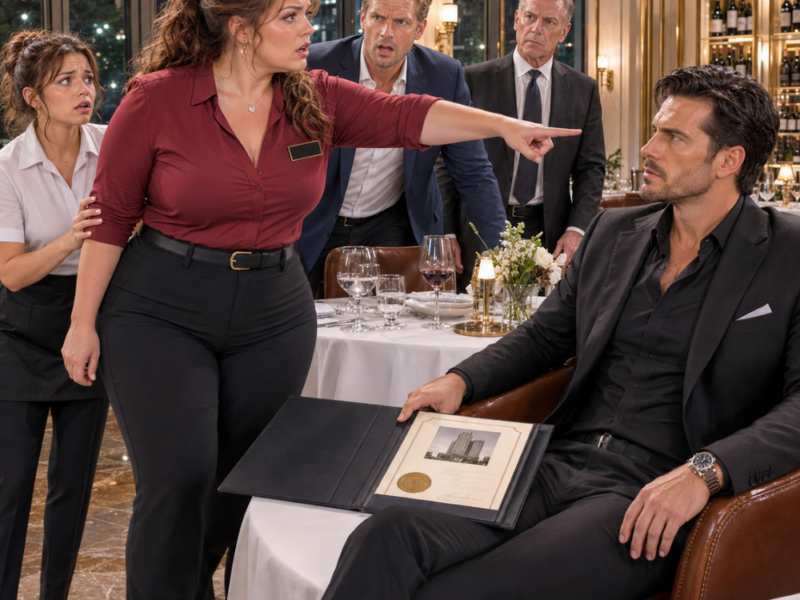
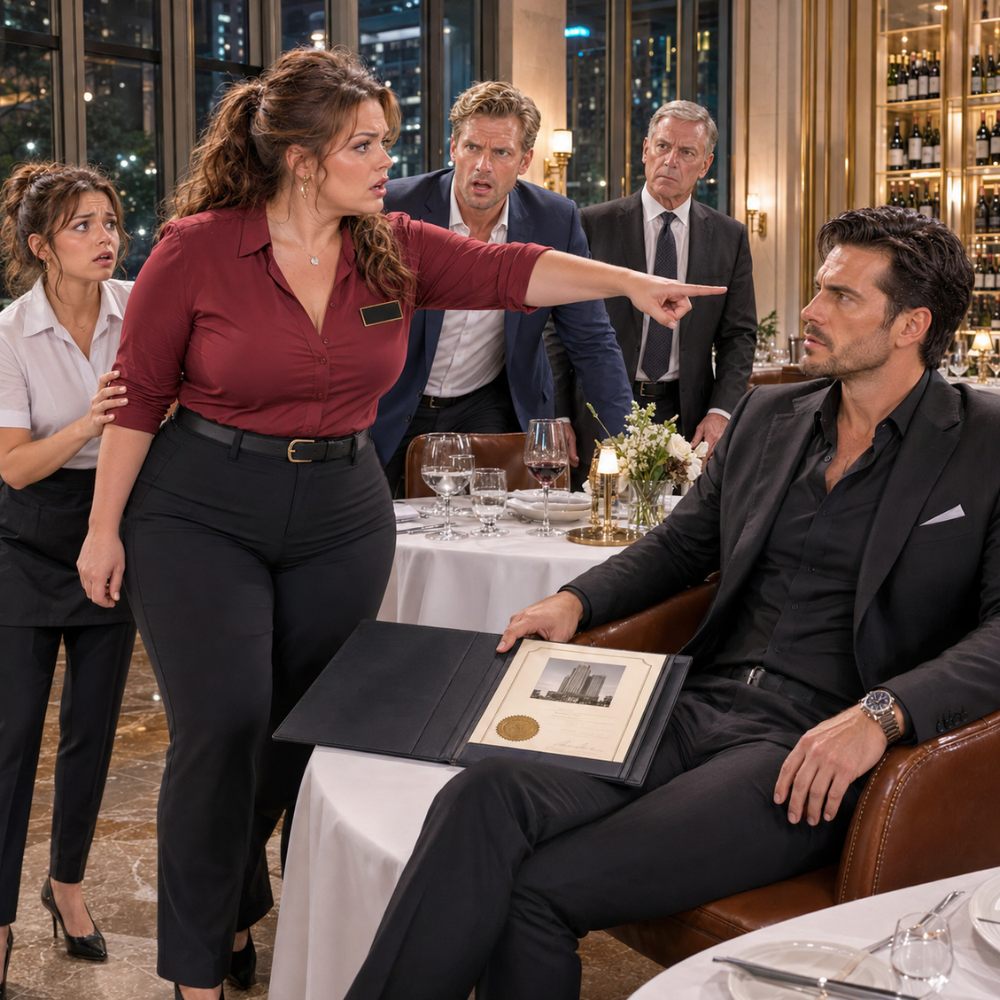
“Take your hand off my waitress.”
The words came from behind Richard Callaway, quiet enough that several people at his table did not realize at first that they were meant for him.
Richard did.
He turned slowly.
Grace Miller stood three feet away with a reservation tablet tucked beneath one arm.
Thirty-six years old, five-foot-five, dark auburn hair pinned carelessly behind her head, black restaurant dress, sensible shoes, and exactly none of the fear Richard expected to find on an employee’s face.
His hand remained around Jenna Wallace’s wrist.
Jenna was twenty-three, worked four dinner shifts a week while finishing a hospitality degree at Bunker Hill Community College, and had been trying for nearly a minute to pull free without turning the situation into the kind of scene managers later blamed on the person with less money.
Richard smiled.
“Excuse me?”
Grace pointed at his hand.
“Take it off her.”
Around them, Roselli’s continued breathing for perhaps two more seconds.
Silverware.
Conversation.
A bartender polishing a glass.
Then nearby diners began noticing.
Richard’s table had already been difficult.
Six businessmen.
Two bottles of Barolo.
A private investment conversation that had gradually become louder as the evening progressed.
Richard Callaway, founder of Callaway Urban Capital, was a recognizable figure in Boston real-estate circles. He owned downtown office space, sat on two nonprofit boards, and appeared often enough in business magazines that he had developed the unfortunate habit of assuming everybody else read them.
Jenna had refused to give him her phone number.
That was the entire problem.
He had asked once.
She said no.
He asked whether she had a boyfriend.
She said that did not matter.
He asked again.
Then, when she tried to collect the empty appetizer plates and walk away, Richard caught her wrist.
Now Grace had seen it.
Richard tightened his fingers slightly.
“Or what?”
Grace placed the tablet on the empty table beside her.
“Or you’re leaving.”
One of Richard’s associates gave a disbelieving laugh.
Richard himself looked amused.
“Do you have any idea who I am?”
“No.”
Grace nodded toward the front door.
“And I’m already enjoying that about you.”
Someone at a booth behind her laughed.
Richard’s smile disappeared.
Jenna tried once more to pull her hand away.
Richard released her abruptly enough that she stumbled sideways.
Grace caught her at the elbow.
“You okay?”
Jenna nodded, although her face had gone pale.
“I’m fine.”
“You’re not fine.”
Grace looked toward Tony Roselli near the bar.
“Tony, take Jenna to the office.”
Richard pushed his chair back.
“This is ridiculous.”
Grace turned toward him.
“You’re finished for the night.”
“You work here.”
“Yes.”
“I’m a customer.”
“Not anymore.”
Richard stood.
He was nearly a foot taller than Grace.
A man at another table quietly reached for his phone.
Richard stepped closer.
“You have a very strange idea of customer service.”
“I’ve been told.”
“You embarrass clients in front of an entire dining room?”
“Only the ones physically bothering my staff.”
His expression hardened.
“You should be careful.”
“So should you.”
Richard reached for Grace’s forearm.
He got one hand around it.
Grace reacted before thinking.
Her free hand came across his face once, fast and sharp.
The sound carried.
Every conversation in Roselli’s died at the same instant.
Richard stared at her.
Grace stared back.
Neither moved.
Then Richard said, “You—”
Grace stepped half a pace closer.
“Finish that sentence carefully.”
Three men at his table stood.
Grace did not move.
Tony appeared from the bar.
Jenna had not gone to the office. She stood behind him with both hands clasped against her apron.
And then, from the far end of Richard’s table, another man spoke.
“Sit down, Richard.”
He had not raised his voice.
Every man who had stood immediately sat.
Grace turned.
The stranger had been there all evening.
She knew that much.
Dark charcoal suit.
No tie.
Black hair threaded with silver near the temples.
Early forties.
He had spent most of dinner listening while everyone else talked.
Grace had refilled his water twice.
He had thanked her both times.
That had been the extent of their relationship.
Now Richard’s confidence disappeared so quickly that Grace noticed.
“Vincent—”
The man lifted one finger.
Richard stopped.
Grace frowned.
Someone behind her whispered, “Grace.”
She ignored it.
The whisper came again.
“That’s Vincent Martell.”
This time she heard.
Grace looked at the quiet man.
Everybody in Boston knew the name Martell, although people tended to know different versions.
Martell Holdings owned office buildings, hotels, logistics companies, restaurants, parking structures, and enough commercial real estate that journalists had stopped trying to summarize the portfolio cleanly.
Vincent himself was forty-three and believed to be worth several billion dollars.
His family had been powerful in Boston for generations.
How the earliest generation acquired that power depended on which newspaper archive or North End grandfather told the story.
Modern Martell Holdings was legitimate, publicly audited, and represented by enough lawyers to fill a small theater.
The family’s old reputation remained.
People did not casually challenge Vincent Martell.
Grace looked at him.
Then toward Richard.
Then back.
Vincent rose.
Grace swallowed.
He buttoned his jacket.
“There’s one thing you should know before you decide what happens next.”
Grace waited.
“I own this building.”
That information took perhaps two seconds to settle.
Tony’s face lost color.
Jenna whispered something Grace could not hear.
Richard looked suddenly hopeful.
Grace folded her arms.
“Okay.”
Vincent raised one eyebrow.
“Okay?”
“Yes.”
She pointed toward the entrance.
“You still have to leave.”
Nobody moved.
Vincent studied her.
“Knowing who I am, you still want me to leave my own building?”
“I want every customer at the table where a server was grabbed to leave.”
“I never touched her.”
“No.”
Grace nodded.
“You watched.”
The sentence landed differently.
Vincent’s face did not change much.
That made the change easier to see.
Richard laughed nervously.
“She’s blaming you now?”
Vincent did not look at him.
Grace continued.
“You had enough authority to stop him before I got there.”
“You don’t know what I was doing.”
“I know what Jenna was doing.”
Vincent waited.
“She was trying to get away.”
Grace gestured toward Richard.
“He had a choice.”
Then toward Vincent.
“So did you.”
The room had become painfully quiet.
Grace could hear the old ceiling fan above the bar.
Vincent said, “You believe silence makes me responsible for another man’s conduct.”
“I believe power gives you more options than she had.”
Grace looked toward Jenna.
“She had to worry whether saying no cost her a tip, her shift, or her job.”
“You had to decide whether interrupting Richard made a business dinner awkward.”
She looked back at Vincent.
“You chose awkwardness later.”
Vincent stared at her for a long time.
Grace’s pulse hammered.
She was afraid.
Of course she was.
Courage did not eliminate the part of her brain screaming that she had just slapped a millionaire developer and ordered one of Boston’s wealthiest men out of property he owned.
She simply had another thought louder than fear.
Jenna had said no.
That should have been enough.
Vincent reached for the back of his chair.
Grace expected him to sit.
Instead he pushed it neatly under the table.
“You asked me to leave.”
“Yes.”
“So I will.”
A few diners audibly inhaled.
Richard stood halfway.
“Vincent, come on.”
Vincent looked at him now.
“You stay.”
Richard froze.
“What?”
“Our meeting is over.”
“Fine.”
Richard forced a laugh.
“We’ll finish tomorrow.”
“No.”
The laugh disappeared.
Vincent picked up a leather folder from the table.
“Our partnership discussions are terminated.”
Richard stared.
They had been negotiating a redevelopment partnership worth roughly forty million dollars.
Everyone at the table knew it.
Richard’s face tightened.
“You’re ending a forty-million-dollar deal because a waitress got offended?”
Vincent’s eyes cooled.
“No.”
He stepped closer.
“I’m ending it because tonight revealed something more expensive than bad manners.”
Richard swallowed.
“What?”
“Your judgment.”
Vincent looked toward Jenna.
“Someone told you no.”
“You decided the answer was negotiable.”
Then he turned toward the door.
Grace stepped aside.
Not because she suddenly felt submissive.
Because demanding somebody leave and then physically blocking the exit seemed poor management.
Before reaching the entrance, Vincent stopped beside Jenna.
She looked nervous.
His voice changed.
Not softer exactly.
More careful.
“Miss Wallace?”
“Yes?”
“I want to ask you several questions.”
Jenna’s shoulders tightened.
“You are free not to answer any of them.”
Grace noticed that.
So did Jenna.
Vincent continued.
“Did Mr. Callaway grab you after you asked him to let go?”
“Yes.”
“Had you refused something before that?”
Jenna looked at Richard.
Vincent said, “You do not need to look at him.”
She looked back.
“He asked for my number.”
“And?”
“I said no.”
“More than once?”
“Yes.”
“What would you like to happen now?”
Jenna blinked.
“You’re asking me?”
“Yes.”
Not Tony.
Not Grace.
Not Richard.
Jenna.
She took a breath.
“I don’t want him allowed back here.”
Vincent nodded.
“Done.”
Richard scoffed.
Vincent ignored him.
“Would you like the incident documented?”
“Yes.”
“Would you like police contacted?”
Jenna hesitated.
“I don’t know.”
“That is also an answer.”
He took a business card from his wallet and handed it to Tony instead of Jenna.
“My security office will preserve building footage tonight. Ms. Wallace can decide tomorrow whether she wants a copy sent to law enforcement or an attorney.”
Jenna nodded.
“Would you like someone to make sure you get home safely after your shift?”
She looked toward Grace.
Grace said, “Your choice.”
Jenna nodded again.
“Yes.”
“That will be arranged.”
Vincent looked at Grace.
“You and I should probably discuss the fact that you struck one of my guests.”
“He grabbed me.”
“After you threatened him.”
“I threatened him with customer service.”
“You slapped him.”
Grace gave him her best innocent expression.
“Premium customer service.”
For the first time, one corner of Vincent Martell’s mouth moved.
Barely.
Grace pointed.
“You smiled.”
“I did not.”
“You absolutely did.”
“There are no witnesses.”
Grace looked around at nearly forty diners.
“There are several dozen.”
Vincent glanced over the room.
“Unreliable.”
Grace stared at him.
After a beat, Vincent said, “That was a joke.”
“Needs work.”
“I’ve received limited feedback.”
“I’m not surprised.”
He left.
Fifteen minutes later, Richard left too.
He did not finish dinner.
He did not take dessert.
He did not receive another meeting with Vincent Martell.
Jenna chose the following morning to file a formal incident report with restaurant management and building security. After seeing the preserved footage, she also made a police report documenting unwanted physical contact.
Grace offered to go with her.
Jenna said yes.
They spent ninety minutes in a police station waiting beneath fluorescent lights while a television mounted in one corner played local news with captions.
On the way out, Jenna looked embarrassed.
“I feel stupid.”
Grace stopped.
“For what?”
“I keep thinking maybe I made everything bigger than it needed to be.”
“Did you tell him no?”
“Yes.”
“Did he stop?”
“No.”
“Then you did not make it bigger.”
Grace pushed open the station door.
“He did.”
Boston morning air hit them.
Jenna nodded slowly.
“Thank you.”
“You don’t have to thank me.”
“I do.”
“No.”
Grace looked at her.
“You work for me.”
“That means when you say someone is making you uncomfortable, I’m supposed to care before it becomes a disaster.”
She thought of Vincent.
“So are other people.”
The restaurant resumed normal service that night.
Roselli’s occupied the first floor of a four-story brick building in Boston’s South End, tucked along a side street where nineteenth-century row houses shared sidewalks with coffee shops, dental offices, dog walkers, delivery vans, and people willing to circle six blocks rather than pay garage rates.
The restaurant had been there forty-one years.
Tony Roselli’s father opened it in 1985 with fourteen tables and a handwritten menu.
Tony grew up washing dishes after school.
By sixty-two, he could still tell which cook had made the marinara by smell alone.
The walls carried framed photographs from three generations.
Little League teams.
Engagement dinners.
A state representative before he became important.
A Red Sox player who had once eaten three orders of veal parmigiana after an extra-innings game.
The booths were repaired more often than replaced.
The bar remained dark walnut.
The recipes changed only when Tony could be convinced his father had simply forgotten to write something down.
Grace loved it.
Which was why the envelope Tony handed her the next morning frightened her more than Richard Callaway had.
He was waiting when she arrived at nine.
The restaurant did not open until eleven-thirty.
Chairs sat upside down on tables.
Sunlight crossed the floor.
Tony placed the thick envelope beside the coffee machine.
“What?”
“Our lease.”
Grace frowned.
“I thought renewal was December.”
“So did I.”
He rubbed his forehead.
“Read page four.”
Grace opened the packet.
Martell Holdings had purchased the building eight months earlier.
The old landlord’s final extension agreement included a termination and market-rate adjustment provision nobody at Roselli’s had understood properly.
Ninety days remained.
The proposed renewal rate was nearly double what Tony currently paid.
Grace read it again.
“That can’t be right.”
“It is.”
“Did you call an attorney?”
“Yesterday.”
“And?”
“If we sign at that rate, we bleed out within six months.”
“If we don’t?”
Tony looked around the empty dining room.
“We close.”
Grace slowly sat.
“How many employees?”
“You know how many.”
She did.
Twenty-two.
Jenna.
Luis and Mateo in the kitchen.
Paula, whose husband had been laid off from a plumbing company.
Mikey, the dishwasher saving for community college.
Stephanie, the bartender raising two boys.
Tony’s niece, who worked Sundays.
Grace herself.
Twenty-two paychecks.
Twenty-two schedules.
Twenty-two lives attached, in various quiet ways, to a place that smelled like garlic before ten in the morning.
“Why didn’t you tell me?”
Tony looked ashamed.
“I thought I could fix it.”
“How?”
“I don’t know.”
“Tony.”
“My father never missed a rent payment.”
“Your father paid nineteen-eighties rent.”
“He built this place.”
“I know.”
“He kept it through two recessions.”
“I know.”
“Through the Big Dig.”
“I know.”
“Through COVID.”
“That was you.”
Tony looked away.
Grace softened.
He had spent most of his adult life preserving something built by a man he still missed.
Closing Roselli’s would not feel to Tony like a business failure.
It would feel like losing his father twice.
Grace looked back at the lease.
One name sat at the bottom.
Martell Holdings.
Vincent.
The man she had ordered out less than twelve hours earlier.
Grace closed her eyes.
Tony said, “Don’t.”
“What?”
“Don’t go asking him for favors.”
“I wasn’t.”
“You were thinking it.”
“I was thinking several hostile things.”
“He could close us because you embarrassed him.”
Grace looked at Tony.
“If Vincent Martell wants revenge because I asked him to leave after one of his business partners grabbed Jenna, then we were already doomed.”
Tony stared.
“That is not comforting.”
“No.”
She folded the lease.
“But it is true.”
Three days passed.
No threatening call came.
No lawyer demanded an apology.
No inspection suddenly appeared.
Nothing.
On Monday morning, Vincent walked into Roselli’s alone.
Grace stood behind the host desk entering a reservation.
She looked up.
“I thought I banned you.”
“You banned me for the evening.”
“I should have been more specific.”
Vincent took off his coat.
“Ten minutes.”
“We don’t sell those.”
“I want to discuss the lease.”
Grace’s humor disappeared.
Tony was at a dental appointment.
The restaurant was nearly empty between lunch setup and opening.
Grace pointed toward a booth.
“Fine.”
Vincent sat.
Grace remained standing.
He placed a copy of the lease between them.
“You’ve reviewed it.”
“Yes.”
“The proposed rent reflects comparable commercial values in this corridor.”
Grace pulled out the opposite seat.
“You practiced that sentence.”
“I did.”
“It sounds expensive.”
“It is.”
She sat.
“Are you closing us?”
“I haven’t decided.”
“Comforting.”
Vincent opened a folder.
Architectural renderings.
Luxury retail on the first floor.
Executive office suites above.
Polished concrete.
Glass.
Every trace of Roselli’s gone.
Grace stared.
“That’s what you bought the building for.”
“One possibility.”
“Then why are we talking?”
“Because demolishing a functioning business that has been here forty years simply because a model says another use yields higher rent is not always smart.”
Grace raised an eyebrow.
“That is surprisingly human.”
“I’m trying something new.”
She almost smiled.
Vincent leaned back.
“Why is Roselli’s struggling?”
“Because rent in Boston has become a form of organized violence.”
One corner of his mouth moved.
“Besides rent.”
Grace studied him.
“You actually want an answer?”
“Yes.”
“How long?”
“Ten minutes.”
“I need twelve.”
Vincent removed his watch.
Placed it face down.
“You have twelve.”
Grace began.
“The food isn’t the problem.”
“I know.”
“The staff isn’t the problem.”
“I know that too.”
“Our regulars love us.”
“Yes.”
“Nobody else remembers we exist.”
Vincent listened.
“Our reservation system is ancient.”
“Our website looks like somebody built it during the Obama administration.”
“Our lunch service is mostly empty because Tony refuses corporate catering.”
“We throw away too much food.”
“Purchasing is inconsistent.”
“Schedules change constantly because Tony still writes half of them on paper.”
“Private events are handled like special favors instead of a real line of business.”
“Social media hasn’t been updated since Jenna posted a Christmas cannoli picture eight months ago.”
Vincent asked, “Anything else?”
“The biggest problem?”
“Yes.”
“Tony.”
He raised an eyebrow.
Grace continued.
“He loves Roselli’s so much that he thinks changing anything means betraying his father.”
Vincent looked toward the old photograph above the bar.
Tony’s father, Frank, stood beside a younger Tony on opening day.
Grace followed his eyes.
“Tony is protecting memory.”
“Not the business.”
“Exactly.”
Vincent folded his hands.
“What must never change?”
That question surprised her.
“The recipes.”
“Why?”
“Because half our regulars would riot.”
Vincent nodded.
“Continue.”
“The longtime staff.”
“The neighborhood feeling.”
“The way somebody walks in and Jenna knows they want Pellegrino before they sit.”
“The Friday couple in booth twelve.”
“Why booth twelve?”
“He proposed there twenty-three years ago.”
“You know that?”
“I know people.”
Grace looked around.
“You cannot replace loyalty with marble and expect customers to call it improvement.”
Vincent glanced at the redevelopment renderings.
Then closed the folder.
“Here’s my offer.”
Grace immediately frowned.
“I dislike that sentence.”
“You haven’t heard it.”
“I have watched movies.”
“This is not a movie.”
“Pity. Lease negotiations improve enormously with a soundtrack.”
Vincent ignored that.
“Ninety days.”
“For what?”
“Roselli’s demonstrates that it can become commercially sustainable at a rent substantially above the current lease, though below the proposed market rate.”
Grace stared.
“You want me to save the restaurant in three months.”
“I want the restaurant to prove it deserves a long-term lease.”
“That is corporate language for the same thing.”
“Yes.”
“And if we fail?”
Vincent looked toward the drawings.
She already knew.
Twenty-two jobs.
Four decades.
Gone.
Grace took a breath.
“What help do we get?”
“Operational review.”
“Accounting.”
“Technology.”
“Marketing analysis.”
“Supplier benchmarking.”
“From your people?”
“Yes.”
“Do they understand restaurants?”
“Some do.”
“Do they understand this restaurant?”
“No.”
“Then they listen to me.”
Vincent considered.
“Agreed.”
“And Tony.”
“Yes.”
“No replacing staff just to make labor ratios pretty.”
“Unless staffing itself is unsustainable.”
“Fair.”
“No changing recipes without Tony.”
“Agreed.”
“No luxury redesign disguised as improvement.”
“Define luxury.”
“If a chair looks like I need a Pilates membership to survive sitting in it, no.”
Vincent stared at her.
“Specific.”
“I have standards.”
He extended his hand.
Grace looked at it.
“You’re serious.”
“Very.”
She shook.
“Ninety days.”
“Ninety.”
The following morning Vincent returned with five people.
Grace stared at the procession entering the restaurant.
“What is this?”
“Help.”
“This looks like an audit escaped.”
Two consultants.
An accountant.
An operations analyst.
A digital marketing specialist.
The lead consultant, Derek Hall, opened a presentation on a laptop.
“Our preliminary recommendation is comprehensive modernization.”
Grace sat.
“That phrase just cost us money.”
Derek continued.
“New reservations platform, integrated point-of-sale upgrade, website redesign, brand refresh, kitchen inventory controls, dining-room modifications—”
“How much?”
He hesitated.
“The complete package would be roughly one hundred eighty thousand dollars over eighteen months.”
Grace nearly inhaled coffee.
“One hundred eighty?”
“The reservation and point-of-sale environment alone—”
“My car cost four thousand dollars.”
Vincent, sitting beside the window, said, “That explains the sound.”
Grace slowly turned.
“Leave my car out of this.”
“It smoked when you parked yesterday.”
“She’s expressive.”
“She stalled.”
“She was gathering herself.”
Derek looked confused.
Vincent’s expression remained serious for three seconds.
Then he laughed.
Actually laughed.
The consultants froze.
Grace pointed.
“There.”
Vincent looked at her.
“I’d like this entered into the official project record.”
“Denied.”
“You laughed.”
“So?”
“I assumed billionaires outsourced it.”
Derek cleared his throat.
“Should we continue?”
Grace opened the presentation.
“Not with page four.”
She rejected the brand refresh.
“No.”
“The logo is dated.”
“The logo is on three generations of takeout menus.”
“Brand consistency—”
“The customers like it.”
She accepted the reservation update but negotiated a cheaper small-business package.
She rejected a dining-room renovation.
Accepted better lighting near the bar.
Suggested lunch partnerships with nearby medical offices, law firms, architecture studios, and two colleges.
Proposed fixed weekly employee scheduling rather than last-minute handwritten changes.
Asked suppliers for consistent-volume discounts.
Introduced inventory sheets designed by Luis, the sous-chef who knew exactly which products were wasted most often.
Added online private-event inquiries.
Created a neighborhood loyalty card.
The consultants kept trying to solve Roselli’s as if it were a generic underperforming asset.
Grace kept forcing them to remember there were people inside it.
At noon, Tony returned from the dentist.
He saw the consultants.
“What did you do?”
“Saved your business.”
“It looks expensive.”
“Mostly we are preventing expensive.”
Vincent approached.
“Mr. Roselli.”
Tony stiffened.
“Mr. Martell.”
“I need your cooperation.”
“This is my restaurant.”
“Yes.”
“Then why are six strangers measuring it?”
Grace stepped between them.
“Nobody’s measuring anything.”
A consultant quietly lowered a tape measure.
Grace stared.
“Seriously?”
Tony pointed toward the old bar.
“You’re not replacing that.”
Vincent said, “No one has proposed replacing it.”
“They will.”
“They won’t.”
“My father built it.”
Grace touched Tony’s arm.
“Tony.”
He looked at her.
“We are not saving your father’s restaurant by refusing to save the restaurant.”
The sentence hurt him.
She saw it.
“I know.”
Grace softened.
“But Frank built something people loved.”
“He didn’t build a museum.”
Tony looked toward his father’s photograph.
Silence.
Then he nodded.
“What changes first?”
Scheduling.
It sounded boring.
That was why Grace chose it.
Half the staff received weekly schedules less than four days in advance.
Stephanie paid additional childcare fees because she could not predict late shifts.
Jenna turned down classes because she feared schedule conflicts.
Mateo’s wife worked hospital nights, and their calendars became a weekly domestic negotiation.
Grace created fixed availability blocks.
Nobody loved every shift.
Everybody finally knew when they were working.
Employee tardiness dropped.
So did call-outs.
Next came lunch.
Grace walked into nearby businesses personally.
No glossy brochures.
No corporate sales pitch.
She carried menus.
Boston Medical Center administrative offices ordered the first large catering lunch.
A small law firm booked trays for a deposition team.
An architecture company ordered Friday lunches twice.
A church two neighborhoods over booked Roselli’s for a retirement dinner.
Revenue moved.
Not dramatically.
Enough.
Three weeks into the ninety days, Tony stared at the weekly report.
“I haven’t seen this lunch number in five years.”
“We’re still behind.”
“I know.”
He looked around the room.
“But it feels different.”
“It is.”
The door opened.
Vincent entered.
Grace did not look up from the host stand.
“Inspection again?”
“Yes.”
“You inspected yesterday.”
“Results were inconclusive.”
“You ate lasagna.”
“Research.”
“You ordered tiramisu.”
“Additional research.”
Grace folded her arms.
“You own seven restaurants.”
“Six.”
“I looked it up.”
“I bought another.”
“Then bother one of those.”
“The manager here is more entertaining.”
Grace tried not to smile.
Failed.
Jenna walked past.
“He definitely likes you.”
Grace whispered, “He likes carbohydrates.”
Vincent removed his coat.
“I heard that.”
“I assumed you would.”
His visits became increasingly difficult to justify as business.
Supplier discussion.
Menu analysis.
Lunch observation.
A supposed acoustics concern that resulted in Vincent sitting in booth six eating bread for forty minutes.
Grace stopped asking.
One afternoon she placed a stack of napkins in front of him.
“Since you’re inspecting.”
Vincent looked at the linen.
“What?”
“Fold.”
“I have never folded restaurant napkins.”
“Today is full of opportunities.”
He picked one up.
Grace demonstrated.
Triangle.
Fold.
Turn.
Vincent attempted.
His napkin looked injured.
Grace laughed.
“This is embarrassing.”
“The linen is unusually uncooperative.”
“The linen works for everyone else.”
Tony passed behind them.
“I have waited forty-one years to see a landlord do side work.”
Vincent tried again.
Worse.
Grace picked up the result.
“I’ve found your weakness.”
“I have several.”
“This one is cotton.”
He looked at her.
She looked back.
Something moved between them.
Not flirtation exactly.
Recognition.
Then Jenna yelled from the front because a delivery order had been entered twice, and Grace went back to work.
That was part of what Vincent liked.
Grace never reorganized the room around his presence.
Other people did.
Servers in his hotels straightened.
Executives became careful.
Lawyers watched his expressions.
Grace would hand him silverware and say, “Table seven needs water if you’re standing there anyway.”
The first time she did it, he obeyed before realizing what had happened.
Jenna nearly dropped a plate.
Grace said later, “He has arms.”
“He owns the building.”
“Still has arms.”
Vincent returned the following day.
One month into the turnaround, a project meeting moved upstairs into the building’s small conference room.
Grace entered.
Stopped.
A modern designer chair waited at the table.
Narrow arms.
Curved back.
Fashionable.
Grace stared.
“No.”
Vincent looked up from a report.
“What?”
“That chair.”
“It is a chair.”
“It is optimism with legs.”
Marcus Bell, Vincent’s longtime operations director, stood near the wall.
He lowered his head.
Vincent looked at the chair.
Then at Grace.
“What is wrong with it?”
Grace placed one hand on her hip.
“Somebody designed that for people who describe salad as lunch.”
Vincent looked confused.
“I am not sitting in it.”
“You sat there last week.”
“Yes, Vincent.”
Grace smiled.
“You and I are built differently.”
Understanding arrived.
So did embarrassment.
Not for Grace.
His own.
Because he had never thought about it.
He picked up his phone.
“Marcus.”
“Yes?”
“Replace these chairs.”
Grace blinked.
“All of them?”
“All.”
“That is ridiculous.”
Vincent looked at her.
“You said they were unsuitable.”
“For me.”
“If a conference room is used by people, the chairs should accommodate people.”
Grace stared.
He turned back to the report.
“Anything else?”
She sat in a different chair.
“No.”
The following Monday, every chair had been replaced.
Wide.
Solid.
Comfortable.
Grace stood in the doorway.
“You actually did it.”
Vincent looked up.
“The old chairs were uncomfortable.”
“For everyone?”
A pause.
Then he said, “Does it matter?”
Grace looked away before he saw the smile.
He saw it.
The conversation stayed with her.
Years earlier, a man Grace dated briefly after college had once taken her to a corporate holiday party.
Grace wore a dark green dress she loved.
On the way home, he told her she was beautiful.
Then added something she never forgot.
“You’re just not really the kind of woman a successful man introduces in rooms like that.”
Grace ended the relationship two weeks later.
She told herself the comment meant nothing.
Then spent twelve years remembering it whenever she entered an expensive room.
Grace was not ashamed of her body.
Not most days.
She had a full figure, soft arms, broad hips, and a relationship with cheesecake that she considered one of her healthiest commitments.
Still, old cruelty had a way of staying available.
Vincent replacing the chairs should have felt like nothing.
Instead, it quietly challenged a belief Grace had carried for years.
Maybe comfort was not something she needed to earn by becoming smaller.
Roselli’s numbers continued improving.
Food waste fell nineteen percent.
Then twenty-three.
Private events rose.
Lunch revenue climbed more than thirty percent.
Weekend reservations filled ten days ahead.
A local food writer published a favorable review about the restaurant’s “rare refusal to become embarrassed by its own history.”
Tony printed it.
Framed it.
Pretended he did not care.
Grace found him reading it twice.
“You’re smiling.”
“No.”
“I know what smiling looks like.”
“You learned that from Martell?”
Grace threw a towel at him.
Tony laughed.
One Friday evening Vincent watched an elderly couple enter.
Grace moved toward them immediately.
“Mr. and Mrs. Donnelly.”
Mrs. Donnelly hugged her.
“Booth twelve?”
“Already set.”
Vincent watched them sit.
“They always get that booth?”
“Every Friday.”
“Why?”
“He proposed there.”
“When?”
“Twenty-three years ago.”
“You remember?”
Grace shrugged.
“I remember where people belong.”
Vincent looked at her.
“So do you.”
Grace’s eyes met his.
Neither joked.
She walked away first.
Later, after closing, Grace collapsed into the same booth with iced tea.
“My feet have resigned.”
Vincent sat opposite.
“I have a proposal.”
She narrowed her eyes.
“The last proposal nearly killed the restaurant.”
“This one is smaller.”
“I don’t believe you.”
“Dinner.”
Grace looked around.
“We are sitting in a restaurant.”
“Somewhere else.”
“Business?”
“No.”
“Lease?”
“No.”
“Supplier negotiations?”
“No.”
“Secret property acquisition?”
“No.”
Grace counted on her fingers.
“I’m running out of categories.”
Vincent held her gaze.
“It’s a date.”
Grace went silent.
Vincent waited.
Five seconds.
Ten.
Then one corner of his mouth lifted.
“Interesting.”
She blinked.
“What?”
“I finally found the off switch.”
Grace laughed so suddenly tea nearly came through her nose.
“That was terrible.”
“It worked.”
“Do not get confident.”
“Is that a yes?”
She looked at him.
He waited.
Grace surprised herself.
“Yes.”
Two nights later, she almost regretted it.
Vincent chose a private dining club in Back Bay.
Not ostentatious by billionaire standards.
Extremely ostentatious by Grace’s.
Valet attendants.
Old paintings.
Women who somehow wore silk in February without looking cold.
Men discussing philanthropy with the same voices they used discussing acquisitions.
Grace wore a midnight-blue dress she already owned.
She felt beautiful when she left her apartment.
By the time she reached the dining room, old words returned.
Not the kind of woman a successful man introduces in rooms like that.
Vincent pulled out her chair.
“Are you okay?”
“Yes.”
“You stopped talking.”
“I do that.”
“No.”
He looked concerned.
“You do not.”
She almost laughed.
Dinner began.
Grace reached for bread.
Then stopped.
Vincent noticed.
“You were hungry.”
“I am.”
“What changed?”
She looked around.
“The room.”
Vincent looked around too.
“I don’t understand.”
“I know.”
Before she could explain, a woman approached.
Tall.
Elegant.
Dark blond hair.
Perfect black dress.
“Vincent.”
He stood.
“Alexandra.”
Grace knew the name.
Alexandra Pierce.
Boston philanthropic circles.
Old banking family.
Once photographed beside Vincent often enough that tabloids had assumed they were engaged.
Vincent introduced them.
“Alexandra Pierce. Grace Miller.”
Alexandra smiled.
“I’ve heard wonderful things.”
Grace relaxed slightly.
“Nice to meet you.”
“You too.”
Alexandra looked at Vincent.
Then Grace.
“Vincent always did enjoy contradictions.”
Grace tilted her head.
“Meaning?”
Alexandra’s smile never disappeared.
“Oh, nothing cruel.”
That was never a reassuring introduction.
“You’re completely outside his usual world.”
Grace waited.
Alexandra sipped wine.
“Enjoy being unexpected.”
Then, pleasantly:
“Just don’t mistake unexpected for permanent.”
She walked away.
No scene.
No insult loud enough for anybody else to hear.
Just one elegant sentence.
Grace ate dinner.
Talked.
Even laughed.
The words stayed.
On the drive home, Boston slid past the window.
Vincent looked over.
“You’re quiet.”
“I’m thinking.”
“About Alexandra?”
Grace turned.
“You really are professionally suspicious.”
“What did she say?”
“Nothing.”
“You’re a bad liar.”
“I’m excellent.”
“Grace.”
She looked out the window.
“Drop it.”
Vincent did.
That mattered.
But the next week Grace declined a charity luncheon.
“Inventory.”
The following week, a reception.
“Staff training.”
Then another event.
“Supplier meeting.”
Vincent believed the first excuse.
Not the fourth.
He did not confront her at a club.
He waited until Roselli’s closed.
Grace sat inside the tiny office reviewing receipts.
Vincent appeared at the door.
“What’s wrong?”
“Nothing.”
He waited.
She kept writing.
“Grace.”
“You’re persistent.”
“Yes.”
She put down the pen.
“Can I ask something?”
“Anything.”
She stood.
For a moment, confidence deserted her.
She hated that.
“My body.”
Vincent’s expression changed.
“My job.”
She gestured toward the little office.
“My bank balance.”
“My life.”
Then toward him.
“Your world.”
He stayed silent.
Grace smiled sadly.
“I believe you want me when nobody’s watching.”
The words surprised him.
She saw it.
“I’m not sure I believe you’d choose me when everybody is.”
“Why?”
She laughed once.
“You really don’t know.”
“No.”
Grace looked down.
“I have worked around wealthy people almost my entire adult life.”
“Roselli’s attracts plenty.”
“I know how men like you sometimes treat women like me.”
Vincent’s face hardened.
“Women like you?”
“Different.”
She hated the word even while saying it.
“Fun.”
“Unexpected.”
“Refreshing.”
She looked at him.
“Then someone like Alexandra walks in.”
“Appropriate family.”
“Appropriate body.”
“Appropriate résumé.”
“Appropriate room.”
Vincent understood.
“She said something.”
Grace looked away.
“That’s not the point.”
“What did she say?”
“That I shouldn’t expect to become permanent.”
Silence.
Vincent stepped closer.
Not too close.
“Do you believe her?”
“I don’t know.”
“Do you believe me?”
“That’s the problem.”
Grace met his eyes.
“I want to.”
He absorbed that.
Then said, “I noticed your body the first night.”
Grace froze.
Vincent continued.
“You threw me out of my own building wearing a black dress and restaurant shoes.”
“I thought you were beautiful.”
She blinked.
“I also thought you were terrifying.”
Despite herself, she laughed.
“Good.”
“But beauty is not why I kept coming back.”
Grace said nothing.
Vincent continued.
“You remember everyone’s name.”
“You know which dishwasher’s mother needs surgery.”
“You know why Tony cannot change the sauce recipe without feeling like he is burying his father.”
“You can read a revenue sheet and a room full of people with equal accuracy.”
“You challenge me.”
“You make me laugh.”
“You tell me when I’m being arrogant.”
“Frequently.”
“Accurately.”
He looked directly at her.
“I did not fall for a contradiction.”
He paused.
“I fell in love with Grace.”
The office felt suddenly too small.
Grace searched his face.
He did not look away.
“If nobody approved?”
“Of what?”
“Me.”
Vincent’s answer came immediately.
“I already stand beside you in rooms where people disapprove.”
“That isn’t what I asked.”
“I know.”
He stepped closer.
“If everybody I knew objected tomorrow, I would still be here.”
Grace swallowed.
“Why?”
“Because they do not have to live my life.”
Silence.
Then Vincent said, “And if you decide you don’t want mine, I’ll leave you alone.”
That mattered most.
Not I’ll fight for you.
Not I’ll convince you.
Choice.
Grace looked toward the receipts.
“We have a lease deadline in three weeks.”
Vincent almost smiled.
“That is an impressively unromantic response.”
“I’m overwhelmed.”
“I noticed.”
“Go home.”
“Yes, ma’am.”
He left.
Three days before the lease deadline, Roselli’s held its final review meeting.
Suppliers.
Potential outside investors.
Tony.
Vincent.
Martell accountants.
Grace.
Revenue charts covered one wall.
The turnaround was undeniable.
Ninety days had changed the business.
Not magically.
Roselli’s still carried debt.
The kitchen still needed equipment.
Margins remained thin.
But the trajectory had reversed.
One investor, Franklin Mercer, reviewed the numbers.
“Impressive.”
Grace nodded.
“Thank you.”
“Remarkably fast.”
“We had low-hanging problems.”
Franklin looked toward Vincent.
Then back at Grace.
A small smile appeared.
“I suppose success becomes easier when you’re sleeping with the landlord.”
Silence hit the conference room.
Jenna stood near the coffee station.
Her face went white.
Tony looked furious.
Vincent rose slowly.
Every person in the room looked at him.
He turned toward Grace.
“Do you want me to handle this?”
Months earlier, he would have decided.
Now he asked.
Grace looked at him.
Then smiled.
“No.”
Vincent held her gaze.
Sat back down.
Franklin looked surprised.
Grace picked up the presentation remote.
“You want transparency?”
“I think everyone deserves it.”
“I agree.”
She clicked.
First chart.
“Revenue up nineteen percent.”
Another.
“Food waste down twenty-three.”
Another.
“Private events up forty-one.”
Another.
“Lunch revenue up thirty-six.”
Another.
“Employee retention.”
One hundred percent.
Grace looked around.
“Not one full-time employee left during the turnaround.”
Then she looked at Franklin.
“Which number was caused by who I’m dating?”
Nobody answered.
Grace waited.
Five seconds.
“Let me help.”
She pointed toward the food-waste report.
“If sleeping with Mr. Martell reduced discarded inventory by twenty-three percent, we should document the methodology and sell it to restaurant consultants.”
Jenna laughed first.
Tony covered his mouth.
Even two investors smiled.
Vincent looked down.
Grace continued.
“The numbers do not care who I date.”
“They do not care how much I weigh.”
“They do not care who owns the building.”
She clicked to the final projection.
“They care whether Roselli’s is being managed properly.”
She looked directly at Franklin.
“So should you.”
He opened his mouth.
Closed it.
The meeting moved on.
Vincent never spoke for her.
Grace noticed.
By late afternoon, Tony and Grace sat with Vincent in the upstairs conference room.
A new lease rested on the table.
Ten years.
Sustainable rent with scheduled increases tied partly to business performance and neighborhood commercial indexes.
No redevelopment termination clause during the initial term.
Tony read it twice.
“Roselli’s stays?”
Vincent nodded.
“Roselli’s stays.”
Tony looked down.
His eyes filled.
Grace stared at the contract.
“Ninety days.”
Vincent looked at her.
“You did what you said.”
“We did.”
“Yes.”
He smiled faintly.
“You did.”
Tony cleared his throat.
“I have something too.”
He handed Grace another envelope.
She opened it.
General Manager.
Then below it:
Minority Profit-Sharing Partner.
Grace looked up.
“What?”
Tony rubbed his neck.
“You’ve been running half this place for years.”
“I didn’t ask for ownership.”
“You earned participation.”
“Tony.”
“My father gave me a restaurant.”
He looked toward the floor.
“I spent too long thinking honoring him meant keeping control of everything.”
Grace felt tears rise.
“You sure?”
“For once.”
She stood.
Hugged him.
Tony whispered, “You saved his place.”
Grace pulled back.
“No.”
“We saved it.”
Later, a real-estate executive approached Vincent downstairs.
“Congratulations.”
Vincent frowned.
“For what?”
“Saving Roselli’s.”
“No.”
He pointed toward Grace.
“She saved it.”
The executive looked toward her.
“Of course.”
Then immediately turned back to Vincent.
“We should discuss expansion opportunities.”
Vincent said nothing.
The executive waited.
Vincent pointed again.
“Wrong person.”
“Excuse me?”
“If you want to discuss Roselli’s future, ask Grace.”
The executive looked genuinely confused.
Then walked toward her.
Grace noticed something subtle happen around the room.
For the first time, people were not looking at her because she stood near Vincent Martell.
Vincent had made clear he stood near her.
Roselli’s closed early that night.
Staff brought out music.
Tony ordered pizza because nobody wanted to cook the restaurant’s own food after a fourteen-hour day.
Jenna raised a glass.
“To Grace.”
Grace groaned.
“No.”
Everyone applauded anyway.
“I hate attention.”
“Too late,” Tony said.
Mikey the dishwasher yelled, “Speech.”
“Absolutely not.”
More applause.
Grace surrendered.
“Fine.”
She looked around.
“Three months ago I thought we were losing this place.”
Her voice caught.
“So thank you.”
She pointed toward Luis.
“For changing ordering even when you complained every day.”
Luis raised his beer.
“I still hate spreadsheets.”
“Thank you, Jenna, for running social media even though half the people online think marinara needs motivational quotes.”
Jenna laughed.
“Engagement is engagement.”
“Thank you, Tony.”
He smiled.
“For finally becoming coachable in your sixties.”
Everyone laughed.
Grace looked around the room.
“And thank you for staying.”
That was all.
No inspirational speech.
The staff understood.
Much later, after everyone left, Grace locked the front door.
Vincent waited outside.
Cold Boston air curled around the streetlights.
“You enjoyed that,” Grace said.
“What?”
“Making a billionaire redirect a real-estate executive to a restaurant manager.”
“No.”
“What then?”
Vincent put his hands into his coat pockets.
“Watching an entire room understand they underestimated my girlfriend.”
Grace stopped.
“Girlfriend?”
Vincent nodded.
“Objection.”
“To the word?”
“To the process.”
He looked puzzled.
“You skipped several meetings.”
“What meetings?”
“The ones normal people use to define relationships.”
Vincent considered.
“Fair.”
Grace folded her arms.
“Your negotiation standards have collapsed.”
“So I’m learning.”
He took one breath.
“Grace Miller.”
She started laughing before he continued.
“Would you like to be my girlfriend?”
“That is terrible.”
“It is direct.”
“It is.”
He waited.
Grace looked at him.
All the certainty.
All the fear.
All the ways she had convinced herself a man like Vincent might enjoy her but never choose her.
He had done something more meaningful than contradicting the fear.
He had repeatedly given her the right to decide.
“Yes.”
Vincent’s expression softened.
He stepped closer.
Stopped.
“May I kiss you?”
Grace raised an eyebrow.
“You’re asking permission.”
“I received extensive criticism regarding power and choices.”
She laughed quietly.
“Learning?”
“Slowly.”
“Very.”
She moved the last step herself.
“Yes.”
He kissed her gently.
No audience.
No dramatic claim.
No sense that a billionaire had won something.
The woman who once ordered him out had chosen to let him stay.
One year later, Roselli’s was not famous.
Grace liked that.
It was busy.
Stable.
Loved.
Friday nights remained difficult to book.
Lunch catering supported weekday margins.
Private events covered slower periods.
Tony reduced his schedule to four days a week and pretended retirement remained impossible.
Grace became full general manager and profit-sharing partner.
Jenna finished her degree and stayed.
Not because she had no options.
Because Grace promoted her to events coordinator and increased her pay.
The medical debt Grace had carried from her father’s final illness shrank month by month.
Her father, Walter Miller, had been a city bus mechanic who spent twenty-seven years telling Grace that dignity and money were not the same thing, though having enough money made dignity easier to defend.
He died three years before Vincent walked into Roselli’s.
Hospital bills remained long after the funeral.
Grace had paid them in quiet installments.
Her profit share finally eliminated the last one.
She sat at her kitchen table after making the final payment.
Closed the laptop.
Cried for ten minutes.
Then called Tony.
“Done.”
He knew.
“Your dad would be proud.”
Grace wiped her face.
“He’d complain about interest first.”
“Definitely.”
Her old car lasted another eight months.
Then one morning it failed to start outside Roselli’s.
Vincent arrived ten minutes later.
Grace stood beside the hood.
“Do not.”
“I said nothing.”
“You’re thinking Range Rover.”
“I was thinking something reliable.”
“No luxury SUV.”
“Why?”
“Because I will spill coffee in it within twelve hours.”
“That is not a legal barrier.”
“I’m buying my own car.”
Vincent nodded.
“Okay.”
She stared.
“That easy?”
“I am coachable.”
Grace bought a three-year-old Subaru.
Two weeks later Vincent gave her a box.
Inside:
Jumper cables.
Portable battery starter.
Tire inflator.
Flashlight.
First-aid kit.
Reflective vest.
Grace stared.
“This may be the least romantic gift a billionaire has ever purchased.”
“You rejected the car.”
“I did.”
“You still deserve to get home safely.”
Grace looked at him.
“True love.”
“What?”
“Jumper cables.”
Vincent smiled.
A year after Richard Callaway grabbed Jenna’s wrist, another wealthy customer raised his voice at her.
Nothing physical.
Just entitlement.
He demanded a table that did not exist.
Called Jenna incompetent.
Grace started moving toward him.
The man noticed Vincent sitting in booth six.
His voice immediately lowered.
“Never mind.”
He apologized.
Grace watched him leave.
Then looked at Vincent.
“You didn’t say anything.”
“I’ve grown.”
“You glared.”
“I cannot control my face.”
“Debatable.”
Vincent returned to his menu.
Grace slid into the booth across from him.
“I thought I told you to leave.”
“That was a year ago.”
“I never officially withdrew the order.”
Vincent looked around.
“I own the building.”
Grace leaned closer.
“And I run the restaurant.”
“So who wins?”
Grace picked up the dessert menu.
“The woman controlling cheesecake.”
Vincent laughed.
“Terrifying.”
“You love it.”
He looked at her.
For a long moment, humor left his face.
“I love you.”
Grace went still.
A year earlier, those words might have triggered suspicion.
Does he mean privately?
For how long?
Until someone more appropriate walks in?
Now she knew.
Not because Vincent had made promises.
Because he had built evidence.
He listened.
He asked.
He let her stand in front of herself.
He used power when she requested it and learned restraint when she did not.
Grace smiled.
“I love you too.”
Then she stood.
“Do you want cheesecake?”
“Yes.”
“Good answer.”
She walked toward the kitchen.
Vincent watched her go.
Around him, Roselli’s moved through another ordinary Friday night.
Jenna laughed near the host stand.
Luis shouted something through the kitchen window.
Mr. and Mrs. Donnelly sat in booth twelve.
Tony argued with a wine supplier on the phone.
No marble redevelopment.
No luxury offices.
Just a restaurant.
The first time Vincent entered Roselli’s, he had believed ownership meant he understood what the building was worth.
Grace had taught him otherwise.
A deed could tell him who owned the brick.
A spreadsheet could tell him what rent might earn.
Neither could tell him why a widow came every Tuesday because her husband used to bring her there.
Why Jenna stayed after graduation.
Why Tony touched his father’s photograph before opening every Sunday.
Why twenty-two employees had worked harder when they believed their jobs had a future.
Why Grace fought like losing Roselli’s meant losing people rather than tables.
Some businesses survived because they generated enough profit.
Others survived because somebody finally understood the things holding a community together also had economic value if you were patient enough to see it.
Grace had been right about something else too.
Power came with choices.
Vincent’s first failure had been watching Richard humiliate Jenna because interrupting a business partner felt inconvenient.
Everything good that followed began when Grace named the choice he had refused to see.
He could act.
Or not.
He could protect by controlling.
Or protect by trusting.
He could own walls without pretending that gave him ownership over the people inside them.
Vincent had spent years believing strength meant deciding quickly.
Grace taught him that sometimes the stronger thing was asking one question first.
What do you want me to do?
The restaurant door opened.
A couple entered.
Grace returned carrying menus.
She greeted them by name.
Of course she did.
Vincent smiled.
Grace saw.
“You’re doing it again.”
“What?”
“Smiling in public.”
“Dangerous.”
“Reputation damage.”
“Probably irreversible.”
She handed him a plate of cheesecake.
Then moved toward the next table, exactly where she belonged—not because anyone powerful had finally given her permission to be there, but because she had built her place herself.









