
The Mafia Boss Demanded to Know Why His Secretary Knew About Medicine — Her Answer Shocked Them All
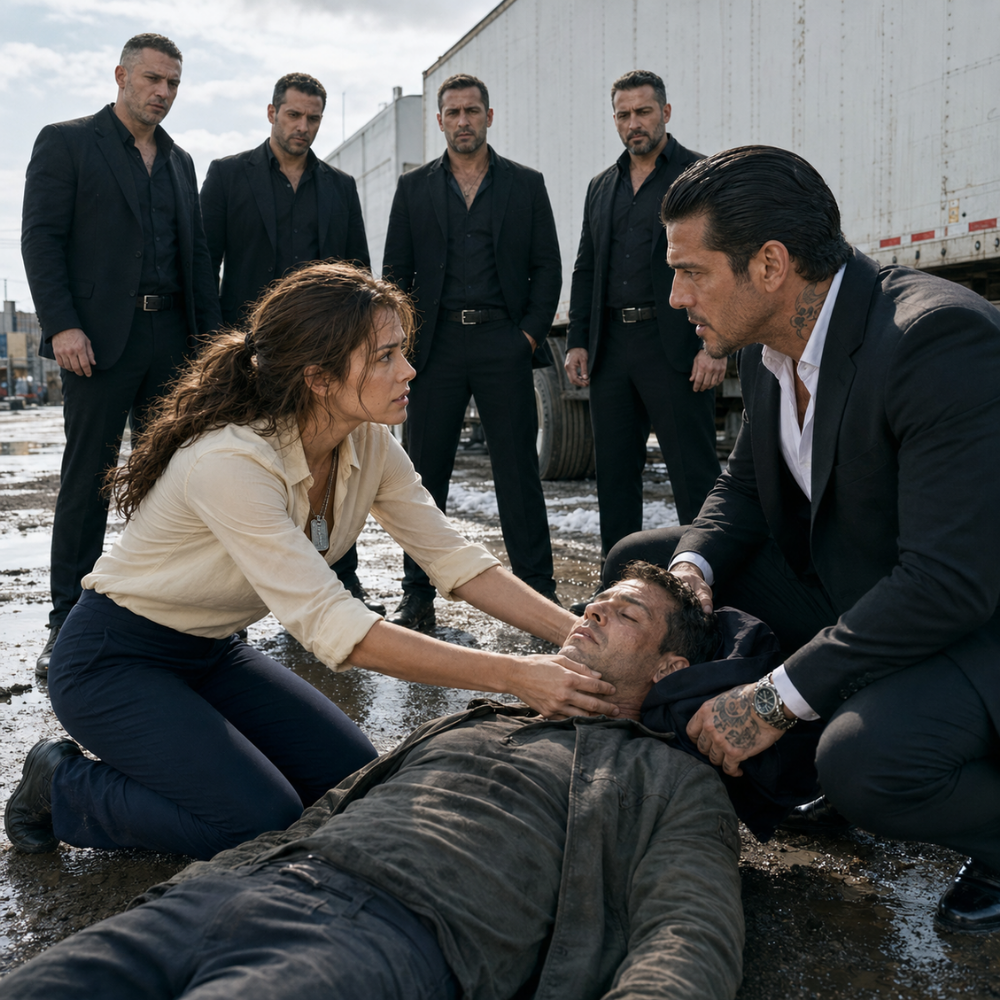
They called her the secretary on the 41st floor until one night in the snow forced her to become the woman she had spent five years trying to bury
By four-thirty on that Wednesday afternoon, the snow over Chicago had thickened enough to erase the far side of the river.
From the forty-first floor of Marquetti Holdings, the city looked quieter than it was. Traffic still crawled along Wacker Drive. The elevated trains still rattled through the Loop. Office workers still hurried toward parking garages with scarves over their faces and grocery bags tucked beneath their coats. But from behind gray glass, everything had been softened into white and steel.
Charlie Boon had been sitting outside Cassius Marquetti’s office for twenty-five minutes.
He was fifty-eight and owned four restaurants in the West Loop, though owned had become a complicated word lately. The oldest place, a narrow Randolph Street dining room with a pressed-tin ceiling and red leather booths, had belonged to his father before him. Charlie had worked there at twelve, carrying water and folding napkins. He had proposed to his wife in Booth Six. His son had washed dishes there during high school.
In the folder on Charlie’s lap were cash-flow projections, revised payroll numbers, a refinancing proposal, and a letter from an accountant who had stayed past midnight helping him assemble it.
Charlie believed those pages mattered.
People often did before they entered Cassius Marquetti’s office.
A man named Booker Vance opened the door.
“Mr. Marquetti will see you.”
Charlie stood.
At the desk outside the office, Camille Ward shifted a stack of contracts against her hip and stepped aside to clear his path.
Charlie did not notice her.
Almost nobody did.
Cassius Marquetti did not rise when Charlie entered.
He was thirty-four, dark-haired, lean, dressed in a charcoal suit without a tie. His office was large but almost bare. No photographs. No awards. No family portraits. Nothing on the desk except a black telephone and a closed file.
Charlie sat.
He began talking.
The winter slowdown had been worse than expected. Construction on Randolph Street had torn up the sidewalk for eight months. A linen supplier had raised prices twice. Beef costs had jumped. Two private events had canceled after Christmas.
Charlie opened his folder.
“I’m not asking anybody to forgive anything.”
Cassius listened.
“Ninety days,” Charlie said. “That’s all I need.”
Cassius said nothing.
Charlie pushed the folder across the desk.
“Ninety days and I can get the Randolph place stabilized. The other three are carrying themselves.”
He hated how high his voice sounded.
“Ninety days.”
Cassius waited until Charlie had finished.
Then he put one hand on the folder, closed it without reading a page, and pushed it back.
Charlie’s face tightened.
Cassius opened the file that had been sitting on his own desk.
He turned it around.
“Read that.”
Charlie read the first page.
Then he read it again.
The document was a bill of sale.
A holding company Charlie had never heard of had purchased the mortgages on all four restaurant properties before Thanksgiving.
That company had then been acquired by Marquetti Holdings.
Ninety days ago.
Before Charlie had called.
Before the sidewalk construction became unbearable.
Before he spent two nights preparing numbers.
Cassius watched him reach the end.
“The restaurants stay open,” Cassius said.
Charlie looked up.
“The names stay. Staff stays. Menus stay.”
Charlie did not understand yet.
Cassius continued.
“People like the Sunday prime rib at Randolph. Don’t change it.”
“Mr. Marquetti…”
“You keep running all four places.”
Charlie’s shoulders relaxed a fraction.
Then Cassius added, “You just don’t own the buildings anymore.”
The relief vanished.
Charlie looked again at the contract.
The room was so quiet that he could hear the heating vent.
He might have argued with another creditor. He had argued with bankers, contractors, landlords, insurance adjusters, aldermanic aides, and one food inspector who had tried to close his kitchen over a freezer thermometer.
He did not argue here.
Later, when he told his wife what happened, he would have trouble explaining why.
Cassius had not threatened him.
He had barely changed his tone.
Perhaps that was why.
Charlie gathered his folder and stood.
“Thank you,” he said.
The words sounded strange even to him.
Booker held the door.
Camille Ward was still at the outer desk.
She pressed the elevator button without being asked.
Charlie stood beside her, staring at the carpet.
Camille did not look at his face.
It was a kindness.
He did not notice that either.
The elevator arrived.
Charlie stepped inside.
The doors closed.
Camille returned to her desk.
Inside the office, Booker remained standing.
He was sixty, broad through the shoulders and immaculately dressed in a dark three-piece suit that seemed to belong to another era. He had worked for Cassius’s father for twenty-six years and had known Cassius since he was a boy.
“The Sheridan group is asking questions again,” Booker said.
“Let them.”
“They’re asking about the river parcels.”
“They can ask about those, too.”
Booker glanced toward the snow.
“Your father had three rules.”
Cassius sighed.
“I know.”
Booker recited them anyway.
“Never touch a hospital. Never touch a newspaper. And a man who sells you out does not get a second morning.”
Cassius stood and lifted his black wool overcoat from the back of the chair.
Booker frowned at it.
“You need a new coat.”
“This one works.”
“The cuffs are shiny.”
“That doesn’t stop it being a coat.”
“I could have one made by Friday.”
Cassius pulled it on.
“You say that every winter.”
“You ignore me every winter.”
Cassius walked to the window.
The Chicago River was almost invisible now.
Somewhere south of the Loop, his younger brother was finishing an architecture lecture and would almost certainly call asking Cassius to attend his Sunday drawing class for neighborhood children.
Cassius would say no.
Elliot would ask again next week.
That was their arrangement.
Outside the office, Camille Ward typed a letter.
Her name appeared in the employee directory as C. Ward.
For two years, nobody on the executive floor had asked what the C stood for.
She arrived before seven every morning. She ate lunch at her desk, usually a sandwich wrapped in wax paper and an apple. She wore flat shoes, gray sweaters, navy skirts, plain winter coats. Her dark hair was usually tied low at the back of her neck.
She knew the names of the building’s cleaning staff.
She knew which courier had a diabetic wife.
She knew that the lobby guard’s oldest daughter was applying to Northwestern.
Nobody in upper management knew any of those things about her.
Cassius passed her desk every morning at 7:45.
“Good morning,” Camille would say.
“Morning.”
He rarely slowed.
It was not cruelty.
Cassius had been trained since adolescence to notice doors, unfamiliar hands, cars that appeared twice, men who watched elevators instead of numbers.
Camille was none of those things.
She was furniture with a payroll number.
Elliot Marquetti had never learned that certain people were supposed to disappear.
He came to the forty-first floor several afternoons a week with rolls of drawings beneath one arm and charcoal smudged along his fingers.
He was twenty-three, tall, open-faced, and had spent most of his life protected by the walls his older brother built around him.
Every time he came in, he stopped at Camille’s desk.
He knocked twice against the edge.
Tap. Tap.
“Miss Ward.”
“Mr. Marquetti.”
“How many times have I told you not to call me that?”
“Approximately forty.”
“Then this is forty-one.”
He placed a small paper bag beside her keyboard.
Camille looked into it.
Cookies.
“You need to stop feeding me.”
“No.”
“Your argument is compelling.”
“I brought clementines last month. That was health food.”
“You brought twelve.”
“You looked vitamin deficient.”
Camille’s mouth lifted.
Elliot leaned against the desk.
“Sunday.”
“No.”
“I didn’t even ask.”
“You were about to.”
“Community center. Ten in the morning.”
“I have plans.”
“You always have plans.”
“That is because I make them.”
“You could come for twenty minutes.”
Camille shook her head.
Elliot taught drawing every Sunday at a community center on the South Side. He had nine regular students, sometimes eleven when parents were not working weekend shifts.
He told Camille about them often.
“There’s a girl named Tessa who draws the same skyscraper every week.”
“Still the heart windows?”
“Still the heart windows. She added an elevator for dogs.”
“Practical.”
“She says dogs are excluded from too much architecture.”
Camille laughed.
The sound changed her face.
For a moment, she looked twenty-seven instead of carefully ageless.
The corner office opened.
Cassius emerged, buttoning his coat.
Elliot straightened.
“Sunday.”
Cassius pressed the elevator button.
“No.”
“You don’t even know what I was going to ask.”
“You were going to ask me to sit in the back of a room while children draw buildings.”
“There’s coffee.”
“No.”
“The coffee is terrible, but that isn’t the point.”
Cassius glanced at Camille.
Elliot gave her an exaggerated look of defeat.
Camille lowered her eyes to hide a smile.
The elevator arrived.
The brothers stepped inside.
At the last second, Elliot leaned out.
“Good night, Miss Ward.”
“Good night, Elliot.”
Cassius heard that.
He did not think about it.
The doors closed.
Camille waited until the floor emptied.
Then she waited forty minutes longer.
People came back for phones.
For forgotten scarves.
For folders needed before morning.
Patience had kept her alive in more ways than anyone in that building could imagine.
At eight, she signed out downstairs.
The security guard looked through the lobby windows.
“You sure you want to drive in this?”
“I’ll be careful.”
“Lake effect is getting ugly.”
“I know.”
“Night, Camille.”
“Good night, Frank.”
She went to the garage.
Instead of driving west toward her rented apartment in Portage Park, she turned south along the river.
Snow battered the windshield.
The roads had become slick enough that every intersection required planning.
Pier 7 sat on an industrial stretch where older brick warehouses had survived redevelopment because nobody had yet found a profitable reason to tear them down.
Marquetti Holdings used one of the buildings for paper archives.
Forty years of contracts, transfers, construction files, warehouse leases, insurance schedules, vendor agreements.
Dead paper, as Booker called it.
Almost everything recent had been digitized.
The old files remained.
Camille had a key because her desk accepted archive deliveries.
Nobody had questioned that.
Nobody questioned the girl outside the corner office.
She parked well away from the building where a row of trees concealed her car from the access road.
Inside, the warehouse was colder than outside.
She used a flashlight instead of turning on the overhead lights.
Rows of shelving disappeared into darkness.
Camille moved with purpose.
She knew the year.
She knew the project.
She knew which property-transfer file should contain the procurement appendix.
She had spent two years getting close enough to search for it.
The first box was wrong.
So was the second.
She knelt on frozen concrete and worked through folder after folder, breathing on her fingers between pages.
Then headlights crossed the warehouse windows.
Camille went still.
Two vehicles.
She switched off the flashlight.
Doors opened outside.
Men’s voices.
Then laughter.
Camille recognized it.
Elliot.
Her stomach dropped.
He should not have been there.
A second voice followed.
Cassius.
She returned the box to the shelf and slipped behind the last row.
The side door opened.
Overhead lights came on one bank at a time.
Elliot’s voice echoed across the warehouse.
“You could have picked literally any other night.”
“The seller flies out in the morning.”
“So have a lawyer do it.”
“He wants me.”
“You have an entire building full of men who get paid to sign things.”
“They get paid to sign their own names.”
Their footsteps moved toward the office at the far end.
Camille pressed herself against the brick wall.
She had spent two years preparing for almost every possibility.
Not this one.
Then the lights went out.
Instantly.
Not weather.
Not a flicker.
A deliberate cut.
Camille stopped breathing.
Outside, engines approached fast.
Several vehicles.
Tires on gravel.
Doors opened almost together.
No shouting.
No laughter.
No confused questions.
That was what frightened her.
People who came to talk made noise.
People who came prepared often did not.
The loading door took a hard impact.
Then another.
Metal shrieked.
Somewhere in the dark, Booker shouted a command.
Camille heard movement between the storage rows.
Flashlights broke the darkness into violent strips.
A phone skidded across concrete.
Snow blew through a damaged loading entrance.
Then she heard Cassius call his brother.
“Elliot.”
Once.
Then again.
“Elliot!”
The second time was different.
Camille did not see what happened.
She heard Elliot shout.
“Get down, Cass!”
A collision of bodies against steel.
Then nothing from Elliot.
Camille moved.
Her mind did not decide.
Her body did.
She slipped along the wall toward the side exit.
The emergency door opened onto the rear lot.
Snow hit her face.
Her car was a hundred yards away.
If she reached it, she could be on Lower Wacker before anyone understood she had been inside the building.
Nobody would know.
Her identity would survive.
The two years would survive.
The file she had come to find could still be found another night.
She reached the car.
Her fingers closed around the key.
Then, through snow and distance and confusion, she heard a voice.
“Miss Ward!”
She stopped.
She would remember the stopping longer than the running.
Her hand was already on the car door.
The road out was open.
She had done everything right.
Then a different voice came back to her from five years earlier.
A young man calling her name somewhere she could not see him.
A phone vibrating against her hip while both her hands were occupied.
A green backpack.
Four missed calls.
Camille closed her eyes.
“No.”
She pressed both palms against the roof of the car.
Snow gathered on her sleeves.
She counted backward.
Ten.
Nine.
Eight.
She did not reach seven.
She opened the trunk.
Inside was a roadside emergency kit, a heavy winter blanket, jumper cables, an old umbrella with a broken frame, and tools nobody looking at an executive secretary’s car would expect her to know how to use.
Camille took what she needed.
Then she turned around.
She walked back.
The men who later told the story always remembered that part.
She did not run.
She crossed the lot at a steady pace.
Her coat hung open.
Snow struck her face sideways.
Booker saw her first.
“Ward, get back!”
Camille walked past him.
“Did you hear me?”
“Yes.”
She kept going.
Near the container stacks, Cassius knelt on the frozen ground with Elliot’s head in his lap.
Cassius’s black coat had been folded beneath his brother.
His shirt was wet through at the knees.
He was saying Elliot’s name over and over.
Not loudly.
Fast.
As if repetition could keep him attached to the world.
Camille dropped beside them.
The young man she knew from cookies and terrible community-center coffee looked frighteningly still.
Snow was settling on his face.
Not melting.
Camille touched his neck.
Then his chest.
Her entire posture changed.
Cassius saw it.
“What?”
She ignored him.
“Booker.”
Booker stepped closer.
“I need everyone who can walk moved over there.”
She pointed.
“Now.”
Nobody moved.
Camille looked up.
“Now.”
Something in her voice changed the lot.
Men who would not have taken orders from a police captain began moving.
Another injured man sat near the wheel of an SUV, dazed and badly hurt.
Camille crossed to him.
She did not explain every decision.
She did not soothe men who did not need soothing.
She stopped dangerous bleeding using materials available in the emergency kits, marked the time clearly for incoming paramedics, then instructed one man to stay with him.
“Repeat what I tell you.”
The man nodded.
“Tourniquet time is marked. Tell the first medic.”
He repeated it.
“Again.”
He did.
Camille moved.
A man was shouting from somewhere near the pallets.
Booker pointed.
“He’s over there.”
“The loud one is breathing.”
“What?”
“I go to the quiet ones first.”
She stepped past him.
Booker stared after her.
Ambrose Doyle had watched everything.
Ambrose was sixty-one and had worked for the Marquetti family since before Cassius was born. Decades earlier, before he became a driver, fixer, adviser, and keeper of family history, he had served as a medic overseas.
He watched Camille triage without hesitation.
He watched the way she marked information directly where rescuers could not lose it.
He watched her ignore noise and search for silence.
His face changed.
He knew what he was seeing.
Not the exact woman.
The training.
The instincts.
The kind of memory held in hands.
Camille returned to Elliot.
She leaned close to his mouth.
Pressed one hand to his chest.
Waited.
Cassius watched her expression.
“What?”
Camille opened Elliot’s shirt enough to examine him.
One side of his chest was not moving correctly.
His breathing had deteriorated.
His color was wrong.
Booker stood nearby with a phone.
“Ambulance says fifteen minutes minimum.”
Camille looked at Elliot.
“He doesn’t have fifteen.”
Cassius grabbed her wrist.
Camille looked up.
His face had gone blank in the way powerful men’s faces sometimes did when fear became too large to show.
“What are you doing?”
“Trying to keep him alive.”
“If you make it worse…”
“Let go.”
His hand tightened.
Cassius lowered his voice.
“If he dies because of something you do…”
Camille’s eyes met his.
“You think you can make me wake up every morning remembering someone I couldn’t save?”
Cassius froze.
“I’ve already done that for five years.”
Snow rested in her eyelashes.
“Let go of me. You’re blocking my light.”
Cassius released her.
Camille performed the emergency intervention Elliot needed using the limited tools available, working with the controlled speed of someone who understood exactly what could happen if she was wrong.
Ambrose stopped breathing for several seconds.
He had seen something similar once.
A lifetime ago.
In a place he rarely allowed himself to remember.
Camille finished.
For one terrible moment, nothing changed.
Then Elliot dragged in a ragged breath.
Cassius made a sound so small nobody later admitted hearing it.
Elliot’s eyelids fluttered.
Camille stabilized him.
“Elliot.”
His eyes did not open fully.
“You’re breathing.”
He made a faint sound.
“I’ve got you.”
Cassius sat back in the snow.
For thirty-four years, men had watched him control rooms.
They had watched him receive news of his father’s death without changing expression.
They had watched him close companies, call debts, remove men from positions they thought belonged to them forever.
Now he sat in slush in his shirt sleeves, staring at a woman whose face he had never bothered to remember.
The first sirens reached the access road eleven minutes later.
Three ambulances.
Red light rolled across snow and brick.
The first paramedic arrived carrying a trauma bag.
Camille began speaking before he reached her.
Three urgent patients.
Several stable.
One with life-threatening bleeding controlled.
One unconscious but breathing.
Elliot with a serious chest injury and an emergency field intervention requiring immediate hospital management.
Her report was concise.
No wasted detail.
The paramedic looked at her.
“You EMS?”
“No.”
“Trauma nurse?”
“No.”
“What service are you with?”
Camille stepped backward.
Other responders filled the space.
She moved out of the lights.
By the time the paramedic looked for her again, she was gone.
Cassius stayed with Elliot until the ambulance doors closed.
Only then did he notice Ambrose.
The older man stood beside the gurney with one bare hand still wrapped around Elliot’s fingers.
Ambrose’s hand was shaking.
Not slightly.
Violently.
Cassius assumed it was because he loved the boy.
He would remember it differently later.
The Marquetti family had access to a small private medical facility on the Near West Side.
It was legally registered, properly staffed, and discreet enough that people who valued privacy knew where to go without needing the name printed on the building.
Elliot underwent surgery shortly after arrival.
At two in the morning, the surgeon came to speak with Cassius.
“Who treated him before EMS arrived?”
Cassius looked down the corridor.
“My secretary.”
The surgeon waited for the joke.
None came.
Cassius repeated it.
“My secretary.”
The surgeon frowned.
“Well, your secretary knew what she was doing.”
“Would he have made it otherwise?”
The doctor considered the question carefully.
“I can’t promise what would have happened.”
Cassius stared at him.
The surgeon softened the answer.
“What was done outside bought us time.”
“How much?”
“Enough.”
Cassius nodded.
“Thank you.”
Then he went downstairs.
Booker brought him Camille Ward’s personnel file.
It took twenty minutes because there was almost nothing in it.
Employment application.
Driver’s license.
Two references from a medical billing company in Rockford that had closed.
An apartment in Portage Park.
No emergency contact.
No social-media accounts.
No professional associations.
No photographs other than her badge.
Two years living and working in Chicago with almost no visible history.
Booker stood across the desk.
“Background check was clean.”
Cassius flipped a page.
“Too clean.”
Booker nodded.
Cassius looked at Camille’s identification photograph.
Plain hair.
Neutral expression.
Nothing memorable.
He thought of her crossing the snow.
“That life was built.”
“Yes.”
“By her?”
“Probably.”
Cassius closed the file.
“Where is she?”
They found Camille in a supply room on the second floor.
She stood at a small stainless-steel sink with water running over both hands.
Her gray sweater was ruined.
For the first time since Cassius had known her, her hands shook.
She tried to work soap between her fingers.
Dropped it.
Picked it up.
Dropped it again.
Cassius entered.
Booker followed.
Ambrose remained by the door.
Cassius put the personnel file on the counter.
Camille turned off the water.
She kept her back to them.
Cassius spoke quietly.
“I know people who manufacture lives.”
Camille did not move.
“I’ve paid some of them.”
Booker looked at the wall.
Cassius continued.
“The good ones understand the trick isn’t what you add.”
Camille looked down at the sink.
“It’s what you leave out.”
Silence.
“Whoever built Camille Ward was good.”
She turned.
Her eyes were red but dry.
Cassius nodded toward the file.
“It’s still not real.”
Camille crossed her arms.
He began listing what he had seen.
Not medical details.
Instincts.
She had understood triage before trained responders arrived.
She had known which injuries could wait and which could not.
She had given information in exactly the order paramedics needed.
She had performed an emergency procedure outside a hospital without hesitation.
She had done all of it while snow fell, men shouted, and lights failed.
Cassius finished.
“The woman outside my office files correspondence.”
Camille stared at him.
“She brings me the signature register every Friday.”
He paused.
“That woman did not learn what I saw tonight from an office first-aid course.”
No answer.
“Where did you learn it?”
Camille’s shoulders lowered.
For five years, she had imagined dozens of ways someone might discover her.
She had never imagined this room.
This sink.
This man.
Her brother’s umbrella still in the trunk of her car.
“I was a surgeon.”
Booker looked up.
Cassius said nothing.
“A trauma surgeon.”
Ambrose lowered himself onto a folding chair near the door.
Camille untied her hair.
“My name was Adeline Marsh.”
Cassius repeated it once.
“Adeline Marsh.”
Ambrose shut his eyes.
He knew the name.
Booker did, too.
Five years earlier, every television in Chicago had known it.
Camille, Adeline, whatever name belonged to her now, leaned against the counter.
“I was twenty-two when it happened.”
Cassius frowned.
“That young?”
“I finished early. Started medical school early. Nothing about my life was normal then.”
She looked at her shaking hands.
“I was chief resident sooner than I should have been.”
Then she began.
The Winter Light Festival happened every February along the Chicago Riverwalk.
That year, white lights had been strung along a pedestrian bridge used by hundreds of visitors moving between festival areas.
The bridge was not truly temporary, though people called it that. It had been installed more than a decade earlier and remained in service year after year.
Adeline had been working a long hospital shift three blocks away.
It was her birthday.
She had stepped outside during a break, still wearing scrubs beneath her coat, and bought hot cider she never had a chance to drink.
The bridge began to fail with a sound she remembered more clearly than anything.
Not a crash.
A groan.
Long and metallic.
People on the span stopped walking.
Some laughed nervously.
Then the deck shifted.
After that, memory came in fragments.
Lights swinging.
People falling.
Screaming.
Snow.
Adeline remembered getting to her feet and feeling fear disappear.
Not courage.
Something colder.
Training.
She began giving instructions.
People obeyed because there was no one else yet.
She directed those able to walk away from the danger.
She used festival tables and supplies to create crude treatment areas.
When firefighters reached the scene, their captain took one look at what she had organized and asked what she needed.
Adeline worked for hours.
Nineteen people who might not otherwise have survived left the riverbank alive.
One injured young man was brought to her wearing an expensive wool coat.
Sterling Grady.
Twenty-two years old.
Competitive swimmer.
Only son of Whitfield Grady, chairman of the hospital board where Adeline worked.
Sterling’s injuries were beyond what anyone on that riverbank could repair.
Adeline had limited hands.
Limited equipment.
Several people who could still be saved.
She made the triage decision.
Every later expert review agreed with it.
Sterling Grady could not have survived even with immediate operating-room care.
Adeline moved to the next patient.
Sterling died nearby.
Near dawn, firefighters recovered a green canvas backpack.
The name inside was Owen Marsh.
Adeline’s nineteen-year-old brother.
He attended college outside the city.
He was not supposed to be in Chicago.
He had driven down without telling her because it was her birthday.
Four calls from him had reached her phone during the disaster.
She never answered.
Her hands had been busy.
Owen died before she knew he had been on the bridge.
Adeline stared at the floor of the supply room.
“Nineteen people lived.”
Booker swallowed.
“My brother didn’t.”
No one spoke.
“And Sterling Grady didn’t.”
She rubbed her palms against her skirt.
“Whitfield Grady opened a review.”
Cassius’s face hardened.
“He blamed you.”
“At first, he asked questions.”
“That isn’t what I asked.”
Adeline looked at him.
“He blamed me.”
The questions were professionally phrased.
Had a resident exceeded her authority?
Had triage decisions been adequately supervised?
Should a physician in training have taken operational control before senior command arrived?
Reasonable questions, each one.
Together, they became something else.
A reporter learned that Adeline had assigned Sterling Grady the category reserved for patients who could not be saved with available resources.
A photograph from her medical identification file appeared in newspapers.
The story became simple enough for strangers to understand.
Young doctor gives up on board chairman’s son.
It did not matter that trauma specialists defended her.
It did not matter that independent reviews found the decision medically correct.
It did not matter that nineteen people survived.
Public stories preferred villains to triage mathematics.
The hospital did not fire her.
“They put me on paid leave.”
Adeline laughed once.
“That sounds humane, doesn’t it?”
Cassius said nothing.
“The state suspended my license during the investigation.”
“For five years?”
“Grady’s lawyers kept challenging the findings. Hearings moved. Boards changed. Attorneys filed things. The hospital stopped returning my calls.”
Her voice remained calm.
“That was the clever part. Nobody ever had to say I was guilty.”
She looked at Cassius.
“They only had to make the question last long enough.”
“What happened to your residency?”
“My program director asked me whether medicine was really where I wanted to spend my life.”
Booker muttered something under his breath.
Adeline ignored it.
“People think losing medicine was the worst part.”
“What was?”
“My name.”
She tapped the personnel file.
“Put Adeline Marsh into any search field in the country. You get the bridge. Sterling Grady. The photograph. Headlines.”
Her eyes filled but did not spill.
“You don’t get the nineteen.”
She paused.
“You don’t get Owen either.”
So Adeline Marsh disappeared.
Camille Ward appeared.
A smaller resume.
A rented apartment.
No social media.
No medical work.
No questions.
“I got good at being nobody,” she said.
Cassius sat down.
Not in a chair.
On the linoleum floor with his back against a steel cabinet.
Booker looked at him.
Cassius ignored him.
After a while he said, “When I was twenty-two, my father took me to a meeting under a building on Ashland.”
Adeline looked up.
“There were fourteen people in the room.”
Cassius rested his arms over his knees.
“The meeting went bad.”
Booker’s face changed.
He had heard pieces.
Not this part.
“My father was on the other side of a steel door. Eleven of our people were behind me.”
Cassius looked at the floor.
“I could open the door and try to get to him. Or I could lock it and take the eleven out through a loading passage.”
Adeline said nothing.
“I locked it.”
Booker turned away.
Cassius’s voice stayed level.
“My father was still alive.”
He pressed his palms together.
“I could hear him.”
Adeline slowly sat on the floor across from him.
“He hit the door three times with his hand.”
Cassius looked at her.
“I hear that every morning.”
The room was silent except for the medication refrigerator.
Cassius had never told Elliot.
Never told Booker.
Never told anyone.
“You saved eleven,” Adeline said.
“My father died.”
“You saved eleven.”
“He was my father.”
“Owen was my brother.”
Their eyes met.
For the first time that night, neither had anything left to hide behind.
Cassius spoke.
“You did not walk past your brother.”
Adeline’s face tightened.
“You had two hands.”
Her mouth trembled.
“You used both.”
She lowered her head.
Cassius added, “No person gets more than two.”
That broke something.
Adeline folded inward.
For five years she had accepted sympathy politely, rejected reassurance privately, and lived beneath the assumption that grief was evidence.
Now she cried on a cold supply-room floor in front of men she had spent two years trying to remain invisible to.
Cassius did not tell her Owen would have understood.
He did not tell her to forgive herself.
He simply stayed.
Three days later, Elliot developed a serious complication.
His fever climbed.
His breathing worsened.
The private facility’s attending physician ordered urgent transfer to a full hospital.
Booker stood in the corridor.
“Rush is twenty minutes.”
Everyone understood the problem.
The men responsible for Pier 7 had escaped when police sirens arrived.
They had known where Cassius would be.
They had gone directly toward Elliot during the attack.
A public hospital offered far better resources but far less control over who entered.
Cassius looked at the physician.
“What can be done here?”
The doctor shook his head.
“He needs a specialist.”
Adeline stood near the doorway.
“I can stabilize him.”
Cassius looked at her.
“With a suspended license?”
“Yes.”
“What happens to you?”
“If anyone reports it?”
“Yes.”
She answered plainly.
“I could be charged.”
“No.”
“Cassius.”
“No.”
“If we keep discussing my legal future while your brother deteriorates, eventually the discussion becomes irrelevant.”
His jaw tightened.
“You are not sacrificing yourself again.”
“I’m not.”
She stepped closer.
“I’m making a medical decision.”
“You aren’t licensed.”
“I’m aware.”
“You have not practiced in five years.”
“My hands did not forget in the snow.”
The room quieted.
Adeline assisted in the urgent procedure necessary to stabilize Elliot until safe transport could be arranged.
Ambrose remained beside her throughout.
He knew enough to help.
The work itself was familiar to her.
What was unfamiliar was the patient.
Elliot, who brought clementines.
Elliot, who knew how she took coffee.
Elliot, who knocked twice against her desk.
She refused to think about those details while working.
Then an alarm sounded in the lower level.
Booker appeared at the doorway.
“Security breach.”
Cassius’s head turned.
Booker continued.
“North stairwell.”
The lights shifted to backup power.
Movement exploded in the corridor.
Cassius did not move toward the disturbance.
Every instinct inherited from his father told him to go.
He remained outside Elliot’s room.
For more than an hour, as security teams worked elsewhere in the building, Cassius stood behind the glass watching Adeline care for his brother.
Only when she declared Elliot stable did Booker enter.
“We have to move.”
They transferred Elliot onto a gurney.
The service elevator had been disabled.
The group used a secured rear route toward an ambulance ramp.
The building felt different in emergency lighting.
Corridors became tunnels.
Every door seemed louder.
Outside, snow had begun again.
The ramp was slick.
The gurney shifted on ice.
Adeline caught the side rail with her whole weight while Booker regained control.
A car stopped at the alley entrance.
Cassius appeared from the passenger side.
He had taken another route out.
He removed the same worn black coat Booker complained about every winter and placed it over Elliot.
“Superior Street,” Cassius told Booker. “Use the secure medical team there.”
As they loaded Elliot, Cassius turned toward Ambrose.
“Twice.”
Ambrose looked at him.
“Men got inside a private location twice.”
Ambrose’s face was unreadable.
“Both times they went toward Elliot.”
Cassius looked into the older man’s eyes.
“Not me.”
Ambrose said nothing.
Cassius stepped closer.
“Why?”
The answer did not come that night.
The public story arrived first.
Thursday morning, an online outlet published a story about Camille Ward.
By noon, larger newspapers had picked it up.
The article was factually cautious.
That made it more damaging.
A woman employed as an executive assistant at Marquetti Holdings had previously held an Illinois medical license under another name.
That license had been suspended following the Winter Light bridge disaster.
The article placed an old photograph of Adeline Marsh beside a recent photograph of Camille crossing Wacker Drive carrying files.
Then it reminded readers that Marquetti Holdings had long been associated with a powerful South Side family.
The article did not directly accuse Adeline of wrongdoing.
It did not need to.
By nine-fifteen, the forty-first floor knew.
Camille felt it before anyone spoke.
Accounting employees stopped talking when she entered the copy room.
A man whose packages she had signed for hundreds of times stared above her head while greeting her.
Someone printed the article and left it beside the water cooler.
She worked all day.
Answered calls.
Scheduled meetings.
Delivered the signature book.
At six, she left.
She sat in the parking garage for eleven minutes before turning the key.
Across the city, Whitfield Grady read the story in his study.
He was sixty-six now.
His son’s swimming photograph still sat behind his desk.
Grady read the article three times.
Then he called his attorney.
The following Monday, a formal complaint reached the medical licensing authority alleging that Adeline Marsh might have practiced medicine while under suspension.
Grady signed it himself.
He did not know who had leaked the story.
He believed he was protecting standards.
He also believed, somewhere beneath everything, that continuing the fight meant continuing to be Sterling’s father.
Both things could be true.
That Tuesday, Booker carried a newspaper into Cassius’s office.
“Your father’s second rule.”
Cassius kept reading.
“Never touch a newspaper,” Booker continued. “Never call one. Never write one. Never answer one. The moment they know you respond, they own a door into the house.”
Cassius looked up.
“My father made those rules to protect us.”
“Yes.”
Cassius folded the article.
“Adeline isn’t protected by the rule.”
Booker said nothing.
“She walked back into that lot when she could have left.”
“I know.”
“She saved Elliot.”
“I know.”
“And now somebody is taking her apart publicly because she did.”
Booker lowered the newspaper.
“What do you want?”
“Find who fed the story.”
Booker studied him.
“Cass.”
“Find them.”
Booker left.
Four days later, he returned with more than a name.
He put Camille’s original employment application on the desk.
“Look at the date.”
Cassius looked.
The executive assistant position had opened when Delia Kohler retired after nineteen years.
The retirement had never been publicly posted.
But Delia had told her sister.
Her sister sang in a church choir in Berwyn.
Eleven days after Delia mentioned retiring to the choir, Camille Ward’s application arrived.
Addressed to the correct office manager.
For a job not yet advertised.
Cassius stared at the paper.
“She didn’t apply to the company.”
“No.”
“She applied to the desk.”
Booker nodded.
The outside desk on the forty-first floor had special archive privileges.
The assistant signed for old property files.
Held a spare archive key.
Could request riverfront contracts without triggering the same scrutiny an executive request would receive.
Cassius understood.
“Pier 7.”
“Yes.”
That evening, after everyone left, he asked Camille into his office.
She remained standing.
“Why were you at Pier 7?”
Camille looked at the window.
“Don’t lie.”
“I wasn’t going to.”
Cassius waited.
“I came to Marquetti Holdings for the archive.”
“What were you looking for?”
“A construction procurement schedule.”
“For the bridge.”
“Yes.”
He stood.
“Why would my company have it?”
“Because the pedestrian span was tied to a riverfront transfer. The city’s procurement copy disappeared during a records purge.”
“You knew there was another.”
“I found a reference to an attachment.”
“And you spent two years looking?”
“I spent two years getting access.”
Cassius absorbed that.
“Did you find it?”
“No.”
He came around the desk.
“There’s something else.”
Camille’s expression hardened.
“You were almost at your car that night.”
“Yes.”
“Booker found where you parked.”
She said nothing.
“You had made sure nobody would see you at Pier 7.”
“Yes.”
“When Elliot called your name, you came back.”
“Yes.”
Cassius’s voice dropped.
“Did you come back because Elliot needed help?”
Camille stared at him.
“Or because if he died and everyone started asking questions about Pier 7, two years of your cover died with him?”
The silence became unbearable.
Cassius regretted the question almost as soon as he finished it.
But it existed now.
Camille could have defended herself.
She could have told him she had forgotten the file the instant she heard Elliot’s voice.
She could have told him she stopped because she heard Owen.
Instead, she looked at him with tired disappointment.
The question contained a piece of truth.
She had lied to enter his company.
She had used his trust.
She had searched private records.
Because part of it was true, she had spent five years losing the ability to defend the parts that were not.
Camille opened her bag.
She removed her building badge.
Then a folded resignation letter.
She placed both on Cassius’s desk.
“Camille.”
She turned.
“Adeline.”
That made her stop.
He had never used the name inside this office.
“You didn’t answer.”
She looked over her shoulder.
“Some questions tell you more about the person asking than the answer ever could.”
Then she left.
She passed the empty desk where she had sat for two years.
She took the stairs.
Cassius remained alone.
Eventually he picked up her badge.
The plastic sleeve was cracked.
He turned it over.
Behind the printed employee card was a faded photograph.
A teenage girl beside a younger boy in a swim-team jacket.
Both laughing in bright sun.
Owen.
Cassius sat down.
Booker found the traitor on Saturday.
The Pier 7 meeting had not been followed.
That meant the attackers knew in advance.
Only four people had known the location early enough.
Cassius.
Elliot.
Booker.
Ambrose Doyle.
Booker brought the conclusion to the Superior Street house where Elliot was recovering.
Ambrose listened.
He did not deny it.
When Booker finished, the older man removed an old handgun from beneath his coat.
He set it on the table.
Cassius stared at it.
Ambrose pushed it toward him.
Then he recited the third rule.
“A man who sells you out does not get a second morning.”
Booker closed his eyes.
Cassius asked one question.
“Why?”
Ambrose stared at his hat in his hands.
“My sister.”
Cassius waited.
“Margaret has kidney disease.”
“I know.”
“She’s been on dialysis four years.”
“I know that, too.”
“Transplant list, two years and eight months.”
Ambrose’s voice cracked.
“A man came to me in the parking garage at her hospital.”
Cassius did not move.
“He showed me a printed list. Her name. Her position.”
Ambrose swallowed.
“Then he showed me another list dated later.”
“What changed?”
“One number.”
Cassius understood.
“She moved down.”
Ambrose nodded.
“The man never threatened me.”
That detail sounded familiar.
“He just asked if I understood what I was looking at.”
Cassius looked away.
“Six weeks later, someone contacted me.”
“What did they ask?”
“An address. A time.”
“Pier 7.”
“Yes.”
“What did they tell you would happen?”
“A conversation.”
Cassius’s face tightened.
Ambrose lifted his eyes.
“I believed it.”
“You have known men like that your whole life.”
“I wanted to believe it.”
“Different thing.”
“Yes.”
Ambrose looked toward Elliot’s room.
“When I came around those containers and saw him…”
His hands began shaking.
Exactly as they had in the snow.
“I knew.”
Cassius looked at the gun.
“You gave them my brother.”
“I gave them an address.”
“You gave them my brother.”
Ambrose nodded.
“Yes.”
No excuse.
No argument.
“I have not slept since.”
Cassius reached for the handgun.
Booker took one step forward.
Then stopped.
Ambrose stood straight.
His eyes closed.
The doorway opened.
Adeline stood there.
She had returned because Elliot’s fever had risen again.
She looked at Ambrose.
At Cassius.
At the weapon.
She understood enough.
“Did you hear him?”
Cassius turned.
“Stay out of this.”
“No.”
“Adeline.”
“He gave them a road and a time because someone moved his sister down a transplant list.”
“He betrayed us.”
“Yes.”
“He almost got Elliot killed.”
“Yes.”
Cassius stared at her.
Adeline stepped closer.
“He did the worst thing he has ever done because somebody found the one person he could not bear to lose.”
“That excuses it?”
“No.”
“Then move.”
Adeline did not.
“If you kill him, what is the difference between you and the man who showed him the list?”
Booker looked at the floor.
Ambrose opened his eyes.
Cassius’s hand remained around the gun.
Adeline’s voice stayed quiet.
“That man used love as leverage.”
She pointed toward Ambrose.
“And if you punish him without law, you use guilt as leverage.”
Cassius looked at her for a long time.
Then he opened the weapon and removed the ammunition.
He placed the unloaded gun on the table.
The rounds went into his pocket.
He walked out.
Nobody followed.
For the next two days, boxes from Pier 7 filled the Superior Street dining room.
Cassius ordered an outside attorney to supervise.
If they found evidence, it would go to authorities.
No disappearing files.
No private justice.
Adeline searched.
On the second afternoon, she found the document.
A subcontractor schedule had been filed under the wrong company name.
Attached was a materials certification for structural steel used in the pedestrian bridge.
Adeline read the supplier name.
Callerin Infrastructure.
Rowan Callerin had spent twenty years presenting himself as a civic builder.
Parking structures.
School renovations.
Riverfront redevelopment.
A charitable foundation whose logo appeared on museum walls, youth programs, hospital plaques, and winter fundraising galas.
The steel certification numbers in the bridge package did not match legitimate mill records.
Booker began pulling corporate histories.
Once he knew where to look, the structure unraveled quickly.
Callerin-controlled companies had supplied critical bridge components through layers of subcontractors.
The pricing had been unusually low.
Documents used to certify the material were unreliable.
A security recording from a bank near the bridge’s north approach had been collected hours after the collapse by someone carrying what looked like a legitimate work order.
The work order was not legitimate.
The recording disappeared.
Within thirty-six hours, a different story dominated local coverage.
Adeline Marsh’s triage decision.
A true fact.
Just not the fact that explained why the bridge failed.
“That’s what they did,” Adeline whispered.
Cassius stood across the table.
“They gave the city something easier to hate.”
Booker brought another document.
A student discussion board.
Architecture students had been sharing old bridge drawings as part of a structures seminar.
One user had posted scanned certification numbers and asked whether anyone could explain why the material records did not align.
The initials beneath the post were E.M.
Cassius went still.
Elliot.
Three days before Pier 7.
Booker looked at him.
“They weren’t there for you.”
Cassius stared at the page.
Everything he believed about the attack rearranged itself.
Elliot had found the discrepancy through a class project.
Someone monitoring the old bridge records had noticed.
The attack at Pier 7 had been meant to reach Elliot.
Cassius had spent his life building walls around his brother.
Elliot had walked beyond them with a library request and a student login.
Ambrose spoke from the far end of the table.
“There’s something else.”
Cassius looked at him.
“Your father knew.”
No one moved.
“A year before the bridge went down, he was offered part of that materials contract.”
Cassius’s face changed.
“He sent inspectors to the mill.”
Booker leaned forward.
“What happened?”
“They came back and told him the certifications were bad.”
Ambrose looked at Cassius.
“Your father killed the deal.”
“Where’s the report?”
“Pier 7.”
Booker immediately stood.
Ambrose continued.
“After the collapse, your father started asking questions.”
Cassius remembered Ashland Avenue.
The basement.
The steel door.
Three strikes of his father’s hand.
“When did the Ashland meeting happen?”
“Three months later.”
Cassius sat slowly.
Adeline looked at him.
The bridge.
Owen.
Sterling Grady.
Cassius’s father.
Five years of apparently separate grief.
Same supplier.
Same missing records.
Same company.
Same habit of turning public attention toward a convenient human target.
Adeline sat opposite Cassius.
For a long time, neither spoke.
Then she placed her phone on the table.
“There’s something I’ve never listened to.”
Cassius looked at it.
“Owen left me a voicemail.”
Her fingers rested near the screen.
“The last call.”
“You never played it?”
“No.”
Five years.
Three phones.
Every time she replaced one, she transferred the file.
Never played.
“Will you sit here?”
Cassius pulled a chair around the table.
He sat beside her.
Their shoulders almost touched.
Adeline pressed play.
Wind.
Traffic.
Distant laughter.
Then a young man’s voice.
“Hey, Addie. Don’t be mad.”
Adeline closed her eyes.
Owen sounded cheerful.
Alive in the careless way people sound when they have no idea anyone will preserve the sentence forever.
“I’m gonna be like fifteen minutes late. There’s some guy up at the north end who got his foot stuck in this grate thing by the railing. Two people are trying to get him loose, and it’s not going great.”
Adeline covered her mouth.
“So I’m helping. Before you say anything, yes, I know you told me not to come into the city. I came anyway. You can yell at me later.”
Cassius stared at the floor.
“The cake’s in my backpack. If it’s smashed, that is officially not my fault.”
A gust of wind overwhelmed the microphone.
“Okay. Gotta go.”
Then, softer:
“Happy birthday, Addie.”
The recording ended.
Adeline did not move.
For five years, she had imagined Owen calling because he needed her.
Because he was frightened.
Because she had failed to answer.
Instead, he had been helping a stranger.
She began to cry.
Not quietly.
Not neatly.
Cassius put one hand between her shoulder blades.
The recording continued playing several seconds of empty wind.
Adeline folded over the table.
“My God.”
Cassius said nothing.
“He stopped.”
Her voice broke.
“He wasn’t calling for help.”
“No.”
“He stopped for someone.”
Cassius kept his hand on her back.
Adeline had spent five years punishing herself because she had chosen strangers while her brother died nearby.
Owen had made the same choice.
He had seen a stranger trapped at a railing.
He had stopped.
The door opened.
Elliot stood there on crutches.
He looked pale and annoyed at being pale.
“I can leave.”
“No,” Adeline said.
Elliot entered.
After a few minutes, he glanced toward the table.
“There’s something I should tell you.”
Adeline wiped her face.
“What?”
“I knew who you were.”
Cassius turned.
Elliot looked guilty.
“Since when?”
“First week she worked upstairs.”
Cassius stared at him.
“You knew Camille Ward was Adeline Marsh for two years?”
“Yes.”
“And said nothing.”
“It wasn’t mine to say.”
Cassius stood.
“You let her have archive access.”
“She already had archive access.”
“You knew she was lying about her identity.”
Elliot’s face hardened.
“She was hiding it. That’s different.”
“Not in my building.”
“Maybe that’s why she had to hide.”
Cassius stopped.
Elliot looked toward Adeline.
“The bridge collapse was a case study in my structural-failure class. I read the reviews.”
Adeline stared at him.
“I recognized your ID picture.”
“Why didn’t you tell me?”
“Tell you what? That I knew the worst thing that ever happened to you?”
He shrugged carefully.
“I figured you knew.”
Adeline laughed through tears.
“So you brought me cookies?”
Elliot looked embarrassed.
“I didn’t know what else to do.”
“You brought me clementines.”
“You looked like you had scurvy.”
Cassius sat again.
Elliot’s voice softened.
“I thought everybody should have at least one person who knew exactly who they were and brought them cookies anyway.”
Adeline covered her eyes.
Cassius looked toward his brother.
Something in his expression changed.
The Grady Whitfield Winter Benefit took place three weeks later in the six-story glass atrium of the hospital’s research pavilion.
More than three hundred donors attended.
Hospital executives.
University officials.
Corporate sponsors.
Politicians.
Physicians.
People whose names appeared on buildings.
Adeline had not entered that hospital as herself in five years.
She arrived wearing a dark green dress.
Cassius walked beside her.
Not ahead.
Not behind.
Beside.
The old medical photograph had circulated enough that people recognized her almost immediately.
Conversation shifted as she passed.
Adeline felt the attention.
She kept walking.
Whitfield Grady met her near the second column.
He looked older than his photographs.
Thinner.
Sterling’s father.
The man who had kept her professional life suspended for five years.
He glanced at Cassius.
Then at Adeline.
“You are not welcome here.”
His voice was low enough that nearby donors could pretend not to hear.
Adeline’s heart struck hard once.
“I’m an invited guest.”
“I can have security escort you out.”
“You can.”
Grady studied her.
“I filed the complaint.”
“I know.”
“You practiced medicine while suspended.”
“I know what I did.”
A security employee approached.
Adeline remained still.
Cassius had already begun moving toward several hospital board members at the far end of the atrium where Booker waited with attorneys and documentary evidence concerning Callerin Infrastructure.
Adeline looked at Grady.
“I’ll leave when my host leaves.”
The lights went out.
Complete darkness.
Then came a tremendous sound from above.
People screamed.
Emergency floor strips illuminated in blue.
Part of a suspended decorative ceiling system had failed near the north side of the atrium.
Panels and framing came down across several tables.
Dust filled the air.
Hundreds of people began moving at once.
Adeline was knocked into a stone column.
She fell.
Someone stepped over her hand.
She pushed herself up.
For one second she was no longer in a hospital atrium.
She was twenty-two on the riverbank.
White lights.
Snow.
People screaming.
A broken bridge.
Her body remembered before her mind caught up.
Adeline removed her shoes.
She gathered the skirt of her dress and tore the seam enough to kneel and move freely.
Then she raised her voice.
“My name is Dr. Adeline Marsh.”
People nearby turned.
“I’m a trauma physician. If you can walk, move toward the south exits and help one person who cannot.”
A security guard started to speak.
She pointed.
“You, count people leaving.”
He obeyed.
Two physicians in formal clothes approached.
“What do you need?”
“Treatment area along the south wall.”
Catering staff stripped tablecloths and cleared banquet tables.
Adeline sent people for first-aid kits.
She instructed security to stop the crowd from pushing into the damaged section.
Cassius appeared through the dust.
“What do I do?”
She pointed.
“Move those tables.”
He did.
No questions.
No hesitation.
Adeline moved through the injured.
The order came back.
Quiet before loud.
Breathing before screaming.
Who needed help now.
Who could wait.
Who could walk.
Then she found Whitfield Grady.
He lay near a fallen decorative panel.
Unresponsive.
Not breathing normally.
For one heartbeat, Adeline stared at him.
This man had taken her name.
He had kept her license tied in proceedings for years.
He had filed a complaint days earlier.
He had told her five minutes ago that she did not belong in the building.
Then the heartbeat ended.
Adeline knelt.
She began resuscitation.
One of the physicians joined her.
They worked.
On the fourth cycle, Grady coughed.
Air returned.
They stabilized him until a response team arrived.
Adeline stood.
Someone grabbed her wrist.
She pulled automatically.
A middle-aged man in a rented tuxedo held on.
A makeshift bandage covered his forehead.
He was crying.
“I know you.”
“I need you to let go.”
“No. Wait.”
“I have other patients.”
“Please.”
Something in his face stopped her.
“My name is Gerald Pruitt.”
Adeline did not know it.
“I was on the bridge.”
Her body went still.
“Five years ago.”
He struggled to breathe evenly.
“North end.”
Adeline stared.
“My foot got stuck in the railing.”
The room seemed to recede.
“There were people trying to get me loose.”
Gerald wiped his face.
“A college kid came over.”
Adeline’s hand began trembling.
“He had a green backpack.”
She stopped breathing.
“He got down on the boards.”
Gerald continued.
“He helped free me.”
Adeline could not speak.
“I tried to give him money. He laughed.”
Tears ran down Gerald’s face.
“He said he was late.”
Adeline closed her eyes.
“He said, ‘I have to go meet my sister.’”
The dust-filled atrium disappeared.
Owen’s voicemail played in her memory.
Cake in his backpack.
Happy birthday, Addie.
Gerald squeezed her wrist.
“I’ve been trying to find his family for five years.”
Adeline opened her eyes.
“You found us.”
He stared at her.
“Us?”
“That was my brother.”
Gerald’s face folded.
“Oh.”
He pulled her into an awkward embrace.
Adeline let him.
For the first time in five years, a stranger told her what Owen had done before he died.
Not how he died.
What he did.
The distinction changed everything.
Authorities detained Rowan Callerin later that evening after outside counsel provided evidence concerning the fraudulent bridge-material records, hidden corporate relationships, financial transactions, and attempts to obstruct scrutiny.
Cassius turned over the archive files.
All of them.
Booker delivered the recovered storage media through attorneys.
No private retaliation.
No warehouse meeting.
No disappearing man.
Three days later, Ambrose Doyle entered the United States Attorney’s Office with counsel and gave a full statement concerning Pier 7.
He included his own actions.
He did not ask for immunity before speaking.
Margaret Doyle’s transplant-list position was independently reviewed after evidence showed improper interference.
She was restored to the place she should have occupied.
Whitfield Grady woke in the hospital the morning after the benefit.
A physician told him whose hands had begun his resuscitation.
Grady lay quietly.
Then he asked for the hospital board.
Eleven members gathered that afternoon.
Grady sat in a wheelchair.
Sterling’s photograph was not with him.
For once, he had to speak without his son’s face behind his shoulder.
“I spent five years insisting that Dr. Marsh’s decision caused my son’s death.”
No one moved.
“That was not the medical conclusion.”
He looked down at his hands.
“It was never the medical conclusion.”
One board member shifted.
Grady continued.
“My son’s injuries were not survivable.”
His voice became rough.
“I was told that within days.”
He paused for a long time.
“I knew it.”
Adeline stood outside the meeting room.
Cassius waited down the hallway.
She could hear only fragments through the closed door.
Then Grady said the part that carried.
“I needed someone to have made a wrong choice because accepting that there was no choice felt impossible.”
Adeline closed her eyes.
The board formally withdrew institutional opposition to her reinstatement.
Grady wrote personally to the licensing authority requesting expedited resolution and acknowledging that his prolonged challenges had continued despite independent findings supporting Adeline’s medical decisions during the bridge disaster.
It did not erase five years.
Nothing could.
A month later, the state board restored her license subject to standard reentry requirements, updated certifications, and supervised clinical reintegration after her long absence from formal practice.
Adeline accepted every condition.
She did not ask for special treatment.
She did not want it.
On the morning she returned to the hospital for orientation, the corridor outside surgical services was unusually full.
Booker Vance stood against one wall.
Gio and several Marquetti employees stood behind him.
Some still carried scars from Pier 7.
Ambrose was not there.
He had legal matters of his own to face.
Adeline entered.
Booker stepped forward.
For two years, he had called her Ward.
Miss Ward.
The girl at the desk when speaking to others.
Now he looked directly at her.
“Dr. Marsh.”
Then he removed his hat.
One by one, the men along the hallway did the same.
Nobody applauded.
Nobody made a speech.
Adeline’s throat tightened.
Elliot came down the corridor on one crutch.
He carried a paper package.
“You’re late,” she said.
“I’m injured.”
“You have been using that excuse for weeks.”
“It’s a strong excuse.”
He handed her the package.
Inside was a brass desk plate.
ADELINE MARSH, MD
TRAUMA SURGERY
Adeline ran one finger over the letters.
“You ordered this before I got my license back.”
“I’m optimistic.”
“You’re impossible.”
“I hear that a lot.”
She hugged him.
Cassius stood farther down the corridor.
He had not joined the line.
Adeline looked at him over Elliot’s shoulder.
Cassius gave a small nod.
He did not approach.
Some distances had to be crossed voluntarily.
The following Sunday, sunlight filled the community center on the South Side.
Children sat around long tables covered in colored paper.
Markers rolled onto the floor.
A girl named Tessa was drawing her skyscraper.
Every window was shaped like a heart.
A complicated exterior elevator now ran down one side.
Adeline stood behind her.
“That elevator looks expensive.”
“It’s for dogs.”
“Obviously.”
“Dogs need vertical transportation.”
“I agree.”
Tessa pointed at the top.
“This is the dog restaurant.”
“Very important.”
At the back of the room, Elliot laughed.
He was still forbidden from carrying anything heavier than a sketch pad and therefore spent most of class offering advice nobody had requested.
The door opened.
Cassius stood outside.
Hands in the pockets of the old black coat.
He had spent years declining Elliot’s invitation.
Not because he disliked children.
Because rooms full of people who expected nothing from him made him uncomfortable in a way negotiations never had.
Elliot saw him.
He did not wave.
Did not call attention to him.
Adeline looked over.
For a few seconds, Cassius stayed where he was.
Then he opened the door.
He entered.
Tessa immediately looked up.
“Do you draw?”
Cassius glanced at Adeline.
“No.”
“Everybody draws.”
“I don’t.”
Tessa pushed a sheet of paper toward the empty chair.
“Then you should practice.”
Cassius looked at the chair.
Elliot covered his mouth.
Adeline waited.
Cassius sat.
Tessa handed him a marker.
“What should I draw?”
“A house.”
“I don’t know how.”
“That’s why you practice.”
Cassius looked down at the paper.
Then at Adeline.
She smiled.
He began drawing.
Badly.
Very badly.
Elliot came over five minutes later, looked at the page, and shook his head.
“That roof violates several codes.”
Cassius ignored him.
“The perspective is criminal.”
“Go away.”
Adeline laughed.
The sound moved through the room.
Cassius looked up.
For two years, he had walked past her every morning.
A quarter to eight.
Gray sweater.
Files against one hip.
Good morning, Mr. Marquetti.
Morning.
He had thought invisibility was something people naturally possessed.
Now he understood that sometimes it was something the world imposed.
Sometimes it was something a wounded person constructed for survival.
And sometimes the difference between losing someone and finding them began with the smallest act imaginable.
A young man noticing how a secretary took her coffee.
A woman turning around in a snowstorm.
A brother stopping beside a stranger whose foot was trapped.
A grieving father admitting that grief had made him cruel.
A powerful man deciding that an old family rule did not deserve to survive merely because his father had spoken it.
A doctor listening, finally, to a voicemail she had carried unopened for five years.
Adeline’s name had been taken from her by a story told too quickly.
The story said she had chosen strangers over someone important.
The truth was slower.
The truth was that there had never been enough hands.
The truth was that Sterling Grady could not have been saved.
The truth was that Owen Marsh had not died waiting for his sister to choose him.
He had died doing exactly what she had done.
He had seen somebody in trouble.
And he had stopped.
Months later, Adeline returned to trauma work full-time.
Her first weeks were supervised.
She welcomed that.
Skill lived in muscle memory, but medicine changed, and pride was a dangerous substitute for updating knowledge.
She studied evenings.
Reviewed new protocols.
Completed courses younger physicians had taken years earlier.
She asked questions without embarrassment.
Some residents knew her story.
Some pretended not to.
A few watched her too carefully.
She let them.
Reputation took years to damage and longer to rebuild.
That no longer frightened her.
One afternoon, she walked through the hospital cafeteria carrying coffee and found Whitfield Grady sitting alone beside a window.
He had recovered slowly from the benefit incident.
His hair had grown whiter.
Adeline considered walking past.
Grady saw her.
“Dr. Marsh.”
She stopped.
“Mr. Grady.”
He looked at the empty chair opposite him.
She sat.
For several seconds, neither spoke.
Finally Grady said, “Sterling hated coffee.”
Adeline was not expecting that.
“He drank hot chocolate.”
She set her cup down.
“With whipped cream. At twenty-two.”
A faint smile passed across his face.
“I used to embarrass him about it.”
Adeline waited.
Grady looked outside.
“I spent five years talking about how my son died.”
His voice weakened.
“Very few people asked me how he lived.”
Adeline thought of Owen.
“I know.”
Grady looked at her.
“I am sorry.”
She believed him.
That did not mean the words repaired everything.
“I know.”
He nodded.
“I don’t expect forgiveness.”
“Good.”
A surprised laugh escaped him.
Adeline almost smiled.
“Because forgiveness isn’t a receipt,” she said. “You don’t hand me an apology and get it stamped.”
Grady accepted that.
They sat quietly.
Before leaving, he said, “He would have liked that you saved me.”
Adeline stood.
“You don’t know that.”
“No.”
He looked down.
“But I like to think so.”
Adeline left him with that.
Superior Street changed, too.
Ambrose eventually pleaded guilty to charges arising from his role in providing information connected to the Pier 7 attack. His cooperation mattered. So did the fact that he had come forward fully.
Cassius never interfered with the legal process.
Margaret visited her brother before sentencing.
Cassius paid none of her medical bills.
Adeline insisted.
Instead, independent investigators forced the hospital system to review whether vulnerable patients had been manipulated through transplant-list information.
Several employees lost positions.
Policies changed.
Families received written explanations of their status rather than quiet verbal assurances.
Margaret received what she had been entitled to before fear became a weapon.
No more.
No less.
Cassius dismantled several remaining parts of his father’s organization after Pier 7.
Booker objected to some.
Accepted others.
One rainy morning, they stood together in the forty-first-floor office while movers removed old filing cabinets.
“Your father would hate this,” Booker said.
“I know.”
“He’d say you were giving away leverage.”
“I know.”
“He’d say people only respect rules if they’re afraid of who enforces them.”
Cassius watched two workers roll a cabinet toward the elevator.
“He said many things.”
Booker glanced at him.
“You miss him.”
Cassius looked toward the river.
“Every day.”
“And you still think he was wrong.”
“Yes.”
Booker nodded slowly.
It had taken him a lifetime to understand that love and agreement were not the same obligation.
“What happens to Pier 7?”
“Digitize everything.”
“Everything?”
“Everything legal counsel approves for preservation.”
Booker smiled slightly.
“And the building?”
“Sell it.”
“To whom?”
Cassius looked at a folder on his desk.
“A nonprofit wants warehouse space for a vocational training center.”
Booker sighed.
“Of course they do.”
Cassius almost smiled.
The outside desk remained empty for several weeks.
Then a new assistant arrived.
A man named Jorge Alvarez with two children, a loud tie collection, and an unfortunate habit of humming while filing.
On his first morning, Cassius walked toward his office at 7:45.
Jorge stood.
“Good morning, Mr. Marquetti.”
Cassius took three more steps.
Then stopped.
He turned around.
“Good morning.”
Jorge looked mildly surprised.
Cassius glanced at the family photograph beside his keyboard.
“Those your kids?”
“Yes, sir.”
“How old?”
Jorge told him.
Cassius nodded.
Then entered his office.
Booker, already inside, looked toward the closed door.
“What was that?”
Cassius removed his coat.
“What?”
“You spoke to the assistant.”
“I speak to people.”
Booker stared at him.
Cassius sat.
“Don’t make this unpleasant.”
Booker smiled and opened his notebook.
On Sundays, Cassius continued going to the community center.
Not every week.
Enough that the children stopped treating him like a visitor.
Tessa eventually taught him how to draw straight perspective lines.
He funded nothing without being asked.
That was harder for him than writing checks.
Adeline noticed.
One afternoon after class, they walked outside together.
Winter had finally loosened.
Dirty snow remained beneath parked cars, but water ran along the gutters.
Cassius carried a paper cup of bad coffee.
Adeline looked at it.
“You voluntarily drink that now?”
“It builds character.”
“No. It damages organs.”
They walked toward the corner.
Cassius stopped.
“There’s something I should say.”
“That sounds dangerous.”
“The night at Pier 7.”
Adeline’s expression changed.
“I should never have asked why you came back.”
She looked down the street.
“You had reasons to ask.”
“No.”
“I lied to you for two years.”
“You lied about who you were.”
“Yes.”
“You did not lie about who you were when Elliot needed help.”
Adeline looked at him.
Cassius continued.
“I knew that before I asked.”
“Then why did you ask?”
He took his time.
“Because I was frightened of how much I believed you.”
That answer surprised her.
“I don’t like needing people.”
“I noticed.”
“I’m working on it.”
“Poorly.”
“Yes.”
She smiled.
Cassius looked toward the community-center window where Elliot was stacking paper.
“Do you still think of leaving Chicago?”
“Sometimes.”
“Would you?”
“Maybe.”
He nodded as if the answer did not matter.
It did.
Adeline studied him.
“Are you asking me to stay?”
“No.”
“Good.”
“I’m asking whether staying is something you could choose without feeling trapped.”
She looked down the block.
A CTA bus groaned toward the intersection.
Parents called children toward cars.
Somebody opened the door of a corner restaurant, releasing the smell of onions and coffee.
For years, Chicago had been the city where she lost everything.
Then it became the city where she hid.
Now, against all expectation, it had begun becoming somewhere else.
“I think so,” she said.
Cassius nodded.
They kept walking.
That spring, the hospital installed a small plaque near the entrance to the trauma education center.
Adeline objected to it.
The board did it anyway.
It did not mention scandal.
It did not mention Whitfield Grady.
It did not mention nineteen lives.
The language was brief.
IN MEMORY OF OWEN MARSH, WHO STOPPED TO HELP.
Adeline stood in front of it alone the first evening after installation.
She touched the edge of the brass.
For five years, Owen existed for her only as the person she had failed to save.
Now the sentence described what he had done.
Not what happened to him.
She liked that.
Elliot came down the hallway carrying two coffees.
He handed her one.
She tasted it.
“Black.”
“Obviously.”
“You remembered.”
“I’ve been remembering since before you knew I knew.”
Adeline leaned against the wall.
Elliot looked at the plaque.
“Do you think he would’ve liked me?”
“No.”
Elliot stared at her.
She laughed.
“I’m kidding.”
“That was cruel.”
“He would have liked you.”
“Better.”
“He would have made fun of your drawings.”
“Unacceptable.”
“He was worse than Cassius.”
“That is impossible.”
Adeline smiled at the plaque.
“He’d have liked the dog elevator.”
Elliot nodded.
“Everybody likes the dog elevator.”
Cassius appeared at the end of the corridor.
He had learned by then not to walk past people without seeing them.
He joined them.
No speech.
No dramatic promise.
Three people stood in a hospital hallway beneath a small brass plaque while staff changed shifts around them.
A cleaning cart passed.
A nurse argued with a vending machine.
Someone laughed behind a closed door.
Ordinary life.
That was what Adeline had wanted back more than glory.
Not headlines.
Not vindication.
The right to live without every room being about the worst night of her life.
The right to work.
To complain about coffee.
To sit through traffic.
To buy groceries.
To argue with Elliot over whether cookies counted as lunch.
To hear Cassius call her by her real name without feeling the past close around her throat.
Years afterward, people still told the story of Pier 7.
The details changed depending on who told it.
Some said the snow was so heavy nobody could see across the parking lot.
Some insisted Adeline had appeared from nowhere.
Booker always corrected them.
“She did not appear from nowhere.”
Then he would pause.
“She almost left.”
That part mattered to him.
Heroism sounded too easy when people removed the moment a person wanted to go home.
Adeline had been afraid.
She had possessed every reason to keep walking.
Her identity.
Her safety.
Two years of searching.
Her freedom from a life she had fought to escape.
She had reached the car.
Hand on the door.
Then Elliot called.
She turned.
Owen had done the same thing.
A stranger had been trapped at the north end of a bridge.
He had cake in his backpack.
His sister was waiting.
He was already late.
He stopped anyway.
There was no grand philosophy connecting those moments.
No destiny.
No promise that kindness would be rewarded.
Owen died.
Adeline lost five years.
Ambrose made a terrible choice because he loved his sister.
Whitfield Grady hurt an innocent woman because accepting his son’s death without blame seemed impossible.
Cassius locked a door on his own father because eleven other people stood behind him.
Human beings did not always receive clean choices.
Most of the time, they received two bad ones and enough seconds to pick.
That was the lesson Adeline eventually carried into every trauma room she entered.
Not that good people always knew what to do.
Not that the right choice always felt right afterward.
Not that courage erased grief.
Only this:
A decision made with limited hands could still be the best decision available.
And a person could spend years condemning herself for a moment that had never been a moral failure at all.
One Sunday near the end of summer, Tessa finished another drawing.
The skyscraper was enormous now.
Heart-shaped windows.
Rooftop garden.
Dog elevator.
A tiny community center on the ground floor.
She slid it toward Cassius.
“This is yours.”
Cassius looked suspicious.
“Why?”
“Because your buildings are boring.”
Elliot laughed so hard he had to sit down.
Cassius examined the drawing.
“My buildings are not boring.”
“They don’t have dogs.”
“That is not an architectural requirement.”
“It is now.”
Adeline stood near the window holding coffee.
Cassius looked at her.
“Do not encourage this.”
“I agree with the architect.”
“She is nine.”
“She has vision.”
Tessa pointed at Cassius’s coat.
“You need a new one.”
The room exploded.
Booker had apparently been discussing the shiny cuffs with Elliot.
Cassius closed his eyes.
Adeline laughed until tears came.
For once, the tears were only laughter.
Nothing underneath.
Nothing waiting to take over.
Cassius looked at her and let the room make fun of him.
Outside, sunlight covered the sidewalk.
No snow.
No sirens.
No collapsing steel.
Just Sunday.
Children drawing.
Coffee going cold.
A man finally sitting inside a room he used to refuse to enter.
And a woman standing in full daylight beneath the name she once believed she could never use again.









