The Injured Admiral Refused Every Doctor — Until the On-Duty Nurse Called Him by His Call Sign
The injured admiral refused every doctor—until the quiet night nurse called him by a name no one there should have known
The first person Rear Admiral Richard Voss recognized at Naval Medical Center San Diego was the nurse everyone else had stopped noticing.
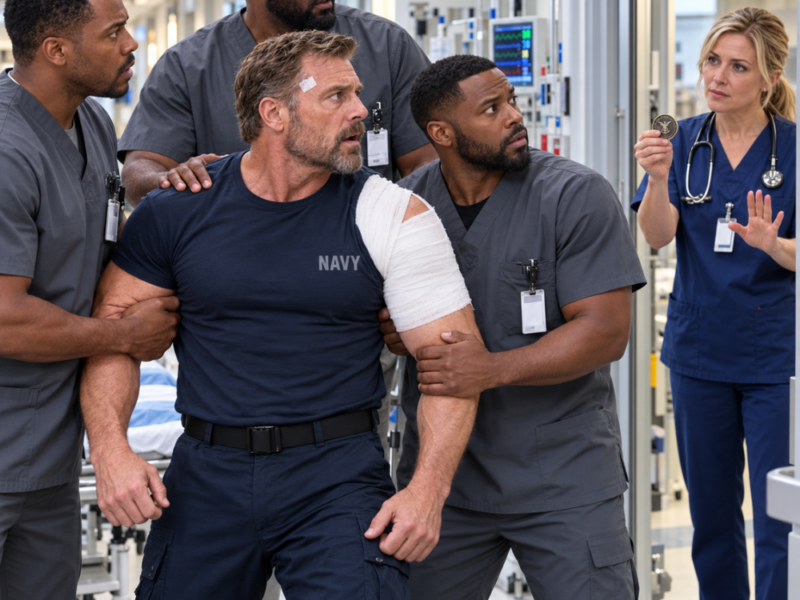
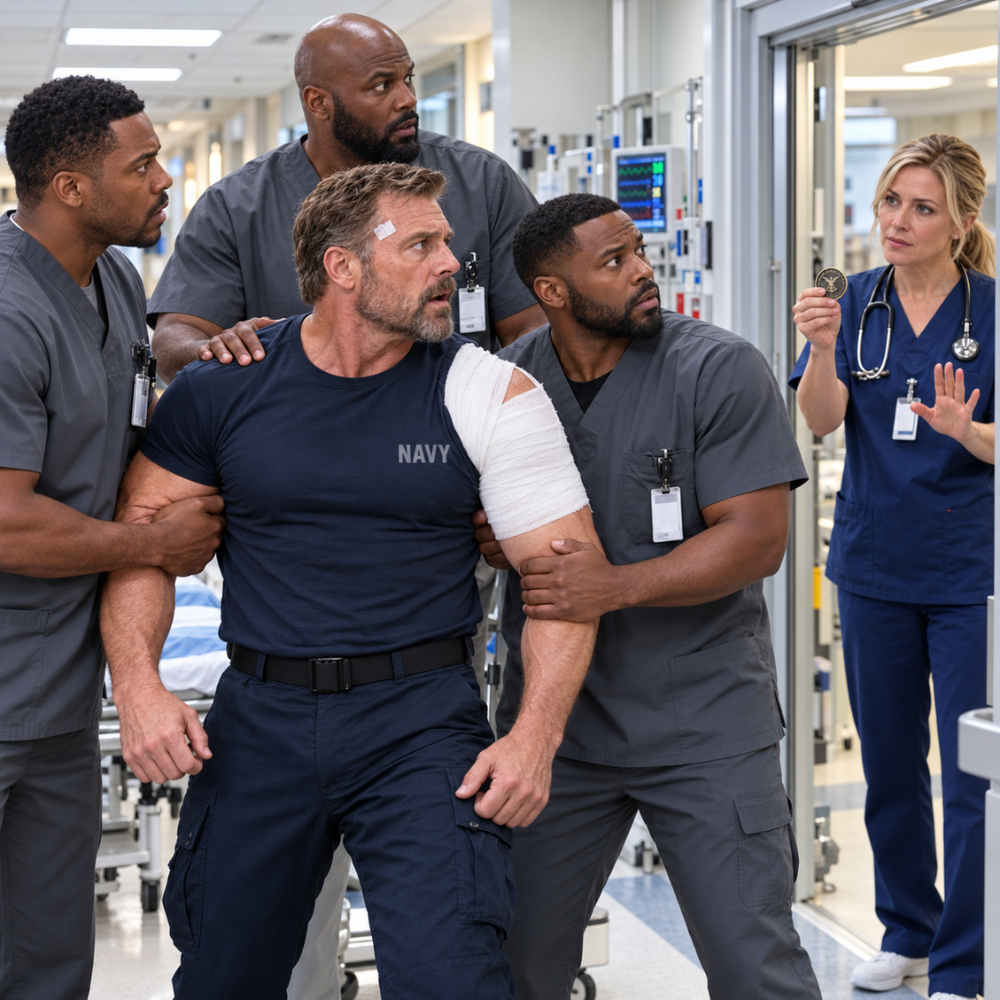
He came through the ambulance doors a few minutes after three in the morning, strapped to a rolling gurney, fighting every hand that reached toward him.
“Get off me.”
Two corpsmen tried to keep him from pulling loose the lines that had already been placed during transport.
“Sir, you’re at Naval Medical Center.”
“No.”
“Admiral, listen to me.”
“No.”
The wheels struck the threshold of Trauma Bay Two hard enough to rattle the metal tray beside the bed.
Dr. Preston Ellery raised his voice over the room.
“Move him across. I want the monitors on. Security, stay close.”
Kate Sullivan stood near the supply cabinet holding a sealed trauma pack.
She had worked the night shift in that department for three years.
Long enough to understand where everyone naturally stood when Dr. Ellery took control of a room.
Residents crowded closest.
Senior nurses took the opposite side of the bed.
Junior staff stayed wherever Ellery pointed.
Kate usually ended up somewhere near the wall.
That was partly because Ellery put her there.
Partly because she had learned to make being overlooked useful.
Her cobalt-blue scrubs were pressed even at three in the morning. Her dark hair was pulled into the same low knot she wore every shift. Her badge said only:
K. SULLIVAN, RN.
Most people called her Sullivan.
Grace Alvarez, the senior charge nurse on nights, called her Kate.
Nobody in the emergency department knew why several years were missing between the military nursing program listed on Kate’s résumé and her first civilian-style clinical posting.
Nobody had ever asked carefully enough.
That had suited Kate.
Until the admiral lifted one shaking hand and tapped three fingers twice against his palm.
Kate stopped breathing.
Once.
Twice.
Pause.
Again.
The gesture was small enough that nobody else noticed.
Dr. Ellery was concentrating on the monitor.
A resident was attempting to get Richard to answer orientation questions.
Security had moved into the doorway.
Kate watched the admiral’s hand.
The signal came again.
Three fingers.
Twice.
A pause.
Something she had not allowed herself to remember in years opened inside her.
Dust.
Darkness.
A radio whisper.
A vehicle tilted against rock.
A younger Richard Voss trying to remain conscious while Kate pressed both hands against a field dressing under a sky with no lights.
Her body recognized him before her mind accepted it.
“Ridgeline.”
The word left her quietly.
It still cut through the room.
Richard stopped fighting.
Not gradually.
Completely.
His head turned toward Kate’s voice.
His eyes were unfocused, but for the first time since entering the hospital, they stopped moving.
“Sable?”
The name hit Kate harder than hearing his had.
For several seconds, ten years disappeared.
Nobody else in Trauma Bay Two understood the exchange.
Dr. Ellery looked from the admiral to Kate.
“What did he call you?”
Kate did not answer.
Richard’s breathing was still too fast.
She set down the supply pack and stepped to the bedside.
Ellery blocked her with one arm.
“Sullivan, stay back.”
Richard’s hand tightened against the sheet.
Kate looked at him.
Not at the doctor.
“Ridgeline.”
His face turned toward her again.
“Look at me.”
He did.
“You’re in San Diego.”
His breathing hitched.
“You’re in a hospital.”
Another breath.
“No convoy.”
The hand on the sheet loosened slightly.
“No ridge.”
Another.
“No fire.”
Richard closed his eyes.
Kate lowered her voice.
“You’re stateside.”
The admiral swallowed.
“Safe?”
“Yes.”
It was the first time he appeared to believe anyone in the room.
Kate did not promise more than she knew.
“You’re inside Naval Medical Center. There are doctors here. You’re injured, but you’re here.”
Richard opened his eyes again.
“Sable.”
“I’m here.”
His shoulders dropped against the gurney.
The room changed with him.
Grace saw it first.
So did one of the corpsmen.
The entire trauma team had spent three frantic minutes trying to overpower Richard’s fear.
Kate had used one word.
Ellery stepped closer.
“Sullivan, what exactly are you doing?”
“Grounding him.”
“I can see that.”
His tone sharpened.
“How do you know him?”
Kate looked at the dressings already in place.
“Later.”
“I asked you a question.”
“And his pressure is falling.”
Ellery turned immediately toward the monitor.
The numbers confirmed it.
The room resumed moving.
Kate saw another problem.
One of the emergency dressings near Richard’s left side had shifted during the struggle. The material was saturated enough that continuing to wrestle with him could make the situation worse.
She reached for the supply tray.
Ellery stopped her again.
“Stay quiet and let the doctors work.”
Kate’s eyes lifted.
Three years of the same sentence in different forms came back at once.
Sullivan, restock Bay Four.
Sullivan, let the resident answer.
Sullivan, don’t complicate this.
Sullivan, you’re very good when you follow instructions.
Kate had accepted most of it.
Not because she believed Ellery was right about her.
Because for three years she had needed work that ended when the shift ended.
She wanted medication carts.
Inventory sheets.
Bad cafeteria coffee.
Ordinary codes with ordinary causes.
Nothing classified.
Nothing involving call signs.
Nothing where someone’s survival depended on remembering a radio frequency she was not allowed to discuss afterward.
She had built a small life around being only Nurse Sullivan.
Tonight that life had reached its limit.
“The dressing is failing.”
Ellery looked.
One of the residents did too.
Kate continued.
“He needs the attending focused on the bleeding, not whether he respects your authority.”
Ellery’s face changed.
Grace moved immediately to the supply tray.
“Kate, what do you need?”
That small question mattered.
Kate answered with standard hospital supplies.
Nothing exotic.
Nothing improvised beyond accepted emergency practice.
Grace passed them.
A resident repositioned.
Ellery took the lead again because legally and clinically that was his role.
Kate did not challenge that.
What she challenged was his refusal to hear useful information because of who had delivered it.
The difference mattered.
Richard watched her whenever his attention started drifting.
“Sable.”
“Still here.”
His hand found her wrist weakly.
“I thought…”
He lost the sentence.
Kate understood anyway.
“You were told I died.”
Richard’s eyes opened wider.
Ellery glanced toward them.
Kate said quietly:
“That story can wait.”
Richard looked at her for a long moment.
Then nodded.
The treatment team worked.
Minutes became twenty.
Then forty.
Richard stabilized enough for imaging and surgery consultation.
The immediate crisis narrowed.
Only then did Ellery turn toward Kate.
“What happened in here?”
Kate removed her gloves.
“An injured patient recognized me.”
“Do not do that.”
“Do what?”
“Answer a serious question like you’re correcting a chart.”
Grace busied herself at the counter, but Kate knew she was listening.
Ellery stepped closer.
“A rear admiral comes in from a classified military exercise. He arrives disoriented and combative. My staff nurse says one word I’ve never heard, and suddenly he follows her voice.”
Kate looked at him.
“Yes.”
“He calls you Sable.”
“Yes.”
“And you expect me not to ask?”
“No.”
“Then answer.”
Kate took a breath.
“I can’t discuss the full context on this floor.”
Ellery stared.
“You work on this floor.”
“Yes.”
“You work for this department.”
“I work for the hospital.”
“That distinction is not going to help you.”
Kate almost smiled.
“Probably not.”
Ellery’s irritation deepened.
“I need to know whether there is anything in your background relevant to patient safety that was not disclosed when you were hired.”
That question was legitimate.
Kate respected legitimate questions even when they came from people she disliked.
“My hiring review was completed through the proper military personnel channels.”
“That is not an answer.”
“It is the answer I can give right now.”
He pointed toward the trauma bay.
“That man just told me you outrank the clearance in the room.”
Kate shook her head.
“No.”
“What?”
“He was injured and under severe stress.”
She looked toward Richard.
“Do not build policy from something a traumatized patient said while losing blood.”
Grace turned slightly.
Kate continued.
“I do not outrank you medically. I do not control this hospital. I am an RN assigned to this department.”
Ellery seemed almost disappointed by the lack of drama.
“Then why did he say it?”
“Because he knows another part of my career.”
“What part?”
“I can’t discuss that here.”
Ellery folded his arms.
“You see the problem?”
“Yes.”
“What do you think the problem is?”
Kate looked directly at him.
“That you’re more interested in what I used to be than in why it took an old call sign for your patient to feel safe enough to let you treat him.”
Ellery’s jaw tightened.
Grace stopped pretending not to listen.
The corridor outside had begun filling.
Not with reporters or dramatic armed men.
Hospital administrators.
Military security.
An officer from the admiral’s staff.
Then two people in gray civilian suits who showed credentials quietly enough that the nearby corpsman immediately stepped aside.
Kate saw them.
The old tightness returned beneath her ribs.
One of the men was silver-haired, late fifties.
He looked at Kate once.
Then said:
“Ms. Sullivan.”
She knew him.
Director Nathan Hale.
Not personally in the ordinary sense.
Names in Kate’s previous life rarely meant friendship.
They meant chain of responsibility.
“Director.”
Ellery looked between them.
“So you do know her.”
Hale gave him a neutral glance.
“Yes.”
“In what capacity?”
“That discussion will occur with administration.”
Ellery laughed without humor.
“She is my employee.”
Hale did not react to the territorial wording.
“She is also a former federal defense employee whose prior service remains protected under continuing classification rules.”
The sentence traveled through everyone listening.
Grace’s eyes widened slightly.
Kate hated that.
Not because it was inaccurate.
Because the room had already begun changing how it saw her.
Ten minutes earlier, she had been Nurse Sullivan.
Now everyone was searching her face for the hidden person they had supposedly missed.
Kate wanted to tell them both versions were equally real.
The woman who restocked Bay Four was real.
So was Sable.
Neither canceled the other.
Ellery looked at Kate.
“You could have told us.”
Hale answered before she could.
“No.”
Ellery turned.
“What?”
“She could not have discussed protected operational details casually as part of normal workplace introductions.”
“I didn’t ask for operational details.”
“No.”
Hale remained calm.
“But your hospital was given every background verification it legally required at the time of her appointment.”
Ellery’s face tightened.
“Apparently not enough.”
Kate finally spoke.
“Enough for what?”
He looked at her.
“To know who is working in my trauma department.”
Kate felt something in herself settle.
“I have worked here three years.”
“That isn’t what I mean.”
“I know.”
She removed her badge clip and looked at it briefly.
K. Sullivan, RN.
“What exactly did you need to know?”
Ellery hesitated.
“That you had this level of experience.”
“For what?”
“So we could use it.”
There.
Not cruelty.
Something more revealing.
Utility.
Kate looked at him.
“I did not come here to be used for what I survived.”
Grace inhaled softly.
Ellery’s face changed.
Kate continued:
“I came here to be a nurse.”
Nobody spoke.
The second gray-suited official moved toward Hale and handed him a phone.
Hale listened briefly.
Then looked at Kate.
“Command wants a debrief when you’re medically and emotionally able.”
Kate almost laughed at emotionally able.
Ten years earlier, nobody had asked whether she was emotionally able to do anything.
The military had improved in certain ways.
Slowly.
Painfully.
“I’m still on shift.”
Hale looked toward Grace.
Grace checked the clock.
“Technically forty-eight minutes.”
Hale nodded.
“Then we’ll wait.”
Ellery’s eyebrows rose.
“You’ll wait?”
“Yes.”
“For a nurse shift?”
“Yes.”
Something about that bothered him even more.
Kate understood why.
Hierarchy was easiest when every institution shared the same ladder.
Tonight, several ladders had crossed.
Hospital medicine.
Military rank.
Federal security.
Nursing authority.
Patient autonomy.
Nobody fit neatly.
Richard Voss solved part of it from the trauma bay.
His voice was rough but audible.
“Kate.”
Everyone looked.
Not Sable.
Kate.
She stepped closer.
He had regained enough clarity to seem embarrassed by his earlier struggle.
“How bad?”
“Doctors will explain the details.”
His mouth twitched.
“Still careful.”
“Yes.”
“You always were.”
Ellery stepped in.
“Admiral, I need you resting.”
Richard turned his head toward the doctor’s voice.
“Then let me ask one question.”
Ellery stopped.
Richard looked toward Kate again.
“Did you save me twice?”
Kate sighed.
“You’re being dramatic.”
Grace covered a smile.
Richard almost laughed, then winced.
“Answer.”
“No.”
His brow furrowed.
“The first time, a team saved you.”
“And tonight?”
“A team.”
Richard nodded slowly.
“Still you.”
Kate leaned closer.
“You are going into surgery if they decide it is necessary. Do not spend your energy building legends.”
His eyes softened.
“Yes, ma’am.”
Ellery looked away.
Kate noticed.
The story of how Richard and Kate first met belonged to a world she had spent years trying not to carry into fluorescent hospital hallways.
A decade earlier, Richard had been a Navy lieutenant commander attached to a joint operation overseas.
Kate had been a military nurse with advanced field-trauma training temporarily assigned to a small interagency support team.
That description was true.
Also incomplete.
Her work placed her near people operating in remote environments where official medical infrastructure could disappear for hours at a time.
She was not an action hero.
She did not spend every day breaking down doors.
Most days involved planning.
Medical inventories.
Evacuation contingencies.
Communications.
Training younger medics.
Waiting.
Then there were nights when waiting ended.
One of those nights happened on a mountain route after a vehicle accident during an already dangerous movement.
Kate found Richard conscious but injured.
Another team member helped pull him from the vehicle.
The evacuation route changed.
Communications became intermittent.
Richard, determined to remain useful while obviously needing help, refused to admit how impaired he was.
Kate told him:
“You are the most stubborn ridgeline I have ever tried to move.”
He answered:
“You move like a sable.”
She hated the call sign immediately.
It stayed.
They spent hours together before extraction.
Not romantic.
Not sentimental.
A nurse and an officer trapped inside the same bad night.
Richard later wrote her name into a classified commendation.
Kate never read it.
Months afterward, she transferred to another assignment.
Then another.
An incident during her final year left two friends dead and Kate badly injured.
The official investigation protected operational details.
Kate went through rehabilitation.
Then quietly resigned from the work that had defined most of her twenties.
She returned to ordinary nursing because ordinary had become precious.
At first, San Diego felt almost absurdly safe.
Emergency rooms were not calm.
But they were honest about being emergency rooms.
A drunk sailor knew where he was.
A child with appendicitis had parents in the waiting area.
A chest-pain patient had a name on the board.
The floor did not shake from distant explosions.
Nobody whispered call signs over encrypted radios.
Kate loved medication reconciliation.
She loved whiteboards.
She loved that when equipment failed, someone opened a work order.
She loved being annoyed by missing IV pumps.
For the first year, she sat in her car after every shift because her body refused to understand that going home was allowed.
Grace found her once.
Parking garage.
Engine off.
Hands on the steering wheel.
“You okay?”
Kate looked over.
“Yes.”
Grace stood outside the driver’s window.
“That was a very military yes.”
Kate smiled weakly.
“I’m fine.”
“Different word. Same lie.”
Kate looked down.
Grace did not ask further.
The next night there was a coffee on Kate’s workstation.
No note.
That became their friendship.
Grace noticed details.
Kate never flinched at shouting patients but startled when someone approached silently from behind.
She could organize disaster supplies faster than the inventory computer.
She always chose the chair facing the emergency department entrance during breaks.
She hated fireworks.
She slept badly around certain anniversaries.
Grace never demanded the story.
Kate trusted her because of that.
Dr. Preston Ellery did not notice any of it.
He noticed performance.
Kate never made medication errors.
Never missed charting.
Rarely called out.
Handled emergencies without losing composure.
To Ellery, that made her useful.
But because Kate did not speak like a resident or compete for attention, he treated her clinical judgment as narrower than it was.
He was not uniquely cruel.
That made the problem harder.
Ellery was brilliant in trauma medicine.
Patients survived because of him.
Residents learned from him.
He donated weekends to disaster-response training.
He also carried an assumption common in hierarchical workplaces:
Expertise entered the room wearing certain titles.
When expertise wore cobalt scrubs and remained quiet, he often overlooked it.
Kate had tolerated that too long.
The morning after Richard’s arrival, hospital leadership convened a formal review.
Not of Kate’s secret career.
Of what happened clinically.
Rear Admiral Voss had stabilized enough for surgery and later ICU monitoring.
Hospital command wanted to know why the trauma bay became disorganized before Kate intervened.
Ellery entered the conference room irritated.
Kate entered exhausted.
Grace came as charge nurse.
Hale attended only for the portions concerning protected background information.
Captain Joanna Reyes, the hospital’s chief nursing officer, sat at the head of the table.
“Before we begin,” Reyes said, “this is not a disciplinary hearing.”
Ellery folded his arms.
“Then what is it?”
“A clinical process review.”
“An injured VIP became combative.”
“Yes.”
“We managed it.”
Reyes looked at him.
“Eventually.”
Ellery’s jaw tightened.
Reyes continued.
“Admiral Voss entered in severe distress. Multiple staff interpreted his behavior as simple noncompliance.”
“He was pulling lines.”
“Yes.”
“He could have worsened his injuries.”
“Yes.”
“Then restraint was appropriate.”
“Possibly.”
Ellery looked frustrated.
“What exactly are we debating?”
Reyes turned toward Kate.
“What did you see?”
Kate took a breath.
“His hand.”
“Explain.”
“He used a grounding signal I recognized from prior field experience.”
Hale glanced toward her.
Kate kept details general.
“It indicated he was orienting to a past environment rather than understanding the present room.”
Reyes nodded.
“What happened after you used the call sign?”
“He recognized a familiar reference.”
“And?”
“His agitation decreased enough to allow normal treatment.”
Reyes looked at Ellery.
“Why wasn’t anyone trying verbal orientation before physical escalation?”
Ellery answered immediately.
“They were.”
“Using his name and location.”
“Yes.”
Kate said:
“That wasn’t reaching him.”
Ellery turned.
“You had unique information nobody else had.”
“Yes.”
“Then this is not a general process failure.”
Reyes looked at him.
“No?”
“No.”
Ellery pointed toward Kate.
“She had a relationship with the patient.”
Kate corrected:
“Prior operational familiarity.”
“Fine.”
He continued.
“She used an old call sign. Nobody else could have done that.”
Reyes nodded.
“True.”
Ellery seemed relieved.
Then Reyes continued:
“But Sullivan also identified a failing dressing and falling pressure before the resident assigned to that side of the bed did.”
Ellery looked at the paperwork.
“Timing.”
Grace spoke.
“I saw it too.”
Everyone turned.
Grace continued:
“Kate said it first.”
Ellery’s face tightened.
Reyes asked:
“What did you do?”
Grace answered:
“Passed supplies because it was clinically appropriate.”
“Did Dr. Ellery initially direct Kate away?”
“Yes.”
“Why?”
Ellery answered:
“Because I needed structure.”
Kate looked at him.
Reyes asked:
“Was Sullivan creating disorder?”
Ellery hesitated.
“No.”
“Was she performing outside nursing scope?”
Another pause.
“Not at that moment.”
Reyes looked toward the notes.
“Then why remove the person providing useful information?”
Silence.
Kate did not enjoy it.
She had spent too many years on the receiving end of public correction to enjoy watching someone else trapped there.
Ellery finally said:
“Because she was overriding my communication.”
“Was she?”
“Yes.”
Kate spoke.
“I was contradicting you.”
He looked at her.
“That is not the same thing.”
The room became quiet.
Kate continued.
“You were leading the trauma response. I was telling you something in your assessment was wrong.”
Ellery’s eyes narrowed slightly.
“And you believe nurses should challenge attendings in front of residents.”
“When patient safety requires it.”
Reyes nodded.
“So does hospital policy.”
Ellery looked toward her.
Reyes slid a document across the table.
“Stop-the-line authority applies to any staff member who identifies immediate safety concern.”
“I know the policy.”
“Then why does using it sound to you like insubordination?”
That question remained unanswered.
Hale spoke only after the clinical portion ended.
“Regarding Ms. Sullivan’s prior service, hospital credentialing was completed correctly.”
Ellery looked at him.
“Then why wasn’t leadership informed?”
“Because leadership did not need operational details.”
“She had advanced field-trauma experience.”
Kate interrupted:
“I did not claim specialist privileges based on that experience.”
Hale nodded.
“Correct.”
Ellery looked frustrated.
“You could have been teaching.”
Kate laughed softly.
He looked at her.
“What?”
“You keep turning my past into a resource you were denied.”
Ellery stopped.
Kate continued:
“I left that work.”
“Why?”
“That is personal.”
He shook his head.
“Everything with you is protected or personal.”
Grace looked uncomfortable.
Kate did not.
“No.”
She answered calmly.
“My medication certifications aren’t.”
“My RN license isn’t.”
“My performance evaluations aren’t.”
“My competencies aren’t.”
“My attendance isn’t.”
“My patient outcomes aren’t.”
She looked directly at him.
“You had three years of information about the nurse standing in front of you.”
The room went still.
“You decided that wasn’t enough because now you know there was a more impressive story hidden behind it.”
Ellery’s expression shifted.
Kate continued:
“I needed you to listen to Nurse Sullivan.”
A pause.
“Not discover Sable.”
That became the most important sentence of the review.
The hospital did not fire Ellery.
Some staff privately expected it.
That would have been simpler.
Leadership found no evidence he deliberately endangered Richard.
His decisions were medically defensible within the information he initially had, though his communication and dismissal of nursing input contributed to unnecessary escalation.
He received a formal performance intervention.
Trauma-team communication training.
Mandatory multidisciplinary simulation.
Leadership coaching.
He hated all three.
That was not a reason to avoid them.
The hospital also reviewed whether nurses felt safe challenging physicians.
The anonymous survey was ugly.
Not because doctors were universally disrespectful.
Because enough people said things like:
Depends on which doctor.
Depends on how busy.
Depends on whether residents are watching.
Depends on whether you want your next schedule approved.
That was not a healthy safety culture.
Captain Reyes treated it as an operational problem.
Not a personality problem.
She changed simulation training.
Residents and attendings were required to practice scenarios where nurses, corpsmen, or technicians recognized something first.
Not always correctly.
That mattered.
Sometimes the nurse challenged and was wrong.
The goal was not to teach that nurses should win.
It was to teach that being challenged should trigger review rather than punishment.
The first simulation Ellery attended was brutal.
Not medically.
Emotionally.
A junior corpsman stopped him during a mock trauma because the patient identifier did not match the medication order.
Ellery knew it was a training setup.
Still, irritation appeared instantly.
The facilitator paused.
“There.”
Ellery frowned.
“What?”
“That reaction.”
“What reaction?”
“The one that makes people decide whether to speak again next time.”
Everyone in the room became painfully interested in their shoes.
Ellery crossed his arms.
Then uncrossed them.
He looked at the corpsman.
“Say it again.”
The young man did.
Ellery checked.
In the scenario, the corpsman was right.
Ellery exhaled.
“Good catch.”
It sounded mechanical.
The facilitator nodded.
“Again.”
They repeated the whole scenario.
The second time, Ellery did better.
That was change.
Not redemption.
Practice.
Richard remained hospitalized for several weeks.
His injuries were serious but survivable.
Kate visited only when invited.
That distinction mattered to both of them.
On the fourth day, Richard was sitting propped up in bed with one arm immobilized and an untouched bowl of oatmeal near him.
He looked at Kate.
“You still hate oatmeal.”
“I have never liked it.”
“Field packets changed your standards.”
“Nothing changes oatmeal.”
Richard smiled.
Then grew quiet.
“I really thought you died.”
Kate sat beside the window.
“I know.”
“I attended a memorial.”
She looked over.
“What?”
“Not public.”
He swallowed.
“Seven names read. Yours included.”
Kate felt old pressure behind her ribs.
The aftereffects of protected identities were strange.
People could grieve a version of you while you were alive somewhere else buying groceries.
“I’m sorry.”
Richard shook his head.
“No.”
“You didn’t control that.”
“I agreed to remain inactive.”
“For a reason.”
“Yes.”
“What happened?”
Kate looked toward the harbor visible beyond the hospital windows.
“You know I can’t give details.”
“I’m not asking details.”
He waited.
“What happened to you?”
That was different.
Kate considered.
“I stopped believing I could do the work without becoming only the work.”
Richard nodded slowly.
She continued.
“I was good at functioning.”
“I remember.”
“Too good.”
He frowned.
Kate looked at him.
“People think the dangerous moment is when someone falls apart.”
She shook her head.
“Sometimes the dangerous moment is when they can keep going forever.”
Richard listened.
Kate continued:
“I stopped sleeping.”
“I stopped answering friends.”
“I could work twenty hours and feel nothing.”
“Then I’d sit in a grocery store parking lot and forget why I’d driven there.”
Richard looked down.
“No one knew?”
“Some did.”
“And?”
“I said I was fine.”
He almost laughed.
“That was your favorite lie.”
“Yes.”
She smiled faintly.
“Eventually the agency offered a medical separation.”
“And you took it.”
“Yes.”
“Then nursing.”
“Eventually.”
Richard looked at her badge.
“K. Sullivan.”
“Yes.”
“What happened to Catherine?”
Kate froze.
He remembered.
Her full first name.
Only her mother used it now.
“She became Kate.”
“That simple?”
“No.”
He smiled.
“Nothing with you ever was.”
They sat quietly.
Then Richard said:
“You saved my life on that mountain.”
Kate shook her head.
“Don’t start.”
“And you helped save it here.”
“A trauma team saved you here.”
“You always hated praise.”
“I hate inaccurate attribution.”
“That sounds worse.”
She smiled.
Richard became serious.
“I need to tell you something.”
“What?”
“I called you Sable because I was scared.”
“I know.”
“No.”
He looked at her.
“I wasn’t remembering rank or clearances.”
“I know.”
“I remembered the one person who had once told me I was safe and been right.”
Kate’s throat tightened.
That was the first time she had to look away.
When Hale returned on Richard’s fifth day, he brought a proposal.
Not an order.
That alone showed how much the defense community had changed since Kate left.
They met in a hospital conference room.
Grace came because Kate asked her to.
Hale opened a folder.
“Medical training liaison.”
Kate stared at him.
“No.”
He smiled.
“I haven’t explained it.”
“You brought a folder.”
“Reasonable concern.”
Grace hid a laugh.
Hale continued.
“Stateside position.”
“Mostly?”
“Completely unless you voluntarily deploy for training evaluation, which is not a current requirement.”
Kate looked at the first page.
Training military medics and nurses who might be assigned to austere environments.
Trauma decision-making.
Stress response.
Cross-discipline communication.
Transition support for personnel returning from high-intensity assignments.
The last line caught her.
RETURN-TO-PRACTICE AND IDENTITY TRANSITION.
Kate looked up.
“That wasn’t part of the old program.”
“No.”
“Why now?”
“Because we lost too many good people between categories.”
She frowned.
Hale continued.
“They leave operational service.”
“They aren’t sick enough for inpatient treatment.”
“They are too functional to trigger concern.”
“They take ordinary jobs and pretend everything before disappeared.”
Grace looked toward Kate.
Hale said:
“We’re trying to stop assuming functional means fine.”
Kate closed the folder.
“You want me because of Voss.”
“Partly.”
“That is not enough.”
“No.”
Hale leaned back.
“We want you because you understand both sides.”
“Field medicine and hospital nursing?”
“That.”
He paused.
“And disappearance.”
Kate did not answer.
Hale did not pressure.
“Think about it.”
“I have a job.”
“Yes.”
“I like my job.”
“Then keep it.”
Kate looked suspiciously at him.
Hale smiled.
“We can build a part-time liaison arrangement.”
Grace spoke for the first time.
“Take that.”
Kate looked at her.
Grace shrugged.
“I’m selfish.”
“How?”
“You train people somewhere else and still work here enough that I don’t have to orient another night nurse who stores saline wrong.”
Kate laughed.
Hale closed his folder.
“No answer tonight.”
“Good.”
After he left, Grace looked at her.
“You’re considering it.”
“I hate you.”
“Considering it.”
“Yes.”
Grace nodded.
“Good.”
Kate looked through the glass toward Trauma Bay Two.
“I’m scared.”
Grace’s expression softened.
“Of what?”
“That if I open that door again, all of it comes back.”
Grace thought.
“Maybe.”
“That is terrible support.”
“I’m a nurse, not a greeting card.”
Kate smiled.
Grace continued:
“But maybe you don’t open the old door.”
“What then?”
“Build another one.”
Kate remembered that sentence for years.
Ellery apologized on a Thursday at 5:40 in the morning.
No audience.
No administrators.
No federal officials.
The emergency department was briefly quiet.
Kate stood at the workstation finishing a chart.
Ellery approached.
He stopped on the other side of the desk.
“You were right.”
Kate continued typing.
“About?”
He almost smiled.
“That is cruel.”
She looked up.
Ellery took a breath.
“I treated your quietness as a lack of authority.”
Kate waited.
“I thought because you didn’t compete for space, you had less to contribute.”
Still nothing.
“I also thought being responsible for the room meant I needed to be the person least questioned in it.”
Kate looked at him.
“That’s the dangerous part.”
“Yes.”
He nodded.
“I know now.”
She tilted her head.
“Know or understand?”
Ellery looked annoyed.
Then caught himself.
“Working on understanding.”
“Better.”
He exhaled.
“I’m sorry.”
Kate studied him.
“For Voss?”
“For you.”
That distinction mattered.
“For three years?”
“Yes.”
Kate nodded.
“Thank you.”
Ellery looked almost disappointed.
“That is all?”
“What do you want?”
“I don’t know.”
“Forgiveness?”
“No.”
He paused.
“Maybe.”
Kate considered.
“I don’t know yet.”
That answer surprised him.
She continued:
“But you don’t need forgiveness to change how you treat the next nurse.”
Ellery nodded.
“No.”
He walked away.
The next month, a first-year nurse named Molly Chen questioned Ellery during a trauma admission.
“Dr. Ellery, I think the dosage was entered in the wrong weight unit.”
Ellery looked at the screen.
His first reaction appeared.
Irritation.
Kate saw it.
So did he.
He stopped.
“Show me.”
Molly did.
She was wrong.
The order was correct.
Her face flushed.
“Sorry.”
Ellery shook his head.
“No.”
He looked at her.
“You checked.”
Then, after half a second:
“Do it again next time.”
Molly smiled.
Kate returned to her chart.
Nothing dramatic.
No one applauded.
That was exactly why it mattered.
Richard returned to duty gradually.
Not immediately.
His recovery included physical rehabilitation, sleep problems, and several weeks when sudden noises pulled him halfway back into the training accident.
He disliked the language of trauma.
Kate told him to get over that.
“You know what happens when people in uniform think symptoms are insults?”
Richard looked at her.
“They hide them.”
“Yes.”
“You’ve become annoying.”
“I’ve always been annoying.”
“True.”
He started therapy through military behavioral health.
Not because Kate ordered him.
Because she told him she had.
That mattered more.
Richard had spent years believing officers protected their people by being visibly unbreakable.
Kate told him:
“People below you learn what is permitted by watching what you admit.”
He hated the sentence.
Then repeated it at a leadership meeting.
He never credited her.
She complained.
“You stole that.”
“Operational necessity.”
She laughed.
Their old friendship became ordinary in a way neither expected.
Coffee when Richard had appointments.
Occasional text messages.
No classified reminiscing.
No dramatic bond that required constant contact.
They had lived through one bad night together.
Then another.
That did not obligate them to turn their entire lives into a monument to survival.
Kate eventually accepted Hale’s liaison proposal.
Two days a week.
Sometimes three.
She remained at Naval Medical Center part-time for the first two years.
Her first training class contained twelve medics, five nurses, two physicians, and one psychologist.
The group expected stories.
Kate gave them none.
She began with a scenario.
A patient arrives injured, confused, and physically resistant.
“What do you see?”
One medic answered:
“Danger to himself.”
“Good.”
A nurse said:
“Possible hypoxia.”
“Good.”
A physician:
“Pain, head injury, intoxication, medication reaction.”
“Good.”
Kate wrote each on the board.
Then:
“What else?”
Silence.
Finally the psychologist said:
“He may not know where he is.”
Kate nodded.
“Good.”
She turned.
“Now tell me what happens when everybody in the room treats behavior before trying to understand the source.”
The class went quiet.
That became the work.
Not teaching secret field tricks.
Teaching people to think wider under pressure.
Kate demonstrated standard clinical grounding.
Clear language.
One speaker at a time.
Orientation.
Explaining touch before touch whenever possible.
Recognizing when restraint was necessary and when escalating bodies around a frightened patient might make things worse.
Then she taught leadership.
Not rank.
Leadership.
“If the newest person in the room sees something you don’t, what do you want them to do?”
“Speak.”
Kate nodded.
“What makes them actually do it?”
Silence.
A medic answered:
“Knowing we won’t punish them.”
“Yes.”
She pointed toward him.
“That is culture.”
Her prior identity never became the center of the course.
People still whispered.
Sable.
Some trainees wanted to hear the legendary story.
Kate refused.
“Your patients will not care about my biography.”
One asked:
“Then why does everyone say you were special operations?”
Kate smiled.
“Everyone says many things.”
“Were you?”
“Today we’re talking about pelvic stabilization.”
The class groaned.
Kate enjoyed that.
Her federal clearance remained active for limited training access.
But she never returned to the kind of work she once did.
That distinction mattered to her healing.
She did not need to become Sable again to prove Sable had been real.
She could keep parts.
The calm.
The training.
The clinical judgment.
The ability to notice fear beneath aggression.
Other parts could stay closed.
The names of certain places.
Faces.
Losses.
She did not owe the public a complete version of herself.
Neither did she owe coworkers one.
Three years after Richard’s admission, Grace retired from active hospital nursing.
The emergency department held a lunch.
Someone ordered a Costco sheet cake because Grace had specifically requested “nothing fancy.”
The bakery wrote:
HAPPY RETIRMENT GRACE
Grace stared at the missing E.
“Perfect.”
Ellery said:
“We can fix it.”
“No.”
Grace slapped his hand away from the icing.
“Do not alter evidence.”
Kate laughed hard enough to cry.
Grace handed Kate a small box before leaving.
Inside was a key chain.
One side said:
K. SULLIVAN, RN.
The other:
LOUD WHEN NECESSARY.
Kate looked at her.
“This is terrible.”
“I know.”
“You spent money on this?”
“Eight dollars.”
“Too much.”
Grace hugged her.
“Don’t disappear.”
Kate stiffened slightly.
Grace felt it.
Then corrected:
“Sorry.”
Kate looked at her.
Grace continued:
“Do whatever you want.”
Kate smiled.
“Better.”
Grace retired to Arizona and spent the next several years sending Kate photographs of desert sunsets and complaints about neighborhood HOA rules.
Their friendship survived distance because nobody treated frequency as proof of love.
Months could pass.
Then Grace would text:
Ellery still arrogant?
Kate:
Improved.
Grace:
Disappointing.
Ellery did improve.
Not perfectly.
He remained demanding.
Still liked control.
Still gave instructions too quickly when stressed.
But he learned something that made him a better trauma chief.
He began asking nurses at the end of difficult cases:
“What did I miss?”
At first, nobody answered.
They thought it was rhetorical.
So Ellery started waiting.
Ten seconds.
Twenty.
Eventually someone spoke.
A supply issue.
A communication problem.
A resident who could not hear an instruction.
A family member left without update.
Then another person.
The department slowly learned the question was real.
Hospital incident reports began showing more near misses.
Administration worried.
Captain Reyes said:
“Good.”
A quality officer frowned.
“More errors are being reported.”
“No.”
Reyes corrected.
“More errors are being described.”
That was healthier.
Kate saw the same principle everywhere now.
Trauma recovery.
Organizational learning.
Relationships.
Silence created false cleanliness.
She had spent years appearing clean.
Steady hands.
Perfect charts.
No complaints.
Nobody knew she woke twice a week at three in the morning.
Nobody knew she kept a chair against her apartment bedroom wall for the first six months after leaving service.
Nobody knew she avoided the Fourth of July by driving inland with headphones.
Functioning had become her camouflage.
Hale’s program required instructors to receive counseling support themselves.
Kate initially resisted.
“I already did therapy.”
The program psychologist, Dr. Mara Bennett, smiled.
“Past tense?”
“Yes.”
“Trauma appreciates administrative closure.”
Kate stared.
Mara continued:
“You will be teaching young medics who may remind you of people you lost.”
Kate looked away.
“You need somewhere to put that.”
The phrasing bothered her.
“Put it?”
“Process it. Curse at it. Ignore it for forty minutes. Come back next week.”
Kate smiled despite herself.
She returned.
Therapy in her forties felt different from therapy in her thirties.
The first time, Kate wanted symptoms gone.
Now she wanted a bigger life around them.
She dated occasionally.
Stopped whenever things became too close.
Mara asked why.
Kate said:
“Relationships are inconvenient.”
“True.”
“Then why are you looking at me like that?”
“Because you sound relieved when one ends.”
Kate hated her.
Eventually she met Aaron Mills, a physical therapist who worked with injured service members.
Not dramatic.
He did not discover Sable.
He met Kate Sullivan.
She spilled coffee on his discharge paperwork.
He called her handwriting criminal.
She told him physical therapists enjoyed making people suffer.
They had dinner.
Then another.
Kate told him about her prior work six months later.
Not details.
Enough.
Aaron said:
“Okay.”
Kate stared.
“What?”
“You had a classified military job.”
“Yes.”
“And trauma.”
“Yes.”
“And you thought I would…”
He waited.
“I don’t know.”
“Be impressed?”
“No.”
“Scared?”
“Maybe.”
Aaron thought.
“I’m a little scared of your spice cabinet.”
Kate laughed.
That was the beginning.
He never asked for stories Kate could not tell.
He did ask why she sometimes stood near exits.
Why she hated being approached from behind.
Why she woke and checked doors.
Kate answered when she wanted.
Sometimes she said:
“Not tonight.”
Aaron said:
“Okay.”
That word became another form of safety.
Richard Voss retired from the Navy at fifty-eight.
At his retirement ceremony, he invited Kate.
She almost did not go.
Too many uniforms.
Too much ceremony.
Then Richard wrote:
No call signs. No legends. Just coffee afterward.
Kate went.
During his speech, Richard thanked hundreds of people.
Mentors.
Sailors.
Family.
Medical teams.
At the end, he said:
“Leadership is often described as knowing what to do.”
Kate looked up.
Richard continued:
“I learned too late that sometimes leadership is recognizing who else knows.”
He did not name her.
Kate preferred it.
Afterward, over coffee, she said:
“You stole another line.”
Richard smiled.
“Retired. No jurisdiction.”
“Terrible.”
He grew serious.
“You know why I didn’t name you.”
“Yes.”
“I wanted to.”
“I know.”
“But?”
“It would’ve turned your lesson into my biography.”
Richard nodded.
“Exactly.”
He had learned.
Years later, Kate’s liaison program expanded into a permanent Defense Medical Transition and Readiness Center.
The name was terrible.
Everybody agreed.
Its work was good.
Austere-environment medical training.
Return-to-hospital pathways.
Peer support for medics leaving high-intensity roles.
Leadership education.
Programs helping people translate specialized military skills into civilian medical careers without requiring them to tell stories they were not ready or allowed to tell.
Kate became clinical director.
She still worked one hospital shift every few weeks because she refused to become a person who taught care without providing any.
The newer nurses usually knew who she was now.
That created a different problem.
They deferred too much.
A young nurse once said:
“You probably know better.”
Kate stopped.
“No.”
“But—”
“Show me the chart.”
They looked together.
The young nurse was right.
Kate had missed a medication interaction.
“Good catch.”
The nurse flushed.
“I thought I was probably wrong.”
“You will often be wrong.”
“That isn’t encouraging.”
Kate smiled.
“So will I.”
She corrected the order through the appropriate physician.
Then documented it.
Being respected was useful.
Being unquestioned was dangerous.
Kate had learned that from both sides.
At fifty, she spoke at a national military nursing conference.
The organizer wanted to introduce her using the old call sign.
Kate said no.
“What should we say?”
“Kate Sullivan, RN.”
“That’s all?”
“Clinical director.”
“People will want the background.”
“They can want.”
The organizer gave in.
Kate stood before six hundred nurses and began:
“The night Rear Admiral Voss arrived at my hospital, everyone thought the surprising thing was that I knew his call sign.”
The room quieted.
“That was not the surprise.”
She paused.
“The surprise was that I had worked beside those people for three years and they needed a call sign before they believed my judgment might extend beyond what they assumed from my title.”
She let that settle.
“Do not romanticize hidden expertise.”
She looked across the hall.
“If someone only becomes worth hearing after you discover a dramatic résumé, you have built the wrong culture.”
That line traveled farther than she expected.
Military newsletters.
Nursing journals.
Leadership courses.
Kate disliked seeing it attributed to “Sable.”
She corrected anyone who asked.
“Kate.”
No shame in Sable.
No need to live under it forever.
The story of Richard’s admission grew anyway.
Stories always did.
In some versions, Kate personally performed surgery.
False.
In others, she overruled a room full of admirals.
Nonsense.
One internet article claimed she was a former intelligence operative who had secretly infiltrated hostile compounds.
Kate read three sentences and closed it.
Aaron found her laughing.
“What?”
“Apparently I’m Batman.”
“Finally.”
“You knew?”
“I married you for the cape.”
She threw a dish towel at him.
Marriage came at forty-six.
City Hall.
Grace flew in from Arizona.
Richard attended.
Hale sent flowers and did not attend because Kate did not invite him.
That was healthy.
Ellery came to dinner afterward.
The seating arrangement accidentally placed him beside Grace.
Grace spent two hours reminding him of every terrible thing he had ever said to a nurse.
Ellery survived.
At dessert, Aaron asked Kate:
“Happy?”
She looked around.
Small restaurant.
Friends.
No classified names.
No uniforms except Richard’s retired service pin.
“Yes.”
It startled her how easily the answer came.
Her old life did not vanish after marriage.
She still woke from dreams sometimes.
One involved the mountain road.
Another the hospital trauma bay.
Some nights she heard Richard say Sable and woke with her heart racing.
Aaron learned not to grab her.
He said:
“Kate.”
Waited.
Then she decided whether she wanted touch.
That was another thing Kate eventually taught in trauma-informed care:
Help should not become another surprise.
A person in distress may need support.
Support can still ask permission whenever the situation allows.
The principle sounded simple.
People forgot it under pressure.
Kate did too.
Once, during a training simulation, a young medic froze after a loud crash sound effect.
Kate immediately took his arm.
He pulled away.
She stopped.
“I’m sorry.”
The medic looked embarrassed.
“No, ma’am.”
“No.”
Kate released him fully.
“I touched you without warning.”
She reset the exercise.
Afterward, one instructor told her:
“You didn’t need to make that a big deal.”
Kate disagreed.
“Small corrections are how you avoid needing big ones.”
That became another line people stole.
She accepted defeat.
Dr. Preston Ellery retired before Kate did.
His final week, he came into the emergency department at night carrying a box.
Kate was reviewing charts.
“What is that?”
“My office.”
“You fit twenty-seven years of ego in one box?”
He looked offended.
Grace would have been proud.
Ellery set it down.
“I wanted to say goodbye.”
“You have a retirement ceremony Friday.”
“I know.”
“Then why tonight?”
He looked toward Trauma Bay Two.
“Quieter.”
Kate followed his gaze.
The bay had been remodeled twice since Richard arrived.
New monitor.
Different cabinet.
Same approximate space.
Ellery said:
“I’ve told the Voss story for years.”
Kate frowned.
“You better not be giving protected details.”
“No.”
He smiled.
“I tell residents I nearly made a serious situation worse because I confused command with control.”
Kate studied him.
“That is accurate.”
“You always know exactly how to make a compliment unpleasant.”
“I try.”
Ellery became serious.
“I owe you more than the apology I gave.”
“No.”
He looked surprised.
Kate continued.
“You changed.”
“Some.”
“That is what an apology is supposed to become.”
Ellery nodded.
They stood quietly.
Then he said:
“I did ask for your opinion eventually.”
“After a rear admiral humiliated you.”
“Yes.”
“Late.”
“Yes.”
Kate smiled.
“Still counts.”
Ellery picked up his box.
At the door, he stopped.
“Kate?”
“Yes?”
“You were a very good nurse before I knew anything else.”
She looked at him.
For reasons she did not expect, that was the sentence that nearly made her cry.
“Thank you.”
He left.
Years passed.
Richard died at seventy-two after a brief illness unrelated to the trauma that reunited them.
Kate attended the funeral.
He had requested no classified anecdotes.
His children spoke.
His wife.
Former sailors.
One grandson who cried halfway through a story about a fishing trip.
Kate sat in the middle of the church.
No special seat.
At the reception afterward, Richard’s daughter approached.
“Ms. Sullivan?”
“Kate.”
She smiled.
“Dad left something.”
A small envelope.
Inside was an old card.
No classified information.
Only two handwritten words:
RIDGELINE / SABLE.
Below them:
We got home.
Kate stared.
Richard’s daughter said:
“He kept that in his desk.”
Kate looked at her.
“Did you know what it meant?”
“No.”
“He said I didn’t need to.”
Kate smiled through tears.
“He was right.”
She kept the card.
Not displayed.
In a drawer beside old photographs.
Some memories did not need explaining to remain real.
At sixty-two, Kate stepped down as clinical director.
She continued teaching quarterly.
The center held a farewell lunch.
No ceremony if Kate could help it.
She could not.
Grace attended with white hair and the same sharp voice.
Aaron sat beside her.
Several former trainees flew in.
One was now a trauma surgeon.
Another led a rural emergency department.
One had left medicine entirely and become a teacher.
Kate considered that a success too.
Hale was gone by then.
Retired somewhere private.
He sent a letter.
No dramatic praise.
Only:
Thank you for proving transition does not have to mean disappearance.
Kate folded it.
Grace watched.
“You going to cry?”
“No.”
“Liar.”
Kate laughed.
During the lunch, a young nurse asked:
“What is the biggest thing you learned from all that work?”
Kate looked around.
People expected something about courage.
Combat.
Medicine.
Leadership.
She said:
“That quiet people are not necessarily okay.”
The room changed.
Kate continued:
“And loud people are not necessarily dangerous.”
She looked toward a table of trainees.
“Behavior is information.”
A pause.
“Not a verdict.”
That was the principle she had spent decades learning.
Richard fighting the gurney had looked dangerous.
He was terrified.
Kate’s silence had looked obedient.
She was carrying a past nobody saw.
Ellery’s authority had looked certainty.
Underneath it was fear of losing control.
Grace’s nosiness had looked intrusive.
It was care.
Hale’s classified folder had looked impressive.
It could not explain whether Kate was healthy enough to use the skills inside it.
People were always more complicated than the first label.
Medicine needed to remember that.
So did institutions.
So did families.
After retirement, Kate and Aaron moved into a small house near Point Loma.
Nothing grand.
Two bedrooms.
A little lemon tree.
A porch just wide enough for chairs.
Kate walked to the grocery store some mornings.
She volunteered twice a month at a clinic serving veterans and military families.
No title on the wall.
Just:
KATE SULLIVAN, RN, RET.
Sometimes a patient recognized the name.
“Are you Sable?”
Kate usually smiled.
“Today I’m Kate.”
That was enough.
One afternoon, a twenty-three-year-old former combat medic came into the clinic for blood-pressure follow-up.
He sat with his back to the wall.
Eyes toward the door.
Answered every question with:
Fine.
Kate finished the medication review.
Then asked:
“You sleeping?”
“Fine.”
She looked at him.
He smiled faintly.
“Bad answer?”
“Familiar.”
He looked away.
Kate did not ask what happened overseas.
She did not tell her story.
She said:
“You don’t have to explain everything to get help with one thing.”
He looked back.
“What?”
“Sleep.”
Silence.
Then:
“No.”
“What?”
“I’m not sleeping.”
Kate nodded.
“Okay.”
They started there.
That moment pleased her more than every conference speech.
No dramatic reveal.
No admiral.
No call sign.
Just one person allowed to admit one true thing before it became a crisis.
Grace died peacefully in Arizona several years later.
Her daughter sent Kate the old steel coffee thermos Grace had carried through thousands of night shifts.
Inside was a note.
Still loud when necessary?
Kate laughed and cried at the same time.
She placed the thermos on her kitchen shelf.
Aaron complained it was ugly.
Kate said:
“Historical artifact.”
“Evidence?”
“Exactly.”
The joke stayed.
By then, the story of Trauma Bay Two had become ancient hospital folklore.
New nurses told it to one another badly.
A mysterious nurse.
A wounded admiral.
A secret call sign.
An arrogant doctor.
The quiet woman reveals she is something extraordinary.
Kate heard one version during a visit.
The nurse telling it did not recognize her.
“She was basically some kind of secret commander.”
Kate almost interrupted.
Then didn’t.
The story was entertaining.
Wrong.
But harmless enough.
Later she met Captain Reyes, also retired, for coffee.
“They still tell the story.”
Reyes smiled.
“Of course.”
“They’ve made me a superhero.”
“Better than what they did to Ellery.”
“What?”
“Apparently he tried to have you arrested.”
Kate laughed.
“He called security.”
“Folklore.”
They drank coffee.
Kate looked toward the hospital across the street.
“Do you think the culture really changed?”
Reyes considered.
“Some.”
“Enough?”
“No.”
Kate nodded.
“No institution gets enough.”
Reyes looked at her.
“You always did have cheerful standards.”
Kate smiled.
“Maintenance.”
That was the word she used now.
Trust needed maintenance.
Safety culture.
Relationships.
Mental health.
Clinical skill.
None stayed good because one crisis taught one lesson.
People had to keep practicing.
Keep asking.
Keep correcting.
Otherwise the old hierarchy returned wearing new badges.
On the fortieth anniversary of Kate’s first classified deployment, she opened the drawer where Richard’s card remained.
RIDGELINE / SABLE.
We got home.
She carried it to the porch.
Aaron sat beside her.
“You okay?”
“Yes.”
He waited.
Kate smiled.
“Real yes.”
He nodded.
They watched the sun drop toward the Pacific.
Kate thought about all the homes she had occupied.
Temporary military quarters.
A small overseas dormitory.
Her first San Diego apartment.
The staff parking lot she once sat in for an hour because she could not make herself turn the key.
Aaron’s old condo.
This house.
Home had once meant wherever she could safely stop moving.
Later it meant something else.
A place where she did not have to become one version of herself.
Not only nurse.
Not only Sable.
Not only survivor.
Not only wife.
Not only teacher.
All of it.
Or none of it on a particular afternoon.
That freedom had taken longer to build than any classified career.
The admiral’s arrival at Naval Medical Center did not magically heal Kate.
It did not reveal her “true” identity.
The internet version of the story always got that wrong.
Sable was not more real than Nurse Sullivan.
The old operative was not the important woman hidden beneath ordinary scrubs.
Kate had never been hiding greatness.
She had been trying to survive a transition.
The problem was not that people failed to recognize someone extraordinary.
The problem was that some of them believed ordinary meant less worth hearing.
That was why she kept returning to the same memory.
Not Richard recognizing her.
Ellery saying:
Stay quiet and let the doctors work.
He had meant:
I have the authority.
You have the lesser role.
Trust the hierarchy.
Years later, Kate could understand what fear lived beneath that sentence.
Trauma medicine punished indecision.
People expected the attending to know.
Residents watched.
Families watched.
Lives could turn on seconds.
Control became addictive because uncertainty felt dangerous.
Kate understood.
She had lived her own version.
Still, understanding did not make the sentence right.
A strong leader did not need the room silent.
A strong leader needed the room capable of telling him something he did not know.
Richard Voss understood that eventually.
So did Ellery.
Kate had to learn it too.
Her own silence had nearly become another kind of pride.
She had spent three years refusing to let anyone know enough to help her because disappearing felt safer.
Then a frightened man arrived on a gurney and called her by the name attached to everything she had tried to bury.
For a while, Kate believed the night forced her past back into her life.
Age changed that interpretation.
The past had never left.
It did not need to.
She simply needed a way to carry it without letting it choose every room.
That was why she accepted the training role.
Why she stayed a nurse.
Why she went to therapy.
Why she married Aaron.
Why she allowed herself to be both competent and tired.
Both calm and afraid.
Both the person who once responded to Sable and the woman who now preferred Kate.
Late one summer evening, a former trainee called her.
Dr. Lena Cho had become director of an emergency department in Oregon.
“Do you remember what you said about challenging authority?”
Kate laughed.
“I said many things.”
“One speaker at a time.”
“That sounds familiar.”
“I had a nurse stop a procedure today.”
“What happened?”
“She was wrong.”
Kate waited.
Lena continued:
“But she was right to stop me.”
Kate smiled.
“Good.”
“I was furious for three seconds.”
“Normal.”
“Then I remembered Ellery.”
Kate stared.
“Why does everyone know Ellery?”
“Training materials.”
“That poor man.”
Lena laughed.
“I thanked the nurse.”
“Good.”
“Then we finished.”
Kate looked toward the darkening ocean.
“No disaster?”
“No.”
“No secret admiral?”
“No.”
“No federal agents?”
“Very disappointing.”
Kate smiled.
“That is the best outcome.”
After they hung up, Kate sat outside until the sky turned dark.
No emergencies.
No old voices.
Only neighborhood sounds.
A screen door closing.
Someone laughing down the block.
A dog barking.
Ordinary life.
People often described ordinary as if it were the absence of meaning.
Kate knew better.
Ordinary had been the thing she fought hardest to recover.
She did not want every night to prove who she was.
She did not want emergencies to reveal hidden worth.
She wanted patients to be safe because teams listened to one another before catastrophe made listening unavoidable.
She wanted nurses respected because they were nurses.
Residents heard because they were residents.
Corpsmen allowed questions.
Doctors allowed uncertainty.
Patients allowed fear.
Not because one person in the room turned out to have a secret file.
Because everyone in the room already mattered.
That was the final lesson Kate took from the morning Richard Voss came through the ambulance doors.
People later remembered the call sign.
Ridgeline.
Sable.
A dramatic recognition across a trauma bay.
Kate remembered something smaller.
The moment after she said:
You’re stateside.
You’re safe.
Richard’s hand had stopped fighting.
Not because she overpowered him.
Not because of rank.
Not because of a clearance.
Because for one second he trusted the voice in front of him enough to believe the room was not what fear told him it was.
Healing often started there.
Not when danger was gone.
When someone could finally believe it might be.
And listening, Kate learned, was how a room became safe enough for that belief to begin.









