She Took Five Bullets to Protect the Mafia Boss’s Mother—Then He Broke Down in Tears
She stepped between a gunman and a mob boss’s mother—and everything changed
The first thing Clara Hughes noticed about the Marino estate was how quiet twenty acres could be when everyone living on them was afraid of the same man.
The second thing she noticed was that the man himself looked more tired than terrifying.
She had expected Dante Marino to resemble the photographs that occasionally appeared beside newspaper stories about federal investigations, labor racketeering, waterfront corruption, and a network of businesses prosecutors had been trying to untangle for years. Those photographs always showed a hard-faced man entering a courthouse or stepping from a black SUV, surrounded by attorneys and men whose jackets hung a little too heavily around the waist.
In person, Dante was thirty-two, tall, broad-shouldered, impeccably dressed, and almost unnervingly still.
He didn’t need to raise his voice.
People simply stopped talking when he entered a room.
Clara understood immediately why the house staff had given her two rules on her first morning.
Don’t ask questions that don’t concern you.
Don’t mistake politeness for safety.
The rules should have been enough to make her turn around.
Six months earlier, they would have been.
Six months earlier, Clara had been a twenty-six-year-old physical therapist at a rehabilitation clinic in Queens with an ordinary life and an ordinary salary. She rented a cramped one-bedroom apartment above a laundromat, took the subway to work, bought generic groceries, and kept a spreadsheet tracking every bill.
Then her father died after a long battle with leukemia.
What remained after the funeral was not only grief.
It was paperwork.
Medical bills.
Credit card statements.
A second mortgage Clara had not known existed.
A stack of envelopes from collection agencies that had arrived during the final months of his illness.
Her father had always insisted he was managing.
After his death, Clara discovered what managing had meant.
He had protected her from the numbers while he was alive.
Now the numbers belonged to her.
She wasn’t legally responsible for every debt attached to his estate, but that distinction mattered less in the first frantic months than it should have. She had helped with costs. She had missed work. She had drained savings. She had paid things simply because she could not bear the thought of another envelope appearing with her father’s name across the top.
By September, her checking account was thin enough that she checked it before buying groceries.
Her landlord had already warned her that rent would increase at the next renewal.
Then, on a humid Tuesday afternoon, a man in a charcoal suit entered the clinic where she worked.
He bypassed the receptionist.
He knew Clara’s name.
He knew her credentials.
He knew she had completed neurological rehabilitation training and had worked with stroke patients.
He placed a manila folder on her desk.
“I represent a family looking for a live-in therapist.”
Clara stared at him.
“We don’t do private placements.”
“This wouldn’t be through the clinic.”
“Then you should talk to my director.”
“We already did.”
That got her attention.
Inside the folder was a description of the patient, a proposed three-month contract, confidentiality documents, and a compensation figure large enough that Clara initially assumed there had been a mistake.
One hundred thousand dollars for the first ninety days.
Housing and meals included.
The patient was recovering from a severe hemorrhagic stroke.
She required daily mobility work, supervised exercise, assistance with activities of daily living, coordination with physicians, and someone who could recognize warning signs of a second event.
Clara kept reading.
Then she reached the patient’s name.
Rosa Marino.
Her eyes returned to the man in the suit.
“Marino?”
“Yes.”
“As in Dante Marino?”
The man did not answer directly.
He didn’t need to.
Clara pushed the folder away.
“No.”
“You haven’t finished reading.”
“I don’t need to.”
“The position is medically focused.”
“Your client has armed men in newspaper photographs.”
The man regarded her calmly.
“And his mother needs physical therapy.”
Clara stood.
“I’m not interested.”
He nodded as though he had expected that answer.
Then he left the folder behind.
That evening, Clara took it home.
She hated herself for doing it.
The folder sat on her kitchen counter beside an unopened electric bill and a notice from her landlord.
She heated canned soup.
She looked at the contract.
She washed the bowl.
She looked at the contract again.
The job had private medical insurance coverage for her.
A driver.
A secure guest suite.
A completion bonus.
Enough money to erase the immediate financial panic that had followed her father’s death.
At midnight, she called the number on the card.
Three days later, a black SUV carried her through wrought-iron gates in Oyster Bay.
The estate looked less like a mansion than a private resort.
A long drive curved through mature oaks and manicured lawns. The main house was stone and pale stucco with tall windows overlooking Long Island Sound. A guest wing extended toward a walled garden. There was an indoor pool, a small therapy room, a staff kitchen larger than Clara’s entire apartment, and enough security cameras to make her feel as though she had crossed an international border.
A woman named Evelyn, who managed the household, showed Clara around.
“This is your suite.”
The room had a king-size bed, a sitting area, and a bathroom with heated floors.
Clara set her one suitcase beside a chair.
“This is bigger than my apartment.”
Evelyn didn’t smile.
“You’ll get used to it.”
“I don’t think I want to.”
That earned the faintest hint of amusement.
Then Evelyn became serious.
“Mrs. Marino is lovely.”
“And her son?”
Evelyn adjusted a vase that did not need adjusting.
“Mr. Marino values discretion.”
“That wasn’t my question.”
“It was my answer.”
Clara understood.
Rosa Marino was waiting in a sunroom overlooking the water.
She was seventy, elegant despite the wheelchair, her silver hair cut neatly at her jaw. The stroke had weakened her left side and left her speech slightly uneven, but her eyes were sharp.
She looked Clara up and down.
“You’re young.”
Clara smiled.
“Everyone says that until I make them exercise.”
Rosa laughed.
The sound was warm and surprisingly mischievous.
“Oh, good. I was afraid Dante hired another one who would speak to me like I’m already dead.”
Clara glanced around.
“Did the last therapist do that?”
“The last three.”
“Then I have good news.”
“What?”
“I’m much more annoying.”
Rosa grinned.
The first session lasted forty minutes.
Clara assessed range of motion, grip strength, balance, transfers, and fatigue. She watched Rosa closely for frustration. Stroke recovery could be humiliating in ways healthy people rarely understood. A person who had once moved freely might suddenly require help standing from a chair.
Clara had learned never to confuse physical weakness with childishness.
When Rosa struggled to lift her left hand, Clara did not say, Good job, as though praising a toddler.
She said, “Again.”
Rosa glared at her.
Clara waited.
Rosa tried again.
By the third attempt, the hand rose two inches farther.
“There,” Clara said.
Rosa looked pleased.
“I hate you.”
“That usually means therapy is working.”
By the time they finished, both women were laughing.
That was when Clara sensed someone in the doorway.
She turned.
Dante Marino stood there.
Dark suit.
White shirt.
No tie.
His presence changed the air in the room.
Rosa noticed.
“Oh, for heaven’s sake, come in. You’re making the poor girl nervous.”
“I’m not nervous,” Clara said automatically.
Dante’s gaze moved to her.
It was a mistake.
His eyes were pale blue and impossible to read.
Clara suddenly understood why people looked away.
“You’re Clara Hughes,” he said.
“Yes.”
“How is she?”
Rosa interrupted.
“I am sitting right here.”
Dante did not take his eyes off Clara.
Clara said, “Your mother has significant weakness, but her cognition is strong. Her biggest problems are endurance, balance, and left-side control. She has more potential than she thinks she does.”
“I heard that,” Rosa said.
“You were supposed to.”
Dante’s mouth almost moved.
Not a smile exactly.
Something close.
“Anything you need,” he said, “tell Evelyn.”
Then he looked at his mother.
“I’ll see you at dinner.”
He left.
Rosa waited until his footsteps disappeared.
“Terrifying, isn’t he?”
Clara exhaled.
“A little.”
Rosa nodded.
“He practices.”
The routine settled faster than Clara expected.
Breakfast at seven.
Medication review.
Morning therapy.
Rest.
Lunch.
Short mobility session.
Afternoon appointments or exercises.
Dinner.
Evening stretching.
Rosa worked hard when nobody treated her like glass.
Within two weeks, she could stand with less assistance.
Within three, she could take several controlled steps between parallel bars.
Clara discovered that Rosa loved old movies, disliked television news, and considered almost every modern restaurant too loud.
She also discovered that the Marino house operated on two separate tracks.
There was the world around Rosa.
Tea.
Therapy bands.
Card games.
Doctors’ appointments.
Garden walks.
Then there was the world around Dante.
Men arrived without appointments.
Conversations stopped when Clara entered rooms.
Cars came through the gates after midnight.
Once, while walking past Dante’s study, Clara heard someone say, “The Brooklyn problem is getting worse.”
Another voice answered, “Then stop calling it a problem and handle it.”
Clara kept walking.
She didn’t need to know what that meant.
She reminded herself constantly that she was not there because she admired Dante Marino.
She was there because his mother needed care and because one hundred thousand dollars could stabilize her life.
That explanation worked during daylight.
At night, things became less simple.
Clara sometimes prepared Rosa’s medications in the kitchen after the rest of the household had gone quiet.
One evening, she entered carrying a small plastic organizer and found Dante sitting alone at the marble island.
The lights over the stove were off.
Only the pendant lamps above him were burning.
A glass of whiskey sat near his hand.
Clara stopped.
“I can come back.”
“You don’t have to.”
She moved toward the cabinet where Rosa’s supplies were stored.
Dante watched her.
Clara could feel it without looking.
After several seconds, he asked, “Did she eat?”
“Yes.”
“How much?”
“Soup, half a sandwich, and fruit.”
“That’s better.”
“It is.”
Clara opened the medication organizer.
“Her grip strength is improving too.”
Dante was silent.
She glanced over.
Something in his expression had softened.
“You sound surprised,” Clara said.
“I’ve spent four months listening to doctors explain what she may never do again.”
“Doctors have to prepare families for possibilities.”
“And therapists?”
“We tell patients what they’re doing tomorrow.”
That time, he did smile.
Barely.
Clara looked away first.
She returned to the medications.
After a while, Dante said, “You always look at the floor when I’m near you.”
Clara’s hand stopped.
“I do not.”
“You do.”
“You’re imagining it.”
“No.”
She finally looked at him.
“I’m trying to be respectful.”
“Of what?”
She almost said, Your reputation.
Instead, she answered, “Your house.”
Dante stood.
He was much larger up close.
Clara instinctively straightened.
He noticed.
“I’m not going to hurt you.”
“People who aren’t dangerous don’t usually have to say that.”
For the first time since she had met him, Dante looked genuinely surprised.
Then he gave a quiet laugh.
“I see why my mother likes you.”
“I’m sure it has nothing to do with my excellent stretching technique.”
He leaned one hand against the island.
“How much progress can she realistically make?”
There was no intimidation in the question.
Only fear.
Clara recognized it immediately.
She had heard that fear in hospital families.
In husbands.
Wives.
Children.
People who wanted someone they loved returned to them exactly as they had been before illness changed everything.
“I don’t know,” she said gently.
His face closed.
“That isn’t what I asked.”
“Yes, it is.”
Dante looked at her.
“I can’t promise you she’ll walk normally again. Anyone who promises that is lying. But she’s improving. She is motivated. Her speech is strong. Her cognition is excellent. Those things matter.”
He looked down at his glass.
“She hates needing help.”
“So do you.”
His eyes lifted.
Clara immediately regretted saying it.
But Dante did not become angry.
Instead, he looked almost tired.
“You’re observant.”
“Occupational hazard.”
That conversation should have ended there.
Instead, it became the beginning of something neither of them acknowledged.
Dante started coming home earlier.
At first Clara assumed it was because of Rosa.
Then she noticed his timing.
Dinner at seven.
He appeared at six fifty-five.
Rosa’s afternoon walk through the greenhouse.
Dante happened to pass through.
Clara prepared tea on the terrace.
Dante suddenly needed to make a phone call outside.
Rosa noticed long before Clara admitted it.
One evening, after Dante left the dining room, Rosa looked over her water glass.
“My son has eaten dinner at home nine times in twelve days.”
Clara kept cutting her chicken.
“Maybe he likes the food.”
“He owns restaurants.”
Clara refused to look up.
Rosa smiled.
“Interesting.”
“Mrs. Marino.”
“Rosa.”
“Rosa, please don’t.”
“I haven’t said anything.”
“You’re thinking loudly.”
Rosa laughed so hard she started coughing.
Clara handed her water.
“You’re impossible.”
“I had a stroke. I am allowed entertainment.”
Clara tried to ignore the attraction.
She reminded herself what Dante’s last name meant.
She remembered the stories.
The federal investigations.
The whispered meetings.
The armed men at the gates.
A person could love his mother and still be dangerous.
A person could be tender in one room and frightening in another.
Clara knew that.
She also knew loneliness when she saw it.
Dante lived surrounded by people and trusted almost none of them.
The only person who spoke to him without calculation was Rosa.
Then Clara arrived.
He began asking her questions unrelated to medicine.
Where had she grown up?
Why physical therapy?
Did she have siblings?
Did she miss Queens?
She answered carefully.
When he asked about her father, she became quiet.
“I’m sorry,” Dante said.
“People say that.”
“Does it help?”
“No.”
He nodded as though that answer made sense.
Clara told him about the last year of her father’s life.
Not the worst parts.
Only enough.
How illness gradually rearranged a household.
How hospital parking receipts accumulated in cup holders.
How you could learn which vending machines accepted dollar bills and which elevators were fastest at two in the morning.
Dante listened.
“My father died when I was nineteen,” he said.
Clara looked at him.
He rarely volunteered personal information.
“Sudden?”
Dante nodded.
“I thought I was prepared for everything afterward.”
“You weren’t.”
“No.”
Nobody ever was.
In October, tension around the estate changed.
Security doubled.
Two additional men began accompanying Rosa outside.
Vehicles were checked before leaving the property.
Dante disappeared for long stretches, returning later and quieter.
Rosa complained.
“Everyone thinks whispering makes bad news invisible.”
Clara adjusted her ankle brace.
“You should focus on your exercises.”
“That means you know something.”
“I know you skipped two sets yesterday.”
“Traitor.”
The newspapers carried stories about renewed conflict between groups tied to the Marino organization and a Brooklyn rival named Victor Russo.
Clara tried not to read them.
Then Rosa’s neurologist insisted on a specialized MRI and vascular study at Mount Sinai.
Dante wanted the appointment postponed.
The doctor refused.
Clara agreed with the doctor.
That led to the first real argument she had with Dante.
“No,” he said.
They were standing in the second-floor hallway outside Rosa’s room.
Clara crossed her arms.
“That isn’t a medical argument.”
“It isn’t safe.”
“The scan was ordered for a reason.”
“We can bring someone here.”
“You can’t bring an MRI machine into your mother’s bedroom.”
“I can bring anything into this house.”
Clara stared at him.
Dante stared back.
“You’re impossible.”
“So I’ve been told.”
“Your mother had a hemorrhagic stroke. Her physicians need the imaging.”
Dante looked toward Rosa’s closed door.
Clara lowered her voice.
“I’ll be with her.”
His eyes returned to hers.
“That doesn’t make me feel better.”
She should not have noticed the way he said it.
She did.
“Then come with us.”
“I planned to.”
“Good.”
Clara started to walk away.
Dante caught her lightly by the forearm.
She stopped.
His hand remained there for only a second.
“Clara.”
“Yes?”
“If something feels wrong tomorrow, you tell me immediately.”
She looked at him.
“You make everything sound like a threat.”
“It’s not.”
“What is it?”
His expression gave her the answer before he spoke.
“Fear.”
The next morning, rain covered Manhattan in gray.
Three armored SUVs carried Rosa’s small group into the city.
Dante rode in the center vehicle with his mother and Clara.
Rosa wore a navy wool coat and complained about being treated like a visiting head of state.
Clara sat beside her.
“You enjoy complaining too much to be truly miserable.”
Rosa squeezed her hand.
Across from them, Dante watched the passing traffic.
He seemed more alert than usual.
Clara noticed his hand move once toward the inside of his jacket when a motorcycle passed too close.
She looked away.
The hospital had arranged a private access point to minimize attention.
Their vehicles descended into a secured garage below the medical complex.
Everything happened almost immediately.
The lead vehicle stopped.
A sharp sound cracked through the enclosed concrete space.
Then another.
The driver ahead sounded the horn without meaning to, a long continuous blast that echoed between the walls.
Dante’s head snapped up.
“Down.”
Clara barely had time to react.
He reached across and pushed Rosa and Clara below the window line as shouting erupted outside.
More sharp reports followed.
Security men moved around the vehicles.
A tire burst.
Glass fractured somewhere ahead.
Clara’s training told her to remain calm.
Her body ignored the instruction.
Her heart hammered.
Rosa gripped her wrist.
“Dante.”
“I’m here, Ma.”
He was outside the vehicle now, using the door for cover while his security team moved them toward a safer position.
Clara didn’t understand the geography of the garage.
She saw concrete pillars.
Headlights.
Men moving.
Smoke from a damaged vehicle.
She heard someone shouting for the hospital security doors to be opened.
Then she saw something Dante could not.
A man had moved around the far side of the disabled lead SUV.
He wasn’t aiming toward Dante.
He was looking into the rear compartment.
Toward Rosa.
Clara saw his arm rise.
For years afterward, she would try to explain why she moved.
There was no thoughtful answer.
She did not decide she was brave.
She did not calculate odds.
She saw Rosa.
The woman who had told her stories, complained through exercises, corrected her card playing, and treated her like a person when Clara had arrived feeling reduced to debt and grief.
Clara moved.
She covered Rosa with her own body as the sound came.
Pain struck her shoulder.
Then her side.
The world became noise and pressure.
She felt herself folding over Rosa.
Someone shouted her name.
Another impact drove the breath from her lungs.
After that, the sequence disappeared.
There were fragments.
Dante’s face.
Rosa crying.
The ceiling of the SUV.
Cold concrete.
Someone’s hands pressing against her side.
A voice repeating, “Stay with me.”
Clara tried to answer.
She could not get enough air.
The garage lights blurred.
Then Dante was holding her.
She had never seen him frightened.
Not truly.
Now his face looked unrecognizable.
“Clara.”
She tried to focus.
“Look at me.”
His voice broke.
“Please.”
She wanted to ask about Rosa.
Her mouth moved.
No sound came.
“She’s safe,” Dante said quickly, as though he understood. “My mother is safe.”
That was enough.
Clara closed her eyes.
“Don’t.”
She heard him almost shout the word.
“Clara, stay awake.”
Sirens were getting louder.
Hospital staff were running toward them.
The last thing Clara remembered was Dante saying her name as though it were the only word he had left.
Then everything disappeared.
The trauma center became a controlled storm.
Clara was taken directly into surgery.
Rosa was rushed to a protected room for evaluation.
Dante stood in the corridor wearing a ruined suit and staring at a set of double doors.
A trauma nurse approached him.
“You need to let us work.”
He did not move.
“She was hit multiple times.”
“I know.”
“Then you understand this could take hours.”
Dante looked at the doors.
“Save her.”
It wasn’t a threat.
That unsettled the nurse more than a threat would have.
“We’re trying.”
For eleven hours, surgeons repaired injuries and controlled internal bleeding.
Clara had been extraordinarily lucky in several ways and dangerously unlucky in others. One round had damaged her shoulder. Others had caused injuries to her torso that required extensive surgery, blood replacement, and careful monitoring.
The medical team refused to make promises.
Dante remained in the hallway.
Tommy Rizzo, one of his oldest security men, tried to get him to change clothes.
“No.”
“You’re covered in blood.”
Dante looked down as though he had forgotten.
It was Clara’s.
His hands had dried red-brown around the knuckles.
Tommy said quietly, “Boss.”
“Where’s my mother?”
“Private room. Stable.”
Dante nodded.
“And the garage?”
“Police have it locked down.”
“Russo?”
“We’re looking.”
Dante’s expression hardened.
Then his gaze returned to the operating-room doors.
Tommy knew better than to say more.
At midnight, Dante finally went to Rosa.
She was sitting upright in bed.
The moment he entered, her face crumpled.
“How is she?”
“Still in surgery.”
Rosa covered her mouth.
Dante sat beside her.
“She stepped in front of you.”
“I know.”
“I saw it.”
Rosa reached for his hand.
His fingers were shaking.
“She didn’t hesitate.”
“No.”
Dante bowed his head.
“I brought her into this house.”
Rosa tightened her grip.
“Don’t do that.”
“She came because of me.”
“She came because I needed her.”
“She was safe before us.”
Rosa looked at her son for a long moment.
“This world has taken enough from you.”
Dante closed his eyes.
“You think I don’t know that?”
“I think you stopped knowing there could be another way.”
He looked at her.
Rosa’s voice was soft.
“If that girl lives, do not reward her by chaining her to the same life that nearly killed her.”
Dante said nothing.
“She saved me because she loves people,” Rosa continued. “Not because she loves power.”
His eyes filled.
Rosa touched his face with her good hand.
“If you care about her, remember the difference.”
At four thirty in the morning, the lead surgeon finally appeared.
Dante was standing before the doctor finished removing his mask.
“She made it through surgery.”
Dante’s knees almost weakened.
The surgeon continued before relief could settle.
“She remains critical. We’ve repaired the most serious damage we could identify. She lost a significant amount of blood. Her lung was injured. There are concerns about infection and respiratory complications.”
“Can I see her?”
“She’ll be in intensive care.”
“Can I see her?”
The surgeon looked at him.
“For a few minutes.”
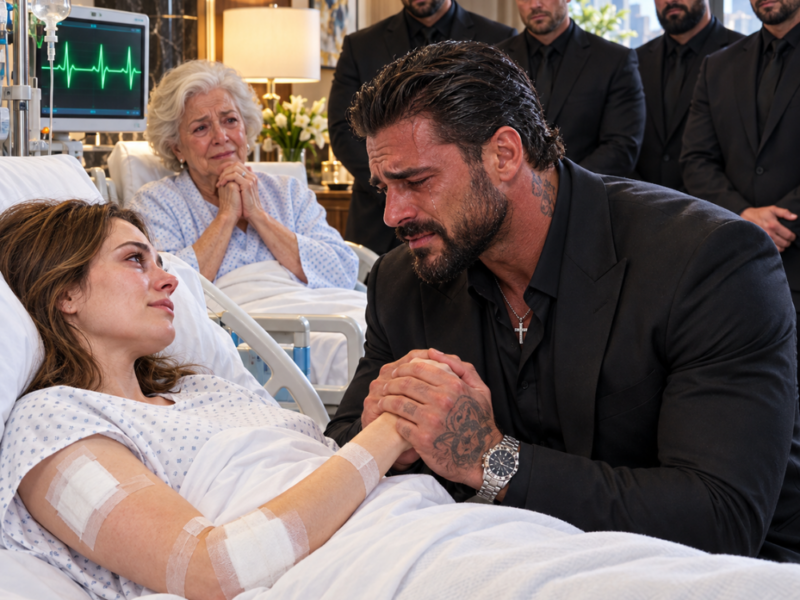
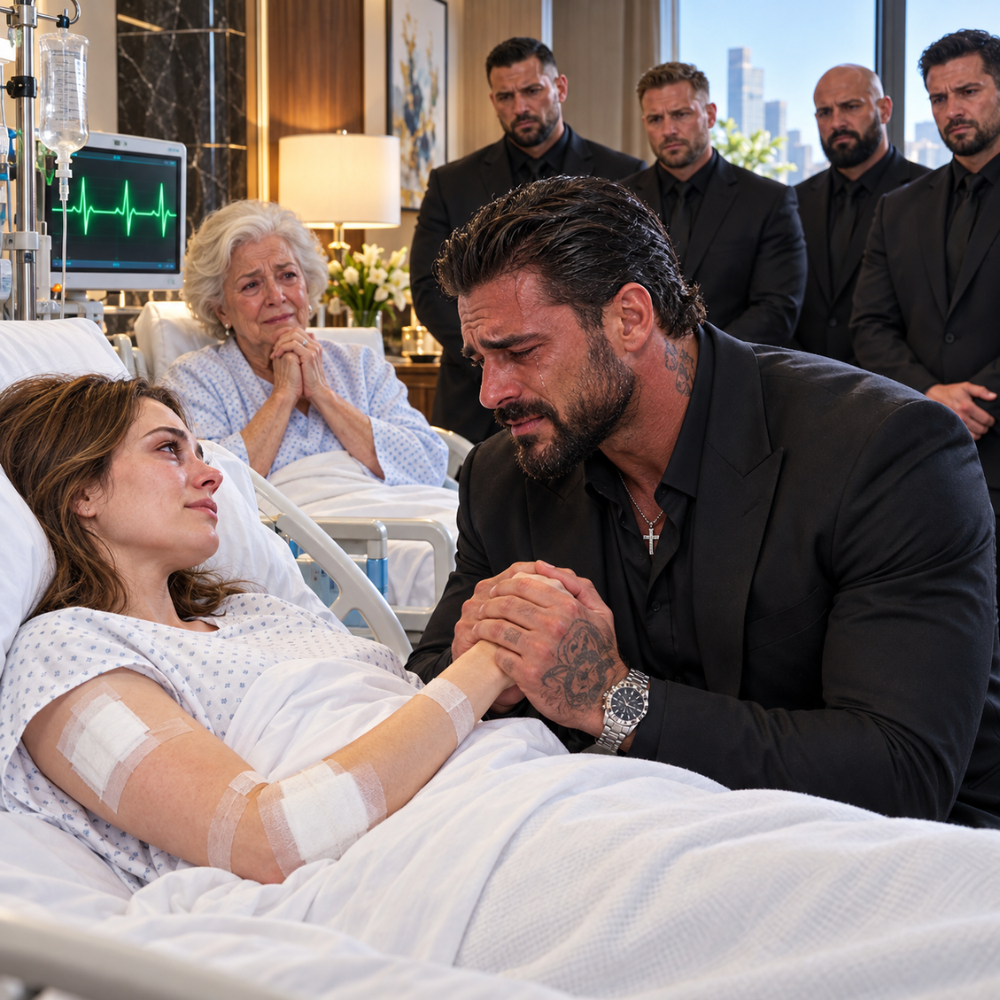
Clara looked impossibly small in the ICU bed.
Machines measured every fragile rhythm.
A ventilator supported her breathing.
Bandages covered injuries that Dante could not bring himself to examine closely.
He sat beside her.
For the first time in years, nobody was asking him for a decision.
No territory.
No money.
No favors.
No orders.
There was nothing he could command.
He took Clara’s hand carefully.
“I’m sorry.”
The machines continued their steady sounds.
“I should never have let you near any of this.”
He looked at her face.
“I spent years believing fear was the same thing as safety.”
His thumb moved over her fingers.
“My mother told me you’re light.”
A broken laugh escaped him.
“She says dramatic things when she’s medicated.”
Clara did not move.
Dante lowered his head.
“Wake up and tell her she’s being ridiculous.”
Nothing.
“I’ll pay every bill your father left.”
He stopped.
That sounded wrong.
Transactional.
Exactly the kind of thinking Clara would hate.
He tried again.
“Forget that.”
His voice dropped.
“I don’t know how to fix this.”
That was closer to the truth.
Dante Marino knew how to solve problems with leverage.
Money.
Fear.
Connections.
Clara had become important to him precisely because she responded to none of those things.
She argued with him about his mother’s therapy.
She told him when he was wrong.
She laughed at his house.
She had once refused a diamond bracelet Rosa tried to give her because, as Clara put it, “I already get paid more than my conscience is comfortable with.”
He had never met anyone like her.
Now the only thing he could offer was his presence.
So he stayed.
While Clara remained unconscious, investigators and security teams reconstructed the attack.
The discovery inside Dante’s organization was almost worse than the attack itself.
Someone had provided the date, route, and timing of Rosa’s hospital appointment.
The betrayal led back to Dominic Rossi, a man Dante had trusted for most of his adult life.
Tommy brought the information to the hospital on the second night.
Dante listened without expression.
“Certain?”
“Yes.”
“Why?”
“Power. Russo promised him access to the shipping business and Queens operations if you were weakened.”
Dante looked through the glass wall toward Clara.
Tommy waited for the reaction he knew.
Dante had built his reputation on immediate retaliation.
Instead, Dante remained seated.
“What did the police get?”
Tommy hesitated.
“Enough to start pulling threads.”
“Give them what they need.”
Tommy stared.
“Boss?”
“You heard me.”
“That exposes people.”
“Then those people should find attorneys.”
Tommy’s disbelief was obvious.
Dante finally looked at him.
“I’m done making this worse.”
“What about Russo?”
Dante’s jaw tightened.
For several seconds, the old answer was visible.
Then he said, “No more hospital garages.”
Tommy remained still.
“No more bodies because somebody insulted my name. No more wars because men with expensive suits can’t tolerate losing.”
“Dante.”
“I almost watched my mother die.”
His voice became quieter.
“And Clara is in there because of decisions I kept telling myself were necessary.”
Tommy had known Dante since they were teenagers.
He had never heard him speak that way.
“What do you want me to do?”
“Protect my mother. Protect Clara. Give the attorneys everything they need to separate the legitimate companies from the rest.”
“And Dominic?”
Dante looked at the floor.
“Keep him away from my family.”
Law enforcement moved quickly after the hospital attack attracted public attention.
The attempted killing had occurred beneath a major medical center. Surveillance footage existed. Vehicles had been recorded. The attack crossed too many lines even for people accustomed to silence.
Within days, arrests began.
Dominic disappeared before investigators reached him.
Victor Russo also vanished from his usual properties.
For the first time, Dante did not order men to hunt them down.
He hired attorneys.
He increased security.
He gave information through intermediaries.
He waited beside Clara.
On the eighth morning, Clara opened her eyes.
At first she saw only light.
Then a ceiling.
Then the blurry outline of a person leaning toward her.
“Clara?”
The voice was familiar.
She tried to turn.
Pain stopped her.
“Don’t move.”
Dante.
His face came into focus slowly.
He looked terrible.
Dark circles.
Several days of beard.
A dress shirt that had been slept in more than once.
Clara tried to speak.
Her throat burned.
“Water?”
Dante immediately reached for the nurse call button.
“You can’t drink yet. Wait.”
Clara frowned.
She searched her memory.
Garage.
Noise.
Rosa.
Her heart monitor accelerated.
Dante noticed.
“My mother is fine.”
Clara stared at him.
“She wasn’t hurt.”
Clara’s eyes filled with tears.
Dante’s did too.
“You saved her.”
Clara tried to ask something.
He leaned closer.
“Don’t talk.”
She ignored him.
“Rosa?”
“Safe.”
Clara relaxed against the pillow.
Dante laughed once, shakily.
“Of course that’s your first question.”
The ICU nurse entered.
“You’re awake.”
Clara looked at her.
The nurse smiled.
“That’s a very good thing.”
A few hours later, Rosa was brought in by wheelchair.
She cried before reaching the bed.
Clara smiled weakly.
“You’re supposed to be the patient.”
Rosa made a sound between laughter and tears.
“You impossible girl.”
She took Clara’s hand.
“You scared twenty years off my life.”
“You’re seventy.”
“Exactly. I don’t have that kind of time.”
Dante turned away, wiping his eyes.
Rosa noticed.
“So dramatic.”
Clara looked at him.
“You too?”
He laughed.
That small sound marked the beginning of recovery.
Recovery itself was not romantic.
It hurt.
Clara tired after sitting upright.
Her shoulder required careful rehabilitation.
Breathing exercises made her dizzy.
Coughing was miserable.
Walking ten feet felt like running a mile.
For a physical therapist, becoming the patient was especially frustrating.
She knew exactly what she was supposed to do.
Her body did not care.
Three weeks after surgery, Clara stood between parallel bars in a private rehabilitation room at the hospital.
Her therapist, Maria, stood beside her.
Dante watched from the doorway.
Clara noticed him.
“Go away.”
Maria looked surprised.
Dante said, “Why?”
“Because you’re staring.”
“I’m observing.”
“You’re making me nervous.”
“You’ve never been nervous around me.”
“I’ve always been nervous around you.”
Dante actually smiled.
Clara pointed toward the hallway.
“Out.”
He obeyed.
Maria waited until the door closed.
“That man listens to you?”
“Apparently only when I’m holding a walker.”
The plan was for Clara to recover somewhere secure and accessible after discharge.
Dante wanted her brought to the Oyster Bay estate.
Clara initially refused.
“No.”
He was sitting beside her hospital bed.
“You haven’t heard the proposal.”
“I know the proposal.”
“My mother’s therapy suite is already modified.”
“I’m not moving back into your house.”
“You need assistance.”
“I can arrange home health.”
“In your apartment above a laundromat?”
“Don’t insult my laundromat.”
Dante sighed.
Clara looked at him more seriously.
“I need to understand what happened.”
His expression changed.
“You were caught in something that should never have reached you.”
“That’s not enough.”
He looked toward the window.
Clara waited.
Finally he said, “Someone inside my organization gave information to a rival.”
“About Rosa?”
“Yes.”
“And now?”
“Some people have been arrested. Others are being investigated.”
“Did you retaliate?”
The question landed.
Dante looked at her.
Clara’s voice remained quiet.
“I need to know what kind of house you’re asking me to return to.”
He could have lied.
Instead he said, “I wanted to.”
“That isn’t an answer.”
“No.”
“No what?”
“I didn’t retaliate.”
Clara searched his face.
“Why?”
Dante looked at the scars beginning to form near her shoulder.
“Because you were lying here.”
She said nothing.
“I kept thinking about what my mother said. That if you survived, bringing you back into the same life without changing anything would be another kind of punishment.”
Clara looked away.
Dante continued.
“I’m separating myself from it.”
“Can you?”
“I don’t know.”
The honesty surprised her.
He leaned forward.
“I have legitimate companies. Shipping. Warehousing. Real estate. Restaurants. Those aren’t fronts, Clara. They employ people. They make money.”
“And the rest?”
“I’m getting out.”
“People don’t just resign from criminal organizations.”
“No.”
“Then don’t make promises because you’re emotional.”
His jaw tightened.
“You think this is emotion?”
“I think you watched me almost die.”
“Yes.”
“And you’re terrified.”
“Yes.”
“Fear makes people promise impossible things.”
Dante was silent.
Clara softened.
“I don’t want you changing because you think you owe me.”
“I don’t owe you.”
“You do.”
“No.”
He shook his head.
“Owing you would mean there’s a number somewhere that makes what you did even.”
Clara looked at him.
“There isn’t.”
For a moment, neither spoke.
Then Clara said, “I’ll recover at the estate for two weeks.”
Dante blinked.
“Two?”
“Three if Rosa behaves.”
“She won’t.”
“Then two.”
Clara returned to Oyster Bay under conditions that would have been unthinkable months earlier.
No armed guards inside the guest wing.
No business meetings near her.
No men arriving after midnight.
No one discussing security issues in front of Rosa.
Dante agreed to every condition.
Rosa called Clara a tyrant.
Clara called Rosa noncompliant.
They resumed therapy.
This time they were recovering together.
Clara used a cane for short distances.
Rosa used a walker.
They made slow laps along the sunroom.
“Look at us,” Rosa said. “A parade.”
“Lift your left foot.”
“You’re bossy even when wounded.”
“Lift.”
Rosa lifted.
Dante became an oddly attentive caregiver.
Too attentive.
He learned Clara’s medication schedule.
He spoke to physicians.
He kept extra blankets on the terrace because she became cold easily.
He once called her surgeon because Clara developed a mild fever.
“It was ninety-nine point four,” Clara said afterward.
“You looked pale.”
“I am pale.”
“You looked more pale.”
“You need a hobby.”
“I have businesses.”
“A relaxing hobby.”
“I don’t relax.”
“I’ve noticed.”
Some evenings he read in the chair beside her.
Not to her.
With her.
Clara discovered he loved history.
He discovered she read terrible mystery novels when stressed.
One night he picked up the paperback beside her chair.
“The detective is a baker?”
“She solves murders between cake orders.”
“That is absurd.”
“It’s comforting.”
“How?”
“Nobody gets hurt in a way that matters.”
Dante stared at her.
Clara immediately regretted the sentence.
He closed the book.
“I’m sorry.”
“No.”
“You don’t have to apologize every time I remember.”
“I know.”
“Then stop.”
He nodded.
After a while, Clara said, “What happens to Dominic?”
Dante’s face became still.
“He was arrested in New Jersey.”
She looked at him.
“You didn’t…”
“No.”
Clara exhaled slowly.
Dante understood what the unfinished question meant.
“That surprises you.”
“A month ago? Yes.”
“Me too.”
The answer mattered.
Not because Clara suddenly believed Dante was innocent.
He wasn’t.
She was not naive enough to turn a dangerous man’s affection into proof of virtue.
But she saw something changing.
Not perfectly.
Not quickly.
Not because she had magically saved him.
Dante was facing consequences he had spent years avoiding.
His attorneys began restructuring companies.
Several businesses were sold.
Others submitted to increased outside oversight.
He gave testimony through negotiated legal processes regarding certain financial operations.
He spent less time surrounded by armed men and more time in conference rooms with accountants.
Tommy hated the transition.
Rosa loved it.
One afternoon, Clara found Dante at the kitchen island surrounded by documents.
“You look miserable.”
“I’ve spent four hours discussing compliance.”
“Congratulations.”
“Why?”
“You’re becoming boring.”
He looked offended.
“I’ve never been boring.”
“Give it time.”
The transition cost him.
Some associates disappeared.
Others turned hostile.
Federal investigators continued asking questions.
Attorneys warned him that moving toward legitimate business would not erase the past.
Dante accepted that.
For perhaps the first time, he stopped expecting power to exempt him from consequences.
Clara respected that more than any grand declaration.
Her own recovery brought difficult moments.
One night, she woke from a nightmare convinced she was back in the garage.
She could hear the horn.
The shouting.
The sharp reports.
She sat upright too quickly and cried out from pain.
Dante was at the door within seconds.
“Clara?”
She couldn’t answer.
He entered slowly.
“I’m here.”
She shook her head.
“Don’t touch me.”
He stopped.
That mattered.
A different version of Dante would have crossed the room because he believed protection gave him the right.
This version waited.
Clara focused on breathing.
Eventually she said, “Sit.”
He sat on the floor near the door.
Not beside her.
Not touching.
Just present.
After several minutes, she said, “I hate that sound.”
“What sound?”
“The horn.”
Dante knew exactly what she meant.
He looked down.
“I hear it too.”
That was the first time Clara understood the attack had not left him untouched either.
They did not discuss romance for months.
That surprised everyone except Clara.
Rosa grew impatient.
“You almost died for this man and you’re making him court you like it’s 1952.”
“I did not almost die for Dante.”
Rosa raised an eyebrow.
“I protected you.”
“Why?”
“Because I love you.”
Rosa smiled triumphantly.
“Exactly.”
“That is not evidence.”
“It is to me.”
Clara threw a pillow at her.
Rosa’s left hand was too slow to catch it.
She complained for ten minutes.
By December, Clara no longer needed a cane inside.
She returned to outpatient work part-time.
The clinic staff treated her carefully at first.
Too carefully.
Her director tried to move all difficult patients to other therapists.
Clara objected.
“I was injured. I didn’t forget my job.”
Gradually, ordinary life returned.
Subway cards.
Coffee cups.
Grocery bags.
Paperwork.
She found herself appreciating things she had once considered annoying.
Standing in line at the pharmacy.
Waiting for a delayed train.
Listening to the neighbor upstairs vacuum at seven in the morning.
Ordinary life felt luxurious after weeks of machines and private security.
Dante visited Queens for the first time without a convoy.
He arrived in a dark sedan driven by one security man who waited outside.
Clara met him at a neighborhood diner.
He looked spectacularly out of place in a coat that probably cost more than the restaurant’s monthly rent.
The waitress called him honey.
Clara nearly laughed.
“What?”
“Nothing.”
“You’re enjoying this.”
“A little.”
He examined the laminated menu.
“What is a pizza burger?”
“Don’t ask questions you aren’t ready to have answered.”
He ordered coffee.
Clara ordered pie.
No one in the diner cared who he was.
That seemed to unsettle him more than hostility would have.
At the next table, two retired men argued about the Giants.
A toddler dropped French fries.
A woman in scrubs ate soup while reading messages on her phone.
Dante watched it all.
“This is your world.”
“One part of it.”
“You miss it.”
“Yes.”
“Do you miss the estate?”
Clara considered.
“I miss Rosa.”
His mouth tightened.
“Only Rosa?”
She smiled.
“Mostly.”
Dante laughed.
When the check arrived, he reached for it.
Clara slapped her hand over the paper.
“No.”
He looked at her.
“I invited you.”
“It costs fourteen dollars.”
“I can afford fourteen dollars.”
“I know.”
She paid.
Outside, rain had started.
Dante opened an umbrella.
They walked slowly toward Clara’s building.
Halfway there, he said, “I sold the clubs.”
She looked at him.
“All of them?”
“The ones tied to people I don’t want in my life anymore.”
“That must have been difficult.”
“It was expensive.”
“I didn’t ask whether it was expensive.”
Dante glanced at her.
“No. It wasn’t difficult.”
They reached her building.
He stood beneath the awning.
Clara looked at him.
“So what now?”
“For the businesses?”
“For you.”
Dante was quiet.
“I don’t know.”
It was one of the things she liked about the changing version of him.
He had stopped pretending uncertainty was weakness.
Clara said, “Good.”
“Good?”
“Yes. People who think they know exactly what comes next are usually dangerous.”
He smiled.
“Are you describing me?”
“Past tense.”
The smile faded into something more serious.
“Can I kiss you?”
Clara had expected him to do it without asking.
The question changed everything.
She looked at him for a long moment.
Then she said, “Yes.”
The kiss was brief.
Careful.
Nothing like the dangerous romance Rosa seemed to imagine.
When Dante stepped back, Clara smiled.
“You look surprised.”
“I am.”
“Why?”
“I expected you to tell me what I did wrong.”
“I was considering it.”
He laughed.
Their relationship began there, not in the estate, not in the hospital, and certainly not in the garage.
It began on a Queens sidewalk beneath an inexpensive awning while rain bounced off parked cars.
Clara insisted on boundaries.
She kept her apartment.
She kept working.
She refused a private driver unless medical appointments required one.
She did not accept expensive gifts.
When Dante sent flowers large enough to block her living-room window, she called him.
“What did I say?”
“That gifts make you uncomfortable.”
“And?”
“These are flowers.”
“They arrived in a van.”
“I got carried away.”
“Apparently.”
The next week he brought supermarket tulips.
Clara kept them.
Rosa considered this proof that civilization was ending.
Winter came.
Then spring.
Dante’s legal problems did not disappear, but his life became less hidden.
Several investigations resulted in financial settlements and business restrictions. Attorneys occupied more of his calendar than former associates did.
He accepted scrutiny he once would have fought.
Tommy eventually took a legitimate position overseeing warehouse security for one of the shipping companies.
“Turns out,” he told Clara one afternoon, “I’m very good at paperwork.”
“You look disappointed.”
“I had a reputation.”
“You still do.”
“For incident reports.”
Clara laughed.
Rosa continued improving.
By April, she could walk short distances with a cane and supervision.
On the anniversary of her stroke, she insisted on walking from the sunroom to the terrace without the wheelchair.
Clara stood on one side.
Dante stood on the other.
Rosa glared at both.
“If either of you touches me, I will start over.”
Dante held up his hands.
Clara nodded.
Rosa took one step.
Then another.
Her left foot dragged slightly.
She corrected.
Five steps.
Seven.
Ten.
When she reached the terrace chair, she sat down and burst into tears.
Clara knelt beside her.
“You did it.”
Rosa laughed through tears.
“I hate physical therapy.”
“Everyone does.”
Dante looked toward the water because he was crying too.
Rosa noticed.
“My son is becoming embarrassing.”
Dante wiped his face.
“Walk back inside by yourself, then.”
Rosa pointed her cane at him.
“Respect your mother.”
That evening, Clara and Dante sat alone on the terrace.
The sun had dropped behind the trees.
Long Island Sound reflected the last orange light.
Dante handed her tea.
“You’ve ruined me.”
Clara accepted the cup.
“How?”
“My mother argues more now.”
“She always argued.”
“Not while walking.”
“Progress.”
Dante sat beside her.
For a while they listened to the water.
Then he said, “I made another sale today.”
Clara looked over.
“The last business I wanted out of.”
“And?”
“Done.”
She studied his expression.
“How do you feel?”
“Lighter.”
“That’s good.”
“And terrified.”
“Also good.”
He smiled.
“You have strange definitions.”
“Fear means you understand choices matter.”
Dante turned the cup in his hands.
“I used to think control meant nobody could surprise me.”
“Did that work?”
“No.”
“Then perhaps retire the theory.”
He looked at her.
“Clara.”
Something in his tone made her still.
Dante placed his cup down.
“I’ve been trying to figure out how to do this without making it look like I’m purchasing a small country.”
She laughed.
He reached into his coat.
“That’s not promising.”
“I know.”
He held a small ring box.
Clara’s laughter disappeared.
Dante did not kneel immediately.
Instead, he looked at her.
“The first months you were here, I thought I loved the way you made this house feel.”
Clara said nothing.
“I was wrong.”
He continued.
“I loved who I became around you because you wouldn’t let me hide behind fear.”
Clara’s eyes filled.
Dante opened the box.
The ring was simple.
A narrow band with a single diamond.
Nothing enormous.
Nothing designed to advertise wealth.
Clara smiled despite herself.
“You listened.”
“I occasionally do.”
He lowered himself to one knee.
“Clara Hughes, I don’t want to protect you by controlling your life.”
Her throat tightened.
“I don’t want to give you a house and call it devotion. I don’t want you to owe me anything.”
He took her hand.
“I want grocery runs. Arguments about terrible mystery novels. Your apartment if you decide you never want to leave it. My mother complaining in whatever house we’re in. I want ordinary mornings.”
Clara blinked away tears.
Dante’s voice softened.
“I spent most of my life thinking ordinary meant weak.”
He shook his head.
“Now I think ordinary might be the hardest thing I’ve ever had to earn.”
Clara looked at the man kneeling in front of her.
He was still Dante Marino.
His past had not disappeared.
Love did not erase consequences.
She knew better than to believe a romantic ending could turn history into something clean.
But he had changed what he could change.
He had accepted what he could not undo.
Most importantly, he had stopped asking Clara to mistake danger for devotion.
“Ask me,” she whispered.
Dante smiled.
“Will you marry me?”
Clara let him wait three full seconds.
Then she said, “Yes.”
Rosa heard them from inside.
“Finally!”
Clara burst out laughing.
Dante looked toward the open terrace doors.
“You were listening?”
“I live here!”
“You were supposed to give us privacy.”
“I had a stroke, not manners.”
Clara laughed until her healing ribs protested.
Dante slipped the ring onto her finger.
Then he kissed her gently.
The following autumn, they married in a small ceremony overlooking the water.
Not at a cathedral.
Not at one of Dante’s hotels.
No political figures.
No newspaper photographers.
No hundred-person security detail.
Rosa sat in the front row wearing navy silk and holding a cane she no longer needed every day.
Tommy stood beside Dante.
Clara invited coworkers from the clinic, several old friends, and the oncology nurse who had cared for her father during his final hospital stay.
One chair in the front row remained empty.
Clara placed a small white rose on it for her father.
Before the ceremony, she stood alone beside the window of the guest room.
For years she had thought survival meant enduring whatever arrived.
Her father’s illness.
Debt.
Fear.
The Marino estate.
The attack.
Recovery.
But survival, she had learned, was only the first stage.
The harder work came afterward.
Deciding what to do with the life that remained.
Dante knocked lightly.
“You’re not supposed to see me.”
“I’m not looking.”
He stood on the other side of the partially opened door.
Clara smiled.
“What do you want?”
“To make sure you’re still coming.”
She laughed.
“Are you nervous?”
“No.”
“Liar.”
A pause.
“Extremely.”
Clara reached through the gap.
Dante took her hand.
For a moment they stood on opposite sides of the door holding hands without seeing each other.
“I’ll be there,” she said.
“I know.”
“You clearly don’t.”
“I wanted to hear you say it.”
She squeezed his fingers.
Then she let go.
Ten minutes later, Clara walked toward him.
Not because he had rescued her.
He hadn’t.
Doctors had saved her life.
Therapists had rebuilt her strength.
Friends had helped her return to work.
Rosa had reminded her that courage without choice could become another kind of prison.
And Clara herself had done the slow work of recovering.
Dante had done something different.
He had listened when the woman he loved told him that love without change was not enough.
He had chosen to become someone she could walk toward freely.
When Clara reached him, his eyes were already wet.
She whispered, “Don’t embarrass your mother.”
From the front row, Rosa said, “Too late.”
Everyone laughed.
Even Dante.
Especially Dante.
Years later, Clara would still remember the hospital garage.
Trauma didn’t disappear because life became beautiful afterward.
Certain sounds bothered her.
Underground parking structures made her uneasy.
On difficult nights she sometimes woke with her heart racing.
Dante never told her to forget.
He never said it was over.
He simply turned on a light, waited for her breathing to slow, and stayed close if she wanted him close.
Rosa lived long enough to see Clara open her own rehabilitation practice.
The clinic occupied a renovated building in Queens with wide hallways, accessible treatment rooms, and large windows.
Clara specialized in neurological recovery and patients rebuilding strength after major medical events.
She kept one photograph of Rosa near her desk.
In it, Rosa stood with a cane beside a blooming hydrangea.
On the back, in shaky handwriting, she had written:
You taught me that progress is still progress when it is slow.
Clara kept the note.
It applied to more than physical therapy.
Dante’s life never became perfectly simple.
There were still attorneys.
Still old newspaper stories.
Still people who recognized his name.
He could not edit his past by building a respectable future.
He learned to live with that.
He also learned that power looked different outside the world he had inherited.
Power was signing a difficult agreement instead of threatening someone.
It was accepting that employees could disagree with him.
It was walking through a grocery store beside Clara while she compared cereal prices even though they could afford every box on the shelf.
Once, he watched her return a carton of strawberries because they were overpriced.
“You know we have money,” he said.
“That’s why we should keep some.”
He stared at her.
“You terrify me.”
“Good.”
Their life became ordinary in ways neither would have predicted.
Sunday breakfast.
Work calendars.
Medication reminders for Rosa.
Arguments about thermostat settings.
Dinner with friends.
Clara leaving wet towels on the bathroom floor and denying it.
Dante buying kitchen gadgets he never used.
Sometimes people who knew pieces of their story called what happened in the hospital an act of sacrifice.
Clara never liked that word.
It made the moment sound noble and clean.
There had been nothing clean about it.
She had been frightened.
She had acted instinctively.
She had paid for that instinct with months of pain and years of complicated memories.
When patients at her clinic learned some sanitized version of the story and called her brave, Clara usually corrected them.
“I was lucky.”
But Rosa never accepted that answer.
One afternoon, when Clara said it again, Rosa shook her head.
“Luck is surviving.”
She pointed a finger at Clara.
“Courage is moving before you know whether you will.”
Clara had no response.
Rosa smiled.
“I win.”
“You always think you win.”
“I usually do.”
The truth was that nobody came out of the story untouched.
Clara lost her sense that dangerous worlds remained safely separate from ordinary life.
Dante lost the illusion that fear could protect the people he loved.
Rosa lost whatever patience she once had for the criminal traditions around her son.
Tommy lost his taste for midnight phone calls and discovered a suspicious enthusiasm for corporate insurance.
Even the Marino estate changed.
The armed men disappeared from the hallways.
The basement rooms once used for private meetings became storage.
One wing was renovated into temporary housing for families whose relatives were receiving long-term neurological treatment nearby.
Clara had proposed the idea.
Dante funded it.
Rosa took credit.
“Without me,” she said, “none of you would know what to do.”
Clara kissed her forehead.
“You’re probably right.”
On quiet evenings, Clara sometimes returned to the terrace where Dante had proposed.
She could see the same water.
The same distant lights.
Yet the estate no longer felt like the place she first entered carrying one suitcase and wondering whether desperation had made her reckless.
She remembered that first contract.
One hundred thousand dollars for three months.
At the time, the figure had seemed capable of changing her life.
It did.
Just not in the way she expected.
The money eventually helped her settle the remaining responsibilities connected to her father’s estate and rebuild her savings.
But the larger change had nothing to do with money.
Clara had entered the Marino house believing survival meant keeping her head down.
Don’t ask questions.
Don’t make eye contact.
Do the job.
Take the money.
Leave.
Instead, she asked questions.
She looked directly at Dante.
She challenged him.
She cared about Rosa.
And when the most frightening moment came, she acted according to who she was rather than where she was.
That choice nearly cost her everything.
It also forced everyone around her to confront what their own choices had cost.
Years later, Dante once asked her the question he had avoided since the attack.
They were sitting on the back steps after dinner.
Rosa had gone to bed.
The house was quiet.
Dante said, “If you knew everything then that you know now, would you take the job?”
Clara looked toward the dark lawn.
“That’s a terrible question.”
“I know.”
“You mean if I knew about the garage?”
“Yes.”
“The surgeries?”
“Yes.”
“The months of rehab?”
“Yes.”
Clara thought for a long time.
“No.”
Dante looked down.
She continued.
“I wouldn’t knowingly choose to be hurt.”
He nodded.
“But?”
“But that’s different from wishing my life had never crossed yours.”
He looked at her.
Clara rested her head against his shoulder.
“I don’t believe suffering has to happen for good things to matter.”
Dante was quiet.
She knew he understood.
Their love did not make the attack worthwhile.
Rosa surviving did not make Clara’s injuries fair.
Dante changing did not transform violence into destiny.
The worst thing that happened to them remained the worst thing that happened.
They simply refused to let it become the only thing.
That distinction mattered to Clara.
Maybe because she had spent years around illness.
People often wanted to turn pain into a lesson immediately.
Cancer makes you stronger.
Loss teaches gratitude.
Trauma happens for a reason.
Clara had heard all of it.
Her father’s leukemia had not happened to teach her anything.
The hospital attack had not occurred so Dante could become a better man.
Sometimes terrible things were simply terrible.
Meaning came from what people chose afterward.
Her father had taught her tenderness while dying.
Rosa taught her humor while relearning to walk.
Dante learned restraint after a lifetime of believing restraint was weakness.
Clara built a clinic because recovery had taught her exactly how lonely being a patient could feel.
Those choices were meaningful.
The suffering itself was not.
Dante took her hand.
“You always ruin my dramatic moments.”
“Someone has to.”
“I was prepared for a beautiful answer.”
“That was a beautiful answer.”
“It included you saying you wouldn’t take the job.”
“Honesty can be beautiful.”
He sighed.
“You’re exhausting.”
“You married me.”
“I did.”
“Poor decision-making.”
“Apparently a lifelong problem.”
She laughed.
Inside the house, Rosa called from upstairs.
“Are you two arguing?”
Clara shouted back, “No.”
Dante added, “Yes.”
Rosa’s voice floated down.
“Keep it quiet. Some of us are old.”
Clara and Dante looked at each other.
Then they laughed again.
That became Clara’s favorite kind of ending.
Not the dramatic one.
Not the hospital awakening.
Not the ring.
Not the transformation of a feared man into someone worthy of trust.
The real ending was that life continued.
Messily.
Ordinarily.
With scars.
With bills.
With family dinners.
With difficult memories and better choices.
With Rosa complaining upstairs.
With Dante learning that love did not require ownership.
With Clara understanding that courage was not the absence of fear and certainly not a requirement to keep sacrificing herself.
Sometimes courage was stepping forward.
Sometimes it was stepping away.
Sometimes it was saying no to the person you loved because the life he offered was not yet safe enough to enter.
And sometimes it was recognizing when someone had finally done the work necessary to meet you where you stood.
Clara had once arrived at the Marino estate because she was afraid she could not afford to refuse.
Years later, she stayed in Dante’s life for the opposite reason.
She knew she could leave.
That was what made staying a choice.
And in the end, that freedom mattered more than the estate, the money, the name, or the frightening story people whispered about how they had met.
The world had once known Dante Marino as a man people obeyed because they feared what happened if they didn’t.
Clara knew the quieter version.
The man who waited outside a therapy room because she told him his staring made her nervous.
The man who asked permission before kissing her.
The man who learned that protecting someone did not mean deciding for them.
The man who could sit beside a nightmare without trying to command it away.
And Dante knew Clara not as the woman who stepped into danger for his mother, but as the woman who survived and then refused to let anyone turn her survival into a debt.
That was the part of the story neither newspaper photographs nor whispered family legends ever understood.
Clara had saved Rosa in one terrifying instant.
Afterward, Rosa helped save Clara from believing that sacrifice was the highest form of love.
And Clara helped Dante understand that devotion was not measured by what a man was willing to destroy for someone.
It was measured by what he was willing to change.
The darkest chapter of their lives began in a concrete hospital garage.
What came after was built far more slowly.
One careful decision at a time.
And that was why it lasted.









