
“I’m Happy for You,” She Hid Her Love for Years—Then They Made Her a Bridesmaid at CEO’s Wedding
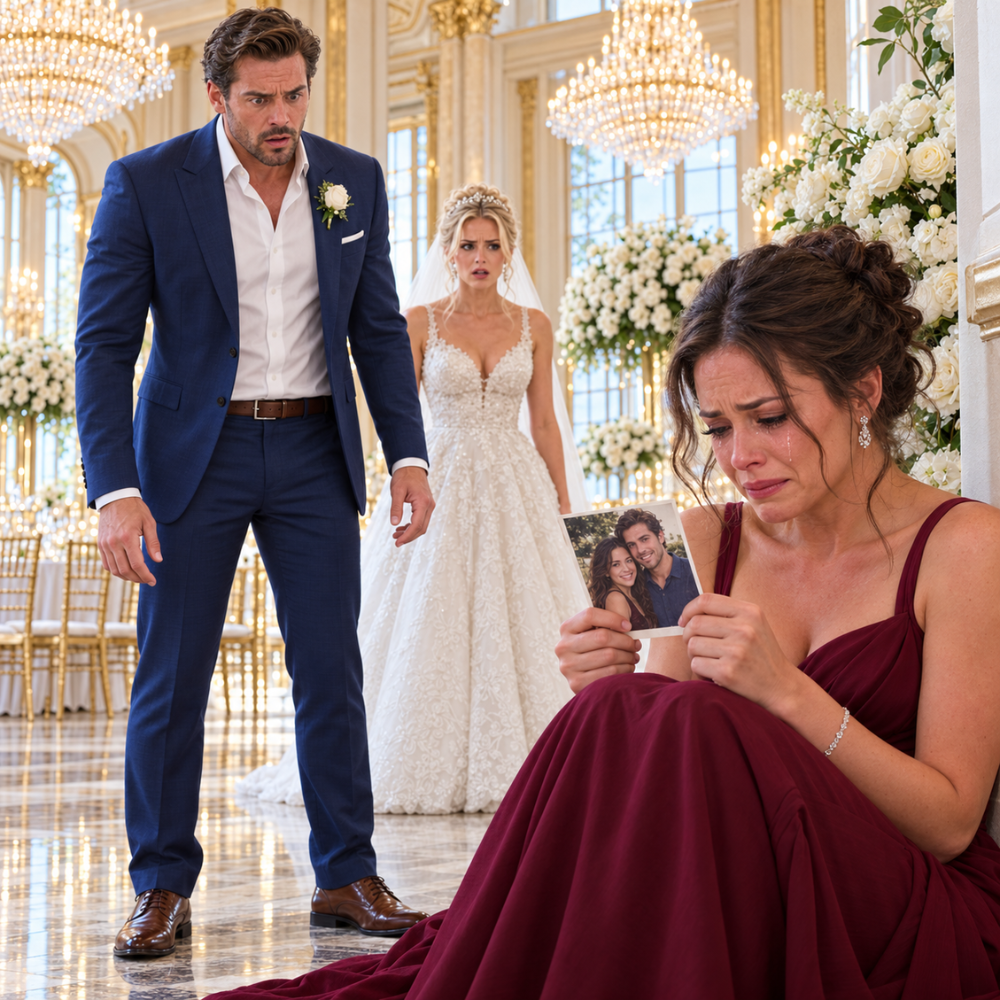
She agreed to stand beside his bride, never expecting the truth to come out before sunrise
The side door of the East End Community Center had been sticking since March.
At 7:07 on a gray Portland morning, Lena Hartwell hit it once with her hip, felt the swollen frame give, and stepped into the familiar smell of floor wax, old coffee, chlorine drifting up from the basement pool, and whatever industrial cleaner the night crew had used on the hallway.
She did not turn on every light. She knew which ones hummed.
She did not check the maintenance note taped beside the drinking fountain. She already knew the fountain leaked if the handle stayed depressed too long, which was why she carried a little wooden wedge in her pocket and used it to keep the utility-room door from swinging shut while she filled the mop bucket.
By seven-thirty, forty folding chairs stood in neat rows for the senior stretching class, each one spaced wide enough for a walker because Mrs. Delahanty hated asking people to move.
By seven-forty-five, the summer camp roster was pinned beside the front desk.
PEANUTS beside one name.
BEES beside another.
NO LATEX BALLOONS beside a third.
Nobody had told Lena to rewrite the allergy list in larger letters.
She had simply noticed that one of the teenage counselors kept squinting at it.
That was the kind of thing Lena did.
She noticed what a room needed and quietly became the person who supplied it.
Outside, Portland was still the color of wet newspaper. Fog sat low over Casco Bay. A delivery truck groaned somewhere on Washington Avenue. Gulls quarreled over breakfast behind a restaurant on Congress Street.
Lena had lived on Munjoy Hill almost her entire life. She knew which sidewalks iced first in December, which bakery sold out of sourdough by ten on Saturdays, and which old houses had stairs steep enough to make moving furniture an act of faith.
Three houses down from the home where she had grown up stood the Pharaoh house.
Lena knew that house almost as well as her own.
She knew the third stair from the landing creaked.
She knew Joan Pharaoh kept the good wineglasses on the highest kitchen shelf and pretended every Christmas to have forgotten where she put them.
She knew the upstairs bathroom window had to be lifted slightly before it would lock.
She knew Ethan Pharaoh took his coffee black until he was twenty-two, then started using one packet of sugar after a brutal semester in college and never stopped.
She knew he hated anybody telling the canoe story.
She also had a key.
Joan had pressed it into her palm when Lena was sixteen, during the summer Lena’s mother started working evening shifts at Maine Medical Center.
“You are not sitting alone in that house eating cereal for supper five nights a week,” Joan had said. “Come over. Let yourself in.”
It was an ordinary brass key, rubbed smooth along one side.
Twelve years later, it still hung on Lena’s key ring between the master key to the community center and the key to a silver Honda with more than 160,000 miles on it.
Nobody had ever asked for it back.
Nobody had ever needed to.
Lena had been part of the Pharaoh household for so long that nobody thought to define what part meant.
Ethan ran Pharaoh Marine Outfitting now, the waterfront company his grandfather had started with one warehouse, three employees, and a habit of extending credit to fishermen who could not pay until the next catch came in.
By the time Ethan inherited it, the company supplied rigging, safety equipment, industrial hardware, and marine electronics to working boats all along the New England coast.
Two hundred fifty people drew paychecks from the business.
There was a board now.
There were quarterly meetings.
There was an attorney in Boston who charged in six-minute increments.
There were photographs of Ethan in business magazines wearing jackets he never wore on the waterfront.
People occasionally called him a CEO.
Lena still remembered him at thirteen with a fishhook caught in his sweatshirt and no idea how to get it out.
He had taken over at twenty-four, nine days after his father died.
At first, he wore the job like a coat borrowed from a larger man.
Then, gradually, it began to fit.
Lena had loved him for a long time.
She had never once turned that love into a claim.
He dated other women.
Lena became very good at hearing about them without changing her face.
Sometimes she even liked them.
That was almost worse.
On a Sunday in late May, Joan called Lena shortly after two.
“Set one extra tonight, honey.”
Lena was standing in the community center office trying to fix a registration spreadsheet one of the interns had destroyed.
“For dinner?”
“For dinner.”
“Who?”
A pause.
“Ethan’s bringing someone.”
Lena stared at the blinking cursor on her screen.
Then she said, “All right.”
That was all.
At five, she walked into the Pharaoh house without knocking, using the brass key because Joan was upstairs changing and Ethan had texted that he was running late.
She put potatoes in the oven.
She found the serving bowl Joan always forgot until the last minute.
She set four places at the kitchen table.
Then, for no reason she could explain, Lena dragged a chair to the cupboard and climbed onto it.
She reached for the good glasses.
Halfway down, one crystal stem balanced between her fingers, she understood why her hands had chosen them.
She stood very still.
Then she climbed down, put the glass at the fourth place, and told herself not to be ridiculous.
At six-two, she heard tires in the driveway.
Ethan entered first, tall in the doorway, hair damp from the harbor wind, one hand still holding his phone.
Behind him came a woman in a dark green sweater.
She had glossy brown hair pinned loosely at the back and one of those faces that looked composed before it looked beautiful. Not cold. Steady.
“This is Claire,” Ethan said.
Lena saw the ring before anyone said the word.
It was small and old-fashioned, with a narrow gold band and a diamond that caught the kitchen light when Claire reached up to tuck loose hair behind her ear.
For one strange second, the entire room seemed to rearrange itself around that small flash.
Then Lena looked at Ethan.
He was already looking at her.
Not dramatically.
Not guiltily.
Almost unconsciously.
It was the way he had always looked for her reaction when something important happened, the way a person checks the sky before stepping outside.
Then Joan came into the kitchen.
Everything happened at once.
There was shouting.
There were tears.
Joan hugged Claire so hard she loosened half the pins in her hair.
Ethan laughed and told his mother to let the woman breathe.
Claire laughed too.
Lena crossed the room.
She hugged Claire, who smelled faintly of lavender and cold car air.
Then she hugged Ethan.
He smelled like wind, wool, and the waterfront.
“I’m happy for you,” Lena said quietly.
And she meant part of it.
That was what made the sentence hurt.
Ethan deserved a woman who looked at him the way Claire did.
He deserved steadiness.
He deserved a life that had not been built entirely around grief and payroll and responsibility.
The part Lena did not mean had no language yet.
It was only a realization arriving several years too late: she had spent too much of her life treating possibility as though somebody had made her a promise.
Nobody had.
Dinner was pot roast.
Joan overfed everybody.
Ethan took a waterfront call between the roast and the blueberry pie and came back apologizing.
Claire touched his forearm.
“Everything okay?”
“One of the draggers blew a hydraulic line. They’re handling it.”
She nodded.
No irritation.
No performance.
Just acceptance.
Lena recognized the gesture because she had been making versions of it for years.
Later, Claire asked how long Lena and Ethan had known each other.
“Since kindergarten,” Lena said.
“Before that,” Ethan corrected. “Our mothers knew each other.”
Claire smiled. “So basically forever.”
“She’s family,” Ethan said.
The answer came so quickly Lena did not have time to prepare for it.
She smiled.
Then she passed Claire the rolls.
After dinner, Lena washed the dishes because Lena always washed the dishes.
Nobody told her to.
Nobody stopped her.
She drove home at nine with the radio off.
Her apartment was two rooms over a bakery on Washington Avenue. The heat from the ovens sometimes came through the floor in winter, and every morning before dawn the whole building smelled faintly of yeast.
She climbed the stairs.
Unlocked the door.
Hung her keys on the hook beside it.
Then stopped.
The brass key was there among the others, worn smooth along one edge.
She had carried it for twelve years without seeing it.
That night, she saw it.
She did not remove it.
She did not touch it.
She left the hallway light on and went to bed.
Three days later, her phone rang during afternoon swim.
Forty children were screaming in a tiled room designed to make every sound twice as loud.
Lena stepped into the hallway.
The number was unfamiliar.
“Lena?”
“Yes?”
“It’s Claire. Claire Pennington.”
Lena straightened without meaning to.
“Hi.”
“I hope it’s okay I called.”
“Sure.”
“This isn’t about Ethan. Well, technically it is, but not in the way that sounded.”
Lena almost laughed.
Claire took a breath.
“I wanted to ask you something myself.”
Behind Lena, a whistle blew.
“All right.”
“I’d like you to be one of my bridesmaids.”
For several seconds, Lena watched a little boy in orange swim goggles sprint toward the drinking fountain despite a sign that specifically said WALK.
She held up one finger.
He slowed immediately.
“I assumed Joan put you up to this,” Lena said.
“No.”
“Ethan?”
Claire laughed softly.
“He suggested it. But I’m asking.”
Lena leaned against the cinderblock wall.
Claire continued.
“He said you’re the person who’s always been there. And Joan told me you’re family. I don’t have much family up here yet.”
There were many ways Lena could have refused.
Most would have created questions.
Some would have created suspicions.
And Claire had done nothing except walk into a kitchen on Munjoy Hill and be kind to everyone in it.
Lena closed her eyes.
“I’d be honored.”
To her surprise, part of that was true too.
The wedding arrived in pieces.
A Saturday fitting in Freeport.
A group chat that produced sixteen messages about shoes while Lena was supervising lunch.
A bridal shower near Boston in a house overlooking the Charles River, where a woman in pearls asked how Lena knew the groom.
“Since we were kids.”
“Oh, that’s wonderful. Like a sister?”
Lena held her iced tea.
“Something like that.”
The first dress fitting was worse than she expected.
Eight women stood in a mirrored room wearing different versions of sage-green satin while a seamstress moved between them with pins held between her lips.
Marcy Dunn had driven up from Saco.
She and Lena had graduated from high school together.
Marcy was loud, affectionate, and almost entirely unchanged by adulthood.
When Lena stepped out of the fitting stall, Marcy put both hands on her hips.
“Lena Hartwell in a bridesmaid dress.”
“Please control yourself.”
“I can’t. This is historic.”
“Marcy.”
Marcy stepped back and looked at her.
Then, with absolutely no instinct for danger, she said, “Honestly, honey, we all thought it’d be you.”
The room stopped for half a second.
Marcy heard herself.
Her face changed.
“I mean years ago. High school. Everybody just figured…”
Someone laughed too brightly.
The seamstress said, “Arms up, please.”
Lena raised her arms.
The moment passed.
Claire was in the neighboring stall.
Lena heard the metal curtain rings slide.
She never found out whether Claire had heard.
Claire never mentioned it.
Lena never asked.
The uncertainty followed her home like a pebble inside a shoe.
After that, Lena began removing herself from Ethan’s life in increments so small that almost nobody noticed.
She stopped bringing coffee to his office on mornings she happened to be near Commercial Street.
For years, she had bought two cups and leaned against his doorway for five minutes while forklifts moved pallets on the wharf below.
In June, she stopped.
In July, their old group of friends went to a Portland Sea Dogs game, the way they did every summer.
Lena texted that she had a work thing.
She did not.
She sat on the fire escape outside her apartment, heard faint crowd noise drifting from Hadlock Field, and told herself this was what making room looked like.
Ethan texted her later.
We missed you.
She stared at the words.
Then answered:
Next time.
Their conversations became practical.
What time is the rehearsal?
Can the community center lend us folding tables?
Does Joan still have the big coffee urn?
Yes.
Six.
Yes.
Bottom cabinet in the pantry.
Ethan assumed Lena was giving him space because his life was changing.
He did not ask what that space was costing her.
It did not occur to him that it could cost her anything.
That was not because Ethan was cruel.
Cruelty would have been easier.
Ethan loved Lena.
He simply had never been forced to ask what kind of love it was, because she had always been available in exactly the same shape.
Sunday dinners continued.
Claire learned quickly.
Joan overfed her.
Claire learned that saying “I’m full” meant nothing and accepted a second spoonful anyway.
Ethan still occasionally took calls during dessert.
Claire learned which interruptions were real emergencies and which were habits wearing emergency clothes.
The Pharaoh family calendar gradually became her calendar.
She adapted.
She was good at it.
Lena watched her become good at it and felt something she refused to name.
Then Joan brought out the photographs.
“For the rehearsal dinner,” she said, spreading three shoeboxes across the dining table. “Ethan wants a slideshow.”
“That sounds nice.”
“I told him what’s wrong with an actual shoebox?”
There were hundreds.
Ethan at four in a bright orange life jacket.
Ethan at twelve missing a front tooth and holding a lake trout like a trophy.
Christmas mornings.
School concerts.
Graduations.
Birthdays.
Then the summer photographs from the Pharaoh camp on Sebago Lake.
The camp was not really a camp in the way outsiders imagined Maine camps.
It was a weathered lake house with a screened porch, pine floors that sloped slightly toward the water, a broad lawn, an old dock, and rooms full of furniture nobody would have purchased new but nobody could imagine replacing.
The dock appeared again and again.
Ethan at seven.
Lena beside him, both sunburned.
Ethan at fourteen.
Lena holding his birthday cake because he was trying to light the candles in the wind.
College graduation.
Lena at the edge of the family row in a borrowed blue dress.
Claire picked up one photograph.
Two children stood soaked on the lawn, both laughing while somebody outside the frame sprayed them with a garden hose.
“That you?”
“Unfortunately.”
Claire looked at Ethan in the photograph.
“You’ve been in his whole life.”
She said it gently.
Like a gift.
Lena heard the kindness in it, which somehow made lying impossible.
“Pretty much.”
She reached for another stack and kept her eyes down.
That night she drove home with the windows open.
She hung her keys on the hook.
The brass key remained exactly where it had always been.
She still did not take it off.
Doing nothing had become a decision of its own.
The second fitting was in August.
The hem was finally right.
The seamstress released the bridesmaids one by one into the hot Freeport afternoon.
Lena walked across the parking lot with her garment bag over one arm, searching for the Honda.
She spotted Claire’s car first.
Claire was sitting behind the wheel.
Engine off.
Both hands gripping it.
She still had half of her trial wedding makeup on. One eye was finished, the other bare.
Her shoulders were moving.
Lena stopped.
Claire was crying.
Not the kind of crying people did when they expected comfort.
This was quiet, contained crying. The kind people allowed themselves when they had concluded nobody was going to see.
Lena knocked on the passenger window.
Claire looked up.
For one second, embarrassment replaced sadness.
Then she laughed and wiped beneath her eye, making the makeup worse.
“I’m fine.”
Lena raised an eyebrow.
“This is stupid.”
“Can I get in?”
Claire unlocked the door.
They sat with the engine off while August heat pressed down on the roof.
A family crossed the parking lot carrying shopping bags.
Somewhere nearby, a truck backed up with a repetitive electronic beep.
For a while, neither woman spoke.
Then Claire said, “I keep waiting to feel excited.”
Lena turned toward her.
Claire stared through the windshield.
“That’s the part I can’t say to anybody.”
Lena waited.
She had learned through years of working with children, parents, city employees, teenagers, grieving families, and furious taxpayers that if you did not rush to fill silence, people often told you what they actually meant.
Claire began talking.
The guest list had reached two hundred ten.
Her father had added forty names in July.
Business associates.
Old friends.
People who had known Claire when she was five.
People Claire had apparently met when she was five and had no memory of.
Then Ethan’s board members went on because excluding them seemed impolite.
The wedding had moved from Maine to an expensive waterfront hotel in Boston because it was easier for the larger guest list.
There was now a lighting designer.
There was a floral installation.
There was a man whose entire job appeared to be managing the seating chart.
“He called me twice yesterday,” Claire said.
“About chairs?”
“About whether two venture-capital people who’ve been divorced for eleven years can be seated in the same quadrant.”
Lena smiled despite herself.
Claire did not.
“My father sends me spreadsheets.”
“What kind of spreadsheets?”
“All kinds.”
She laughed without humor.
“Guests. Costs. Transportation. Hotel blocks. And I say thank you because he’s paying for a huge part of it, and he’s excited, and he’s my dad.”
“What did you want?”
Claire went quiet.
The question seemed to surprise her.
Finally she said, “The camp.”
“Sebago?”
Claire nodded.
“Ethan took me up there in May. We sat on the dock. There were loons across the lake, and he told me about his father. I thought…”
She exhaled.
“Sixty people. Chairs on the grass. Somebody’s aunt making potato salad. A tent if it rains. That’s what I pictured.”
“So why aren’t you doing that?”
“Because somewhere along the way everybody started being reasonable.”
Lena understood immediately.
Claire looked at her.
“And it’s not only the wedding.”
Lena said nothing.
“There’s a way the Pharaohs do everything. Sunday dinner. Holidays. Who gets called first. Ethan’s work. His mother. The camp. The waterfront. And nobody is mean about it.”
That last part came out almost angrily.
“That’s what makes me sound ungrateful.”
“You don’t sound ungrateful.”
“I already know how this goes. Everybody has a rhythm, and I’m the new person, so I’m the one who adjusts. Which is logical. Except I’m starting to think I’ll be adjusting for forty years. And I’ll be very gracious about it.”
She wiped her cheek.
“And one day I’ll be sixty, and I won’t be able to remember what I wanted before I got so good at being reasonable.”
There it was.
Handed to Lena without protection.
Lena could have answered with any number of true and bitter sentences.
Yes.
That is exactly how it happens.
I’ve been doing it since I was six.
You become useful enough that everybody loves you, and then one day you realize love and accommodation have become so tangled you cannot tell which part is yours.
One sentence could have changed the direction of Claire’s life.
Lena looked at the woman beside her, one eye carefully made up and the other bare.
She could not do it.
“Ethan isn’t doing it on purpose.”
Claire turned toward her.
“He doesn’t notice when people accommodate him,” Lena continued. “He’s never had to notice. People have been arranging themselves around him his whole life, especially since his father died, and I think he honestly believes that’s what rooms are like.”
Claire gave a tired little laugh.
“That is not a glowing recommendation.”
“No.”
Lena folded her hands in her lap.
“But he listens.”
“To you.”
“When somebody stops making it easy for him, he listens. That’s different.”
Claire looked down.
“You don’t have to manage him, Claire. You have to tell him.”
“And if he says no?”
“Then you learn something before the wedding instead of after it.”
Claire stared at the steering wheel.
“Fight for the camp.”
“Why?”
“Not because it’s cheaper. Not because it’s prettier.”
Lena’s voice softened.
“Because if you don’t get to want one thing out loud now, you’re right. You won’t suddenly get better at it twenty years from now.”
The sentence landed between them.
Lena heard what she had just said.
She was helping Ethan’s marriage.
Helping it with her own two hands.
And sitting in that hot parking lot, she understood exactly what Claire’s dream meant.
The dock.
Those boards.
That lake.
Lena said nothing about that.
Instead she asked, “Do you want coffee before you drive back?”
Claire laughed through the last of her tears.
“God, yes.”
Claire waited until Tuesday.
When she spoke to Ethan, she did not soften it.
By Thursday, the Boston hotel had been released.
They lost part of the deposit.
Ethan made the calls himself.
The camp had always been the quieter wedding waiting underneath the expensive one.
Once Claire said what she wanted, Ethan understood almost immediately.
Two hundred ten guests became sixty-four.
They kept the people who knew them before the engagement became an event.
The rest received apologies.
Ethan took responsibility for the business contacts.
Claire took responsibility for her family.
The seating consultant stopped calling.
Howard Pennington, Claire’s father, refused to speak to her for two days.
Then he called.
“Fine.”
Claire waited.
“But I’m paying for the tent.”
She smiled into the phone.
“All right, Dad.”
“And proper flooring.”
“Dad.”
“Your grandmother is eighty-three.”
“All right.”
“And decent lighting.”
“We are not having a lighting designer.”
A pause.
“Fine.”
He said the word like a man conceding a treaty.
Claire heard the hurt beneath it.
It was not only control.
It was a father realizing his daughter had made an adult family decision without asking him to approve it first.
They moved the rehearsal dinner back to Joan’s kitchen.
Too much food.
No printed program.
No scheduled toasts.
Sunday morning after the wedding became family only.
No networking brunch.
No business contacts.
At dinner that Sunday, Ethan was praising Claire for holding her ground when she put down her fork.
“Actually, Lena helped me.”
Ethan looked across the table.
Lena concentrated on buttering a piece of bread.
Claire continued.
“She told me you’d listen.”
Joan looked at Lena.
“She also said you’re not someone who needs to be managed.”
Ethan leaned back.
“That sounds suspiciously generous.”
“She said you’ve spent your life surrounded by people who make things easy for you.”
Joan made a small sound that might have been agreement.
Claire smiled.
“And she was the only person connected to this family who never once tried to convince me that being a Pharaoh was some kind of prize I should feel lucky to win.”
Joan stood abruptly.
“Coffee.”
Nobody had asked for coffee.
Later, driving Claire back to the apartment she still kept on Danforth Street, Ethan was quieter than usual.
He was thinking about something he had never examined before.
Lena had spent fifteen years making his life easier.
He could not remember her asking him for one meaningful thing.
Not once.
He had always classified that as part of Lena’s nature.
Competent.
Generous.
Dependable.
He had never asked whether kindness given repeatedly could become an expectation on the receiving end.
He had certainly never asked what it cost.
The photographs were still spread across Joan’s dining table on Wednesday night.
Ethan sat down with a beer to help organize them.
He sorted them chronologically because that was how he approached everything.
Life jacket.
First day of school.
Missing tooth.
Christmas.
Baseball.
Camp.
Lena appeared again and again.
He had always known that.
What he had never done was watch her position change.
At seven, she was beside him.
At twelve, she was in the middle of the photograph holding his cake.
At seventeen, she was close enough that their shoulders touched.
Then came college.
There was a Thanksgiving photograph with a girlfriend named Stephanie.
Lena stood at the end of the row, half behind Joan.
Another photograph came from the camp when Ethan was twenty-six.
Priya was there.
Lena stood near the porch holding somebody else’s dog.
Two years later there was another cookout.
Another woman.
Lena was at the far edge of the frame carrying a tray.
In photograph after photograph, she had moved backward through his life by inches.
Nobody had asked her to.
“You’re taking a long time.”
Joan stood in the doorway with a dish towel over her shoulder.
Ethan tapped one photograph.
“She’s always at the edge.”
Joan did not ask who he meant.
“When did that start?”
Joan sat across from him.
At sixty-eight, she still swam in Sebago until October and considered diplomacy useful mainly for foreign governments.
“Nobody ever asked her for that key back.”
Ethan frowned.
“What?”
“I gave Lena a key to this house when she was sixteen.”
“I know.”
“Twelve years.”
Joan folded the dish towel carefully.
“Nobody has ever asked for it back.”
Ethan waited.
Joan looked at him.
“You think that’s the same thing as asking somebody to stay?”
“She’s family.”
“She is.”
“Then what are you saying?”
“Family is who people take for granted, Ethan. That’s practically the definition. You can’t take strangers for granted. You haven’t earned the standing.”
He looked down at the photographs.
“Did she tell you something?”
“No.”
“Mom.”
“I am not telling you anything else.”
Joan stood.
“It isn’t mine to tell.”
She went back to the kitchen.
That should have been the end of it.
Instead, Ethan began noticing absences.
Lena no longer appeared at the waterfront office.
She missed the Sea Dogs game.
She left Sunday dinner earlier.
Her texts had lost the little unnecessary details that used to make them Lena’s.
The strangest part was that everything with Claire was improving.
Once Claire started speaking directly, he discovered that he liked directness.
When she told him he could not schedule a fleet call during their own rehearsal dinner, he moved it.
No argument.
No resentment.
He felt closer to her afterward.
He was not discovering that marrying Claire was a mistake.
That would have been simpler.
He was discovering that another relationship in his life had remained undefined for so long that he had mistaken its permanence for a natural law.
Nobody makes you name the thing that has always been there.
The rehearsal dinner happened Thursday in Joan’s kitchen.
Exactly as planned.
Too much food.
Claire’s sister told a story about a disastrous middle-school viola recital that made Howard Pennington laugh loudly enough to surprise himself.
Joan complained that nobody was eating.
Everybody was eating.
Lena was flawless.
That was the word Ethan found himself thinking.
Not happy.
Flawless.
She spent twenty minutes talking to Claire’s aunt.
She found an extra chair before anyone asked.
She refilled Joan’s water.
She laughed in all the right places.
Then, immediately after pie, she picked up her purse.
Ethan watched.
“You’re leaving?”
“Long day tomorrow.”
Every year of their lives, the part after dinner had been the part Lena stayed for.
Cleaning.
Talking.
Standing at the kitchen counter long after everybody else left.
Ethan knew the sound of her car door closing in his mother’s driveway better than he knew most people’s voices.
He followed her outside.
Lena had the Honda door half open when he called her name.
She looked back.
Crickets sounded in the dark grass.
Warm light fell across the gravel from the kitchen windows.
“Hey.”
“Hey.”
“Talk to me.”
She held the keys loosely in one hand.
“About what?”
“Something’s been off since June.”
Lena said nothing.
“Did I do something?”
“No.”
“Then what is it?”
She closed the car door.
That small action frightened him more than it should have.
She turned to face him.
“After the wedding, I’m going to need some distance.”
Ethan stared at her.
“Distance.”
“For a while.”
“From me?”
“From all of it.”
She gestured toward the house.
“Sundays. Holidays. Automatically being here. Automatically being involved. I need to build something that isn’t arranged around your family.”
He felt the sentence physically.
Like missing a stair in the dark.
“Are you angry?”
“No.”
“Lena.”
“You’ve never done anything cruel to me in your life.”
For reasons he could not have explained, that answer felt worse.
He looked at her.
The question came before he had time to decide whether he was allowed to ask it.
“Does this have something to do with how you feel about me?”
The crickets kept going.
Inside the house, somebody laughed.
Lena looked at him for a long time.
He watched her make a decision.
“Not here.”
“Where?”
“The dock.”
“At the camp?”
“Six tomorrow morning. Before anybody’s awake.”
Then she opened her car door.
“Lena.”
“Tomorrow.”
She drove away.
Fog sat over Sebago Lake the next morning like something placed there during the night and forgotten.
Lena arrived first.
At six, she sat at the far end of the dock with a paper cup of coffee cooling beside her.
Her sneakers rested flat on boards polished by decades of wet feet.
A loon called somewhere beyond the point.
Farther down the lake, an outboard motor coughed, caught, and settled into a low hum.
Behind her, the wedding tent stood empty on the lawn.
The chairs would be arranged later.
Ethan came down the path four minutes after six.
He sat beside her without asking.
That, Lena thought, had always been the trouble.
He had never needed to ask.
For a while they watched the water move beneath the boards.
The morning smelled of pine, lake water, damp earth, and the old creosote preserved deep inside the dock timbers.
Lena had imagined making this speech for years.
In some versions she was angry.
In some she cried.
In some Ethan understood everything before she finished.
Now that the moment was real, she had no speech.
Only the truth.
She picked up her coffee, discovered it had gone cold, and set it back down.
“I’ve loved you since I was nineteen.”
Ethan did not move.
Lena looked straight ahead.
“I’m telling you because you asked. And because you deserve an honest answer.”
His breathing changed beside her.
“But that’s not the part you don’t know.”
She folded her hands.
“Seven years ago, you sat right here and asked me to be with you.”
Ethan slowly turned.
“I asked you?”
“You did.”
His face emptied.
“You were twenty-four. It was nine days after we buried your dad.”
The distant motor moved farther away.
“You’d barely slept for a week,” Lena said. “You’d just inherited a company you never expected to run that young. Everybody was asking you questions. Employees. Lawyers. Your mother. The bank.”
She swallowed.
“And you looked at me across this dock like I was the only thing in your life that hadn’t moved.”
Memory arrived on Ethan’s face.
Not fully.
Pieces.
Rain earlier that week.
His father’s jacket still hanging in the camp hallway.
Lena sitting barefoot on the dock.
“I remember.”
“You asked me to stay with you.”
His eyes closed briefly.
“And you said no.”
“Yes.”
“Why?”
Lena laughed once, without humor.
“Because I was scared.”
“Of me?”
“Of being what you grabbed because everything else had disappeared.”
She finally looked at him.
“I thought the grief would lift someday, and you’d look at me and wonder how I got there.”
He stared at her.
“And I was proud.”
“Proud.”
“Very.”
Despite everything, the corner of his mouth moved.
Lena continued.
“I didn’t want to be the girl next door who said yes because you were hurting and I happened to be standing closest.”
Her eyes burned now.
“I wanted you to want me on a regular Tuesday. Not nine days after your father’s funeral.”
Ethan looked back toward the lake.
“So you said no.”
“I said no.”
“And then?”
“I thought you’d ask again.”
The words were almost embarrassingly small after seven years.
Ethan’s mouth opened.
Nothing came out.
“You never did.”
“Lena…”
“And I never told you I’d changed my mind.”
She forced herself not to look away.
“That part is mine. I’ve had seven years to say one sentence, and I didn’t say it. Nobody did this to me.”
Ethan covered his face with both hands.
For several seconds, he stayed like that.
Then he lowered them.
“You said no.”
“I know.”
“I thought that was you letting me down kindly.”
“I know.”
“I built everything after that on the assumption that you didn’t want me.”
“I know.”
“I never…”
He stopped.
His eyes were red.
“I never let myself go back and check.”
The fog had begun lifting from the far shore.
Lena said nothing.
“You’re the person I call.”
He looked at her.
“Do you understand that?”
She almost smiled.
“Yes.”
“No. I mean something happens. Good, bad, stupid. The company lands a contract. My truck won’t start. Mom’s bloodwork comes back. Before I know I’m doing it, I’m reaching for my phone.”
He shook his head.
“And it’s you.”
Lena stared at the water.
“Fifteen years.”
His voice dropped.
“I never asked myself what that meant because I never thought I could lose it.”
“That was the arrangement.”
“What arrangement?”
“You were never going to have to ask.”
Lena looked at him.
“I just never told you there was one.”
The empty wedding chairs waited on the lawn.
Ethan looked toward them.
Then toward the house.
When he spoke again, his voice was different.
“Maybe this is wrong.”
Lena went still.
“Maybe I shouldn’t be doing this tomorrow.”
There it was.
The sentence she had imagined in a thousand impossible rooms.
It had finally arrived on the one morning when accepting it could damage four lives.
Her entire chest seemed to go quiet.
“No.”
Ethan turned toward her.
“Lena, listen to me.”
“No.”
“You just told me you’ve loved me for years.”
“And you’re getting married tomorrow.”
“That’s exactly why I need to think.”
“If you don’t want to marry Claire, don’t.”
He stared at her.
“But you stop the wedding because the marriage is wrong. Not because I finally opened my mouth.”
“How is that fair?”
“It’s completely fair.”
She stood.
Ethan stood too.
“Lena.”
“I am not going to be the door you leave through.”
Her voice cracked.
She let it.
“I spent seven years waiting to be chosen. I’m not accepting it now, a day and a half before your wedding, while another woman is upstairs with her mother’s earrings packed in a box.”
His face tightened.
“If I let you turn toward me now, I’ll spend the rest of my life wondering whether you chose me or whether you just chose the nearest exit.”
“That’s not what this is.”
“You don’t know what it is yet.”
He looked away.
“And neither do I.”
Lena stepped closer.
“But Claire deserves to know this conversation happened.”
Ethan’s head came up.
“I’m not asking you to tell her you love me.”
“You don’t have to.”
“Then why?”
“Because if you’re standing on this dock at six in the morning wondering whether you should marry her, that belongs to her too.”
“Lena…”
“She gets all the information.”
He exhaled sharply.
“You’re putting all of this on me.”
“Yes.”
She picked up the cold coffee.
“It was always yours. I just stopped carrying your half.”
Then she walked up the path.
Halfway across the lawn, with the empty tent to her left and the lake behind her, Lena noticed something unfamiliar.
Not relief.
Not happiness.
Something smaller.
Steadier.
She had told the whole truth.
And she had not used one word of it to ask Ethan for anything.
At 6:40, Ethan found Claire alone in the camp kitchen.
She was wearing pajama pants and one of his old college sweatshirts.
A printed wedding timeline was still taped to the refrigerator.
Claire looked up from her coffee.
“You’re awake early.”
Ethan remained near the doorway.
“There’s something I need to tell you.”
She studied him.
“Okay.”
“It’s about Lena.”
Claire’s expression changed, but she said nothing.
“And me.”
He pulled out a chair.
“I should have told you before I ever asked you to marry me.”
Claire slowly sat opposite him.
Ethan told her everything.
Not gracefully.
Not in the correct order at first.
He told her about the dock seven years earlier.
His father’s funeral.
The question.
Lena’s refusal.
The assumption he had made afterward.
Then he told her about that morning.
When he finished, the coffee between them had gone untouched.
“She told me to come tell you,” he said.
Claire’s eyes lifted.
“That was the first thing she said. You get to decide with all the information.”
Claire looked at him for a long time.
When she finally spoke, her voice was calm enough to frighten him.
“It isn’t that she loves you.”
Ethan said nothing.
“I could survive somebody loving my husband. People love people. Most of the time we don’t get to control that.”
She pressed her fingertips to the mug.
“It’s that you’ve had a home this whole time.”
Ethan frowned.
“You’ve had one person you never had to explain yourself to.”
“Claire…”
“And you were building a house with me.”
Her eyes filled, but she did not look away.
“I’ve been trying to earn a place in your life. She already had one. And neither of you ever called it anything.”
Ethan sat motionless.
Claire stood.
She carried her coffee to the sink, rinsed the cup, and placed it in the drying rack.
“I’m going to my sister’s.”
“Can we talk?”
“Not right now.”
“Claire.”
She turned.
“Don’t call me tonight.”
By ten, the camp was full of people who knew nothing.
Sixty-four chairs arrived on a truck.
The tent crew tightened ropes.
Someone from the rental company asked Joan where she wanted the portable fans.
Joan pointed without looking up from a bowl of green beans.
At noon, Howard Pennington’s car came too quickly up the dirt road.
He entered the kitchen already speaking.
He had heard enough from Claire to understand there was trouble and not enough to understand the shape of it.
He used the word bridesmaid twice.
The third time, he attached something unkind to it.
Joan set down her knife.
“Howard.”
He stopped.
“That girl is the reason your daughter is getting married here.”
He stared at her.
“Excuse me?”
“Claire cried in a parking lot in Freeport because everybody had turned her wedding into a corporate fundraiser with flowers.”
“That’s not remotely fair.”
“I didn’t say it was fair.”
Joan wiped her hands on her apron.
“Lena Hartwell sat in the car with her and told her to go home and ask for what she wanted. That’s the whole crime.”
Howard opened his mouth.
Joan pointed toward the table.
“Now sit down and eat something. You drove three hours.”
Perhaps because nobody had spoken to Howard Pennington that way in twenty years, he sat.
Joan gave him green beans, cold chicken, and a roll.
He ate all of it.
He never used the word bridesmaid that way again.
Ethan spoke to both parents separately.
“If Claire calls this off, it is because of me.”
Nobody argued.
“And nobody tells people she was abandoned. Nobody says Lena interfered. Nobody turns either woman into the villain because it’s easier than explaining what I failed to understand.”
Then he drove back to Portland.
He sat in his truck on Danforth Street for an hour.
He never went upstairs.
At four, Lena’s phone rang.
Claire.
“Can you come to the camp?”
Lena gripped the phone.
“Does Ethan know you’re calling?”
“No.”
A pause.
“Just you and me.”
Lena knew she could lose the Pharaohs entirely by agreeing.
She went anyway.
The women sat on the dock with their shoes off, an arm’s length between them.
The afternoon water was flat and green.
Claire spoke first.
“I heard Marcy.”
Lena closed her eyes.
“At the fitting.”
“Yes.”
“Behind the curtain.”
Lena nodded.
“I’ve been carrying that for six weeks.”
“I’m sorry.”
“I decided it was small-town nonsense.”
“Mostly it was.”
Claire gave her a sideways look.
“Mostly?”
Lena almost smiled.
“People in Portland can turn knowing somebody since second grade into a prophecy.”
Claire looked back at the lake.
“I’m not going to accuse you of anything.”
“All right.”
“I’m going to ask you one thing, and I want the truth.”
“You’ll get it.”
“Did you ever ask Ethan to choose you?”
Lena breathed slowly.
“Once, seven years ago, he asked me.”
Claire turned.
“And I said no.”
Lena made herself finish.
“I have never asked him for anything since. Not once. Not in fifteen years.”
Claire nodded slowly.
The way a person nods when something difficult finally fits.
“I’ll step out of the wedding,” Lena said.
Claire’s face sharpened.
“No.”
“It might be easier.”
“No.”
“Tell everybody I’m sick.”
“Absolutely not.”
“Claire.”
“If you disappear the day before my wedding, it becomes the only thing anybody in Maine talks about for ten years.”
Despite herself, Lena laughed.
Claire did not.
“I’m serious.”
“I know.”
“I’m not letting gossip design my wedding.”
Claire looked directly at her.
“You stand where you’re supposed to stand.”
It was not friendship.
Both women understood that.
It was something harder and, at that moment, more useful.
Respect without comfort.
Truth without intimacy.
That evening, Claire gave Ethan one condition.
“Tell me why without her name.”
He stared at her.
“Why what?”
“Why you want to marry me.”
She folded her arms.
“And you don’t get to use Lena’s name once.”
Ethan slept in his father’s old boatshed on a cot that smelled faintly of varnish.
He did not call Lena.
He did not call Claire.
For the first time in years, he did not ask another person to help him understand his own life.
By morning, he had an answer.
It was not elegant.
It was not romantic enough for a wedding toast.
It was true.
His history with Lena was real.
It mattered.
He had loved her in ways he had failed to examine.
But fifteen years of history was not the same as wanting to abandon the life he had consciously chosen with Claire.
He had confused history with destiny because nobody had ever forced him to place them side by side.
Claire listened.
She did not forgive him dramatically.
She did not cry and fall into his arms.
She asked questions.
He answered them.
At two o’clock, she married him.
Sixty-four people sat on the grass.
Howard had paid for an excellent tent and flooring sturdy enough for Claire’s grandmother.
There were white flowers in mismatched glass vases.
A cousin played guitar before the ceremony.
The lake behind them looked silver-blue in the afternoon light.
Lena stood two places from the bride.
On the same gray boards where she had once said no to Ethan, she held her bouquet and kept her face steady.
She had a lifetime of practice.
At dinner, the best man raised his glass.
“To the girl next door who taught this man how to drive stick and still somehow survived his entire adolescence.”
The tables laughed.
Lena raised her glass with everyone else.
She did not disappear.
She did not leave before dinner.
She did not collapse in private.
She ate.
She helped Joan find the extra serving spoons.
She told Claire she looked beautiful.
She meant it.
At the end of the night, Lena found Joan near the coolers behind the tent.
Joan took one look at her face and opened her arms.
Lena hugged her.
Hard.
Then she reached into her purse.
The brass key lay in her palm.
Joan looked down.
“You don’t have to.”
“I know.”
“Honey.”
“You should have this back.”
Joan’s fingers closed slowly around it.
“You understand this doesn’t mean you’re not family.”
Lena’s eyes filled.
“I know.”
“Do you?”
“I’m trying to.”
Joan touched her cheek.
Lena stepped back before either of them could make the moment larger than she could bear.
She walked up the dirt road to her car.
Then she drove home alone.
For the first time since she was sixteen years old, Lena Hartwell did not have a key to the Pharaoh house.
She had no idea what her life looked like when it stopped being arranged around being welcome there.
The first Sunday, she nearly forgot.
At eleven-thirty, Lena got into her Honda to buy groceries.
Halfway up Congress Street, she realized her hands had automatically turned toward the familiar route to Joan’s house.
She laughed.
Then the laugh disappeared.
She pulled over near the Eastern Promenade and sat with the engine running.
That was September.
It happened again in October.
A child lost a tooth in the deep end of the pool, and Lena’s thumb hovered over Ethan’s name before her mind caught up.
A pipe burst in the ceramics room.
She almost texted him a photograph.
The first hard frost came, and she thought automatically of whether Joan had remembered to bring in the herb pots.
Each time, Lena stopped herself a little sooner.
Healing turned out not to be a clean line.
It was a collection of ordinary Tuesdays.
She started seeing a therapist in Deering twice a month.
At first Lena hated it.
She was excellent at solving practical problems.
Feelings offended her partly because they refused to behave like practical problems.
There was no form.
No deadline.
No maintenance request you could submit to the city.
Her therapist once asked, “What would you like?”
Lena answered immediately.
“I don’t know.”
The therapist waited.
Lena laughed.
“That seems bad.”
“It seems informative.”
Lena started saying yes to things she had declined for years.
A neighborhood book group.
A Thursday pickup basketball game made up mostly of city employees in their thirties and forties who were universally worse than they remembered being in high school.
Dinner after work instead of going home because Sunday was coming and she had unconsciously saved her social energy for the Pharaoh family.
Marcy called to apologize about Freeport.
“I keep replaying it,” she said. “I feel horrible.”
“You said what everybody was thinking.”
“That doesn’t make it better.”
“No.”
“Were they right?”
Lena looked out her apartment window.
“Once.”
Marcy went quiet.
“I’m sorry.”
“Me too.”
Lena discovered that loneliness and progress could occupy the same evening without canceling each other.
She could come home after basketball, sore and laughing, then feel painfully alone while brushing her teeth.
Both things could be true.
In March, on her birthday, Ethan texted.
Happy birthday, Lena. I hope this year is good to you.
She read it.
She did not answer.
The next morning, she read it again.
On the second evening, she finally wrote:
Thank you. Same to you both.
That was all.
Later, Lena realized it might have been the first honest exchange between them that had cost her nothing.
The renovation at the East End Community Center began in April.
The building was seventy years old and had accumulated decades of repairs that made sense only if you understood which problem each repair had originally been trying to solve.
The city finally hired an architecture firm.
Lena’s role was simple in theory.
Sit in meetings and explain what actually happened inside a building nobody on the design team had ever operated.
The architect assigned to the project was Owen Merritt.
Thirty-two.
Tall.
Quiet.
He kept a mechanical pencil behind his ear like somebody from an earlier century.
At the second meeting, Lena tapped the electrical plan.
“You put all the outlets around the perimeter.”
Owen looked down.
“Yes.”
“The senior group uses tables in the middle.”
“We can run floor boxes.”
“You didn’t.”
Owen studied the drawing.
“No.”
“Every week, I have three extension cords crossing a floor used by people with walkers.”
He made a note.
“Floor outlets cost more.”
“So does a broken hip.”
He looked at her.
Then he smiled.
“Floor outlets.”
They argued about coat hooks.
Lena wanted two heights.
Owen originally wanted one because the wall elevations looked cleaner.
She brought in six children and had them try to hang their jackets.
Two could not reach.
The next drawing showed two rows of hooks.
They argued about a door that opened the wrong direction.
They argued about storage.
They argued about a beautiful bench Owen wanted placed exactly where Lena knew parents would abandon wet umbrellas.
Somewhere around June, their lunches stopped being entirely about the building.
Owen did not overwhelm Lena with charm.
That might have frightened her away.
What unsettled her was consistency.
If he said he would call Tuesday, he called Tuesday.
If a construction problem in Biddeford changed his schedule, he told her at four in the afternoon instead of eight that night.
Then he rescheduled the meeting himself.
He did not hand the inconvenience to Lena and assume she would organize around it.
One evening they were walking through the partially demolished lobby when Owen said, “Do you ever do anything that isn’t here?”
“Occasionally sleep.”
“That’s encouraging.”
She looked at him.
“What do you do?”
“Complain about contractors.”
“Professionally or recreationally?”
“Both.”
In July, he asked her to dinner.
Lena froze.
Owen saw it.
“This was supposed to be less alarming.”
“I’m sorry.”
“You don’t have to apologize.”
“Honestly?”
“Please.”
“Not yet.”
He nodded.
“Okay.”
That was it.
He did not sulk.
He did not withdraw.
He did not turn colder during meetings.
He did not become aggressively friendly to prove he was unaffected.
He remained exactly himself.
A month later, Lena walked out of the community center and found him beside his car holding two sets of revised plans.
“I’m going to ask again.”
Her heart stuttered.
Owen continued.
“No production. No dramatic speech.”
“That’s reassuring.”
“Dinner.”
He looked at her.
“Yes or no?”
Lena stood in the August heat and felt something turn slowly inside her chest.
She had once waited seven years for somebody to ask a second time.
“Yes.”
Owen smiled.
“Friday?”
“Yes.”
“Seven?”
“Yes.”
“I’m going to stop before this becomes a municipal hearing.”
Lena laughed all the way to her car.
In the fall, she told him everything.
Not on the first date.
Not the third.
Months later.
They were walking home after dinner when Owen asked why she sometimes became quiet when somebody mentioned Sebago Lake.
So Lena told him.
The dock.
Ethan’s father.
The proposal at twenty-one.
Her refusal.
Her assumption that Ethan would ask again.
Seven years of silence.
The engagement.
Claire.
The wedding.
The key.
When she finished, Owen walked half a block before speaking.
“You really said no?”
“Yes.”
“And wanted him to ask again.”
“Yes.”
“That’s rough.”
“It was not my most efficient communication strategy.”
Owen laughed.
Then he became serious.
“Do you still love him?”
Lena thought before answering.
“Yes.”
Owen nodded.
The answer seemed to surprise him less than it surprised her.
“But not in the way I used to.”
“What way is that?”
“I don’t know yet.”
“That seems fair.”
He did not call her foolish.
He did not announce that he would treat her better.
He did not promise she would always come first.
What Owen offered was smaller.
And because it was smaller, it took longer to recognize.
When they began discussing living together, he did not say she could move into his apartment on Brackett Street.
He said, “Let’s find somewhere neither of us has lived.”
Lena looked at him.
“Why?”
“Because I don’t want you fitting into my closets.”
She laughed.
“Your closets are terrible.”
“Exactly.”
They found a small house after months of looking.
Lena wanted to stay on the peninsula.
Owen wanted a driveway.
They compromised badly and happily.
Both names went on everything.
The lease first.
Later, the purchase documents.
Before a single moving box entered the house, they stood in the empty living room deciding where the bookshelves would go.
“My books are heavier,” Owen said.
“That doesn’t give them voting rights.”
“My architecture books require structural consideration.”
“My books arrived first.”
Lena’s went up first.
Nobody arranged themselves around anybody.
Three miles away, another kind of work was happening quietly.
Ethan and Claire found a marriage counselor in the fall.
They went every week through winter.
Some sessions left them feeling better.
Some left them angry.
Some weeks they sat in Ethan’s truck afterward and completed the argument in smaller, more honest voices.
Claire stayed at the high school teaching orchestra.
She refused every suggestion that she could “help more” with Pharaoh Marine charity events simply because her schedule seemed more flexible.
Ethan learned that teaching did not mean having afternoons free.
Claire learned that some calls from the waterfront genuinely could not wait.
She stopped assuming every demand from the company was Ethan choosing work over her.
He stopped assuming every family tradition automatically outranked plans she had made.
One February afternoon, Ethan realized he had been waiting for Claire to accommodate him again.
The realization embarrassed him.
Then he asked what she wanted.
That became a habit.
Their marriage eventually became ordinary.
Grocery lists.
Oil changes.
A disagreement about whether they needed a new car.
Claire’s cello student leaving sheet music on their porch.
Ethan forgetting milk and going back out for it.
A private joke about the enormous fan Howard had insisted on renting for the wedding.
Nobody got the life they had pictured before that August.
They got lives they had actively chosen.
It turned out to be a different thing.
And, for all of them, a better one.
Two years after the wedding, Lena’s phone rang on a Wednesday evening.
“Lena Hartwell.”
She smiled immediately.
“Hello, Joan.”
“I am turning seventy.”
“I heard rumors.”
“And I am having dinner.”
“Revolutionary.”
“I would like you and your Owen to come.”
Lena stopped drying the plate in her hand.
Joan’s voice changed by exactly one degree.
“Lena.”
“I’m here.”
“It is my seventieth birthday.”
“I understand how birthdays work.”
“I’d like the whole table.”
Lena looked around the kitchen.
Her kitchen now.
A bowl Owen had left in the wrong drying rack.
Two paint samples still taped to the wall because they had been disagreeing about the hallway since May.
“I’ll think about it.”
“That is all I’m asking.”
Lena almost declined.
Not because she feared Ethan.
That part surprised her.
It was the house.
Some rooms preserve older versions of you longer than memory does.
She was not certain she wanted to walk into the kitchen where a twenty-eight-year-old woman once climbed onto a chair to retrieve good wineglasses for a stranger and understood halfway down why her hands were shaking.
She told Owen.
He was washing lettuce at the sink.
“You want me to tell you to go?”
“No.”
“You want me to tell you not to?”
“No.”
“Excellent. I am performing very well.”
Lena smiled.
Owen dried his hands.
“I’ll go if you want company.”
She waited.
“And I’ll stay home with you if you don’t want to go.”
That was all.
Lena thought about it for two days.
Then she called Joan.
“We’ll be there at five.”
The house looked almost identical from the street.
Inside, it had changed.
Joan had finally replaced the old kitchen table with one long enough to seat ten comfortably.
Ethan had gray starting at his temples.
Claire moved through the rooms carrying platters and directing traffic.
It took Lena several minutes to understand what was different.
Claire had stopped auditioning.
She no longer behaved like someone trying to deserve her position in the family.
She did not ask Joan where serving dishes belonged.
She told Ethan to move the bread.
She opened drawers without hesitation.
She lived there.
When Claire saw Lena, she crossed the room.
“I’m glad you came.”
“Me too.”
They hugged briefly.
It was not intimate.
It was real.
Lena waited for the old pain.
Eventually it arrived.
Not as a wound.
More like a sprain announcing rain.
Then it passed.
Lena understood something as she watched Joan order everybody to sit down.
She had not come back to reclaim anything.
She had come because a woman she loved was turning seventy.
After cake, people carried folding chairs in from the lawn.
That was how Lena and Ethan ended up alone in the side yard.
They stacked metal chairs four at a time the way they had at cookouts when they were teenagers.
Ethan lifted two.
“You look good.”
Lena added another to the stack.
“I’m good.”
They worked quietly.
Then Ethan said, “I’m not going to apologize again.”
“Please don’t.”
“I know.”
He straightened a chair.
“I just want to say one thing once.”
Lena waited.
“What we had was real.”
She looked at him.
Ethan continued.
“I don’t want either of us pretending it wasn’t just because it didn’t become something else.”
Lena nodded.
“It was real.”
He breathed out.
“Completely real.”
She picked up another chair.
“It just wasn’t the rest of my life.”
Ethan looked toward her.
“Those aren’t the same thing.”
“No.”
“I spent a long time thinking they had to be.”
He nodded slowly.
Through the kitchen window, Owen was talking to Joan.
Joan appeared to be interrogating him about ceiling heights.
Ethan smiled.
“He’s good to you.”
It was not a question.
“He is.”
They carried another pair of chairs to the stack.
Then Ethan said, “I’m happy for you, Lena.”
She stopped.
The same five words.
The words she had handed him in his mother’s kitchen two summers earlier.
Back then, half of them had been true and half had lodged in her throat.
Ethan was not quoting her.
He had no idea.
He meant every syllable plainly.
That was the difference.
“Thank you,” Lena said.
And that was all it took.
Claire opened the back door.
“Lena!”
Both of them looked over.
“We need you for the picture.”
There was no meaningful pause.
No loaded expression.
No dramatic acknowledgment of what they had survived.
Claire simply waved.
“Hurry up before Joan decides we’re all doing this tomorrow.”
Lena laughed and walked inside.
She stood beside Owen and behind Joan’s chair.
Somebody’s phone took three photographs because the first was blurry and Ethan blinked in the second.
Then everyone complained and laughed and moved toward the remaining cake.
Lena and Owen drove home with the windows down.
A plate of leftovers rested on Owen’s lap.
Between buildings, the harbor flashed blue in the late evening.
For the first time in months, Lena thought about the old brass key.
For a while after the wedding, she had believed she had given away a family.
That was not what had happened.
Joan had never stopped loving her.
Ethan had not erased her.
The key had never been the thing.
What Lena had surrendered was the idea that access to somebody else’s house proved she belonged somewhere.
The house she shared with Owen was small and older than either of them.
They had gotten engaged in February.
There had been no restaurant proposal.
No ring hidden in dessert.
They had spent months discussing money, work, aging parents, children, whether they wanted them, whether they could afford them, whose grandmother’s dishes they were keeping, and what Owen’s student loans would mean if one of them ever changed careers.
One evening, after weeks of conversations that had already answered the question, Owen asked it.
Lena said yes.
No surprise.
No performance.
No rescue.
He had asked her twice.
For Lena, that number still mattered.
Owen carried the leftovers from the car.
Lena unlocked their front door.
Her key ring held the house key, the Honda key, and the community center master.
No sentimental brass key.
Nothing preserved simply because of what it used to mean.
Inside, three moving boxes were somehow still unopened after months.
Owen’s drawings stood rolled in one corner.
Lena’s work tote hung from a kitchen chair.
Two paint samples remained on the wall by the stairs.
The entire house was unfinished.
For once, unfinished did not frighten her.
For most of her life, Lena Hartwell had believed love meant being grateful when somebody made room for you.
She had believed belonging meant knowing where the spare towels were, being trusted with the key, remembering everyone’s coffee, setting the extra chair, staying useful enough that nobody would ever think of asking you to leave.
There was love in those things.
Real love.
But love was not the same as disappearing into somebody else’s arrangements so gracefully that even you forgot you had once wanted something different.
Her first love had taught her how deeply she could feel.
Losing the future she had quietly attached to it taught her something harder.
She was allowed to decide where all that feeling went.
She was allowed to want things aloud.
She was allowed to say no and later admit she had changed her mind.
She was allowed to leave a table where everyone loved her and still understand that leaving was not betrayal.
She was allowed to build a home that did not depend on anybody else’s invitation.
Owen set the leftovers in the refrigerator.
“You locking up?”
“In a second.”
Lena stood in the doorway for a moment.
Behind her was the house they had chosen badly and happily together.
Ahead of her was an ordinary Portland night.
Tomorrow there would be construction problems at the community center.
Someone would forget a swim bag.
Mrs. Delahanty would complain if the stretching chairs were too close together.
Owen would probably leave his coffee somewhere inconvenient.
Nothing in Lena’s life had become perfect.
That was no longer what she wanted.
She turned the key in the lock.
Then she went inside.
Love, she finally understood, was not being welcomed permanently into another person’s life.
It was two people choosing, again and again, on ordinary weeknights, to build a life in which neither one of them had to remain the guest.









