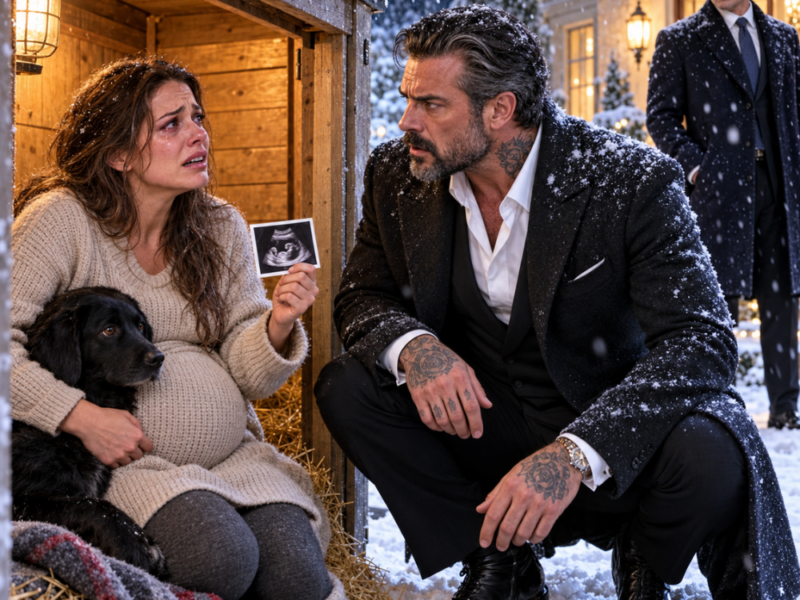
He Force His Pregnant Wife To Sleep In A Dog Shed —Until The Mafia Boss Makes Him Regret It
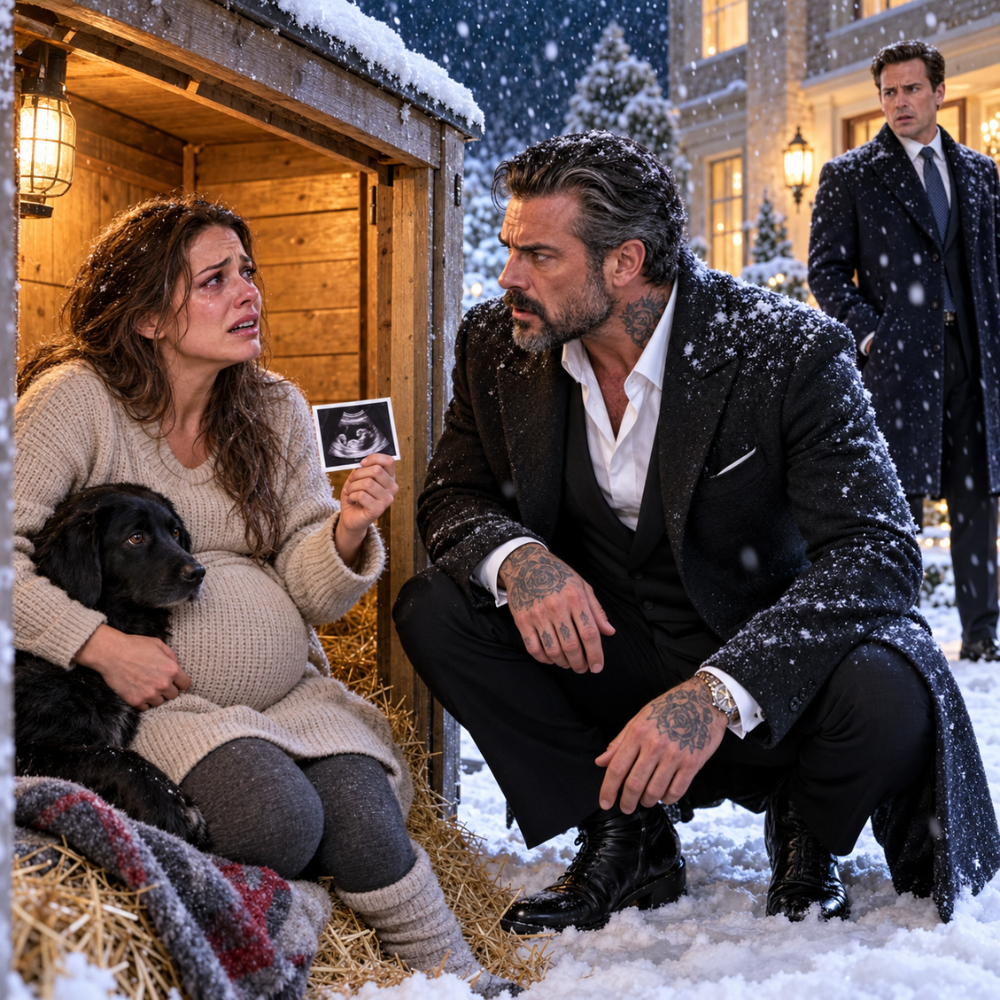
Her husband locked his eight-month-pregnant wife in a dog shed—then the man who had searched for her for nine years found the padlock
The padlock was new.
That was the first thing Jude Graves noticed.
Everything else behind the small Wyoming farmhouse looked as though it had been losing a fight with winter for twenty years. Fence posts leaned at different angles. A rusted stock tank sat on its side near a dead cottonwood. The shed crouched against the back fence beneath a sagging sheet-metal roof, its boards gray and split from years of snow, wind, and neglect.
But the lock on the door was bright steel.
Jude stopped three feet away.
The November wind moved across the flat country hard enough to sting his face. Behind him, one of the men from his security team waited near the corner of the house while another stood beside the black SUV parked beyond the cattle gate.
No one spoke.
Jude crouched.
At first he heard only the wind.
Then something scraped inside.
A dog gave a low, exhausted growl.
After that came a woman’s voice.
Barely louder than breathing.
“It’s okay, baby. I know. Just stay with me.”
Jude’s entire body went still.
He leaned closer to the crack between two warped boards.
“Ma’am?”
Silence.
Then the dog growled again.
Jude pulled a flashlight from his coat and angled the beam through the opening.
A woman sat curled in the far corner.
She was visibly pregnant.
Very pregnant.
A thin blanket covered part of her legs, but her feet were bare against the dirt. A faded cotton dress hung loosely over her shoulders beneath an old sweater that looked several sizes too large. One hand rested protectively over the curve of her stomach.
An aging hound lay pressed against her side.
The woman lifted her face toward the light.
Jude forgot the cold.
Pale green eyes stared back at him.
For nine years, he had remembered those eyes more clearly than he remembered the faces of men he had worked beside for decades.
He had wondered whether memory had changed them.
It had not.
“Lena?”
The woman flinched.
Her hand tightened over her stomach.
Jude did not move closer.
He had imagined finding her so many times that the actual moment felt strangely quiet.
There had been versions where she recognized him immediately.
Versions where she laughed.
Versions where he gave back an old embroidered handkerchief and finally learned whether he had spent nearly a decade searching for a real person or for the memory of one impossible night.
None of those imagined versions had included a padlocked dog shed.
“Who are you?” she whispered.
Jude swallowed.
“My name is Jude Graves.”
Nothing changed in her face.
That hurt more than he expected.
“You don’t know me yet.”
A door slammed behind the house.
“What the hell are you doing back there?”
A man came around the corner fast.
Mid-thirties.
Heavy boots.
Work jacket unzipped despite the cold.
Wade Phelan had the flushed, unsteady look of someone who had been drinking for hours and thought anger could make him sober.
Jude rose.
Wade stopped when he saw the two security men.
“This is private property.”
Jude looked toward the locked shed.
“There’s a pregnant woman inside.”
“My wife.”
“That doesn’t answer the question.”
Wade’s eyes narrowed.
“I don’t have to answer you.”
“No.”
Jude took his phone from his pocket.
“You can answer the sheriff’s department and the ambulance crew.”
Wade moved forward.
“Don’t call anybody.”
Jude’s security man stepped between them without touching Wade.
That was enough.
Jude dialed 911.
He gave the address.
He said there was an eight-month-pregnant woman confined in an outdoor structure in freezing weather and that she might require immediate medical attention.
Then he ended the call.
Wade stared at him.
“You don’t know anything.”
Jude looked at the new padlock.
“I know that door locks from the outside.”
“You people come onto my property and start making accusations?”
From the back porch, a woman called, “Wade?”
Darlene Phelan came through the screen door wearing slippers and a cardigan.
She was in her early sixties, though resentment had drawn hard lines around her mouth that made her look older.
Her eyes moved from Jude to the shed.
Then to the SUVs.
“What is this?”
“Some rich idiot thinks he can walk onto my land and tell me how to run my family.”
Darlene looked at Jude.
“That woman is his wife.”
“I heard.”
“Then this is family business.”
Jude’s expression did not change.
“A locked pregnant woman in freezing weather stopped being private business the second someone found her.”
Darlene’s mouth tightened.
“You don’t understand what she’s like.”
The words were so ordinary that they chilled him.
Not dramatic.
Not ashamed.
Practiced.
The kind of sentence people repeated until cruelty began sounding like household management.
A third person appeared in the doorway.
Curtis Phelan, Wade’s younger brother.
He was thinner than Wade and several years younger, wearing jeans and a stained thermal shirt.
Unlike the others, Curtis did not look angry.
He looked terrified.
His eyes went immediately to the shed.
Jude saw guilt there before Curtis looked away.
The woman inside spoke again.
“Please.”
Everyone heard it.
Not loud.
That made it worse.
Jude turned back to the shed.
“Lena, paramedics are coming.”
“No police.”
Her answer came instantly.
Jude crouched again.
“You don’t want law enforcement?”
“No.”
He could hear the fear in one word.
“Okay. Listen to me. I’m not going to make that decision for you. But I need to get this door open because of the cold and because you’re pregnant. Is that okay?”
A long pause.
Then:
“Yes.”
Jude looked at his security chief, Min Harper.
Min carried bolt cutters from the SUV.
Wade stepped forward.
“You cut my lock and I’ll have you arrested.”
Min did not even look at him.
Jude crouched beside the door.
“Lena?”
“Yes.”
“We’re opening it.”
The bolt snapped.
Min removed the broken lock and stepped back.
Jude opened the door slowly.
The smell of damp earth, old straw, and neglected animal bedding came out with the cold.
The hound stood.
He was an old redbone mix with cloudy eyes and visible ribs.
His legs shook, but he placed himself between Lena and the doorway.
Jude lowered his hands.
“Good dog.”
The dog growled.
“Very good dog.”
Lena pressed one hand against the wall and tried to stand.
She made it halfway.
Her knees buckled.
Jude instinctively reached forward, then stopped himself before touching her.
“Can I help you?”
Lena stared at his hand.
Not at him.
At the hand.
He understood then how far away from normal life she had been carried.
A person should not have to think that long before accepting help getting off a frozen floor.
Finally she nodded.
Jude took her forearm gently.
Min moved to the other side but waited until Lena accepted his help too.
Together they got her upright.
The old hound leaned against her leg.
Jude removed his coat and held it out.
She looked toward Wade.
Wade was staring at her with an expression Jude knew too well.
Possession disguised as betrayal.
“Get back inside,” Wade said.
Lena froze.
Jude said nothing.
Wade took a step.
“Lena.”
Her shoulders folded.
Jude wanted to put himself between them.
He did not.
Not yet.
He looked at Lena.
“You have a choice.”
She stared at him.
Wade laughed.
“No, she doesn’t.”
Jude kept his eyes on Lena.
“You can stay. You can leave. You can go with the ambulance, with us, with someone else. You can tell everyone here to get off the property if that’s what you want.”
Lena’s face changed.
Only slightly.
As though choice were a language she remembered but had not spoken in years.
“I can go?”
“Yes.”
Wade shoved past Min.
“She is my wife.”
Min caught Wade by the upper arm and stopped him without striking him.
Jude’s voice remained quiet.
“She is not property.”
Wade struggled once.
Min tightened his grip.
“Take your hand off me.”
“Stand still.”
Curtis remained near the porch.
His face had gone white.
Darlene shouted about trespassing.
No one listened.
Jude looked at Lena again.
“What do you want?”
She turned toward the shed.
Toward the frozen dirt.
Toward the thin blanket.
Toward the dented water bowl in the corner.
Then she looked at Wade.
For perhaps three seconds they faced each other.
Something happened inside her during those seconds.
It was not courage arriving all at once.
It was exhaustion finally becoming heavier than fear.
“I want to go.”
Wade went silent.
Lena took a breath.
“The dog comes with me.”
Jude nodded.
“Of course.”
His security man opened the back of the second SUV.
Lena pulled Jude’s coat around herself and took one step.
Then another.
Wade shouted her name.
She stopped.
Jude watched the old habit pass across her face.
The instinct to turn.
To explain.
To make him less angry.
Lena’s hand moved to her stomach.
The baby shifted beneath her palm.
She did not turn around.
She kept walking.
The ambulance arrived twelve minutes later.
By then, Lena sat inside the heated SUV with the old hound at her feet and a blanket over her shoulders.
The county paramedics checked her blood pressure and listened to the baby’s heartbeat.
The younger medic’s face changed when he saw the reading.
“We need to transport.”
Lena’s eyes went immediately toward Wade.
“He can’t come.”
“He won’t,” the medic said.
Jude looked at Min.
“Someone takes the dog.”
Lena gripped the blanket.
“No.”
Jude understood.
“He stays with our people. You tell us exactly where you want him brought.”
She searched Jude’s face.
“You won’t leave him here?”
“No.”
“Promise?”
“Yes.”
Only then did she let the paramedic help her into the ambulance.
Before the doors closed, she looked at Jude.
“Why do you know my name?”
Jude reached into the inside pocket of his coat.
Then remembered she was wearing it.
He almost smiled.
“In the hospital.”
“What?”
“I’ll explain in the hospital.”
The ambulance doors shut.
For the first time since arriving, Jude looked directly at Wade.
Wade smiled without humor.
“You think money means you can take another man’s wife?”
Jude’s face remained expressionless.
“No.”
He glanced toward the red lights disappearing down the county road.
“I think she means she can leave.”
Nine years earlier, Jude Graves had been dying in mud.
He had been twenty-eight then and much less important than people would later claim he had always been.
He owned no skyscrapers.
No private aircraft.
No security company.
No fleet of armored SUVs.
He had a half-interest in a struggling freight brokerage in Seattle, several bad debts, and enough old connections to know that some men were looking for him for reasons that had nothing to do with business disagreements.
The details stopped mattering later.
What mattered was the storm.
Jude had driven into the Wyoming mountains because the interstate had closed and he believed a secondary road might get him south.
It did not.
His truck went off the road in heavy rain.
He walked.
Somewhere during those hours, already injured from an earlier confrontation and losing strength, he crossed a fence line and collapsed behind a small house in a mountain valley.
Lena Callaway was eighteen.
She lived there with the woman she called Grandma Opal.
Opal Wynn was not Lena’s biological grandmother.
She had found Lena at five years old after a child-welfare case that had moved the girl through temporary homes for almost a year.
Opal had been a widowed seamstress in her late fifties then.
She agreed to foster Lena for a month.
The month became twenty years of family.
Their house was small.
Two bedrooms.
Wood stove.
Tin roof.
A porch that tilted slightly on the west side.
Opal sewed alterations for people from three counties and embroidered wild columbine flowers into handkerchiefs, baby blankets, table runners, and church linens.
Her initials sat in one corner of every piece.
O.W.
Lena learned beside her.
She learned how to turn trouser hems so the stitch barely showed.
How to replace a zipper without puckering the fabric.
How to make old clothing useful again.
How to charge fairly without apologizing for needing money.
How to keep soup stretching for another day.
How to tell the difference between helping and rescuing.
That last lesson took longer.
The night Jude collapsed, Lena had gone out for firewood.
Lightning briefly turned the yard white.
She saw a body beside the shed.
At first she thought he was dead.
Then he moved.
She ran back for Opal.
The older woman stood over him with a lantern.
“This is trouble.”
Lena nodded.
“We should call somebody.”
Opal looked toward the road.
Their county sheriff at the time had a reputation for deciding whether people deserved help based partly on their last name and partly on whether he knew their father.
Opal distrusted him deeply.
“Ambulance won’t get through that road tonight.”
Jude moaned.
Lena knelt.
“He’ll die out here.”
Opal sighed.
“That is how trouble usually introduces itself.”
They dragged him into the wood shed because Lena could not manage his weight alone.
His injuries looked bad but not hopeless.
One deep cut ran along his forearm.
Another wound along his side needed pressure and eventual medical care.
They cleaned him as well as they could.
Opal boiled water.
Lena used clean towels and a first-aid kit.
When the bleeding through the forearm dressing would not stop, Opal handed Lena one of her embroidered linen cloths.
Blue columbine flowers curled around one corner.
“Use this.”
“It’ll ruin it.”
“Child, cloth is for people. People are not for cloth.”
Lena wrapped Jude’s arm.
The linen stained dark.
For two nights he drifted in and out of fever.
On the third morning the road reopened.
Opal wanted an ambulance.
Jude refused.
That told Lena immediately he was involved in something she did not understand.
“You need a hospital.”
“I need a phone.”
“Hospital first.”
His dark eyes studied her.
“Are you always this bossy?”
“Only when people are bleeding on Grandma’s blankets.”
Despite his condition, he almost laughed.
Later, after making one brief phone call, Jude slept another twelve hours.
When he finally woke properly, Lena was replacing the dressing.
He watched her.
“What’s your name?”
“You’ve already asked.”
“You didn’t answer.”
“I know.”
“Why?”
“Because I don’t want whatever happened to you coming back here.”
That surprised him.
Lena was young, but she was not naive.
“You saved me.”
“I helped you until you could leave.”
“Difference?”
“Yes.”
He considered that.
“Why?”
“Why what?”
“Why help somebody you don’t know?”
Lena tied the bandage.
“Because you were alive.”
“That simple?”
“Yes.”
“You didn’t wonder whether I deserved it?”
“That’s not how being alive works.”
He never forgot those words.
On the fifth morning, a car arrived to collect him.
Jude stood outside the shed wearing borrowed clothes and a bandage beneath his sleeve.
He offered Opal money.
She refused.
He offered Lena money.
She refused harder.
“Then tell me what I owe you.”
“Nothing.”
“Nobody does something for nothing.”
Lena looked at him.
“Maybe people around you don’t.”
He had no answer.
She pointed toward the road.
“Go live.”
Jude touched the stained embroidered cloth still wrapped around his arm.
“I should return this.”
“Keep it.”
“Why?”
“So you remember somebody once helped you without wanting anything.”
The sentence would embarrass her years later when Jude repeated it.
At eighteen, Lena said it simply.
Then she went inside to make breakfast.
Jude’s car disappeared into the morning mist.
For Lena, the strange week became one story among many.
For Jude, it became a line dividing two versions of his life.
He returned to Seattle.
Recovered.
Rebuilt his failing business.
Then rebuilt it again.
Freight became logistics.
Logistics became warehousing, private transportation, security contracting, and investments.
Some people called his organization an empire.
Others called it less flattering things.
Jude’s earlier life had given him associations that newspapers occasionally described as “underworld connections,” though most of the stories were larger than the truth and the parts that were true were parts he spent years trying to leave behind.
By forty, Jude had become the sort of man whose name made doors open quickly.
He hated that he had once needed a dying man’s luck to survive long enough to become him.
He kept Opal’s handkerchief.
The fabric faded.
The stain never fully came out.
He searched for the young woman who had given it to him.
At first casually.
Then seriously.
But he had almost nothing.
A first name he did not entirely trust.
A remote property whose ownership had changed.
An older woman named Opal.
A memory of embroidered blue flowers.
Nine years is a long time to look for somebody who does not know she is missing.
By the time he found her, Lena’s life had already narrowed to the size of a locked shed.
Opal died when Lena was twenty-two.
No long illness.
No warning.
Lena found her one February morning in bed, hands resting over the quilt, reading glasses folded on the nightstand.
The house became unbearable after that.
For the first month, neighbors brought casseroles.
A church group delivered a ham.
The pastor’s wife sat with Lena at the kitchen table and told her grief came in waves.
Then everybody returned to work, school pickup, winter feed bills, dental appointments, and their own families.
That was natural.
Lena understood it.
Understanding did not make the silence smaller.
She kept Opal’s alteration business running.
The sign outside became OPAL’S THREAD.
People drove in from ranches twenty miles away with broken jacket zippers, wedding dresses, rodeo shirts, school uniforms, and curtains that needed shortening.
Lena was good.
She paid the mortgage.
Paid utilities.
Filed taxes.
Bought groceries once a week at the regional supermarket.
She appeared functional.
Loneliness rarely looks dramatic from the outside.
Often it looks like someone remembering to take out the trash.
Wade Phelan entered the shop the following year carrying his father’s old western jacket.
“Can you save this?”
Lena turned the leather over carefully.
“Maybe.”
“That’s not confidence.”
“It’s honesty.”
He smiled.
That smile became important later because she would spend years wondering how the same mouth had held it.
Wade was attentive at first.
Not extravagantly.
That might have warned her.
He brought coffee.
Changed the oil in her truck.
Fixed the back step without being asked.
When the first anniversary of Opal’s death arrived, Wade remembered.
He left flowers on the porch and did not force Lena to talk.
At twenty-three, alone in a house full of someone else’s memory, that kindness felt enormous.
Darlene liked her too.
At first.
“My son needs a steady woman.”
Lena should have heard the ownership in that sentence.
Instead she heard inclusion.
They married after ten months.
Small church ceremony.
Sheet cake from the grocery store.
Forty people.
Wade cried during the vows.
For the first six months, married life was mostly ordinary.
Then Wade lost a seasonal drilling job.
Money tightened.
He drank more.
He began asking where Lena had been even when he knew she had been at the sewing shop.
He disliked certain customers.
Especially men.
Then he disliked Lena working late.
Then he disliked the shop altogether because “a wife shouldn’t need strangers walking in whenever they please.”
He never asked her to close it outright.
He made keeping it exhausting.
That was his pattern.
He rarely forbade something directly at first.
He simply attached enough tension to it that surrender felt easier.
The first time he grabbed her arm hard enough to leave marks, he apologized before bed.
He cried.
He blamed whiskey.
Work.
His father.
The fact that Lena “shut down” during arguments.
Then he bought flowers.
Lena believed remorse meant change.
The second time, he blamed her for embarrassing him in front of a friend.
Then came apologies again.
By the time Darlene moved into the house after losing her rental, Lena no longer knew which version of normal she was defending.
Darlene explained Wade to her.
That was how she framed it.
“He has a temper.”
“He gets scared when he thinks people don’t respect him.”
“You know how men are.”
“Don’t push him when he’s been drinking.”
“Marriage takes patience.”
At church lunches, Darlene spoke about Lena as though she were fortunate.
“My Wade works himself sick keeping that roof over them.”
Lena owned the house before she met him.
Nobody corrected Darlene.
Neither did Lena.
When Lena became pregnant, she believed things might improve.
For three weeks, they did.
Wade came to the first appointment.
He stared at the ultrasound screen.
He cried in the parking lot.
Then one night he accused Lena of judging how much he drank.
The old cycle returned.
By the eighth month, Dr. Margot Avery at the county clinic had begun asking Lena direct questions.
“Do you feel safe at home?”
“Yes.”
“Has anyone hurt you?”
“No.”
“Do you have somewhere to go if you needed to leave tonight?”
Lena stared at the paper sheet covering the exam table.
“No.”
Dr. Avery pulled a business card from a drawer.
It contained the number for a domestic-violence program two counties away.
“Keep it somewhere he won’t find it.”
Lena did not take it.
Dr. Avery placed it inside a prenatal information folder instead.
“No decision today.”
Lena looked at her.
“Why are you doing this?”
“Because I’m asking every question your face is asking me not to ask.”
Lena left the clinic with the card.
She hid it beneath the spare tire in her truck.
A month later, Wade sold the truck.
He told her they needed money.
The dog shed began as a threat.
“If you want to act like you don’t belong in this house, maybe you shouldn’t sleep in it.”
The first time he locked her there, it was August.
Warm enough at night.
He left her for an hour.
Then two.
By autumn, punishment had become routine.
The old hound, Boone, began following her out.
Wade stopped trying to keep him away.
“Dog belongs in the dog house.”
Darlene laughed the first time.
Curtis did not.
He also did not say anything.
That silence would follow him for years.
The night Jude found Lena, Wade had been drinking since afternoon.
A ranch supplier named Ray Cutler had stopped by.
Lena answered a question Wade believed she should have let him answer.
That was all.
Later, inside the kitchen, Wade accused her of disrespecting him.
Lena made the mistake of saying, “I was talking.”
A small sentence.
A dangerous one.
He put her outside.
Locked the shed.
The temperature dropped below freezing before midnight.
And hundreds of miles away, Jude Graves received a phone call.
The clue that finally led him to Lena came from something embarrassingly simple.
Embroidery.
An archivist helping his staff research the old cloth recognized the columbine pattern as similar to work once sold through a church craft cooperative in central Wyoming.
Records listed Opal Wynn.
Deceased.
No children.
One former foster daughter: Lena Callaway.
Married name: Phelan.
Jude’s investigator initially found nothing alarming.
Then he found a withdrawn assault complaint involving Wade.
A second county record.
A dismissed disorderly-conduct case.
A note from a former employer.
Nothing alone proved abuse.
Together they made Jude uneasy.
He hired a licensed investigator.
The investigator saw Lena once at a grocery store wearing long sleeves on a warm afternoon.
Again at the clinic.
Then at the property moving feed sacks while heavily pregnant.
Jude told himself he needed evidence before barging into a stranger’s marriage because of a nine-year-old memory.
Then Min called.
“He put her in an outdoor shed.”
Jude stood from his desk.
“What?”
“I watched him lock it.”
“Pregnant?”
“Yes.”
“Call emergency services.”
“I already did.”
Jude was moving before the call ended.
At the hospital, Lena’s world became paperwork.
That surprised her.
She expected rescue to feel like a door opening.
Instead it looked like forms.
Insurance information.
Medical history.
Prenatal records.
A domestic-violence advocate named Tessa who sat beside the bed and spoke in a voice that made no promises she could not keep.
“You do not have to decide everything today.”
Lena held a cup of water in both hands.
“Can he make me go home?”
“No.”
“He’s my husband.”
“You are an adult. Marriage doesn’t give him custody of you.”
The sentence sounded obvious.
Lena cried anyway.
Dr. Avery arrived the next morning after Jude’s office located her through the clinic.
She examined Lena carefully.
High blood pressure.
Dehydration.
Nutritional concerns.
Several older injuries that needed evaluation.
The baby, somehow, remained stable.
“You need rest,” Dr. Avery said.
Lena laughed once.
“I’ve heard of it.”
Dr. Avery did not smile.
“I mean it.”
The hospital social worker helped Lena file for an emergency protective order.
A local attorney explained divorce.
Another explained property rights.
The house had been Opal’s.
That mattered.
Wade’s name had been added later to some accounts but not the deed.
Lena listened as though they were discussing a stranger’s life.
Property.
Protective order.
Separate finances.
Prenatal coverage.
Evidence preservation.
Sheriff’s jurisdiction.
For two years, Wade had made every problem feel personal and emotional.
Now professionals turned pieces of her life back into facts.
Facts could be written down.
Facts could be filed.
Facts did not care whether Darlene approved.
On the second evening, Jude came to see her.
He did not enter until a nurse asked Lena.
“Mr. Graves is here. Do you want him in?”
Lena almost said no.
Then she remembered his face outside the shed.
Not rescuing.
Waiting.
“Yes.”
Jude entered alone.
He wore a dark sweater instead of a suit.
For a man people described as intimidating, he looked oddly uncertain.
Lena sat upright against the pillows.
“Who are you?”
Jude took the chair farthest from the bed.
“That depends how long an answer you want.”
“The real one.”
He nodded.
“My company owns transportation and security businesses. I have a past that is less clean than the company biography makes it sound.”
Lena’s expression did not change.
“I’ve known men who use vague language when the real language makes them look bad.”
Jude almost smiled.
“Fair.”
“So?”
“I ran with people I shouldn’t have when I was younger. Some relationships followed me into business. People decided that made me something like a mob boss.”
“Are you?”
“No.”
She waited.
Jude added, “But I’ve done things I wouldn’t defend today.”
“That sounds closer to the truth.”
“It is.”
“Why were you looking for me?”
Jude reached into his jacket.
This time the handkerchief was there.
He placed it on the small table between them.
Lena stared.
The cloth was faded nearly gray.
Blue columbine flowers still curled across one corner.
O.W.
Her grandmother’s initials.
A stain remained in the center despite years of washing.
Lena touched it with two fingers.
“Where did you get this?”
“You gave it to me.”
Her eyes moved to the scar along his forearm.
Memory arrived slowly.
Storm.
Wood shed.
A stranger barely conscious.
Opal complaining that trouble had found the property again.
Lena looked at Jude.
“You.”
“Yes.”
“You were younger.”
“So were you.”
She sat back.
“You’ve had this nine years?”
“Yes.”
“Why?”
“Because nobody had ever saved my life and then refused to tell me her last name.”
“I didn’t save your life.”
“You did enough.”
Lena touched the embroidery again.
“Grandma made this.”
“I know.”
Her eyes filled.
Jude looked away to give her privacy.
That gesture mattered.
“Why search for me?”
“At first, gratitude.”
“And later?”
He considered lying.
Then did not.
“Because I needed to know you were okay.”
“You didn’t know me.”
“No.”
“Then that doesn’t make sense.”
“I know.”
Lena studied him.
“I don’t owe you anything.”
The sentence came out suddenly.
Almost harshly.
Jude nodded immediately.
“Correct.”
“You finding me doesn’t mean I belong to you.”
“No.”
“You don’t get to decide where I live.”
“No.”
“Or what happens with Wade.”
“No.”
“Or my baby.”
“No.”
She stared at him.
“You’re agreeing too fast.”
“Because you’re right.”
Silence.
Lena’s shoulders dropped slightly.
Jude leaned back.
“The only thing I want from you is permission to return this.”
He indicated the handkerchief.
“It belongs to you.”
Lena folded the cloth carefully.
“No.”
Jude frowned.
“You kept it nine years.”
“Yes.”
“Then keep it.”
“Why?”
Her face softened by a fraction.
“So you remember you survived.”
The following morning, Wade appeared in the hospital lobby.
Not with a weapon.
Not with hired men.
With paperwork and entitlement.
Sheriff Owen Daws came beside him despite having no authority to enforce Wade’s demand outside his county.
They never reached Lena’s floor.
Hospital security stopped them.
A city police officer arrived.
Tessa, the domestic-violence advocate, came upstairs to Lena.
“Your husband is downstairs.”
Every muscle in Lena’s body locked.
“He found me.”
“Yes.”
“Is he coming up?”
“No.”
“He’ll make a scene.”
“He already is.”
Lena looked toward Jude, who sat near the window.
Jude said nothing.
Tessa asked, “Do you want to see him?”
“No.”
Then Lena closed her eyes.
She remembered Wade telling neighbors that she was unstable.
Darlene telling church women Lena exaggerated.
Sheriff Daws seeing a bruise near her cheek at the grocery store and asking Wade whether “things were getting difficult at home” as though Lena were weather.
Lena opened her eyes.
“Yes.”
Tessa waited.
“Are you sure?”
“No.”
That answer made the advocate smile faintly.
“You don’t have to be sure.”
“I want to tell him myself.”
The meeting happened in a hospital conference room with security nearby and Lena’s attorney present.
Not the lobby.
Not a corridor.
No audience.
Wade entered wearing the same work jacket from the night before.
His expression changed the moment he saw her.
The fury disappeared.
His voice softened.
“Baby.”
Lena almost laughed from the familiarity of it.
He sat across from her.
“I’ve been worried sick.”
“You locked me outside.”
“I was angry.”
“In freezing weather.”
“I made a mistake.”
Lena’s hands shook beneath the table.
She placed them on top so he could see.
Wade leaned forward.
“Come home. We’ll fix it.”
“No.”
He blinked.
“I said I’m sorry.”
“I heard you.”
“You know I love you.”
Lena looked at him.
For years that sentence had functioned like a receipt he handed her after every cruelty.
Proof that the transaction should be considered settled.
“You’ve apologized before.”
“This is different.”
“How?”
“The baby.”
Something inside Lena became calm.
Not because she stopped being afraid.
Because the answer finally became clear enough to stand beside fear.
“You locked the mother of your child in a dog shed.”
Wade looked toward her attorney.
“You people are putting words in her mouth.”
Lena’s voice sharpened.
“Look at me.”
He did.
“No one is putting words in my mouth.”
His face hardened.
There was the Wade she knew.
“This is that Graves guy, isn’t it?”
“No.”
“He’s got you confused.”
“No.”
“You think he’s going to take care of you?”
“This isn’t about him.”
Wade laughed.
“Everything is about money now.”
Lena leaned forward.
“This is about me leaving you.”
The room went silent.
Wade stared.
“You don’t mean that.”
“I do.”
“Lena.”
“I’ve hired a lawyer.”
His eyes flicked toward the woman beside her.
“We are filing for divorce.”
The word changed him.
His jaw tightened.
“You’re carrying my child.”
“Yes.”
“You can’t keep my child from me.”
“That will be handled through the court.”
The attorney had taught Lena that sentence.
She loved it.
Not because it threatened Wade.
Because it removed the argument from his kitchen.
“You’re destroying our family.”
Lena took a breath.
“A family should have been safe before I had to destroy anything.”
Wade stood.
Hospital security immediately stepped closer.
He looked at Lena with naked hatred.
Then at Jude through the glass wall outside.
“I knew it.”
Lena did not turn around.
“You always need somebody else to blame.”
Wade’s face reddened.
“You’ll come crawling back when his charity runs out.”
Lena stood carefully.
“My life is not his charity.”
Then she left the room.
Her legs nearly gave out in the hallway.
Jude moved toward her.
Stopped.
“Do you want help?”
Lena nodded.
Only then did he offer his arm.
That became the pattern between them.
Ask.
Wait.
Accept the answer.
Wade returned to Wyoming with Darlene.
His attorney withdrew within a week after reviewing Lena’s medical records and learning an emergency protective order had been granted.
Sheriff Daws became the subject of a state-level review after hospital staff documented his attempt to pressure administrators into releasing information about Lena.
Curtis Phelan was interviewed.
At first he said little.
Then investigators asked whether Lena had ever been locked in the shed before.
Curtis looked down at his hands.
“Yes.”
“How often?”
“I don’t know.”
“More than once?”
“Yes.”
“More than five times?”
His eyes filled.
“Yes.”
He went home sick afterward.
Darlene called him a traitor for speaking at all.
“You don’t testify against blood.”
Curtis looked at his mother.
For thirty years, that sentence had organized the family.
Blood first.
Truth second.
Sometimes truth not at all.
He did not answer.
The immediate danger returned two weeks later.
Wade began sending messages despite the protective order.
First apologies.
Then accusations.
Then long promises about the baby’s future.
Lena documented everything.
She did not respond.
One night Curtis saw Wade drinking in the garage with an old handgun case open on the workbench.
That was enough.
Curtis went outside.
Sat in his truck.
Called 911.
“My brother is under a protective order.”
The dispatcher asked for the address.
Curtis gave it.
“He’s drinking and talking about going after his wife.”
“Does he have access to a firearm?”
Curtis closed his eyes.
“Yes.”
Deputies arrived before Wade left the property.
The weapon was secured.
Wade was arrested for violating the protective order after investigators reviewed the messages and other evidence.
There was no hospital standoff.
No heroic gunfight.
No pregnant woman facing down a weapon to prove she had become strong.
Lena learned about the arrest the next morning while eating oatmeal.
Her spoon stopped halfway to her mouth.
“That was Curtis?” she asked.
Tessa nodded.
“He called.”
Lena looked toward the window.
For two years Curtis had been the quiet figure in doorways.
The one who carried groceries past the shed.
The one who sometimes looked sorry.
The one who never unlocked the door.
Lena had hated him almost as much as Wade some nights.
Maybe more.
Wade’s cruelty was obvious.
Curtis’s silence left room for hope every time he walked past.
Hope hurt differently.
“Is he asking me to forgive him?”
“No.”
“Good.”
Tessa waited.
Lena finished the oatmeal.
“Maybe someday.”
Six days later, Lena went into labor.
Not because Wade appeared.
Not because there was another confrontation.
Because babies do not respect narrative timing.
At 3:18 in the morning, Lena woke with pain low across her abdomen.
By four, Dr. Avery was at the hospital.
Jude arrived at five and stopped outside the maternity unit because no one had invited him farther.
He sat in a waiting room beside a vending machine that accepted his dollar twice and refused to release the coffee.
Min found him staring at it.
“You want me to fix that?”
“No.”
“You’ve been staring at it five minutes.”
“I am experiencing helplessness.”
Min sat down.
“Bad?”
“Terrible.”
“Character building.”
“I preferred my old character.”
Inside, Lena worked through hours of labor with Dr. Avery, a labor nurse named Samantha, and a hospital social worker who had become unexpectedly important to her.
At one point Lena cried for Opal.
Not dramatically.
The name simply escaped.
“Grandma.”
Samantha squeezed her hand.
“Tell me about her.”
Between contractions, Lena tried.
“She found me when nobody wanted me.”
Another breath.
“She sewed flowers on everything.”
Another.
“She would complain about this hospital gown.”
Samantha laughed.
“Why?”
“Bad seams.”
Hours later, a little girl entered the world shouting.
Healthy.
Six pounds, nine ounces.
A head of dark hair.
Lena held her against her chest and cried so quietly the nurse pretended not to see.
“Hello.”
The baby rooted against her.
“I promised you.”
Lena touched one tiny cheek.
“I promised I’d get you somewhere safe.”
She named her Opal Margot Callaway.
Callaway.
Her own name.
The court would later address Wade’s parental rights and responsibilities through the formal process.
But Lena did not give her daughter the Phelan name at birth.
It was a small legal choice.
It felt enormous.
Jude was allowed in that afternoon.
He stopped at the doorway.
“Come in,” Lena said.
He approached the bed.
The man rumored to terrify boardrooms, freight competitors, and people from his old life looked alarmed by a seven-hour-old infant.
Lena noticed.
“You’re scared.”
“No.”
“You are.”
“I respect how breakable she appears.”
“She isn’t glass.”
“That’s easy for you to say. You’re holding her.”
Lena laughed.
It was the first real laugh Jude had heard from her.
Something in his face changed.
She saw it.
“Want to hold her?”
Jude looked genuinely panicked.
Lena smiled.
“Sit down.”
He did.
She showed him where to put his arms.
Then placed baby Opal against him.
Jude stared down at the tiny face.
The baby yawned.
He looked up.
“She did something.”
“She yawned.”
“Is that good?”
“Usually.”
“Why are you laughing?”
“Because nine years ago you were bleeding in a shed telling me you didn’t need a hospital.”
“I was young.”
“You were twenty-eight.”
“Very young.”
The baby wrapped her hand around one of his fingers.
Jude stopped speaking.
Lena watched the stillness move through him.
“Thank you,” she said.
He looked up.
“For what?”
“For finding me.”
Jude shook his head.
“You chose to leave.”
“You opened the door.”
“I opened a lock.”
“Sometimes that’s enough for someone to remember doors can open.”
Jude absorbed that.
Then Lena added, “But don’t make it bigger than it was.”
“I won’t.”
“I mean it.”
“So do I.”
She looked at her daughter.
“I have to build the rest.”
“Yes.”
Jude looked down at the baby again.
“I know.”
The divorce took nearly a year.
Real life did not finish neatly in a courtroom six weeks after the rescue.
There were continuances.
Discovery requests.
Financial disclosures.
Property arguments.
Custody evaluations.
Medical records.
Protective-order hearings.
A prosecutor separately handled Wade’s criminal case.
Lena learned to distinguish the civil process from the criminal one because people around her kept using the word justice as though it meant one thing.
It did not.
Some days justice looked like Wade being held accountable.
Other days it looked like Lena discovering she still owned the house Opal had left her.
Sometimes it looked like child support calculations.
Sometimes it looked like being allowed to enter the old property with a sheriff’s civil standby so she could collect sewing machines, photographs, and boxes from Opal’s attic.
Jude offered to send people.
Lena refused.
“I need to do this.”
He nodded.
“Want me nearby?”
“No.”
“Okay.”
She went with Tessa and two deputies.
The house smelled the same.
Coffee.
Dust.
Wood smoke trapped in curtains.
Darlene had already moved out.
Curtis waited by the barn.
He did not approach until Lena walked toward him.
“You called the police,” she said.
“Yes.”
“Why?”
Curtis looked miserable.
“Because I finally understood he might kill you.”
Lena’s expression did not soften.
“You should have understood before.”
“I know.”
“You heard me.”
“I know.”
“You saw him lock that door.”
“Yes.”
“You walked past.”
Curtis cried then.
No dramatic breakdown.
His eyes simply filled and he looked toward the dirt.
“I was afraid of him.”
“So was I.”
“I know.”
“No. You got to leave the room.”
He covered his mouth.
Lena let the silence stand.
Then Curtis said, “I’m sorry.”
She nodded once.
“I believe you.”
Hope entered his face too quickly.
Lena stopped it.
“That doesn’t mean I forgive you yet.”
He lowered his head.
“Okay.”
“It means I believe you’re sorry.”
“I’ll take that.”
She looked toward the dog shed.
The lock had been removed.
The door hung crooked.
“Why didn’t you help me?”
Curtis answered after a long time.
“Because my whole life my mother told me keeping the family together was the same thing as being good.”
Lena looked at him.
“And?”
“And I finally learned keeping something together can be evil if the thing you’re protecting is hurting people.”
That was the first honest thing Curtis ever gave her.
Months later, he testified.
Not because Lena asked.
Because prosecutors subpoenaed him and he decided not to hide behind forgetfulness.
He described what he had seen.
What he had ignored.
How Wade used the shed.
How Darlene normalized it.
How the household had slowly reorganized itself around one man’s temper.
His testimony mattered.
So did the medical records.
The photographs.
The text messages.
The emergency call.
The hospital documentation.
The protective-order violations.
Wade eventually accepted a plea agreement that included a significant prison sentence and restrictions on future contact.
The family-court judge separately addressed custody based on safety assessments and the criminal findings.
Sheriff Daws resigned after a state investigation found repeated failures in how his office had handled domestic-violence complaints, not only Lena’s.
That mattered to her almost more.
There had been other women.
Other kitchens.
Other explanations.
Other people told that home was private.
The county hired new leadership.
A domestic-violence liaison began training deputies.
Nothing transformed overnight.
But something moved.
Lena did not return to Opal’s old house.
She sold it.
People were surprised.
“You own it free and clear,” Dr. Avery said.
“I know.”
“Are you sure?”
Lena looked at baby Opal sleeping against her shoulder.
“The good memories are good.”
“And the bad?”
“They’re not why I’m selling.”
“Then why?”
Lena smiled slightly.
“Because owning a house is not the same as owing it the rest of my life.”
She moved two towns away.
Not far.
Far enough.
The new house was small, pale yellow, with a covered porch and a maple tree beside the driveway.
She rented it at first.
Then bought it eighteen months later with money from the sale of Opal’s property.
Jude offered nothing toward the down payment.
That had been Lena’s rule.
He respected it.
Opal’s Thread reopened in a storefront between a pharmacy and a family-owned diner.
The first month was slow.
Lena altered school uniforms.
Hemmed jeans.
Repaired a wedding dress zipper the morning of the ceremony while the bride’s mother paced behind her.
Then Dr. Avery mentioned the shop to somebody.
Tessa mentioned it to somebody else.
Gradually, women from the regional shelter began appearing.
One needed a jacket repaired for a job interview.
Another needed professional pants shortened.
A third wanted to learn how to sew because she needed a job that could work around childcare.
Lena started offering classes on Wednesday evenings.
Free for shelter residents.
Ten dollars for everybody else.
The classes expanded.
A church donated two machines.
A retired home-economics teacher volunteered.
Someone brought a Costco sheet cake to the first class that had ten women.
Nobody admitted ordering it.
Lena suspected Tessa.
Boone slept beneath the cutting table.
The old hound had been examined by a veterinarian after the rescue.
Underfed.
Arthritis.
Bad teeth.
Otherwise stubbornly alive.
He followed Lena everywhere.
When baby Opal began crawling, Boone tolerated handfuls of fur with the patience of a saint.
Jude visited.
Not often at first.
Lena controlled the rhythm.
Coffee once.
Lunch.
A walk through a city park with baby Opal strapped against Lena’s chest.
Jude never arrived unannounced.
He did not send extravagant gifts.
When he brought baby Opal a stuffed bear that cost far too much, Lena returned it.
“You can’t return a bear.”
“Watch me.”
“It has a receipt?”
“No.”
“Then it goes to the shelter toy drive.”
Jude stared at her.
“You’re ruthless.”
“You’ll survive.”
He bought a smaller bear from the grocery store.
Opal loved it.
Jude had spent most of his adult life in rooms where people accommodated power before he asked.
Lena did not.
It was one of the things he loved first.
It was also one of the things he had to learn not to romanticize.
Lena’s independence was not a performance for him.
It existed whether he enjoyed it or not.
Sometimes it inconvenienced him.
That was the point.
One afternoon he offered to have his company’s lawyers review a lease for expansion space.
Lena said no.
“They’re excellent.”
“I have a lawyer.”
“Mine specialize in commercial property.”
“So does mine.”
“Who?”
She named a local attorney.
Jude frowned.
“He’s good.”
“I know.”
“You already hired him.”
“Yes.”
“Why did you let me talk for five minutes?”
“You seemed happy.”
Jude laughed.
Another evening, Lena asked about his past.
Not the respectable version.
The real one.
They sat on her porch while Boone slept near the steps and baby Opal breathed through a monitor inside.
“You told me you did things you wouldn’t defend.”
“Yes.”
“What things?”
Jude was quiet.
Lena waited.
Finally he told her enough.
No heroic gangster stories.
No glamorous empire built through fear.
He told her about his teens.
Foster care.
Street violence.
Working for men who treated loyalty like ownership.
Jobs he regretted.
Threats he delivered.
Money he should not have taken.
The people he eventually cut ties with.
The legitimate freight company that gave him the first route out.
“You’re disappointed,” he said.
Lena looked at him.
“No.”
“That would be easier.”
“I’m thinking.”
“About?”
“Whether who you were is something you’re still asking other people to pay for.”
He stared at her.
She continued.
“Are you still hurting people because you were hurt?”
“No.”
“Are you hiding crimes?”
“No.”
“Are you pretending fear is respect?”
Jude looked down.
“I did for a long time.”
“And now?”
“Now I know the difference.”
Lena nodded.
“Then keep knowing it.”
He smiled faintly.
“You make everything sound simple.”
“No.”
She looked toward the dark yard.
“I make it sound like choices.”
Two years after the night Jude opened the shed, Lena took his hand first.
It happened in October.
Cold enough for sweaters.
Warm enough to sit outside.
Opal had fallen asleep early.
Boone was snoring near Jude’s chair.
Lena talked about nothing important for twenty minutes.
A difficult customer.
The city’s plan to redo parking meters.
A woman in sewing class who had finally learned buttonholes and celebrated as though she’d won the lottery.
Jude listened.
Then Lena reached across the porch and put her hand over his.
He became completely still.
That made her smile.
“You can move.”
“I didn’t want to assume.”
“Good answer.”
He turned his palm upward.
Their fingers fit together.
“I want to try,” Lena said.
Jude looked at her.
“Try what?”
“This.”
His expression remained careful.
“Slowly.”
“Very.”
“My daughter comes first.”
“Obviously.”
“My work matters.”
“I know.”
“My house stays mine.”
“Yes.”
“You don’t solve problems I haven’t asked you to solve.”
“I am going to fail at that occasionally.”
“At least you’re self-aware.”
“I’ll apologize.”
“You’ll correct it.”
Jude smiled.
“Yes.”
Lena squeezed his hand.
“And if I ever feel trapped again, I leave.”
His smile disappeared.
“Always.”
She studied his face.
“That’s the part people misunderstand.”
“What?”
“Love isn’t promising someone they’ll never leave.”
Jude waited.
“It’s building something they don’t have to escape.”
He lifted her hand and kissed her knuckles.
Nothing more.
Weeks later, Jude returned something else.
A small silver pendant lay inside a plain box.
Blue columbine.
Opal’s pendant.
Lena stared at it.
For years she had believed Wade pawned it in Casper and that it had disappeared forever.
“How?”
“Secondhand records. Pawn databases. A dealer in Idaho bought an estate lot that included it.”
“You searched?”
“Yes.”
“For how long?”
“Long enough.”
Lena’s eyes filled.
Jude immediately said, “This is not a debt.”
She looked at him.
“I know.”
“I need you to know.”
“I do.”
He placed the box in her hand rather than fastening it around her neck.
That mattered.
Lena touched the silver flower.
“Grandma wore this every Sunday.”
Jude sat beside her.
“She must have been something.”
“She was impossible.”
“Sounds familiar.”
Lena laughed through tears.
Then she put the necklace on herself.
The following autumn, she carried two-year-old Opal to the small cemetery where her grandmother was buried.
Jude came but stayed near the truck until Lena waved him over.
Boone was too old for the drive.
The cemetery grass had gone gold.
Lena placed fresh columbine flowers beside the stone.
Opal Wynn.
Beloved mother and grandmother.
Not by blood.
Nobody had needed that carved into granite.
Lena stood quietly.
Little Opal touched the stone.
“Grandma?”
“Great-Grandma.”
“Flower.”
“Yes.”
Lena crouched.
“She liked flowers.”
The child immediately tried to pick one from the arrangement.
Lena laughed and stopped her.
Jude stood several steps away.
Lena looked at Opal’s name.
“I found my way.”
Wind moved through the dry grass.
No answer came.
She had not expected one.
“I was mad at you for a while.”
Jude glanced toward her.
Lena kept speaking to the stone.
“You taught me to help people. You forgot to teach me I was allowed to stop helping people who hurt me.”
Her mouth trembled.
“That probably wasn’t your fault.”
Little Opal sat in the grass.
Lena wiped one cheek.
“I thought being patient made me good.”
She took a breath.
“I know better now.”
Jude looked away.
The moment belonged to Lena.
She touched the pendant at her throat.
“I still miss you.”
Then she stood.
They drove home before dark.
Years passed.
Wade became less central to the story.
That was its own victory.
At first Lena counted everything from him.
Six months since the protective order.
One year since the divorce.
Two years since the shed.
Three years since the last court filing.
Then one day she realized she had missed an anniversary entirely.
She had been helping Opal with preschool enrollment.
The date came and went.
Nothing happened.
Healing did not announce itself.
Sometimes it looked like forgetting to count.
Curtis wrote Lena once a year.
Never asking forgiveness.
Updates only.
He had left Wyoming.
Stopped drinking.
Started therapy.
Found work with a utility contractor.
The first letter ended:
You don’t owe me an answer. I just wanted you to know I am trying to become somebody who would have opened the door.
Lena kept the letter.
She did not answer for eight months.
Then she wrote:
Opening the door matters. Speaking before the door gets locked matters more.
Curtis framed the note.
He never told her.
By the time Opal started kindergarten, Opal’s Thread employed four women.
The Wednesday class had become a nonprofit program operating from the back half of the shop.
It offered sewing instruction, interview clothing, emergency tailoring, and referrals to legal and housing services for women rebuilding after unsafe homes.
Lena refused to call it a rescue program.
“We don’t rescue adults,” she told a local newspaper reporter.
“What do you call it?”
“A place with tools.”
The reporter smiled.
“That sounds less dramatic.”
“Good.”
“What do the tools do?”
“Whatever the person using them decides.”
The quote became the headline.
Jude kept a copy.
He did not show Lena because she accused him of becoming sentimental with age.
He was.
Their eventual wedding was smaller than people expected.
Jude’s business reputation made strangers assume there would be security convoys, expensive hotels, and a guest list full of people who measured power for a living.
Lena wanted none of that.
They married behind Opal’s Thread on a September afternoon.
Forty-three guests.
Folding chairs.
Food from the diner next door.
A sheet cake from Costco because Lena genuinely liked Costco cake and refused to pretend otherwise for symbolism.
Dr. Avery attended.
Tessa attended.
Min stood beside Jude.
Curtis did not come.
Lena had invited him.
He declined.
His note said he did not want his presence turning Lena’s wedding into a test of forgiveness.
She respected him for understanding.
Boone had died the previous winter.
Old age.
At home.
Lena kept his collar in a drawer behind the shop register.
On her wedding day she wrapped a small piece of blue ribbon from the collar around the stems of her flowers.
Baby Opal, no longer a baby at all, walked ahead carrying petals and ignoring every instruction she’d been given about where to scatter them.
Jude waited beneath a maple tree.
No black suit.
No intimidating entourage.
Gray jacket.
Open collar.
Scar still visible along his left arm.
Lena wore Opal’s silver columbine pendant.
When she reached him, Jude glanced at it.
Then at her.
“You okay?” he whispered.
“Yes.”
“You sure?”
“Stop asking.”
He smiled.
“You told me to ask.”
“Not every six seconds.”
Their vows were simple.
Jude spoke first.
“I spent a long time believing strength meant being the person nobody could force to move.”
Lena watched him.
“I was wrong.”
His voice softened.
“Strength is being able to stand beside someone without deciding where they should stand.”
Lena’s eyes filled.
“I promise to ask before I help. Listen after you answer. Admit when I fail. And never confuse loving you with owning any part of you.”
There were people in the audience who understood exactly why those words mattered.
Lena took his hands.
“For most of my life, I thought love was something you earned by being useful.”
Her voice remained steady.
“I thought if I was patient enough, helpful enough, quiet enough, people would keep choosing me.”
She looked toward little Opal sitting between Dr. Avery and Tessa.
“I know now that silence isn’t peace.”
She looked back at Jude.
“And being needed is not the same thing as being loved.”
Jude swallowed.
“I choose you because you leave room for my no. Because you stay when I say yes. And because you learned that protecting me sometimes means trusting me to protect myself.”
They married beneath the maple tree.
Nothing dramatic happened.
No enemies appeared.
No debt came due.
Nobody had to be frightened for the ending to feel earned.
At the reception, Lena found herself standing near the shop door while people carried paper plates and children ran through the grass.
For a moment, the scene blurred with memory.
A different door.
Rotten wood.
Frozen dirt.
A padlock.
She could almost hear Wade’s voice telling her to get back inside.
Then Opal ran up.
“Mom!”
Lena looked down.
Her daughter held an enormous piece of cake with one side already collapsing.
“This is too much cake.”
“Uncle Min said yes.”
Across the yard, Min immediately looked away.
Lena laughed.
“All right. Sit down before you drop it.”
Opal ran toward the tables.
Jude appeared beside Lena.
“You went somewhere.”
She knew what he meant.
“Just for a second.”
“Want to talk?”
“No.”
He nodded.
They watched the party.
After a moment, Lena said, “I used to think that shed was the worst thing that happened to me.”
Jude waited.
“It wasn’t?”
“Oh, it was terrible.”
She folded her arms.
“But the worst thing happened before.”
“What?”
“The part where I stopped believing the door should have been open.”
Jude looked at her.
“That took longer to fix.”
He slipped one hand into hers.
She let him.
Years later, people still occasionally told the story wrong.
They said a powerful man found a helpless woman and saved her.
Lena corrected them whenever she had the energy.
Jude opened a door.
Doctors treated her.
Lawyers explained her rights.
An advocate showed her options.
Curtis finally told the truth.
A judge enforced the law.
Friends helped.
A community gave her work.
All of that mattered.
But Lena chose to walk.
She chose again the next morning.
And at the protective-order hearing.
And when Wade apologized.
And when Darlene blamed her.
And when loneliness made the old house almost seem preferable to uncertainty.
And when money from Jude could have made everything easier but also might have made independence harder to recognize.
She chose when she reopened the shop.
When she hired her own attorney.
When she sold Opal’s house.
When she bought her own.
When she let Jude close enough to disappoint her.
When she corrected him.
When she trusted the correction.
When she took his hand.
When she married him.
Freedom was not the SUV waiting beyond a frozen yard.
Freedom was what happened after.
It was the hundred ordinary decisions no one applauded.
Jude changed too.
For much of his life, people had obeyed him before he finished sentences.
He had mistaken that for respect more than once.
Lena taught him the cost of rooms where one person carried too much gravity.
He stopped enjoying them.
At work, he changed policies that had once made his own authority too difficult to question.
His companies established independent employee complaint channels.
Senior leaders received fewer opportunities to hide behind loyalty.
Min joked that marriage had turned Jude soft.
Jude disagreed.
“I was soft before.”
Min stared at him.
“You were terrifying.”
“Exactly. Insecurity with a security budget.”
Min laughed for three full minutes.
Lena heard the story later and immediately took Min’s side.
One winter evening, years after the rescue, Jude came into Opal’s Thread near closing.
Snow moved softly outside.
The last sewing student had left.
Opal, now eight, sat on the floor doing homework beside the radiator.
Lena was repairing the lining of an old wool coat.
Jude hung his jacket near the door.
“You ready?”
“Ten minutes.”
He looked at the clock.
“You said that twenty minutes ago.”
“Then you have useful evidence.”
Opal looked up from her worksheet.
“Mom always says ten minutes.”
“Thank you,” Jude said.
“Traitor,” Lena replied.
The child grinned.
Jude wandered toward the back wall.
Framed there was one piece of old linen.
Faded.
Blue columbines.
O.W.
Lena had finally asked for the handkerchief back the year after they married.
Not because Jude’s keeping it bothered her.
Because she realized it belonged in the shop.
Beside the frame was a small card.
It did not mention Jude.
It did not mention the storm.
It simply read:
Cloth is for people. People are not for cloth. — Opal Wynn
Jude had seen it hundreds of times.
That night he stopped again.
Lena noticed.
“What?”
“I was thinking about her.”
“Grandma?”
“Yes.”
“You never met her awake.”
“Technically I did. I was barely awake.”
“She thought you were trouble.”
“She was right.”
“She usually was.”
Jude looked at the framed cloth.
“I wish she could see this place.”
Lena threaded a needle.
“Sometimes I think she would complain I charge too little.”
“Also probably right.”
“Do not encourage her ghost.”
Opal looked up.
“Ghost?”
“No ghost,” Lena and Jude said simultaneously.
The child returned to homework.
Jude walked behind the counter.
“Can I help?”
“Yes.”
He looked pleased.
“Take the trash out.”
His face fell.
“That’s the help?”
“You asked.”
He took the bag.
Lena watched him go.
She smiled.
This was what nobody understood about happy endings.
They were rarely made of happiness alone.
There were winter utility bills.
School permission slips.
Arguments.
Nightmares that returned without warning.
Years when Lena still hated certain kinds of locks.
A period when Opal asked difficult questions about Wade and Lena had to decide what truth looked like at each age.
Jude had his own ghosts.
He had people from his past he would never fully forgive himself for failing.
Some nights he woke before dawn and walked through the house checking doors because old habits did not vanish just because life became kind.
They did not heal each other like magic.
They learned each other’s injuries without using them as weapons.
There was a difference.
On the tenth anniversary of the night Jude found the shed, he said nothing in the morning.
No flowers.
No solemn message.
Lena appreciated that.
The date belonged to her only if she wanted it.
That evening, after Opal went to a friend’s house for a sleepover, Lena drove Jude out toward the old county road.
He looked at her.
“Where are we going?”
“You’ll see.”
The old Phelan property had new owners.
The house was painted.
The barn repaired.
The dog shed was gone.
In its place stood a small vegetable garden beneath wire fencing.
Lena pulled over on the public road.
She did not enter the property.
Jude looked across the field.
“You knew?”
“I looked it up.”
“How do you feel?”
Lena watched evening light settle over the mountains.
“I don’t know.”
They sat quietly.
Then she smiled.
“The shed’s gone.”
“Yes.”
“I thought seeing that would feel bigger.”
“What does it feel like?”
“Like somebody needed a place for tomatoes.”
Jude laughed softly.
Lena leaned back against the seat.
“That’s probably better.”
They remained until the light faded.
On the drive home, Lena stopped at a gas station for coffee.
Jude bought a candy bar.
She complained about the price.
They argued over which route was faster.
Nothing important happened.
That was the point.
Once, Lena’s entire life had been organized around another person’s temper.
Now the most difficult decision of the evening was whether to take the highway or the county road.
She chose the county road.
Jude drove.
The mountains went dark around them.
Her phone buzzed with a message from Opal asking whether she could stay at her friend’s house through breakfast.
Lena typed:
Yes. Brush your teeth.
Then another message appeared.
Already did.
Lena showed Jude.
“She is lying.”
“Almost certainly.”
“We raised a criminal.”
“Do not put that on me.”
She laughed.
The sound filled the car.
The old silver columbine pendant rested against her sweater.
Jude’s scar showed faintly where his sleeve had pulled back from his wrist.
Two marks from two lives that had crossed once in a storm, separated for nine years, then crossed again beside a locked door.
For a long time, Jude believed finding Lena meant repaying a debt.
Lena eventually convinced him there was no debt.
She had helped a human being because he was alive.
He had helped her because she asked for a door to be opened.
Neither act purchased the future.
That was why the future became possible.
Love did not arrive as payment.
It arrived later.
Slowly.
After boundaries.
After grief.
After legal papers and hospital corridors and bad coffee.
After Lena had a house with only her name on it.
After Jude understood that “I can fix it” was not always generosity.
After a frightened brother finally used his voice.
After a daughter was born somewhere safe.
After an old dog learned that every door in the new house opened from the inside.
When Lena later spoke to women at the Wednesday sewing program, she never promised them a Jude.
She hated stories that made freedom sound dependent on being discovered by the right powerful man.
Most people did not have black SUVs arriving at midnight.
Most had themselves.
A hotline number hidden in a shoe.
A coworker.
A doctor.
A cousin with a spare room.
A church secretary who knew how to keep quiet.
A legal-aid attorney.
A shelter bed.
A police officer who actually listened.
A grocery-store parking lot where they finally made a phone call.
“Don’t wait for a hero,” Lena told one woman who asked how she’d escaped.
The woman looked surprised.
“But someone came for you.”
“Yes.”
“And that saved you.”
“It helped me.”
Lena threaded blue fabric through a machine.
“But the first thing he asked was what I wanted.”
The woman went quiet.
Lena looked at her.
“That was what I had to learn to answer.”
Years earlier, on frozen dirt, the word choice had sounded almost foreign.
Now choice appeared everywhere in Lena’s life.
Which fabric.
Which school.
Which house.
Which lawyer.
Which Saturday to work.
Which Sunday to sleep late.
Whether to forgive.
Whether to remember.
Whether to stay.
Whether to go.
Whether to love.
Most choices were not dramatic.
That was their beauty.
One evening, after everyone left the shop, Lena turned off the sewing machines one by one.
Jude waited near the front door.
Opal was older now, nearly tall enough to look Lena in the eye.
She had gone to a school concert with friends.
The shop was unusually quiet.
Lena put the day’s receipts in the drawer.
Then she walked toward the framed handkerchief.
“Do you ever regret searching for me?” she asked.
Jude frowned.
“No.”
“Not even when I returned the ridiculous bear?”
“It was not ridiculous.”
“It was bigger than the baby.”
“She would have grown into it.”
“That is not how stuffed animals work.”
Jude smiled.
Then his expression softened.
“Why?”
Lena looked at the embroidered flowers.
“I sometimes wonder who you’d be if you hadn’t.”
“So do I.”
“And?”
“I think I’d have more money.”
She looked at him.
“Excuse me?”
“You are expensive.”
“I have never asked you for money.”
“You introduced me to property taxes, school fundraisers, charitable matching, and a daughter who believes concert tickets are a human right.”
Lena laughed.
Jude came closer.
Then he answered properly.
“I’d be smaller.”
She studied him.
“Smaller?”
“I used to think taking up space was the same thing as having power.”
He looked toward the shop.
“You taught me power can be making room.”
Lena slipped her hand into his.
“You learned that yourself.”
“Eventually.”
“Very eventually.”
He squeezed her fingers.
“What about you?”
“What?”
“Regret opening the shed door?”
She smiled.
“You opened it.”
“Fine. Regret walking out?”
Lena looked through the shop windows.
Snow had begun again.
Soft flakes against the streetlights.
Cars passed.
The pharmacy sign glowed next door.
A waitress across the street flipped the diner sign from OPEN to CLOSED.
Ordinary America settling into night.
“No.”
Jude waited.
“Not once?”
Lena thought about it.
There had been nights she missed even the certainty of fear because freedom felt so uncertain.
Nights after the divorce papers arrived.
Nights when baby Opal had a fever and Lena wanted another adult to blame.
Nights when a bill frightened her.
Nights when loneliness convinced her that maybe Wade had been right and she could not manage alone.
But wanting fear to become familiar again was not the same as regretting freedom.
“No,” she said.
“Not once.”
Jude unlocked the front door.
Cold air entered.
Lena wrapped her scarf around her neck.
Before stepping outside, she looked back.
At Opal’s Thread.
At the tables where women had learned to sew, filled out housing applications, cried into coffee, laughed over crooked seams, and occasionally said for the first time what they wanted.
At her grandmother’s handkerchief on the wall.
At Boone’s collar resting in a small shadow box below it.
At a life nobody had handed her whole.
A life built stitch by stitch.
Jude held the door.
He did not say hurry.
He did not step out first and assume she would follow.
He simply waited.
Lena turned off the last light.
Then she walked through the doorway on her own.
The door closed behind them.
Not locked against her.
Locked by her.
There was all the difference in the world.









