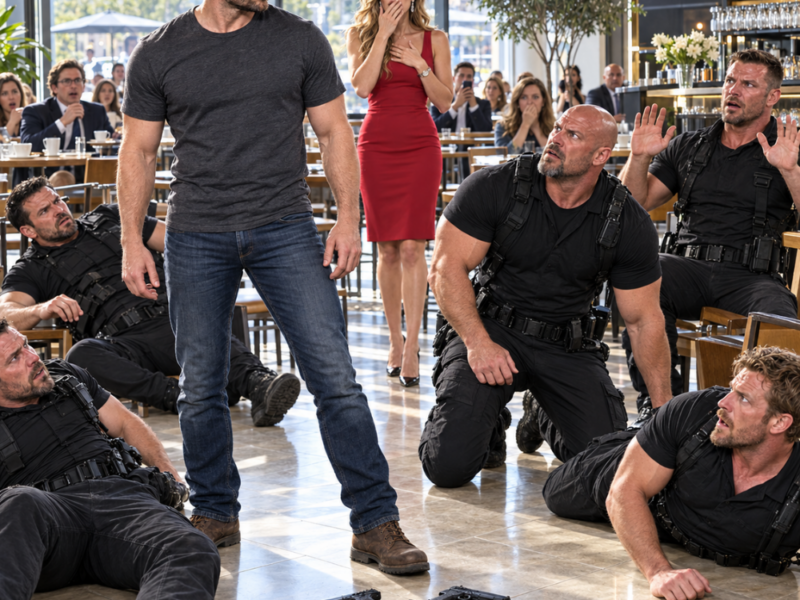
Elite Bodyguards Laughed at a Single Dad in Front of the CEO—5 Seconds Later, All 5 Were Disarmed
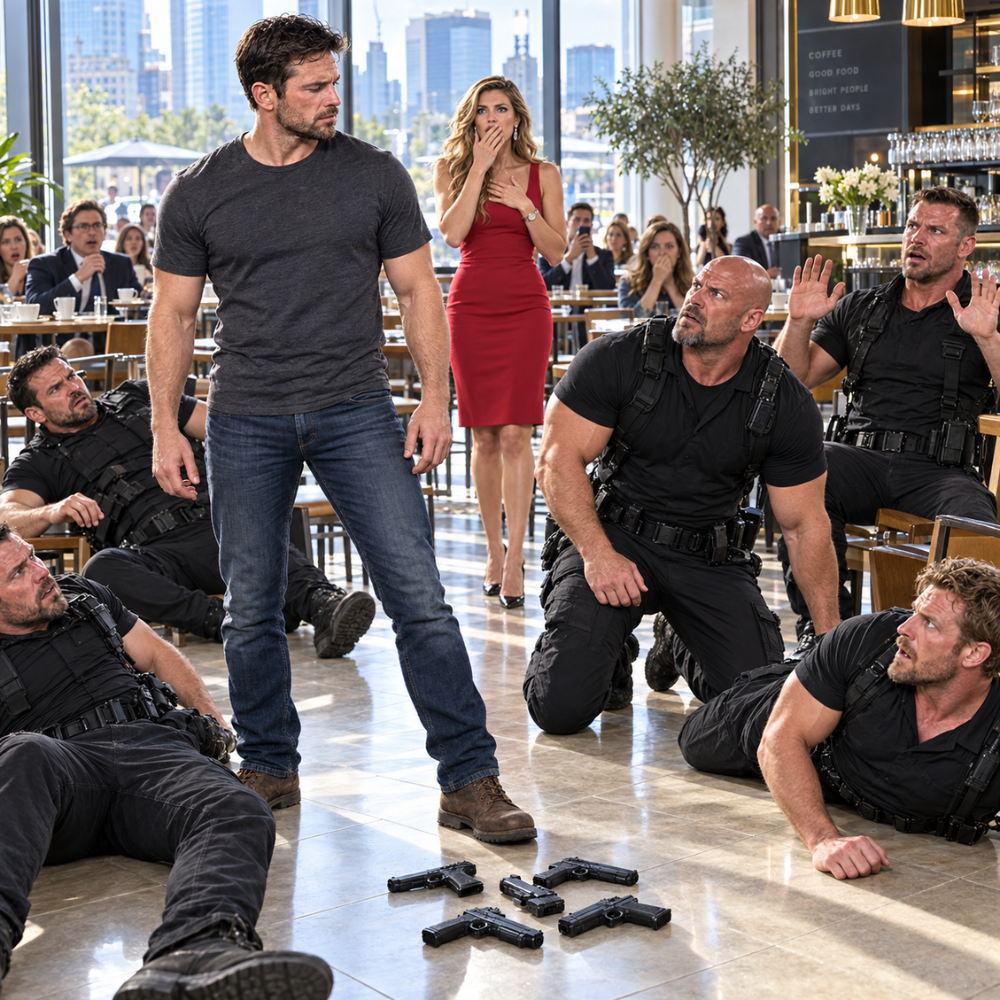
Five elite bodyguards mocked the quiet maintenance worker—then their CEO watched him put all five on the mat in seconds
The leak above sublevel two had been dripping for eleven days when Ethan Walker finally stopped waiting for the work-order system to acknowledge it.
At 6:47 on a gray Tuesday morning in Denver, he filled out a paper maintenance slip, slid one copy beneath his supervisor’s office door, kept the other folded in his shirt pocket, picked up his toolbox, and took the stairs underground.
Ethan almost always took the stairs.
Nobody at Valkor Industries knew why.
To the building’s facilities staff, he was a thirty-seven-year-old maintenance technician who showed up early, worked quietly, and seemed capable of identifying mechanical trouble before a sensor noticed it.
His navy uniform had been washed so many times that the fabric had softened at the elbows. The embroidered WALKER above his left pocket had begun fraying at the W. His steel-toed boots were three years old and had been resoled once. A dull grease stain near one sleeve refused to disappear no matter what detergent he used.
Nothing about him encouraged a second look.
That suited Ethan.
Valkor Industries occupied twelve floors of glass, steel, server rooms, research labs, executive offices, and restricted infrastructure near downtown Denver. The company publicly described itself as an advanced-security and defense-technology firm. It built surveillance systems, secure communications architecture, private security tools, and resilient infrastructure for clients who cared deeply about confidentiality.
Some of those clients were federal agencies.
Some contracts appeared nowhere on the company website.
The employees knew enough to understand that Valkor took security seriously.
Employees moved fast.
Spoke in acronyms.
Measured one another through titles, access levels, salaries, and proximity to the executive floor.
Maintenance staff moved through all of it almost invisibly.
Ethan repaired cooling units.
Changed filters.
Replaced locks.
Reset malfunctioning pressure sensors.
Fixed an elevator twice in one month.
Tracked the humidity inside server rooms.
Found bad wiring other technicians missed.
He had been at Valkor fourteen months.
His supervisor, Gerald Moss, described him as the best facilities technician he had hired in twenty-seven years.
Gerald also knew almost nothing about him.
Ethan did not drink with the crew after work.
Did not complain about management.
Did not join fantasy-football pools.
Did not talk about military service beyond confirming that yes, he had served in the Navy.
When coworkers asked where, he usually said:
“Different places.”
When they asked what he did:
“Security work.”
Most eventually stopped asking.
Ethan was not unfriendly.
That distinction mattered.
He remembered birthdays when people mentioned them.
Covered shifts for fathers whose children were sick.
Brought Gerald coffee during a January snowstorm after the older man spent four hours dealing with a frozen roof drain.
He simply maintained a border around the parts of his life he considered private.
The most important part was named Lily.
She was eight years old.
She had dark brown hair that refused to remain inside any ponytail for more than twenty minutes, her mother’s gray-green eyes, and the conversational pace of someone whose thoughts consistently ran three sentences ahead of her mouth.
Lily organized Ethan’s life more completely than any military schedule ever had.
He chose their apartment because it sat three blocks inside a school district with a strong elementary math program.
He accepted the Valkor job partly because the shift allowed him to leave by 2:45 most afternoons.
He picked Lily up at 3:15.
If work ran late, he called Mrs. Alvarez, the school secretary, who let Lily sit behind the front desk coloring or reading until he arrived.
He kept an old truck because it was paid off.
Cooked at home.
Bought clothes at the same discount store twice a year.
Tracked every dollar carefully enough that Lily never felt they were poor, though nobody looking at Ethan would have guessed he had much room for waste.
He had learned long ago that whatever you loved most deserved protection from unnecessary attention.
That morning, the ceiling leak turned out to be simple.
Condensation line.
Loose fitting.
Twenty-five-minute repair.
Ethan cleaned the area, checked the line pressure, documented the fix, and continued toward his next assignment.
Sublevel three.
Security training center.
An east-wall motion detector had been intermittently faulting since the previous evening.
The room did not appear on the public building directory.
Executive protection personnel trained there.
Access required a separate badge authorization.
Ethan had been inside three times.
Twice for cameras.
Once for ventilation.
He knew the room from memory after the first visit.
Ethan remembered rooms the way some people remembered faces.
Doors.
Exits.
Blind corners.
Distances.
Ceiling height.
Where sound carried.
What equipment sat where.
He had spent years trying to stop noticing such things.
He had failed.
The habit caused no harm when used to repair buildings.
At 7:32, Ethan badged into the training center.
He placed the toolbox against the east wall.
Removed the detector housing.
Started testing voltage.
He heard the five men before seeing them.
Five sets of footsteps.
Different weights.
Different rhythms.
Ethan registered it without thinking.
They entered talking.
Graphite-gray uniforms.
Executive protection division.
The unit responsible for protecting Valkor’s CEO, high-profile visitors, and sensitive corporate movements.
The team captain was Ryan Cole.
Thirty-four.
Six-foot-two.
Broad enough that expensive suit jackets had to be altered through the shoulders.
Before Valkor, Ryan spent six years in law enforcement and another five in executive-security contracting.
He carried confidence naturally.
Sometimes too naturally.
Behind him came Mateo Torres, Owen Hendricks, Daniel Park, and Luke Graves.
All were trained.
Several had military backgrounds.
Graves was newest.
Nine months.
Hendricks noticed Ethan first.
Or rather, the toolbox.
“Who left that?”
Ethan looked over.
“Mine.”
Hendricks stopped.
“What are you doing?”
“Motion sensor fault.”
Ryan approached.
“You need to be in here now?”
Ethan remained kneeling beside the panel.
“Work order came through yesterday.”
“We’ve got an evaluation this morning.”
“I can leave.”
Ryan glanced toward the open detector housing.
“What happens if you don’t finish?”
“East perimeter feed stays unreliable.”
Ryan looked at his men.
Then Ethan.
“Fine.”
He pointed vaguely toward the wall.
“Stay out of the way.”
“Will do.”
Ethan returned to work.
Behind him, the protection team began warm-ups.
Footwork.
Defensive positioning.
Protective formations.
Close-range response drills.
Ethan never looked directly at them.
He did not need to.
He could hear enough.
The team was good.
Ryan especially.
Disciplined base.
Controlled breathing.
Fast transitions.
The kind of man who had worked hard for physical competence and had spent enough years being one of the more capable people in a room that capability had become part of his identity.
Hendricks started the conversation.
“Hey, maintenance.”
Ethan kept working.
“Maintenance.”
Ethan looked up.
“What?”
Hendricks smiled.
“You ever get tired of fixing everybody else’s stuff?”
“Sometimes.”
“Seems relaxing.”
“It can be.”
“No pressure.”
Ethan returned to the wiring.
Hendricks crouched several feet away.
“Little sensor.”
“Little screwdriver.”
“Go home.”
“Not a bad life.”
Ethan looked toward him.
“It pays the bills.”
Hendricks laughed.
Torres said:
“Leave him alone.”
But he was smiling.
That meant Hendricks heard permission rather than warning.
Ryan walked closer.
“How long you been doing maintenance?”
“Fourteen months here.”
“Before that?”
“Facilities.”
Ryan nodded slowly.
“Career choice.”
Ethan knew what the tone meant.
He had heard it before.
Maintenance.
Janitor.
Security guard.
Warehouse worker.
People frequently assigned value to work according to how expensive the worker’s clothing looked.
Ethan did not argue with categories.
Most categories became less useful the closer you looked.
Ryan gestured around the training center.
“Some people are built for different lanes.”
Nobody responded.
Ethan tightened a connector.
Ryan continued.
“You know what I mean.”
“I do.”
“Guys like us deal with pressure.”
Ethan checked the diagnostic meter.
“And you guys deal with making sure lights stay on.”
“Cooling stays working.”
“Doors lock.”
“Nothing wrong with that.”
Ethan looked up.
“No.”
That was all.
Ryan had expected resistance.
The absence irritated him more.
“You ever wonder how you’d handle a real threat?”
Ethan thought.
“Not recently.”
Hendricks laughed.
Park tried not to.
Ryan’s smile disappeared.
“You think that’s funny?”
“No.”
“I answered your question.”
Ethan closed the sensor cover.
“I’m thirty-seven.”
“I’m past wondering about most things.”
The training-room door opened.
Everyone straightened.
Olivia Hart walked in.
Olivia was thirty.
Most people who met her assumed she was older until they saw a biography.
She had become Valkor’s chief executive two years earlier after building its defense-systems division from a fourteen-person startup team into the company’s fastest-growing business unit.
People who disliked her called her cold.
People who worked closely with her usually used a different word.
Exact.
Olivia did not need people to like every decision.
She needed them to understand what had been decided and why.
She listened before speaking.
She tolerated honest mistakes.
She had almost no patience for repeated mistakes disguised as bad luck.
She also noticed things.
The maintenance technician on the floor of the executive protection room registered immediately.
Ryan approached.
“Morning, Ms. Hart.”
“Morning.”
“We’re ready for the review.”
She looked toward Ethan.
“Facilities issue?”
“Motion detector,” Ethan said.
He held up the work order.
“East feed.”
Olivia read the number.
“Carry on.”
“Thank you.”
She moved toward the observation area.
Ryan began the formal training assessment.
His team performed well.
Very well.
Extraction formation.
Threat identification.
Protective movement.
Simulation with training weapons.
Olivia took notes.
Ethan finished the detector.
Ran two tests.
Green.
Stable.
He began packing.
Ryan noticed.
“Before you leave.”
Ethan looked over.
Ryan smiled.
Not cruelly at first.
More like a man who had decided to entertain the room.
“You’ve watched us train.”
“Not really.”
“You hear it.”
“Yes.”
“You ever think you could do any of this?”
“No.”
Ryan laughed.
“At least you’re honest.”
Olivia looked up from her notes.
Ryan walked toward the training rack.
“I want to show something.”
“Ryan,” she said.
“Simple reaction drill.”
He removed a weighted rubber training pistol.
“No contact beyond controlled positioning.”
Olivia’s face hardened.
“He is not part of your unit.”
“I know.”
Ryan looked toward Ethan.
“You don’t have to.”
Ethan closed his toolbox.
“I know.”
The answer made Olivia look at him differently.
Ryan held up the replica.
“Basic scenario.”
“I approach.”
“You react however you think an ordinary person should react.”
Ethan stared at him for a moment.
There were several easy choices.
Say no.
Pick up the toolbox.
Leave.
That was what the older version of himself would probably have done.
The version before Denver.
Before Valkor.
Before fourteen months of careful work brought him close to the thing he had been searching for nearly nine years.
But refusing now might produce more attention than accepting.
Ryan already wanted a performance.
People usually stopped asking questions after getting the answer they expected.
Ethan set the toolbox down.
“All right.”
Olivia said:
“You can still decline.”
“I’m fine.”
He rolled his left shoulder once.
Old injury.
Then stood.
Hands loose.
No stance.
Ryan began moving toward him.
Confident.
Training weapon forward.
Two steps.
One.
What happened next became the most replayed five seconds inside Valkor for months, though Olivia later ordered the internal footage restricted because employees were turning it into entertainment.
Ethan’s left hand moved first.
Not a strike.
A redirection.
Ryan’s wrist turned.
His center of gravity shifted.
The training pistol changed hands.
Ryan found himself on the mat before his mind caught up with his body.
Silence.
Torres moved instinctively.
Then Hendricks.
Park.
Graves.
Not a coordinated assault.
More like four trained men reacting simultaneously to their captain going down.
Ethan’s body changed.
That was the part Olivia remembered.
Not bigger.
Not more aggressive.
Simply efficient.
Torres approached low.
Ethan changed his angle.
Torres lost balance and rolled onto the mat.
Hendricks overcommitted.
Ethan redirected him toward Park.
Both fell.
Graves reached for Ethan’s upper body and found his arm controlled before his fingers touched fabric.
Ethan guided him down.
Ryan started rising.
Ethan turned.
Ryan stopped.
Five seconds.
Maybe six.
Nobody was hurt.
Nobody had been punched.
Nobody had been thrown carelessly.
They were simply no longer standing.
Ethan returned the rubber training pistol to the rack.
Picked up his toolbox.
“Sorry about the interruption.”
Ryan lay staring at the ceiling.
Ethan looked toward Olivia.
“Sensor’s fixed.”
“Should hold.”
Then he left.
The door closed.
For several seconds, nobody spoke.
Olivia looked at the five men.
Then toward the door.
“What just happened?”
Ryan sat up.
“Lucky sequence.”
Torres looked toward him.
No one else said anything.
Olivia had watched highly trained professionals demonstrate close-protection techniques.
She had watched former special-operations personnel.
Federal tactical instructors.
Military contractors.
Ryan’s explanation did not fit.
Luck had a certain visual texture.
Panic did too.
Ethan’s movement contained neither.
Every action had looked chosen before the problem fully developed.
Olivia reached for her phone.
“Janet?”
Her head of human resources answered.
“Yes?”
“I need the complete personnel file for Ethan Walker.”
A pause.
“Maintenance?”
“Yes.”
“Everything.”
“Background check.”
“Employment history.”
“Military information.”
“Whatever we legally have.”
She looked toward Ryan.
“Within the hour.”
The file arrived fifty-three minutes later.
Olivia opened it at her desk.
Thin.
Too thin.
The recent history was ordinary.
Facilities contractor.
Hospital systems maintenance.
Warehouse infrastructure.
Commercial building maintenance.
Good references.
No criminal record.
Stable credit.
Current Colorado license.
Then:
UNITED STATES NAVY
2008–2015
HONORABLE DISCHARGE
Nothing else.
No detailed billet history.
No specialty summary beyond a broad classification.
No unit information.
No deployment data.
Olivia read it again.
She called Marcus Chen.
Marcus ran information security for Valkor.
Thirty-eight.
Six years with the company.
The kind of person Olivia trusted because he occasionally told her a request was stupid and explained why.
“I need you to look at an employment record.”
“Whose?”
“Ethan Walker.”
Marcus was silent.
“The maintenance tech?”
“Yes.”
“How deep?”
“Legally as deep as you can.”
“Military record?”
“Yes.”
“Give me a few hours.”
“Keep it quiet.”
“I assumed.”
Olivia hung up.
Across the building, Ryan watched the training footage for the third time.
Lucky sequence had stopped sounding credible during the first replay.
Hendricks entered.
“You watching it again?”
“No.”
The screen clearly showed Ethan Walker depositing five men onto mats.
Hendricks sat.
“I was an ass.”
Ryan looked at him.
“What?”
“This morning.”
“No argument.”
Hendricks frowned.
“You participated.”
“I said no argument.”
They watched.
Hendricks said:
“He didn’t even hit anybody.”
“No.”
“He could’ve.”
Ryan knew.
That was the part he disliked most.
The control.
Ethan did exactly enough.
No anger.
No ego.
No revenge for the mocking.
That suggested experience Ryan could not categorize comfortably.
Ethan picked Lily up at 3:15.
She came through the elementary-school doors at a run.
Backpack bouncing.
“Dad.”
“Hey.”
“We did fractions.”
“Good.”
“I already know fractions.”
“Then you had an easy day.”
“No.”
She took his hand.
“Mrs. Petros wants us to show work.”
“That is how teachers get you.”
“I think she knows I know fractions.”
“Probably.”
“I’m letting her teach me anyway.”
“Generous.”
“I know.”
They walked toward Ethan’s old Ford.
“What’s for dinner?”
“Pasta.”
“With sauce?”
“Yes.”
“No.”
“With butter?”
“You need vegetables.”
“Cheese is a vegetable.”
“Absolutely not.”
“It comes from cows.”
“That made it worse.”
They drove home.
Their apartment was modest.
Clean.
Two bedrooms.
Fourth floor.
Reliable heat.
Two stairwell exits Ethan had noticed before signing the lease.
Lily’s room had a window seat she had turned into a reading corner with three pillows and a lamp shaped like a moon.
Ethan made pasta.
Lily ate broccoli under protest.
They watched a documentary about octopuses.
She informed him that octopuses had three hearts five times.
He behaved surprised on the fifth.
“Three?”
“Yes.”
“That is excessive.”
“Dad.”
At 8:45, after a negotiated bedtime extension, Lily slept.
Ethan waited until her breathing settled.
Then he went to the kitchen.
Opened his laptop.
Unlocked a file no one at Valkor knew existed.
At the top:
RIDGEBACK.
Nine years earlier, Ethan Walker had not fixed buildings.
He had belonged to a Navy special operations unit whose missions rarely became public knowledge.
He never described himself as elite.
That was a word people outside such units enjoyed.
Inside, the work was more practical.
Prepare.
Move.
Communicate.
Adapt.
Bring people home.
In February 2015, Ethan’s six-person team had been assigned an extraction mission in a region whose location remained classified.
They had to move an intelligence source through a corridor containing three planned checkpoints.
The route had been built from current intelligence.
Positions.
Timing.
Fallback paths.
Then the corridor changed.
Not randomly.
Checkpoint positions had been altered in a pattern that exploited the team’s approach procedure.
Someone had known enough about the plan to design a trap around it.
Marcus Frell died during the first contact.
Dana Reyes made it to the secondary position and died there.
Two others were badly wounded.
Ethan came home.
That became its own kind of injury.
The official review called the failure an operational planning error complicated by rapidly changing local conditions.
Nobody accused Ethan directly.
They did not need to.
He had been the senior operator on the ground.
The words planning error followed him anyway.
Ethan spent eight months asking questions through official channels.
Who had access to the route?
Which contractors supported logistics?
Why had intelligence updates failed?
Why did the repositioning match internal approach doctrine?
The answers became slower.
Then stopped.
Eight months after Ethan left the Navy, parts of his service record were sealed retroactively.
That interested him.
Not because classified personnel records were unusual.
Timing was.
Someone looked backward and decided his history needed becoming harder to trace.
Ethan stopped asking loudly.
He did not stop asking.
He raised Lily.
Worked.
Built a civilian life.
Kept records.
Stayed in contact with people who knew pieces.
Then nineteen months before joining Valkor, an encrypted message reached an address he had not used in years.
Frell wasn’t an accident.
The network is active.
Valkor Industries.
Look deeper.
No signature.
Ethan did.
He found Meridian Logistics.
A private security and defense-support contractor dissolved in 2016.
Meridian had provided logistical systems during the period surrounding Ridgeback.
Several former Meridian technical signatures appeared in architecture later built inside Valkor.
The connection was thin.
Circumstantial.
Enough to investigate.
Not enough to accuse.
Ethan applied for maintenance because people with toolboxes entered spaces executives did not.
Nobody questioned a technician checking cooling vents.
Maintenance was access disguised as ordinary work.
The first month, Ethan did only his job.
The second too.
Then he began observing.
Work orders.
Restricted infrastructure.
Legacy equipment.
Approval chains.
After-hours access patterns.
He never hacked systems.
Never stole credentials.
He used legitimate maintenance access.
Photographed only what he could lawfully reach while assigned to physical equipment.
Collected public records.
Cross-referenced serial numbers.
Built paper notes because paper could not be remotely altered.
Slow work.
Eleven months after starting, Ethan found an undocumented hardware channel inside sublevel four.
It appeared physically dormant.
Label:
LEGACY — DO NOT USE.
It was not dormant.
Power remained.
Data moved.
The device had a separate backup supply.
A concealed exfiltration path built beneath the official network.
Ethan photographed part.
Not enough.
The panel design prevented a full view without removing the housing long enough that monitoring might notice.
So he waited.
Until Tuesday.
Until Ryan Cole mocked the maintenance man.
Until Olivia Hart saw five bodyguards hit the floor.
Until the invisible worker became visible.
At 7:18 the next morning, Marcus called Olivia.
“Your maintenance guy is interesting.”
She closed her laptop.
“Tell me.”
“The military record is partially sealed.”
“I know.”
“No.”
Marcus continued.
“Sealed after discharge.”
Olivia became still.
“How long after?”
“Eight months.”
“Why?”
“No explanation.”
“Can that happen routinely?”
“Sometimes classified program protection gets updated.”
“But this looks targeted.”
“How?”
“Specific sections.”
“The service itself remains visible.”
“The operational block disappears.”
Olivia wrote on a yellow legal pad.
“Anything about unit?”
“Naval Special Warfare.”
“High-end classification.”
“Enough to explain yesterday?”
“Yes.”
“Enough to explain why he works maintenance?”
“Absolutely not.”
Olivia looked toward the window.
“Who could apply a seal after separation?”
“Senior DoD authority.”
“Intelligence channel.”
“Maybe somebody with enough contractor influence working through one.”
Marcus paused.
“I’m not saying anything illegal happened.”
“I know.”
“But something happened.”
“Yes.”
Olivia stood.
At eight, she found Ethan inside a third-floor server corridor lying beneath a raised floor panel with both arms extended toward a cooling line.
“Mr. Walker.”
The work stopped.
He slid out.
Sat up.
Dust across one cheek.
“Ms. Hart.”
“Do you have a few minutes?”
“Unit’s going to take another hour.”
“I can stop.”
Olivia crouched so she was not standing over him.
“What did you do in the Navy?”
Ethan’s face changed.
Almost nothing.
She saw it anyway.
“Specialized security.”
“Tier one?”
He said nothing.
“Your service record was partially sealed eight months after discharge.”
Ethan looked directly at her.
“Who looked?”
“Marcus Chen.”
“Legally?”
“Yes.”
Ethan nodded.
“Good.”
That answer surprised her.
“You knew?”
“I knew about the seal.”
“Did you request it?”
“No.”
“Know who did?”
“I have a theory.”
“Will you tell me?”
“Not yet.”
Olivia felt no hostility.
He simply was not giving her that part.
She moved forward.
“Why Valkor?”
“Because of what Valkor does.”
“That is broad.”
“Defense infrastructure.”
“Security contracts.”
“Network architecture.”
Olivia studied him.
“What architecture?”
“The routing layer your chief security officer installed.”
The corridor seemed colder.
“That is not information maintenance personnel have.”
“No.”
“How do you know it?”
“I pay attention.”
“That is not enough.”
Ethan held her gaze.
“No.”
Olivia stood.
“You are not here only to fix cooling.”
“No.”
“But you do fix cooling.”
A faint movement near his mouth.
“I’m good at it.”
She almost smiled.
“My office.”
“Tonight.”
“Seven.”
Ethan thought.
“My daughter.”
It was the first personal fact she had heard.
“I need to arrange pickup.”
“Pick another time.”
“Seven works.”
“Good.”
Olivia walked away.
At the elevator, she turned.
Ethan was already beneath the floor again.
That disturbed her more than drama would have.
He had just admitted to the CEO that he had entered her company with another purpose.
Then returned to repairing a cooling system because the cooling system still needed repair.
Ryan spent the day pulling Ethan’s keycard history.
He had authority as executive protection captain to review movement relevant to sensitive-area security.
Most access aligned perfectly with work orders.
Three visits stood out.
Sublevel four.
Evening.
6:15 p.m.
7:40 p.m.
Saturday 6:50 a.m.
All with legitimate work orders.
All when staffing was minimal.
Ryan printed the list.
He considered taking it to Daniel Cross.
Did not.
Cross was Valkor’s chief security officer.
Ryan’s superior.
A former Army intelligence officer.
Six years at the company.
Normally, a suspicious access pattern went directly to him.
Something stopped Ryan.
Maybe Tuesday.
Maybe the footage.
Maybe an instinct that had finally become humble enough to admit it could be wrong.
He locked the paper in his drawer.
Daniel Cross already knew.
He sat in his office watching Olivia leave the server corridor on a security feed.
Then he opened an undocumented audio-capture system installed eighteen months earlier during a security infrastructure upgrade.
The microphone had recorded the conversation.
Every word.
What were you doing in the Navy?
Tier one?
Why Valkor?
Not just here to fix sensors.
Cross listened twice.
Then called a number not stored under a real name.
“We have a problem.”
A voice answered.
Cross looked at Ethan returning to work.
“The technician.”
“She’s asking questions.”
A pause.
“Yes.”
“I understand.”
Another.
“I’ll handle it.”
Cross hung up.
Opened a locked drawer.
Inside:
Flash drive.
The contingency.
He had built the file over eight months.
Ethan Walker’s legitimate after-hours access logs.
His unusual military record.
Manufactured email fragments.
A fabricated intelligence narrative.
Real details arranged around false conclusions.
If necessary, Ethan could become the spy.
A maintenance technician with classified experience.
Unexplained access.
Foreign communications.
Trauma.
Grudge.
Suspicious movements through defense infrastructure.
Cross understood how institutional suspicion worked.
People rarely needed a complete lie.
They needed enough truth surrounding one.
He put the drive away.
Not yet.
At seven, Ethan entered Olivia’s office wearing a gray Henley and clean jeans.
She had poured coffee.
He sat across from her.
No deference performance.
No intimidation.
Olivia began.
“I’m going to tell you what I know.”
“Then I want enough truth to understand what is happening inside my company.”
“Fair?”
“Yes.”
She described Marcus’s findings.
The military seal.
The training room.
The sublevel access.
Ethan listened.
When she finished, he set his cup down.
“The mission was called Ridgeback.”
Olivia said nothing.
“February 2015.”
“Six operators.”
“Extraction.”
He gave no location.
No classified tactics.
Only what mattered.
“The corridor was compromised before we entered.”
“Checkpoint positions were changed using information that required access to our approach protocol.”
Olivia asked:
“Deliberately?”
“Yes.”
“We lost Marcus Frell.”
“Dana Reyes.”
“Two wounded.”
“Official conclusion?”
“Planning failure.”
“You disagreed.”
“I had questions.”
Ethan looked toward the windows.
“For eight months I asked through official channels.”
“Then someone sealed my record.”
Olivia understood.
“Cut the visible thread.”
“That was my conclusion.”
“And Valkor?”
Ethan looked back.
“Daniel Cross’s security infrastructure uses architecture that appears in one other system I can document.”
“Meridian Logistics.”
Olivia knew the name faintly.
“Old contractor?”
“Yes.”
“Dissolved.”
“Yes.”
“They supported operations during Ridgeback?”
“Their systems did.”
She went still.
“Cross worked there?”
“I have not proven direct employment.”
“But?”
“The routing style.”
“Hardware.”
“Legacy components.”
“He built something here based on their system.”
Olivia stood.
Walked toward the window.
“If you’re right, he has had access to nearly everything.”
“Four years.”
“Government contract traffic.”
“Yes.”
“Personnel.”
“Yes.”
“Planning data.”
“Possibly.”
Olivia turned.
“What do you need?”
That question surprised Ethan.
He expected skepticism.
Not immediate belief.
But Olivia was not offering belief.
She was offering access to verification.
“Sublevel four.”
“Physical core.”
“I need the full hardware configuration.”
“Why haven’t you gotten it?”
“Monitoring.”
She frowned.
“There is undocumented audio capture in the server corridors.”
Olivia’s face changed.
“What?”
“I found the device three months ago.”
“Why didn’t you remove it?”
“Removing it tells whoever installed it someone found it.”
Her eyes moved toward the office walls.
“Cross heard us this morning.”
“Assume yes.”
Olivia’s composure tightened.
Her office suddenly felt different.
Not hers.
Observed.
She pulled the yellow legal pad closer.
“Internal phones compromised?”
“Potentially.”
“Email?”
“Assume.”
“Personal cell?”
“If it never touched building Wi-Fi, probably clean.”
“It hasn’t.”
“Good.”
Olivia wrote Marcus Chen.
“One person I trust.”
“He’s clean,” Ethan said.
“You know?”
“I’ve watched the structure for fourteen months.”
“Ryan?”
“Not compromised.”
Olivia raised an eyebrow.
“Tuesday didn’t improve your opinion?”
“That was arrogance.”
“Not corruption.”
“Difference matters.”
“Torres?”
Ethan hesitated.
“I saw him with one of Cross’s people three months ago late at night.”
“Could be nothing.”
“Could be something.”
“Don’t tell him.”
“Agreed.”
Olivia sat.
“Why all this?”
Ethan looked at the cold coffee.
“Frell.”
“Reyes.”
“Yes.”
“Revenge?”
“No.”
She studied him.
“What do you want?”
“The record corrected.”
“Officially.”
“Not a blog.”
“Not somebody saying maybe.”
“Their families were told it was planning failure.”
“It wasn’t.”
Olivia leaned back.
“If what you have holds, we send it outside.”
“Federal investigators.”
“Independent chain.”
“Something Cross cannot erase.”
Ethan nodded.
“That is what I need.”
The following morning, they met in parking level two before regular shifts.
Olivia.
Ethan.
Marcus.
No building phones.
No office cameras.
At least none Ethan had found.
He brought forty-three paper pages.
Marcus read the first twelve.
Stopped.
“Oh.”
Olivia looked at him.
“That bad?”
“Keep reading.”
The file mapped technical similarities between Valkor’s defense-network infrastructure and Meridian Logistics.
Routing patterns.
Hardware serial ranges.
Old procurement records.
Sublevel-four photographs.
Marcus reached the third image.
His face changed.
“That’s an exfiltration channel.”
Olivia looked toward him.
“You’re sure?”
“I designed the official architecture.”
“This is not mine.”
He pointed.
“Independent power.”
“Secondary route.”
“Hardware level.”
“If it is active, anything passing through our secured environment could be copied outside our monitoring layer.”
Olivia felt sick.
“How long?”
“Based on installation?”
Ethan answered.
“Four years.”
Marcus looked toward her.
“Four years.”
Olivia thought about every government customer.
Every sensitive contractor file.
Every employee record.
“This goes federal.”
“Yes,” Marcus said.
Ethan removed a sheet.
“Special Agent Karen Voit.”
“Defense Criminal Investigative Service.”
“She has an open Meridian investigation.”
Marcus looked up.
“You know her?”
“She interviewed me before I came to Denver.”
“Why not tell her then?”
“I had suspicions.”
“Not evidence.”
Marcus nodded.
“That was smart.”
Olivia took the contact sheet.
“I call.”
“Outside the building,” Ethan said.
“Different location.”
“Personal phone.”
“Yes.”
Marcus added:
“I can create a monitoring gap.”
“How long?”
“Four to six hours if the shadow system doesn’t notice.”
Ethan looked at him.
“It will.”
Marcus frowned.
“What?”
“The hidden hardware monitors too.”
Marcus stared at the photograph again.
“Damn.”
“Then?”
“Maybe twenty minutes before Cross notices something abnormal.”
Ethan shook his head.
“Assume ten.”
Olivia looked between them.
“Ten minutes to document the hardware?”
“Enough.”
“Maybe.”
She looked at Ethan.
“You expect Cross to frame you.”
“Yes.”
Marcus frowned.
“How?”
Ethan answered without emotion.
“Sealed military record.”
“Sensitive access.”
“Maintenance credentials.”
“Fourteen months inside restricted areas.”
“Manufactured communications.”
“Behavioral profile.”
“If I were him, that’s what I’d prepare.”
Olivia stared.
“You’re telling us now so we hear your account first.”
“Yes.”
“If Cross’s story lands first, mine looks reactive.”
Olivia nodded.
“Good.”
She understood.
Not trust blindly.
Sequence accurately.
At 7:45, Daniel Cross entered the building.
Normal time.
Normal suit.
Normal routine.
At 8:30, his monitoring system flagged Olivia’s calendar.
EXTERNAL MEETING
OUT OF OFFICE
No security briefing.
No listed destination.
Cross sat still.
Then opened the drawer.
Removed the drive.
The contingency window had arrived.
He began preparing an evidence package for transmission.
First:
Two board members.
Second:
The primary government defense client.
If Ethan could be defined as the breach before Olivia spoke, every later accusation would arrive contaminated by her apparent defense of a suspect employee.
It was elegant.
Cross liked elegant systems.
He did not know Ryan Cole was simultaneously reviewing the three sublevel-four access records.
Ryan had arrived early after another poor night’s sleep.
He rechecked the work orders.
All legitimate.
Then noticed something.
Each had been routed through a secondary security authorization.
Not facilities.
Security.
Cross’s office.
Ryan sat back.
Daniel Cross had authorized the very visits that could later be described as suspicious.
That did not prove anything.
It changed the question.
Ryan used his personal phone.
Texted Marcus.
Need to talk. Not building systems.
Marcus replied:
P2. Twenty minutes.
When Ryan arrived, Olivia and Ethan were already there.
He stopped.
Looked at Ethan.
Then Marcus.
Then Olivia.
Nobody spoke for several seconds.
Ethan nodded toward the paper in Ryan’s hand.
“Keycard log.”
Ryan frowned.
“You knew?”
“You found the secondary approval.”
“How do you—”
“I found it nine months ago.”
Ryan stared.
“I wasn’t sure whether you were part of it.”
“I’m not.”
“I know now.”
The words landed awkwardly.
Ryan looked toward Olivia.
“All three of Walker’s sublevel-four visits were authorized through Cross’s security clearance.”
Marcus took the paper.
“This helps.”
Olivia outlined the plan.
Call Voit.
Create a short monitoring outage.
Ethan documents the hardware.
Ryan remains visible.
Nobody informs Torres yet.
Ryan’s jaw tightened.
He did not argue.
Then he looked toward Ethan.
“Tuesday.”
Olivia almost interrupted.
Ryan continued.
“I need to say this.”
Ethan waited.
“I was wrong.”
“About?”
“Everything I said about lanes.”
“The job.”
“You.”
Ryan looked uncomfortable.
Good.
Apologies should cost something.
“I thought I knew what competence looked like.”
“I saw a maintenance uniform and decided the rest.”
Ethan nodded.
“Okay.”
Ryan looked surprised.
“That’s it?”
“That’s what you said.”
Ryan almost smiled.
Then became serious.
“If we get through today, I want another conversation.”
“Sure.”
At 8:40, Marcus began disabling the monitoring nodes.
Surgically.
A failure pattern that looked like system instability rather than deliberate shutdown.
Three nodes down.
His desk phone rang.
Daniel Cross.
Marcus let it ring twice.
Answered.
“Chen.”
“Monitoring instability sublevels three and four.”
“Seeing it.”
“What?”
“Looks like a cascading relay problem.”
“How long?”
“Twenty minutes.”
Cross paused.
“Keep me posted.”
“Will do.”
The call ended.
Marcus finished.
Timestamp:
8:51.
He texted Ryan:
Window open. Nine minutes clean.
Ryan sent Ethan the update.
Ethan reached sublevel four at 8:53.
Cold air.
Sixty-two degrees.
Server hum.
He moved directly toward the legacy panel.
Removed the cover.
There it was.
The full architecture.
Secondary power.
Routing device.
Signal transfer.
Serial plates.
He photographed the first angle.
Second.
Third.
The door opened.
Ethan finished the photograph before turning.
Daniel Cross stood there.
Alone.
Dark suit.
Badge.
No visible weapon.
No security team.
His eyes moved from Ethan to the camera to the exposed hardware.
“Walker.”
“Mr. Cross.”
“What are you doing?”
“Documenting infrastructure.”
“That equipment is decommissioned.”
“No.”
Ethan looked toward the live indicators.
“It’s been transmitting for four years.”
Cross let the door close.
Something changed in his face.
The professional layer disappeared.
Not dramatically.
Simply unnecessary now.
“How long?”
“Specific hardware?”
“Three months.”
“The architecture?”
“Longer.”
Cross looked toward the camera.
“Ridgeback,” Ethan said.
Cross did not react quickly enough.
“You know it.”
“I know the name.”
“Meridian Logistics supported the operation.”
“Meridian supported many operations.”
“They had access to planning architecture.”
“You cannot prove that.”
“Not fully.”
Cross almost smiled.
Ethan continued.
“But the routing system here carries the same technical signature.”
“Circumstantial.”
“Three active components came from a manufacturing batch purchased by Meridian in 2014.”
Cross became still.
“I traced the serial numbers six weeks ago.”
Ethan lifted the camera.
“Now I have full configuration.”
“Power.”
“Routing.”
“Output channel.”
“And your authorization records for my access put your office in the chain.”
Cross stared.
Ethan continued.
“Special Agent Voit has the Meridian case.”
“You know Voit.”
“Yes.”
“How much did you tell her?”
“Enough.”
Cross breathed slowly.
Then said:
“I have an evidence package.”
Ethan waited.
“About you.”
“No surprise.”
“Access logs.”
“Military record.”
“Communications.”
“A full security assessment.”
“Some real.”
“Some not.”
Cross almost smiled.
“Enough real that nobody will know which is which for a while.”
“Already sent?”
“Eight minutes ago.”
“Board.”
“Government client.”
“Yes.”
Ethan looked toward him.
“What route?”
Cross’s expression changed.
“Excuse me?”
“Transmission.”
“Building network?”
“Personal hotspot?”
“Why?”
“If building network, Marcus has routing metadata.”
“If personal device, Voit can subpoena the transmission.”
Cross’s jaw tightened.
Ethan continued.
“You just documented yourself framing an employee who is a material witness in an active federal investigation.”
“Assuming anyone believes you.”
“They don’t have to believe me.”
“They compare records.”
“That is the part you never understood.”
Cross stepped closer.
“You think this ends cleanly?”
“No.”
“Your daughter gets to hear her father called a corporate spy.”
Ethan’s face changed.
Cross saw it.
There.
The pressure point.
“Eight years old?”
Ethan said nothing.
“I know everything in your personnel file.”
“School district.”
“Custody.”
“Your wife’s death.”
“Your apartment.”
Ethan’s voice became colder.
“Do not bring my daughter into this.”
Cross held his gaze.
“Then consider what happens when suspicion becomes public.”
“That package will take months to unwind.”
“Maybe longer.”
“Government clients suspend access first and ask questions later.”
“You know that better than anyone.”
Ethan thought of Lily.
Fractions.
Three hearts.
Butter pasta.
Mrs. Alvarez.
He felt fear.
Real.
Cross saw that too.
Ethan had learned long ago that courage was not absence of fear.
It was deciding fear did not get exclusive voting rights.
“That was your mistake,” Ethan said.
“What?”
“You overprepared.”
Cross frowned.
“Thorough people do that.”
“They build contingencies so carefully they fall in love with them.”
“You did not need to transmit that package yet.”
“You could have waited.”
“But something moved without your permission.”
“And you could not stand it.”
The door opened.
Ryan entered first.
Hendricks behind him.
Park.
Olivia in the doorway.
Cross turned.
Olivia took in the room.
Open panel.
Ethan’s camera.
Cross.
She looked toward him.
“Daniel.”
“Olivia.”
“You’re making a serious mistake.”
“I have made several.”
She looked at the panel.
“Hiring you was one.”
Cross smiled faintly.
“The evidence against Walker is already out.”
“I know.”
“Two directors.”
“Government client.”
“Yes.”
“Our lawyers are retracting it with documentation.”
“That takes time.”
“It will.”
Olivia looked directly at him.
“Accuracy usually does.”
She turned toward Ryan.
“Call Agent Voit.”
“Tell her the hardware is documented.”
“She’s already moving,” Ryan said.
Cross looked at Ethan.
“This does not clear Ridgeback.”
Ethan shook his head.
“No.”
“It opens it.”
The building entered lockdown at 9:17.
Quietly.
No sirens.
No panic.
Employees received a security notification instructing them to remain at workstations.
Elevators restricted.
Exterior access controlled.
Federal authorities had not arrived yet, so Cross was not formally arrested.
He was removed from active system access under Olivia’s executive authority and kept in a monitored conference room with counsel being contacted.
That distinction mattered.
Ethan had spent nine years wanting accountability.
He did not want a private company improvising criminal justice.
Federal agents arrived at 10:55.
Special Agent Karen Voit led the team.
Fifty-one.
Compact.
Controlled.
Twenty-three years in federal investigative work.
She shook Ethan’s hand once.
“Walker.”
“Agent Voit.”
“We spoke eight months before you came here.”
“Yes.”
“You gave me almost nothing.”
“I had almost nothing.”
She looked toward the camera.
“Now?”
Ethan handed it to the forensic technician instead of directly to her.
“Physical unit remains installed.”
“Photographs show configuration.”
“Serial numbers.”
“Routing.”
“Independent power.”
Voit nodded.
“Good.”
“The Ridgeback link?”
“Technical chain is there.”
“Direct decision chain is not.”
She studied him.
“You understand that distinction?”
“I’ve been living inside it nine years.”
Voit’s expression softened slightly.
“We’ll investigate.”
“I cannot promise the conclusion you want.”
“I don’t need the conclusion I want.”
“What do you need?”
“The accurate one.”
Voit held his gaze.
Then nodded.
“That I can promise we pursue.”
The hardest conversation of the day belonged to Torres.
Ryan brought him upstairs at 11:20.
Torres looked at the federal badges.
Then Ethan.
Then Ryan.
He already knew.
“Cross asked me to watch Walker.”
Ryan’s expression hardened.
“When?”
“Three months ago.”
“What did he ask?”
“Routine monitoring.”
“Movement.”
“Who he talked to.”
“Where he worked.”
“I thought it was legitimate.”
Ethan answered before Ryan did.
“I believe you.”
Torres looked at him.
“You do?”
“Cross used legitimate authority.”
“That is what made him effective.”
Torres swallowed.
“I reported your movements.”
“I know.”
“I didn’t know why.”
“I know.”
Ryan asked:
“What did you tell him?”
Torres answered everything.
No defense.
No attempt to make himself heroic.
When he finished, Ethan said:
“You were naive.”
“Not corrupt.”
Torres looked almost offended.
“That doesn’t feel much better.”
“It shouldn’t.”
Ethan held his gaze.
“But it is different.”
“That difference matters.”
Voit took Torres’s formal statement.
The building slowly reopened after lunch.
Valkor did not collapse.
That too mattered.
Large institutions rarely stop functioning because one secret breaks open.
Payroll still needed processing.
Customers still called.
Someone on the ninth floor still complained about an air-conditioning vent.
The facilities crew still had work orders.
Olivia spent the afternoon speaking with the board.
Government clients.
Outside counsel.
Security liaisons.
Every conversation required admitting that Valkor had harbored a senior security leader running an undisclosed infrastructure layer inside systems designed to protect sensitive information.
She did not hide behind euphemism.
“We identified a compromise.”
“Federal investigators are onsite.”
“We are preserving everything.”
“We will provide verified updates.”
One government liaison asked:
“How long has the exposure existed?”
Olivia answered:
“Potentially four years.”
Silence.
“That is unacceptable.”
“Yes.”
“You understand the contractual consequences?”
“Yes.”
“Are you asking us not to suspend?”
“I am asking you to distinguish between an organization discovering and disclosing compromise and an organization concealing one.”
Another silence.
“That distinction will depend on what the evidence shows.”
“I agree.”
By 3:40, Olivia found Ethan in the parking garage sitting on the hood of his old Ford.
He was speaking on the phone.
Warmly.
A voice she had not heard from him.
“I’m going to be late.”
Pause.
“Probably six.”
Another.
“Yes.”
“Tell her I’m sorry.”
“Tell her the octopus documentary is available.”
“I’ll watch it with her when I get home.”
He ended the call.
Olivia approached.
“Mrs. Alvarez?”
He nodded.
“She picks up Lily when I’m late.”
Olivia stood beside the truck.
“The false package is being addressed.”
“Both directors know it was transmitted by Cross.”
“The government client has the formal notice.”
“Your name is included with context.”
Ethan looked toward her.
“Thank you.”
“It is not a favor.”
“It is accurate.”
He nodded.
“Agent Voit says the Meridian investigation is moving.”
“What about Ridgeback?”
“Formally reopened.”
Ethan became still.
Olivia continued.
“No promises on outcome.”
“She said the evidence is old.”
“Witnesses scattered.”
“But it is open.”
“Officially.”
Ethan looked down at his keys.
“Frell has a brother.”
“Tallahassee.”
“We used to talk.”
“I stopped.”
“Why?”
“I was in bad shape.”
Olivia did not ask for details.
“Reyes had a daughter.”
“She would be fifteen.”
He paused.
“They deserve the truth if it can be established.”
“They’ll get whatever can be established.”
Olivia looked toward him.
“What comes next for you?”
Ethan almost smiled.
“I have to pick up my daughter.”
“I mean after this.”
“I know.”
He stared toward the concrete ramp.
“I don’t know.”
“For fourteen months, I knew what I was doing every day.”
“Find the other end of the thread.”
“Now somebody else has it.”
“The federal government.”
“Good luck.”
He smiled.
Olivia did too.
“I haven’t thought about after.”
“You don’t have to tonight.”
“I know.”
He opened the truck door.
Then stopped.
“Ms. Hart.”
“Yes?”
“You are unusually easy to talk to for a CEO.”
She laughed.
“I will add that to my annual review.”
“Please don’t.”
He drove toward Lily.
The school secretary’s house sat twelve minutes from campus.
Mrs. Alvarez opened the door before Ethan reached the porch.
Lily ran past her.
“You’re late.”
“I know.”
She hit him around the waist.
He caught her.
“Mrs. Alvarez made me do reading practice.”
“Cruel.”
“I like reading.”
“Then why complain?”
“Principle.”
Mrs. Alvarez handed Ethan a plastic container.
“Soup.”
“You don’t need—”
“Take it.”
“Yes, ma’am.”
Lily looked at him.
“You’re tired.”
“Long day.”
“Did something break?”
Ethan thought about Daniel Cross.
The hidden hardware.
Nine years.
Marcus Frell.
Dana Reyes.
“A few things.”
“Did you fix them?”
“They’re getting fixed.”
Lily accepted that.
They went home.
Watched the octopus documentary.
Lily fell asleep against him during the section about camouflage.
Ethan did not move.
The television murmured.
He thought of Frell’s laugh.
Dana Reyes saying, during a freezing training exercise years earlier:
“If we survive this, I’m changing careers.”
She had not.
Neither had Frell.
Ethan had.
He looked down at Lily.
This ordinary life had once seemed impossible.
A couch.
A sleeping child.
Soup in the refrigerator.
School pickup.
Bedtime negotiations.
For years, he had believed stability was what remained after ambition died.
Now he understood it differently.
Stability could be an achievement.
The federal case moved slowly.
Daniel Cross was arrested four days later on charges related to corporate espionage, obstruction, falsified evidence, and conspiracy.
Additional charges evolved as investigators examined Meridian.
Cross hired excellent counsel.
He did not confess immediately.
He negotiated.
That was his right.
Voit called Ethan a week later.
“He’ll probably cooperate eventually.”
“You sound certain.”
“People like Cross calculate.”
“Once the sentence exposure becomes clear, calculation changes.”
“Ridgeback?”
“Open.”
“Formally connected.”
“Still difficult.”
Ethan looked through his kitchen window.
“I know.”
“You did the hard part.”
“No.”
“What?”
“I found enough for you to start.”
“You have the authority to finish.”
Voit laughed.
“That may be the most generous thing anyone has ever said about federal bureaucracy.”
Ethan called Derek Frell that evening.
Derek answered cautiously.
“Hello?”
“My name is Ethan Walker.”
Silence.
“Marcus Frell and I served together.”
The silence changed.
“Ethan?”
“Yes.”
“My God.”
They had spoken after Marcus died.
Then less.
Then not at all.
Derek asked:
“Is this about the news?”
“Partly.”
Ethan sat at the kitchen table.
“The investigation into Ridgeback is officially reopened.”
Derek said nothing.
Ethan continued.
“The original conclusion may be wrong.”
“May?”
Ethan respected the question.
“We have evidence the route compromise was deliberate.”
“Federal investigators are working it.”
Derek’s voice broke.
“My mother died three years ago.”
Ethan closed his eyes.
“I’m sorry.”
“She believed the official story.”
“What else could she do?”
Derek exhaled.
“Was Marcus responsible?”
“No.”
The answer came immediately.
“Not for the route failure.”
“Not for what happened.”
Derek cried.
Quietly.
Ethan waited.
After several minutes:
“You sure?”
“As sure as I can be from the evidence we have.”
“Federal investigators will establish the rest.”
Derek whispered:
“Thank you.”
Ethan looked down.
“I should have called years ago.”
“Maybe.”
Derek surprised him.
“But you called now.”
They talked forty minutes.
Not about Cross.
Not about Valkor.
Marcus.
Football.
His terrible singing.
The way he put hot sauce on scrambled eggs.
The laugh.
Ethan had not said Marcus’s name that many times in years.
Afterward, he sat alone.
The grief had not disappeared.
It had been compressed.
Talking allowed it to occupy its actual size.
Three weeks later, Olivia asked Ethan to meet at a coffee shop two blocks from Valkor.
Neutral location.
He arrived after school drop-off.
Olivia looked tired.
“The board review is complete.”
“And?”
“Valkor survives.”
“Good.”
“Government clients are maintaining relationships under enhanced oversight.”
“Better.”
“We are rebuilding security governance.”
“Cross’s position needs replacement.”
Ethan waited.
“I want you.”
He smiled faintly.
“No.”
Olivia laughed.
“That quickly?”
“I thought about it.”
“Why no?”
“Full-time chief security means twelve-hour days.”
“Travel.”
“Calls.”
“Emergency availability.”
“Yes.”
“I have Lily.”
Olivia nodded.
“I expected that.”
“Then why ask?”
“Because sometimes people surprise me.”
“Apparently.”
“What would you accept?”
Ethan considered.
“Advisory.”
“Part-time.”
“Defined hours.”
“Help rebuild architecture.”
“Train Ryan’s unit.”
“Independent review protocols.”
“No executive-title theater.”
Olivia smiled.
“You have a problem with titles?”
“No.”
“I have a problem with titles becoming personality.”
“Fair.”
She turned her cup.
“I also owe you something.”
“What?”
“An apology.”
Ethan looked at her.
“I did not mock you.”
“No.”
“I did not invite the training exercise.”
“No.”
“But I watched a maintenance technician walk around my building fourteen months and treated you as a category.”
“Facilities.”
“Yes.”
“I am supposedly good at reading people.”
“That is part of what people pay me for.”
Ethan smiled.
“You read the available information.”
“I stopped too early.”
“That is different.”
Olivia looked toward him.
“Is that absolution?”
“No.”
“Good.”
He continued.
“Most people categorize.”
“Fast.”
“Wrong.”
“Often.”
“The useful part is noticing when evidence stops fitting.”
Olivia nodded.
“You gave me evidence.”
“Five seconds.”
“Very dramatic evidence.”
“Not my plan.”
“I know.”
Ethan looked outside.
“The uniform was useful.”
“Invisible.”
“Yes.”
“In the Navy, invisible meant deliberate.”
“In civilian work, it sometimes means people assume the job explains the person.”
“Did that bother you?”
“Sometimes.”
“Not enough to stop using it.”
“No.”
Olivia smiled.
“What are you now?”
Ethan thought.
“A maintenance technician.”
She laughed.
“Of course.”
“Part-time security adviser maybe.”
“Father.”
“Definitely.”
“Former SEAL?”
Ethan’s expression changed.
“Former Navy.”
Olivia understood the boundary.
“Fine.”
They agreed on the advisory role.
Ryan requested the next conversation.
He met Ethan in the parking garage.
Apparently it had become Valkor’s preferred room for honesty.
Ryan looked tired.
“You staying?”
“Part-time.”
“Good.”
He shoved his hands into his jacket pockets.
“I watched the footage again.”
“How many times?”
“Too many.”
“What did you learn?”
Ryan looked toward him.
“I was trying to understand how you beat us.”
Ethan said nothing.
“Then I realized that was the wrong question.”
“What’s the right one?”
“You weren’t fighting.”
“You were managing.”
Ethan nodded slightly.
“You knew where everyone would go.”
“Mostly.”
“Before we did.”
“Not exactly.”
Ryan shook his head.
“I’ve got fifteen years.”
“I’m not slow.”
“I’m trained.”
“I still missed everything about you.”
Ethan waited.
Ryan continued.
“I said lanes.”
“Yes.”
“I acted like your job meant something about your capacity.”
“Yes.”
“It was stupid.”
“Yes.”
Ryan almost smiled.
“No softening?”
“You said you wanted honesty.”
“I did.”
He looked toward Ethan.
“What I’m trying to understand is how you handled what came after.”
“Cross.”
“Torres.”
“Hendricks.”
“You could’ve humiliated all of us.”
“What would that accomplish?”
“Feel good.”
“For how long?”
Ryan thought.
“Short.”
Ethan nodded.
“Exactly.”
“Were you angry?”
“Yes.”
“Tuesday?”
“A little.”
“At us?”
“Not really.”
Ryan frowned.
“You’re very annoying.”
“I’ve heard that.”
Ethan continued.
“Cross was the problem I came here to solve.”
“Torres made a bad decision inside a legitimate command structure.”
“Hendricks acted like an ass.”
“You were arrogant.”
“None of those things were the same as building a four-year espionage system.”
Ryan nodded.
“People are more than one thing.”
“Yes.”
He extended his hand.
Ethan shook it.
Ryan said:
“I want the training framework.”
“What?”
“How you read the room.”
“The thinking.”
“Not tricks.”
Ethan considered.
“That is harder to teach.”
“I know.”
“Still want it?”
“Yes.”
“Then we try.”
Hendricks came to apologize two weeks later.
Ethan was repairing a ventilation intake.
Hendricks stood in the doorway.
“Hey.”
“Hey.”
“I said some things.”
“I remember.”
“I was being an ass.”
Ethan looked at him.
“No complicated reason?”
“No.”
“Just an ass.”
“Fair.”
Hendricks nodded awkwardly.
“I’m sorry.”
“I appreciate you saying it.”
Hendricks looked surprised.
“That’s it?”
“What else?”
“I don’t know.”
“Usually people make speeches.”
“I hate speeches.”
“Good.”
Ethan went back to the valve.
Hendricks stayed.
“You know what bothers me?”
“What?”
“After the training room.”
“You apologized.”
“For interrupting.”
“I did.”
“Why?”
Ethan tightened the new seal.
“Because I wasn’t trying to prove anything.”
Hendricks considered that.
Then nodded.
“Right.”
He left.
The repair took eighteen minutes.
A worn seal.
Nothing dramatic.
Ignored long enough, it would make the entire ventilation system work harder than necessary.
Ethan liked mechanical problems because they rarely needed moral interpretation.
Six months after Cross’s arrest, Valkor implemented a new security-training framework.
Ethan led some sessions.
Ryan led most.
The same training room.
Same east-wall motion sensor.
Different culture.
Ethan started one session by standing in the center.
“Tuesday morning.”
Hendricks groaned.
“Again?”
“Yes.”
“You all remember Ryan approaching me.”
Ryan folded his arms.
“Unfortunately.”
Ethan looked toward the team.
“What was the first problem?”
Graves answered.
“Training weapon.”
“No.”
“Ryan?”
“No.”
“Then what?”
Ethan pointed toward Torres.
“You.”
Torres frowned.
“What did I do?”
“You shifted weight before Ryan entered range.”
“You were preparing to move.”
“Park changed angle.”
“Hendricks was already looking for a flank.”
“Graves watched Ryan instead of the room.”
“The problem existed before contact.”
Graves leaned forward.
“So you predicted us.”
“No.”
Ethan shook his head.
“I reduced uncertainty.”
“Different thing.”
He continued.
“You never see everything.”
“Good operators are not magic.”
“The goal is not to miss nothing.”
“The goal is to notice enough that one surprise doesn’t collapse the whole plan.”
Ryan nodded.
“That applies outside physical threats too.”
Ethan looked toward him.
“Exactly.”
That was the training Valkor needed most.
Not stronger bodyguards.
Less unquestioned confidence.
The federal Ridgeback investigation continued.
Four months after Cross’s arrest, formal letters went to the Frell and Reyes families.
Not final findings.
Notification that the mission compromise was under criminal investigation.
Official record.
Derek called Ethan.
“My mother should’ve seen this.”
“I know.”
“She waited years.”
“I know.”
“But it matters.”
“Yes.”
Two weeks later, Dana Reyes’s daughter Sophia wrote Ethan a letter.
Fifteen years old.
Handwritten.
I was seven when my mother didn’t come home. They told me it was an accident. I never believed it was an accident. I don’t know why. Thank you for not letting accident be the final word.
Ethan read it three times.
Then placed it in the kitchen drawer beside Lily’s school documents, truck registration, and lease.
Extraordinary truth among ordinary papers.
That felt right.
Cross eventually cooperated.
Not fully at first.
The government had enough evidence around Valkor and Meridian to make negotiation attractive.
His information helped investigators reconstruct part of the Ridgeback access chain.
The final conclusion took nearly two years.
Meridian personnel had received unauthorized access to operational planning information through a compromised contracting channel.
Daniel Cross had not personally designed the Ridgeback ambush.
He had participated in the network that made the compromise possible and later helped conceal technical relationships after investigators began asking questions.
A former Meridian official provided additional evidence.
The official Ridgeback finding changed.
Not operational planning error.
Compromised mission planning through unauthorized disclosure.
Responsibility assigned across multiple individuals.
That mattered to Ethan.
It was not the cinematic answer.
One villain.
One betrayal.
One confession.
Reality was distributed.
So was responsibility.
Frell and Reyes received posthumous corrections in service records.
Their families were formally briefed.
Ethan attended neither ceremony the press later imagined.
There were no cameras.
One closed military room.
Families.
Officials.
Letters.
Names corrected.
When Derek called afterward, he said:
“It doesn’t bring him back.”
“I know.”
“It still matters.”
“I know.”
Silence.
Then:
“Thank you.”
Ethan looked toward Lily doing homework at the kitchen table.
“Marcus deserved the truth.”
“So did you.”
Ethan did not answer.
That part would take longer.
Olivia rebuilt Valkor’s security structure.
No chief security officer held the same unilateral access Cross once had.
Technical controls required split authorization.
Sensitive hardware changes required independent verification.
Government customers gained stronger audit rights.
Internal surveillance could not be installed without written legal authorization and employee notice consistent with applicable law.
Marcus called the redesign “boring.”
Olivia said:
“Good.”
Ryan’s executive protection unit changed too.
Not physically much.
They still trained hard.
Still wore expensive gear.
Still had confidence.
But confidence became more explicit about its limits.
During one assessment, Graves made a mistake and immediately said:
“I missed the east entrance.”
Ryan answered:
“Good.”
Graves frowned.
“Good?”
“You saw it.”
“Fix the next run.”
Old Ryan might have turned the mistake into a dominance exercise.
New Ryan still hated mistakes.
He had simply learned that humiliation was not correction.
Torres stayed at Valkor after the federal review concluded he had acted within a plausible but misused supervisory request and cooperated fully once the problem became known.
He asked Ethan once:
“You really believed me immediately?”
“No.”
Torres laughed.
“Thanks.”
“I believed evidence showed Cross framed legitimate requests.”
“You answered honestly.”
“That was enough for the next step.”
Torres nodded.
Trust, Ethan believed, did not require pretending uncertainty did not exist.
It required giving people a fair path through it.
Olivia offered Ethan more money than he expected for the advisory role.
He negotiated downward hours rather than upward salary.
She stared.
“You are the first person who has ever negotiated fewer hours before discussing compensation.”
“I have school pickup.”
“I know.”
“Three fifteen.”
“Yes.”
“You’re making me feel judged.”
“You should.”
They settled on twenty hours a week maximum.
Emergency exceptions required direct agreement.
He kept facilities work for several months while transitioning.
People found that strange.
A former special operations officer who helped expose corporate espionage still replacing air filters.
Ethan did not.
One afternoon, Gerald found him repairing a door closer.
“You know they’d move you upstairs if you asked.”
“I know.”
“You like doors that much?”
“No.”
“Then?”
Ethan adjusted the hydraulic screw.
“This was on the list.”
Gerald watched.
“You’re a weird man.”
“Yes.”
When Ethan eventually left full-time maintenance, Gerald gave him the frayed WALKER work shirt.
Ethan stared.
“What am I supposed to do with this?”
“Frame it.”
“No.”
“Wear it when executives become annoying.”
“Possibly.”
He kept it.
Lily learned about Ethan’s past gradually.
He never intended the information to become public.
Valkor’s internal incident attracted business press.
Then defense-industry attention.
His name appeared.
A local reporter discovered he had served in special operations.
One afternoon Lily came home carrying a printout from school.
“Dad.”
Ethan looked up.
“What?”
“Were you a Navy SEAL?”
He stopped.
“What did you read?”
“Internet.”
“Dangerous.”
“Dad.”
“Yes.”
Her eyes widened.
“You said security.”
“That was security.”
“That is cheating.”
Ethan smiled.
“Maybe.”
“Did you jump out of airplanes?”
“Yes.”
“Did you fight bad guys?”
“Sometimes.”
“Were you famous?”
“No.”
“Did you save people?”
“Yes.”
“Did people save you?”
Ethan became quiet.
“Yes.”
Lily nodded.
That answer seemed to matter.
“What happened to your friends?”
He looked toward her.
She had read enough to know there were friends.
“They died.”
Lily’s face changed.
“I’m sorry.”
“Thank you.”
“Is that why you went to Valkor?”
“Yes.”
She thought.
“Did you beat up the bodyguards?”
“No.”
She stared.
“Dad.”
“I put them on mats.”
“That counts.”
“Ask Ryan.”
“I’m asking the internet.”
“No.”
Lily smiled.
Then became serious.
“Were you scared?”
Ethan looked at her.
“When?”
“When the bad guy knew about me.”
He froze.
She had found more than he wanted.
“Who told you that?”
“Article.”
Ethan sat beside her.
“Yes.”
“I was scared.”
“But you kept going.”
“Yes.”
“Why?”
He thought.
“Because being scared doesn’t always tell you to stop.”
“Sometimes it tells you what matters.”
Lily considered that.
Then:
“Can we get pizza?”
“Very profound.”
“Thank you.”
They got pizza.
Life continued.
That became Ethan’s favorite outcome.
Years later, the part people remembered remained the least important part to him.
Five bodyguards.
Five seconds.
Maintenance worker secretly dangerous.
It made a good story because it reversed expectation quickly.
People enjoyed watching arrogance fall.
Ethan understood.
He even laughed when Ryan occasionally referenced it.
But the event mattered for another reason.
It forced Olivia to look closer.
That exposed a thread Ethan might otherwise have spent another year pulling alone.
The skill that mattered most was not what happened on the mat.
It was fourteen months of patience.
Documentation.
Knowing when not to act.
Waiting until evidence could survive the attention it would attract.
People often imagined special operations as speed.
Ethan had learned something different.
Many dangerous situations were lost long before the dramatic moment because someone rushed before understanding the environment.
Attention mattered.
So did restraint.
The same principles worked in ordinary life.
With Lily.
At work.
With grief.
At forty-two, Ethan still worked for Valkor part-time.
His advisory role expanded somewhat.
Not enough to consume school pickup.
Lily, now thirteen, no longer needed to be picked up every afternoon.
She still liked when he did.
Ethan asked whether it embarrassed her.
“Everything embarrasses me.”
“Helpful.”
“But you can come.”
He did.
Ryan became Valkor’s director of protective operations.
No one put Ethan above him.
That would have been the simplistic organizational ending.
Ryan was actually good at leading the unit.
Ethan was better at advising from the side.
People did not need to swap places for respect to exist.
One afternoon, a new hire saw Ethan walking through the training center carrying a small tool pouch.
He had been fixing a malfunctioning lock after an advisory session.
The young guard whispered:
“That him?”
Hendricks heard.
“Yes.”
“The five-second guy?”
Hendricks sighed.
“I hate that name.”
“Did he really drop all five?”
Hendricks looked toward Ethan.
“Ask him.”
The recruit did.
“Mr. Walker?”
“Ethan.”
“Did you really take down the whole protection team?”
Ethan looked at Ryan.
Ryan called across the room:
“Unfortunately.”
Everyone laughed.
The recruit asked:
“How?”
Ethan thought.
“They expected me to behave like the person they imagined.”
Ryan nodded.
“That’s the lesson.”
Not speed.
Not technique.
Expectation.
The most dangerous assumptions were often the ones nobody knew they had made.
Olivia learned that too.
Valkor began including a section on organizational blind spots inside management training.
No motivational slogans.
No posters with Ethan’s picture.
He threatened to resign when marketing suggested one.
Instead managers studied cases where job title, age, educational background, communication style, or status caused people to ignore valuable information.
Olivia taught one session personally.
She said:
“I once had a man in my building for fourteen months whose background included capabilities directly relevant to our highest-risk operations.”
“Because his badge said maintenance, I treated what he knew as maintenance information.”
A manager asked:
“How were you supposed to know if he didn’t tell you?”
Olivia smiled.
“You weren’t.”
The room became quiet.
“The failure was not that I failed to guess his secret résumé.”
“It was that our culture made me believe job category told me enough about the person.”
That distinction mattered.
Ethan later thanked her.
“For what?”
“For not telling them managers should assume every janitor is secretly special forces.”
Olivia laughed.
“I considered it.”
“That would create terrible meetings.”
“Agreed.”
Dana Reyes’s daughter Sophia eventually visited Denver at eighteen.
She wanted to meet Ethan.
He was nervous.
More nervous than he admitted.
They met at a coffee shop.
Sophia resembled Dana around the eyes.
That almost undid him.
She sat across from him.
“So you were with my mom?”
“Yes.”
“Last mission?”
“Yes.”
“Was she scared?”
Ethan considered.
“Yes.”
Sophia looked surprised.
“She never seemed scared in photos.”
“She was human.”
“Was she brave?”
“Yes.”
“Because she wasn’t scared?”
“No.”
Ethan leaned forward.
“Brave because she did her job while scared.”
Sophia nodded.
“What happened?”
He gave only what had been legally cleared for families.
No classified detail beyond official findings.
Dana had recognized the checkpoint pattern was wrong before most of them.
Warned the team.
Helped redirect movement.
Stayed with an injured operator.
Made choices that saved lives.
Sophia cried.
Ethan did too.
That surprised him.
The door he thought permanently closed opened without asking.
Afterward, Sophia said:
“Thank you for telling me about her as a person.”
“What do people usually tell you?”
“That she was a hero.”
“She was.”
“I know.”
Sophia wiped her eyes.
“But heroes don’t feel real.”
Ethan understood.
Marcus Frell had become a hero too after records were corrected.
Ethan remembered a man who sang badly and stole other people’s hot sauce.
Both were true.
People deserved the full size of their lives.
Not only official summaries.
That became the real correction Ridgeback eventually received.
Not merely:
Mission compromised.
Not merely:
Personnel not at fault.
But names.
Actions.
A record stating that Marcus Frell and Dana Reyes had operated from compromised intelligence they had no reasonable way to identify before entering the corridor.
Their families no longer had to carry the quiet implication of preventable error.
That was enough.
Not complete justice.
Enough.
At forty-five, Ethan finally moved out of the apartment he had chosen for Lily’s elementary school.
Lily was sixteen and protested the new house because it was farther from her friends.
“It has a yard.”
“I don’t care about yards.”
“You wanted a dog.”
“I wanted a dog when I was ten.”
“You have complained for six years.”
“Consistency.”
They bought a modest house in a neighborhood west of Denver.
Three bedrooms.
Small backyard.
Garage.
Two exits.
Lily noticed.
“You picked this because of the exits.”
“Partly.”
“Therapy.”
“Already doing it.”
“More therapy.”
“Expensive.”
She laughed.
The first thing Ethan put in the garage was his toolbox.
Same one.
Scratched.
Repaired latch.
The maintenance shirt remained folded in a box.
He never framed it.
Gerald was disappointed.
Olivia visited once for a backyard cookout.
Ryan came with his family.
Marcus brought beer.
Hendricks brought something called artisan sausage that nobody requested.
Torres argued with Lily about whether pineapple belonged on pizza.
At one point Olivia looked around.
“This is strange.”
Ethan stood beside the grill.
“What?”
“The first time I met all of you together, five men were on the floor and you were carrying a toolbox.”
Ryan said:
“We agreed never to describe it that way.”
“No.”
“You agreed.”
Laughter.
Ethan looked around.
For years he had kept Lily separate from his professional world because separation felt like protection.
Some of that had been necessary.
Some had become habit.
Now Lily was showing Marcus a science project.
Ryan’s wife talked to Olivia.
Hendricks overcooked sausage.
Nothing bad happened because worlds touched.
E worlds touched.
Ethan noticed.
Old survival habits could become cages after the threat disappeared.
That was another thing he had begun unlearning.
The future opened slowly.
He never returned to full-time tactical work.
No dramatic reinstatement.
No secret government offer that tempted him back into action.
Those stories belonged to movies.
Ethan had left for reasons deeper than Ridgeback.
He wanted civilian life.
He wanted fatherhood.
He wanted problems measured in broken sensors.
He occasionally consulted for federal security programs.
Reviewed systems.
Taught situational awareness.
Helped organizations design insider-threat controls.
Then went home.
At one training session, a participant asked:
“Do you miss operations?”
“Yes.”
Ethan answered before polishing it.
The room became quiet.
“What part?”
“Clarity.”
“Meaning?”
“In some operations, the objective is simple.”
“Protect.”
“Extract.”
“Get home.”
“Civilian life has fewer clean objectives.”
People laughed.
Ethan continued.
“That doesn’t make it easier.”
“In some ways, raising a daughter requires more humility than anything I did in uniform.”
Someone asked:
“Why?”
“Because she changes the rules every six months.”
Laughter again.
He smiled.
“That is not a joke.”
By seventeen, Lily wanted to study marine biology because the octopus documentary had apparently done permanent damage.
Ethan reminded her:
“You were eight.”
“Formative experience.”
“You fell asleep.”
“Still absorbed it.”
She applied to colleges.
One in California.
Ethan disliked the distance.
Said nothing.
Lily noticed.
“You want me to stay in Colorado.”
“I want you to choose well.”
“That is Dad language.”
“What is Dad language?”
“Words that sound objective while hiding feelings.”
Ethan stared.
“Olivia taught you that?”
“Therapy.”
He laughed.
“Yes.”
“I will miss you.”
Lily hugged him.
“Better.”
She chose California.
Ethan survived.
Barely, according to Ryan.
When they moved her into the dorm, Ethan checked the stairwell exits.
Lily caught him.
“Dad.”
“Habit.”
“You are not doing a tactical assessment of freshman housing.”
“Fire safety.”
“Go home.”
He smiled.
Then cried in the parking lot after she left.
Not from fear.
Mostly.
Pride.
Loss.
Ordinary parenthood.
He called Olivia.
“This was a bad idea.”
“She’ll be fine.”
“How do you know?”
“I don’t.”
“Useless.”
“You called a CEO for parenting support.”
“Fair.”
He drove back to Denver.
For the first time in eighteen years, his home had no child inside it.
The quiet hurt.
Then changed.
Open space again.
He joined Ryan for dinner more often.
Worked on the truck.
Eventually replaced it when repairs became irrational.
The day he bought a newer vehicle, Gerald texted:
Coward.
Ethan replied:
Transmission died.
Gerald:
Excuses.
Ethan smiled.
Daniel Cross’s case ended years before that.
He received a federal sentence after pleading guilty to several charges and cooperating in related investigations.
The newspapers framed Ethan as the man who exposed him.
Ethan considered that inaccurate.
Marcus found part.
Olivia gave access.
Ryan found approval routing.
Torres testified.
Voit built the federal case.
Ethan found a thread and pulled.
Systems failed collectively.
They recovered collectively too.
That became his central teaching point whenever organizations asked him to speak about insider risk.
“Do not build hero-dependent systems.”
A board member once asked:
“What does that mean?”
“It means if your entire security plan depends on one unusually ethical person noticing everything, you do not have a security plan.”
“People fail.”
“Good people get tired.”
“Competent people become overconfident.”
“Loyal people protect the wrong thing.”
“Processes exist so one person’s weakness does not become institutional catastrophe.”
Olivia used the quote later.
Without attribution.
Ethan complained.
“You stole my line.”
“Company property.”
“Incorrect.”
“See legal.”
“No.”
They remained friends.
Not romantic partners.
Neither needed the story reshaped around that.
Olivia eventually married someone else.
A pediatric surgeon named Aaron who met Ethan once and said:
“So you’re the maintenance guy.”
Olivia nearly choked on wine.
Ethan answered:
“Yes.”
Aaron grinned.
“I’ve heard this story.”
“Unfortunately.”
That was enough.
Ryan remained one of Ethan’s closest friends.
They still disagreed.
Often.
Ryan remained more comfortable with hierarchy.
Ethan distrusted it instinctively.
Their arguments became useful.
One evening Ryan said:
“You assume authority needs challenge.”
“Yes.”
“That can slow decisions.”
“Yes.”
“Sometimes speed matters.”
“Yes.”
Ryan stared.
“You’re annoying when you agree.”
“I know.”
Ethan continued.
“The question is not challenge everything.”
“It is build a system where challenge remains possible before the mistake becomes permanent.”
Ryan nodded.
“Fine.”
“Still annoying.”
Years after the original training-room incident, Ryan used Ethan’s story with new protection recruits.
Not the dramatic version.
He began:
“I made a bad assessment.”
That got their attention.
“Guy in a maintenance uniform.”
“I assumed the uniform told me what I needed to know.”
“It didn’t.”
A recruit always asked:
“Wasn’t he special operations?”
Ryan answered:
“That’s not the lesson.”
“What is?”
“If he had really been only maintenance, disrespecting him still would’ve made me wrong.”
That was the part Ethan appreciated most.
Capability did not retroactively create dignity.
The maintenance worker deserved respect before anyone discovered classified service.
That applied to janitors.
Assistants.
Receptionists.
Interns.
Drivers.
People with toolboxes.
People with corner offices too.
Ethan had spent much of his life inside organizations where people mistook access for importance.
The older he became, the less impressed he was by status.
Lily once asked:
“Were you offended when they mocked your job?”
“A little.”
“Why didn’t you tell them who you were?”
“What would that prove?”
“That they were idiots.”
“They already proved that.”
She laughed.
Ethan continued.
“If I tell somebody, ‘Respect me because I used to be dangerous,’ I am teaching the same hierarchy.”
Lily thought.
“Then why did you put them on the floor?”
Ethan smiled.
“Your father occasionally makes imperfect decisions.”
“Finally.”
He threw a dish towel at her.
At fifty, Ethan still carried the old pain in his left shoulder.
Weather worsened it.
He stopped pretending otherwise.
Old injuries became part of how a person moved.
So did grief.
Frell.
Reyes.
His wife, Claire, who had died when Lily was two after a sudden cerebral aneurysm.
Ethan rarely discussed Claire during the Ridgeback years because grief had categories then.
Mission grief.
Marriage grief.
Single-father fear.
He kept boxes separated.
Age mixed them.
Claire would have loved Lily’s marine-biology career.
Frell would have made inappropriate jokes at graduation.
Reyes would have interrogated Ethan about whether he had retirement savings.
People stayed present in strange forms.
He no longer believed healing meant becoming someone who did not carry them.
He simply learned to carry them without allowing the weight to dictate every direction.
That was perhaps what happened after the Valkor investigation.
For years Ridgeback had been a compass.
Every unexplained technical signature pointed back to it.
Every file.
Every contact.
Every late-night laptop session.
Then the truth entered official records.
The compass stopped spinning.
For a while, Ethan felt lost.
Then Lily needed help choosing college.
Gerald needed someone to fix a motorcycle.
Ryan wanted training advice.
The kitchen sink leaked.
Life supplied direction.
Not grand purpose.
Tasks.
People.
Repairs.
Enough.
On a Friday evening in November, years after the day five bodyguards hit the mat, Ethan came home from work early.
Snow threatened.
Denver sky gray.
He stopped at the grocery store.
Bought flour.
Eggs.
Butter.
Blueberries.
Lily was visiting for the weekend.
At nineteen, she had decided pancakes for dinner remained valid because breakfast food had “no legally enforceable time zone.”
Ethan did not argue.
She stood in his kitchen mixing batter.
“Too thick.”
“It is fine.”
“It needs milk.”
“No.”
“You always overcorrect.”
“That is not true.”
“It is literally your personality.”
Ethan added milk.
The first pancake burned.
Lily held it up.
“Evidence.”
“One data point.”
“Pattern.”
“Bad methodology.”
She laughed.
Ethan made the next correctly.
They ate at the kitchen table.
No sirens.
No classified files.
No people watching.
Lily told him about a professor who assigned too much reading.
A roommate who refused to wash cups.
A research project involving kelp forests.
Ethan listened.
Actually listened.
That was the habit he valued most now.
At one point Lily asked:
“Do you ever think about leaving Valkor?”
“Yes.”
“Would you?”
“Maybe.”
“What would you do?”
Ethan thought.
“Fix things.”
She rolled her eyes.
“That is not a job description.”
“It has worked so far.”
“Buildings?”
“Sometimes.”
“Security?”
“Sometimes.”
“People?”
“Careful.”
She smiled.
“You know what I mean.”
He did.
Outside, snow began.
The kitchen light reflected against the window.
Years earlier, Ethan thought a meaningful life required something large enough to justify survival.
Mission.
Truth.
Justice.
Correcting Ridgeback.
As he grew older, he stopped trusting that instinct.
Large purposes could become another form of hiding.
Ordinary life demanded attention too.
Pancakes.
School pickup.
Apologies.
Repairing a sensor nobody else cared about.
Calling a dead friend’s brother after too many years.
Telling a CEO enough truth to let her make her own decision.
Giving a man like Torres room to admit he had been used.
Accepting Ryan’s handshake without pretending nothing happened.
Those things lacked dramatic shape.
They mattered anyway.
Lily ate a fifth pancake.
Ethan pretended not to count.
She noticed.
“You’re counting.”
“No.”
“You are.”
“Professional situational awareness.”
“That is cheating.”
“Probably.”
They laughed.
The old maintenance toolbox sat in the garage.
Ethan still used it.
The frayed Valkor shirt remained folded inside a drawer.
Not as a symbol.
Just an old shirt.
The east-wall motion detector in the training center still blinked green years after Ethan first repaired it.
Every time he passed, he noticed.
A small piece of equipment doing exactly what it had been designed to do.
Watching quietly.
Reporting accurately.
No ego.
No rank.
No assumption.
The first morning Ryan Cole mocked Ethan Walker, he believed there were two kinds of people in the room.
Those trained to handle serious situations.
And those assigned to keep the building running around them.
He was wrong.
But not because the maintenance worker secretly belonged to the higher category.
That was too simple.
Ethan had spent years learning that the categories themselves were the problem.
A person could be a Navy operator and a father.
A maintenance technician and an investigator.
A skilled protector and an arrogant man capable of learning.
A chief executive and someone who missed what was directly in front of her.
A subordinate who made a bad call without being corrupt.
A security chief who once served honorably and later betrayed everything the work was supposed to protect.
People were rarely one thing.
The danger began when institutions behaved as though a label answered every important question.
Maintenance.
Executive.
Bodyguard.
Veteran.
CEO.
Threat.
Asset.
Nobody fit completely.
That was why Ethan taught attention.
Look longer.
Ask again.
Notice what does not fit.
Do not mistake confidence for completeness.
Do not treat the immediate stimulus as the whole environment.
And when evidence changes, change with it.
Ryan eventually did.
Olivia did.
Torres did.
Even Hendricks did.
Daniel Cross did not until consequences forced him.
That difference shaped everything.
The five seconds on the mat became legend inside Valkor because people liked simple reversals.
Five elite guards.
One quiet worker.
Humiliation.
Surprise.
Ethan tolerated the story because he could not stop it.
But when recruits asked what mattered, he gave them a less entertaining answer.
“The important part happened before the first person moved.”
“What?”
“You had already decided who everybody was.”
They usually looked confused.
Ethan continued.
“Most serious mistakes begin there.”
Years later, when Olivia retired as CEO, she asked Ethan to attend the dinner.
He declined at first.
She called.
“You are coming.”
“That sounds like executive overreach.”
“I am retiring. I have limited opportunities left.”
“I have plans.”
“With?”
“Lily.”
“Bring her.”
Lily heard.
“We’re going.”
Ethan sighed.
At the dinner, Olivia gave a speech.
Near the end, she looked toward Ethan.
“The most important security lesson I learned as CEO came from a man whose official responsibility was repairing a motion sensor.”
The room laughed.
Ethan closed his eyes.
Olivia continued.
“I used to think leadership meant seeing more than everyone else.”
“It doesn’t.”
“It means building an organization where people can show you what you missed before your blind spot becomes everybody’s problem.”
She raised a glass.
“To people who look closer.”
Ethan nodded.
That one he accepted.
Later, Lily whispered:
“You’re emotional.”
“No.”
“You are.”
“Lighting.”
“Sure.”
They drove home.
Ethan thought about the Tuesday morning long ago.
The leak.
The work order.
The toolbox.
Ryan’s voice.
Stay in your lane.
He had spent most of his life crossing lanes other people could not see.
Soldier.
Widower.
Father.
Maintenance worker.
Investigator.
Adviser.
Friend.
None alone explained him.
That was fine.
He no longer needed explanation.
At home, Lily went upstairs.
Ethan stood in the kitchen.
Quiet.
The house heater clicked on.
A pipe made the small metallic sound he had been meaning to inspect.
He smiled.
Something needed fixing.
Of course it did.
He took the toolbox from the garage.
Opened it on the floor.
And went to work.
Because beneath every old record, every classified chapter, every dramatic mistake people continued retelling, that remained the simplest and most accurate thing about Ethan Walker.
He noticed when something was broken.
He stayed long enough to understand why.
And whenever he could, he fixed it without needing anybody to know he had been theleciteturn15file0









