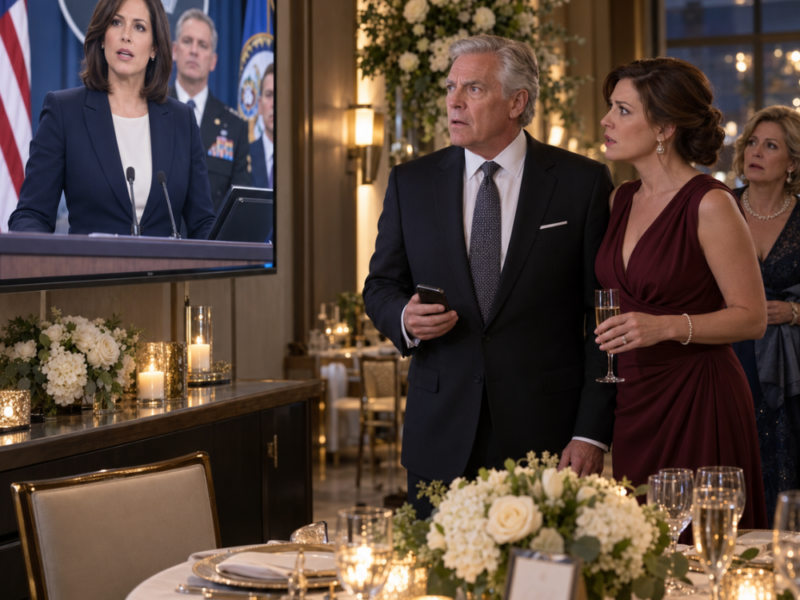
DAD TEXTED: “DON’T FLY IN EARLY. THE REHEARSAL DINNER IS ALREADY SET.” SO I WENT BACK TO MY PENTAGON BRIEFING, BUT TWO DAYS LATER, ROXANNE CALLED HER VOICE WAS SHAKING. “HOW COULD YOU DO THIS TO OUR FAMILY?” DAD HAD JUST SEEN THE C-SPAN CLIP, AND. .2.U
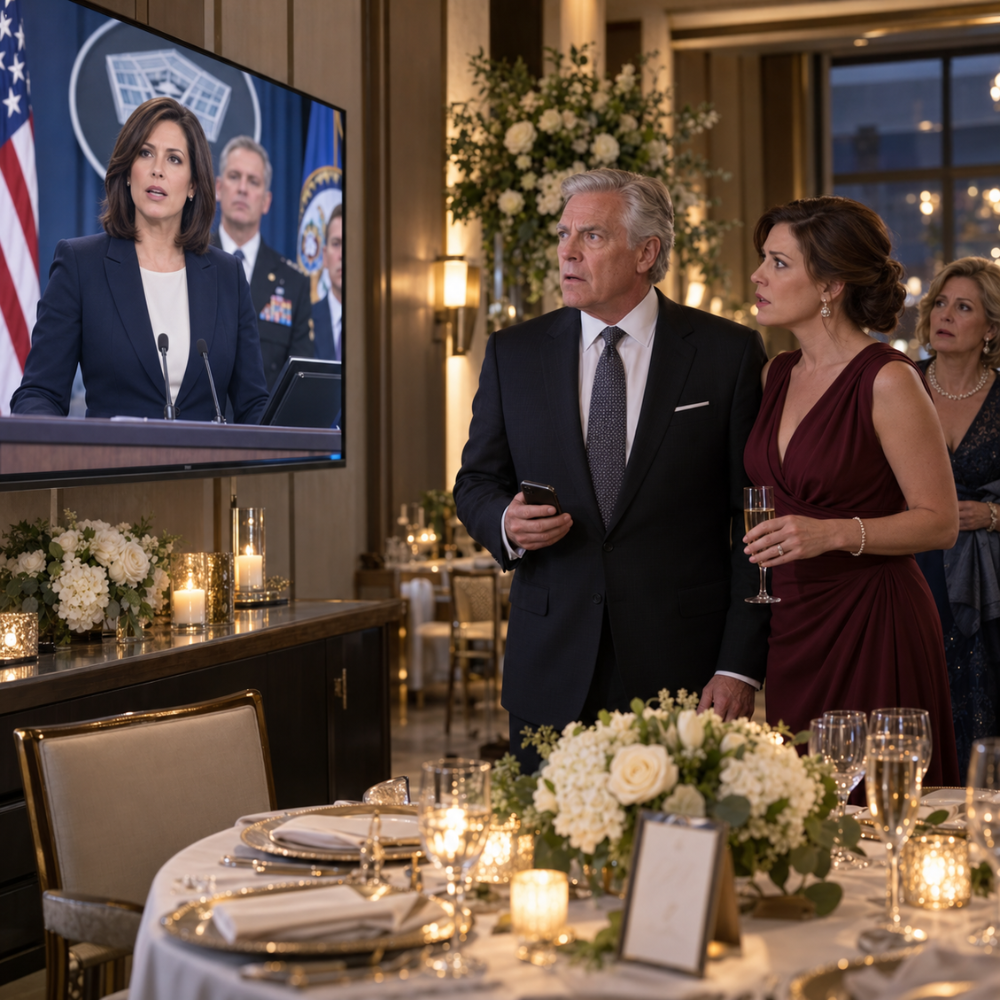
Dad told me not to fly in early for my brother’s rehearsal dinner—two days later, he saw me advising the congressman they were desperate to impress.
My father’s text arrived while I was walking toward a security checkpoint at the Pentagon.
Don’t bother flying in early. The rehearsal dinner is already handled.
I stopped beneath the fluorescent lights and read it again.
At first, I assumed he meant transportation.
My flight home was booked for Thursday afternoon. My younger brother Kyle’s wedding was Saturday, and the rehearsal dinner was Friday night at Belleview Country Club, a place my father had mentioned so many times over the previous six months that I knew the ballroom capacity, menu, guest list strategy, and initiation fee without ever having set foot inside.
I typed:
What does “already handled” mean?
The three dots appeared almost immediately.
Then disappeared.
Then reappeared.
Finally:
Roxanne’s family had to tighten the dinner list. A lot of important people are attending. Come Saturday morning for the ceremony.
I stood there holding my phone while employees moved around me.
Military officers.
Civilian staff.
Contractors.
People carrying briefing books and coffee.
Nobody paid attention to the forty-one-year-old woman reading a family text near the Pentagon security line.
That was one of the things I liked about Washington.
Everybody believed their day was important enough to prevent them from becoming overly interested in yours.
I called my father.
Arthur Dunning answered on the second ring.
“Vera.”
“Hi, Dad.”
He exhaled in the particular way he used when a conversation had become inconvenient before it started.
“You saw my message.”
“I did.”
“So you understand.”
“No.”
Silence.
“What part is confusing?”
“The part where I’m apparently no longer invited to my brother’s rehearsal dinner.”
Arthur lowered his voice.
I could hear people around him.
Glasses.
Conversation.
Maybe he was already at Roxanne’s parents’ house.
“Vera, please don’t make this bigger than it needs to be.”
“I’m asking a question.”
“The room has limited capacity.”
“The country club ballroom holds more than two hundred.”
Another silence.
“You researched it?”
“No. You mentioned it approximately forty times.”
“That’s not the point.”
“What is the point?”
He sighed again.
Then decided honesty was easier.
“Roxanne’s family has assembled a very distinguished guest list.”
I leaned against the wall.
“Okay.”
“These are people who matter to Kyle’s future.”
“That’s interesting phrasing.”
“Business leaders. Political people. Major real-estate families. The kind of connections that could open doors.”
“And my presence closes them?”
“That’s not what I said.”
“You removed me from the dinner.”
“No one is removing you from the wedding.”
“So generous.”
“Vera.”
I heard irritation entering his voice.
“Your government work is admirable.”
Whenever my father called something admirable, it meant he had already decided it was unimpressive.
“But this dinner is different.”
“How?”
“It is partly social and partly professional.”
“For the groom?”
“You know how these things work.”
“I’m not sure I do.”
“Kyle is moving into a different circle.”
A different circle.
My brother was marrying Roxanne Bellamy, daughter of a successful commercial real-estate developer whose family had spent decades building wealth around hotels, office parks, and suburban mixed-use projects.
The wedding had gradually become less about two people and more about establishing that the Dunnings belonged inside Bellamy society.
My father had taken that project personally.
New tuxedo.
Country club trial membership.
Wine lessons.
A sudden interest in charitable boards.
He had even replaced the ten-year-old Lexus he once insisted was “perfectly good” because, according to him, arriving at the Bellamy wedding weekend in something dated would create the wrong impression.
I had listened to all of it with the detached fascination of someone observing a culture through glass.
Arthur continued.
“Congressman Garrett Albright may attend.”
That explained more.
“May?”
“Roxanne’s father has been working on it for months.”
“Why?”
“He represents a district with major defense manufacturing.”
“I know who he is.”
Arthur sounded surprised.
“You do?”
“Yes.”
“Well.”
He recovered.
“That is exactly what I’m talking about.”
I almost laughed.
“What are you talking about?”
“These are serious people, Vera.”
My grip tightened on the phone.
“And I’m not?”
“That is not what I mean.”
“Then explain it.”
Arthur became impatient.
“You work for the government.”
“Yes.”
“You don’t exactly move in the same social circles.”
“No.”
“You wouldn’t enjoy yourself.”
I looked through the glass partition toward the security line.
“Dad.”
“Yes?”
“What do you think I do?”
Another pause.
“You work in defense policy.”
“That’s broad.”
“You’re some kind of adviser.”
“Also broad.”
“You work for the Pentagon, Vera. I’m not insulting you.”
“No?”
“No.”
His voice softened in that patronizing way I had known since childhood.
“I’m proud that you found stable government work.”
Stable government work.
I closed my eyes.
“I see.”
“You have good benefits.”
There it was.
My father had reduced a decade of national-security work to pension eligibility.
“You’d be more comfortable coming Saturday.”
He continued.
“Less pressure.”
“And you don’t think my career fits the image.”
Arthur said nothing.
That answer was enough.
“I understand.”
Relief entered his voice immediately.
“Good.”
“I’ll change my flight.”
“Thank you.”
“For making this easy?”
“Vera.”
“I’ll see you Saturday.”
I hung up.
Then I stood still for perhaps ten seconds.
I was angry.
But not shocked.
Shock requires an expectation that something different might happen.
My father had spent most of my adult life misunderstanding me with remarkable consistency.
My name is Vera Dunning.
At the time of Kyle’s wedding, I was forty-one and had spent nearly ten years as a senior civilian defense policy adviser.
My life was not glamorous in any way my father recognized.
No corner office in Manhattan.
No company car.
No stock-option package.
No country club.
No executive biography printed beneath my photograph on a corporate website.
Instead, I had a government badge, a small townhouse in Arlington, a reliable Subaru, and a wardrobe containing more navy suits than any person should reasonably own.
My work involved policy analysis, budget coordination, congressional preparation, industrial-base questions, and enough interagency process to make most people’s eyes glaze over before I reached the second sentence.
Some weeks I spent more time reviewing briefing papers than sleeping.
Some days were uneventful.
Others began with one set of assumptions and ended with senior leaders rewriting testimony before a televised hearing.
I rarely discussed specifics outside work.
Not because I was mysterious.
Because discretion was part of the job.
You do not sit at Thanksgiving dinner and casually explain sensitive defense planning between pumpkin pie and football.
At least I did not.
My family interpreted silence differently.
They assumed there was nothing impressive enough to describe.
When I first joined government, Dad seemed proud.
For about a year.
Then Kyle’s career accelerated.
My brother was seven years younger and had always understood our father more naturally than I did.
Kyle liked visible progress.
Promotions.
Bonuses.
Job titles.
Memberships.
He worked in commercial development for a national logistics company and could explain his career in language our father appreciated.
Revenue.
Expansion.
Clients.
Deals.
Arthur loved deals.
He owned a regional insurance brokerage in Ohio for thirty-two years and believed adulthood could be measured through a series of recognizable milestones.
Career.
House.
Marriage.
Network.
Retirement account.
Social standing.
I had most of those except the ones that mattered visually.
My townhouse was comfortable but not large.
I never married.
I had no children.
My government salary was solid but nowhere near Kyle’s private-sector compensation.
I drove a practical car.
I took vacations to places where hiking boots mattered more than hotel lobbies.
My father regarded my life the way someone might regard a well-maintained municipal building.
Useful.
Respectable.
Nothing to brag about.
Kyle, meanwhile, gave him material.
At thirty-four, he wore tailored suits.
Bought a newly built house in a gated development.
Joined a downtown business club.
Then he met Roxanne.
That changed everything.
The Bellamys were not nationally famous.
They were locally powerful, which can be far more consuming.
Roxanne’s father, Preston Bellamy, owned a commercial real-estate firm with projects across three states.
Her mother chaired two nonprofit boards.
Their holiday parties were photographed for regional society magazines.
Roxanne grew up knowing which fork to use because nobody in her childhood ever needed to joke about not knowing.
She was not unkind when I met her.
That matters.
She was polished.
Ambitious.
Used to a certain world.
She worked in philanthropic development and moved through wealthy rooms with ease.
Kyle adored her.
So did my father.
Within three months of the engagement, Arthur had absorbed Bellamy culture like a man studying for an exam.
The rehearsal dinner became his final.
I put my phone away and entered the building.
My immediate supervisor, Ellen Shaw, was waiting near our offices with two folders tucked under one arm.
“Flight today?”
“Changed.”
She looked at me.
“Problem?”
“Family schedule.”
“Everything okay?”
“Yes.”
A lie.
Small.
Social.
Acceptable.
Ellen handed me one folder.
“We got committee follow-ups.”
“How bad?”
“Depends how much you enjoy explaining regional procurement logic to people who already decided what they think.”
“So normal.”
“Exactly.”
Work helped.
That afternoon, I forgot about the wedding for several hours.
The House defense hearing scheduled for Friday had occupied our team for weeks.
The subject was complicated enough that even smart people disagreed legitimately.
Industrial capacity.
Regional suppliers.
Workforce shortages.
Long-term procurement assumptions.
Which investments strengthened readiness.
Which simply moved money toward politically attractive places.
My role was not to decide elections, reward districts, or hand out contracts.
The job was much less dramatic and much more important.
Analysis.
What did the policy actually authorize?
What data supported the allocations?
What assumptions were uncertain?
What could leadership defend under questioning without overpromising?
I helped prepare senior officials for those answers.
That week, one section of the hearing materials involved manufacturing capacity in Congressman Garrett Albright’s region.
The same man my father hoped would bless Kyle’s rehearsal dinner with his presence.
I did know him.
Not socially.
Professionally.
He had participated in defense hearings for years.
He asked detailed questions.
Sometimes skeptical ones.
He had challenged our office before.
Sometimes correctly.
We had disagreed more than once.
That was normal.
Policy work becomes dangerous when professional respect requires agreement.
By seven that evening, I was still at my desk.
My flight cancellation email sat unread in my personal inbox.
Ellen passed my office carrying her coat.
“You staying?”
“Another hour.”
“You said that two hours ago.”
“I meant a government hour.”
“That isn’t a thing.”
“It should be.”
She leaned against the door.
“You sure you’re okay?”
I hesitated.
Then said:
“My father uninvited me from my brother’s rehearsal dinner because he thinks my job is insufficiently impressive.”
Ellen stared.
Then laughed.
Hard.
I waited.
“This is emotionally devastating. Thank you.”
“I’m sorry.”
She covered her mouth.
“No, I’m sorry.”
Then:
“He thinks what?”
“Government clerk.”
“Does he know what you do?”
“Apparently not.”
“Have you told him?”
“Yes.”
“Did he listen?”
“No.”
“That sounds more like a father problem than a communication problem.”
I smiled.
“Likely.”
She became serious.
“That hurts.”
“Yes.”
“Are you still going to the wedding?”
“Yes.”
“Why?”
“Because Kyle is my brother.”
She nodded.
“Reasonable.”
Then:
“Do not let them make you explain your résumé as the price of belonging.”
That sentence followed me home.
My townhouse was quiet.
I reheated soup.
Put laundry into the washer.
Changed into sweatpants.
Ordinary life.
At 9:10, Kyle called.
I considered ignoring him.
Then answered.
“Hey.”
“Dad talked to you.”
“Yes.”
Kyle exhaled.
“Vera.”
“What?”
“This got awkward.”
“Only now?”
He was quiet.
“I didn’t know he was going to text you like that.”
“But you knew I was off the dinner list.”
Another silence.
“Yes.”
“Okay.”
“Roxanne’s parents had to make cuts.”
“I heard.”
“It’s not personal.”
I actually laughed.
“How is removing the groom’s sister from a rehearsal dinner not personal?”
“That’s not what I mean.”
Same phrase.
Same family.
“It’s a weird dinner.”
He continued.
“Preston has clients there.”
“Some political people.”
“Dad got obsessed with the seating.”
“And you let him.”
“I had enough going on.”
I sat at my kitchen counter.
“So I became the easy cut.”
Kyle said nothing.
“Just say yes.”
“Yes.”
At least that was honest.
“I’m sorry.”
“Thank you.”
“I mean it.”
“Okay.”
He sounded frustrated.
“Can you not do that?”
“Do what?”
“That calm thing.”
“What would you prefer?”
“I don’t know.”
“Then don’t critique the available option.”
He laughed despite himself.
That helped slightly.
“Are you coming Saturday?”
“Yes.”
“Good.”
A pause.
“Roxanne likes you.”
“I like her too.”
“She didn’t mean for this to become insulting.”
“Did she object?”
Kyle said nothing.
“Right.”
“That’s fair.”
I closed my eyes.
“Have a good dinner.”
“Vera.”
“What?”
“Dad is being ridiculous.”
“He usually becomes ridiculous near people he thinks are important.”
“That is painfully accurate.”
Then Kyle said:
“I should have stopped it.”
“Yes.”
We ended there.
No reconciliation.
But a crack in the performance.
Friday began at 5:15 a.m.
Coffee.
Weather check.
Email.
Navy suit.
Low heels.
Hair pinned back.
By seven, I was in Washington.
The hearing room was already developing its own weather system.
Staffers.
Press.
Committee personnel.
Security.
Policy teams.
Witness preparation.
People whispering last-minute changes that were apparently too important to have existed the night before.
I took my assigned seat behind the senior defense officials our office was supporting.
Not beside them.
Behind.
That was normal.
Advisers are often most visible when somebody turns around because a question requires detail.
C-SPAN cameras were present.
I did not think about my family.
At least not initially.
The hearing opened.
Statements.
Prepared remarks.
Questions.
Some predictable.
Some not.
About ninety minutes in, Congressman Albright began a line of questioning involving regional industrial capacity.
He was not grandstanding.
At least not more than hearings naturally encourage everyone to.
He had concerns about how projected manufacturing requirements aligned with actual workforce and supplier data.
The senior official answered.
Albright followed up.
Numbers.
Assumptions.
A comparison with an earlier estimate.
I recognized the issue immediately.
One of the tables had changed during final review because newer supplier data improved the forecast.
The official answered correctly but turned slightly toward me.
I passed a note forward.
Albright saw the movement.
Then he looked behind the witness table.
“Is Ms. Dunning with you today?”
My stomach dropped for a completely irrational reason.
The official nodded.
“Yes, Congressman.”
Albright adjusted his papers.
“Ms. Dunning’s team walked committee staff through the revised assumptions earlier this week.”
He looked toward me.
“Would you confirm whether the workforce constraint in the updated model is accounted for before the final capacity estimate?”
No dramatic deference.
No declaration that I controlled Washington.
A professional question.
In my area.
On the record.
I leaned toward the available microphone after receiving the chair’s permission to respond.
“Yes, Congressman.”
I explained.
Briefly.
The revised analysis incorporated updated supplier data and separated immediate capacity from projected expansion.
One estimate represented current throughput.
Another assumed workforce investments already funded but not yet fully realized.
I noted the uncertainty range.
No promises.
No performance.
Albright asked one follow-up.
I answered.
Then he said:
“That distinction is helpful. Thank you.”
The hearing continued.
That was it.
Professionally, the exchange was ordinary.
Personally, it detonated my family.
My phone remained secured and silent until recess.
When I finally checked it in the corridor, I had seventeen missed calls.
Dad.
Kyle.
Roxanne.
Mom.
Dad again.
Two numbers I did not recognize.
Then text messages.
ARTHUR:
CALL ME.
ARTHUR:
VERA PLEASE CALL.
KYLE:
Okay so apparently we all owe you an apology.
ROXANNE:
Vera, please call me when you can. I am so embarrassed.
Then Dad:
Was that Garrett Albright asking YOU the question?
I stared at the message.
Ellen appeared beside me holding vending-machine coffee.
“You have the face.”
“What face?”
“The family face.”
I showed her.
She read the messages.
Then looked at me.
“Oh.”
“Yes.”
“He saw.”
“Apparently the country club had C-SPAN on.”
She nearly spilled the coffee.
“The rehearsal dinner people were watching a defense hearing?”
“Preston Bellamy likes Congressman Albright.”
“That is the funniest possible explanation.”
“It gets better.”
“How?”
“Dad removed me from dinner because he thought I wasn’t important enough to sit near Albright.”
Ellen closed her eyes.
“I need to be mature.”
“Please try.”
“I cannot.”
She walked away laughing.
I listened to Dad’s voicemail.
“Vera.”
His voice was strained.
“Please call me as soon as possible.”
Pause.
“We just saw the hearing.”
Another pause.
“I didn’t realize Congressman Albright knew you personally.”
That phrase bothered me.
He didn’t know me personally.
He knew my work.
There was a difference.
Dad continued.
“Preston said Garrett may still attend tonight.”
Then:
“We should discuss seating.”
Of course.
Not:
I am sorry.
Seating.
Roxanne’s voicemail was more honest.
“Vera, I’m mortified.”
Her voice shook.
“I went along with something I knew was rude because I wanted tonight to be perfect.”
She breathed in.
“And now it looks even worse because of who you work with, but I know that’s not actually why it was wrong.”
That stopped me.
Good.
She understood before my father did.
“I’m sorry.”
“I would really like you to come tonight.”
“Not because of Congressman Albright.”
“Because you are Kyle’s sister.”
That mattered.
I saved her voicemail.
Then I called Kyle.
He answered immediately.
“Please tell me you’re not enjoying this.”
“A little.”
“Fair.”
“What happened?”
“We were at Belleview.”
“At ten in the morning?”
“Final setup.”
“Of course.”
“Preston had C-SPAN on in his office.”
“Of course.”
“Dad was there.”
“Of course.”
“Then your face appeared.”
I rubbed my forehead.
“My face was always going to appear. I sit behind the witness table.”
“Yes, well, none of us knew that.”
“You could have.”
“I know.”
“How?”
“I know.”
He sighed.
“Dad nearly dropped his coffee.”
“That would have been wasteful.”
“Roxanne is furious with him.”
“Why?”
“She says he made the whole family look awful.”
“That is not the primary issue.”
“She knows.”
Kyle lowered his voice.
“I know too.”
Silence.
Then:
“I should have had your back.”
“Yes.”
“Can I fix it?”
“I don’t know.”
“Will you come tonight?”
“I have work.”
“The hearing ends around?”
“Whenever Congress decides we are finished.”
“Good point.”
“I also have a flight tomorrow.”
He hesitated.
“Roxanne wants to put you at the head table tonight.”
I laughed.
“No.”
“Why?”
“Because yesterday there wasn’t a chair for me.”
“Vera.”
“I’m not rearranging my life because Dad discovered my professional title has social value.”
Kyle became quiet.
“That is brutally fair.”
“Thank you.”
“Will you at least come if you want to?”
That wording mattered.
If you want to.
Not:
We need you.
“Yes.”
“Okay.”
I ended the call.
Then Dad called again.
I answered.
“Vera.”
“Hi.”
“What exactly is your position?”
I closed my eyes.
“Dad.”
“I’m asking.”
“Ten years late.”
“That’s unfair.”
“Is it?”
He became defensive.
“You never discuss work.”
“I have discussed work.”
“You always say policy.”
“Because I work in policy.”
“You never said members of Congress knew you.”
“Why would I?”
“Because that is significant.”
“To you.”
Silence.
I immediately regretted the sharpness.
Not the point.
The sharpness.
Dad lowered his voice.
“I made a mistake.”
“Yes.”
“I thought…”
He stopped.
“What?”
“I thought you were farther down.”
There it was.
Hierarchy.
The only language he truly trusted.
“Farther down where?”
“The organization.”
“I am not a general.”
“I know.”
“I do not command troops.”
“I know.”
“I do not award contracts.”
“Okay.”
“I advise leadership on specific policy matters.”
“But Congressman Albright relies on your analysis.”
“Sometimes his staff uses our analysis.”
“That’s not what he said.”
“Dad.”
I could feel frustration rising.
“You are doing it again.”
“What?”
“Trying to convert my job into status.”
He went quiet.
“My job is not impressive because a congressman asked me a question on television.”
“No.”
“It was important before that.”
“I understand.”
“No.”
I leaned against the corridor wall.
“I don’t think you do.”
Another pause.
“What do you want me to say?”
“The truth.”
He sighed.
“I thought your work was ordinary.”
That hurt.
I knew it already.
Hearing it mattered.
“Okay.”
“I thought Kyle’s career was more impressive.”
“Okay.”
“I thought tonight mattered for his future.”
“Okay.”
“And I thought…”
He stopped.
I waited.
“You might make the table less polished.”
There.
Ugly.
Honest.
I swallowed.
“Thank you.”
“For what?”
“For finally saying it.”
“Vera, I’m sorry.”
I looked through the hallway windows toward a gray Washington afternoon.
“I know you are now.”
“That sounds worse than yelling.”
“I’m not trying to punish you.”
“Will you come tonight?”
“I don’t know.”
“I’ll send a car.”
“No.”
“Private charter if needed.”
“No.”
“I can—”
“Dad.”
He stopped.
“I had a commercial ticket Saturday.”
“Yes.”
“I moved it to tonight after Roxanne called.”
Silence.
Not because he asked.
Because she apologized without needing my résumé to become impressive first.
“I’ll arrive when I arrive.”
Relief filled his voice.
“Good.”
“Do not change the whole dinner around me.”
“Fine.”
“Do not introduce me as some Washington power broker.”
“I wasn’t going to—”
“You were.”
He sighed.
“Yes.”
“Do not tell Congressman Albright we are close socially.”
“We aren’t?”
“No.”
That seemed to disappoint him.
“We have a professional relationship.”
“Understood.”
“And Dad?”
“Yes?”
“Do not ask me for introductions.”
His silence answered before he did.
“Understood.”
The hearing concluded after three.
I returned to the Pentagon.
Finished notes.
Answered follow-up questions.
Updated Monday’s briefing list.
At four-twenty, I changed in the office restroom.
The navy suit became a simple dark green dress I had packed for the wedding weekend.
Pearl earrings from my mother.
Low heels.
No stylist.
No country-club transformation.
Ellen saw me in the hallway.
“You’re going.”
“Yes.”
“Why?”
“Because my brother is getting married.”
She nodded.
“Good answer.”
Then:
“Want me to lend you something intimidating?”
“What?”
“My Senate parking placard.”
I laughed.
“Go home, Ellen.”
I took the scheduled flight.
No charter.
No emergency rush.
The flight was delayed twenty-three minutes because of weather.
That somehow pleased me.
There are limits to what social panic can do against commercial aviation.
By the time I reached Belleview Country Club, the formal rehearsal dinner had ended.
Cocktail hour continued.
The building was exactly what I expected.
White columns.
Dark wood.
Landscape lighting.
Golf photographs.
A lobby arrangement of hydrangeas so large it seemed to require structural support.
I checked my coat.
Walked toward the ballroom.
Before I reached the doors, Dad appeared.
He looked ten years older than he had Monday.
“Vera.”
“Hi.”
“Thank God.”
He took my elbow.
I gently removed his hand.
“What?”
“Come over here.”
He led me toward a quiet alcove.
Kyle appeared behind him.
Tuxedo.
No tie yet.
Nervous.
“Hey.”
“Hi.”
He hugged me.
That helped.
Dad lowered his voice.
“Congressman Albright hasn’t arrived yet.”
I stared.
“Okay.”
“He may come for cocktails only.”
“Okay.”
“If he does…”
I waited.
Dad glanced toward the ballroom.
“We should present a united family.”
I felt something inside me go very still.
“Meaning?”
“Just don’t mention the confusion about the rehearsal list.”
“Kyle.”
My brother closed his eyes.
“Dad.”
“What?”
“Stop.”
Arthur looked between us.
“I am trying to prevent unnecessary embarrassment.”
I almost laughed.
“The embarrassment already happened.”
“Vera.”
“No.”
I kept my voice low.
“You do not get to exclude me privately and then display me publicly because someone important recognized my work.”
Dad’s face reddened.
“I apologized.”
“Then act like it.”
He stared.
“How?”
“Let me attend my brother’s wedding without becoming a prop.”
Kyle nodded.
“Dad, she’s right.”
Arthur looked wounded by the alliance.
Then the ballroom doors opened.
A murmur moved through the lobby.
Congressman Albright entered with his spouse, a chief of staff, and a local host from the Bellamy side.
I almost groaned.
Not because I disliked him.
Because I knew what was about to happen.
Preston Bellamy moved forward immediately.
“Kyle.”
He gestured.
“Come.”
Roxanne joined them.
She saw me first.
Her face softened.
“Vera.”
She crossed the room and hugged me.
A real hug.
“I’m so sorry.”
“Thank you.”
“I mean it.”
“I know.”
Her eyes were wet.
Then she whispered:
“Your father is going to explode from stress.”
“I noticed.”
We both nearly laughed.
Congressman Albright finished greeting Preston.
Kyle stepped forward.
“Congressman, I’m Kyle Dunning.”
Albright shook his hand politely.
“Congratulations.”
“Thank you, sir.”
Then Albright noticed me.
Recognition crossed his face.
“Ms. Dunning.”
I walked over.
“Congressman.”
He shook my hand.
“Good clarification this morning.”
“Thank you.”
“I sent staff back to review the workforce assumption.”
“Good.”
“I think you were right to separate current capacity from projected expansion.”
“Your question helped expose the ambiguity.”
That was the truth.
Professional disagreement can improve analysis.
Albright smiled.
“I’ll take credit for that.”
Then he looked at Kyle.
“Your sister has saved committee staff from several badly worded charts over the years.”
I laughed.
“That may be my legacy.”
Kyle smiled awkwardly.
Dad stood nearby.
Silent.
Preston Bellamy introduced himself.
He mentioned his commercial work.
Albright listened politely.
No sudden defense contracts.
No magical business favor.
No discussion of procurement influence.
Because that is not how any of this should work.
Then Albright’s spouse asked Roxanne about the wedding flowers.
The social universe resumed.
That normality saved me.
The room did not freeze forever.
Nobody announced I held “real power in Washington.”
Because I didn’t.
I had expertise.
Trust.
A professional reputation.
Those things were enough.
Still, guests had heard.
News travels quickly in curated circles.
Several people suddenly wanted to know what I did.
The same people who had been told Kyle’s sister worked a modest government job.
I answered briefly.
“Defense policy.”
“What kind?”
“Industrial and strategic planning.”
“Do you work directly with Congress?”
“Sometimes our office supports hearings.”
No inflation.
No false mystery.
Roxanne brought me wine.
“I owe you more than one apology.”
“You owe me exactly one honest one.”
“Then I’m sorry I let your father convince me a guest list mattered more than treating you like family.”
That was honest enough.
“Thank you.”
She looked toward Kyle.
“He argued.”
I raised an eyebrow.
Kyle happened to be close enough to hear.
“Not enough.”
He smiled ruefully.
“No.”
Roxanne continued.
“I was so obsessed with making everything impressive.”
“Why?”
She looked across the ballroom.
Crystal.
Flowers.
People with recognizable names in local business.
“My parents know how to do this world.”
“And?”
“I always felt like I had to prove I could do it too.”
That sounded familiar.
“I didn’t want anyone thinking Kyle’s family was…”
She stopped.
“Ordinary?”
Her face reddened.
“Yes.”
I took a sip of wine.
“We are ordinary.”
She looked confused.
“My father sold insurance.”
“My mother taught music.”
“I work for the government.”
“Kyle works in logistics.”
“That is ordinary.”
Roxanne smiled faintly.
“I think you know what I mean.”
“Yes.”
Unfortunately, I did.
“You were afraid people would think we lacked status.”
“Yes.”
“That’s different from lacking value.”
Her eyes dropped.
“I know that now.”
Maybe.
Learning takes repetition.
But it was a start.
Dinner was over, so nobody moved my place to the head table.
Good.
I joined Kyle, Roxanne, and a group of cousins in the lounge.
For twenty minutes, no one discussed policy.
We talked about a disastrous bachelor-party fishing trip.
Aunt Carol’s flight cancellation.
Whether Kyle’s college roommate would embarrass everyone during the toast.
Normal family conversation.
It felt wonderful.
Near ten, Dad found me alone on the terrace.
Cold air drifted off the golf course.
I was holding club soda because one glass of wine was enough before a wedding.
Arthur stood beside me.
Not too close.
For a minute, neither of us spoke.
Then:
“I was ashamed.”
I turned.
“Of me?”
“No.”
His answer came fast.
“Of myself.”
I waited.
He put both hands into his coat pockets.
“When Albright spoke to you…”
He stopped.
“I was proud.”
“That sounds nice.”
“And then immediately embarrassed.”
“Also understandable.”
“Because I realized I had needed him to tell me you mattered.”
There it was.
The line beneath everything.
Arthur looked older.
Not defeated.
Stripped of performance.
“I have spent my whole life reading rooms.”
“I know.”
“Clients.”
“Business people.”
“Who has influence.”
“Who can help.”
“Who can’t.”
I listened.
“I thought that was intelligence.”
“Sometimes it is useful.”
“Yes.”
“But I turned it into how I judged people.”
He looked toward the ballroom.
“Kyle’s future.”
“The Bellamys.”
“That congressman.”
“I got obsessed with getting near important people.”
Then he looked at me.
“And the whole time, I didn’t know my own daughter.”
My throat tightened.
“Dad.”
“No.”
He raised one hand.
“Let me finish while I’m capable.”
That was almost funny.
“I should have asked.”
“Yes.”
“What you do.”
“Yes.”
“What matters to you.”
“Yes.”
“Whether you were happy.”
I looked away.
“Yes.”
He swallowed.
“I’m sorry.”
“I believe you.”
He looked relieved.
Then I added:
“That doesn’t mean I’m finished being hurt.”
His relief softened.
“I know.”
“Good.”
“Can you forgive me?”
I thought about it.
“Eventually, probably.”
Not the answer he wanted.
The honest one.
He nodded.
“Fair.”
I looked through the terrace doors toward Kyle.
“Do you know what bothered me most?”
“The text?”
“No.”
“What?”
“If I had actually been the government clerk you imagined…”
Arthur flinched.
“…would I have deserved to be excluded?”
He stared at the golf course.
“No.”
“That’s the part I need you to understand.”
“I do.”
“Not because I secretly have a prestigious role.”
“No.”
“Not because Albright knew my name.”
“No.”
“Because I’m your daughter.”
Arthur closed his eyes.
“Yes.”
That was enough for that night.
The wedding ceremony took place Saturday afternoon.
Blue sky after a week of gray.
Roxanne walked down the aisle with her father.
Kyle cried before she reached him.
I cried too.
That surprised me.
Family can hurt you deeply and still remain capable of moving you in beautiful moments.
Both truths fit inside the same body.
My seat was in the second row beside Mom.
Not upgraded because of C-SPAN.
That had always been my ceremony seat.
Mom squeezed my hand.
“You look tired.”
“Work.”
“You always say work.”
“I know.”
Then she whispered:
“I watched the hearing clip six times.”
I groaned.
“Mom.”
“You were very good.”
“Thank you.”
“I wish you had told me more.”
“I tried.”
She nodded sadly.
“I know.”
That answer told me Dad had been talking.
Good.
At the reception, Arthur did something I did not expect.
He introduced me to one of Preston’s friends.
“This is my daughter Vera.”
Then stopped.
No title.
No Pentagon.
No Congressman Albright.
Just daughter.
The man asked:
“What do you do?”
Before Dad could answer, he looked at me.
Actually looked.
And waited.
I said:
“I work in defense policy.”
Dad smiled.
That tiny pause meant more than any elaborate apology.
Kyle and Roxanne left the next morning.
I flew back to Washington Sunday afternoon.
No dramatic family separation.
No cutting people off forever.
Life is usually less satisfying and more complicated.
Dad called the following Wednesday.
Not to ask about Congressman Albright.
To ask:
“What does defense policy actually mean?”
I laughed.
“That is a very large question.”
“I have time.”
So I explained.
Not classified details.
The shape of it.
How policy becomes guidance.
How budgets reflect assumptions.
How legislative oversight interacts with executive planning.
How industrial capacity matters.
Why a single chart can require three weeks of review.
Dad listened.
At the end he said:
“That sounds exhausting.”
“It is.”
“Do you like it?”
There.
The question he should have asked years earlier.
“Yes.”
“Why?”
“Because it matters.”
He was quiet.
Then:
“That’s a good reason.”
Our relationship changed slowly after that.
Not perfectly.
Arthur remained Arthur.
He still noticed expensive cars.
Still liked knowing important people.
Still read business magazines at breakfast.
Still believed a good blazer solved many problems.
But he became more careful about treating status as character.
I saw the change at Thanksgiving.
A cousin named Emily had recently quit a prestigious law firm to teach at a community college.
Old Dad would have said she was wasting her education.
Instead, he asked:
“Do you like teaching?”
Emily looked surprised.
“Yes.”
“Then that’s good.”
I almost dropped my fork.
Later, I cornered him in the kitchen.
“Who are you?”
He smiled.
“I can learn.”
“Disturbing.”
He handed me the gravy.
“Don’t make it weird.”
Kyle changed too.
Marriage did that more than the wedding incident.
Roxanne had less tolerance for his social climbing once the event was over.
A year later, they moved into a smaller house than Preston wanted them to buy.
Dad was appalled.
I was delighted.
Kyle called me during the move.
“You know what Dad said?”
“I can guess.”
“He said the neighborhood doesn’t have enough prestige.”
“That sounds right.”
“I told him prestige doesn’t help with the mortgage.”
“Growth.”
“Roxanne said you ruined me.”
“Good.”
He laughed.
Then became serious.
“I never really apologized.”
“You did.”
“Not properly.”
I waited.
“I let Dad cut you from the dinner because I wanted his approval and Preston’s.”
“Yes.”
“I knew it was wrong.”
“Yes.”
“I thought you’d get over it because you always do.”
That line hurt.
“Meaning?”
“You’re the easy one.”
There it was.
Families assign roles.
Kyle was the golden child.
I was the capable one.
The one who did not need much.
The one who understood.
The one who could absorb disappointment without disturbing the event.
“I’m not actually easy.”
“I know that now.”
“Good.”
“I’m sorry.”
“Thank you.”
He hesitated.
“You going to make me suffer?”
“I’ll remind you periodically.”
“Fair.”
Roxanne became unexpectedly close to me.
Not best-friend close.
Family close.
Real.
She called sometimes about nonprofit governance because of my experience with policy structures.
I called her once when I needed help finding a last-minute event venue.
Years later, when she and Kyle had their first child, I was at the hospital.
Arthur brought balloons so large they nearly blocked the hallway.
Roxanne looked exhausted.
Dad tried to tell a nurse that the Bellamy family knew the hospital board chair.
I took him by the elbow.
“No.”
“What?”
“Do not status-network in maternity.”
“I was making conversation.”
“You were identifying influence.”
Roxanne laughed so hard she had to hold her incision.
“Vera, stop.”
Dad looked offended.
Then laughed too.
Families heal oddly.
The C-SPAN clip lived longer than I wanted.
A relative found it.
Shared it.
Then another.
For several years, somebody played it whenever the wedding story came up.
I hated that because the clip gradually became the wrong lesson.
Look at Vera.
Secretly important.
Dad thought she was nobody, but a congressman knew her.
That was satisfying.
Also dangerous.
One Christmas, a cousin told the story to her teenage daughter.
“Your aunt Vera is proof you should never underestimate someone because they might secretly be powerful.”
I interrupted.
“No.”
Everyone looked at me.
My cousin frowned.
“What?”
“That isn’t the lesson.”
She smiled uncertainly.
“Okay.”
“The lesson is don’t treat people badly even if they aren’t powerful.”
The room quieted.
I continued.
“If I really had spent my career processing ordinary paperwork in a government office, Dad still would have been wrong to cut me out because he thought I lowered the room’s status.”
Arthur nodded.
No defensiveness.
That mattered.
“If Congressman Albright had never known my name, I still deserved a chair at my brother’s rehearsal dinner.”
My cousin looked embarrassed.
“I didn’t mean—”
“I know.”
I smiled.
“But we tell these stories backward.”
We do.
We love secret-status stories because they provide instant justice.
The waitress owns the restaurant.
The quiet employee is the CEO.
The poor-looking aunt is a millionaire.
The ignored sister advises Congress.
Then the people who mistreated them realize they chose the wrong target.
It feels good.
But if the cruelty becomes wrong only because the target turns out to have hidden power, we have learned nothing.
My father’s mistake was not failing to recognize my influence.
It was believing influence determined whether I deserved consideration.
That was the lesson worth keeping.
I remained in government several more years.
My career changed.
Different office.
Broader portfolio.
More responsibility.
Still mostly invisible outside the small circles that needed to know my work.
I preferred it that way.
There were occasional hearings.
Occasional media mentions.
No secret empire.
No dramatic political rise.
Just work.
One afternoon, years after Kyle’s wedding, I ran into Congressman Albright at an event in Washington.
He had no idea he had once caused a Dunning family crisis.
We spoke for five minutes about an industrial-base issue.
Then he said:
“You still making our charts readable?”
“Trying.”
“Good. Half of government is translation.”
“Only half?”
He laughed.
We moved on.
That was it.
I considered telling him the story.
Never did.
Some people do not need to know the symbolic role they accidentally played in your family.
Dad retired eventually.
He sold the insurance brokerage.
The first six months were difficult.
Without the company, he lost the constant network of people measuring one another.
He called me more.
At first, still about business.
Then weather.
Books.
Mom.
A documentary he thought I would like.
One Saturday, I visited my parents.
Dad and I went to a diner for breakfast.
He wore jeans.
That alone felt historic.
A waitress named Joanne brought coffee.
Dad knew her.
“Your daughter still at Ohio State?” he asked.
“Graduated.”
“What’s she doing?”
“Works at the county library.”
Old Arthur would have replied:
Just library work?
Instead he said:
“She like it?”
Joanne smiled.
“Loves it.”
“Good.”
I looked at him.
He noticed.
“What?”
“Nothing.”
“No, what?”
“Growth.”
He rolled his eyes.
After Joanne walked away, Dad stirred his coffee.
“I’ve thought about that rehearsal dinner a lot.”
“So have I.”
“Worst text I ever sent.”
“Top five.”
He smiled faintly.
“I was trying to control how people saw us.”
“I know.”
“The Bellamys intimidated me.”
That surprised me.
“You?”
“Yes.”
“They had money.”
“So did you.”
“Not like that.”
“Status.”
“Yes.”
He looked through the diner window.
“I spent my entire life believing successful people could smell insecurity.”
I almost laughed.
“That’s a sentence.”
“I’m serious.”
“So I always tried to enter the room with something useful.”
“A connection.”
“A client.”
“A story.”
“A child with an impressive job.”
There it was.
“I used Kyle that way.”
“Yes.”
“And when I thought your job wasn’t impressive…”
“You hid me.”
His face tightened.
“Yes.”
We sat in silence.
Then:
“I’m sorry.”
Again.
Years later.
Still useful.
I reached across the table.
Touched his hand.
“I know.”
“I’m proud of you.”
I smiled.
“Thank you.”
Then he added:
“But not because of Albright.”
“Excellent recovery.”
He laughed.
“What are you proud of?”
He thought.
“That you never became impressed with yourself.”
I raised an eyebrow.
“Dad.”
“What?”
“I am extremely impressed with myself.”
He nearly choked on coffee.
Good.
Humility should not become self-erasure either.
That was another lesson my family had to learn.
Quiet competence is admirable.
So is being able to say:
I worked hard.
I know this.
I earned this responsibility.
For years, I avoided discussing accomplishments partly because discretion required it.
Partly because Dad’s status obsession made visible pride feel contaminated.
I did not want to become him.
So I leaned too far toward invisibility.
That had consequences.
At work, younger women sometimes asked how to gain visibility without appearing self-promotional.
I told them the truth.
Document your contribution.
Speak clearly.
Do not inflate.
Do not disappear.
You can be private without becoming unknowable.
You can be humble without pretending you have no expertise.
You can let other people see your work without turning your work into your worth.
Those distinctions took me decades.
When I finally left government service, my farewell gathering was small.
Colleagues.
Mentors.
People from several offices.
No press.
No political spectacle.
Ellen, now retired herself, attended and gave me a framed copy of one of our least attractive briefing charts.
At the bottom she had written:
THE CHART THAT RUINED A REHEARSAL DINNER.
I laughed until I cried.
Dad attended.
He sat quietly in the second row.
Afterward, one of my former supervisors introduced himself.
“Arthur?”
“Yes.”
“I worked with Vera for six years.”
Dad smiled.
“I’ve heard a lot about you.”
The supervisor said:
“She was one of the best policy people we had.”
Years earlier, that endorsement would have transformed Dad’s face.
Status confirmation.
Prestigious witness.
This time he looked toward me.
Then said:
“I know.”
Simple.
No surprise.
No new respect.
He already knew.
That was when I realized the lesson had finally settled.
My family had not become perfect.
Kyle still liked exclusive restaurants.
Roxanne still planned events with almost military precision.
Dad still noticed who drove what.
Mom still clipped articles anytime my name appeared in anything remotely public.
I still became impatient when I felt underestimated.
We remained ourselves.
The difference was curiosity.
Dad asked.
Kyle listened.
I explained more.
Roxanne challenged the family when old habits returned.
Respect became less dependent on proof.
One Thanksgiving, nearly fifteen years after the wedding, we gathered at Kyle and Roxanne’s house.
Their two children ran through the dining room.
Dad sat near the window with a glass of wine.
He was slower now.
Gray.
Retired.
Still wearing a blazer at family dinner because some habits are structural.
Kyle stood to say grace.
Everyone bowed.
I looked around.
No hierarchy.
No curated guest list.
Just family.
Then Dad opened one eye.
He caught me watching.
“What?”
I whispered:
“Nothing.”
“You have a face.”
“Apparently everyone says that.”
He smiled.
After dinner, Dad handed me his phone.
“What?”
“Read that.”
A draft text.
To my niece, who had recently quit a finance job to teach high school history.
It said:
Heard about the career change. I hope it’s what you want. Proud of you either way.
I looked at him.
“You wrote this?”
“Don’t sound shocked.”
“I’m calling the newspapers.”
“Very funny.”
Then he became slightly uncertain.
“Is it okay?”
“Yes.”
“No advice?”
“No.”
“Good.”
I handed the phone back.
“Send it.”
He did.
That tiny message may have been the fullest repair of all.
Not my apology.
Not the country club.
Not the hearing.
A different young woman making a life choice the family did not entirely understand.
Arthur Dunning finally choosing not to make understanding a condition of respect.
The rehearsal dinner story still gets told.
Usually after wine.
Kyle exaggerates Dad’s panic.
Roxanne insists she did not cry on voicemail.
She did.
Ellen’s framed chart hangs in my study.
Sometimes guests ask.
I tell them the short version.
“My father thought my government job would embarrass the family, so he cut me from my brother’s dinner. Then he saw me answer a congressional policy question on television.”
People laugh.
Then they usually say:
“That must have felt amazing.”
For a moment.
Yes.
Vindication often does.
But vindication is not the same as healing.
That took years.
The real turning point was not Congressman Albright saying my name.
It was my father eventually learning that he should not have needed anyone else to say it first.
I spent much of my career in rooms where status mattered.
Titles.
Rank.
Jurisdiction.
Authority.
Those things exist for reasons.
A colonel is not a captain.
A committee chair is not a junior staffer.
An agency head has powers an analyst does not.
Pretending hierarchy does not exist is naive.
The mistake is assuming institutional hierarchy maps neatly onto human worth.
It does not.
The person serving coffee may have little authority in the meeting.
They still deserve courtesy.
The clerk may have no policy influence.
Their work still matters.
The senior adviser may be respected professionally and lonely personally.
The wealthy family may be insecure.
The unimpressive relative may be content.
People are always more complicated than the status marker nearest their name.
Dad needed a televised hearing to learn that.
I needed years afterward to understand I had also allowed his misunderstanding to define too much of our relationship.
I could not talk about classified matters.
I could have talked about myself.
The parts that were not classified.
Why I loved the work.
What made me proud.
What exhausted me.
What I feared.
Why I stayed.
Instead, after enough dismissive reactions, I stopped offering.
That protected me.
It also created distance.
Families are responsible for listening.
We are responsible, when possible, for giving them something honest to hear.
Not résumés.
Not proof.
Ourselves.
The night of Kyle’s rehearsal dinner, I stood on the Belleview terrace and told my father:
“You shouldn’t have needed a congressman’s endorsement to treat me like your daughter.”
That sentence remained true.
It still is.
But the ending I prefer came much later.
Breakfast at a diner.
A draft text to my niece.
My father asking whether a career made someone happy before asking what it paid.
Me explaining work without waiting to be asked twice.
Kyle admitting he chose convenience over loyalty.
Roxanne learning that an impressive guest list cannot make a family impressive.
Those are smaller moments.
They do not make good television.
They make better families.
If I had accepted Dad’s offer of a private charter that Friday, I could have arrived earlier.
Walked into the ballroom before Congressman Albright.
Taken the best chair.
Allowed Arthur to introduce me with a title he had ignored two days before.
Maybe everyone would have been impressed.
I am glad I did not.
I took the commercial flight.
Arrived late.
Entered as Vera.
Not Senior Adviser Dunning.
Not the woman from C-SPAN.
Not the useful connection to Washington.
Kyle’s sister.
Arthur’s daughter.
That was the identity they should have valued first.
Eventually, they did.
And by then, I no longer needed the country club to prove anything at all.









